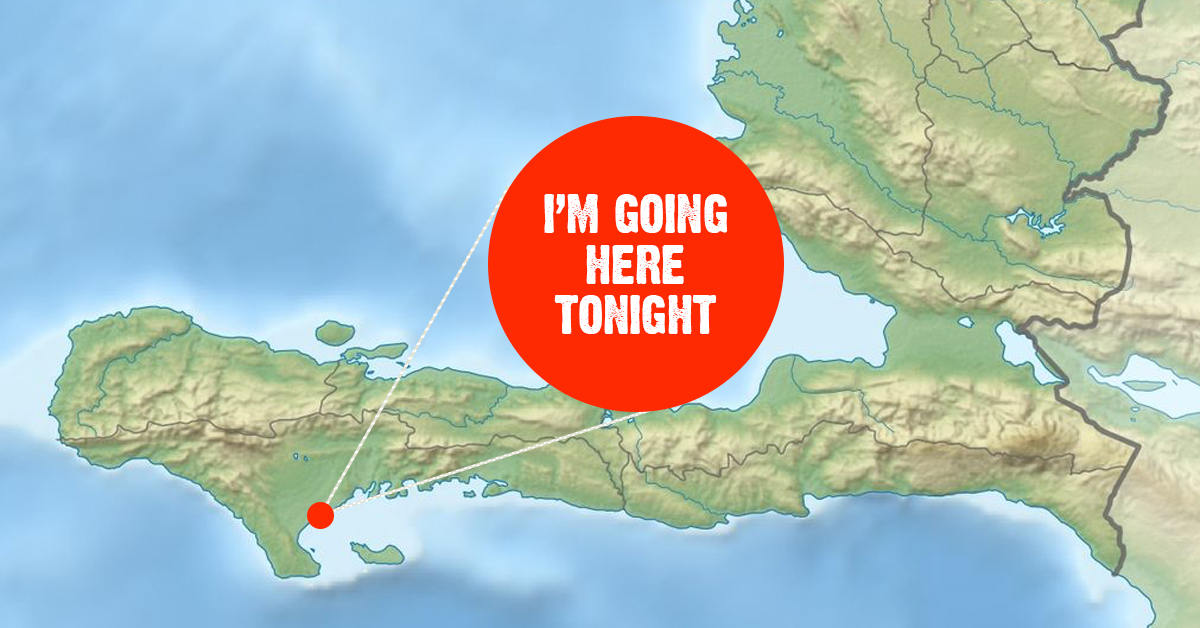
I have thousands of pictures from 2010. Work events, family life, our garden, and two mission trips. But both of my favorite pictures of the year came from the same day in the same location. The Sons of God Orphanage in Carrefour, Haiti.
The first picture is of Kristen. She’s with a little boy who latched himself to her and promptly fell asleep. He sensed her mom-ness and found rest. And she carried him around in the 100+ degree heat with this smile on her face for more than an hour. She and I were thinking the same thing, knowing it was impossible.
The second picture is of me. Walking around the small courtyard snapping pictures of the 60 or so children playing and interacting with our team I decided to let a boy take some pictures of his own. Placing the strap around his neck he grabbed the camera like a pro. He started fiddling through my Nikon settings and changing things to his liking. About that time another boy snagged Mandy’s sunglasses and told his friend to start shooting. I was shocked by the quality of shots this young man took, including this one. I love the composition and the juxtaposition of my smile against the backdrop of a the orphanage. Likewise, the subjects serious face mixed with the silliness of his sudden discovery of style captures the fullness of the moment. Despite the hardship these were kids having fun.
The other day I got connected to Emily Troutman, a reporter working for AOL News in Port-a-Prince, Haiti. She was looking for Americans who had travelled to Haiti since the earthquake and I fit that description. After a quick exchange of emails, she told me she was just looking for a couple of quotes about an article covering Sarah Palin’s visit last week. I was happy to comply.
I thought it would be interesting to share the final essay she published and also share my full responses to her questions.
First, her essay:
“Haiti has been a country that has suffered in the past and is going to continue to suffer until some fundamental changes are being made here,” said Palin, who was accompanying the Rev. Franklin Graham, director of Samaritan’s Purse, an evangelical charitable organization operating in Haiti.
If Sarah Palin wants change for Haiti, though, I hope she will first be changed by Haiti.
Tuesday night, a roving gang, setting fire to a car, aimed rocks at my head when I attempted to take a photo. I just threw my hands in the air, in surrender. By today, I was catching photos of Palin’s cheerful, determined grin. And again, I was tempted to throw my hands in the air. The country was catapulted further into crisis this past week, after many felt the presidential election, mired in fraud, failed to reflect the democratic vote of the people. For three days, Port-au-Prince was shuttered and innocent bystanders sprinted through the streets to find safety.
My name never really appears in the article. Which is fine… I knew that going in. If you read the whole essay though, you’ll see some themes that I brought up appearing scattered throughout. I thought it was pretty cool.
Here are my answers to her questions:
Happy to help. And I didn’t know Sarah was coming to PaP. Very cool of her. I hope her heart is changed the same way mine was.
Feel free to use my name or not. It’d be cool if you could send me back a link if you publish something. (Even if you don’t use my stuff.)
Adam McLane
San Diego, CA
Why did you come to Haiti?
I came immediately following the January earthquake to minister to survivors in tent cities and evaluate what further opportunities there could be for American college students and young adults to serve those displaced.
Did you choose Haiti over another impoverished place? If so, why? Or was it always just Haiti that you wanted to visit? Why?
No, I responded to a specific invitation from an NGO to come to Haiti after the earthquake. Such a trip had never been on my mind before the invitation.
How did you feel when you were here?
I had a lot of fear in coming to Haiti. My whole adult life I’d only heard terrible things. I’d heard it was a place of violence. I’d heard horror stories of those who practiced the Voodoo religion. What shocked me was that my experience was the exact opposite. From my arrival (driving in from the Dominican Republic) until the time I left, I had never been to a place more friendly, and more hospitable. We were greeted everywhere with warm, generous smiles. Surely, when we encountered tent cities who had nothing to eat or drink there was desperation. But we never felt in danger, never saw expressions of anger, and were warmly received. (Whether we came just to help people process what they were going through, praying with them, participating in worship services, or coming to deliver aid, we were treated the same.) As I left in February I cried because my time had ended too quickly. I vowed that I’d be back to serve again. (And fulfilled that vow in July)
I expected Haiti to be a nation heavy with mourning and instead found it a place of hope!
Did anything surprise you?
Lots of things! I didn’t expect to enjoy the food so much. From fresh fruit bought on the street to amazing meals of rice, beans, and goat.
On my return trip in July, what surprised me was how little progress had been made. The tent cities were filled with the same people and the rubble was in the same place. Likewise, the people in the tent cities were frustrated by the big NGOs promises to help. They knew billions of dollars had been given in aid but only a few things had happened. (I wasn’t there with Oxfam, but in several of the camps we worked in we were impressed by the sanitation/water systems installed by Oxfam.)
How did you feel when you went home?
On both trips I was sad to leave Port-au-Prince. I feel strangely alive while I’m there. It’s hard to explain how amazing of a community it is, even amidst the great disaster. I had a hard time explaining to people what I’d experienced. Their minds were filled with the horror stories portrayed on the news while I wanted to share stories of the great hope for rebuilding the nation we felt as we met with people in tent cities, pastors, and various community leaders.
Did you feel different? Culture-shocked? Grateful? Tired? How long did it take for that feeling to subside, or did it?
Coming back, first there were the silly things. On both trips I was overcome with emotion in the airport upon coming back to the States. On my first trip, our team sat down for lunch and collectively felt guilty. We had each just spent $10 on lunch… enough money to feed a family for 10 days. On my second trip, it just didn’t make any sense to me that a short two-hour flight from Port-au-Prince took me a world away. It was trivial, but after going through customs and checking in to my homeward flight, I cried in the bathroom. It was just too clean and unused to make any sense. That was definitely reverse culture shock.
Did it subside? Of course. But I’ve been changed forever.
Will you come back? Why or why not?
I will come back. Why? There is too much work to be done. And for anything I’ve given it’s been returned to me ten times in blessing.
I originally had plans to return after Christmas but they’ve since fallen through. I’m currently looking for an opportunity to come back with an NGO to continue working in the tent cities. I would love to be a camp manager.
Are you glad you went to Haiti?
Absolutely. Haiti is a place that intrigues you with its paradox. It has a rich, proud history of being the first free black nation. It’s people speak a beautiful language and love to learn. But it’s also defined by a history of corruption and deep poverty. That paradox sets it apart and calls me back!
Here’s the deal: Haiti still needs help. It still needs people like you. If God is calling you there and you aren’t quite sure why. Let me know.
As the video says, I’m looking to gauge the interest of a trip to Haiti this December 27th or 28th, 2010 – January 1st or 2nd, 2011. I’m specifically interested in leading a team of church/youth/college leaders who are exploring the possibility of a trip in 2011 or 2012. (Yes, this would be my 3rd trip in 2010… I know, crazy.)
Also, if your church is considering a church partnership with a Haitian church, this would be a great way to see how the partnership works and meet some pastors who are in the program already.
So, we’ll do ministry and meet practical needs with an eye on seeking the Lord’s desire for us to bring a team at a later time. The trip would be run by Adventures in Missions, obviously I don’t work for them but you’ll have the chance to see how they work, ask questions, and really figure out if the trip is the right fit for your ministry. (I love being the connector– that’s all I get out of it!)
If you are interested, please let me know soon. For the trip to work I need 10-15 people to commit in September. Feel free to use the contact page, send me a Facebook message, Twitter direct message, or email me with questions.
I have a lot more information for those interested. And looking for more information is absolutely not committing you to anything.
UPDATE: The trip dates changed by a couple of days. But the intent and everything else is exactly the same. Let me know ASAP if you are interested.
If you are interested in helping fund the school in Wilnard’s church or perhaps your church (Or a group of Christian educators, or any combination) is interested in adopting this school to help pay the teachers, provide uniforms and shoes, or even feed the students, please let me know.
If you’d like, we can plan a trip together and I can introduce you to Pastor Wilnord myself.
The needs in Haiti are still real. The opportunity is still huge. Please don’t forget.
Jeffrey and Joel were visiting with the people of a tent city in the town of Carrefour, Haiti when they heard periodic banging. Used to the sound of big diesel engines and definitely used to the sound of kids laughing and playing games, metal on metal banging was distinctive pang and piqued their curiosity.
Under a tree, away from the main tent area, they met Daniel. Daniel is a mason by trade. But right now there are way more masons than opportunities to do masonry so he began to improvise. With all of the aid flowing into the tent camp there was plenty of garbage generated. One thing that seemed like it was useful for something was all of the one gallon aluminum cans which brought foods like beans.
After some messing around and possibly scouting out what was selling in the city, Daniel started cutting open the cans and making flat sheets of aluminum. Then, using only a large square chunk of steel and a smaller, shorter chunk of steel, he began shaping the aluminum into little boxes and punching a hole in them.
Bam. Instant piggy bank made from recycled cans.
Next, he began selling them to street vendors to sell up the hill in Carrefour. He sold them at 3 for 25 gouds. (3 for about 75 cents in US dollars) Each one took him about 2 minutes to make. So, in theory, Daniel could earn about 75 cents per hour. Remember, the average Haitian family earns less than $1 per day.
Jeffrey and Daniel bought about 6 piggy banks. (They paid him a little more than he was asking.)
Later that night as our team debriefed the day Joel brought up this story. And as the conversation morphed our team decided that we wanted to buy as many piggy banks as Daniel could make. Maybe, if we could get enough, we could use them to raise money for something like the Sons of God Orphanage?
The next day we went back to the tent city and found Daniel under his tree, banging away. We told him our plan and he liked it.
We will buy as many banks as you can make by noon tomorrow.
He thought he could make about 50. We said, no matter how many he makes… we’ll buy them all.
The next day, we were all a little apprehensive and hopeful. We had a feeling he’d have the 50 piggy banks. But we joked that we’d also walk into the camp and see tons of little kids with band-aids on their fingers from making these things all night long!
Daniel looked like a smart businessman. Maybe he’d hired the whole neighborhood to turn garbage into cash? Wouldn’t that be hilarious? I’d hoped we had enough money.
When we found Daniel under his tree it was clear that he was exhausted. He hadn’t slept. The interpreter tried to nice it up by saying that he thought Daniel had a fever. But it was OK, he had worked all night and we had come to buy what he had. His hard work was a good sign that he cared for his family.
He had 44 piggy banks. We counted them. We examined them. We made a big deal over how cool they were and well they were constructed. And then we talked about price.
You could tell he was nervous about that part. I don’t speak Creole but I could read his body language. Were the Americans going to try to offer him a bad price? And what would he do if we did?
The same price came up… 3 for 25 gouds. We told him no. We told him that he had worked all night and that we had rushed him. We told him that we didn’t feel right about paying him so little. We asked him if he thought it was fair if we paid him 25 gouds each. (It took a couple rounds of interpreting to get what we were saying.) He looked kind of confused by our proposition. I doubt anyone had ever told him they should pay him MORE because he had worked hard.
So, we counted them up and paid him just over 1000 gouds. (About $25 US) We shook hands, gave him the money, and walked away.
I don’t know what justice looks like. I can define justice. I can talk about it. But I don’t have a clue what it actually looks like.
I honestly don’t know if that was justice in action or just some silly Americans buying souvenirs thing. I just don’t know because I live in a world where basic justices are a given. But I do know business. I know that on that day, under that tree, that act of business felt like an act of justice.
I pray that more Daniel’s find more ways to recycle things. Turning garbage into money is good in any longitude or latitude.
The hope for Haiti’s future lies in the churches ability to recognize and empower leaders as they emerge.
On my first trip to Haiti I got to see this first hand. As we built relationships with key church leaders we began to gain access to some of their best and brightest leaders.
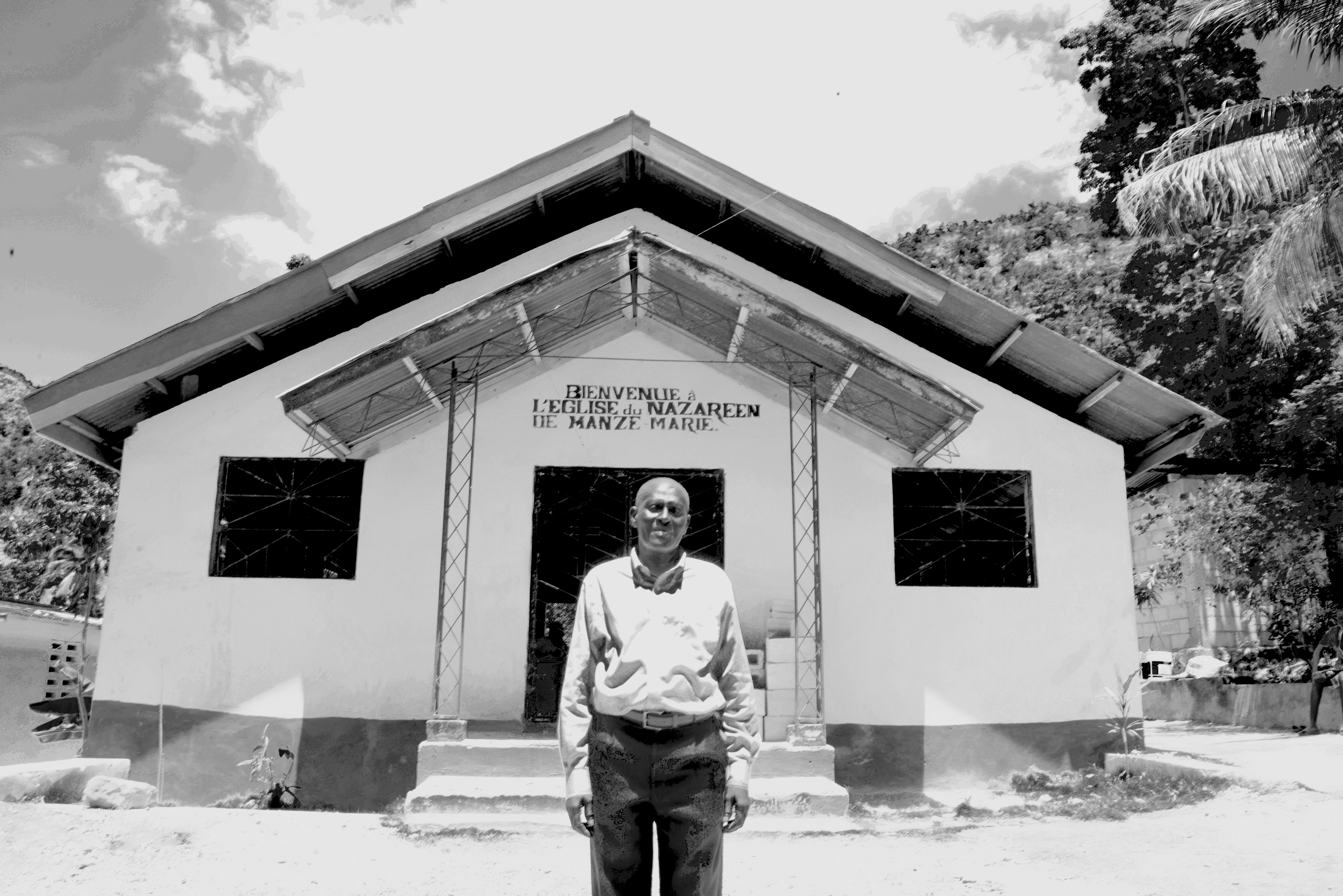
I met John on my first day in Port-au-Prince. When we divided into teams to go to a massive public worship service, Lars and I were assigned to John. [Pictured right]
John was working as a translator since the earthquake destroyed and indefinitely closed his seminary. He had translated for another ministry in his early 20s, but since there weren’t many other options for him to work– it was logical to go back to it for him until his seminary opened.
For the next 3 days John and I were constant companions. Each time we went out to do ministry it just became a given that he and I would work together. What I like about him is his easy-going attitude and heart for ministry. He took his job very seriously. It wasn’t just work, it was ministry for him.
One day, as we were walking from one tent city to another, I asked John about his life as a seminar student. “What is your greatest difficulty?” He kind of looked at me and thought about it. Finally he said, “Doing my homework in an internet cafe is very hard. I find it hard to concentrate on my Greek or a passage with so much else going on.” He wasn’t asking for me to help him buy a computer, but it was clear that a computer would make all the difference in his studies.
I left Haiti and committed to praying for John’s ministry. And in the months to come John emerged as one of the key translators and connecting points for AIM.
Flash forward to May. Mark Oestreicher and some other church leaders headed back to Haiti to launch the Church to Church program. During the trip, Marko had the opportunity to get to know John as well. And as we exchanged texts one morning I asked Marko if John had anything I could bring him when I came in July. His request? A laptop.
Good. Because that is what I had in mind as well.
But the truth was… I didn’t really have an extra $400 I could spend to buy it. Kristen and I put out so much cash for our trip already, it just wasn’t responsible.
So I put out this Twitter request:
To my surprise and astonishment… yes, people did want to help! Within a few days I had raised the $400 needed to buy a very nice netbook for John. On top of that coolness, when I went to Best Buy to pick it up, I explained what I was doing to the associate who helped me… and he kicked in a protective sleeve as his contribution.
In the grand scheme of our trip to Haiti I had hoped to see John again and give him this gift. It wasn’t to be. The ministry site I was at was nearly 40 minutes from the place he was at. And without a car it just wasn’t possible to make that moment happen. I was, however, able to give it to his boss who could give it to him. Not quite as “fun” for me… but the gift will have the same effect anyway.
It might not seem like a big deal. One computer for one leader. But, to me, it is a big deal. An emerging church leader should have the equipment he needs. And the thought of studying for a Greek exam in a crowded and hot internet cafe, or writing a message, or just trying to do some research… it was an inequity I wanted to do something about!
Some big thanks! Several people donated money to help equip John’s ministry. In fact, donations covered this 100%! I owe a massive thanks to Todd Tolson, who rallied his friends from Journey church and his business, Wired Community. I put out the call and within hours they had met 75% of what I needed to raise. I was shocked!
Thanks again to Katie from Adventures in Missions for making the time to produce this video. Why am I passionate about connecting North American churches to ministry opportunities in Haiti? Well, you’ll see it goes both ways. You give a lot and get a lot. In the long term, I long to see more of this culture bridging work transform our church culture. With this new global society… I want to get beyond a traditional view of missions and see more bridging ministries spring up.
Thinking about taking a group to Haiti? I don’t work for AIM, but I am happy to share a third-person perspective on what they are doing. Leave me a comment or use my contact form to send me your information, let’s chat.