Category: Church Leadership

  • Pushing Forward and Through

    Big Mud

    If you’ve visited Western and Central Europe you know it can be a wet, nasty place. As you drive around, especially in non-summer months, you’ll get acquainted with the mud. The touristy places are gorgeous and attract thousands for a reason– because non-gorgeous places aren’t worth visiting.

    Reading Hemingway’s A Farewell to Arms acquaints you with the dreaded reality found in the mud. Months and months of cold, wet weather wore soldiers down. Visiting famous battle sites all over Europe helps you imagine the misery soldiers felt over the centuries.

    Their leaders brought them out into a field where they sank in the mud, got covered in it from head to toe, slept in it, and then were told to fight. They had to think… why here? What are we doing? Can’t we just go home?

    You can’t see the fields of France, Germany, and Belgium and not think about the military leaders. It had  to take serious leadership to keep men motivated to fight in that.

    Leading in the Mud

    The last 24 hours have been an exercise of pushing forward and through some mud.

    My definition of leadership is taking people where they would otherwise not go on their own.

    Leadership is an action of the collective will.

    • We will go there
    • We must go there
    • We will go even if its difficult to get there

    Right now, I’m leading forward on some things which are facing some forms of resistance.

    The details of what I’m pushing through aren’t even relevant to the larger point. Instead, I’m pushing through because the only way to move forward is to push forward and through some stuff. 

    O, The Stuff

    In the past several years I’ve noticed that others tend to get hung up on the stuff and less convicted by the need to push through the stuff.

    What’s the stuff? Distractions. Frustrations. Anxiety. Complications. Family life factors. Physical limitations. You know… stuff. Stuff is real. But it stands between where you are and where you need to go... so it’s just stuff to push through, right? 

    All too often I talk to people who know where they need to go– are truly convicted that they need to press on towards the prize– but they’ve fallen into a fatalistic, over-spiritualization of the stuff.

    Too many times we look at the stuff and read into it that since its difficult that God might not want us to push through the stuff. We start off on a journey towards something but as soon as stuff gets difficult we start mislabeling difficulties. (see Myth: God Opens and Closes Doors)

    Relentlessly Pushing Forward

    When I think of my last 24 hours and some of the stuff… really, it’s “just” stuff to push forward through. (“Just” meaning it’s stuff I can push through, not that the “just” part of it somehow means that its unimportant.) Some of the things were beyond my control, so you roll with them. Other things were things I didn’t know, so you have to make good decisions in the moment about it and press onward. Other things were situations faced because my skill level was too low, so you learn quickly and figure out what to do. Still other stuff is self-inflicted, so you correct that too.

    The point of leading somewhere isn’t the stuff you have to overcome to get there. It’s that you overcome the stuff to get where you need to go. 

  • Rewarding Students for Thinking

    If I narrowed the learnings from Soul Searching & Sticky Faith into one axiom that has to impact how I raise my kids and how I teach students, it would be this: It’s more important to teach students how to think than anything else. 

    For decades, the educational assumption of curriculum, teaching, and many kids/youth programs was: “Start children off on the way they should go, and even when they are old they will not turn from it.” (Proverbs 22:6)

    Don’t dismiss this point. That very verse is often in the introduction to curriculums. It pops up in committee meetings. It’s proclaimed as if Solomon was issuing a directorate for all eternity that memorization/regurgitation/repetition is somehow the best way to teach children about God. Because if we can just hide enough truth in their hearts they won’t become serial killers.

    The problem is, for as long as I’ve been part of the church, that building an educational assumption around this verse hasn’t worked. They do leave. And all of that stuff we’ve hidden in their heart sure doesn’t manifest itself later.

    We have asked kids to listen to lots of sermons. We have asked them to memorize lots of verses. We’ve turned things like “Bible Quizzing” into a church-sponsored sport. The hope (and often justification for funding) has always been that if you can just cram Bible knowledge and teaching into a students head that they won’t forget it. And the cold, hard reality is that it hasn’t made a large-scale significant impact.

    I love a not-so-subtle change our church has made in the kids ministry areas. They are focusing less on students regurgitating facts and focusing more on teaching students what biblical truth means. For instance, they are adapting one of the core things about Awana— the memorization of verses — and instead they are rewarding kids based on what the verse means. In our high school small group I’m really clear, I care more about their hearts than I do about the lesson. The agenda is them. The content is a starting point but it isn’t the point of our high school ministry.

    With our own kids, Kristen and I are challenging Megan and Paul to think critically and big picture about stuff as opposed to testing them on the details. “OK, so why did we tell you not to hit your sister. It’s great that you remember the rule… but why is it a rule and why didn’t you obey it?

    That doesn’t mean that achievement is pointless. That doesn’t mean we don’t push our students to dive into Scripture or that we don’t challenge our kids academically. But it does mean that we are quick to ask them to say, “So what are you going to do with that knowledge?

    Do not merely listen to the word, and so deceive yourselves. Do what it says. James 1:22

  • Focus and the worship service

    We use lights, microphones, seating, and position to focus attention towards the platform during a worship service. People who are attending the service may come with a million words to say, a lot of things on their hearts, and a lot of individual motives… but those putting on the service easily gain control and retain control of the room tactically. 

    • Lighting – By illuminating the platform and darkening the seating area, this draws your attention to the light, humans are built that way. The darker you make the seating area, the more you focus attention on the platform and visa versa.
    • Seating – By point all of the pews/chairs towards the platform, it is more comfortable to put your back against the pew/chair and your feet facing towards the platform than it is for any other seated position. With seating pointed towards the platform, eyes naturally go there.
    • Sound – By amplifying the human voice you can communicate to the ears of everyone else in the room that you are more powerful than they are. Music, voice, video… all of that done at 80-105 decibels will typically focus all of the audience attention.
    • Height – By positioning people on a platform or a stage, especially while you are in the seated position, you are forced to “look up” to whomever is up front. This tells your brain, “that person is in control.
    • Position – As people of faith, we already have an assumption that the people on the platform have some level of authority over us. This is right and good. We ought to give that person our attention.
    • Schedule – By controlling all of those factors, you control the schedule. People will stand when you say so, sit, be quiet, and be dismissed. These are cultural cues, defined by mores. We all know, intuitively, that it’s rude to stand and talk to the person behind us when someone with a microphone is speaking in front of us.

    From a moral perspective all of these are neutral. Nothing about having or even creating that tactical advantage is either good nor bad. But it is a tactical advantage that most churches utilize on a week-to-week basis. It’s what they know how to do as they’ve copied and refined it over the years.

    This has inherent advantages and disadvantages, like all tactics. 

    • ADVANTAGE: This allows you to start/end services according to a prescribed time.
    • DISADVANTAGE: That only works if people show up on time and are willing to stay.
    • ADVANTAGE: The person on the platform is rarely interrupted.
    • DISADVANTAGE: That only works if the person on the platform doesn’t need to be interrupted.
    • ADVANTAGE: As a worship service planner, you can set the theme and manage the content of the service.
    • DISADVANTAGE: The service is limited to the planning teams creativity and listening to the Holy Spirit.
    • ADVANTAGE: You can build the whole service towards a theme, anticipate a response, and even manipulate the audience psychologically to respond the way you want them to. (Yes, I went there.)
    • DISADVANTAGE: There is an opportunity for abuse of power, position, and the temptation to sin is great.
    • ADVANTAGE: You can make a worship service clean, orderly, and (for the service planning group) predictable.
    • DISADVANTAGE: It’s easy to forget that the Spirit is wild, untamed, living and active in the hearts of the audience.
    • ADVANTAGE: The audience knows what to expect from the worship experience.
    • DISADVANTAGE: That predictability makes it easy to tune out.

    I’d encourage you to continue with this list of advantages and disadvantages in the comment section.

    So what’s the point?

    The point is that we need to think about these things, be reminded of them, and ask hard questions about our motives. As leaders we know it’s relatively easy to gain a tactical advantage over our audience. But, in doing so, we are also intentionally limiting the input and community aspects of our congregations.

    Again, these are morally neutral. But what happens in our heart as we utilize these advantages must be regularly checked.

    Historically, the Bible was not meant to be studied in private. At the time of its writing no one had private access to scripture. The New Testement authors couldn’t have even envisioned that one day people would study the Bible privately, it was outside of the realm of possibilities. They would argue “Why would you even want to do that?” The notion of privately owning sacred texts is a 16th century innovation. (Gutenberg, Wycliffe)

    It was never meant that the speaker would prepare in isolation and reveal his teaching at a service with such a physical tactical advantage. Even the notion of a personal application and an individual dividing Scripture and then sharing it publicly is not a historical position, but a remnant of the Reformation and Enlightenment. (Evangelicalism is really the perpetuator of this today, most mainline denominations and our Catholic brethren lean on a common lectionary.) Likewise, from a historical perspective few messages could/would ever be shared outside of a small context. In today’s technological age it’s very easy to hear messages that were never intended for your context, and a lack of specific local contextualization is a general assumption for those preparing messages/sermons today.

    Again, So What?

    For me, as I personally struggle with focus and distraction during worship services, I’m left with this thought about the impact of the modern worship service:

    Are attempts to control and limit focus in worship services killing creatively looking at the potential impact of the Gospel message on a community? Research shows that distraction leads to creativity while focused attention leads to mere productivity. And in many churches we are very productive at some things while largely ignoring the major problems our communities face.

  • How to Disembark from the S.S. Fantasia

    Delay is the deadliest form of denial.
    ~ C. Northcote Parkinson

    Have you ever talked to someone and wondered… is this person living on the same planet that I am? This is a bizarre cultural phenomenon all too common among church leaders. Their day-to-day life, ministry, and sadly ministry aspirations are not based on reality but a fantasy version of reality that they have created for themselves.

    This disconnection often manifests itself to me when false assumptions have driven decision-making and engagement with their local community.

    • Building a ministry around an assumption of the nuclear family. (In denial of the reality of their own extended family and in the face that the community they are trying to reach has no cultural reference to this ideal.)
    • Shrugging off the lack of racial/ethnic diversity in their organization. (In denial of statistical fact that all of America, not just urban centers, have experienced a major shift in statistical balance over the past 10 years.)
    • Redefining ministry measurables to fit the make-up of what happens naturally versus what ought to happen. (In denial of the role of organizational entropy, the reality that if you measure your impact based purely on who comes, eventually this will lead you to a crushing vortex of inward thinking.)

    Sometimes, almost never intentionally and certainly by apathy, I see organizations struggling not merely because they have the wrong people in leadership or because they are bad people or because they have bad values. But they are struggling because they aren’t living in their own present reality. They are trying to win a game no one else is playing. 

    They may be perfectly positioned to take community-changing action but work extremely hard on the wrong things.

    Surrounded by people who think just like them (known as groupthink) they organization sales the seas of their community on the S.S. Fantasia. 

    3 practical steps to help you anchor your assumptions in reality

    Let’s get grounded in putting our academic study to work for us!

    • Regularly review census and other statistical data in your immediate area. If once per quarter your leadership team reviewed the latest statistical data publicly available for free via the census and the myriad of government organizations in your community, you could regularly make small decisions based on what you learn. For instance, if the school district releases a profile of new students which shows a spike in a demographic you could ask the most obvious question, “What can we do to serve this new group of people?Don’t understand this or does this seem too hard? Make an appointment with a school administrator or local college sociologist who will gladly share this data and help you understand it.
    • Regularly ask for cultural observations during team meetings. You don’t need to be a trained ethnographer to do basic ethnography. Your team is already spending time outside of the office in the community you are trying to reach… add a new question to your weekly meetings asking for one thing you observed. Maybe its that women outnumber men at a coffee shop during the day? Maybe its about what people are wearing or driving or reading. We all gather this data but until we share it with our teams we can’t make adjustments. Don’t think your team can handle this? We asked groups to do this in our Good News in the Neighborhood curriculum, middle schoolers can handle it!
    • Define your geographical target and make decisions to benefit those within that area. Face the reality that there are lots and lots of organizations/churches/ministries just like yours. Don’t be a purveyor of the rule of affinity, that’s a short-term strategy built on a false assumption that people will always like what you are doing. Instead, define your target area… be it by a mile radius or specific streets or even a zip code. And then, when you make decisions, ask yourself what’s best based on what you know from regular statistical data and cultural observations from within that target area. If you really want to go crazy– reward your staff for moving into that area and only nominate unpaid leaders like elders who come from that target area. That will begin to send the message that your organization is about that geographical area.

    What are S.S. Fantasia things you see in your area/context/ministry? What’s driving you crazy? 

  • 5 Things Church Communicators Can Learn from Michelle Obama’s DNC Speech

    5 Things Church Communicators Can Learn from Michelle Obama’s DNC Speech

    I don’t know if you watched Michelle Obama’s speech at the Democratic National Convention live or not. I wasn’t planning to watch it but kind of got sucked in during the speech by the mayor of San Antonio.

    If you haven’t seen it, allow me to encourage you to watch it above.

    What I saw the best political speech I might ever see in my lifetime.Which is saying something, because her husband has had some epic moments during the 2008 campaign. Anyone remember 1 million people showing up at Grant Park in Chicago? I mean Clint Eastwood says he cried. There are reports that Chuck Norris gave up round house kicks to the throat because of Barack’s speech there.

    The speech above is amazing in a lot of ways. But, the real question for my fellow church leaders is… what can we learn from Michelle’s speech?

    Here’s 5 lessons: 

    1. She was set-up well. The content of her speech was clearly part of the script for the night. Previous speakers didn’t hint at the content of her talk or step on her themes, they didn’t package a video intro highlighting the key words to listen for, etc. The video intro and the introduction set-up the audience for what they were about to hear. Lesson: Don’t make your services so thematic that the sermon doesn’t reveal something. If you are producing services in a theatrical manner (auditorium, stage, lighting, etc) than use that to your advantage. I can’t tell you how many times the person introducing the sermon has said, “the pastor is about to talk about ____.” I mean, really? Don’t do that! 
    2. She was prepared well. Trust me, this wasn’t a speech she practiced twice on Wednesday morning and then said, “I’m good.” That speech was a team effort. She knew where the cameras were, she knew where he emotive points were, she knew which lines were instant Twitter gold, and she was familiar enough with the content of the speech to get past forced gestures and have the whole thing come off as straight from the heart. That only comes when you really, really know your material. Lesson: Too many pastors depend on talent/experience, foregoing the positive impact of practice and preparation. If you are working on this weekend’s sermon this week, you’re not going to get that response. And if you are creating sermons in a vacuum, even with just your staff, you aren’t going to get that response. Prepare more for a better response.
    3. She stayed within herself. She spoke within a framework that her audience expects of her. Clearly, her speech was political as she tied her families story to the story of millions of Americans in contrast to her husband’s blue blood opponent. But she didn’t get into issues or stomp the stump. She played her part, she was an expert character witness, and you never felt like she was stretching to become believable. Lesson: One of the things I really like about our pastor is that he stays within what he knows well. Too often, I hear pastors preaching things they know little about. You are left to think… “Wait, what does he know about counseling… he has an MDiv, he’s not a licensed therapist.” When you get outside of what you know you start to look real dumb, real fast. If you need an element for something, bring in an expert or use a video. 
    4. She was centrist. For years I’ve talked about the 1-5-10 rule of content creation. Negative content gets a 5 times multiplier versus normal content. But truly remarkable content gets a 10 times multiplier. She didn’t get 28,000 tweets per minute by being negative. She got the massive response by telling a story every person in the room could identify with. Lesson: I’ve heard from pastors who say they preach in response to what’s happening in their congregation. Um, responding isn’t leadership. Leaders take people where they would not go by themselves. Remember, the Gospel of Jesus Christ is for EVERYONE. If you are preaching to the choir than you are limiting your potential impact. Instead of aiming your ministry at the top 15% or the bottom 15% of the learning curve, aim for the middle 70% to maximize. 
    5. She was inspirational. Her speech reminded people that the American Dream is not just about financial success. (Certainly, the Obama’s are no longer poor.) Her speech took the audience somewhere. It started as the Obama’s story and morphed from personal pronouns of “my story” to our shared journey of “our story.” You were left not just cheering for the Obama’s but also for yourself. That’s impressive. Lesson: Take your audience somewhere. Help them see that their life with Jesus can add perspective, meaning, and purpose to their lives. Stop talking about the dreams of the individual and move people towards the dreams we can fulfill as a community of believers. I don’t want to  go to the mountaintop alone– I want to go with us. 
  • The problem with being cutting edge

    If you’re at the cutting edge, then you’re going to bleed.

    ~ Nancy Andreasen

    I guess they don’t call it the bleeding edge for nothing.

    Here’s my thought about the dangers of being cutting edge…

    • The biggest growth happens for those people and organizations willing to take risks.
    • I’d rather be innovative than a copycat.
    • I’d rather look forward to what can be than hold onto what used to be.
    • I’d risk getting hurt by being cutting edge than get hurt by being too slow to respond.
    • I think leaders take people where they wouldn’t go alone, regardless of risk.
    • I think a little bleeding isn’t fatal.
    • I’d rather be the guy with scars telling the stories than be the guy without scars regretting being careful.

    I’m wired to not see the downside in being “cutting edge.” I only see upside.

    What are some risks you are taking right now that might make you bleed a little? 

  • Outsmarting Your Opponent

    Rocky Long is crazy. Yesterday, he told reporters that as head coach of the San Diego State football team he is planning on always onside kicking and always going for it on 4th down.

    Rocky Long is genius. By telling his opponents he is not going to traditionally kick the ball off and not planning to punt on 4th down, they have to prepare for that potential even if he has no intention of doing it.

    This is Rocky Long’s Moneyball moment. After 40 years as a head coach he has a wild idea and he’s toying with the gamble. He sees something that his opponents don’t. And he’s convinced that this could give him the competitive advantage over more talented teams that he needs.

    He told the Union-Times:

    And yes, Long — who apparently hasn’t yet tried it all in his 40 years of coaching — is serious about this. “It makes sense,” he said, seeming almost giddy in talking about the possibilities. “Additional plays would allow you to score a lot more points,” he said. “It also puts a whole lot of pressure on the defense.” source

    As a season ticket holder I know that this announcement is influenced by his personnel and not just a crazy idea he woke up with. He lost 4 of his most crucial players to the NFL and wasn’t able to replace them with players of equal/higher quality. (QB, RB, MLB, Punter) Additionally, they are one year away from entering the Big East where he will likely have a competitive disadvantage every single week of conference play. He’s interested in a gimmick because he is desperate to give his team any sort of advantage. And just the threat of this makes other teams prepare for it.

    That said, the person he’s learning this philosophy from is pretty successful with it.

    The possibly not-so-mad professor of this “punting-is-for-wimps” practice is Kevin Kelley, the head coach of a small private school, the Pulaski Academy, in Little Rock, Ark. In nine years, Kelley’s teams have posted a 104-19 record, winning three state titles. Last season, Pulaski went 14-0 and averaged 51 points per game. source

    It’s crazy. But it might just be crazy enough to work.

    What’s your competitive advantage?

    In ministry, the head coach of the other team is Satan. And he’s been doing some winning lately, hasn’t he? Sick of him winning yet? He has more resources than you. He’s got great recruiters. He’s actually smarter and more experienced than you. You are losing, not because you’re a bad person, but because you’ve been outsmarted.

    My prayer is that you’re ticked off about this. My hope is that you’re tired of losing. And my eye glimmers with the possibility that maybe you are ready to start playing with the team you have and not the team you wish you have.

    Maybe it’s time to try that idea you’ve always wanted to try but thought was too risky? Maybe it’s time to look around and discover something that’s way outside of the box but is totally working? And maybe it’s time you took a 48 hour retreat and figured something out?

  • 3 Things I’m Wondering About What Church Leaders Believe

    Yesterday, Kristen and I went to the Willow Creek Global Leadership Summit. It’s an event I’ve always loved… I’ve gone 3-4 times in the past decade and the years that I couldn’t make it I always wanted to. Looking back, it’s an event where I always learn a lot.

    I’m probably a lot like you. I’m tired of talking about why humpty dumpty sat on a wall, why he had a great fall, or why all the kings horses and all the kings men couldn’t put humpty dumpty back together again. Deconstruction is so… 2005. My time is spent coming up with ways to reconstruct the church in new ways, in ways that people currently disconnected from Christ want to connect with Him. It comes from a deep respect for the Scriptures, leaning into the truths of the Gospel, and a relentless hope that our best days must be ahead.

    All that to say– I walked away with 3 things I’m wondering about based on what I heard yesterday. These were the working, meta-narrative, definitions of how the speakers/hosts seemed to view the world around them. And it left me wondering… is this what they really believe?

    1. The church is the hope of the world – I walked away wondering… Is that really a true statement? I know I just have an undergrad Bible college degree. And I picked Spanish in college because Greek and Hebrew didn’t seem all that practical for youth ministry. But I think Jesus is the hope of the world. I think the church is the bride of Christ. The church is Hope’s wife, they are wed, they are one… but the church is not the Hope of the world. Jesus is. (I can accept the phrase as a metaphor but the phrase was not said as a metaphor– it was said as an axiom/truism/fact.)
    2. Neighbors are people you invite to church – I walked away wondering about the application of one of the stories… Bill Hybels told a story about a man who came to their property looking for his cat. The man asked Bill, “What is this place?” (Assuming it was a college) Bill used that story to illustrate that they, for the first time in 30 years, needed to do some marketing to retell the Willow story to people in their community. His story left me screaming inside! Dude, you blew it. Jesus didn’t say, “Love your neighbor and invite them to church.” He said, “Love your neighbor as yourself.” The guy didn’t come and ask Bill for a flyer or an invitation to church. He wanted help looking for his cat. It was an invitation for Bill to go to the man’s house! It was an invitation to get to know his neighbor— not fill his mailbox inviting neighbors to hear him preach. Oh, I really wanted that to be a turning point for Bill to see that a church dispersed in its community, as Hope’s representative and wife, is far more potent than a church coming to his “college.” [If you know me, you know my prayer is that the church becomes Good News in the Neighborhood.]
    3. Leadership is the most important spiritual gift – Oh, there was so much insider language and playing to a senior pastor audience about “leadership!” Bill Hybels repeatedly pumped up leadership as the only important spiritual gift. He “thanked God” that he didn’t have the other gifts. (There was a lot of woman bashing from the stage, too. I hope someone mentions that to him. That’s beneath leaders of his caliber.) It made me wonder about the definition of Christian leadership. Paul makes it clear in 1 Corinthians 12, no one is more important in the body of Christ than anyone else. And Jesus corrected his disciples again and again… to be great, you must be a servant. (Mark 10:42-45) Those weren’t popular concepts at Willow’s Summit. In fact, in an interview with an organization that has two equal leaders the question came up again and again… “Is it possible to have 2 leaders?

    So that’s what I left wondering with after day 1. Just wondering. Not criticizing or tearing down. Just wondering. 

    If you went to WCAGLS— what were your highlights? What did you leave wondering about? 

    QUICK UPDATE: Day 2 of WCAGLS was very good, I didn’t stick around for Bill’s closing talk, but really enjoyed all of the speakers today. Pranitha Timothy was absolutely stunning today. Very thankful for that talk.

  • Leading without Anger

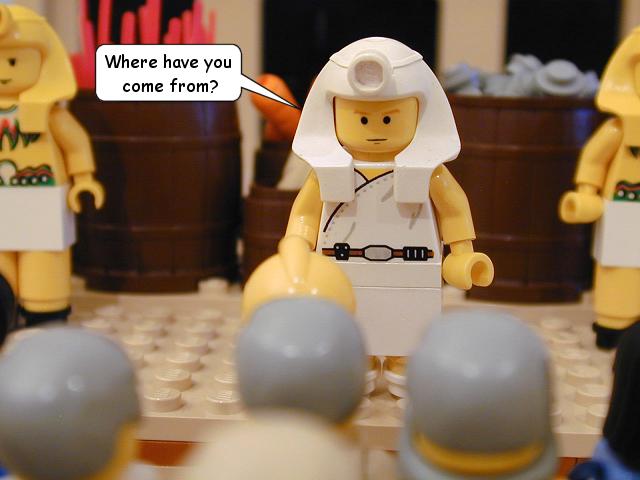
    It’s hard to imagine what was going through Joseph’s mind. For 40 years he imagined this moment — He saw his brothers. (Reread Genesis 42, it’s fascinating.) When he was just a teenager these brothers staged his death, sold him to some travelers as a slave, and lied to their father about his disappearance.

    • For 40 years his brothers owned the secret.
    • For 40 years Joseph wondered what he might do if he saw them again.

    And here they were. Penniless and in desperate need of food. And here was Joseph. The man with the power to silently execute judgement on them. They didn’t recognize him and no one in the room knew they were his brothers.

    He held all of the power over their life and death.

    And here was his moment of confrontation! He had the power to do whatever he wanted to them!

    Leading Without Anger

    Inside Joseph screamed this truth: They wanted to destroy me. They wanted me dead. They lied to our father.

    But. BUT. BUT…

    They didn’t have the power to harm me. They didn’t have the power to destroy me.

    And I do…. so what am I going to do?

    He lead without anger. He made the radical choice to not empower the voice of revenge. He made the choice to not execute judgement. He made the choice, instead, to give power to leading his people forward and towards a new life.

    We Have to Make This Choice

    Leading with and without anger looks the same. There is only a silent difference between driven by a dream and driven by anger. Only you will truly know. Like Joseph, leading without anger is a daily, intentional choice to make.

    In my own life I am very competitive. I’m driven by dreams and aspirations, some of which are decades old while others are brand new. There’s a fine line between wanting to do my very best, wanting to “win” versus wanting others to lose. [Sidenote: I’m a golfer. We view competition differently than football players. Wanting to win is not truly wanting others to lose. Golfers cheer for one another, wanting everyone to do their very best, while at the same time trying to win. That’s why Ernie Els consoled Adam Scott in the scorers tent at the British Open, he was happy he won but sad his friend lost by not playing his very best.]

    I do have things that could allow me to be driven by anger. (We all do.) There’s temptation there. There’s energy to be found in relying on anger to drive your dreams.

    But doing that give your adversaries, those who have sought to harm or even destroy your work, all the power. It’s leaning into the sin of the Garden instead of the redemptive hope found in Jesus.

    True power is not in the execution of revenge, it’s in having the opportunity for revenge but choosing redemption.

    “Do not be overcome with evil. But overcome evil with good.” 

    Romans 12:21

    Photo credit: The Brick Testament
  • Why big churches get bigger

    It’s been about a year since our family started attending Journey Community Church in La Mesa.

    For the past decade or so we had been small church people. Most of the congregations we’ve been a part of (and worked at) were a couple hundred people. But, for a number of reasons, we started attending at Journey last Spring.

    There are some obvious reasons people come to a bigger church… things like:

    • They do worship services really, really well. I can’t think of a time a technical issue has truly disrupted the flow of a service at Journey.
    • The preaching is always for the masses. I’m not sure why, but in smaller contexts the preaching has a tendency to respond to issues within the church a lot more than in a small context.
    • Programs. Programs. Programs. Dear Lord! There are programs for anything and everything at a big church. I’m waiting for Journey to start a class for how to start a class at Journey.
    • The disappearance factor is high. When you attend a church with a couple thousand people you can be as anonymous as you want. Plus, if you ever need anything— anything at all— it’s all right there at your disposal.
    • Big things are possible! When you have a big church with lots of hands available, you can pull off big huge thing after big huge thing. The crazy thing is that since there are so many people… pulling off something huge doesn’t exhaust the congregation in the way it would in a small church.

    I’m sure there are more, big obvious reasons why big churches grow. I don’t buy into the idea that God has blessed them more or that their staffs are better or anything like that. I know too many people to think that the case.

    But let me clue you in to the big one. One that actually drew us to Journey in the first place.

    Triangulation.

    People who study marketing and specifically those who study the art of sales, know that in order to make an impression on you about they need to triangulate. You need to see a message about that product in 3 different modes. You need to hear about Geico on the radio. Then you need to see a Facebook ad. Then you need to see their gecko on the side of a blimp at a sporting event. When you are looking for car insurance… everywhere you look you see Geico. So you call.

    The same factor is super high at a big church. 

    One reason people end up at big churches is the triangulation of connection. It’s easy to find other people or have a social connection to people in a bigger church even if you never meet them at the church. You just start bumping into them all over. Even when you meet a person whose sister goes to Journey, that makes an impression.

    Think about the social connection you make with any stranger… When you meet someone out in the community we each have an innate desire to seek social connection with them. There is always a little dance that happens when two people are getting to know one another. They shake hands or start chit chatting in line at the store, and they start dancing for a social connection. Sometimes its as simple as watching the same TV show. But you’d be surprised how often a church person will find another church person or a person through their church network will be connected to someone they meet in the community.

    Part of what is happening that makes a place like Journey grow is that it’s very easy to find little points of social connections.For us, it felt like all of the people in our lives had a connection at Journey. We joked about it feeling like a gravitational pull was dragging us there because everyone we knew went there.

    That’s triangulation in action. When you start to use the church as a place of social connection– that’s a powerful draw and it can overcome almost anything. 

    Photo credit: Dave Gray via Flickr (Creative Commons)