Category: hmm… thoughts

  • Is what the new who?

    who-a-what

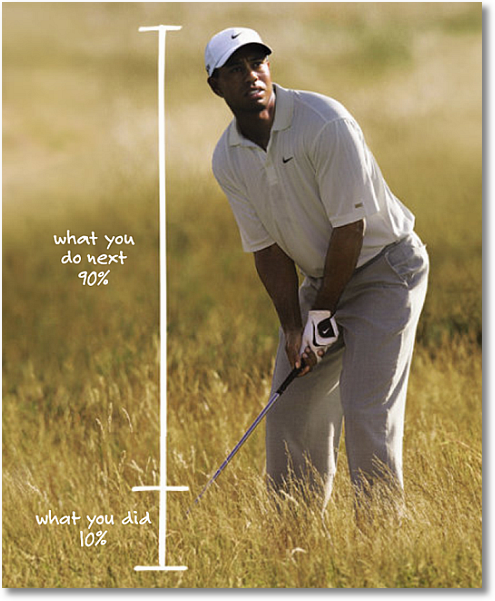
    The last three or four years has seen a major technological leap that no one can ignore. With the rise of social media (marketing, tools, networking) there are a new set of rules and people who once found it impossible to become known for their competence now have a place to elevate above the people who are known for who they are. All of a sudden Robin Williams has to wonder… “if I’m not on Twitter, do I stop being a celebrity?” The mocking of the nerds on the internet stopped being quite so funny in the last 18 months, didn’t it?

    This isn’t the first time that the who apple cart has been upset by the what. The what’s of the industrial revolution become the who’s to take out when the automobile revolution took over. The who’s of the auto age where taken out by the what’s of the technology boom in the 1970’s. The who’s of the technology boom were taken out by the what’s of the software developers. On and on it goes. The what’s replace the who’s to become the who’s that’s taken out by the next round of what’s. The who’s desperately hold on, invest their billions to say “who matters” and “who’s still have it” while the what’s laugh as the transfer of wealth once again takes over.

    The obvious example of this is Microsoft’s Bing vs. Google. Microsoft is the who of the software boom. For 20+ years no one could touch Bill Gates. But now, next to the innovators at rivals like Apple, Google, Facebook, and even Twitter… Microsoft looks like the Ford, GM, and Chrysler at a congressional hearing. Microsoft is spending billions of dollars on Bing and all it does is remind people how much they love Google. People used to dream of working at Microsoft. Now if an up-and-coming software engineer, UI developer, or otherwise tech talent announces they are going to Microsoft… there is a certain snicker that goes around. “Couldn’t get a job at Facebook, eh?” Why is that? Unless you are turning Microsoft around, you can’t become a who by being a what at Microsoft.

    Being a what gives me hope. Let’s face it, I’m not a who. There aren’t many who’s out there. But I know that if I get really good at being a what, there’s hope. There’s opportunity for what’s. We’re in a transition time that comes around only so often when the apple cart is upset. And if you’re a pretty good what at what is new, you’ll do OK.

    Something even more encouraging. There isn’t just one set of who’s vs. what’s anymore. Right now there are so many who’s that the opportunities are unparalleled. You could become the next who of ____ if you make your what better than their what.

    More encouraging than that? In a transition time between who and what, money isn’t that important. Innovation is now cheaper than ever before. Becoming a what is easier. Becoming a what takes less time. And the amount of time you need to invest to become known as a what gets shorter every day.

    Tired of working for the who? Become a what. Worst case scenario… there’s always good work in convincing a who that they can become a what again.

  • What You Water Grows

    photo

    I took this picture in my backyard this morning. It illustrates this thought perfectly. In the middle is our healthy orange tree, to it’s left is a healthy grapefruit tree, if you could see more you’d see another orange tree, a couple peach trees, a mandarin, and lemon tree. And everything else is dirt.

    Being a Midwest boy now living in an coastal arid climate I’ve been fascinated by this simple principle: What you water grows. The rest of our backyard is dirt or dead, dried up weeds. Where I grew up this same effect would be impossible. Weekly rains would ensure that the dirt would become covered in in vegetation. But in our climate, if you don’t water an area… nothing will grow.

    In your life, what you water grows

    Followers of Jesus know this to be true in matters of the heart as well. Jesus said  this, “If anyone is thirsty, let him come to me and drink. Whoever believes in me, as the Scripture has said, streams of living water will flow from within him.” By this he meant the Spirit, whom those who believed in him were later to receive. Up to that time the Spirit had not been given, since Jesus had not yet been glorified.We know that God’s written word is living water to our souls.” Practically speaking, those who spend time contemplating and meditating on Scripture grow– while those who do not, don’t grow. Later Jesus taught his followers why they needed to stay connected to the vine. [fellow believers] “I am the vine; you are the branches. If a man remains in me and I in him, he will bear much fruit; apart from me you can do nothing.” The vine is the source of water and nutrients… stay connected to the vine and you live. Disconnect and you die.

    Are you watering the right things?

    In an arid climate water is a precious commodity. Here in San Diego we live under water restrictions as our fresh water isn’t natural to the area. It is all pumped in from other places! (We have a rainy season [Winter] and a dry season. [Spring, Summer, Fall]) We all have to make choices with the water that we have… what will we allow to grow and what will we allow to die? The same is true in our lives. Professionally, we know we can’t do it all… so what will we give water and see thrive and what will we not water and see die? In our families, we must chose things to water and things to dry out. In our ministries, we must chose which programs and people to water and which to allow to not grow or even willow. Individual believers chose, do I want to be connected to the vine… the source of nutrients and water… or do I want my faith to die by not connecting with other Christians?

    This water thing is pretty deep. After all, the Mediterranean climate is a coastal desert as well. It all ties into the parable of the talents as well, doesn’t it? We’re all given things to manage. And part of being a good manager is deciding what to water and what to let die. You can’t do it all! Chose wisely and water the right things.

  • Gran Torino Discussion Questions

    Basic CMYKWalt Kowalski is a widower who holds onto his prejudices despite the changes in his Michigan neighborhood and the world around him. Kowalski is a grumpy, tough-minded, unhappy an old man, who can’t get along with either his kids or his neighbors, a Korean War veteran whose prize possession is a 1972 Gran Torino he keeps in mint condition. When his neighbor Thao, a young Hmong teenager under pressure from his gang member cousin, tries to steal his Gran Torino, Kowalski sets out to reform the youth. Drawn against his will into the life of Thao’s family, Kowalski is soon taking steps to protect them from the gangs that infest their neighborhood. link

    Discussion Questions:

    – Why do you think Kowalski stayed in his neighborhood when all of his neighbors had moved to the suburbs?

    – Perhaps the hardest part to stomach of Gran Torino is the repeated use of racial slurs. Do you think Kowalski was a racist?

    – The miscommunication between Kowalski and his sons was epic. Based on what is presented in the movie, what would be some steps the son could have taken to re-open the lines of communication?

    – What changed Kowalski’s opinion of his Hmong neighbors?

    – When confronted with the priest, Kowalski closed the door on his because he was too young to comprehend what Kowalski was going through. Should the priest have honored his parishner’s wishes, tried harder, or done the same as was presented in the movie?

    – Kowalski fathered Thao in a way that he didn’t his own children. Why?

    – The Hmong people celebrated Kowalski as a hero. Was he a hero, a vigilante, or a nutcase?

    – Which character was more righteous, Kowalski or the priest?

    – When Kowalski finally goes to confession, he confesses that he kissed a woman at a cocktail party and that he wasn’t a good father. Do you think there were other burdens that he needed to confess?

    – Kowalski’s actions helped one family in a tough neighborhood. What action could you take to make a change in your nieghborhood?

    – Ultimately, Kowalski embraced his Hmong neighbors, mentored the boy next store, and helped them seek justice where justice could not be found. What does that teach us about our individual responsibilities in the hood we live in?

    – Which character represented the person you’d like to be. Why?

    – Which character exhibited the type of faith you’d like to exhibit in your life?

    – What do you think happened in the neighborhood after the story ends?

  • Humans and the pentatonic scale

    This absolutely blew my mind. Check out what Bobby can do via audience participation. Not only is this facinating showmanship, it’s fascinating science. How does everyone in the audience just know what to do?

    World Science Festival 2009: Bobby McFerrin Demonstrates the Power of the Pentatonic Scale from World Science Festival on Vimeo.

    HT to Cory

  • So, you’re done?

    At lunch yesterday 3 guys sat around the table getting to know one another better. In the course of the conversation we chatted about kids. Each man had two. The guy sitting next to me affirmed that two was enough for his family and barring a medical miracle, they were done. The guy across the table said that he and his wife hoped for one more. When they found out I had a 5 (Paul is 6 next Saturday) and an 8 year old, they said… “So, you’re done, eh?

    I have to be honest. Now that Paul is almost 6 it’s at that point where— adding  a third would be like starting a second family. At the same time Kristen and I look at each other and joke about a third child all the time. Truth on that is, we usually say it in the most sarcastic way possible when Megan or Paul is having “a moment.” You know, the type of moment so horrific that you label it as birth control. You know, temper tantrums at the Capital building, or in Battery Park, or the one in a hotel recently in which I was certain someone would call the cops.

    There’s a more personal angle to this. It’s hard for me to acknowledge that I’m somehow old enough to be done having kids! The crazy thing is that some of the people I went to high school think that 33 is the time they should get married and start a family. When people find out Kristen and I met when we were 18, got married at 21, and had Megan at 24, they feel uneasy about that. They say, “Oh, you were just babies!” We look at our peers and think, “You waited until your 30’s to get married? You’re so old!

    9 out of 10 times I just roll with the joke that Kristen and I got married as children. But every time that comes up I am overcome with self-righteousness… No, we were the normal ones. No, we were the ones making the good decisions at 19, 20, and 21. No, we were the ones who didn’t buy into the middle class notion that you have to be a certain age to fall in love or get married. No, we were the responsible ones while all of our classmates were focused on keggers and messy college relationships which required years of recovery and regret. Indeed, we were young and naive about life. But who isn’t? How dare people tell us we were immature to marry at 21! [Steps off soapbox, hands microphone back to street preacher and walks away.]

    I’ve done enough pre-marital counseling to know tt doesn’t matter what age you get married, you’re always ignorant about what you’re getting into!

    Something is completely broken in our culture when we begin labeling adults (18-22) as too young to be adults. It’s jacked up to say people old enough to serve in the military are too young to be in adult relationships or make adult decisions. What’s next? 30 is too young to get married and have kids? What else will our culture throw in the way?

    Why is it that middle class white people consider 24 to be on the young side to have kids? [Physically, that’s prime time.] And yet people in the city would say… “Wow, you were 24 when you had your first kid?” The answer is culture. In affluence we keep our children immature a lot longer. (Just look at the super affluent British royal family, Prince Charles still acts very much like a 17 year old, doesn’t he?) When you are affluent you don’t have to grow up because you don’t have to feed yourself, clothe yourself, or make enough money to pay the bills. Part of what matured Kristen and I in our early 20’s was precisely that. We needed real jobs to pay real bills. We had responsibilities. We made a lifestyle choice that kept us out of clubs. A few years into marriage we knew we made enough money and were stable enough to start a family. In essense, we were not developmentally delayed like our affluent classmates.

    So, does 33 with a 6 and 8 year old mean we’re “done” having kids? It kind of looks that way doesn’t it?. I know I don’t want to go back to baby seats, puke, dirty diapers, and finding half-eaten Cheerios tucked behind the couch! Maybe we should just focus now, in our old age, on helping our friends with their babies?


  • Balancing an attack-oriented life

    In this world there are people who attack life and people in which life attacks them. It’s a rational choice that becomes habitual and sets the course for your story. I am a person who attacks life. Most of the people reading my blog are people who attack life! Early in my Christian life I memorized a verse and this phrase stuck out to me, “make the most of every opportunity.” That struck me because I never thought Christians could be aggressive, but Paul makes a very aggressive statement!

    I just got back a 24 hour trip to Michigan. I am exhausted and pumped up at the same time! Basically, 12 months ago I did the same trip in opposite fashion so it’s not like I’ve never done it before. The truth is I’ve done that type of trip many times before. For example in October 2001, I flew from Chicago to Heidelberg, Germany for a five day trip in which I spoke 10 times. The mindset of, “I’m going there to do business and than coming home” is not new to me.

    The flip side of this is the notion of living a balanced life. A key reason we want to live a balanced life is sustainability. Which begs the question, “How do you live an attack-oriented life” It seems anti-balanced life to have some of your calendar year balance between family, friends, service, and work while other– big chunks– of your life is spent out attacking a project.

    I think its easy to over-compensate on both fronts. You meet people on the road who attack life too much. And you meet people at home who play the role of the attacked. The key is determining which things are opportunities that you need to make the most of because they advance your life’s purpose (whoppertunities) and which are just plain-old opportunities that will gain you some more income, notoriety, or just be an item to check off your list. And then there are things that masquerade as opportunities but are really distractions.

    In other words, part of being a leader is discerning which things are opportunities, whoppertunities, or distractions.

    Whoppertunities don’t come along often and they are worth dropping everything for. Opportunities come along fairly often and you need to take the time to discern if they are worth pursuing towards your stated goals. And ones that aren’t worth pursuing you need to label (at least mentally) as distractions.

    You ability to do that determines whether you can balance it all. Invest in too many distractions and you’ll soon be too busy to see whoppertunities or even opportunities you need to jump on.

    My stated goal is to change the world in which I live. By very nature that is an attack-oriented life as the only type of change the world does on its own is negative, entropy-driven change. Change for the betterment of an ecosystem is hard work. But it is never impossible!

    My advice to anyone who wants to change the world in which they live is to not give into the notion that you can’t be both balanced and driven by your work. That’s plain nonsense.

  • Ah, ministry to students…

    Before Thursday night, I had spoken to exactly zero groups of high school or middle school students in the past school year. None. Zip. Zilch. For the most past that was intentional. I needed a break.That part of my life felt tired when I left Romeo. The grind of preparing 1-2 talks per week, year after year, really does wear you down. I was also feeling the type of exhaustion that lead me to say repeatedly, “I’m qualified to lead and teach, just too tired.” I’ve been especially thankful to the leadership of our church for being patient with me. They’ve allowed me the freedom to rest!

    So when Chris from Harbor asked me to host and teach his group of summer interns I was a little apprehensive. I always felt rusty after taking a vacation… how would I feel after taking a year off? Plus, I didn’t know any of the students so I couldn’t lean on relationship. Ah, the excuses I had created in my mind for failure!

    It all went great. Kristen completely rocked the hosting part. She made lasagna and salad… keeping it simple always seems to work best. The house was ready, the kids seemed to have a good time. 25 smiling faces when they came, while they were here, and when they left. Success! The only little bump was Stoney getting frisky with some guests. But that’s completely in character for him! The talk part went pretty smooth. If I had practiced a couple of times I wouldn’t have needed my notes at all and I would have had a better feel for some of the material. But I think I maintained their attention and the whole thing was pretty fun. (I was relieved that they actually did the discussion part… I never know how that’ll go.) Hopefully, I gave them something memorable, something worth thinking about, and something applicable to their service when they lead camp next week.

    As I’ve shared, the last year has really jacked with my identity in a good way. Switching from a full time role where my ministry was primarily to students and their parents to a role where I interact with a lot of youth leaders but not a lot of students… it’s given me a chance to think a lot about who I really am in Christ. Am I my work? Is my ministry outside the home more important than inside? What is it like to not be labeled “pastor” anymore? One thing Thursday night reminded me of… I was made to work with high school students. I can do a lot of other things at a high competency. And for this season of my life I am perfectly comfortable not working with high school students vocationally. Yet, this was a reminder that I need to be more intentional and giving in volunteering my service to high schoolers. I’ve got to figure that part. Reality tells me that I don’t have oodles of time. But reality also  tells me that something will be incomplete if I don’t find 3-4 hours per week to do something with high school students.

    That’s what I’m thinking about this Saturday morning. Now off to the beach so Stoney can hump his own kind.

  • Youth Worker Book of Hope ON SALE NOW!

    At work today Mandy handed me an envelope from Zondervan. Holding it, I could feel a lump in it. As I opened it I joked to myself, “Geez, are they paying me in cash these days?” To my delight it was not a bundle of cash, it was my copy of The Youth Worker Book of Hope.

    Out of pure selfishness, I flipped to the table of contents and scanned for my chapter. Sure enough, on page 99 my name is in black and white. For a blogger that is a funny thing to see. I’m used to seeing my name on a computer screen… but printed in a book was a tactile experience I wasn’t quite prepared for. It was emotional and fun. I then dutifully read my chapter as if I hadn’t read it like 20 times before.

    When this project was originally pitched to me I was literally and figuratively thousands of miles from working at YS. As I’ve blogged about before I didn’t have a strong desire to be a part of a book project. When I walk into a bookstore I love seeing books written by people I know, but for whatever reason I’ve never had a strong desire to walk into a bookstore and find a title with my name on it. While my default answer about any book is always “no,” this project was on a topic near and dear to me– encouraging youth workers faced with crisis. That’s what my chapter is about… how do you handle a crisis in leadership in youth ministry. My working title was “what do you do when the crap hits the fan?” How do you deal with being dealt a bad deck of cards as a leader? I’ve been dealt some fun cards… and I jumped on board with this project because I felt like I had a thing or two to help others.

    Of course, the book isn’t about me. It’s about hope. There are lots of chapters and lots of authors sharing stories of how they found hope in hopeless situations. In that regard I think the book appeals to everyone, even people who don’t work at churches. That’s why I want to encourage you to buy the book. (Like right now! It’s only $11.04, you can do it.) It’s the type of book you want to have on your bookshelf for when hard times hit. It’s the type of book you’ll want to hand to a discouraged friend. It’s the type of book you may even want to come back to. Or even reach out and connect with an author.

    Youth Worker Book of Hope

  • Facebook Morphs Blogging Again

    adam-head-09-100px-squareBlogging, by very nature, is a fluid art. Just a few years ago I thought I was pretty slick because I could journal on my computer using Microsoft Word. Flash forward a few years, to around 2000, and I learned that I could take those Word documents and convert them to webpages. It was cumbersome and I didn’t do it very often… but it was awesome. Then Blogger.com took “the web log” out of the hands of the HTML king and made blogging accessible to just about anyone willing to give it a shot. I was fasinated that I could link to friends blogs and that we could leave comments for one anothers posts. A few years later, 2005-2006 and Typepad and WordPress suddenly made it possible for blogs to live on their own domain easily.

    In 2007-2008, blogging became all about search and syndication. I started seeing my stats level off while I could tell my reach greatly extended. RSS (really simple syndication) made my content portable and SEO (search engine optimization) got my blog noticed high in Google search results.

    facebook2009 has seen blogging morph again. Facebook’s power in the adult demographic has brought blog syndication to a whole new level. Now my posts appear on my Facebook friend’s timeline, so a whole new audience of people has been added to the pool of people who read my blog. When they comment that ends up on their friends timeline, which greatly expands the pool of people reading and commenting on my stuff. (Though there isn’t yet a matrix for this so that’s a bit frustrating.) In the past few months I’ve run into tons of people who read my blog and I have no idea who they are or how they got here… but it’s awesome!

    More noticeably, in the past few months I’ve noticed a steep uptick in folks who read my blog posts exclusively on Facebook and comment there as well. Often times, I’m left with a post which generates two separate conversations. Which is really cool! On top of that, Twitter has further expanded my blogs discussion and reach. While there is some overlap, Twitter is mostly a different audience for my content.

    Wagon_WheelGoing forward, adammclane.com is now and will continue to be the hub of my online presence. It feeds RSS, search results, Facebook, and Twitter. I think of the personal blog as the engine that powers everything else. That said, my recommendation for beginners has begun to morph. You can certainly do the same thing with a WordPress.com blog (free) or even a Facebook account.

    And since I know about 75% of the people who are reading this post will never make it to adammclane.com, here are some ways we can connect. We can be Facebook friends. You can follow me on Twitter. We can pool links on delicious. You can be a contact on Flickr. You can subscribe to my blog via RSS. But you can’t be my Myspace friend. That’s so 2005.