• You Need a Personal Philosophy of Recreation

    You Need a Personal Philosophy of Recreation

    We use words all the time that we’ve not thought about the meaning, intent of the word itself.

    And my experience over the past 2 weeks of vacation proved something to me afresh: A lot of people have no idea what recreation means… they don’t have a personal understanding or philosophy of recreation. 

    Recreation – activity done for enjoyment when one is not working.

    The process of being created again.

    Synonyms – pleasure, leisure, relaxation, fun, enjoyment, entertainment, amusement; play, sport;

    Antonyms – work
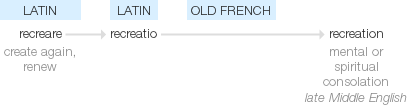
    recreation-defined

    Here’s something that’s very interesting to me. Despite a culture that celebrates, supports, and invests heavily recreational activity, according to Google the usage of the word “recreation” is on the decline.
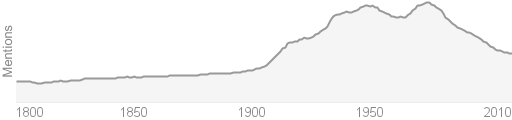
    recreation-usage-over-time

    source


    What’s Recreational to Me?

    As a Christian there’s no way to argue that recreation is not part of God’s plan for a healthy life.By the seventh day God had finished the work he had been doing; so on the seventh day he rested from all his work. Then God blessed the seventh day and made it holy, because on it he rested from all the work of creating that he had done.” (Genesis 2:2-3) When God said He “made it holy” that means that one day per week… the seventh day we refer to as Sabbath… is set apart from all the others as a day of rest– to stop creating and to re-create. Notice that the Sabbath day in Genesis 2 wasn’t set aside for worship… it was set aside for rest

    So when it comes to the question, “What’s recreation to me?” it is defined first as something set apart from my day-to-day life and second as something that isn’t work.

    For me, most recreation / Sabbath activities / vacation are loosely boundaried activities. My ministry life is highly integrated with my personal life. For instance, this blog is part ministry and part hobby. Sometimes writing a blog post is absolutely work and other times it is absolutely hobby. The difference is nuanced, I suppose only I know the difference between something written for fun or as a release and something that’s written because I have to do it for work. Another example would be my social media usage. Sure, there are definitely times when I post things for work on various social media accounts, both personal and professional. So does that mean that if I’m on vacation I can’t post a picture on Instagram to share something with my friends or just to document something cool? Again, that’s nuanced because so many of my friends are also part of my ministry. (work) It’s what happens inside of me that’s set apart or holy.

    That doesn’t mean I don’t have strictly boundaried times. One boundary I have for myself on vacation is that I don’t take a computer. One of the boundaries I set-up for myself this year was that the first half of my vacation I kept my phone in the glove box of the car rather than my pocket. We also asked the kids to leave their electronics in the car so that when we were camping… we were camping.

    On a smaller scale, recreation can be taking the dog for a walk or heading to the beach on a Sunday to boogie board or go to the zoo. It can be sitting down on a Saturday and binge watching Deadliest Catch or meeting a friend for a beer or taking my kids to an Aztec game. All of those are decidedly non-work.

    Recreation and Being a Husband/Dad

    One thing that we’ve discussed in our house over the last year is that different people in our family recreate in different ways. I travel a lot, I go a lot of places, a lot of my work is the action of go-ing. So the most relaxing thing I can do is not go anywhere. I long for a small-life vacation where we don’t do much, where the biggest thing we do is make a move from the beach to the hot tub or we’re just too lazy to make dinner.

    But my family, Kristen specifically, recreates best by doing stuff. They want to go to somewhere new and see everything. They relax while I drive. 

    An essential part of having a personal philosophy of recreation is having open conversations about what each person finds recreational. (Harder for little kids to articulate, but Megan and Paul can tell us what they find relaxing versus what they find boring versus what they find “work.”) But having those conversations has helped us create good compromise. For instance, we spent 5 days in Yosemite with a daily activity of going somewhere. But we also spent 5 days in Cayucos doing nothing. One of the most relaxing things, for me, about our beach vacation was that I didn’t drive for a few days. The minivan didn’t move and that was relaxing to me.

    5 Steps to Creating a Philosophy of Recreation

    So I’ve made the case. I think it’s useful to take a little time to actually write out a personal philosophy of recreation. Heck, it might be the most soul-saving thing you do in the next year. Here’s how I’d recommend getting started.

    1. Start with creating a definition of recreation. What is it? What is it to you? Specifically, what activities do you find recreational? Are there any thing that some people find recreational and you don’t? (example: I don’t really find going to the movies recreational because it’s expensive… but watching a game on TV? Totally recreational.)
    2. Next, define some boundaries for recreation. Here’s a pro tip: You won’t recreate well if you just try to plug it into the white, empty space on your calendar. If you know you suck at recreation than I’d encourage you to create an appointment 1-2 evenings during the week and a specific 4-6 hour block of time over the weekend. I actually think you need boundaried space for recreation every day in short bursts, one dedicated time during a work-week, and at least a half-day over the weekend… plus a couple really good vacations per year.
    3. Experiment a little to see what works for you. Look, until you’ve tried a few things you might not really know what works for you. Even forcing yourself into something you might ultimately hate isn’t bad, it’s just an experiment. Play with the idea of recreation… and I guarantee that your idea of “what’s restful” will change over time. We used to think backpacking was recreational. And right now? The idea of dragging myself from campsite to campsite sounds like way too much work. Stuff changes, keep experimenting.
    4. Take the time to write it down. Way back in my undergrad days I actually had to write a paper called my “Philosophy of Recreation.” I thought it was stupid to have to write it out. But you know what? I’ve referred back to it, revised it, and re-written it a couple of times. I’ve found having it in writing really helps me… primarily because I acknowledge that recreation is part of God’s plan for me.
    5. Verbalize it with the people you love. Kristen and I have been married 18 years and it’s only in the past 4-5 years that we’ve taken the time to really articulate to one another what we find relaxing. We can laugh about our differences in vacation styles but we went on some vacations where she was way too bored by my sitting by the pool for days and I was way too stressed out by driving all over the place exploring. It wasn’t until we started to talk about it that we’ve started to create better space for one another inside of our recreation. (And outside of vacation, we have some shared recreational activities… but most are individual, stuff we do with friends or solo.)

    I’d love to hear about your philosophy of recreation in the comments. How has this helped you in your life? 
  • Be Less Careful

    Be Less Careful

    “Be careful.” 

    I say this to my kids all the time. I cringe a little each time I say it. And yet I can’t stop myself. It just happens.

    Paul jumps up on a banister to slide down 30 feet with concrete in every direction.

    Be careful!

    Jackson chases after his 6-year old cousin at Glacier Point, rambling up a big piece of granite after her.

    Be careful! 

    Megan goes for a bike ride in our neighborhood, a place we’ve lived for 6 years.

    Be careful! 

    Without even thinking about it, without even realizing it, heck– without even wanting to: I say it over and over again. Be careful! Jackson, our 3 year old, will look at me with his gigantic blue eyes when he’s doing something cool and say with a dagger, “I’m being careful, daddy.”

    Ugh.

    Why do I do that? Why do I put that “be careful” thing on them? That’s not really who I am. And it’s certainly not what I want my kids thinking their primary directive is. Sure, I don’t want them to get hurt. But I also hate that I must say it so much that my kids know to look at me and say, “I’m being careful, daddy.”

    Be Less Careful

    Risk aversion isn’t just about managing to keep my kids safe. A “be careful” mentality can get lodged in your soul. It sucks the life out of you. It lies to you. And it turns a life of boldly walking in faith into a life with a faith-flavored cologne sprayed on when needed.

    If I want the people in my life to see anything from me it’s that I live a life of walking in faith, not a life walking in risk aversion.

    Culture tells me that I need to manage risk. The New Testament is full of stories of men and women who lived out a faith free of risk aversion.

    I’ll pick the New Testament lifestyle all day, every day.

    A Commitment to Risk

    A couple weeks back I wrote about turning thirty-eight. I don’t know what it is about this age, but I think it’s related to our kids rounding the corner into adolescence, my marriage closer to 20-years than any semblance of being a “newlywed,” and our small business growing… I now have a (new) natural tendency to be protective.

    As I reflected on this last week I realized that this innate desire to protect had impacted important decisions about my family, what I write here on the blog, stuff that we’re doing at work, on and on.

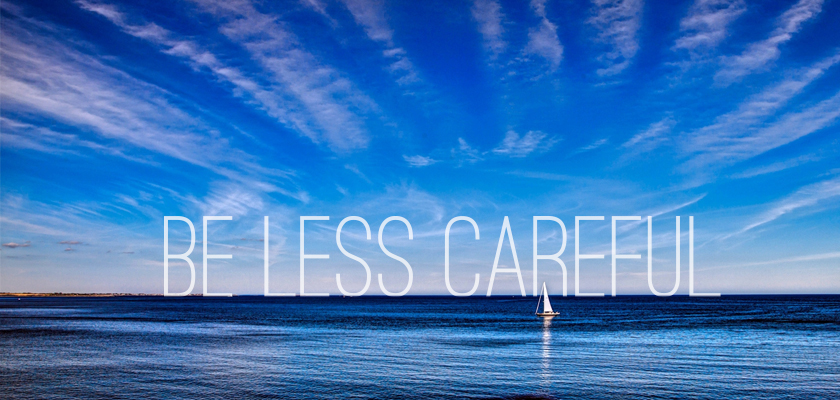
    Fear of failure or what people will think mixed with a tendency to protect what I have from what I fear could happen to it is like having an ocean worthy sailboat but being afraid to sail it on the open ocean. There’s no sense in having these things unless you really allow them to flourish where they are supposed to go.Putting that into Christianese… risk aversion is a perverted view of stewardship. 

    So that’s my commitment to myself: Be less careful.

    And that’s my encouragement to you: Take the time to examine your life and separate “be careful” from “be faithful.

    Photo credit: Sailboat by Cindy Costa via Flickr (Creative Commons)
  • Can You Vacate?

    Can You Vacate?

    Vacation – the state of vacating.

    The suffix turns the verb vacate into a process, state, or condition.

    The verb vacate comes from the Latin vac?tus, past participle of vac?re, to be empty. 

    About 8 months ago I read an article by Tim Maurer about his justification of a 10-day vacation instead of a 7 day vacation. Here are his points, all of which hit home:

    1. A 10-Day Vacation Gives You Time to Surrender, to Capitulate, and to Truly Vacate
    2. Travel Consumes a Lesser Percentage of Your Total Vacation Time
    3. It Opens the Door to a Vacation with Multiple Stops
    4. You’re Gone Long Enough That You’re Forced to Off-Load Your Duties at Work
    5. You’re Gone Long Enough That You’re Forced to Budget Financially
    6. It Leaves Sufficient Time for the Creation of Memories Through Experienceand the Catharsis of Do-Nothing Relaxation

    All of those resonated with me. All. of. them. 

    So, almost on a whim, Kristen and I booked a 10-day vacation we’re jokingly calling “The Surf & Turf Vacation.” We’re leaving tomorrow to spend 5-days in Yosemite National Park, camping with my cousins Trent & Marisa and their kids. After that we’re going to spend 5-days in a tiny little California beach town called Cayucos in a beach house we found on Airbnb.

    So that’s the plan.

    August through November is going to be a sprint. We have lots and lots of awesome stuff to do at the Cartel and to get it all done with the right attitude the most efficient thing I can do is a good & proper vacation.

    So it’s 10-days away from home. No computer. I’m locking up my iPhone in the van. No blogging. No social media-ing. No texting. No meetings or troubleshooting. We’ve got a housesitter to take care of the house, work stuff will wait, my job is to play with my kids, hang with my wife, read some fiction books… watch some movies… and vacate. (Loving that word!)

    Question: How good are you at vacating?


  • You Had Vision for Me

    You Had Vision for Me

    Last month I turned 38. What? Thirty-eight. XXXVIII.

    Thurdy-ate.

    If you know me well you know I’m not much of a personal birthday celebrator. One of the most fun things I’ve done in the past five years was learn how to hide my birth date from Facebook so I didn’t have 200 people wishing me happy birthday. Fact is, I just don’t care about my birthday much. I celebrated this year with an appointment at the Passport Office.

    Yeah, I’m 38. Big deal. Go to work.

    Get on with it.

    The Only Thing That Works For Me…

    Adult life began for me around 20 years ago. A couple of weeks before my eighteenth birthday, Mid-May 1994, I moved out of my dad’s house in Mishawaka, Indiana and into a college dorm at Moody in Chicago with two strangers. High school graduation was three weeks away. I’d never missed school for more than a day or two in 13 years of school, but I had an opportunity to get a full-time job painting dorm rooms that’d help me pay for college so I took it. My teachers were awesome about it. I didn’t attend class the last three weeks of school and no one reported me absent. I didn’t take finals but got straight A’s.

    After my first day of work I walked over to Cosmopolitan Bank & Trust on Clark Street and opened a checking account. If college were going to happen, I was going to make it happen. I opened my account with $50. On August 15th I had to write Moody a big check and the only one who was going to make that happen was me.

    Two weeks later, when I got my first paycheck I saw that after taxes 40 hours per week of painting at $4.80 just wasn’t going to be enough to pay for college… so I walked around the Gold Coast for a few hours looking for another job. That afternoon I walked into a small ice cream shop on Oak Street, met the owner, and agreed that I’d start working 4 PM to close 6 days per week.

    8 hours x $4.80 = $38.40 or $192 per week before taxes.

    8 hours x $6.50 = $52 or $312 per week before taxes.

    After taxes and $10 per week for food that meant I put away about $400 per week from June until mid-August when classes started, then I cut back from two full-time jobs to just one because of classes so I could pay my Winter school bill.

    In those 12 weeks I learned some things:

    • I can make my way.
    • The only money I appreciate is money I’ve earned.
    • God may be my provider, but make no bones about it, that provision wasn’t a gift… it’s earned.
    • 80 hours of work per week isn’t bad. 96 is way better because of the overtime.

    Looking back, the biggest thing I learned in that first summer as an adult was this: The only thing that works for me is hard work. 

    There’s No Shame in Confidence

    Twenty years later I can look back at that period with fondness. I don’t have rose-colored lenses about it. I remember how hard it was because it’s not like today is a whole lot easier. The Summer of 1994 was just the first round, a foreshadowing of what was to come. (2001-2002 was far more difficult.)

    In that moment— it was exhilarating. There’s no finer feeling than walking up to a window and writing a check to pay for your education.

    I remember the day I went to pay for my first semester. I woke up early, showered, and shaved. I put on a nice shirt. I was nervous. I waited in line, took my turn at the window, handed the lady my bill and my check, and I forced myself to hold it together.

    She stamped my bill “paid” and handed it back to me. I put it into my checkbook, cool. Then I calmly walked over to the elevator bank, hit the button, and waited.

    When the door closed on that elevator I celebrated.

    I don’t mean a fist pump and a head nod. Or a tear of gratitude or a quiet prayer of thanksgiving.

    I’m talking spike the football, full Richard Sherman mode

    • Don’t doubt me.
    • Don’t tell me what I can’t do.
    • Don’t tell me I don’t have what it takes.

    Yes… without a doubt… I was laughing in the face of doubters. I heard the murmurs. I saw the looks. And so walking into that office and writing that check and seeing that word “paid” on my bill was proof to me. The only thing that works for me is hard work. 

    In that moment I didn’t just prove people wrong, I proved something to myself. 

    And I wanted to do it again. I had to. And I did… I’ve paid my own bills and earned my way since that day.

    Over the years I’ve been told some people think I’m arrogant. Or a little too confident for a Christian leader. I’ve been told I can be cocky.

    Well, conversely, over the years I’ve met a lot of people who are soft. The simple fact is I don’t have as much respect for someone who had stuff handed to them that I do for people who earned it. Why? Because that’s where I’ve come from. That’s my reality. Mommy and daddy didn’t write checks for me… I had to write checks for myself. I think that’s why friends like Andy Marin and I get along so well. Yup, we’ve accomplished some things. But no one gave us anything. We made it happen. Team Hustle, baby.  And when the rewards come they are just that much sweeter.

    To some people titles, responsibilities, and leadership roles are given. I tip my cap to them. I know that’s the way the world works. Some people get stuff handed to them because of who their parents are or who they know. That’s just not my world. Everything that has come to me as come because of hard work. No one gave me a title or responsibility or a leadership role.

    So you can look at me and say I’m arrogant or whatever. Truthfully, I’ve been called worse and probably deserved it.

    I just think that people who judge me without knowing me misread confidence for arrogance. 

    The Next Thirty-Eight Years

    I don’t think I’ve arrived. Pfft… what does “arrive” even mean for a blue collar kid? There’s no retirement party coming or 30 years of golf in my future. Eavesdrop on a walk with Kristen and I one evening and you’ll hear how aggressive I am about what we’re doing at the Cartel. We’ve hustled to get here. And we’re going to hustle to get where we’re going.

    The fact is that the first twenty years is only setting up the next 38.

    The challenge for the first twenty years has been… “How do we get from here… NOTHING… onto the pathway of the vision God laid on my heart as a broke, punk seventeen year old who figured out a way to get into Bible college?

    The challenge for the next season is getting other people on board. No coronations, no hand outs, no freebies… together we get there by hard work, the only thing that truly works for me.

    I’m thankful for the vision God had for me.

    All of the crap I went through, every hard day from there to here, makes sense.

    God’s vision for my life has been so much harder, more fun, and more rewarding than I could have ever figured out on my own.

    Photo Credit: Joe Dyndale via Flickr (Creative Commons)
  • Youth Ministry as an Advocate for Teenagers

    Youth Ministry as an Advocate for Teenagers

    “The administration needs to deport these families and children,” said Labrador, who appeared on the show [Meet the Press] after [DHS Security Secretary] Johnson. “I know it sounds harsh and difficult, but it’s better for the children. Send these children back in a humanitarian way. We can do it safely and efficiently.”

    Rep. Raul Labrador, Idaho (R) July 6th, 2014 – Source

    Right. We’re going to round up minors and deport them?

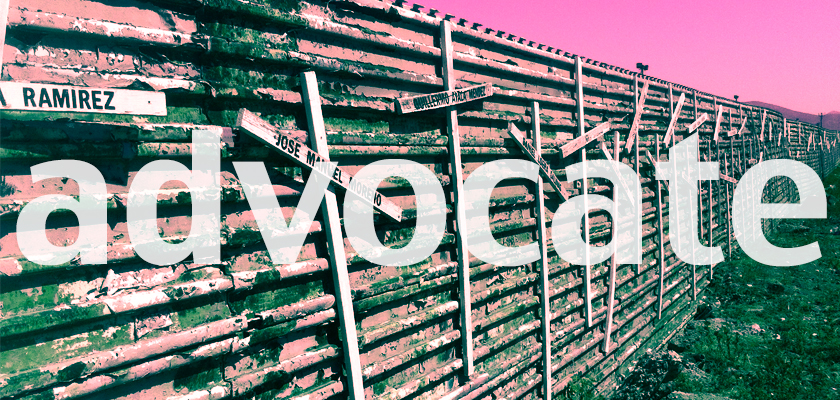
    The US government predicts that 90,000 unaccompanied migrant children will cross the US-Mexico border in fiscal year 2014, more than 10 times the number who crossed in 2011. Thousands more children have crossed with a parent, also an increase from previous years.

    Human Rights Watch, June 25th, 2014 – Source

    While the media wants to use this wave of border crossings as a political football about border security, no one seems to be asking the question, “Why are 90,000 kids risking their lives to cross the border?” (Fleeing violence? Hoping for protection as Dreamers? Better labor conditions?)

    These Aren’t Numbers. These Aren’t Problems. These Are People.

    I think it’s easy to get caught in the rhetoric and forget we’re talking about actual people. We all have opinions on contemporary issues like immigration. One thing I love about our country is that we’re all allowed to have an opinion, voice it, and be heard. Yet we also acknowledge that some folks, myself included, have an opinion informed not just by ideology but by relationship with people in our lives. After watching a documentary last weekend on immigration I posted on Facebook, “It’s impossible to love your neighbor and want them deported.” 

    For me, immigration policy isn’t just something I can debate as a thing, like say organic food policy. Immigration effects people in my life like neighbors, classmates of my kids, people at my church, etc. I want to see a pathway to citizenship created for the people in my life who really want and need it. (At the same time, I don’t pretend it’s a simple cut & dry issue either.)

    All of that was why I was so bummed out to see protestors lined up in Murietta, CA.

    I watched this and wondered, “What are those kids thinking?” Some are teenagers who might have some sense that they are merely pawns in a political thing. But younger children… do they really think people hate them?

    See, it’s easy to watch a news story and react. But let’s not forget that 90,000 minors crossing the border in 2014 isn’t a problem to be solved, these are real people coming here for real reasons. 

    I can’t help but look at this and scream: This is a youth ministry issue! Where are my friends in this? 

    Youth Ministry as an Advocate for Teenagers

    As a youth worker… all of this this leads to the broader question about the nature of our work:

    Do we exist as advocates for the students who attend our youth group or can youth workers see themselves in a broader sense, advocating for the teenagers in their community regardless of whether they attend youth group or not?

    Youth workers tend to be very insular. We think about the best strategies for engaging teenagers on a Sunday morning. We look for small group tips and tricks. We refine our upfront teaching. We read books and blogs about our job all the time. But maybe, just maybe… our biggest problem isn’t skill development it’s that the students in our lives don’t see as caring about the things they care about? Maybe they look at our ministry and think, “That’s Good News for Adam. But that’s not Good News for me.” 

    I see the protests in the CBS piece above and I also see the Christians, not covered in the news, who are on the opposite end of that. People who are bringing this out of rhetoric and into a reminder of the humanity of the situation.

    Sometimes we don’t need more bible studies, camps, small groups, and worship music. Sometimes… teenagers need to see youth workers sticking their neck out to advocate for the teenagers in their community with desperate needs for compassion, grace, and a roof over their head. 

  • Geek Class Rising

    Geek Class Rising

    Sitting 5 feet from me is my 10-year old son, Paul. He’s playing Minecraft. He’s really into Minecraft. He’ll play Minecraft until he goes to school. Then he’ll play in the afternoon when he gets home from school.

    (more…)

  • Spouses of Youth Workers

    Spouses of Youth Workers

    A couple weeks back I was waiting in the drive-thru at Starbucks.

    (more…)

  • Photos and Videos from Guatemala

    Photos and Videos from Guatemala

    I’m back home in San Diego now, arrived very late Friday night. While my bags are unpacked I’ll still have several more days of unpacking the experience. I’m finding myself going back to the trip journal to look for updates from the team. Yup, kind of jonesing to go back already. 

    Over the next couple of days I’ll finalize my photos and videos from the trip.

    Photos on Flickr

    Videos on YouTube

    Here’s a quick video I finalized yesterday, a time-lapse of the drive from Calderas back to Guatemala City.

  • Two Stories, One Story, Our Story

    Two Stories, One Story, Our Story

    Pedro

    We met Pedro completely randomly.

    I had a stomach ache, so sitting around the church was just a reminder of the discomfort I was experiencing. Rob and Ross, my compatriots and Praying Pelican staffers, were stir crazy. We decide to go for a little walk around the lake just to see what we could see.

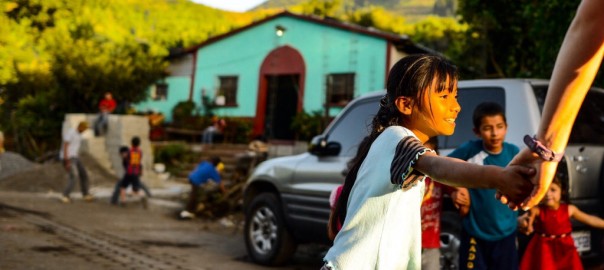
    Factually, in a village of 200 families there isn’t a lot to see. A couple small shops. An empty parking lot. And a small road that leads up the hill on either side of the lake to the next village. Three gringos walking around can’t exactly blend in. So our walk was predicated by stares and cautious waves hello.

    We walked about 1/4 mile past where we’d been when we saw an abandoned tourist attraction, a zip line that came off the hill and through the forest, sweeping over the lake. There was also a small pavilion where we guessed they served food. But it was all abandoned, it’d clearly been a couple years since anyone had paid to use it.

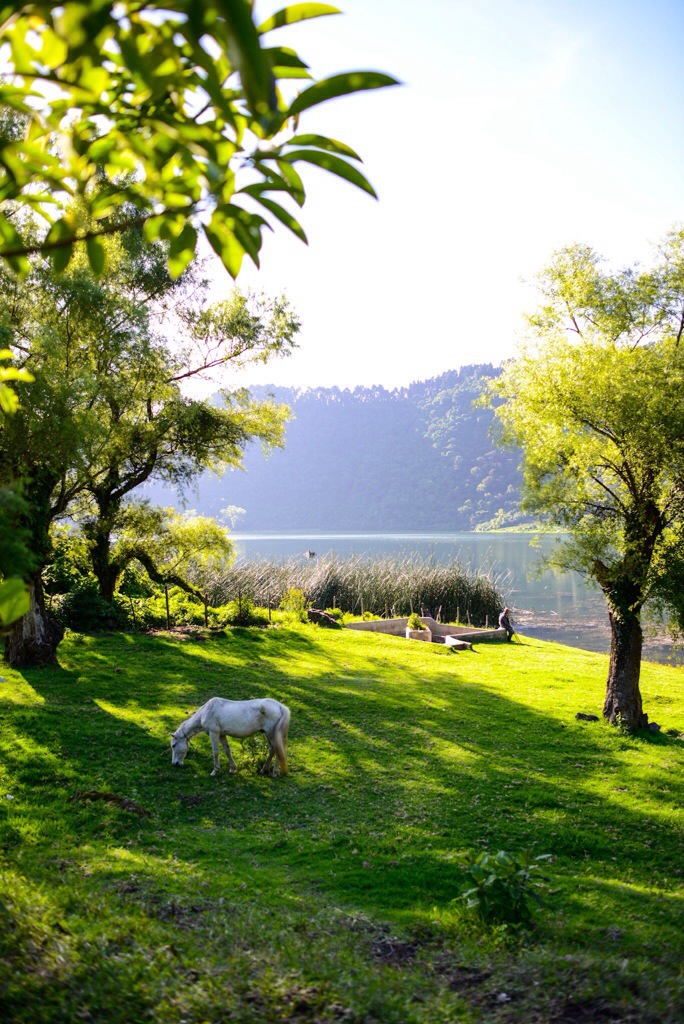
    On our way back towards the church we came to a grassy area, an area once developed by the zip line company but also abandoned. A horse grazed on the uncut grass while some boys played a summers long game of soccer. Near the waters edge a man sat on the edge of an abandoned pool, staring out over the lake.

    20140628-001215-735875.jpg

    Rob and I marveled at what we saw. “It’s like a Monet” one of us said searching for words to describe what we were seeing. The windless lake cast a glassy reflection in the quiet late afternoon breeze, a million shades of green from right to left from waters edge to edge in the stillness.

    While we awed at the scenery Ross made small talk with an elderly man standing at the entrance to this park, he leaned on a barbed wire fence, griping firmly as if he were holding onto a secret.

    How long have you lived here?

    I’m 74, I’ve lived here about 50 years.

    It’s beautiful here.

    Yes, it is beautiful. It’s very quiet, too. It’s always been a small village, but some people moved away after the eruption.

    Is this a park? Who does it belong to?

    It belongs to the man that owns the horse that is eating grass. He also owns the coffee fields on the hill. Before the eruption people came here but since he hasn’t repaired the pool or the zip line, he has more important things to do I suppose. No one comes here anymore.

    Can you tell us about that day? Where were you?

    I was at home. There was an earthquake and then rocks started falling from the sky, then the ash.

    Was it expected?

    No. We had no warning. Before the eruption, previously, there had been a warning to expect a major eruption and everyone was prepared, but it didn’t happen then. This came suddenly.

    What’s different in Calderas since the eruption?

    There is a lot of fear. We are all afraid that it will happen again. That never existed before the eruption, but now everyone in the village lives in fear. We are all afraid it will happen again at any moment.

    20140628-001354-834737.jpg

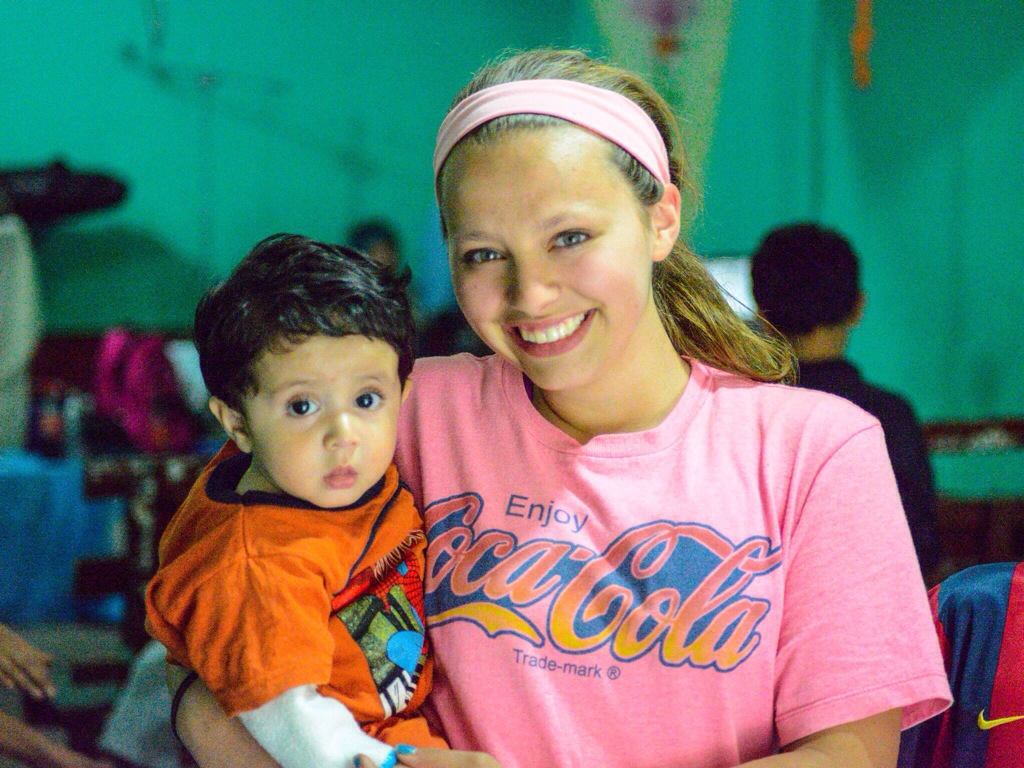
    We met Kendra Monday at the airport. Like the rest of her team, she was excited to be in Guatemala with her friends and eager to somehow serve.

    She fronted me. She kept me away with her humor and confidence. She’s bubbly and fun. Outgoing and quick without being brash. But I knew she was fronting me, and I was OK with it. Certainly, the team could say I was fronting them, too. I have a tendency to use my role, a camera or a question or looking busy to keep from lifting a shovel or playing with kids on the street. We all front.

    On Thursday night Kendra shared her testimony at church and I cried. A room full of strangers, some who spoke her language while most didn’t, we bonded together by her story in a way only the Spirit can. Realistically, we all cried.

    Bravely, she stood up and shared her story.

    She shared about growing up around the church, making an early commitment to Christ, and making more serious commitment early in her teen years.

    She walked in faith in mostly good times with some trials, common trials many teenagers face.

    But the story turned. This spring she experienced hardships. A friend passed away. Some tough times in her family. And a dream put on hold, somewhat related to these hardships.

    “I was mad at God. I did everything right, why me?”

    She explained that she searched for answers but couldn’t find a purpose for the things that had happened in her life, that she couldn’t just wash it away with Sunday School answers. She wondered the things we all wonder when bits of our life splatter against the proverbial fan, “Does God care about me? Why does all of this stuff have to happen one on top of another?”

    Kendra shared that she came on this trip still angry. Her anger was a front. And it was a wall that she was tearing down in front of her friends and the congregation.

    She shared how God was using her time in Guatemala to help her heal from these feelings. She saw God’s love in the little church in Calderas, the love she felt from the kids, the joy.

    She thanked everyone for listening to her story. But everyone in the room was blown away with thankfulness that she had shared.

    Yesterday we met Pedro and we met the Kendra.

    Fear is their bond.

    Fear is our bond.

    Fear knows no cultural boundaries or languages.

    Fear transcends right to our humanity, bonding us in our need for a Comforter.

    But don’t forget that bravery is their bond, too. Pedro griped the barbed wire, choking his story of fear. Kendra, too, overcame the fear of sharing her story… her real story… And in both cases just verbalizing released the grip fear had just a little.


    This week I’m in Guatemala with our missions partner, Praying Pelican Missions. If you want to learn more about PPM or their work in Guatemala, fill out the form below and I’ll follow-up with you next week.

    [gravityform id=”10″ name=”Ppm lead” title=”false” description=”false” ajax=”true”]