Search results for: “good news”

  • A Snapchat Interview with an 8th Grade Student

    A Snapchat Interview with an 8th Grade Student

    Back in November I heard from an 8th grade student who wanted to interview me about Snapchat for a research project she was writing for school. Her questions were probing, interesting, and excellent!

    With her permission, and the permission of her parents, I am sharing that interview today.

    J: Why was snapchat created?

    Adam: In my post, Why You Should Delete Snapchat, I wrote this: The fact is that Snapchat was created as a sexting app. Like a do it yourself version of Girls Gone Wild. You might not use it that way, but that’s what it was created for.

    J: Has anyone’s pictures ever been leaked on Snapchat? If so, how?

    Adam: This has happened LOTS. While Snapchat is more secure and better engineered now, they suffered many leaks of account info in their early years. See this post, 200,000 more reasons to Delete Snapchat

    J: Would you consider Snapchat safe? Why or Why not?

    Adam: Safe is a relative term, right? So I’d wonder what you mean by “safe”? Is your data secure? Yes, it is more secure now than 3-4 years ago. Is it safe for a teenager to use? I suppose that’d be determined by what you were doing with the app, what you were posting, what was being sent to you, etc. I would argue that the vast majority of Snapchat usage at this time is normal social media usage for teenagers. But you also can’t lose sight of 2 facts.

    1. Snapchat’s early, explosive growth was fueled by it’s early sexting app history. Why did it take off? Because of sexting. How is it used now? In both safe and unsafe ways.
    2. While many of the concerns I’ve written about have been addressed by Snapchat, it’s important to remember that they didn’t do that by choice. The app is safer today for users because the United States government forced them to comply with laws. Read more about that here: http://adammclane.com/2015/07/29/can-i-use-snapchat-in-a-responsible-way/

    J: What age group do you think was intended to use?

    Adam: The original intent was college-aged people. (See Why You Should Delete Snapchat post) Currently, 70% of Snapchat’s user base is female. My original argument, based on the founders own words, was that Snapchat was created to sexually exploit college girls. While I’ve softened that argument it is clear that the primary users and target audience of Snapchat remain female. Just look at their marketing, it’s geared towards younger females.

    J: Do you think Snapchat exposes kids to online predators?

    Adam: I have engaged with law enforcement officers in many places in the United States across many agencies investigating cases of adults targeting underaged women with Snapchat. Up until the FTC ruling, Snapchat has [sic] no way for law enforcement to force Snapchat to share information that’d be useful for prosecuting sexual predators. They had a reputation for not responding, ignoring court orders, etc. However, after the 2014 FTC ruling, Snapchat is in compliance and provides a way for law enforcement to get the data they need to prosecute sexual predators using their app.

    J: In your opinion is Snapchat much worse than other social media sites such as Twitter and Instagram

    Adam: The ephemeral nature of Snapchat (that the images “disappear” or that things are temporary) does encourage less thoughtful, more whimsical usage. That’s not always bad. In fact, researcher Dana Boyd basically predicted something like Snapchat two years before it was created precisely because teenagers had no where online they could just be goofy without leaving a searchable history. (Like Twitter, Instagram, etc) My reminder to teenagers is that just because the image disappears doesn’t mean that the memory of what you’ve seen does. That’s not the way our brains work! Likewise, I’ve worked with many teenagers who have sent things with Snapchat they regretted. So while the image may only last for a few seconds, the impact of what you’ve sent lives on.

    J: What do you think appeals to teens about Snapchat?

    Adam: This is a really important question, one which I do my best to get parents to understand at my workshops! In her book, It’s Complicated, Dana Boyd says that teenagers need places to hang out with their peers. However, increased busyness, over-involvement, and over-regulating the freedoms of teenagers (See chapter 1 of Robert Epstein’s book Teen 2.0 for more on that… his research shows that adult prisoners have more personal freedoms than American teenagers!) creates the need among teenagers for adult-free spaces. This is what she calls “Networked Publics” which is a fancy way of saying “Online places to hang out.

    J: What age do you think people must be to use Snapchat?

    Adam: Actually, this isn’t about an opinion. In the United States the age is 13. A federal law called COPPA (Child Online Privacy Protection Act of 1993) prevents any online company from collecting personally identifiable information about anyone under the age of 13. I wrote about this here – http://adammclane.com/2014/06/12/allow-children-get-social-media-account/

    J: Do you believe that Snapchat collects information about its users?

    Again, this isn’t a belief, this is a statement of fact. Snapchat collects lots of information about their users. They make this clear in their privacy policy. If you’ll read the privacy policy you’ll see two things I’ve taught people about social media since the early 2000s…

    • There’s no such thing as anonymity or privacy online, just the perception that your activity is private and/or anonymous.
    • You aren’t the customer of a social media company, you are their product. You are freely giving them information which they turn around and sell to advertisers, marketers, and other agencies.

    They make this perfectly clear in their privacy policy. But marketing is powerful… it is, as Seth Godin says, a lie.

    J: Can you think of any positive things about Snapchat?

    Most users use Snapchat in a safe way. And certainly most users seem to enjoy using Snapchat. As I mentioned before, I think that Snapchat addresses a real need among teenagers… a place to just be a teenager without the prying eyes of adults. That’s a very good thing. I just wish that Snapchat were a better digital citizen. I think they are getting there, but it’s taking people willing to do the work to force them to be more responsible.
  • Shrunken to Surveillance

    Shrunken to Surveillance

    Our House

    Is this what we’ve become? People of surveillance?

    That’s a question I’m asking myself this week in recognition that something deep inside me has changed.

    After living on this block since 2009, when the worst thing we’ve experienced was someone swiping Stoney’s leash off the front porch, a few days ago we awoke to news that our car was vandalized.

    We’ve grown accustomed to the squad cars and police helicopters over there. Yet, on that day, they were buzzing around our house like bees on a flowering orange tree over here.

    A couple hours later the police wrapped up their investigation and I was handed a case number with a promise that a detective will follow-up. (We aren’t holding our breath) Later, I got on the phone and made arrangements for a rental car and scheduled a visit from an insurance adjuster.

    I matter-of-factly dealt with the facts of the matter.

    Later in the morning, Kristen and I went around to several houses offering our thanks and reassurance that everything would be OK. Over and over we heard that out of the stillness of the morning, something bad happened, and our neighbors were the ones  left telling police about our house, “This is such a quiet neighborhood. They are good neighbors. Nothing like this happens here.”

    And, to be clear, while we indeed live in the city we truly do live in a quiet neighborhood. That’s not self-assurance. It’s a statement of fact. Our area is relatively crime free.

    And yet our collective stillness was shattered. Our nerves wrecked. And, at least temporarily, our trust broken.

    Amid a fog of frustration and insurance claims, I found myself wandering the aisles of Best Buy in search of a solution. A camera. Sure, it’s not going to stop something from happening. But, at least we’ve convinced ourselves, if there is a next time we’ll have something to help police.

    With the camera installed I find myself deeply conflicted. I’m asking myself questions like this:

    Is this what we’ve become? A house of surveillance?

    Do we really watch and record stuff now? Really? 

    Are we really people who want to keep an eye on things? Because if we are– than something fundamental has changed within us.

    I want to be defined by a love of my neighborhood, not a love of security.

    Our Children, Surveilled

    This isn’t just our house, is it? We find ourselves living in a society of surveillance.

    At my parent workshops about social media and mobile phones there are many questions about how to track and monitor children’s behavior at home and wherever they might go.

    • Apple’s devices have a built-in tracking service called Find My iPhone which allows me to pinpoint the location of every device my family owns.
    • You can buy devices, like the Circle, which attempt to track each family members internet usage and filter out apps and sites that parents don’t approve of.
    • Your cellular provider offers parental controls that monitor and track everything your child does with their phone.
    • You can even get devices that track the movements of your pets, you know, child replacements.

    If you look around you’ll see that there are nearly limitless devices available which offer nearly limitless opportunities to track and monitor your children’s every waking moment.

    What started in the crib with baby monitoring continues in the classroom with daily coursework updates  from teachers, notifications that your child missed the bus, and a million other things.

    Why are we doing this?

    All of this monitoring, tracking, and surveillance stands in stark contrast to what we know: We are living in the safest period of American Life in generations. The bad old days, when you and I were growing up in the 1970s, 80s, and 90s, offered no such surveillance and much more crime. The closest thing we came to Find My iPhone was mom picking up the other phone to listen in to my conversations with girlfriends.

    So why are we doing this?

    Has the sacred trust with our children been broken? Has our relationship with our children degraded from parenting and trust to CIA-level monitoring and inborn distrust?

    If you think about it you’ll see that we’ve resorted to installing spyware on our home networks to track our children, we’ve planted tracking bugs on them and called them phones for communication, and we’ve retrained teachers as spies.

    Stumbling backwards I’m left to ask: Is this really the relationship you want with your kids? 

    When I’m asked by [loving] parents about how to track their children’s online activities or read their text messages when they are sleeping I am deeply bothered and left with a single question: Why?

    Has our role in the lives our our children shrunken to surveillance?

    I want to know what’s broken inside of us– the parents— to feel the need to do that?

    I want to know what it is in our culture– a culture fed daily by a news cycle of fear– that demands this insane Orwellian behavior.

    It’s not the children who are broken. It’s the parents.

    Moreover, as I reflect on this all in the scope of my own relationship with my children, all I know is this: I want my parenting to be defined by love, not a love of their security.

  • In Pursuit

    In Pursuit

    Maybe you’ve heard about the drought in California? And maybe you’ve heard that weather experts are forecasting for an El Niño that should end the drought later this fall, perhaps the strongest El Niño in 50 years?

    Both trends have to do with ocean water temperature. While I’m sure there’s also impact of climate change most believe that there are natural and ancient cycles of ocean current temperature change in the Pacific where our normally cold coastal water, which creates San Diego’s temperate climate year-round, turns warmer every so often bringing moisture and rain to Baja and California.

    The water off the coast of California is significantly warmer than it should be, 5-10 degrees warmer than normal. One result of that is that this year’s inshore and offshore fishing is one for the ages. People are catching within a few miles of shore that are usually caught 100 miles offshore.

    For anyone who fishes the Pacific this is a season for the ages. No one knows how long it might last but the thought that fishing off of California’s coast may not be this good again in our lifetime has everyone pushing to get on the water.

    Innate Pursuit

    Over the past few months I’ve been drawn into this more and more intensely.

    • I’ve continued to fish in local bays for bass and other species.
    • I’ve gone on several shorter, half-day type trips onto the ocean.
    • I’ve acquired all of the gear to take my kayak onto the open ocean, making my first trip last Friday morning.
    • I’ve gotten more heavy gear suitable for offshore fishing.

    I have no idea what’s driving this.

    It’s coming from somewhere deep inside of me that I can’t quite explain.

    It’s innate. I can give you a lot of descriptions and justifications of why I’m into fishing right now, I could get Freudian and say it’s some connection to family, I could get mid-century pop psychology and say it’s about some midlife search for significance, I could get all Christianese and say it’s this or that.

    I don’t really understand the drive. But that’s what it is, it’s powerful, and–frankly– I don’t feel bad about it one bit. I love it!

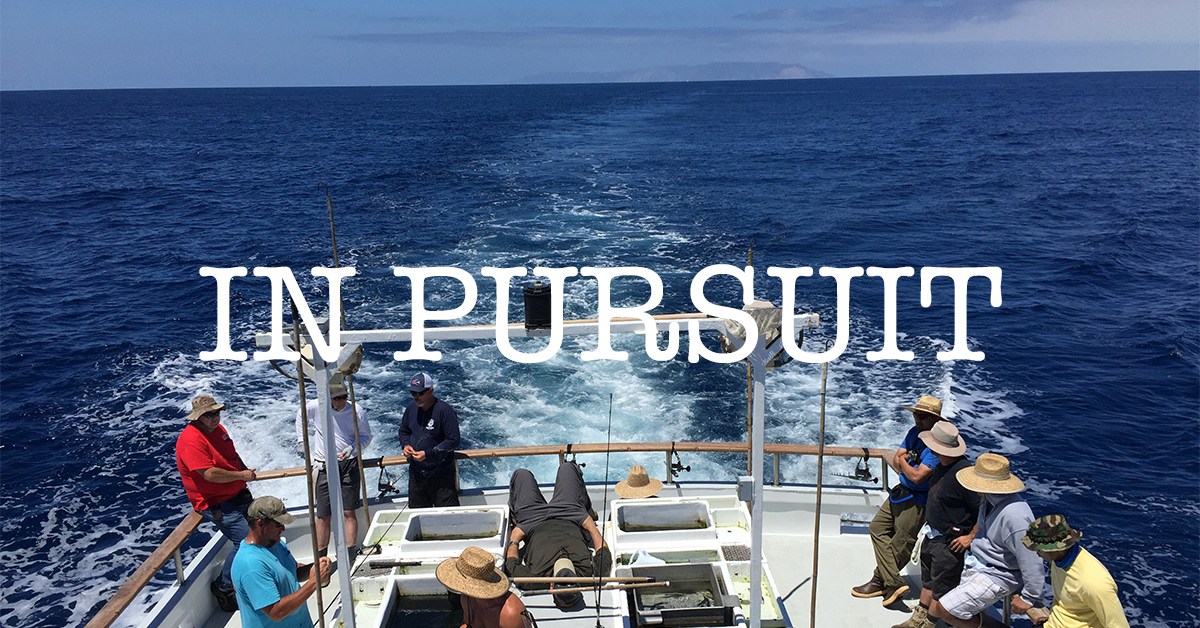
    This past weekend, Paul and I took that pursuit to the next logical step by going on our first ever overnight fishing trip. We left San Diego at 10:00 PM on Saturday night, slept on board the Tribute for a few hours, and then spent all day Sunday fishing for bluefin tuna… a species that’s not normally seen in SoCal waters in the numbers and size that are being seen.

    We woke up before dawn yesterday, did one last gear check, and then fished from first light until the boat was full at about 1:00 PM.

    Paul was the first between us to catch a fish, landing his fish at about 8:30. You haven’t lived until you see you son reel in a 35 pound fish. (Half his body weight!) It’s a mano y mano battle. You are reeling hundreds of yards of line like mad and shuffling to stay in front of it while it’s trying to swim away. You tire the thing out to get it to finally come to the surface and submit to it’s fate. It was especially awesome that the entire crew and fellow fishermen cheered for him as his boat came on deck. “Yeah PAUL!” followed by fist bumps, chest pumping, pats on the back, and congratulations from every corner of the boat. I got to witness a moment of manhood in my boy’s that is one small step towards what’s to come in his life, and that was priceless.

    Throughout the day Paul and I lost a combined three other big tuna while the rest of the boat continued catching. I started to think I might not catch one myself and go home with stories of the ones that got away.

    But just as we were reaching the boats limit of 2 fish each, my reel started screaming, I clicked it into gear and it peeled away some line on the drag right away. Initially I thought I had a little guy as it allowed me to pull it near the boat quickly. But just as it was about 50 feet from the boat it went on a giant run, showing it’s strength. 30 minutes of fighting later the captain gaffed it and pulled it on board.

    No Pursuit, No Health

    As I laid in my bunk on the long ride back to San Diego I started to reflect on this fishing pursuit.

    Why am I paddling my kayak out 3 miles from the shore in La Jolla? Why did Paul ask for this trip for his birthday? Why did landing those fish feel so good? Why is this boat full of men and women doing the same thing?

    But that’s when it started to sink in. 

    We live in a society where things are upside down. Weber’s Protestant Work Ethic teaches us that virtue comes by unlimited hard work and frugality. So our culture tells us to feel guilty when we rest or do anything recreationally or maybe spend money unnecessarily.

    But laying in that bunk thinking about the day, seeing the pride from my son– a little swagger, and the pure joy on display on this boat leads me to conclude this: I have no guilt in this pursuit. In fact, I’m not worried about people who have pursuits. I’m worried about people without pursuits.

    People who convince themselves that their work is their sole passion scare me. I love what I do and am fortunate to have a career that reflects so much of who God has made me to be. But it’d be sad if that defined me wholly.

    I am more than my work. (Which I love)

    I am more than what people know me for. (Which is great)

    I am more than a dad and husband. (Roles I cherish)

    I am more than any label.

    I am more.

    I am made in the image of God, a God in pursuit of His children.

    I am made to pursue. And when I do? It reflects His image in me.

    To not pursue is to not reflect His image.

  • Grit

    Grit

    Yesterday, Paul caught a trophy fish.

    https://instagram.com/p/3odnLlMjsa/

    OK, so it’s not technically a trophy fish. He won’t win any awards and we didn’t even keep it. It was just a little spotted bay bass.

    But that one fish represents a major accomplishment. It was the first saltwater fish Paul caught completely unassisted from the shore. 

    He’d gone out with me at least 10 times over the past 9 months and never caught a fish. Probably 30 hours of fishing with no success. He’s had a lot of bites, lots of struggle to learn how to cast, and lots of coming up empty.

    Finding Free Play

    We live in a society that bores easily. Video games, the classroom, even our profession… we want nearly instant results. 

    People want to do something for the very first time and see quick success when it just doesn’t work that way. In Outliers, Malcolm Gladwell famously made the argument that it takes 10,000 hours of practice to become the best in a field. Although the precision of that claim has been discredited, the general concept behind it is true: If you want to get good at something you’ll need to practice and learn and find your own way of doing things.

    To get good, at anything, you have to struggle past the mechanical stage of learning where you are thinking about how to do it to get into the muscle memory stage where you can stop thinking about how to do something to the point where you can start to play.

    Success and innovation comes when we get to free play.

    Watch anyone who is excellent at their craft and you’ll see that it often looks like play. Why does it look like play when they are doing something incredibly hard? Because it is play!

    Grit

    Few people get to free play… where a small success like catching a bass or a larger success like innovating software that changes the game while creating a great place to work.

    You see, to get there you have to push past a lot of failure. Not cute failure. Not the failure you can laugh off as a learning experience. Actual failure.

    There’s a characteristic that some people have and other people don’t, which is– in part– why some people succeed where others don’t.

    So what is the difference between people who get to the success of free play and the people who just never quite seem to get there?

    Researchers use one word: Grit.

    Photo credit: Sandpaper by Lukasz Fabis via Flickr (Creative Commons)

  • Eyelashes, Dinner Tables, and Other Stuff that Promotes Long-term Health

    Eyelashes, Dinner Tables, and Other Stuff that Promotes Long-term Health

    Have you ever wondered why we have eyelashes?

    This morning, while making coffee, I poured boiling water into our french press and it splashed a little in an unexpected way. A fraction of a second later my eyelid batted away a drop of boiling water that’d somehow missed my glasses.

    Think about that. When you blink, the duration of that blink is 100 to 400 milliseconds. (.1 to .4 seconds) But, according to researchers at MIT, the human brain can recognize an image in just 13 milliseconds. That means that, instinctively [and without caffeine] my eye saw an incoming droplet within flying at my eye, my brain saw this and processed “BLINK” all within a tenth of a second.

    This happened so fast and was so effective that I didn’t really think about it until AFTER it actually happened.  

    But is that the reason we have eyelashes in the first place? Preventing tiny boiling drops of water from hitting your eye? Partially. It turns out that our eyelashes do that… but it’s among their purposes.

    Through anatomical measurements, we find that 22 species of mammals possess eyelashes of a length one-third the eye width. Wind tunnel experiments confirm that this optimal eyelash length reduces both deposition of airborne particles and evaporation of the tear film by a factor of two. Using scaling theory, we find this optimum arises because of the incoming flow’s interactions with both the eye and eyelashes. Short eyelashes create a stagnation zone above the ocular surface that thickens the boundary layer, causing shear stress to decrease with increasing eyelash length. Long eyelashes channel flow towards the ocular surface, causing shear stress to increase with increasing eyelash length. These competing effects result in a minimum shear stress for intermediate eyelash lengths.

    Source

    Basically, your eyelashes exist to bat away tiny boiling drops of water but also help keep your the air around your eye moving, helping to keep the perfect moisture on all your eyes parts so that it operates optimally. Eyelashes too long? That causes fatigue. Eyelashes too short? You may experience dryness.

    The Dinner Table

    I think I’ve shared before that our family got our first dining room table last year. We transitioned from a family who rarely ate together to a family that regularly ate together around a family table. [Generally, we’d go to the kitchen to retreive food the go back to whatever we were doing. So we were together in the same room, just not paying attention to one another. Now we set the table, food is brought to the table, and we all sit there, eating together until everyone is finished.]

    The dinner table had an instant impact on our family. Our 11 year old, who when we brought the table home said, “That’s the worst idea you’ve ever had!” has been the biggest benefactor. While we all look forward to dinner together, it’s the one guaranteed distraction free time during the day where we’re together, Paul benefits from this the most.

    Since we started eating together I’ve started to recognize the family meal as a keystone behavior to our family’s health… this one thing lead to so many other good things! When we sit down together, good things happened. When we have a string of days it doesn’t happen, things begin to break down and old habits emerge.

    As we started experiencing this simple, yet powerful transformation, I started to notice all sorts of research coming out ascribing family meals other indicators of mental and physical health. (Obesity, depression, drug use, etc.) In short, the dinner table started to feel like a magic bullet when I know it’s not that simple. That’s why I was excited to read this study from Cornell University, which brought balance, understanding, and context to some of the other research emerging:

    The take away message from this study is that youth who engage in more frequent family meals tend to have lower depressive symptoms. While a more basic analysis suggested that family meals have a significant beneficial effect on child mental health, substance use, and delinquency, after accounting for demographic backgrounds and family relationships, these benefits decreased in magnitude, suggesting that they were not due to the family meals per se, but rather reflected the type of people who engage in family meals.

    Source

    In other words, family meals are not a magic bullet. But family meals do reflect a value we, as a family, seek to be.

    Ordinary Things, Extraordinary Impact

    Eyelashes and Dinner Tables. Two things so ordinary that most don’t even pay attention to them until they are gone.

    But without them? The long-term impact is dramatic.

    We live in a society that is infatuated with extremes. Extremes get attention whereas the ordinary is ignored.

    But if you ignore the ordinary? You’re missing your opportunity for long-term health.

    Photo credit: Close Your Eyes by Kristina Alexanderson via Flickr (Creative Commons)
  • What Haiti Taught Me About Nepal

    What Haiti Taught Me About Nepal

    Tony Jones wrote this:

    A standard issue in theodicy has been an attempt to protect the sovereignty of God. Consider that theological shorthand for the omni’s: omnipotence, omniscence, and omnipresence. Combine that with God’s benevolence and immutability, and you’ve got a divine being who’s a lot closer to Plato’s Nous than to Moses’ Yahweh.

    What if, instead, God is traveling through time with us?

    What if God abdicated all the sovereignty so as to give creation room to flourish?

    What if God is in a dynamic love-relationship with us, and both we and God are being changed as a result?

    If this is the case — and there’s ample biblical evidence that it is — then the earthquake in Nepal caught God by surprise. God is neither planning earthquakes nor sitting back and allowing them to happen. God is a victim of the earthquake because thousands of God’s beloved children perished.

    – Source

    For some folks, Tony is a troublemaker, some would even say he’s dangerous.

    But I think that’s because they don’t know him. I don’t claim to be close to Tony, but we’re acquaintances enough where I frame Tony more as an instigator than a troublemaker. (If you’ve met him you know he isn’t dangerous. Professorial? Yes. Dangerous? Nah.)

    He asks and says things that need to be said in a way that demands to be heard. He forces folks to think about what they’ve been taught and challenge assumptions, and in an age where everyone is circling the wagons around what they believe that’s a very good thing.

    I like the way Tony thinks and stirs me even if I don’t always agree. (Let me be blunt: I don’t want to be friends with only people I agree with. That’d be boring.)

    So, given what I know about Tony, his work, and even his most recent book– his post today didn’t take me by surprise.

    But I disagreed with him to the point where my Facebook comment stretched into 600 words… which is more of a blog post than a Facebook comment.

    Here’s my response for Tony, one that I don’t think he’ll be uncomfortable with and am positive he’ll dismiss as just a typical evangelical’s response: I think God’s ways are bigger than our ways. He acts at a level our processors can’t handle… And yes, He can even author an earthquake for His glory because He’s all those omni’s without the constraints of our philosophical limitations.

    He’s big enough for us to describe His actions as evil.

    And He’s “omni-enough” to be patient for us to get it.

    God is no more afraid of being blamed for what we perceive as evil than He’s excited about being constrained to the rigors of 20th century systematic theology’s attempt to define Him.

    My respectful disagreement isn’t born merely in my far-less-educated study of every theological vantage point.

    It’s informed by having walked down the same path already and allowing my experience to correct my incorrect thinking. (Something I believe would be good for Tony, as well.)

    The Surprise of Haiti

    I must confess that I wrestled with Tony’s concept in the aftermath of what happened in Port-au-Prince in 2010. Hearing about what happened and the wall-to-wall post-Earthquake television coverage shook my walk with God more than I was willing to admit in the moment. As news continued to roll in that the death count was thousands, then tens of thousands, then hundreds of thousands I started to doubt that God was truly good. In the aftermath I was left with big, gaping holes in a matter-of-fact, indoctrinated evangelical theology, kind of way.

    For lack of a better term– God disappointed me with what happened in Haiti.

    I was left blaming God because that’s where my theology lead me– then I quickly forced myself to walk back because I know God is ultimately good and benevolent and cannot, by His very nature, also be the author of something so tragic as mass loss of life. It was all so senseless.

    So I get what Tony is writing about. I really do… I don’t want to “blame God” for an earthquake because it just feels so un-God-like of Him. Morally speaking, blaming God for a natural disaster just feels wrong.

    But that changed when I went to Haiti.

    Walking among the rubble, seeing destruction no TV camera could convey, smelling the death still hanging in the air, I remember looking out the window of our beat-up white minivan and wondering to myself… “No… really… How could a loving God allow this to happen?” and even bigger “Where was God in that moment? Because He surely wasn’t here.

    As a witness I was left wondering if God was even there. But when we got out of the van and started talking to people, I realized that my judgement was grounded in assumptions about what was going on, not what was going on when you really talked to people and listened.

    The answers to those minivan questions took my breath away. Over and over again as we heard stories… our minds were blown to learn that He was right there with people, some of whom were believers but most of whom were not.

    God wasn’t surprised by the Haitian earthquake in 2010. Yes, many died. But even more were saved. Over and over again we heard people’s testimony that in the moment… literally with everything falling around them… they heard the voice of God. We heard testimony from people who can’t explain how they escaped, that they were picked up and carried out of a collapsing building.

    We met common people who had uncommon encounters with God that day. God wasn’t surprised. God wasn’t absent. He was fully present because that’s is, by His definition, who He is.

    More than five years after the earthquake in Haiti– the rubble is long gone. But what has endured is the revival that was sparked by the earthquake. To outside eyes it looked like an unloving God was responsible for the senseless loss of more than 200,000 people. But to people on the ground? I’ve heard five year’s of testimonies from people in Haiti that the earthquake was the closing of one chapter of a nations relationship with God and the beginning of a new one.

    As hard as it is to understand with humanity– usually the death of one thing leads to the birth of something new– new life was born out of death in 2010. We see it all the time in life’s great hardships. (Loss of a child, loss of a relationship, loss of a loved one, loss of an identity, on and on.) Death brings forth new life. It’s this universal expression of the Gospel which points us to an ultimately loving, knowing God who operates in dimensions we simply can’t comprehend.

    In Haiti… this is what you’ll hear from Christians and non-Christians alike:

    Where did people run to and find food and shelter in 2010? The church.

    Who was there to help? Christians.

    In the aftermath, who came down to help after the NGOs left? North American Christians.

    Who has continued to help re-build and now plant new churches? North American and Haitian Christians.

    Who is now sending missionaries to remote areas of their own country, neighboring islands, and even the United States? Haitian Christians.

    To quote a friend of mine, Sister Mona at Good Shepherd Orphanage in Carrefour, “The earthquake was a wake up call.

    In the aftermath of Haiti no one would have blamed Haitians for seeing only darkness and despair. But what actually emerged? Hope and new life.

    In closing, I don’t claim to know what’s going on in Nepal. But my experience in Haiti over the past five years has confirmed for me, beyond my own comfort level, that God was not surprised by the earthquake in Nepal.

    He was right there, loving His children like He always does.

    My hope and prayer for Nepal is the same today as my hope and prayer was for Haiti in 2010: That the Author and Finisher of all things, life itself, is revealed through the earthquake and it’s aftermath.


    Get Involved

    Tony ended his post by linking to some resources to get involved with Nepalese relief efforts. Here’s the link.

    If you want to get your church or youth group involved in World Vision’s relief efforts, here’s the link.

    And if you would like to learn more about taking a team to Haiti, to be a part of the work I described in this post, fill out the form below.

    [gravityform id=”10″ title=”false” description=”false” ajax=”true”]


  • Tech Tuesday Questions about Snapchat, high school graduation, and big data

    Tech Tuesday Questions about Snapchat, high school graduation, and big data

    For the past month or so I’ve had a form in the sidebar of my blog. The intention is for readers to submit their questions about anything tech related. Here’s a few questions that have been submitted.

    Question

    How do I get in contact with Snapchat? I’ll track these mfs down and then snapchat and my friends can be safe!!

    Emma in Australia

    Answer

    Dear Emma, you can always contact Snapchat directly with your user questions and concerns. You could also follow their CEO, Evan Spiegel, on Twitter and connect with him that way.

    And if something has gone wrong, let’s say a law has been broken, I’d encourage you to contact your nearest law enforcement agency so they can work with Snapchat to investigate. (Law enforcement can refer to this handy guide)

    Question

    Can you recommend any books for teenagers entering adulthood, geared towards a 17 year old turning 18 who is making really life changing choices and not good ones?

    LaRie in the United States

    Answer

    Sure, over at The Youth Cartel we released a book for exactly that age group called The Amazing Next. It was written for precisely that age.

    Question

    How do internet companies know so many things and know so much information? Do they make all theses phone apps for kids just to see what there doing and to post there information?

    Sasha in Michigan

    Answer

    Sasha, the first part of your question is actually pretty easy… you can find out lots of information about various things and people specifically because they openly and freely share it. Most people don’t read the terms of service to create accounts. But in most cases, you’re agreeing that the information you share on a website or app belongs to the service provider and they can do with it whatever they want within their policies.

    The second part of your question is a bit more nuanced. Most developers would argue that their app is about it’s utility… they really want to help people connect with their friends or want their app to help people navigate to where they are going. And the data they collect is merely a byproduct. Most will claim that the sale of that information is merely a secondary market for them… but it’s a $50 billion secondary market annually!

    Big data is big business for a lot of reasons, nearly all of them are commercial. Right now, predictive information is what’s hot. Companies want to know what people are talking about today so they know what they’ll buy tomorrow. They buy traffic information so they can know what kinds of people drive by their store. Even hospitals are tapping into big data to predict how many people will visit the emergency room.

    I don’t think people really care about Big Data as it’s macro. We don’t care because it’s kind of about us but not about us specifically.

    The reason I teach healthy social media habits to parents and teenagers is that it’s not Big Data that gets you in trouble. Instead, it’s bad habits that ruin relationships and it’s micro “Little Data” that can lead to personal problems like you losing your job or your teenager not getting a scholarship.


    Got a Tech Tuesday question for me? Head over to my blog and submit your question using the sidebar form. 


  • Wearable Technology and the Internet of Everything

    Wearable Technology and the Internet of Everything

    What’s Wrong with Apple’s Watch?

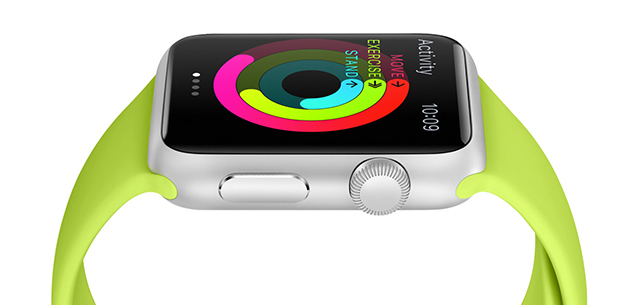
    Yesterday was the big keynote for Apple, announcing the sale date and prices for their new product, Apple Watch.

    I’m being more cautious about the watch than I was about the iPad. I thought the iPad was a joke but it turns out to have been a great idea. They created a desire where there was none and now everyone has one.

    Personally, I just have zero desire to wear a watch. It wasn’t the technology I ditched, it was that I didn’t like having something on my arm all the time. Even now, when I dress up sometimes I’ll slip on my old fancy watch, and it just bugs me. I can’t imaging having something on my arm that might get hot because it’s connecting to things or having to remember to charge it.

    But that’s not what worries me about the watch. I’m convinced that people will buy it, especially next year when they release a $99 version. (That’s their habit.) What concerns me about the watch, for Apple, is that they have a monster inventory issue that will eventually kill them.

    Think about it like this: They used to have one phone, the iPhone. And in the United States it worked only with AT&T. Great… it’s easy to make and inventory something. This is the Henry Ford model of mass production. (A model that is driving the growth/success of Southwest Airlines, by the way.)  But the iPhone 6 has tons of models and options. You can chose different colors, different storage sizes, and different mobile carriers. It’s confusing for customers because they can’t just walk into a store and ask for the latest iPhone… now they have to make a lot of choices. And it is incredibly expensive to stock. Imagine being a retailer… to sell the iPhone 6 you have to stock tens of thousands of dollars in iPhone’s in all of your stores. Think about that from a global perspective and you’ll see that Apple must have BILLIONS of dollars in inventory for products that their own system is constantly making obsolete. (People only want the latest phones.) As an investor this huge shift in business model in the post-Steve Jobs Apple keeps me away from buying their stock. It’s popular. But boy is it risky. 

    Into that comes the Apple Watch. There are 25 different models currently available, with nearly unlimited options.

    Take the case of Best Buy

    Best-Buy-follows-Yahoo-and-cancels-working-from-home-programImagine the risk as the buyer at Best Buy? You have 1050 stores and your customers are going to expect each store to have all 25 models on day one. So let’s say you place and order for all 25 models, starting with 50 units of each of the 25 models at an average wholesale cost of $175. Each store will be starting with $218,750 in inventory on the Apple Watch. That’s an initial order of $229 million to cover just U.S. stores. Sure, that’s the potential for $500 million or more in sales. But that’s a ton of risk for Best Buy because they just have to take a guess at which models will be most popular to customers.

    For a retailer, even one as large as Best Buy, putting $229 million on the line for the potential of $500 million in sales is a lot of risk. In 2015, they’ll do about $40 billion in sales… a $229 million risk on just one of their products in their store is a big, big risk.

    And that’s just one retailer. 

    Now imagine you are Apple worldwide? You have to manufacture for orders to sell to thousands of retailers like Best Buy while also serving your own retail Apple Stores and your online customers.

    All of that means that they are paying to build billions of dollars in Apple Watch’s various models without ever really knowing if customers are going to buy them. If it works, the world’s largest company just got bigger. If it doesn’t? You’ll have to account for that loss to stockholders.

    In my opinion, even for a company that seems bulletproof like Apple, it’s a very risky step.

    I’ve had Apple in my personal portfolio in the past. But right now? That’s too much risk for me as an investor.

    The Internet of Everything

    Maybe you’ve heard this term, the Internet of Everything? It’s kind of a buzz word and the unofficial theme of this years Consumer Electronics Show. Essentially, the trend is to get everything in your home to connect to the internet so that you can monitor it and control it with your phone. There are funny examples… like a device that let’s you know how many eggs you have in the fridge to more serious devices that control the thermostat or your home security system.

    The Apple Watch is part of a movement of “wearables.” Companies like Garmin, FitBit, and JawBone have been making devices that people wear for fitness purposes or to talk on a cell phone. It’s big business and no one is blaming Apple for getting into it, even if they are a little late.

    The simple reality is that our phone and these devices are starting to track all of our movements, our purchases, or plans, our calendars, and now that we’re connecting our homes and bodies to them… it’s getting to be a lot of data. You, as a user, are literally a network of everything.

    How Much is Too Much?

    Last week, I listened to a fascinating conversation on NPR about wearables and the data they collect called, “Sure you can track your health data, but can your doctor use it?

    The quick answer is… “No.” Your doctor doesn’t want that data as they aren’t trained to use it, don’t know if it’s accurate, and if you are transmitting data to them they somehow become liable for that data legally.

    But it brings up a larger, more important question: Where is all of this data going?

    I don’t mean literally. Literally, the data is going to servers and it won’t be long before advertisers and marketers are able to purchase all sorts of data about you that you willingly share so that they can hit you with an ad on iTunes Radio just at the time of day you normally take a break and walk over to Starbucks. That’s literally what is happening.

    But, more figuratively, what are you doing with that data yourself? And if we’ve gone from desktops to laptops to mobile phones/tablets to wearables… it won’t be much longer until we’re talking about Apple’s new device, an edible / embeddable device charged by the electrolytes in Gatorade that lives in your large intestine.

    I mean, neuroscientists are already perfecting technology that can read your thoughts! It won’t be too much longer until the internet of everything is literally, the internet of everything. Won’t it be interesting to have your phone play a song embedded with an ad for your favorite taco shop because your stomach is starting to tell your brain that you’re hungry for lunch?

    I don’t know. All of this is starting to feel like too much. And, as I’m out talking to teenagers around the country, they are getting tired of all of it. I am not saying that the technology won’t be there and I’m not saying that I don’t think people will adopt wearables or even ingestibles… I’m just saying there’s going to emerge some questions about how much data is too much data?

    Is This Good or Bad?

    I don’t know. But I do know the whole thing is interesting.

    And as much as I can’t imagine why I’d need the Apple Watch. Apple has proven, over time, to speak my language and market things to me I don’t really need but eventually want.

    Something tells me I’ll be standing in line for a watch sometime in the not-so-distant future.

  • Social Media Safety and Security

    Social Media Safety and Security

    Uh oh. Something went wrong with several social media applications late last night.

    Hundreds of millions of people worldwide were unable to use Facebook and Instagram for around an hour today.

    Hackers from online group Lizard Squad have claimed they shut down the two sites at around 6am GMT – but Mark Zuckerberg’s social media empire says it was just a technical fault.

    Both sites, which have a total of 1.5billion users, appeared with error messages in the United States, Europe and Asia for around an hour.

    The social media blackout also affected the dating mobile app Tinder, as well as AOL Instant Messenger and Hipchat.

    Source

    It was amusing to watch as Twitter went into full-on State of the Union mode, the hashtag #FacebookDown adding faux drama and humor to the occasion.


    And while I joked about it there is the potential that this could be more than old man Zuckerberg is letting on.

    https://twitter.com/LizardMafia/status/559963134006292481

    Here’s what I know:

    • Facebook is a giant target with 1.4 billion monthly users. (20% of all humans!!!)
    • They are due to release their quarterly earnings report tomorrow evening.
    • Lots of people share lots of personal information on Facebook.
    • Even more use Facebook to login to a lot more apps.

    Let’s say it really was a technical glitch caused by the rollout of some new features. (Snapchat and Twitter also rolled out new features today, they indeed do have to keep up with the Social Media Jones’s of the world.) That’s perfectly possible and my only real reason to think otherwise is based on their being a publicly traded company, getting hacked would do bad things to their stock right before their earnings report… there’s a lot at stake for them. Enough to lie? Maybe.

    But let’s say Facebook was hacked and while the site was offline hackers ran away with a billion or so people’s personal information. What’s a user to do?

    Just to be safe, I’d recommend these two courses of action:

    1. Change your Facebook and Instagram passwords today. It only takes a few minutes and it never hurts to change things up.
    2. Turn on 2-factor authentication on any and every application you can. If you use Facebook to log into a bunch of things, do yourself the favor and turn this on now.

    If you’d do that you’re good to go either way. 

    Tech Tuesday Questions

    Rachel asks, “Why did you write the post, ‘Why You Should Delete Snapchat?’” 

    As someone who talks to parents and teenagers a lot about social media, I’m actually fairly slow to judge an application. I really dislike black and white answers. I originally wrote the post because at several different speaking engagements parents asked me what I thought about Snapchat. I put them off for several months because I was still analyzing it, so I would say “Keep an eye on my blog. When I know more I’ll write about it.

    So, a few months later, when the guys started suing one another about who came up with the idea and a bunch of their emails ended up in the public record, I was able to dig around some more. Snapchat was the first time I’ve ever told people… just don’t use it. And I’ll reiterate the two main facts of why I don’t recommend people use Snapchat.

    1. They lied to their users from day one about what does and doesn’t disappear. I wrote about it in August 2013 and in May 2014 they reached an agreement with the Federal Trade Commission where they admitted they mislead users.
    2. They are not good digital citizens. You see glimpses of it my original post, how they speak about women, things like that. But bigger than that and far more important. The operators of Snapchat know that a percentage of their application is used in the course of crimes. (Child pornography, prostitution, drug trade, etc.) But, unlike basically every other social media company, Snapchat does not make their data available to law enforcement to help put criminals behind bars. Every investigator or prosecutor in the United States knows this is true. And to me? That they would knowingly hold data that could put people in jail for terrible, terrible crimes… usually against their own target audience of young women… well, that’s reason enough for me to stand by my post and say, “I think every user should delete Snapchat. You might use it for something fun, but people are getting hurt. Bottom line: Your [probably innocent] activity on the app is helping to fund other people getting hurt.

    Julia from California writes, “Which is safer, Facebook or Snapchat?” 

    I wrote back to Julia asking for clarification on what she meant by “safer.” As in “safer doing what?”

    But here’s the answer: Neither are safe.

    When you use any social media application you are taking a risk. It’s in the applications best interest to convince you that your data is safe, that what you think is private will stay private, on and on. But never forget that this is a perception. Ultimately, anything you post online is public. As soon as you hit the “send” button on your phone or computer you have given up control of what happens to that message, picture, or video.

    That message could get intercepted. It is most definitely being monitored by, at least, the country you live in. (But potentially other governments) The person you send the message to could share it with others or use it against you. And the application itself that you are using could get hacked or sold or otherwise compromised.

    I don’t say that to freak anyone out. I say that to remind you, as a user, that the best thing you could ever do before hitting “send” is to make sure that what you are saying is OK to be seen publicly if it ever becomes public. If it isn’t? Don’t send it.


    Tech Tuesday

    Have a tech question for Adam? Each Tuesday I write a tech post. Submit your questions using the form on my site’s right sidebar. It can be about anything tech related, from social media to networking to life at home with wireless devices.

  • The Psychology of Savings

    The Psychology of Savings

    Last night, we watched an excellent documentary on Netflix called Living on One Dollar. It’s the story of two upper middle class college students who are passionate about international development but realize that in order to truly understand their coursework they need to experience the life of those they hope to help. They went on a quest, living in rural Guatemala for a summer on  the equivalent of $1 per day.

    Watching this documentary with my family made me realize three things about a lot of people in my life

    1. Many people I know live far too close to the edge. They are pursuing their calling, lots in full-time ministry, but money is a real problem in their life. (spoken or unspoken) They are one blown engine or medical bill from disaster.
    2. Many people I know are living on less than $1 per day. Actually, they are living on -$20 per day. “The average American household carries a debt of $203,163 for financial baggage such as mortgages, credit card balances and student loan debt.” (source)
    3. Like the Guatemalan families featured in the film, my friends don’t have an income or spending problem, they have a savings problem. “Bankrate.com reported in 2012 that 28 percent of American families have no savings. Another 20 percent don’t have enough saved to cover even three months’ worth of living expenses” (source)

    The Psychology of Savings

    15328480419_86ec9e099d_z

    Life on the edge is dangerous. Sure, you might not fall very often. But life away from the edge is better than life on the edge.

    Balancing on the edge is a weird thing. It’s ultimately about confidence and attention. If you focus too much on keeping your balance and thinking about it… you’ll fall. And if you don’t think you can keep your balance… you’ll fall.

    The same is true with not having a cushion of savings. You teeter on the edge. You try to ignore it but what happens? Eventually, you stumble and things get worse.

    Having money in the bank, something you can fall back on if something goes wrong or something you can depend on when the check engine light comes on… it has a psychological impact on you.

    You are more confident.

    You are free to take some risks.

    • Your boss asks you to do something you think is 100% stupid. And you tell him.
    • You get a flyer for a class to learn something new. And you go for it. 
    • You walk through a neighborhood you want to live in. And you know what it would take to make it happen. 

    See, having some savings is more than merely practical. It’s more than a fallback plan. It’s a psychological advantage.

    Our Story

    2008-2009 dealt us a bummer hand. We had to sell our house in the middle of the worst housing crisis in modern history… and we pretty much got screwed. While we had multiple offers on our house, while we guaranteed the bank we’d pay the difference between what was owed and what the market would offer, the holder of our second mortgage erroneously illegally foreclosed on our house and sold it at auction. (Then sold our “debt” down the line, resulting in years of harassment and collections agencies.)

    In short, our biggest investment went bust. Not only did we lose every penny we invested in the house. We also lost our credit rating.

    Worse still. We lost our confidence. It sucked big time. We went from feeling like we were doing OK to right back to the edge.

    That was 6 years ago. We were far too close to zero with my phone ringing off the hook, creditors chasing us, the letters, the threats, the whole 9 yards. (We were in the right and didn’t owe the banks anything… they stole our house! But when you cross that line the people over there don’t care about right or wrong. They just want the money their computer screen says you owe.)

    I share that to say this: In the last 6 years we’re right back on track. In fact, our savings is stronger than ever. A couple weeks ago we did a review and were shocked to discover that we have nearly 1 years worth of income in long-term savings.

    You want to talk about a psychological advantage? Confidence? We went from having 1/2 months savings to 12 months in 6 years. 

    We looked at those numbers and realized something crazy: We can get way more aggressive. So, starting this month, we’ve adjusted our budget again. I jokingly call these “austerity measures.” But in reality, giving up cable or things like that aren’t that big of a deal.

    Jump Start Your Savings

    Before you eyeroll me I want to share with you the plan we’ve used. It’s not a gimmick or a book or a lecture series or anything like that. It’s drop-dead-simple.

    1. Pay yourself first. We get paid on the 15th and the 30th. The very first thing I do is put a set amount into savings.
    2. Pay your kids second. A few weeks ago I asked my Facebook friends what they were doing to save for their kids college. Almost no one had a plan. When Megan was born we started a 529 plan and put $25 a month in it. We’ve increased it periodically. I treat it like a bill. And while $25 a month might not sound like it’s going to help you get to $100,000 or whatever crazy number people toss around these days, it’s better than doing nothing. The little bit we’ve weaseled away each month since 2002 has resulted in us having about the first year of Megan’s college in that account. (This is about 20% of our college savings plan, I won’t bore you with the rest.)
    3. Pay your bills third. I suck at paying bills. Quite frankly I just forget. That’s why I try to pay all of my bills in the same action.
    4. Go cash only on the rest. More accurately, debit card only. When we buy something, whether it’s groceries or a car, that money comes directly out of our checking account. Don’t have it? Don’t buy it.
    5. All forms of credit suck. Debt is debt. We have a credit card for business travel. I hate it. We’ve been told we need to buy a house. Maybe one day, but I’m in no hurry. After all, last time I bought a house the bank stole all my money. I’ve read and been told that “some debt is good.” This is only said by people trying to sell you debt. Two weeks ago Chase bank reported disappointing 4th quarter 2014 results… they only made $5 billion when Wall Street expected $6 billion. All debt sucks. It’s the enemy. Treat it as such. 
    6. Convince yourself that you are poor. I’m sure there’s another word for this. But we intentionally live below our means so we can be generous and pour money into long-term savings. The typical family in Southern California spends 30%-35% of their income on housing: We spend 18%. Most people have two cars, we will eventually get two cars, but we’ve only had two cars for 10 months of the seventeen years we’ve been married… and that belonged to a missionary couple who let us borrow it.
    7. Reward yourself along the way. We love our vacations, we love our hobbies… in so many ways I feel like we live high on the hog. But all of those things are just rewards. Ultimately, we aren’t as aggressive with our frugality as we possibly could be. And I think we’re able to save for the long-term precisely because of that. We live reasonably and we reward ourselves richly in responsible ways.

    Wrap-Up

    I’m bringing all of this up, not to brag, but to help you see that there’s a direct tie between the pursuit of all that you could achieve, what some people might call “God’s will for your life” and your lack of financial stability.

    • I know too many with big, world changing dreams, who can’t pursue them because of a lack of confidence.
    • I know too many people who think their dreams aren’t worth pursuing because they live too close to the edge.
    • I know too many people who think living on the edge of financial disaster is somehow a burden they are called to bear as Christ-followers.

    You have to address it. And it’s better to address it today than go another $20 in the hole to start tomorrow. 

    Photo credit: Sunset in Rungsted Havn via Olga Capriotta via Flickr (Creative Commons) Her Third Birthday by Travis Swan via Flickr (Creative Commons)