Search results for: “good news”

  • Yik Yak Threats Are a Bad Idea

    Yik Yak Threats Are a Bad Idea

    CBS News 8 – San Diego, CA News Station – KFMB Channel 8

    [Link to the above video – I appear in a phone interview talking about the situation at Torrey Pines High School and Yik Yak, in general.]

    Yik Yak has a problem.

    The harder they try to market themselves as an app for college students the more high schoolers they attract.

    In fairness, they really have been a good digital citizen. 

    They make it easy for law enforcement to contact them, they provide information to aid investigations when they receive a court order, and they went to great expense and effort to geofence off every middle and high school over the summer. They’ve even made it possible for school administrators to request geofencing or correct it.

    And yet problems persist. The perception of anonymity gives some teenagers license to wreak havoc. Just like there were idiots who pulled the fire alarm every day at Hanau American High School when I was a junior in high school, the (child of) that same idiot will make threats on Yik Yak.

    “You Are So Dumb”

    You-are-dumb-you-are-really-dumb-fo-realIn the words of a great American, Antoine Dodson, I say this: If you think you can post an anonymous threat on Yik Yak and get away with it… You are so dumb.

    Here’s What You Need to Know

    All of the so-called anonymous and ephemeral apps point directly back to you. (Yik Yak, Snapchat, Whisper, Secret, etc) The only people that thinks things disappear or are anonymous are the users.

    So if you are using these apps and thinking it’s all private or secure or anonymous, recognize that this is merely a perception.

    There is no such thing as privacy or anonymity online, only the perception of privacy or anonymity. 

    Here’s Some Reasons Yik Yak Threats Are a Bad Idea

    • To create an account you need a valid email address. Oops. 
    • Even if you use a fake or “anonymous” email address to create an account, the IP address associated with your account points back to you. (Learn about IPv6 — “Every device on the Internet is assigned an IP address for identification and location definition.”) Oops. 
    • Most people are too lazy for that so they login with their Facebook account. Oops. 
    • With Yik Yak specifically, the app simply won’t work if you don’t have the GPS on your phone activated for the app. (Location Services for Apple Users) So while a Yak posted my only show you a general area it’s posted from, the app recorded your exact location when you posted. Oops. 
    • When you post an image to something like Whisper or Snapchat… the image itself has TONS of metadata that points directly to your device and location. Oops. 
    • The data network on your phone is constantly pinging your location back to your service provider. Actually, the GPS on most phones actually works even if you have data turned off. In other words, if that phone is on, it’s logging your location within about 10 feet. Oops.
    • The cellular network on your phone connects to nearby towers each time you make or receive a call or send a text. While not as accurate as the GPS, it establishes that you are within a general area. Oops. 
    • Let’s say you think you are slick and use a VPN. Wanna know what? Your phone logs that you used that VPN. So if a threat came through a VPN and your phone used the same VPN? Oops. 

    And do you know how hard it is to get all of that information? Not that hard if you are law enforcement. A court order, subpoena, or search warrant is all that’s needed. A little paperwork and the signature of a judge.

    So, let’s say you make a threat about a school on an “anonymous” app. Within about two weeks you’ll discover that what you thought was anonymous was anything but that.

    Far from putting on winter gloves and pulling the fire alarm in 1993, an online threat posted to Yik Yak or another so-called anonymous app leaves a digital footprint that easily establishes your guilt. All of this data is admissible in court. And all of this data will prove, beyond a reasonable doubt, that you did it.


    Yes! I agree that it’s weird that I have to write this. It feels kind of obvious. But then again… every day a new story emerges of someone doing it. So, I guess this post really is needed.

  • 200,000 More Reasons to Delete Snapchat

    200,000 More Reasons to Delete Snapchat

    Since news of this broke on Friday I’ve received at least 50 texts, emails, and other messages about it.

    I’m a little torn. I don’t want to say “I told you so.” More like– “NO!!! I tried to warn people.”

    More than 4 million people have read my post, “Why you should delete Snapchat.” The PDF of that post has been downloaded 45,000 times. It’s been taught as an example of a persuasive argument in just about every state in the United States.

    But here we are. My efforts weren’t enough.

    Somewhere, in the ether of the internet, are 200,000 images posted online without permission. That’s on top of the countless number of Tumblr blogs and other websites dedicated to sharing captured Snaps.

    The facts of what I wrote about Snapchat in August 2013 haven’t changed

    1. Snapchat is built on a lie that digital images disappear. They don’t. Once you take a picture with your device and send it to another person you’ve given up control of that image. It might get deleted. Once you send it via text, email, or upload it to an app… you lose control.
    2. You think you’re anonymous online, but you aren’t. Whether it’s Snapchat or Yik Yak or an online forum, everything you post online points directly back to you. Everything. That happens at the device level with metadata. It happens with your ISP or mobile provider. And it happens with app developers at the server level. The only one who doesn’t know who everyone is on an anonymous app are the actual users. And, as we’re about to learn with the Snapchat leak, facial recognition is a double-edged sword.
    3. Snapchat was created as a safe way to sext. In the past year since the January 2013 uproar, Snapchat has done a very good job navigating further and further away from it’s genesis story of a safe sexting app. I’ve acknowledged that publicly. They introduced some new features, they’ve said all the right things in the press, they’ve educated users, and– even for me– they truly have done a good job trying to pivot Snapchat from the salacious history, which indeed fueled the initial popularity, to something better and more mature. But they can’t get away from their history or the subset of users who use the app as a safe way to sext. As Mitt Romney learned in 2012… you can’t “Shake the Etch-a-Sketch” and just tell a new story sometimes. If they were serious about getting rid of the subset of users who sext with the app they would invest a few million dollars to develop a feature that detected nudity and blocked it. (ala facial recognition in Facebook or iPhoto.)
    4. The Snapchat leaders seem more interested in blaming others than blaming their app. When they settled with the FCC, it was a misunderstanding and they didn’t own responsibility. When user names and passwords were leaked, it wasn’t their incompetence as developers– it was unscrupulous people wanting access to an unlimited treasure trove of private data. And in this latest leak, it’s not the fact that Snapchat has an open unofficial API that even an untrained developer can crack into within a few minutes then build and release iOS and/or Android apps on the official marketplace— it’s these 3rd parties who are to blame. We all know people like this. Whether it’s entitlement or immaturity or arrogance, they can’t simply admit that their leadership failed, that Snapchat is bigger than they are capable of leading, or that their skills as a developer are not up to snuff. Instead they play the “Hey, I’m just a kid, I make mistakes” card. Snapchat is valued at anywhere from $2 billion to $10 billion. (Though with existing and pending litigation I can’t see it.) Isn’t it time for the leadership at Snapchat to be held responsible? Shouldn’t the board, likely full of VC investors, make a decision to remove the founders and put in place someone capable of finishing the job? Surely, if the eventual goal of Snapchat is to sell it to Google, Apple, Yahoo, Facebook, or whoever wants it– the maximum value of Snapchat will never be achieved with a bumbling leadership team who can’t publicly own failure. Duh.

    If anything, what I wrote in August 2013 has been validated time and again. Which only leads me to the same conclusion: Delete the app.

    Do not trust an app built like this. And do not trust people like this.

    There are white hats and black hats in this world, Snapchat wears a black hat.

    Beyond “I Told You So”

    Right now, nearly every hour, a story is coming out blaming Snapchat for this leak. And they are 100% to blame. No doubt many will join me in calling the Snapchat board to remove Snapchat’s founders for their incompetence.

    But, emotionally, I’m just not interested in “I told you so” any more than I truly care about who is the CEO of an app people should just delete.

    Just like there wasn’t anything in it for me when I wrote the original post in August 2013, I am not somehow filled with pride that this has happened and I was right all along. (If you didn’t know, I wrote the post in response to requests from a group of moms at a seminar. I couldn’t answer their question about Snapchat sufficiently on the fly, I told them to watch my blog and I’d write some reasons you should delete it.)

    So here’s what I’m feeling about the Snapchat leak:

    • I feel terrible for the people who will now pay a penalty for their lack of understanding on how the internet works. Yes, we should hold Snapchat responsible. And I believe that the FBI will hold those who have leaked images of minors will be arrested for distribution of child pornography.
    • For those who have had images leaked, I hope they seek and get justice. What was done to them was wrong, it’s against the law, and the perpetrators may have had a good reason (to expose Snapchat’s vulnerability) but that’s not reason enough to violate the law.
    • I hope the public learns from this leak. For those who will have images posted, I hope they’ve learned that no matter what is promised, anything shared online is ultimately public. Take solace in knowing you aren’t alone. But make a correction in your behavior, as well, so that it never happens to you again.
    • As a Christian, I believe all humans are ultimately fallible. This isn’t about Snapchat– it’s about us. (Ourselves and the people we thought we trusted.) We make mistakes, people we trust betray us, and we all live in a space between blaming ourselves and blaming others for a lot of stuff. (Not just this leak) This is what we do as humans. While we all have good in us, as we’re made in the image of God, we also have evil in us. Last week I wrote about a new research study about teenagers and sexting. In talking about this with some friends I came to this conclusion: 100% of us are susceptible to sexting. The reason many haven’t is that the opportunity hasn’t arisen in our lives. The hormones of sex and the dopamine rewards of our inborn reward system are simply stronger than us. We all need Jesus. We need his strength to resist. We need forgiveness when we mess up. And we need His hope (and the actions of His people) for freeing the world of sexual exploitation. But I don’t see myself any better than those who have leaked images or had images leaked. And neither should you.
    • Let’s not forget that the leak is about sexual exploitation and the power of shame in our society. In the coming days it’ll be easy to throw people under the bus and blame them for taking these images. But there’s a big difference between exchanging these images with someone you trust (or are flirting with) and having them published, perhaps with their usernames or real names. Trust me, those affected will feel terrible enough as it is. Let’s not forget that the release of these images is illegal. (Do I even need to say it… DON’T LOOK AT THEM!)
    • These aren’t 200,000 images. These are 200,000 people. That’s a lot of hurting people out there. Ugh, my heart hurts.
    • I’ve got more work to do. One thing that’s become clear over the past year is that there aren’t a lot of people actually trying to educate teenagers about social media in a useful way. Scaring them doesn’t work. Instead, I’ve found that helping them understand how basic principles of social media play out in the real world as well as creating some common language with the adults in their lives really, really helps. In so many ways– I’m sick of talking about social media. But I also don’t feel like I can stop because the need is so great.

    Why Have You Deleted Snapchat?

    I’d love to hear from people who have had enough and deleted Snapchat. Now that you aren’t using it, what are you using instead?

  • 4 Emerging Apps for High School Students

    4 Emerging Apps for High School Students

    I’m often asked: “What’s the big social media thing with teenagers right now?”

    That’s a really hard question right now because of a fractured landscape. Unlike in 2010, when Facebook dominated, it’s hard to point to a single application and say it’s the big thing.

    The only thing I’d describe as dominant right now is texting. According to Amanda Lenhart of Pew Internet Research 95% of teenagers use the internet regularly, 78% have a cell phone, and 75% of all teens text.

    Three Overarching Behavioral Trends

    Instead of dominant applications I’d like to point to dominant behavioral trends among teenagers which help us old people understand the behavior more than just get excited about what’s cool.

    Here’s three:

    1. Teenagers/young adults go where their parents aren’t – In some sense this is a no brainer yet needs to be called out. For the most part teenagers isn’t going to make a social media app their go-to if it’s the same application their (overbearing, over-involved) parents use. Now that Facebook is the #1 network for 35-49 year olds, many teenagers don’t use it as often. Likewise if their parents are on Instagram, they become less interested, if mom is on Twitter, they tend to shy away or have multiple accounts.
    2. Teenagers Hide in Plain Sight with Coded language – Dana Boyd’s book, It’s Complicated, does a great job documented how teenagers code language and behavior so that their friends know what they are talking about while adults are kept clueless. I find this especially true on popular social media apps like Twitter & Instagram. Often times an adult will skip right over a post because it doesn’t make sense (or is overly emotive) when in fact it’s a coded message their friends totally understand. (For example: An image with a quote from a song or a meme can communicate meaning beyond the lyrics. Sometimes you’ll see emoji responses from friend or a bunch of likes on a post from friends to show support.)
    3. Perceived anonymity is enough – When I talk to teenagers about the reality that there’s no such thing as anonymity online, only perceived anonymity… they really do care and understand that what they do online can be traced back to them. So they fully realize if they post a threat that police or an investigator could find out that they did it. But they also know that perceived anonymity is good enough for most of what they want to do because 99.99% adults in their lives don’t truly care what they do online, as a result perceived anonymity is just as good as real anonymity for what they are doing.

    4 Emerging Apps for Teenagers

    Preamble: I’m pointing these apps out, specifically, not because I think they are dangerous or adults need to freak out about them. I am mentioning them because I’m seeing/hearing/observing a high amount of teenage activity on them. (Mostly anecdotally, the research tends to trail behind a bit.)

    Tinder

    Tinder is pretty simple. The app displays images, you swipe to the right if you like the person’s picture and left if you don’t. If the corresponding person also swipe’s right on your picture… the app connects you as a match. It’s basically a slightly more grown up version of Hot or Not.

    Tinder is targeted at young adults. But, like is so perfectly demonstrated in the promotional video above, Tinder is attractive to teenagers because it’s promoting the idea that this is how young adults are meeting new people right now. Watch the video with the eyes of a 15 year old… young adults know that this isn’t how life really works, but if you’re 15… that looks/feels grown up and that’s the life I want. (Who doesn’t want to walk across the Brooklyn Bridge with a friend, snapping selfies, then play in Central Park flirtatiously?

    Yik Yak

    yik-yak-logo

    The Yak burst onto the teenage seen in the worst way possible, negative publicity in the mainstream media. Early 2014 saw tons of news articles about bullying and bad behavior on high school campuses. These stories have persisted with more and more high school and college campuses banning the app, which of course just makes it more popular with high school students!

    But, as Lora Kolodny reported in the Wall Street Journal, Yik Yak pivoted their approach over the summer. They geofenced their app from every middle and high school in the United States [meaning that you can’t post or view the app while at school] and refocused their efforts on college campuses.

    I live very close to San Diego State University, where the “Yik Yak game” is pretty active. I’ve been keeping tabs on campus usage for about a month now and I have to be honest in saying that I see Yik Yak as mostly harmless. It’s college students whining about early classes, talking up their fraternity, and bragging about their drug/sexual exploits.

    I’m mentioning this as an emerging app for teenagers because, like Tinder, teenagers have a natural tendency to look up to college students and replicate their behavior. If Yik Yak establishes a foothold on campus it’ll trickle back down to high school students. The big challenge I see for Yik Yak, behaviorally, is “Will it establish it’s own vernacular?” [Like Twitter has done] Right now, that hasn’t happened. I think it can overcome basically being pointless… but only if it establishes a reason why it’s pointless via a vernacular.

    Twitch

    twitch-logo

    I should be clear, Twitch isn’t an emerging application for teenagers, it emerged a year ago. But it’s about time it’s recognized as such. What is Twitch? Twitch is a video game streaming service used by gamers.

    The premise is simple… login to Twitch and watch your favorite gamer play your favorite game live. (Usually with commentary by the gamer along the way.) In our house, it’s pretty normal for our kids to watch streaming gameplay while they are playing. It’s one of the reasons they don’t watch TV… ever.

    Unlike Tinder and Yik Yak I think Twitch is going to move up to high school as younger, more game-addicted, teenagers move up from middle school.

    WhatsApp

    whatsapp-logo

    WhatsApp is one that hasn’t exactly emerged for American teenagers yet, but I’d put it on the watch list because of a couple specific reasons.

    1. It’s where parents aren’t. Lots of teenagers use non-text-messaging services because their parents monitor their texts. Whatsapp is like Kik, but better.
    2. It’s owned by Facebook. Just this week, Facebook officially closed on a $19 billion deal on Whatsapp. Facebook currently owns a giant repository of more than 1 billion people’s social data. When the largest holder of social data makes their biggest investment in a messaging app, you know messaging is about to become the biggest pivot in Facebook’s history since they dropped “The” from their name nearly 10 years ago.

    So while Whatsapp might not be a thing among American teenagers right now, I think we’ll see it emerge as a player in the next 6 months. (Full disclosure: I have a Whatsapp account with exactly zero connections! I’m struggling to get started.)

    Wrap-Up

    Over the next few months I’ll be presenting to a number of students and parent groups. Between the feedback I get there, the observations I make among teenagers as I travel, and forthcoming research it’ll be interesting to see which of these, if any, can become dominant.

    My prediction is that the age of pseudo-anonymity is fading and teenagers will once again flock to a new place, en masse, where everyone somehow has a verified identity. (ala Facebook) And I wouldn’t be surprised to see it be… a reinvented Facebook.

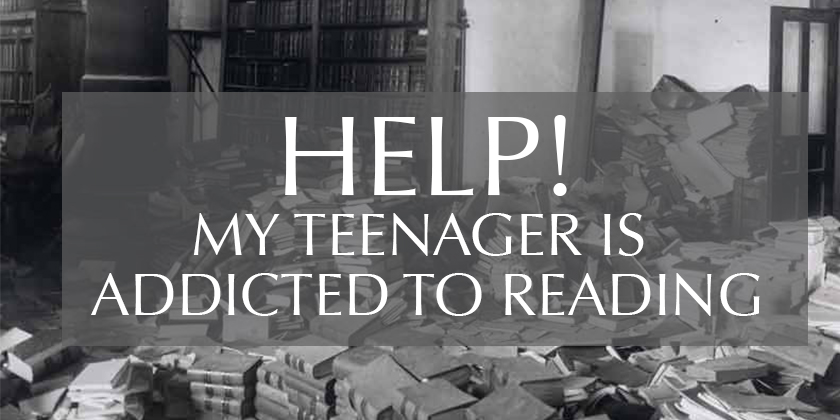
  • Help! My Teenager is Addicted to Reading

    Help! My Teenager is Addicted to Reading

    I heard giggles coming from her bedroom. It was nearly midnight. She’d gone to bed hours before. I stared down the hallway expecting to see darkness but I saw a streak of light peaking under her door. Inching near her door I heard it. It’s a sound every parent fears coming from their teenagers room. I took a deep breathe and opened the door unsure of exactly what I might discover.

    I’d caught her reading. Again.

    My heart sank because this isn’t the teenage life I’d dreamt of for her. It’s not supposed to be this way.

    Like millions of parents of teenagers I struggle with a teenager who is addicted to reading. Over coffee I explain the symptoms to my friends, their eyes swell sympathetically.

    • Excessive sleepiness
    • Good grades
    • Growing vocabulary
    • The occasional late fee at the library
    • Excessive ideation and imagination
    • Exposure to life outside of San Diego

    I know I’m not alone. Other parents suffer through this hellish reality, we are silently united– bonded over the sorrow of a lost teenage experience.

    Action Plan to Cope With Teenage Reading Addiction

    Though there is no known cure for teenage reading addiction, there are some things you can do which might help your teenager find their way out of the rabbit hole.

    Alice-in-Wonderland-Alice-Looks-Down-The-Rabbit-Hole-24-2-10-kc

    1. Introduce YouTube – They say free time is the devil’s playground. Well, I suggest trying to keep your teenager distracted from reading by occupying their time with something more healthy… viral video. With millions of videos in every genre known to mankind, encouraging your teenager to access YouTube on their phone or tablet seems to distract their mind from the itch they feel to pick up a book.
    2. A Boyfriend – It’s nearly impossible to read books while kissing and/or holding hands. A boyfriend is an excellent remedy for a reading addiction. Just make sure to check his wallet. If he has a library card he is bad news, kick him to the curb.
    3. Bullying – Many teenagers who bully also have a low literacy rate. This can be an excellent alternative for teenagers with a high literacy rate. While introducing bullying to your teenagers life may be a tough sell, they may discover that being the villain in their story is more interesting than reading about the villain in a book.

    Fellow parents: What are other ways you are helping your teenager overcome a reading addiction? 

    Photo credit: Pile of Books by Texas State Library Archives via Flickr (Creative Commons)
  • The Day That Changed Us

    The Day That Changed Us

    Back in college I had to read this book for a class called, “Turning Points.” If you went to an evangelical school you might have had to read it to. While it’s a book about church history the central idea of the text is that the author looks at the history of the Christian church and points to specific moments in history that altered the course of church history.

    I really connected to that concept. And if you’ve heard me speak or read what I’ve written over the last decade or so you might recognize that I use this concept at times because I find it to be a helpful way to look at the large arc of time.

    September 11, 2001

    There are three things I’ll never forget about 9/11.

    1. It was a beautiful, cloudless morning in Chicago. I got to the office that day about 4:00 AM. A couple hours later I took my normally scheduled lunch break. As I drove down Des Moines Avenue and went to the Dominick’s supermarket that morning, I parked my car, turned around 180 degrees and just stared at the Sears Tower. About a mile away, it stood there, the city was stirring, but the silence had lingered. Beautiful, warm, perfect day.
    2. We all made decisions. A co-worker, Allen, returned early from lunch that day. He had been sitting at a local lunch counter, having breakfast and drinking coffee while watching Good Morning America when they started reporting that a plane had hit a building in New York. He came into our office telling everyone about it. We all blew him off. But he grabbed another co-workers portable TV and set it up in the office with the volume way too loud. And we all saw the second plane hit on live TV. We didn’t say anything but we all had the same idea. Let’s go home. Within a minute all of our cell phones started ringing. A couple minutes later I got a call from an automated system from our company telling us to prepare to evacuate the building, that they were considering sending home the entire staff of about 5,000 people. I looked at my team, there were about 6 of us, and I made a decision: “Look, we all need to get home. They are going to send us home but they haven’t told us when to release you to do that. And I’ve got a feeling the city is going to close the loop. No one sign out, just leave when you are ready. I’d suggest you go now.” No one ever asked when my team left. But we all left about 30 minutes before several million people in the loop were told to go home.
    3. It was a beautiful, silent evening in Chicago. After I left my office at Blue Cross I drove to Kristen’s office in Buck Town. On the way there I called my mom, waking her up in Vegas to the news. For the next several hours it was the only call I could make because the cell networks were overwhelmed. As Kristen and I drove home on the Eisenhower we had the sunroof open and the radio on. We couldn’t help but look at the sky. We couldn’t help but listen to the news. We drove back to Oak Park and tracked down Megan at her babysitters house, Aunt Mary, we called her. The rest of the day we watched the news in shock… not knowing what else to do. Word had spread that our church was going to hold a prayer gathering that night. I don’t remember going. Maybe we did and maybe we didn’t? But what I do remember was the silence of that evening. Normally, as evening quieted our neighborhood you would take notice of the air traffic over our head. Every minute or so you’d hear a jet in the distance making it’s decent to O’Hare. It was one of those things that you didn’t notice until it was gone. It was gone that night. I think we walked that night. Megan in the stroller and sidewalk beneath our feet. And I remember the silence. A city of 6 million people isn’t supposed to be silent, but that night it was silent in Chicago. Eerily, respectfully, silent.

    It Changed Us

    Like millions of others, that day 13 years ago is a vivid memory.

    But, at the same time, we all have to look at that day as a turning point in our country. It’s easy to point to security at airports or the creation of the Department of Homeland Security as the output of 9/11.

    But what I think happened was so much deeper than that. September 11th was the day fear became the most powerful force in America.

    For the next several years, if the President said we needed to do something for national security, he could do whatever he liked as long as he said it was for security. Any mention of 9/11 became a selling point for a program.

    That newfound fear began to rule our government. Instead of people being innocent until proven guilty by a court of law, people could be arrested for “security reasons” and the public assumed they were terrorists.

    That’s not who were are. But that’s who we’ve become. 

    And that fear-based rule making isn’t just about our military, it’s about everything. We make decisions about a lot of things, not by values but by fear. My kids will never have a locker at school, in part, because of the fear that was born on 9/11.

    For some reason, “national security” lead to individuals buying handguns at an alarming pace. Before 9/11 Americans bought about 2 million guns per year. In 2012, we bought more than 8 million guns. You don’t buy a handgun to express your freedom to do so. You buy a handgun because you’re afraid of something and you think you might need to use it.

    September 11th, 2001 changed our society. It unleashed in us something that I hope time heals: Fear. It’s something that seeps into every part of who we are.

    And that fear– that turning point toward a society where fear is conquered by nationalistic excuses to become agents of terror ourselves, bombing countries and holding people in nameless prisons without trial– makes me sad. It might be who we are but it’s not who we aspire to be.

    Remember Who We Were

    Today, like every 9/11, there will be moments of silence and remembrances of those who gave their lives. It was and continues to be a tragedy.

    I want to remember those people.

    But I never want to forget who we were before that day.

    I hope we heal enough to be that nation again.

    Photo credit: September 11 Memorial by Jens Schott Knudsen via Flickr (Creative Commons)
  • A Problem of Polity

    A Problem of Polity

    Controversial Seattle megachurch founder Mark Driscoll will step down for at least six weeks while church leaders review formal charges lodged by a group of pastors that he abused his power. source

    Most people seem aware of the situation with Mark Driscoll and Mars Hill. However you feel about the situation we can all agree on one thing: It’s a mess.

    There’s little doubt that this has cast a shadow over a ministry that’s bigger than it’s leader. I can’t imagine trying to recruit people to check out a small group. “Yes, we’re a small group of Mars Hill. No, we’re not a cult. It’s just that… Yes, I understand. OK, thanks for listening. Goodbye.” I’ve heard from staff people who’ve lost their jobs. And I know other people who once went there and are hurting.

    But this post isn’t about Mars Hill, really.

    Turning Towards the Mess

    If you’ve read about the Mars Hill mess and others like it, you’ll see that there’s a point in the growth of a church that people point back to as a turning point into the mess.

    And that point is when the churches by-laws are changed.

    Up until about 15 years ago most of these non-denominational, conservative evangelical churches had a church polity of congregational rule. Autonomous congregational rule is something of a baptist distinctive. Part of being baptist, or baptistic, as non-denominational churches like to set themselves apart by saying, is:

    1. autonomous – they don’t want anyone beyond the local church to have outside power, such as a denomination. But they’ve also been very shy about outside influence, as well.
    2. congregational rule – 15-20 years ago it was normal that a major part of membership at a baptistic church was voting rights. You’d go to congregational meetings, there would be presentations, things would be opened up to the floor for discussion, and if there needed to be, a vote would be taken.

    Sometimes this autonomous congregational rule was very healthy. And other times it was really problematic for the pastors. They had a hard time getting people onto boards, getting people hired, or keeping people from getting fired. In unhealthy situations, a small group of people could call a meeting, they could make a case, and force a vote to ouster the pastor or change the direction of the church altogether.

    But, as church polities go, the traditional baptist church polity did a fairly good job of providing checks and balances for the pastor and staff. They were largely able to do their work under the authority of the deacons or elders, but were always mindful that they could get questioned in a congregational meeting. It was a double-edged sword, but it was still a sword… the congregation had power.

    There have always been hot shot, arrogant staff members. Heck, I’ve been one and a bunch of my friends have been that person, too. But the checks and balances of the church polity always managed to balance things out. A person got too brash or sloppy or whatever: The congregation fired them. Want to continue in ministry? You learn real quick.

    The Making of a Mess

    But, about 15 years ago, autonomous congregational rule started to fall out of style. 

    I don’t remember where it really got going or who originated it. But I remember that by about 2005, our staff fell in love with a series of podcasts/books by Andy Stanley, and the point of emphasis for their entire case was built around moving away from autonomous congregational rule and moving your congregation to an elder rule, staff lead polity.

    “If you want to get stuff done and your church to grow, you’ll first need to get the congregation out of the way.” Not the exact words, but definitely the message conveyed.

    What does “elder rule, staff lead polity” mean? That means that, in most instances, the bylaws of the church are changed so that the congregation loses voting rights over the activities of the church. Instead, if they are asked to vote at all, they get to vote on elders. But ideally– the goal, in a true elder lead polity, is that the congregation doesn’t have any voting rights and essentially the pastor and elders of the church completely control the church.

    Why would a hot shot pastor want that? Practically speaking, this means that a relatively small group of hand selected people act as general oversight but the staff make 100% of the daily decisions for the church. In some megachurches, these elders aren’t even people who go to the church at all, they are essentially board members and friends of the pastor/church. So why would I want that type of polity? Because if I want to be the captain of my ship… it’s a whole lot easier to dominate 8 of my friends than it is 2,000 voters. 

    When making the change, the argument that’s made is a simple, yet powerful one. They reason that the average person in the pews can’t possibly understand the rigors of vocational, professional ministry. “So why let them make decisions?”

    And, if you believe in the priesthood of the staff, that’s a perfectly acceptable position. (Whereas, another baptist distinctive is doctrine of the priesthood of all believers.) And if you’re a hot shot pastor what’s a little Scripture-twisting to get what you want? People are eating up my messages; I can say whatever I want!

    See, here’s where the mess happens. It’s relatively easy to convince non-professional, non-vocational church attendees that the staff is best prepared to make all the day-to-day decisions of the congregation without any non-professional help. It’s particularly easy to convince 51% of the congregation that they aren’t highly trained, vocational church staff.

    And so they vote away their voting rights and the staff takes over. 

    Is It Always a Mess?

    Of course not.

    Thousands of congregations have made the move from congregational rule to elder rule and not had problems. For many of them, a self-governed staff has lead to brand new and powerful seasons of ministry. They are thriving under this new polity. So I want to be cautious and make sure I’m not painting a picture that the new fashion-forward-look of elder lead polity is necessarily bad.

    But, at the same time, I want to bring up two points of caution:

    1. Putting all of the political power of a large, religious organization into the hands of a very small group of people is risky. As an outsider it might not seem like a lot of power, but to a vocational staff person, it is. It can be glorious and it can be a disaster. Either way it is risky.
    2. I think fostering a congregation whose only voice is whether or not to show up or whether or not to give financially is a short-term strategy. The most concerning thing you hear, as a congregant, in how people talk about this on the inside is a staff attitude of “if you don’t like it, find another church.” That gets to the heart of the matter: Pride.

    Also worth pointing out? This style of elder lead, staff ruled polity has taken off at the same time as the church planting movement. Thousands of church planters look towards these folks as their heroes and have set-up their church polity exactly as their heroes have told them, meaning the conditions for a mess to develop could be incubating right now in lots of congregations around the country and you’ll never hear about them.

    Avoiding the Mess

    I don’t know how you can read 1 Corinthians and come to the conclusion that 1% of people can make 100% of the decisions for a congregation. Call me old school, but even as a staff member I really liked the traditional congregational rule. (I like the way Presbyterians handle polity, too.)

    But if you’re going to operate this way, here are some suggestions.

    1. Require the congregation to get financially audited by a group like the ECFA every year.
    2. Term limits. For elders, specifically. But I’d be open to exploring the impact of term limits for pastoral staff. That’d certainly cut down on the pride issue.
    3. Create and foster a specific place the congregation can be heard. The Holy Spirit isn’t limited to speak just to the staff, give the people of your congregation a real voice… not a microphone in a room of 1,000 people. Maybe this is a non-staff lead committee?
    4. Create and empower a staff relations committee. The stuff I hear about the hiring, firing, and staffing conditions of people who work in churches is often times appalling. I can’t believe that if a congregation really knew what was going on that they’d stand for it. I’m not saying a larger church shouldn’t have an HR person, but I am absolutely saying that the HR practices should not be a staff-only thing. They need outside help to prevent abuses.

    In short, if you are going to govern with an elder lead, staff-driven concept: Don’t set yourself up to fail. (Morally, legally, functionally)

    You have the power to create  transparency, fairness, and internal controls… so don’t abuse the power given to you.

    Obviously, this is all just my opinion. It’s not well-formed or anything that I’d call “an official position on church polity.” But it is environment I see that’s fostered some of the abuses in the publics eye right now.


  • Liberty and Justice for All

    Liberty and Justice for All

    The past few weeks have been full of horror and hope for me. There have been moments where I could do nothing but turn off the news. And there have been moments where I watched the news unfold, mesmerized to do little more than watch and pray.

    Where is justice?

    The Horrors

    • In an effort to stamp out Hamas, Israel shelled it’s own people in Gaza, killing more than 1,000 civilians. This included women and children seeking shelter in United Nations facilities. It makes no sense to me. There’s no justification acceptable for it and yet our country is so afraid of Israel that they just stand by and watch. New York can’t build a wall around Jersey and then send in troops, can they?
    • An unarmed teenager was gunned down by police in Ferguson, MO. Understandably, since Saturday racial tensions have continued to mount. Mostly peaceful protests have been punctuated by some regrettable looting and rapid militarization of the local police force. The police killed an unarmed teenager and then have the audacity to blame residents for being angry and taking to the streets? (Including the illegal arrests of two members of the media and an elected official.) The police exist to serve and protect the citizens! All of a sudden it looks the state of Missouri might just wall of the city of Ferguson. What’s next? Shelling?
    • Thousands of Central American children and adolescents are detained by border patrol for illegally entering the United States. Instead of asking the question, “Why is this happening?” the news media and some elected officials in Washington act as though we’re being invaded. Famously, members of the public took the bait. Instead of responding in a humanitarian way, people showed up in Murrieta to protest children’s arrival at a detention facility. Adults. Picketed. Children!
    • ISIS, a group so extreme that Al-queda won’t claim them, exploded into Iraq and are allegedly systematically committing genocidal acts against the population. It’s been hard to verify exactly what’s happening and there are rumors of all sorts of terror. But it’s abundantly clear that there’s an emerging humanitarian crisis going on. If the rumors are true, ISIS is committing atrocities that demand a response from neighboring countries.

    All of these things stun the senses. They aren’t just news items. You can’t just flip the channel to a baseball game and move on. They are people.

    I don’t know how people of conscience, much less ministers of the Gospel, can not stop what they are doing and pay attention.

    These things are really happening. You and I have to act, somehow.

    Prayer is not enough.

    Hope

    • Last week, I had the joyous opportunity to visit the new IJM field staff in the Dominican Republic. The government there is overwhelmed with the crisis of commercially trafficked sexual exploitation (adults & minors) and is welcoming the International Justice Mission with open arms. Even a semi-trained eye can walk around tourist areas in the DR and see rampant sexual exploitation. It brings me hope to meet with passionate people who don’t cast a blind eye to injustice in front of them, but make sacrifices to stand up, seek justice, and ensure that victims experience restoration.
    • Two weeks ago I hung out with Jon Huckins, a good friend and co-founder of The Global Immersion Project. Their work started with leading experiences in Israel, taking Americans to all sides of the dispute there, hearing from leading voices in the peace process. Jon and his partner, Jer, are now taking those same lessons and helping leaders in cities throughout the U.S.. But I’m especially excited about two specific things with their work… 1. They are beginning a work helping church leaders better understand issues on the U.S./Mexico border with an immersion experience. 2. They are beginning to work with teenagers to help them understand the peacemaking process through immersion experiences.
    • This week, Marko and I are finalizing our latest collaboration which will help youth workers equip and activate teenagers in their ministry around issues of justice. We’ll be making an official announcement about it in the coming weeks, but I’m very excited about the long-term impact of this pivot within the Cartel.

    To be honest, this dichotomy is confusing. I’m angered and frustrated about the horrors going on. While at the same time this despair is back-filled with hope in the knowledge that there is a lot I can actually do.

    And I suppose that’s what the meaning of hope is, right? When all you are left with is despair, hope rises. 

    Photo credit: Golden Lady Justice by Emmanuel Huybrechts via Flickr (Creative Commons)
  • Early Bird Deadline for The Summit

    Early Bird Deadline for The Summit

    Just a quick reminder to my friends in youth ministry… today is the deadline to register for The Summit for as little as $129.

    [button link=”http://theyouthcartel.com/event/the-summit-2014/” color=”silver”]REGISTER HERE[/button]

    [hr]

    In related Cartel news…

    We’re sending 3 brand new books to the printer tomorrow. (Good Lord, willing) We’ve got a pre-release deal going on all of them. Plus, if you order from us you’ll get them like 2 weeks before they start shipping via Amazon.

    1. A Woman in Youth Ministry by Gina Abbas
    2. Teaching Teenagers in a Post-Christian World by Jake Kircher
    3. One Body by Sam Halverson

    That’s in addition to two new digital products, which will also release on August 15th:

    1. Hypotherables by Jake Bouma & Erik Ullested
    2. THINK Volume 1: Culture by Jake Kircher

    Not to be forgotten, tomorrow we release our 6th edition of Viva… Viva: I AM

  • Impending Doom

    Impending Doom

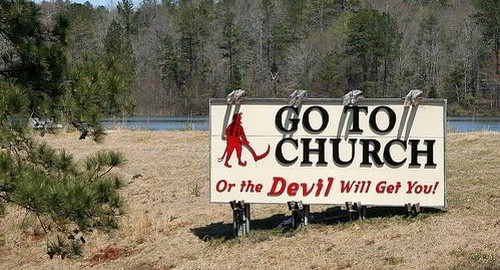
    Last month, I drove from Nashville, Tennessee to Starkville, Mississippi for a Sunday afternoon speaking engagement. As I drove across rural Alabama and Mississippi, through small towns, flooded fields, and by countless small farms, I got a glimpse into a religious phenomenon oddly familiar.

    On this drive were hundreds of religious signs. Most mentioned the name of a church or the times of a service. But many focused on a central message: Impending Doom.

    (more…)

  • The New Economy Emerging

    The New Economy Emerging

    “This is a bad economy…”

    “Pretty cool, especially in this economy…”

    “You know, in this economy, every dollar counts.”

    I don’t know about you. But I hear bad news about this economy all the time. It’s at the point where it drives me nuts. You see, it’s one of those things that’s said on the news or people believe that just isn’t true. Want some proof? Read this AP article from today.

    (more…)