Search results for: “good news”

  • Megachurches canceling services today?

    Last night my friend Gavin Richardson posted an interesting quandary on Twitter. To paraphrase, “Why is it that in some parts of the world people die trying to go to church while here in the states megachurches are canceling services because they did a big service Christmas eve?

    Here was my response, “Easy. It’s a different Gospel. The Gospel of convenience/comfort bears no resemblance to one of suffering.

    Let’s unpack this

    In Iraq, Christians gathered for Christmas Eve services in defiance of people who threatened their lives. (And had proven the threat just 60 days ago!)

    Throughout Iraq, churches canceled or toned down Christmas observances this year, both in response to threats of violence and in honor of the nearly 60 Christians killed in October, when militants stormed a Syrian Catholic church and blew themselves up. Since the massacre, more than 1,000 Christian families have fled Baghdad for the Kurdistan region in northern Iraq, with others going to Jordan or Syria or Turkey. Though the exact size of Iraq’s Christian population is unclear, by some estimates it has fallen to about 500,000 from a high of 1.4 million before the American-led invasion of 2003. Iraq’s total population is about 30 million.

    Read the rest at the New York Times (Here’s the article Gavin linked to in his tweet)

    Unfortunately, Iraqi’s aren’t alone. There are Christians killed for worshiping Jesus every day. Throughout the world believers in Jesus suffer daily. If you’d like to hear their stories and understand their struggles more, I’d recommend subscribing to the Persecution Podcast published by Voice of the Martyrs.

    For a large part of the world loving Jesus is tied closely to suffering. Many are expelled from their families for following Jesus. Some are sold as slaves. Some are imprisoned. Some experience economic inequity. Many are breaking the law by meeting– even in private. Many are left as outcasts. Many go hungry while their neighbors do not.

    In the United States, some Christians won’t gather for services the day after Christmas because their leaders want to give everyone a day off. Their Bible apparently includes an out-clause in Exodus 20:8-11. Their Bible reads, “Remember the Sabbath and keep it holy, except after Christmas when we give everyone the day off so they can spend time with family.

    After gearing up for Christmas services throughout this week, several megachurches will wind down by canceling Sunday worship on Dec. 26th.

    Pastors and church leaders say taking that day off allows the staff and volunteers more time to spend with their family during a traditionally busy season.

    Read the rest at Christian Post

    For a large part of the United States loving Jesus is tied closely to convenience. We do things when it works for us. But when it is more convenient to not do something, we pretend like we don’t even see it.

    To summarize: In some parts of the world people risk death threats to worship while in other places in the world we’re taking the Sabbath off so we can spend time with family.

    Two different worlds

    We, in the United States, dishonor those in the persecuted church when we decide not to meet because it’d be more convenient. Any time you hear a pastor justify something like this by saying “we are putting families first,” you need to call them out. We are called to put God first. Period. 52 Sunday’s per year. 365 days per year. 24 hours per day.

    Why?

    The church is our real family. Coming to church, small group, or other forms of community is real family time. Partnering with those who suffer for the sake of Christ by continuing to worship no matter what is a real family expression of love. Healthy families get together. We suffer together. It is what we do. It is who we are. More importantly, it is who Jesus told us we need to be.

    Those who heard this asked, “Who then can be saved?” Jesus replied, “What is impossible with man is possible with God.”

    Peter said to him, “We have left all we had to follow you!” “Truly I tell you,” Jesus said to them, “no one who has left home or wife or brothers or sisters or parents or children for the sake of the kingdom of God will fail to receive many times as much in this age, and in the age to come eternal life.” Luke 18:26-30

    Taking the Sunday after Christmas off to spend time with family? What a slap in the face to the concept that the church is your family! This is the churches way of telling its congregant… “You aren’t my real family.

    This is what happens when church becomes staff-driven and about programs as opposed to the simple expressions described in the New Testament. (Where one person, maybe, was employed… per city!) Church becomes about doing what is best for the staff and what is convenient to the programs. Staff and programs aren’t bad– they are good. But the organization isn’t and shouldn’t ever be about them. They are there purely to serve the family.

    We are to be real family to those without family. We are to be about the business of loving neighbors. We are to take care of widows and orphans. We are to feed the poor. We are to be about suffering alongside our brothers and sisters. We are to be about sacrificing for their sake.

    Be reminded that the early church spread fastest, furthest, and had the deepest impact when we had no paid staff, no property, and met in homes or borrowed spaces.

    Instead, they depended on one another as equal. Paul paints the picture again and again that the church is a body. We are inter-dependent. When one part suffers we all suffer. And when another part rejoices we all rejoice. Let no one in the church be more important than the other!

    My brothers and sisters, believers in our glorious Lord Jesus Christ must not show favoritism. Suppose a man comes into your meeting wearing a gold ring and fine clothes, and a poor man in filthy old clothes also comes in. If you show special attention to the man wearing fine clothes and say, “Here’s a good seat for you,” but say to the poor man, “You stand there” or “Sit on the floor by my feet,” have you not discriminated among yourselves and become judges with evil thoughts?Listen, my dear brothers and sisters: Has not God chosen those who are poor in the eyes of the world to be rich in faith and to inherit the kingdom he promised those who love him? But you have dishonored the poor. Is it not the rich who are exploiting you? James 2:1-6a

    In the end, the megachurches who take today off (and the myriad of churches who follow their lead, since they are “church growth experts“) are exhibiting the hole in their Gospel. Not to vilify them– but to expose the places we need to help them repair. It seemed like the right thing to do at the time but they got it wrong.

    No more groupthink in church leadership. Instead, let’s move forward by compassionately living out what God has clearly told us to do in the Bible.

  • Perspective

    That’s what 2010 has been about.

    My life was turned upside down multiple times in the past 12 months. All of which I’m entirely grateful for.

    Haiti – On January 12th, as news flooded in that much of Port-au-Prince had crumbled in an earthquake, I prayed a crazy prayer. I asked God to comfort those who were dying, bring emergency help if possible for those who survived, and if He wanted I was willing to go.

    Little did I know that 5 weeks later I’d be standing amidst the rubble. We helped where we could. We prayed with people and met plenty of pastors looking for aid. But the thing that rattled me more than anything was to feel a nation suddenly turn their heart towards God. An emotion leapt out of every person that sang in the streets, “I’m alive, so I can celebrate! I’m alive because of Jesus! I will celebrate even though I have nothing!” The only way I can describe that is that it felt like I’d been given the opportunity to dip my toe in a river of God’s benevolence. It’s was more powerful than anything I’d ever experienced.

    My perspective was changed when people who slept in tents on the rocky bare ground asked if they could pray for me. That re-defined what it means to be poor.

    Baby – One Sunday in late June the game was changed. “I’m pregnant.” Two words that I’ve wanted to hear for a long time but never really thought I’d hear again. Over the next few months we’ve had to wrap our minds around what it’ll mean to have a baby in the house again. Unlike with our first baby the question we’ve been asking ourselves is, “How little stuff do we think we can get away with acquiring?” There are, of course, bigger questions to be answered. How will this baby change our family? How will we handle child care? Will this baby finally have curly hair like Kristen?

    My perspective was changed when the reality set in that this is an opportunity to apply what we learned with Megan and Paul. In many ways we’re brand new parents.

    Openness – For some reason I’d kept a muzzle on myself. I suppose I had a fear that if I really opened up and said what was on my mind– instead of what I thought people wanted me to say– that people would like me less. And I certainly felt the sphincter effect on my creativity as more and more people began reading my blog after Marko left YS.

    Then, late last year I woke up and realized something. “I just don’t care. I need to be 100% me 100% of the time. This is who God made me and I need to be gaudy in that. Let the chips fall where they may.” It’s been interesting to see the results in 2010. I’ve written things in 2010 that I literally done with fear and trembling… and time and again those things have been affirmed as not just OK… but words that people needed to read. More good things have happened as a result of trying to be true to myself than I ever would have thought possible.

    My perspective was changed when I internalized that the world has enough pretenders. Sometimes you need to do things that are counter-intuitive to break through a barrier.

    All of this has given me new ears to listen. New levels of obedience. And an overwhelming excitement for days to come.

  • Fearing the right things

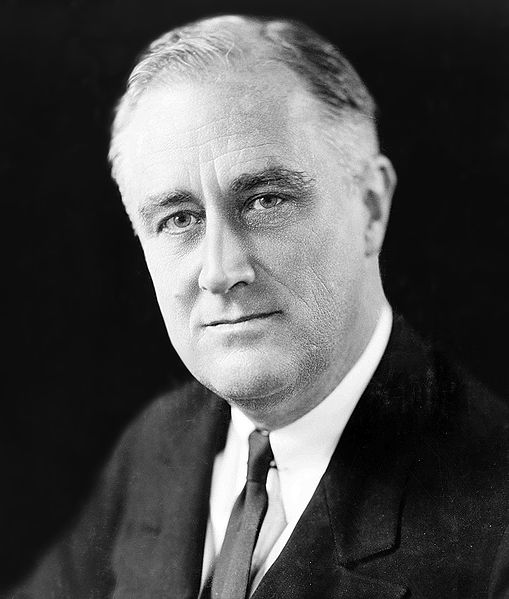
    Franklin D. RooseveltContrary to popular belief– I do have fears.

    Every day I ride my bike to work, I’m fearful of getting hit by a car.

    When I’m out bodyboarding, I’m fearful of getting killed by a shark.

    When my kids are late coming out of school, I’m fearful that something happened to them.

    I have the same fears as everyone else. I recognize that there are things with which it is healthy to have fear.

    But I refuse to be defined by my fears

    Fears are often irrational. I’ve got a pretty slim chance of getting hit by a car, or killed by a shark, or that my kids will be kidnapped from their school.

    That’s the rational reality.

    So, I chose to not have my life defined by paralyzing fear of those things.

    I have no fear of opportunity

    The lens of fear is the wrong lens to judge an opportunity. You can’t worry about failure. You can’t worry about getting emotionally hurt. You can’t worry if people will like you. And you can’t worry about what people will think if you say yes or say no.

    You need a better lens than that. You need a level head to determine whether an opportunity is good for you or not.

    I often say no to ideas presented to me. But I never allow fear to be a part of the equation.

    Why?

    Deep down I know that I shouldn’t fear what could happen if something goes wrong. Instead, I fear what could happen if I don’t try.

    As Franklin D. Roosevelt said, standing before the world on his inauguration day. With everything to fear– from wars on two continents looming, a depression lasting nearly a decade, and even his private battle with paralysis:

    The only thing we have to fear is fear itself. listen

  • Thank You, YMX

    Yesterday, we we went public with a decision to end Youth Ministry Exchange after about 5 years.

    For the last couple of years it has been trickling and trickling… and so we figured, “Why not just have a celebration of life and let it pass now instead of letting it go from 200 members per day, to 100, to 20 (where it’s at now) to 10, to 5?”

    I’m thankful for YMX and the hundreds of core people who made it a vibrant community. 200,000+ posts— yowsers! While there were a couple thousand members– there were 100-200 regulars who made it not just a forum, but a forum community.

    Five years ago, about this time of year, I started to get an inkling of an idea that I wanted to create a new home for the defunct YS forums. There was a core group of about 20 youth workers who did an AOL group chat just about every night. And when YS closed their forums about 5 other forum sites popped up as substitutes… but none of them were run very well.

    I talked to Kristen about it and she was kind of meh about the concept. “You don’t really know much about that kind of thing. And you really don’t know much about running an internet company.” Both were completely true but I took that as a blessing! Then, a few weeks later, I brought up the idea with Todd Porter after he visited our church. He got really excited– which added energy to the idea.

    So, mid-November 2005, I put together a private chat with 5 people I thought were strategically the right ones to talk about this idea. That discussion generated even more energy. And in early December 2005, we were open for business.

    I spent $72 to start the company. And the first 24 hours we made over $250. It was awesome!

    As time went on, the company went about 1,000 directions as I tried various initiatives. Business plan? Um, I didn’t have one! How could I? I was still trying to figure out what I wanted to do with it.

    From 2005 to 2008 we continued to grow… this was really the peak for YMX. We published a lot of user-generated content, we pushed out a regular newsletter, we had a podcast, the forums were vibrant, and some of our satellite sites were doing pretty well.

    In truth, I had no idea what was next. I was learning a lot about business along the way but I wasn’t sure I knew how to navigate YMX past a new hurdle. Subscriptions were declining, interest in the web content was skyrocketing, and the site was struggling to pay the bills.

    Thankfully, in June 2008, Youth Specialties stepped in and ended all the angst. They bought most of the web properties and hired me to come help them figure out how to bring some of the flavor of YMX to YS.

    About the same time Facebook took off. Then Twitter took off. And forum communities hardly seemed to be the wave of the future that they once were. We infused some serious marketing efforts into YMX as part of YS. But it was obvious that masses of youth workers were going to flock to Facebook and Twitter while the decrease of interest in YMX continued to decline.

    Certainly, there are those who think that the forums could have prevailed if I had focused more attention on them. I don’t value my presence there quite that much. I only had 4,000 of the 200,000 posts. Hardcore forumites know full well that in the last year or so I’ve largely turned the reigns over to Patti Gibbons and the rest of the moderator team. It just wasn’t humanly possible to do the work I needed to do at YS while maintaining things day-to-day at YMX. I heard the grumbles but couldn’t really do much about it. I think if those people saw the world from my vantage point they would have invested energy in the same places I did.

    It was a two-way street… I was doing the best I could in my new role. And the moderator team did a great job ministering to the forums.

    So, long-story short, we went public with the decision yesterday. It was a bit more sad than I expected. It truly felt like the end of an era.

    It was a good era and one I’ll be fond of forever.

  • Savior: The Adult Desire to Save Teenagers From Themselves

    Photo by fengschwing via Flickr (Creative Commons)

    Am I the only one who notices that adults seem to obsessed about teenage lives? More to the point, we seem obsessed with pointing out how we need to intervene before they destroy themselves and the human race.

    Our culture takes a very negative view of people between the ages of 13-18. If you work with them, you are used to folks turning up their noses when you tell them you love working with that age group.

    Here are some recent headlines to illustrate the point:

    School: Little as they try, students can’t get a D here [New York Times] more articles…

    Sleep: Lack of sleep linked to obesity for teen boys [Time Magazine] more articles…

    Sex: Teenage girls rely on the rhythm method [What is the trend] more articles…

    Crime: States rethink “adult time for adult crime” [CNN] more articles…

    Forgive me if the links provided aren’t damning evidence. You are welcome to browse my entire body of hundreds of news articles on adolescence to get a better flavor. What I am talking about is not a hot pile of evidence. It is a slow burn of negative views on adolescents as well as adult desires to fix teenagers.

    Another angle that demonstrates this is our wonderment over a teenager who does something good. Sail around the world? Shocking! Raise money for a worthy cause? News at 11! Start a successful business? Give her an award!

    It seems that those news stories are of interest, in part, because we expect teenagers to only do negative/self-destructive things and when they do something amazing it must be newsworthy.

    Three observations I want to point out on this topic

    1. Jesus is their savior, you aren’t.
    2. Have you ever wondered why sports are so popular with adolescents? Maybe it’s the easiest place for them to achieve and/or exceed expectations.
    3. Teenagers have about the same grades, sleep about the same, have the same amount of sex, and commit the same amount of crimes that they always have. Our obsessing over it only reveals something twisted in our lives and not theirs.
  • Social Currency

    If this were your house, what would you do?
    If this were your house, what would you do?

    “Why don’t they just fix it themselves?”

    If I had a dollar for every time someone said that to me about the people of Haiti I wouldn’t be $1700 short in my fundraising!

    There are a few answers to that question. At least from my über limited perspective.

    1. Haiti is so poor that they just don’t have the infrastructure and resources to even conceive of a solution. It’s just too big and they have been too dependent on the outside world to help them to solve it themselves.
    2. Culture has put up some major barriers. There are laws and traditions to be obeyed which make seemingly easy problems to fix nearly impossible. For instance, you’d need a permit (which costs money) to haul away the rubble of a home you rent. (which you are still paying the rent for) You have to find the owner, (who might live in Haiti or the U.S., you’ve never met him but only paid his cousin) who has to provide the government (which fell down) with proof of ownership (which was destroyed when government buildings collapsed) before you can hire workers to remove the rubble. (which costs money, and the government hasn’t yet determined where to take all of the rubble)
    3. The poorest of the poor don’t have the social currency to not worry about breaking the law/culture and looking past a lack of resources for the sake of doing some good.

    What is social currency?

    I first thought of this often debated online phrase in the real world while in Haiti in February. Like a lot of relief workers I struggled with what I saw. It just didn’t reconcile with the world I know.

    I’m not a sociologist. But this is how I think of social currency.

    If my house partially collapsed, killing my family, what would I do? Obviously, I’d call 911 and 6 minutes later a miniature army of highly trained firefighters would show up. Then a news helicopter would fly overhead so that the entire metro area would know what had happened within the hour. In shock and not knowing what else to do, I’d get in an ambulance and go to the hospital. At some point soon after that my insurance agent would call me. I’d call some friends who would rally around me. Within about 48 hours I’d be planning funerals, talking to endless insurance people about life insurance and property insurance, while a group of friends would help me “get back on my feet.” In the meantime, I’d probably stay with some friends or relatives before settling into a long-term hotel that my insurance company would pay for (and going to a years counseling that my health insurance company would pay for) while they took care of hiring contractors to pull permits and level the house before rebuilding it.

    That’s a lot of social currency. I’d call on all of those government and financial institutions without thinking about it because I’ve paid into those institutions! I’d call on friends to help because we have a perceived reciprocal society. Just the thought that “they’d do the same for me” would compel them to help.

    How would that change if I were the poorest of the poor, living in a country with no infrastructure, and the entire city I lived in collapsed? Those with financial means would leave immediately. This would be the land-owners and business people. Those with no means (the homeless, the orphans, the widows) are just kind of frozen. They don’t know what to do because they don’t know the questions to ask nor the ramifications of what would happen if they “just fixed stuff.” Nor do they have the resources to fix stuff. Nor do they have the energy or equipment to fix stuff.

    I remember Seth Barnes asking people what they were going to do and the dialogue always went like this:

    What are you going to do about your home?

    – I don’t know. I’m waiting for the government to help me.

    Has the government ever helped you in the past?

    – [laughter] Of course not.

    The poorest of the poor are, unfortunately, dependent on help. The real question for them seems to be… what will accepting help cost them? Remember that Haiti is a place of both spiritual and real oppression. Accepting help may land them into a debt that costs a lifetime to repay. This is a place where children are trafficked and labor is unregulated. This is a place where, on a good day, the police are uncaring about your plight. But on a bad day, the police are just as dangerous as the oppressors. They may even be the oppressors in some neighborhoods.

    What would you do? You’d laugh at those silly barriers in full knowledge that the landlord wouldn’t care that you cleared the property. At the very least you’d knock down your condemned home and pile up the rubble to be hauled away. Chances are pretty good that you’d also try to organize your neighbors into a group of workers who would go around clearing rubble for other people. Say, old women. That’s the power of social currency. You aren’t frozen. When everyone is stuck, you’d naturally rise up and take action.

    This is why you should consider a relief trip to Haiti

    If you are a reader of this blog I want to encourage you to find an agency of relief and pray about going to Haiti in the next 12 months. You have resources. You are ignorant of culture barriers. And you have social currency to spare.

  • Jobs and Millennials

    Scott Nicholson needs a job. Or so reports the New York Times in a recent article. The problem isn’t that Scott can’t get a job. It’s that Scott can’t get a job he wants. Here’s one situation that lead to a job offer he turned down.

    It was in pursuit of a solid job that Scott applied to Hanover International’s management training program. Turned down for that, he was called back to interview for the lesser position in the claims department.

    “I’m sitting with the manager, and he asked me how I had gotten interested in insurance. I mentioned Dave’s job [his older brother who makes $75k, this job offer was for $40k] in reinsurance, and the manager’s response was, ‘Oh, that is about 15 steps above the position you are interviewing for,’ ” Scott said, his eyes widening and his voice emotional.

    The article documents the lamentations of a self-described “hard worker” as he searches for his first real job, post-undergraduate education. It seems two realities are hitting him hard while avoiding the third.

    1. His expensive undergrad degree and good grades didn’t earn him squat.
    2. Even though his parents are connected, there’s no high paying job waiting for him post-graduation.
    3. He has no debt, his grandparents paid his way through school, and his parents are footing his kennel fees indefinitely. This is a blessing and a curse.

    What I find interesting is this desire to hold out for the right job. Scott would rather not work than work a job he doesn’t like.

    It’s not just Scott who does it. It’s kind of an upper-middle class phenomenon in America. College graduates hold out for a dream job that doesn’t really exist. Meanwhile, hungrier and harder working students trying to climb the socio-economic ladder continue to take more advantage of a system that rewards hard work… thereby disadvantaging lazier, idealistic, rich kids who are looking for a fast-forward.

    It’s a cultural disadvantage facing the suburbs right now. Somewhere, somehow, they have bought into a lie that pursuing the American Dream is easy. And a good job is their birthright.

    A trip into American history only reveals the opposite to actually be true.

    I wrote last May that there was bad news coming for the suburbs and Scott’s story only adds an illustration to the point. The problem isn’t that there aren’t jobs. It’s that there aren’t jobs that recent graduates are willing to do.

    That’s two separate problems.

    Don’t be a moron

    1. Life is not a made for TV movie. We’ve never lived in a country that grants recent college graduates wishes for easy street. If you want the American Dream you have to do it just like the next guy… you take it.
    2. You are not Mark Zuckerberg, Bill Gates, or one of these 20 year old billionaires. See, they didn’t just wake up billionaires. They worked their butt off and earned billions of dollars with their good ideas. But it also took time, they got lucky, and they are smarter than you.
    3. Starting at the bottom is not humiliating. It’s the only strategy that works. See, the economy depends on people starting at the bottom and working their way up. Likewise, how else will you learn? It’s not like college prepares you for the real world.
    4. There’s nothing wrong with chasing dreams. Heck, I’m still chasing the same dream I started pursuing as an 18 year old! I’ve come pretty far– but I’ve still got a ways to go! But understand that the chasing of dreams can take a lifetime of steps in the right direction while avoiding many pitfalls. If your life were a novel, it’d suck if you reached your goal in chapter 1.
    5. Desperation is the key ingredient to success. I can’t tell you how many times I’ve told parents… the best thing you can do to your post-college graduate is to stop feeding them, stop paying their bills, and make them either pay a real rent or kick them out. The smelling salt of items 1-4 above will never be accepted until a person wakes up to the reality that they are the ones who have to make something happen. If they don’t hustle, they don’t eat.
  • Mexico + Fear = Stupid

    Hanging with Phil in Baja

    As I mentioned last week, I spent Friday in Mexico with Phil Cunningham of YWAM. We had a fun time meeting some people for coffee and talking about life, touring the YWAM Baja base, grabbing an amazing taco in Rosarito, and getting a glimpse of the vision they have for reaching Baja for Christ.

    I live about 30 minutes from the Tijuana border. And I’m ashamed to admit that the last time I crossed the border into Mexico was 2003. Kristen and the kids have never been. (In fairness, the five years that we lived in Romeo, a mere 45 minutes from Canada, we crossed the border three times.)

    The Tijuana/San Diego border sees an average of 300,000 people moving between countries daily. Considering San Diego has 1.2 million residents and Tijuana has 1.5 million… you’re talking a lot of people who cross one way or the other each day.

    Two Types of San Diego Residents

    There are really two types of San Diego residents when it comes to TJ. There are those who go often and those who never go. The average San Diego resident who doesn’t go has a visceral reaction when you mention going to Tijuana. Almost universally you’ll hear people say “Don’t go to TJ. It’s dangerous.” It’s a mantra I’ve had drilled into me since moving here and its had the intended result– I’d never gone to TJ since moving here!

    Likewise the news media on the U.S. side does its best to reinforce this concept that TJ is super dangerous. Drugs, human trafficking, gang violence, murders. While it’s true that those are serious issues the end result is that there is an increasing fear of our neighbors to the south building up.

    As if any city of 1.5 million in the United States didn’t have drugs, human trafficking, gang violence, or murders?

    Fear vs. Reality

    YWAM guest housing near Rosarito.

    Now that I’ve been there I can affirm that not much has changed in Tijuana since my last visit in 2003. If anything, crossing the border both ways is a little simpler. Just like any border crossing around the globe there are procedures. You pull up, show some ID, answer some questions, and hope you don’t get waved in to an inspection lane.

    If you’ve never been to a developing nation– or only been to a resort city in a developing nation– than Tijuana will come across as dirty and disorganized. In truth, TJ isn’t unlike many major metropolitans in the United States. There are nice areas and there are nasty areas. There are places where you are likely to get robbed and there are places you can relax. Being that Mexico is a developing nation and Tijuana is a fast-growing city it is no surprise that there are many parts of TJ which are slummy and could use some help. I’m not going to say that Tijuana is an awesome place to visit but I do want to point out that its a typical big city in a developing nation.

    But if you watch the news, particularly conservative news, all of the Mexican border areas are filled with people who want to brutally murder Americans on site. Burned in our consciousness are all the Dateline NBC shows, Geraldo standing at the border and saying beheading as many times between commercials as possible, and documentaries showing us how people are being brutally murdered. Let’s remind ourselves of a simple fact… if you aren’t in a gang or not buying drugs or not soliciting a prostitute, you are unlikely to get caught up in anything having to do with drugs, gangs, or prostitution.

    The news media, particularly the conservative news media, is well-aware that scaring people leads to good ratings. (Which translates to ad revenue) So it pays well to scare you away from Mexico. And it is working. Big time.

    Here’s a little fact for you to think about. Killing innocent Americans is bad business for a drug cartel. With a little street smarts and a good dose of common sense I don’t think there is any reason to avoid going to Mexico altogether. (Obviously, there are plenty of places to avoid after dark! But you’d avoid those same types of places in any city in America.)

    Mission trips to Mexico

    I think the thing that shocked me the most during my day in TJ was to learn how Christians have stopped coming to Mexico to do missions. Participation is down 50%-75% in recent years.

    And why? All of the agencies will tell you the same thing: People are afraid of traveling to Mexico.

    I saw this same phenomenon on my Facebook status the other day. Had I posted that I was going out for a taco with my friend Phil, no one would have thought much of it. But because I said I was going to TJ… lots of people were praying for my safety. Now, I appreciate the prayers. But this reveals the fear factor.

    What’s changing?

    I couldn’t help but go down there, see the ministry locations, and hear the news that people aren’t helping as much anymore without being touched.

    What’s changing first is my behavior. I know I can’t do a lot but I know that I can both raise awareness of ministry opportunities in TJ as well as make time to go and participate in small ways. Maybe that will mean finding a place to plug in as a family? Or a community group? Or inviting friends to go down to check out ministry stuff? I’m not sure on the exact details yet… but I do know that I can’t serve in Jerusalem and Judea without thinking about the Samaria next door.

  • The Baby-god Myth, Part One

    Hi, I'm Rex. I'll be the king of your life if you let me.

    If you are a parent or if you work with parents you are well aware that there’s a lot of idolatry of children going on. In this four-part series I plan on exploring this phenomenon, it’s origins, and its impact on our society and the American family.

    How did we get here?

    People are waiting longer, much longer, to have their first child. The average age of marriage for a woman has crept past 25. (27+ for males) And it’s not uncommon for people to wait until their mid-30s to begin having children. And when those parents finally pop out a kid– a coronation takes place as the child is crowned king of the parents universe.

    It is logical that an older set of parents has had longer to dream about being a parent, more impact of cultural ideals, [movies, television, books, magazines] and more mature in the workforce to have higher wages, more time off, and more flexibility.

    Old parents

    This is a purely cultural phenomenon. The only reason men and women don’t have children in their late-teen to early-20s is because our society requires it. It’s taboo to marry or have kids young now. (Trust me, I’ve got plenty of friends who married in their early 20s and had kids under 25… they bear the wrath of middle-class culture scorn!)

    Biologically, this causes problems. Like it or not, the human body is “ready” in the mid-teen years. In human history this is when women started having children. Interestingly, cultural influence have caused females to enter puberty earlier and earlier. But it’s become increasingly taboo to have sex or conceive children in the teen years. Sexual activity is normative for minors yet culturally we frown on teen moms. Biologically speaking– the body is strongest, the reproductive system is the most ready, on and on. There’s no biological reason for waiting to have a first child until late-20s or the early 30s. In fact, human history is built on young mothers of 14-22. Common sense tells us that when you tell your body “no” to reproduction for 15 years or more, your body just might not want to say “yes” when you are culturally ready. Thus, we’ve seen an increase in physical problems with older mothers.

    Culturally, this also causes problems. Middle-class American culture tells a woman she needs to go to college and start a career before “settling down” to be a parent. So men and women marry later and acquire more stuff before marriage. (and debt) By their mid-30s, affluence leads them into the baby worship we see today. The American Dream coaxes parents to believe that each generation has to be exponentially more affluent and educated than the previous generation. The problem is that macro-economics doesn’t work that way. Middle-class parents simply can’t raise children to become more wealthy than they are… there is a statistical glass ceiling to what the economy can bear. Economically speaking, we blame Wall Street for the recent collapse of the housing market when, in fact, the Middle-class bought the American Dream on credit. (Interesting article from Time Magazine, Older Parents: Good for Kids? Written in 1988)

    We scornfully look down on young parents. We track the teen pregnancy rate in pitiful, arrogant, ignorance of the fact that in most places on the planet a 16-17 year old mother is normative– and our own grandparents would now be scorned in today’s late-marriage status quo. We’ve put so much pressure on ourselves that our kids will have it better than ourselves that from the time children are in the womb we want to educate them and put them ahead of their peer group. Our culture has created this truism. Young mothers are bad or naughty, older mothers are more prepared and nurturing. But is there evidence that this is true? Doubtful.

    The Allure of the American Dream

    In my opinion, the root of the baby-god-myth was born in the pursuit of the American dream among Middle-class parents. If little Rex is going to be better than well-off mommy and daddy, we’re going to have to push and shape harder than our parents did.

    Sadly, the church joins in

    This is a chicken/egg phenomenon as each side would argue the other started it. But any church growth expert knows that if you want to attract parents these days you need an amazing kids program. The hope is that if you can attract Rex and keep him happy, a parent will get hooked into participating in the greater church. This is, indeed, born out of an earnest desire to attract and reach lost people. But the churches desire to reach out to the little Rex’s of the community in hopes of hooking parents has lead to attracting parents and staff who buy into a format of church that idealizes the American dream. A thriving kids program is polished, safe, fun, and good for Rex. It’s bigger and better every year. Even if it isn’t, we strive for that in all we do.

    And today’s kids ministry ideals are largely devoid of Deuteronomy 6:4-9

    Hear, O Israel: The LORD our God, the LORD is one. Love the LORD your God with all your heart and with all your soul and with all your strength. These commandments that I give you today are to be upon your hearts. Impress them on your children. Talk about them when you sit at home and when you walk along the road, when you lie down and when you get up. Tie them as symbols on your hands and bind them on your foreheads. Write them on the doorframes of your houses and on your gates.

    The church often gives lip service to this truth. But systematically, we are quick to bail on parental responsibility and claim it as our own since Rex’s parents are too busy shuttling him to soccer practice and it’d be too embarrassing to tie anything scripturual as symbols on their hands. Sadly, church is often merely seen as “the holistic part” of Rex’s college resume to parents who are involved “because it’s good for the kids.”  And little Rex picks up on this, in full knowledge that his parents gods are him and the stuff they are acquiring. We wonder why kids check out of church? Maybe it’s just  the way we’ve raised them?

    It would be controversial for the church to stand up to parents and tell them the truth.You are worshipping your children. You are to put God first, your marriage second, and your children third. Children are subservient to their parents!” No– this is heresy in our culture. We all know, intrinsically, that if we were to proclaim that kind of truth the parents and their money which pays for our nice building and staffs would quickly disappear.

    Alas, the church is often sad peddler of the baby-god-myth.

    More on this later.

  • Why I Don’t Have Haiti Fatigue

    More than 3 months have passed since 200,000 people were killed and a million people were displaced in Port-au-Prince.

    For a news item that’s an eternity ago. It’s just how we’re hardwired. We hear a news item, we are shocked by it, we do a fundraiser, we move on. And we want to block it out until late December of that year when our favorite news agency does “2010: A Year in Photos.

    For lack of a better term I’ve been calling this “Haiti fatigue.” The news cycle has passed. People are thinking about economic recovery. Health care reform. Earthquakes in San Diego, Chile, and China. Larry King and Tiger Woods sex lives. iPads. On and on. Anything to distract ourselves from the good and bad that is happening just a few hundred miles south of Miami.

    Talking about what’s happening in Haiti just isn’t that interesting to people any more. They are sick of it.

    But I’m not fatigued.

    I’ve not forgotten.

    I’m praying about how to wake up those echoes. Stay tuned.