Tag: 1 timothy 3

  • Titus 1 & 1 Timothy 3: Six Things the Bible doesn’t say

    Here are the two most often quoted passages from the New Testament about the qualifications of a pastor.

    Titus 1:5-9 [Brackets, mine]

    The reason I [Paul] left you [Titus] in Crete was that you might put in order what was left unfinished and appoint elders [some translations use the word leader] in every town, as I directed you. An elder must be blameless, faithful to his wife, a man whose children believe and are not open to the charge of being wild and disobedient. Since an overseer manages God’s household, he must be blameless—not overbearing, not quick-tempered, not given to drunkenness, not violent, not pursuing dishonest gain. Rather, he must be hospitable, one who loves what is good, who is self-controlled, upright, holy and disciplined. He must hold firmly to the trustworthy message as it has been taught, so that he can encourage others by sound doctrine and refute those who oppose it.

    1 Timothy 3:1-7 [Brackets mine]

    Here is a trustworthy saying: Whoever aspires to be an overseer [elder, pastor, overseer are basically the same word] desires a noble task. Now the overseer is to be above reproach, faithful to his wife, temperate, self-controlled, respectable, hospitable, able to teach, not given to drunkenness, not violent but gentle, not quarrelsome, not a lover of money. He must manage his own family well and see that his children obey him, and he must do so in a manner worthy of full respect. (If anyone does not know how to manage his own family, how can he take care of God’s church?) He must not be a recent convert, or he may become conceited and fall under the same judgment as the devil. He must also have a good reputation with outsiders, so that he will not fall into disgrace and into the devil’s trap.

    6 things that Paul doesn’t say that American church culture often says are qualifications to be considered a pastor.

    1. You have to be a leadership expert, a proven leader with years of experience, a reader of books on leadership, aspiring to be a leader, and a regular at Willow Creek’s Leadership Summit and/or somehow tangentially related to John Maxwell.
    2. You have to be an employee of the church. The same passage describes the biblical qualifications for a pastor as they do positions the American church almost never considers staff-level. (Elder, overseer)
    3. Aspiring to be a well-known preacher. “Able to teach” is a pretty low standard. I am fully “able to run” but you won’t catch me out there doing it too often.
    4. Be in possession of an Masters in Divinity from a denominationally approved seminary prior to seeking ordination. That said, education was a high priority in the early church. You couldn’t even be baptized or label yourself a Christian until you’d gone through about a one year process of intense discipleship. (Prior to baptism, new believers were called catechumen.)
    5. Be a great manager of programs and projects. Since the early church was organized around the idea of family, you didn’t need to take classes in organizational leadership to understand the dynamics of a family.
    6. You have to be an amazing self-promoter of both the church and your “personal brand.” Paul didn’t have a blog, Twitter, or Facebook. And yet he somehow managed to be spur on the most powerful viral message of all time.
  • The Pastor Man Up Movement

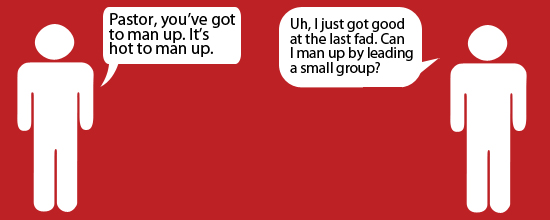
    The last few years has seen the popularization of something I refer to as the Pastor Man Up Movement. (PMUP)

    You hear things said, like “Pastor, if anyone is going to lead your church, it has to be you.” Or, “No one else in the church is called to lead more than you.” Or, “It’s time the pastors of the church took control from the committees.” It’s an interesting phenomenon. And it’s promoting a lot of abuse of power. Pastors read a blog or hear a PMUP message and run to the next meeting all full of testosterone instead of grace.

    It’s dangerous to take the power that a pastor is given and then encourage that person to exert his will on a congregation.

    It’s like storing a keg of black powder in a cigar bar. Eventually there will be an explosion.

    In a healthy context there’s nothing wrong with this movement. It’s good for pastors and church staff to be leaders and to be reminded of their calling. That’s why we pay them. (Let’s not lose site of that fact. I know many people have been abused by the church, but there really are healthy churches out there.) When we hire pastors at our churches we should empower them to lead. I currently attend a church where the church staff are good leaders. They seek wise counsel, they are temperate, they consider the needs of the whole congregation in making decisions, they work hard to battle “what people want” vs “what the Bible is asking us to do.” I’ve never sensed that they are afraid to lead.

    The problem is that it’s also become popular to hire staff members with little or no formal training. It’s not unusual for me to hear of people joining a church staff with not only no formal training at the undergraduate/graduate level– they’ve not even been an intern or been taught how to lead a church in an informal setting. They have zero training to enter the ministry. Literally, one week they are selling cars (or whatever) and the next week they have the title of pastor. Few other professions do this the way churches do. You wouldn’t hire a teacher to be a lawyer. Nor would you hire a vet to be a physician or a CPA to be a plumber. But in the church? It’s become en vogue to hire non-professionals.

    [My suspicion is that those people who leave a profession to enter the ministry probably weren’t that good at their profession in the first place. But it’s quite an ego boost to go from being a CPA to an executive pastor! It’s not like a mediocre CPA was going to make partner.]

    PMUP + Untrained staff = Explosion waiting to happen

    A couple of thoughts about this combination:

    • When a senior pastor surrounds himself with untrained associates this should tell you something about the leader of the senior.
    • There’s nothing wrong with being a strong leader. But if no one is following you of their own free will… you aren’t leading. You are a dictator. (Remember how things end for most dictators)
    • When a church calls an untrained person to be their pastor, this should tell you something about the congregation.
    • It makes me giggle when a bunch of dudes decide that they need to man-up. I grew up thinking that a real man took care of the people around him, not used his weight to get his way.
    • Where in the Bible were deacons/overseers/elders told they should man up?
    • When did the will of a congregation/voting become a bad thing?
    • Sometimes it seems as though people are selling themselves and their vision instead of God’s vision. As a churchgoer, all I know if I’m stuck with the bill.
    • If someone has to throw around their weight to make things happen, does that make them a leader worth following?
    • The unspoken message every person knows in a church is that if the pastor can’t exert his will, the congregation runs the risk of the person quitting. (This isn’t “manning up.” It’s “taking my ball and going home.”)
    • When did formal eduction/training as an entry point to ministry become a bad thing? And if churches are  going to hire untrained staff, why don’t they budget for properly training them?