
Tag: decentralization

  • What if we made youth ministry’s goal simpler?

    “What’s the goal of your youth ministry? Not like your purpose statement, but why do you do this thing?”

    I love to ask this question. It usually takes people a few minutes to articulate something they feel comfortable with. And it always sparks a great conversation.

    The answer to that question typically lands like this, “My goal is to create an environment where students grow in their relationship with Jesus.” And when we’re really honest a functional goal is, “Keep enough people engaged in my ministry so that my church thinks I’m doing a good job with that.” (In 2009 – 2010, the real honest answer was, “Whatever I have to do to keep my job.”)

    A question I’ve been wondering the past couple of years is this…

    What if we made the goal of youth ministry simpler? What if the goal of youth ministry became Christian worldview formation? How would that change the way I did youth ministry?
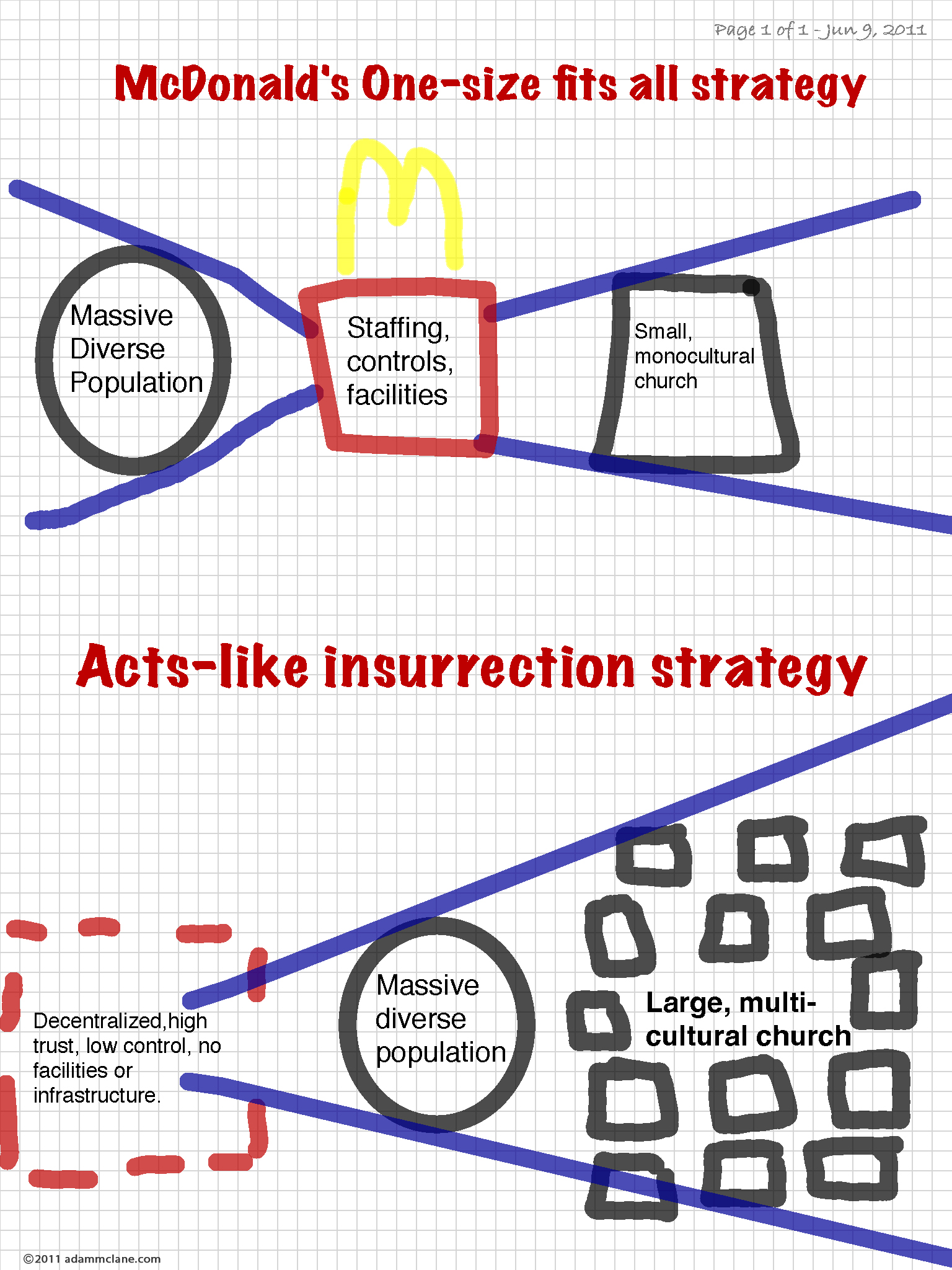

  • The problem with one-size fits all is…

    The problem with one-size fits all is… One-size doesn’t fit all.

    We are faced with a tiny percentage of the population actively involved in the local church. (>10%) Yet, I’m continually perplexed to see no one looking hard at the big, obvious problems of bottlenecks & gatekeepers which keep churches small with a strategy that lost its effectiveness 25 years ago.

    Most churches have the same exact strategy. It’s the manifestations of that strategy which differ.

    Faced with impossible statistical opposition first Century church leaders in Acts rejected the culturally accepted strategy of building a religion. Instead, they decentralized power, they empowered the powerless and served the cast-offs, and they didn’t get tied down to buildings, staffing, and overhead. As a direct result within 200 years this ragtag insurrection and their Gospel message essentially overthrew the government of Rome. Statistically speaking, when they got away from that and started to act like a religion with firm control, structure, and facilities… the churches growth slowed.

    Simply put. The reason we are reaching >10% of the population is that we have replaced a rebellion for nice.

    To reach more people you don’t need a new program.

    You need a new strategy.