Tag: novel

  • 20 Types of Youth Ministry Volunteers

    I’ve been involved in youth ministry in one form or another since I was in high school. One thing I love about being involved with youth group is the cast of characters that each ministry seems to have.

    If I were to write a novel and wanted to include all of the types of youth workers I’ve worked with through the years, I would need to build the cast using these traits. (I’ve played one role or another at various times in my ministry career.)

    1. The sage – Life is a riddle, he has one for all of life’s problems.
    2. The sports guy – Give him a basketball and an hour and he’ll sweat some kids closer to Jesus.
    3. The buddy – Let’s just hang out and play Portal 2 this weekend, OK? Maybe we will talk about Jesus between rounds?
    4. The real man – All of the worlds problems will go away if men are men. Did you hear me son? What we need in this group is more men, real men!
    5. The Bible guy – I earned this Timothy award and I’m not afraid to use it.
    6. The hugger – Why talk when we can just hug? Everyone will feel more comfortable with more physical contact.
    7. The mom – A spoon full of sugar, honey, that’s what you need. And I’m kind of here to keep an eye on Jeffrey.
    8. The waiter – Hold onto your cup! If you put it down for even a second, it’s gone.
    9. The deer in the headlights – How did I get here? I’m in a room full of teenagers, oh my gosh. What’s going on?
    10. The camp guy – In 8th grade this guys life was transformed at snow camp and he is still looking to repeat that experience at 54.
    11. The whistle blower – Rules are important, I have a whistle, and I will blow it.
    12. The Christian ghetto guy – He has connections at every Christian owned business in town. Keep your bucks in the family, you dig?
    13. The clip board guy – If you aren’t careful this guy will sign up everyone for the military. How do we know Jesus fed 5,000? This guy counted.
    14. The evangelist – Every lesson better have a Gospel presentation, because if you were to die tonight…
    15. The bodyguard – If anyone tries to talk smack about this group, these kids, or our youth pastor, I promise you he will punch them right in the face.
    16. The band – Sure, the band might be one person, a guitar, and PowerPoint, but worship should be at the center of what we do, right?
    17. The historian – Do you remember when? No? This guy does.
    18. The elder – Sure, I’m here to volunteer. When I’m not making sure your teaching lines up with our doctrinal statement.
    19. The prayer warrior – A kid just broke his leg? Before we call 9-11, let’s gather in a circle and pray for Lydia… Mr. Myagi style.
    20. The youth-pastor-in-training – With aspirations of one day being in charge, this volunteer does it all and always feels like he is one step away.
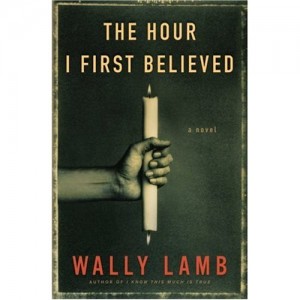
  • The Hour I First Believed by Wally Lamb

    Few books require comparison to a Fyodor Dostoyevsky novel. Yet both the length of the story and the depth of the primary character does resemble works like The Brothers Karamazov.

    While Dostoyevsky wrote in serials and was therefore paid by the word for his work which in turn paid for his gambling addiction, about 500 pages into The Hour I First Believed I began to wonder more about the sanity of the author, Wally Lamb, than the sanity of the main character. In the end, it was a novel that you both couldn’t wait to finish, while at the same time this reader remained convinced that the story should continue forever. It was a painful joy similar to Thanksgiving Day. You can’t possibly eat one more thing and yet you find yourself opening the refrigerator door, more out of compulsion than true hunger for more.

    The story is a first person perspective of the main character, Caelum Quirk. Caelum and his wife work at Columbine High School in Littleton, Colorado in 1998-1999. The story takes a dramatic twist when Quirk’s wife is caught in the crossfire during the school shootings. Her life is spared and taken at the same time. Spared in that she isn’t harmed. Taken in that the post-traumatic stress syndrome steals much of the joy and peace from her life.

    In an attempt to get away from the tragedy and start over, the Quirks leave Colorado and move into the home of his aunt, who raised him. Left with the family farm and a wife whose mental capacity continues to decline, Caelum begins discovering his real family history. This history is disturbing and freeing as Caelum begins to create a new life for himself in the town he grew up in.

    While the story is long and covers a decade, it is still interesting. The title misleads you to believe that Caelum’s tale is a spiritual one. While one could argue this search for history and identity is a spiritual journey the conclusion is not a Christian spiritual journey but perhaps one of existentialism. Lamb seems to paint a superstitious picture of Mrs. Quirks religiosity and the parallel between her discovering peace in Jesus and the end of her life is opaque enough to fail hiding the authors bias.

    I almost wish there had been a third person narrative about the author of the story coinciding with the writing of the novel. In the appendix Lamb shares how the novel took nearly a decade to write. For him, it was natural and necassary to weave real world events like the shootings at Columbine and September 11th. Likewise, he threads in a story of a women’s correctional facility founder into his main characters life. In the end, I don’t know if these provided a richness to the story or merely context for a story which otherwise would have lacked depth.

    While it is obvious that critics will find this novel brilliant I found it to be tiresome. In the end I felt like it was just 400 pages too long.