Tag: small

  • Piggy Banks

    Jeffrey and Joel were visiting with the people of a tent city in the town of Carrefour, Haiti when they heard periodic banging. Used to the sound of big diesel engines and definitely used to the sound of kids laughing and playing games, metal on metal banging was distinctive pang and piqued their curiosity.

    Under a tree, away from the main tent area, they met Daniel. Daniel is a mason by trade. But right now there are way more masons than opportunities to do masonry so he began to improvise. With all of the aid flowing into the tent camp there was plenty of garbage generated. One thing that seemed like it was useful for something was all of the one gallon aluminum cans which brought foods like beans.

    After some messing around and possibly scouting out what was selling in the city, Daniel started cutting open the cans and making flat sheets of aluminum. Then, using only a large square chunk of steel and a smaller, shorter chunk of steel, he began shaping the aluminum into little boxes and punching a hole in them.

    Bam. Instant piggy bank made from recycled cans.

    Next, he began selling them to street vendors to sell up the hill in Carrefour. He sold them at 3 for 25 gouds. (3 for about 75 cents in US dollars) Each one took him about 2 minutes to make. So, in theory, Daniel could earn about 75 cents per hour. Remember, the average Haitian family earns less than $1 per day.

    Jeffrey and Daniel bought about 6 piggy banks. (They paid him a little more than he was asking.)

    Later that night as our team debriefed the day Joel brought up this story. And as the conversation morphed our team decided that we wanted to buy as many piggy banks as Daniel could make. Maybe, if we could get enough, we could use them to raise money for something like the Sons of God Orphanage?

    The next day we went back to the tent city and found Daniel under his tree, banging away. We told him our plan and he liked it.

    We will buy as many banks as you can make by noon tomorrow.

    He thought he could make about 50. We said, no matter how many he makes… we’ll buy them all.

    The next day, we were all a little apprehensive and hopeful. We had a feeling he’d have the 50 piggy banks. But we joked that we’d also walk into the camp and see tons of little kids with band-aids on their fingers from making these things all night long!

    Daniel looked like a smart businessman. Maybe he’d hired the whole neighborhood to turn garbage into cash? Wouldn’t that be hilarious? I’d hoped we had enough money.

    When we found Daniel under his tree it was clear that he was exhausted. He hadn’t slept. The interpreter tried to nice it up by saying that he thought Daniel had a fever. But it was OK, he had worked all night and we had come to buy what he had. His hard work was a good sign that he cared for his family.

    He had 44 piggy banks. We counted them. We examined them. We made a big deal over how cool they were and well they were constructed. And then we talked about price.

    You could tell he was nervous about that part. I don’t speak Creole but I could read his body language. Were the Americans going to try to offer him a bad price? And what would he do if we did?

    The same price came up… 3 for 25 gouds. We told him no. We told him that he had worked all night and that we had rushed him. We told him that we didn’t feel right about paying him so little. We asked him if he thought it was fair if we paid him 25 gouds each. (It took a couple rounds of interpreting to get what we were saying.) He looked kind of confused by our proposition. I doubt anyone had ever told him they should pay him MORE because he had worked hard.

    So, we counted them up and paid him just over 1000 gouds. (About $25 US) We shook hands, gave him the money, and walked away.

    I don’t know what justice looks like. I can define justice. I can talk about it. But I don’t have a clue what it actually looks like.

    I honestly don’t know if that was justice in action or just some silly Americans buying souvenirs thing. I just don’t know because I live in a world where basic justices are a given. But I do know business. I know that  on that day, under that tree, that act of business felt like an act of justice.

    I pray that more Daniel’s find more ways to recycle things. Turning garbage into money is good in any longitude or latitude.


  • Smaller is Better

    Photo by mrskoolick via Flickr (Creative Commons)

    Want to know a little secret? People who go to your church like it when you know them.

    Want to know another little secret? People who go to your church aren’t that impressed with big anymore.

    How do I know these secrets? I listen to people who don’t go to church talk about church. I listen to people who are disgruntled with their church. (Their biggest complaint is that you don’t listen to them or care about them.) I meet people who wouldn’t mind going to a church or learning about a relationship with Jesus, they just haven’t met the right people yet.

    The people in your life want to be known deeply. They crave intimacy. They are looking for people to trust. They long for people to share the good life and bad life with. They need community to keep growing. They desire people to giggle with. They hunger for 6-7 close friends. Wonder why they join a bowling league? Not sure why their kids hockey team is more important than coming to hear another sermon? The simple fact is that those people know them better.

    Right now, things that are big are suspicious. They smell of waste. They look at big things and wonder if they have something to hide. They look at big things and assume they will just be another customer.

    If you are part of a small church, this is great news. You are perfectly positioned to make a deep impact interpersonally. If you are a big church, you better get working on creating smaller and smaller ways for people to do life together outside of your church walls.

    The wise church invests in creating intimacy between people. That is so 2010.

    The foolish church invests in trying to draw a crowd. That is so 2000.

  • Going lean and mean

    lean-and-mean

    Yesterday’s church service was a celebration of what God is doing in our community. For those who don’t know, I attend a church plant called Harbor Mid-City. It’s an effort to do the impossible task of bridging cultures in one of San Diego’s most diverse communities. Mid-city is home to roughly 60 language groups and it’s socio-economic demographic stretches nearly as wide. In short, it is a place which embraces the awkwardness that these people don’t normally come together for the sake of living out the Gospel message of justice and equality while being surrounded by injustice and inequality.

    No church has ever challenged my way of thinking more. In theory, I love everything Harbor is about. But in practice, I’m a wuss and have to actively fight my tendency to make church about my kind of people worshipping in my kind of way. I thank God for His challenging our to invest there for now.

    For the last few weeks the church– and a hodgepodge of other ministries in the neighborhood– have run what they call The Urban Project. Essentially, this is a justice in action project. I don’t know all of the details of everything that was done but I do know that for these few weeks the whole church put forth an effort to do really cool stuff. They fixed stuff that was broken. They pointed out to local government injustices in our working class poor neighborhood. They employed high school students and taught them leadership skills. They ran a free day camp for the children of the community. I’m sure they did a lot more, too. But that’s the stuff I know of.

    Here’s the point of this post: The church couldn’t do this if they didn’t operate lean and mean. Here are three ways they operate lean and mean that are worth thinking about:

    1. No property. I think a lot of churches would be wise to sell their property. They have no idea what a distraction an office is for the staff nor how much time/effort/money is wasted simply by maintaing a building. It’s a gross inefficiency that most ministries don’t truly need. By not having property to hang at, maintain, or pay for… the church is able to focus much more attention on their actual ministry.

    2. Low-tech service. If you are used to high production church you’ll be shocked to see how simple the services are at Harbor. Seriously, shortly after arriving at Harbor a couple of staff asked me to get involved helping them catch-up. My counter-point to them is that a pretty, produced service has little net gain for the amount of time invested in making it great. I’d rather them stay focused on what makes the church great than get distracted in trying to get pretty. It’s 90 minutes of people’s lives each week… to people in the pews it’s not nearly as significant as people in church leadership think it is. I’m glad to see that Harbor continues to keep the worship service in perspective and keeps it simple. (Yet powerful in its simplicity!) Moreover, I think a lot of churches think their worship service change lives and over do it. If there is one area of regret from my time in church ministry its that we wasted so much time producing a worship service. I kick myself for that all the time.

    3. Preaching rotation. This is something I greatly appreciate about Harbor. You see, the lead pastor is very gifted. I’d put him on par with most of the people we bring in at YS events. And yet Stephen’s main ministry is not preaching. It’s leading the church and ministering to the people. If Stephen concentrated on preparing 50 sermons a year the churches overall ministry would suffer. A major reason we’re seeing so much success is that when he shares the pulpit with other qualified people he essentially has created an additional part-time position at the church! I wish more preaching pastors gave up the pulpit at least once per month for the sake of the church ministry. At the end of the day, life-on-life ministry has  long-term impact while up-front preaching ministry tends to have short-term impact.

    What are ways that you could re-evaluate your ministry to get lean and mean in the ministry season to come?

  • Changing the metaphor for small church

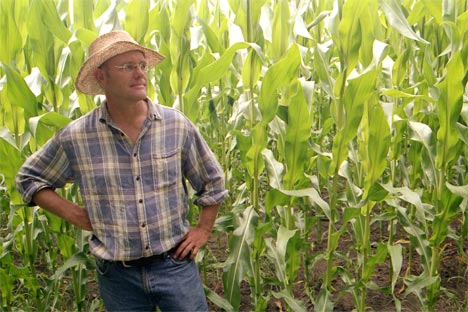
    farmer

    A couple months back I raised some eyebrows by saying that medium-sized churches were in crisis. Since that post I’ve had dozens more conversations which confirm that it isn’t just me seeing this, it really is happening. Church leaders all nod their head when they read Seth Godin,Big is the new small. But you’ll always have big.” In the business world, Wal*Mart is still getting bigger while medium-sized outlets struggle to exist. But the real growth in retail happens in the mom-and-pop shop online. The same is coming true in chuch-world.

    In churches, the big will keep getting bigger. Just like people are driven to the big box retailers, people are continuing to be drawn the big box churches. I say… let them have their big buildings, ginormous programs, and endless pursuit of perfection. While it doesn’t appeal to everyone… certainly, that appeals to masses and its obvious that those megachurches will/should continue to get mega-er.

    For them, the business model really is the best model for church. 10% effort and 90% profit.

    But for small churches, the best model is a farm. 90% effort and 10% profit.

    Both are noble. Both are valuable. But both operate in strikingly different manners.

    I see that we are at the forefront of seeing an explosion of small, niche based small churches. Just like it’s easy to dream of an online shop selling homemade Mario Brothers crafts and finding an audience on Etsy.com, it’s getting increasingly easy to build a church around a niche. People are more-than-happy to drive 50 miles to worship with people in their tribes who share their passions. That’s why we’re seeing a major wave of church planters who successfully grow from 1 to 200 and then plateau… happily. They are churches full of artists or surfers or engineers or soccer players.

    Differences between business models and farming models of church leadership.

    At the core it’s this: Business models are driven by growth. Farming models are driven by sustainability.

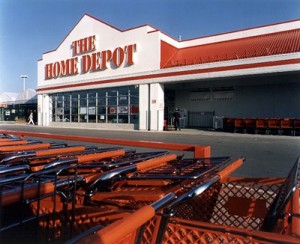
    home-depot1. Success is different. In business models growth is expected every year. You are expected to have a larger audience in 2010, 2011, 2012 or you’ve failed. When you reach saturation you have to franchise by planting a new megachurch or going to satellite services somehow. Plateau is the enemy, growth is measurable. In a farming model, growth is important but sustainability is more important. A farming-based model recognizes that you’ll have bumper crop seasons where there will be temptation to grow the farm… but you don’t, intentionally, because you know there will be tough times when a bigger farm would lead to failure. Successful farmers expect good years and bad years.

    2. Discipleship is different. Examine any discipleship method in the business model of church and it all goes back to the Sonlife model taught in youth ministry of the 80s. Win-Build-Equip-Multiply. Navigators, Sonlife, Willow Creek, Saddleback, North Point… all of those models are designed to grow a church through multiplication. In a farming model, it’s all about yield per person. How can I maximize growth with the people that I have? How can the people within my congregation grow the most? How can I love them more? Since farming is about sustainability and not multiplication discipleship is always about maintaining a healthy ecclesia. One isn’t better or more biblical than the other… they are just different methods. (Of course, proponents of each think their model is superior!)

    3. Leadership is different. A large church pastor is driven [and held accountable] by growth. There are many good ramifications of this. Tens of thousands of people are introduced to the Gospel… please don’t misread that I’m saying big churches are bad. But a nasty byproduct of that drive for growth is that the successful church in this model really becomes about the pastor. New Spring is Perry Noble’s church. Lifechurch.tv is Craig Groeschell’s church. Willow Creek is Bill Hybels church. North Point is Andy Stanley’s church. Mars Hills is Mark Driscoll’s church (Or Rob Bell’s church, depending which coast you live in.) On and on. While those leaders never desire to create a cult of personality… the leadership-style that creates that movement of God draws that type of person in the same way Ebay is Meg Whitman’s company, Microsoft is Bill Gates company, and Apple is Steve Jobs company. Contrary to what you might think… I don’t think the drive to grow a large church is evil. It’s perfectly fine and healthy to live within that paradigm. My fear with those churches is that there simple isn’t a succession plan if/when that leader steps away! Look back to last generations megachurches and you see the problem and how it plays out.

    soy-fieldA small church pastor is driven by sustainability. It always has to be about the people, the families, and the community. Since everyone will actually know everyone in a small, niche-based church can’t afford a cult of personality. In a small church the people are always aware that the pastor won’t be there forever… and so they hold the pastor accountable by making him make sustainable decisions. The small church pastor is motivated by “the farm” and he isn’t frustrated when there are bad times… it’s just part of what he does. He fertilizes and tills the ground, he maximizes the yield, and he understands that good and bad times are part of the ebb and flow of small church ministry.

    4. Expectations are different. Values in a large church are that things will be professional, smooth, highly organized, and striving for perfection. In a small, farm-modeled church, excellence is nice when you have an excellent person… but the expectation is “the best we can do.” That’s why there was so much pride in Mainstreet when I was in Romeo. It was the best thing we could do and we were proud of it. Sure, it wasn’t Broadway quality. Reggie Joiner wasn’t going to come to Romeo and write a book about how we adopted his model with cardboard and a fat youth pastor dressed like a cow. But no one in Romeo really expected it to be and we set it up in a way that could sustain. That’s why Mainstreet is still happening even after I moved away. In a small, niche/affinity based church, perfection isn’t the goal… the niche is the goal. Quaint is good! Rock that quirky church, baby! Mrs. Nelson’s son playing on the piano poorly is just fine. A kids program lead by an ex-stripper now Christian grandma is a blessing. Ministries lead by teenagers is about sustainability of the niche-based church… not about having the best leaders teaching.

    What do you think? Do you think it’s time to introduce a model for small church ministry that is based on sustainability? Do you agree with this premise… or am I way off?

  • The church is shifting

    Last weekend I had the opportunity to meet a ton of people for the first time. Convention attendees, authors, speakers, and ministry leaders from across the US. And it was interesting because there was a phenomenon among the conversations that I found fascinating.

    Somewhere in the conversation there would always be this thread of “do you see what is working in youth ministry?” In other words… “what’s worked for me in the past is presently not working.

    Here’s how I described what I’m seeing in my work.

    There is a shift towards the small. While I see large ministries getting larger, more organized, and reaching more masses of people than ever their successes come via the small and intimate settings of community, micro-community, and stuff that happens outside of programs. But outside of churches in the 3,000-5,000 range I see tons of head scratching frustration. Leaders are sensing the shift, they are seeing numbers change, yet they aren’t coping with it well. Their response to the shift towards the small is to create a program that appeals to that. In other words… their people want something small and not programmatic but ministry leaders desire to create a program of ultra-small groups. And they wonder why it isn’t working.

    Here’s a problem to be overcome. As soon as I say “the church is shifting” many people’s brain automatically label “shift” as “emergent church.” And that includes a whole slew of people the church at large seeks to ignore and marginalize. I really think they would rather fail than admit that some of those people were right.

    Here’s what I am not saying. I’m not proposing that the church should change. (future tense) I am recognizing that society has shifted (past tense) and that the church is shifting to respond. (present tense)

    Here’s what I am saying. This isn’t about theology. It is about the church, the timeless truths of God’s Word, and it’s leaders responding to a seismic shift in how culture works in our society. Society is shifting and many church leaders are clinging to programs as if they were the Gospel!

    Instead of purpose-driven churches we need to see mission-driven churches. Instead of copying what we see at conferences and mega-churches, we need church leaders to spend serious time studying their communities doing the hard work of ethnography. (This isn’t new, A.B. Simpson said the same thing 120 years ago!) We need to see churches working within their communities instead of asking the community to come to their buildings.

    Let’s make it even simpler.

    Churches who build their ministry around their community are succeeding.

    Church who build their ministry around the short cuts of copying megachurches are failing.