
 A key component to the second law of thermodynamics is entropy.
Entropy is the scientific principle that all systems will eventually go from order to disorder. Entropy allows mathematics to explain dissipation within a system boundary. In the first law of thermodynamics, energy is never lost in a macrosystem. But in a microsystem, entropy explains why stuff breaks down. The classic example of entropy is a glass of ice water. Water, a system where water is in a mixed state of solid and liquid, is constantly 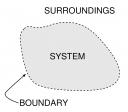 breaking down. Entropy explains that eventually the glass of ice water will break down. The ice will melt into the water because of the heat energy outside of the glass or the liquid will freeze because of the lack of heat. But entropy will not allow the glass of ice water system to stay the same.
In short, entropy is one of the variables that explains that stuff (a system) breaks over time. Pressure, stress, strain, temperature… all are variables. It’s why cars don’t last forever. It’s why toys eventually break. It’s why today’s superfast computer will be slow in three years. If you are a scientist designing a closed system… a car or a medicine or anything scientific you have to plan for entropy… that system will break down over time. If a scientist has no plan for entropy in his system he has failed on a professional level.
But what about entropy in social organizations? Does social entropy exist within systems?