Proof: Being a redneck is not limited to geography.
Lesson: Don’t let your ethnocentricity cloud your judgement.

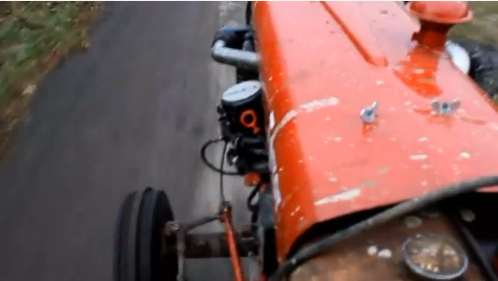
Proof: Being a redneck is not limited to geography.
Lesson: Don’t let your ethnocentricity cloud your judgement.
If I had a dollar for every time someone said that to me about the people of Haiti I wouldn’t be $1700 short in my fundraising!
There are a few answers to that question. At least from my über limited perspective.
I first thought of this often debated online phrase in the real world while in Haiti in February. Like a lot of relief workers I struggled with what I saw. It just didn’t reconcile with the world I know.
I’m not a sociologist. But this is how I think of social currency.
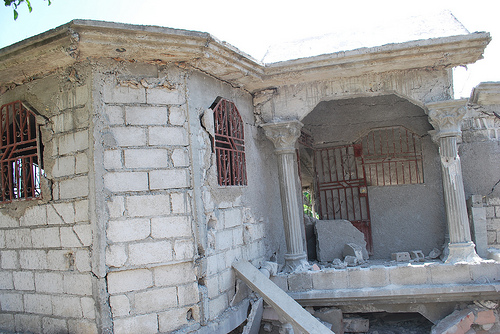
If my house partially collapsed, killing my family, what would I do? Obviously, I’d call 911 and 6 minutes later a miniature army of highly trained firefighters would show up. Then a news helicopter would fly overhead so that the entire metro area would know what had happened within the hour. In shock and not knowing what else to do, I’d get in an ambulance and go to the hospital. At some point soon after that my insurance agent would call me. I’d call some friends who would rally around me. Within about 48 hours I’d be planning funerals, talking to endless insurance people about life insurance and property insurance, while a group of friends would help me “get back on my feet.” In the meantime, I’d probably stay with some friends or relatives before settling into a long-term hotel that my insurance company would pay for (and going to a years counseling that my health insurance company would pay for) while they took care of hiring contractors to pull permits and level the house before rebuilding it.
That’s a lot of social currency. I’d call on all of those government and financial institutions without thinking about it because I’ve paid into those institutions! I’d call on friends to help because we have a perceived reciprocal society. Just the thought that “they’d do the same for me” would compel them to help.
How would that change if I were the poorest of the poor, living in a country with no infrastructure, and the entire city I lived in collapsed? Those with financial means would leave immediately. This would be the land-owners and business people. Those with no means (the homeless, the orphans, the widows) are just kind of frozen. They don’t know what to do because they don’t know the questions to ask nor the ramifications of what would happen if they “just fixed stuff.” Nor do they have the resources to fix stuff. Nor do they have the energy or equipment to fix stuff.
I remember Seth Barnes asking people what they were going to do and the dialogue always went like this:
What are you going to do about your home?
– I don’t know. I’m waiting for the government to help me.
Has the government ever helped you in the past?
– [laughter] Of course not.
The poorest of the poor are, unfortunately, dependent on help. The real question for them seems to be… what will accepting help cost them? Remember that Haiti is a place of both spiritual and real oppression. Accepting help may land them into a debt that costs a lifetime to repay. This is a place where children are trafficked and labor is unregulated. This is a place where, on a good day, the police are uncaring about your plight. But on a bad day, the police are just as dangerous as the oppressors. They may even be the oppressors in some neighborhoods.
What would you do? You’d laugh at those silly barriers in full knowledge that the landlord wouldn’t care that you cleared the property. At the very least you’d knock down your condemned home and pile up the rubble to be hauled away. Chances are pretty good that you’d also try to organize your neighbors into a group of workers who would go around clearing rubble for other people. Say, old women. That’s the power of social currency. You aren’t frozen. When everyone is stuck, you’d naturally rise up and take action.
If you are a reader of this blog I want to encourage you to find an agency of relief and pray about going to Haiti in the next 12 months. You have resources. You are ignorant of culture barriers. And you have social currency to spare.
 A key component to the second law of thermodynamics is entropy.
Entropy is the scientific principle that all systems will eventually go from order to disorder. Entropy allows mathematics to explain dissipation within a system boundary. In the first law of thermodynamics, energy is never lost in a macrosystem. But in a microsystem, entropy explains why stuff breaks down. The classic example of entropy is a glass of ice water. Water, a system where water is in a mixed state of solid and liquid, is constantly 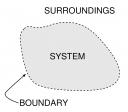 breaking down. Entropy explains that eventually the glass of ice water will break down. The ice will melt into the water because of the heat energy outside of the glass or the liquid will freeze because of the lack of heat. But entropy will not allow the glass of ice water system to stay the same.
In short, entropy is one of the variables that explains that stuff (a system) breaks over time. Pressure, stress, strain, temperature… all are variables. It’s why cars don’t last forever. It’s why toys eventually break. It’s why today’s superfast computer will be slow in three years. If you are a scientist designing a closed system… a car or a medicine or anything scientific you have to plan for entropy… that system will break down over time. If a scientist has no plan for entropy in his system he has failed on a professional level.
But what about entropy in social organizations? Does social entropy exist within systems?