
Month: December 2011

  • A brief history of sexting and the power of media manipulation

    Here’s a brief history of sexting.

    • Some students got in trouble for sending sexually explicit pictures of another student around a school.
    • Local news reported on it, after all it contained “teenagers” and “sex” in the same story. Brittany Spears must have been on vacation.
    • In another town a similar case was reported.
    • To make it more interesting, a regional or national news editor aggregated the two stories and gave it a sensational title: sexting.
    • A single national news organization ran a story with the title “sexting.”
    • Other news organizations and certainly those not in the media but whom enjoy making comment on news items (aka– bloggers) picked up the story and repeated it.
    • Remember, this was 1-2 isolated cases aggregated together as an emerging trend.
    • Someone does 45 minutes of research into teen texting behavior from an unrelated marketing survey and determines that 20% of teenagers have sent a sexually explicit text message.
    • Forget that fact that the study was likely unscientific and didn’t study sending/receiving photos or videos… the thing that gets codified is that 20% of teenagers send sexually explicit texts.
    • Any new case similar to this, among the millions of teenagers in America sending trillions of text messages monthly, was now labeled as “sexting.”
    • Sexting began appearing in the vernacular of the public… and an assumption formed that “sexting is something a lot of teenagers do.
    • Sexting, now a thing, begins to be written about as if it is a real trend affecting millions of teenagers.
    • A news agency, not to be outdone, labels sexting an epidemic.
    • Legislators, keen to make it on the news, murmur about the teenage sexting problem.
    • School boards and soccer moms start to talk about the horrors of sexting.
    • Sexting cases” start to get aggregated with ANYTHING teenagers do. Any music trend. Prom. Sports. Everything now has a sexting potential.
    • Some students actually start sending explicit photos of one another around… because they hear about how prevalent it is among teenagers on the news. 
    • Sexting begins to appear in the litany of prevention literature. Teenagers and their “malformed pre-frontal lobes” can’t help themselves. Left alone for more than 14 seconds, they will drop their pants and send pictures of their privates to everyone they know. At least that’s what you’d learn from these “concerned organizations.”
    • Soccer moms, parenting from a cocktail of fear and living vicariously through their children, buy the whole thing. They start looking through their children’s texts while they sleep.
    • Sexting becomes something every adult assumes is happening rampantly among teenagers.
    • Someone actually does a study and proves that the whole thing is a fabrication. About 1% of teenagers have ever sent or received a sexually explicit text message.
    • And of course the news machine makes money talking about why sexting isn’t happening at the rate everyone thought it was.

    “Even if you look at 1% or 2% of kids in a high school of a thousand kids, that’s 10 to 20 kids, and that’s plenty of people for whom this is a big issue and for whom this is a troublesome problem in their lives,” says Lenhart, who has researched teen sexting but was not involved in the new study.
    Source

    1% of teenagers isn’t something we need to have a prevention focus on. Stop this perverted fascination on adolescent sexuality! As long as humans could write, people have drawn and written sexually explicit messages.

    As advocates for adolescents, we need to call this stuff out. Our cultures bias against adolescents, including the false creation and labeling of phenomenon, is a form of discrimination that we need to root out.

    Want another example? Look at this Fox News piece.

    It has every stereotype of teenagers in one story. Teenage sex is bad. (Er, look at history. We wouldn’t exist as a society without teen sex.) Malformed teen brains. Negative brain development ties with experiencing sex in the teenage years. (The study is of HAMSTERS!) Fear, fear, and more fear.

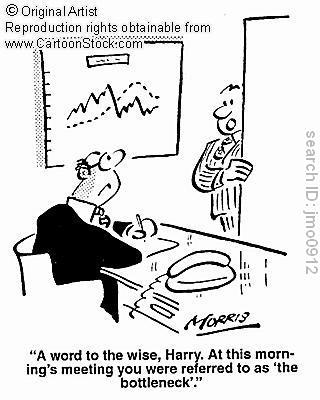
  • Bottlenecks

    A bottleneck is a phenomenon where the performance or capacity of an entire system is limited by a single or limited number of components or resources. The term bottleneck is taken from the ‘assets are water’ metaphor. As water is poured out of a bottle, the rate of outflow is limited by the width of the conduit of exit—that is, bottleneck. By increasing the width of the bottleneck one can increase the rate at which the water flows out of the neck at different frequencies. Such limiting components of a system are sometimes referred to as bottleneck points.

    Bottlenecks are one reason the church can’t grow to full capacity in the current model. It’s not that the Gospel of Jesus Christ isn’t appealing to more people. It’s that the mode with which the American church choses to operate is driven to a single bottleneck: The worship service. 

    With a clearly defined bottleneck and the low trust, high control primary management style of most in church leadership– we are seeing other negative non-monetary economic principles come into play.

    3 non-prescriptive solutions to finding church growth

    1. Embrace a high trust, low control management-style.
    2. Create additional entry points to biblical community. (Non-worship service endpoint)
    3. Capitalize on Americans culturally hard-coded draw to good news.
  • Donate your New Orleans Bowl tickets to the Marshall Faulk Foundation

    Like a lot of San Diego State fans, I’m not able to attend this years bowl game in New Orleans. Besides having plans for December 17th already it would have cost more than $1000 to attend. (airfare, hotels, tickets, food, etc.)

    That’s why I was thrilled to see that the SDSU ticket office has made it possible for season ticket holders and the general public to buy tickets for the game and donate them to a deserving child* in New Orleans through the Marshall Faulk Foundation. (see above)

    As a fan and supporter of Aztecs sports I wanted to partner with SDSU in selling their allotment of 9500 tickets. I’ve donated my ticket allotment to the Marshall Faulk Foundation and I am encouraging all fellow season ticket holders, Aztec Club members, alumni, and fans of the Aztecs to do the same.

    Here’s the link to buy tickets to sponsor a child

    Note: *To comply with NCAA rules on recruiting the ticket office has made it clear that tickets donated to the Marshall Faulk Foundation will not go to high school students. (Hence the works “child” and not “youth.”)

  • Kick off the new year with CBEmini

    I’m kind of tired of hearing how biblically illiterate teenagers are today. 

    Ultimately, as spiritual leaders and parents dedicated to investing in those students, biblical illiteracy is on us. Our students don’t know the Bible because we’ve failed to teach them. (Guilty as charged) Worse yet, if students don’t have a love for God’s Word that’s reflecting on our own lack of love for the Bible.

    I’m happy to be a part of something that is changing that and helping people have a brand new relationship with the Bible.

    Marko and I worked with the folks at Biblica (International Bible Society) to create CBEmini.

    What is CBEmini? It’s a 9 day trip through Luke-Acts using The Books of the Bible. Basically, The Books of the Bible is the New Testament laid out like a chapter book. All the words are the same but the format is a lot more simple. No columns, no footnotes, no verse numbers… just the story of Jesus and the early church as Theophilus may have read in in the first century.

    CBEmini is a bit-sized version of the 8 week Community Bible Experience. Our hope is that if your students try the 9 day experience that they will want to continue. So far, in our beta testing, that’s exactly what has happened… people are continuing on because 9 days wasn’t enough. (You read that right– students want to read MORE of the Bible.)

    The format is simple. You get a PDF of Luke-Acts to print and students read it. You get together as a group a few times to talk about what you’re reading in more of a book club format than a typically Bible study. (You get a leaders guide, too.) And watch what happens as student read the Bible, really, for the first time. It’s really cool. 

    Over and over again we’ve heard students say… “It’s almost like I’m reading a story and not the Bible.” Or “I love reading this in the same way I read a good book… I just read until I get tired and put it down, then come back later.” Or “I never knew how good the Bible was at telling stories. Things fit together in ways I never saw before.

    I’m excited about this project because I can only imagine the movement that would be created if thousands of students fell in love with God’s story in the same way the connect to Harry Potter or Twilight. It’s not that students don’t like to read. They do! This tool just helps them read the Bible in a format that they can connect to.

    The best part? It’s totally free. How cool is that? 

    Here’s the punchline: Go sign-up now.

  • American Airlines CEO quits on moral grounds

    American Airlines, once the largest airline in the United States, declared bankruptcy. This is not surprising news for the beleaguered airline industry; what is different is what is emerging from the wreckage. Gerard J. Arpey, American’s chief executive officer and chairman, resigned and stepped away with no severance package and nearly worthless stock holdings. He split with his employer of 30 years out of a belief that bankruptcy was morally wrong, and that he could not, in good conscience, lead an organization that followed this familiar path.

    Read the rest

    Trying to think of the right word for Gerald Arpey’s choice… hmmm… oh yeah… Morals.

    Remember when those in power were known for their high moral standards? Remember when the person at the top represented the organizations highest standards of excellence and character.

    Maybe we should  get back to that? Maybe we should ask organizations to hire people who will uphold the values of the organization above the profits of the organization?

    We should celebrate Mr. Arpey’s choice. He upheld the moral high ground that the company should pay its debtors and retiree benefits while the rest of the board made the immoral decision to file for bankruptcy as an easy way out “because everyone else is doing it.”

    I also found it interesting that American Airlines is calling it a retirement while the New York Times is reporting it as resigning because he thought the board was morally wrong. I wonder which is the truth?

    Hint: The company who declared bankruptcy in order to get away from paying their debts might just be protecting their behind from Wall Street while the guy who quit because he thought that was wrong is likely telling the truth.

    On top of that– Arpey didn’t hold the board hostage by taking a massive golden parachute. (In fairness, I have no doubt that with 30 years of service and having made $14.34 million in the last 5 years, that Mr. Arpey is hitting the bread line any time soon.) He just said… “You know what? If you make this move you are making it without me.”

    I like that in a leader. 

  • 14 Must-Have Gadgets for the Geek in Your Life

    ATTENTION GOOGLERS!

    Here’s a link to my 2012 list

    Let’s face it. For many of my readers I am the geek in their life.

    I’m the nerdy friend you tell your IT guy about when you don’t know what else to talk about because you want to talk about the latest political news about Herman Cain or what happened on SNL and all he is knowledgeable about is Leo Laporte’s ugly shirt in his last episode of This Week in Tech.

    You don’t even know who Leo Laporte is. And that’s OK.

    So what do geeks want for Christmas? What are the things that will make us shout “sleigh ride” on December 25th? I’m glad you asked. Here’s my list of 14 geek toys that I will happily tweet about when the UPS man drops them off.

    For super smooth panning on my YouTube videos…

    buy the Camera Table Dolly for Adam at the Photojojo Store!

    For capturing my every moment of adventure…

    buy the GoPro Camera HD Hero 2 Outdoor Edition for Adam at Amazon.com

    So I look cool at the water cooler…

    buy the Fail Whale Coffee Mug for Adam at Zazzle

    For making me look just a little bit thug on the trolley…

    buy the Custom Comic Headphones for Adam at Etsy

    So I don’t get lost finding a coffee shop on my bike…

    buy the Perfect Fit Handlebar Mount for iPhone 4 for Adam at Amazon.com

    For keeping my desk organized…

    buy the Metal Cordies for Adam at Quirky

    For posting the perfect fish eye Instagram…

    buy the The iPhone Lens Dial for Adam at the Photojojo Store!

    For making stop motion movies of my web design process…

    buy the Neewer shutter release for Canon DSLRs for Adam at Amazon.com

    For getting that nod at the bar from fellow addicts…

    buy the Angry Birds Triple Threat t-shirt for Adam from Amazon.com

    For making people smile more than making them jealous…

    buy the iPad Cover Made from a Real Book for Adam from Etsy

    So I’m using space wisely and keeping my USB options open…

    buy the Space Bar for Adam at Quirky

    For tweeting while walking and keeping the digits toasty…

    buy Texting Friendly Gloves for Adam at Etsy

    For street-level citizen journalism at Occupy San Diego…

    buy the Groundbot for Adam at Rotundus

    For sharing time with Kristen that’s better than updating my status…

    buy the Rocking Chair for Two for Adam at Sway

    What would you add to the list? Leave a comment with a link, maybe I’ll add it!

    Posts like this:
    5 Socially Conscious Christmas Gifts
    Good News Idea: Ring That Bell


  • Lamborghini + Tree = LamboChristmasTreenini

    MY CAPTION:

    What do you mean I’m fired? I thought you said, “Put my lamborghini under a Christmas tree?” [face + palm]

    What’s your caption? 

    ht to Dirk up in Eagle Rock for the picture… it was windy up in LA last night.

  • To go deep, you have to go wide

    Photo by ??’ via Flickr (Creative Commons)

    I’ve been thinking a lot lately about how our students so quickly dispatch their faith in early adulthood.

    As I’ve read Sticky Faith, Almost Christian, Christians Smith’s research, and played host to the Extended Adolescence Symposium last week I’ve been taking it all in and trying to figure out “why.”

    Why is it that so many students walk away from their faith in early adulthood?

    And I can’t get away from this: The Jesus we present is often times shallow, weak, and boring. He’s easy to walk away from.

    It’s not that following Jesus is any of those things. It’s just that we present him that way.

    I think a lot of young adults walk away because we are shallow, weak, and boring.

    They are thinking deep thoughts about important things, they are reading Joyce and Emerson and wrestling with the Pythagorean theorem while we spend countless hours debating the merits of pop-culture Christianity. We care more about Rob Bell’s glasses than we do why Jesus is allowing hundreds of thousands of children to starve in the horn of Africa. We care more about next week’s worship set than we care about what’s happening on their campus.

    Our students are learning from their own experience that if you want to go deep on things you have to go wide– and they look at us and see us trying to go deep on things we aren’t very wide about.

    • They observe we only read from people we already agree with.
    • They observe we only listen to vantage points we are likely to already hold.
    • They observe we are only stretched intellectually unintentionally.
    • They observe we are avoid big theological questions.
    • They observe we seek training and education for our limited scope and see little value in getting outside of our discipline.

    I’m struck by the reality that most high school sophomore’s have a more mature reading pallete through their literature classes than the average pastor.

    A sophomore is reading Shakespeare, Hemmingway, Arthur Miller, Twain, F. Scott Fitzerald, Maya Angelo… to name a few. The average pastor is reading Francis Chan, a couple of commentaries from the same theological spectrum, and a book about leading small groups.

    You might have an MDiv but you’re looking pretty intellectually thin next to a 15 year old getting a C- in British Lit. 

    We make a mistake when we try to simplify the Gospel. We make a mistake when we try to dumb down what Jesus is saying to what we think our students can understand. We make a mistake of trying to neatly wrap up a Bible lesson into 3 easy-to-remember points.

    Because our students know life isn’t that easy. They expect an infinite God to be infinitely deep and infinitely wide. And what they see presented from their leaders lacks both.

    I think the thing I’m wrestling with is  the reality that students aren’t walking away from Jesus necessarily. They are walking away from the cheap, easy,uninteresting, anti-intellectual, shallow, weak Jesus we have presented them in high school.