
Once you were not a people, but now you are the people of God; once you had not received mercy, but now you have received mercy.
Dear friends, I urge you, as foreigners and exiles, to abstain from sinful desires, which wage war against your soul.Live such good lives among the pagans that, though they accuse you of doing wrong, they may see your good deeds and glorify God on the day he visits us.
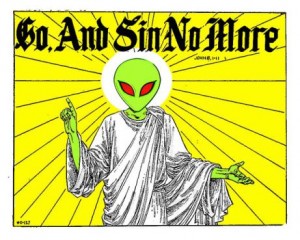 This is one of those passages of Scripture so easily twisted that it is used to justify all sorts of weirdness done in the name of Jesus. (My favorite is using this as justification of a position against immigration reform.)
What is Peter even talking about?
Context is everything. And, as is almost always the case in prooftexting and twisting Scripture to fit your agenda de jour, when you understand the context of what Peter is saying it ends up saying the opposite of what you want it to say.
Peter is writing to Christians scattered throughout Turkey and Greece. Some were converted Jews but most were new to both the Jewish-ness of Christianity and walking with Jesus, the Messiah.
New believers were experiencing double-culture-shock. Jesus pulled them out of their native culture and plopped them into a culture that was simultaneously Jewish as well as a cult of Judaism.
That left everyone wondering who they were. That left everyone desperately needing Peter’s instructions on how to figure this stuff out.
These were questions of identity.
And they are super relevant today.
Born this way?
The Old Testament is full of stories shunning assimilation and celebrating victorious separation. (Daniel, 2 Kings, Genesis 35-50) Indeed, part of being Jewish was a separation from culture. To be God’s people was something you were born into. Language like “chosen people” or “God’s elect” were terms bestowed by birth and not by choice.
Language like holy was just fancy language for “set apart.” To be Jewish was to avoid assimilation with culture.
To assimilate was to embrace non-Jewish ways. It was made clear that when you married outside of the Jewish faith, calamity came. When you sold out and ate unclean foods, you brought disease. When you worshiped alongside other faiths, God brought thunder and destruction.
Assimilation is anti-Jewish.
Then came Jesus– and later Peter’s vision in Acts 10-11. They didn’t just open an addendum or loop hole for how to be Jewish-like while living in Judea. (There’s a whole group of people labeled God-fearers who lived Jewish-like lives documented in Acts.) This was an invitation to anyone and everyone who believed that Jesus was the Messiah to become God’s elect, His chosen people. To follow Jesus was to be completely a Christ-follower. To whom you were born didn’t matter nearly as much as to whom you were born again and baptized.
Fundamentally different is that in Christ you can chose to become elect. And that’s a foreign concept to traditional Jews.
That’s super relevant for today. Peter addresses a fundamental question the church still wrestles with today: Are we set apart from culture? Or do we assimilate?
Do we assimilate?
Have you ever been an alien? I’ve been fortunate enough to live abroad as well as travel. So I have gotten glimpses of what it’s like to be an alien to a culture.
But I also live in a community of aliens. Each year about 3500 new refugees arrive in my community. They are relocated here from places of conflict or devastation around the world. They don’t speak the language. The transportation system is scary. Some have never had electricity. They’ve never shopped in a grocery store or been to a bank. They are decidedly not Westerners.
So many people have been hit by cars on University Avenue that they’ve made a large section with flashing lights and lines on the pavement warning drivers that people might simply walk into your car.
These new neighbors fear assimilation. A year or so ago I was in a church that had services for a group of Somali refugees. On the bulletin board were prayers written out… most of them were prayers against assimilation.
At first, assimilation seems like the only option. To give up your Cambodian-ness or Hmong-ness or Guatamalean-ness or Mexican-ness or Congolese-ness seems like the only option. And a century ago assimilation was the answer. Immigrants who went through Ellis Island often gave up their given names for English ones. And as soon as they could give up their language and heritage, they would.
As Christians, some groups of people want to assimilate with the larger culture altogether. They tend to give up their Christian-ness in order to blend in. They poke fun at or deny their Christian-ese or shy away from knowing the names of people or things they grew up with. (I find this especially true among more liberal tribes.)
Or do you integrate?
I think Peter is calling us to integrate with our society. When people use 1 Peter 2 as a justification for culture wars or railing against culture, they often miss a subtle, yet important word “among.”
You see, you can’t change culture or society by not assimilating at all and standing outside of it.
And you can’t change culture by fully assimilating and becoming so much a part of it that no one could pick you out as different.
Peter says you change yourself as you live among culture and that the culture in which you live is changed when you integrate yourself among society.
Ultimately, I believe, 1 Peter is about integration. It’s about getting dirty. It’s about learning the language. It’s about standing apart humbly while standing amongst.
1 Peter 2 is not about standing outside and pointing fingers. It’s not about pride. It’s not about I told you so. It’s not about giving up your identity. It’s not about sacrificing distinctives or pretending the Bible isn’t vital or denying what you believe for fear of offending someone.


Leave a Reply