
Category: management

  • 3 Lies of Church Growth Experts

    Right now there are a lot of people making a lot of money telling churches how they can grow. Along the same lines, there are a lot of church boards and pastors wasting a lot of time discussing church growth strategy.

    An observation. Have you noticed that churches that want to grow (100 to 1000 people) flock to churches that grew 10, 20, or 30 years ago but have since plateaued? It’s like asking Bill Gates, “How do you start a software company?” Bill wouldn’t have a clue! When he wants to start a software company he buys one! In the same way, asking a church of 10,000 how to grow is a waste of time because they knew how to do it in their town 10, 20, or 30 years ago but haven’t a clue how to do it today in your town!

    So let me save your church some time and money. Here are 3 guaranteed ways NOT to grow a church. There must be 20 conferences, 50 books, and 100 consultants based on these three lies. 

    #1 You have to have a great ____ ministry. This lie has been out there forever. A church with a great van ministry that’s really reaching people will one day go, “Hey… let’s start teaching people how to start a van ministry so they can copy us!” Same thing with student ministry, kids ministry, music ministry, puppet ministry, after school ministry, seniors ministry, etc. None of these programs will grow your church! It’s just a marketing lie to think that you can grow a church by having a great program. Having great programs is vitally important to the mission of any church (reaching and discipling people) but there isn’t a program out there that will grow a church from 300 to 1000 people! If you see a conference, book, or consultant who tells you “If you just have ____ you’ll see the growth you are looking for” just know that you’re being sold an idea that worked in one location and won’t work in yours. The best consultants will look deeply into your organization before recommending anything!

    #2 If You Build it They Will Come Building stuff and remodeling stuff is highly addictive. But buildings and environments don’t grow churches. I’ve been to some real dumps that were exploding in growth. And I’ve been to some beautiful buildings that were empty. Have you ever been to Europe? There you can visit some of the best looking church buildings in the world, they are mostly empty on Sunday mornings. As a 16 year old I toured the Cathedral in Strasbourg France. Completed in 1439 the cathedral is amazing in its beauty. It was the tallest building in the world from 1647 to 1874. Talk about a city on a hill! Want to know how many people go there now? None.

    A ministry will endure when it focuses on its task at hand way more than its location. Location means squat. (Just ask the Chinese!)

    If someone is telling you that a new building or a new _____ will grow your church, they are either deceived or trying to sell you something. Take a tour of some of the fastest growing churches in the United States and you won’t be overly impressed with architecture, ornate decoration, or interior design. What’s on fire in those places is not the building!

    #3 “You have to be more focused on reaching people than keeping people.” This is just ignorant marketing! It’s even worse pastoring.

    The best thing you can do to grow a church is to lead, grow, and love the people in your church. If they are growing, being lead  to deeper expressions of their faith, and feeling loved by the people of the church, they will tell their friends. That makes sense along every front a church looking to grow. Marketing, strategy, leadership. 

    The only church growth advice that I’ve ever heard that is truly a guarantee is “All healthy organisms grow.” That is dead on. If only the folks looking to grow their churches would focus on getting the church they have today healthy, it would grow. But to take an unhealthy church and try to grow it with a new building or a new program or a new focus is just silly. 

    Q for Church leaders: What do you think? Do you think I’ve captured 3 lies in church growth? Or do you think those experts out there really have something that can help you grow your church?

  • What Makes Romeo Different?

    differentWe’ve had a lot of visitors lately and I’ve gotten this question a couple of times… I’ve been to a lot of churches, why does this one feel different? This was a reminder to me of just how different we do church at Romeo.
    I don’t mean musical style or programs that we offer… though that is very different from a traditional church… I mean that we are different in how staffing works.

    Let me share the two typical ways churches are run.

    Traditional church staff = The senior pastor calls all the shots. He hires and fires to his specifications associate level staff. Practically speaking, he both gets all the stuff done and he is lord over the church’s programs.

    Contemporary church staff = There are ministry directors who run their own departments. Each department head, “Pastor of Students” or “Pastor of Music” or “children’s director” all report to the senior pastor but they are pretty much lord over their departmental domain. Generally, 90% or more of their time is invested in their department and they compete for people, resources, and money to each grow their own ministry. The other 10% of their time is either voluntarily or involuntarily spent helping in “general” church ministry stuff.

    I dislike both of those models. They are good but not geared at “whole church” ministry. In other words, participants in the youth program don’t typically regard the children’s director or senior pastor or music pastor as their spiritual leaders. Their allegiance is to the youth pastor… and that’s bad for the long-term health of the church. Likewise, the department heads are always seen as replaceable if their particular department fails. This is simple-minded since it’s not fair to judge the adult music program when music hasn’t been fostered in children and youth. Just like it isn’t fair to blame poor Sunday school attendance on the pastor’s preaching. In a small to medium-sized church a departmental-style or a traditional “pastor-ruled” method actually acts as a growth limiter. The growth of the church is limited by the capacities and talents of either the senior pastor or the individual department heads. That makes hiring nearly impossible. Each department is looking for a person who can do everything! No wonder people fail. Expectations are completely unrealistic.

    In the past, Romeo has used both of those structures. And both didn’t work out too well long-term. At least not in my opinion.

    That’s how we now come to the question, “What makes Romeo so different?” I call our structure a “holistic ministry staffing.”

    Holistic church staffing = This starts with an understanding that a diverse staff team makes for a well-rounded and healthy church ministry. Instead of basing a staff member’s ministry around an age-group— each staff member’s ministry is based around their giftedness. For me, I’m the tech/video/internet guy on top of my love and desire to reach students. So about 50% of my time goes to non-student ministries with the goal of making each ministry area excellent in what I am strong at. The same is true with all the other areas of our church. Also unique to our set-up is the expectation that each staff member contributes to the other areas… this shocks people who work in the other two methods! That’s why you’ll see our pastor be a big part of kids ministry and the children’s director adds a lot of administration to all of the other church ministries. From our perspective, this methodology gets the most bang for our staffing buck. Likewise, our hope is that every staff member is regarded as a spiritual leader of the whole church. Of course, we all are subordinates of the pastor… but that doesn’t mean we all don’t work together any less. Just like I’m interested in making Sunday morning services the best we can possibly be, the other staff people pitch in to make students or music or children’s ministry the best we can.

    I know this is unconventional. But for us it works. Moreover, I think this style of staffing is where most church staff’s need to work towards.

    How does this start? It starts with brave senior staff and leadership teams who are comfortable in their skin. By admitting that there are things you aren’t great at you can focus more of your time at what you are good at.
    From there… it’s mostly a matter of submitting oneself to the greater good of the ministry over your personal preferences.

    Why didn’t you talk about lay leadership and volunteers? Next time.

  • Do you need a resume? It depends.

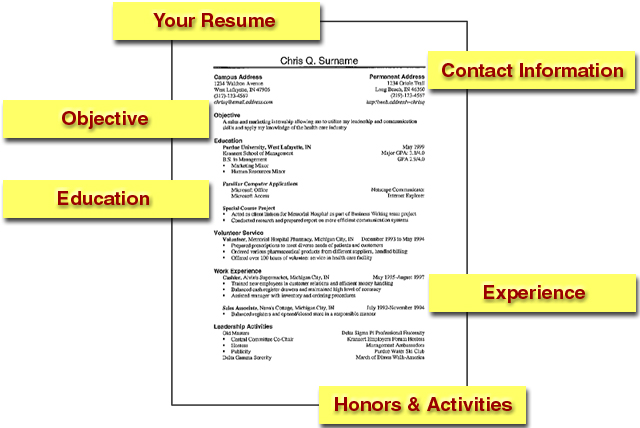
    resumeRecently, Seth Godin made this statement on his blog.

    I think if you’re remarkable, amazing or just plain spectacular, you probably shouldn’t have a resume at all.

    The reason is simple. If you are really, really good at what you do [remarkable] the resume is just a formality. I’ve been on plenty of job hunts both from both perspectives and I know this to be true. When I’ve been looking for a job I have always translated “We have your resume and we’ll be reviewing it soon.” to mean “You aren’t our top choice, we’ll call you when the #1 person isn’t coming.” And when I’ve been looking to fill a position I have already talked to the best candidates before I start collecting resumes. Or worse, when I’ve started looking for resumes it means that I don’t know what I’m looking for exactly.

    What is a resume, anyway? It’s a self-marketing tool. That’s all it is. You are casting a light on yourself to highlight what you are good at and hide what you aren’t good at.

    Confession time. In both my ministry and my health insurance career I have been “lucky enough” to land on head hunters phone lists. What that means is that I have occasionally gotten calls from people whose job is to talk happy employees (me) out of their jobs to try a new business or ministry. [Trust me, I’m not going anywhere! 28 years left on the mortgage.] My response has always been the same two fold answer.

    1. “Why would I leave a place I’m happy with for a place that had to hire a head hunter to get someone?”
    2. “Why should I send you a resume when you’re calling me tells me “they” want me because you’re calling me out of the blue to try to talk me into leaving this job?”

    In that instance, my resume isn’t important. When a headhunter calls you, you are already in the drivers seat for that job. That’s a scary place to be but it is the truth of the situation.
    When is your resume important?

    1. When you are looking for an entry to mid-level job.
    2. When you are trying to get a first job in a new location or field.
    3. When you aren’t sure exactly what you want.
    4. When you are forced by circumstances to cast a wide net. (laid off, fired, or living in Michigan)

    When is your resume unimportant?

    1. When you’re not looking but get a call asking for it.
    2. When you’re a “known” entity in a job field or location.
    3. When the aggressor in the job search is the employer.

    If all three of those are true, you might as well send them a napkin with your phone number as you’re skipping the pre-screening phase and going right to the big interview.

    What do you think? What are your job searching tips?

  • Vision, Goal, and Mission Statements

    SuccessEvery organization can measure success.

    It doesn’t matter if you’re running a non-profit, a government agency, a corporation, small business, or an educational institution… you need to have some ways to set the course and measure your progress. That is, if you would like to succeed.

    If you are willing to fail (must be a government agency or educational institution where money comes “magically” from the tax gods) goals, mission, and vision are pointless as your default measurement of success is merely “Did I keep my job another year?” While those in businesses without defined goals have default, meaningless measurement tools like “Did we make more money than last year?” From a business perspective, that’s a stupid measurement tool as you can kill next year by maximizing profits this year to reach the “make more money than last year” measurement tool. Just ask Enron. Organization driven by meaningless measurements like profits will always fail!

    So, let’s define some terms. Maybe this will help your organization. (more…)