Category: management

  • The Paradox Every Small Business Must Navigate

    The Paradox Every Small Business Must Navigate

    This fall we’re transitioning our farm from working full-time to part-time.

    This decision was largely made for us back in February. Our largest account closed with no warning, we learned about it on their Instagram page, a $60,000 – $70,000 deal gone without so much as a phone call or email.

    Just poof.

    We came into 2026 resolved to let the data decide our farm’s future. Trend up and we push forward on our growth path. Trend down and we get jobs in town.

    At the same time, if you’ve ever started a small business, you’re always holding on to a lottery ticket. “If this one thing happens… maybe… just maybe.”

    It’s a fantasy every small business owner holds onto.

    And you know what? Over and over in my career when I held out hope for something big to happen it did.

    Back in February, we decided to continue on with the Summer CSA and make a decision by August 1st.

    Starting in late Spring I was holding out hope that I’d find something, a project or a new line of business, to keep the farm growing.

    And late in the game I thought I found it.

    I was given the opportunity to pitch a project in the area that would have kept the farm operational financially in its then-current form through the end of 2026, at least. That would give me time to find the next project that’d keep us going until the spring when our next nursery season hit, which rolls into our Summer CSA.

    Translation: If I could land this deal I could probably get us to fall 2027.

    Once again, as I’d done for most of my adult life, maybe I could pull a rabbit out of my hat?

    Survive at all costs vs. Live to Fight Another Day

    Fight or flight, basically. I’m hard-wired to fight but experience has taught me that sometimes flight is the best path to long-term survival.

    That’s the paradox every small business owner faces at some point.

    But at what cost?

    The client was really excited and seemingly motivated. And most importantly, they had budget to make it happen.

    I sent them a well-vetted proposal with an aggressive timeline. I could get started right away and have their project completed before the winter set in.

    Just give me a green light and magic will happen.

    They stalled.

    Then they pushed back on costs without adjusting the timeline or scope.

    Then they just dropped off the face of the earth without making a decision.

    I’ve done a ton of project work, albeit in website development, but it’s not altogether different. When a client starts balking and flaking out like that I know those are red flags. I’ve learned it’s better to simply walk than to try to keep negotiating as the project will disappoint everyone.

    We moved on and that was that.

    Then they came back to me recently to try to renegotiate one more time. I had to give them a hard no because in this case, “Live to Fight Another Day” for us is far less costly to my body, family, and budget than taking on a “Survive At All Costs” project.

    Hard pass. No hard feelings. Thanks but no thanks. Not this time.

    Unable to pull a rabbit out of my hat we proceeded with the data-driven decision we’d laid out earlier.

    “Let’s get off-farm income like 75% of small family farms in the United States.”

    And you know what? Living to fight another day is farm more hopeful in this season of life than surviving at all costs.


  • Fear of Success

    Fear of Success

    I find the biggest thing that holds people back from experiencing success in their lives is an inability to manage their fear. Rather than overcoming their fear they just get stuck.

    (more…)
  • Failure and Success are Siblings

    Failure and Success are Siblings

    I failed yesterday. It hurt. It sucked. And I did it on purpose.

    Over the summer, after months of nudging by my friends, I picked golf back up. For me, during the pandemic, it’s been the perfect outlet. I get out and exercise, building cardio and muscle by walking San Diego’s hilly courses, but more importantly it’s helped keep me sane from the repetition of elongated stay-at-home orders from COVID-19.

    (more…)
  • 3 Types of Advice I’ve Given that I’m Now Applying to Myself

    3 Types of Advice I’ve Given that I’m Now Applying to Myself

    To move up…

    To move up sometimes you need to move on.

    I’ve given that advice to youth ministry friends over the past decade. And this year I finally awoke to the reality that it was time to take my own advice.

    (more…)
  • Trading Magic Wands for Work Boots

    Trading Magic Wands for Work Boots

    Have you ever noticed how easy problems are to solve for people who aren’t involved?

    (more…)
  • I Am Dean Spanos

    I Am Dean Spanos

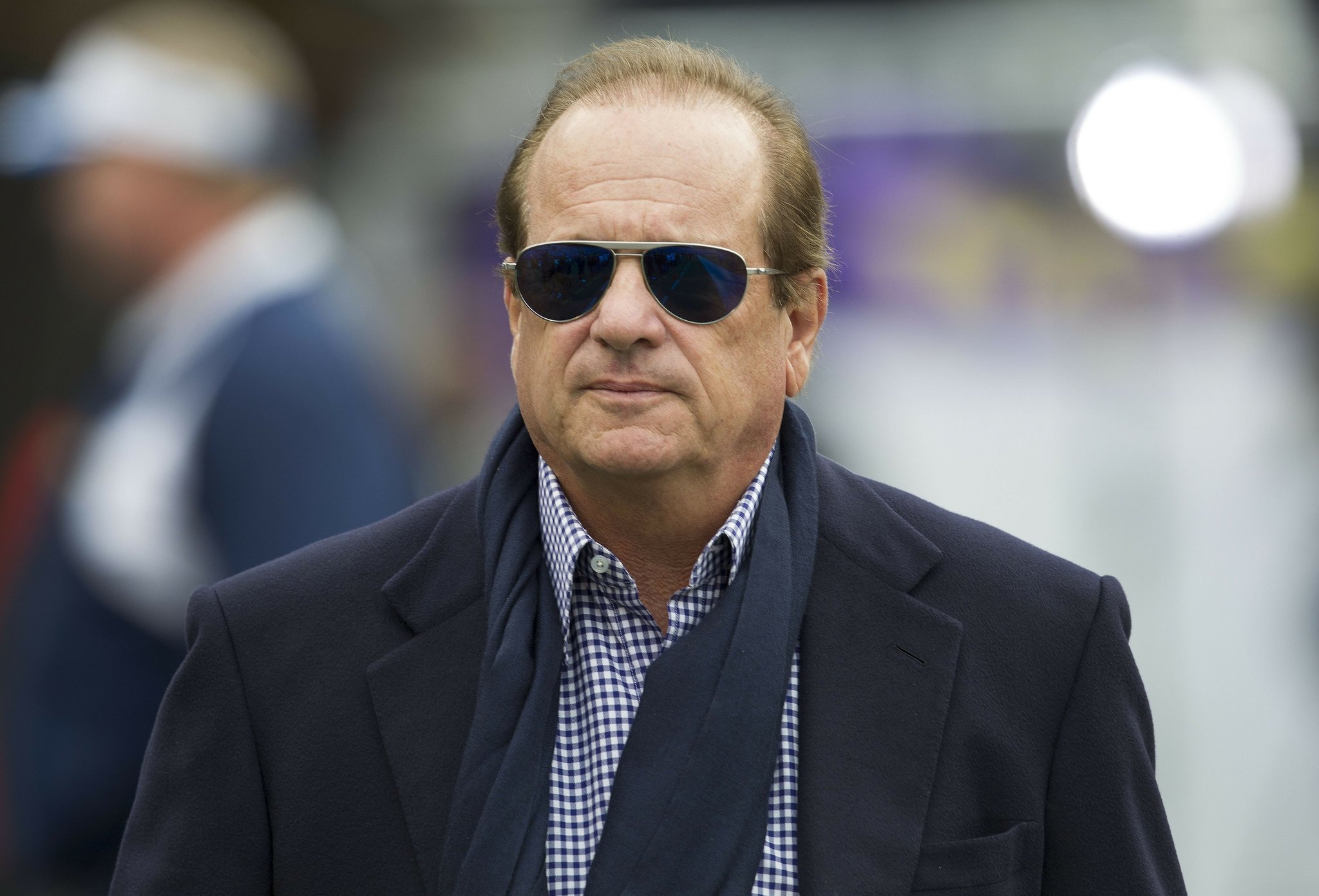
    Yesterday, NFL owner Dean Spanos walked into his San Diego office and told his staff that after 56 years they were moving the franchise to Los Angeles.

    (more…)

  • Numbers-Based Decision Making

    Numbers-Based Decision Making

    I’ve got pretty good instincts for making decisions. Think about it. We all do. We make hundreds of decisions each day as we navigate our daily life and the vast majority of them turn out just fine.

    (more…)

  • Hurry Up and Hurry Up Some More

    Hurry Up and Hurry Up Some More

    Every day I get about 250 emails. 

    It looks something like this:

    • 125 of them I can delete straight away. Email marketing, social media notifications, stuff like that. 
    • 100 of them result in small tasks that I can deal with quickly. Purchases at our online store, questions in our Help Center, blog comments, stuff like that. 
    • 25 of them are things I have to actually deal with. Work-related stuff, personal stuff, you know… actual emails that take time and thought to respond to.

    And that’s just email.

    On top of email each day is filled with a myriad of other things to do in both my personal and professional life. Every day household tasks like watering plants, putting the dishes away, running errands, taking the kids to school, on and on. Ordinary work stuff beyond email like bookkeeping, shipping/receiving, and stuff like that.

    And then there is the work stuff that actually is “what I do.“ (The stuff that actually feeds my family) For me, this time of year, that’s a lot of strategy and execution on somewhat complex projects. Complex projects with deadlines and expectations both externally and within myself.

    Getting Stuff Done in the Age of the Edit Button

    It’s that “what I do” stuff that I want to draw attention to right now.

    The ordinary stuff with it’s routines and repetition is very important, I would argue that until you can manage that well you’ll never really succeed at the “what I do” stuff because it acts as the foundation for excellence you need to have the “what I do” stuff be really, really good. So let’s assume we’re managing that.

    How do I get stuff done– on time and meeting internal/external expectations?

    How do I avoid hurry up and hurry up some more?

    How do I find contentedness with an ever-stacked todo list rushing me to the next thing?

    My answer? 

    By letting go of “perfect” to embrace “perfecting”.

    By weighing “this is my absolute very best” against “this is the best I can do in the time this is worth, I can come back to it if I need to fix something.”

    Sometimes you need to let things go that aren’t quite the way you’d like them.

    s0134145_sc7This is one of the joys of today. Technology makes this possible.
    I remember back in high school, in a race against the deadline, madly typing my thoughts into an electric typewriter until I’d hear it chirp. The single line liquid crystal screen would flash “Memory Full“. You’d double tap the return key and your thoughts would quickly type onto the page. CRAP! There’d be a typo and you’d have to use the correction tape or White Out to fix it.

    The problem was that this process would break your concentration. You couldn’t ever really get into a writing flow because every couple of sentences you’d have to stop for corrections. I remember furiously writing down my next thoughts on paper I kept next to the typewriter so that I wouldn’t lose it.

    Do you even remember Wite Out? 

    You don’t need it anymore.

    Now you can just press “edit” and fix it.

    Every day, when I write, I just let my thoughts flow. My Macbook doesn’t have tiny crystal screen that only stores 250 characters at a time. It doesn’t chirp “Memory Full” before forcing me to put my thoughts onto paper. (Heck, my thoughts rarely even end up on paper at all!) Instead, I freely type as fast as my fingers allow and if I make a mistake it either automatically corrects itself or I can go back later, click the “edit” button, and fix it.

    Perfecting Instead of Perfect

    It’s this letting go ability that I love. This knowledge of being able to edit later which allows me to be productive.

    While I have perfectionist tendencies I can relax knowing that almost everything I do doesn’t have to be perfect when I finish it. Instead of being hung up on getting things perfect I can relax knowing that the work I do can be perfected later.

    If you think about it that’s how most of the products and services you love work. Software constantly evolves, perfecting as developers learn new things, folding in new features that customers want. Movies and television screen their product to select audiences than perfect it, editing and re-editing, until it’s finally ready for public consumption. On and on, we now live in a world where the “edit” button frees us.

    The question facing most of us is simple: Will we allow ourselves to set aside perfect for perfecting? Will we embrace the edit button in what we do? For most of us, in most professions, we don’t have to do our jobs perfectly. Instead, we can get better over time– even going backwards to fix our previous mistakes.

    Let’s live in and embrace that freedom.

  • Small Ball

    Small Ball

    In the sport of baseball, small ball is an informal term for an offensive strategy in which the batting team emphasizes placing runners on base and then advancing them into scoring position for a run in a deliberate, methodical way. This strategy places a high value on individual runs and attempts to score them without requiring extra base hits, or sometimes without base hits at all, instead using bases on balls, stolen bases, sacrifice bunt or sacrifice fly balls, the hit-and-run play, and aggressive baserunning with such plays as the contact play. A commonly used term for a run produced playing small ball is a “manufactured run”. This style of play is more often found in National League game situations than in the American League due in large part to the absence of the designated hitter in the National League.

    Source

    I don’t follow major league baseball. Heck, I don’t even follow little league baseball. (Or particularly like watching  baseball!)

    Winning vs. Entertainment

    As a spectator sport, it takes a certain type of baseball fan to appreciate small ball. Americans like fast-moving entertaining baseball. We want to see homers, players running into one another in the outfield, and close plays at home.

    But watching batter after batter take balls to get walked? Not so much. 

    So it’s a balancing act for professional baseball management. On the one hand small ball wins ballgames. On the other, winning doesn’t matter if fans don’t show up.

    In professional sports there’s winning and there’s winning.

    A Life of Small Ball

    In the same way, American culture celebrates big, dramatic, and entertaining lives. We love it when someone does something big. Success looks like a stadium of people waiting to hear you speak or your creating something so big that you become a household name.

    That– we suppose— is what success must look like.

    Or is it? 

    • Is a big thing a success?
    • Is success big?
    • Is success external?
    • And what does this success cost in relationship to other things?

    Personally, I find going for the big home run to be more exhausting than the elation of the big moment. [Forget that fact that hitting a home run while losing the game isn’t much of a success.]

    Let’s take this out of the ether of hypothetical. “What are you really talking about, McLane?”

    I’ve turned a corned over the past couple of years. I’ve largely given up on the idea of going for big, ambitious, household-name-styled success and instead embrace a lifestyle of small ball.

    I believe success comes as the result of more than a moment– though, at times, a moment exposes your success to a broad audience– instead, success is the result of a thousand good choices and behaviors.

    In my personal life, I don’t need to be celebrated as a great dad or husband. Instead, I just want to be a great dad/husband by making a thousand good choices. It’s better to be healthy than to be seen as healthy while actually being unhealthy.

    In the Cartel life, [a term we use informally to talk about leading The Youth Cartel] we aren’t interested in being big, with complex structures, large staff, and loads of property & products to manage. That’s someone else’s success, not ours. Instead, we feel like if we do a thousand things well/right/good the next thousand and the thousand after that will come to us. We’re not out to compete with anyone or put anyone down… we just want to do our thing in a way that’s healthy and sustainable for us.

    The Impact of a Small Ball Life

    When I travel for work people ask me about the impact of that on my family life. I suppose, if you don’t travel that much, that hanging out with someone who travels for work can feel like that must imply success. While I certainly like traveling and meeting new people, I see travel for work as just that… travel for work. It’s my job! I like to say, “My life is either really big– going cool places, meeting cool people, doing cool stuff– or really small. Outside of taking kids to school I work at home and so my life revolves around my family, house, and neighborhood.”

    I like my “big life” and I like my “small life.”

    But given the choice, I’ll take a thousand small successes over one big win, all day any day.