• From RSS to Today

    Is RSS dying? Quick answer: No

    But RSS (Really Simple Syndication) has a lot more to compete with in 2010 than it did in 2005 when it took off.

    In 2005, the advent of aggregators like Bloglines, Google reader, and even the über popularity of my.yahoo.com made RSS the best way to grow your reach as a blogger. If you could just get them to click that orange button– they’d get your blog post every time you published automatically!

    RSS was king.

    For a few years RSS was one of the easy measurement tools of blog power. As people visited a site for the first time they were more likely to subscribe to a blog if they knew say… 1034 other people already did. (And yes, tons of the names in the Christian blogosphere you know today got known simply because they figured out how to manipulate the Feedburner subscriber chicklet. They made it seems like they had tens of thousands when they really had about a hundred. Tricky, tricky. It was dirty but you bought their books. Sorry.)

    In 2006, the apple cart began to get upset with the popularity of sites which sifted through thousands of relevant RSS feeds within a niche` and curated the niche` into a website. Power wasn’t just measured in your ability to have thousands of RSS subscribers… it became measured in your ability to get your conent brought to the front page. Sites like Boing Boing, TechCrunch, Huffington Post, and Mashable exploded simply by curating their respective niche`. (Imagine editors looking through tens of thousands of RSS feeds and choosing 10-12 things a day to link bait.) Interestingly, since that’s essentially what newspapers and television news folks do, these curators became recognized as legitimate news outlets within their sector. All because they subscribed to thousands of RSS feeds and started to bring the best stuff to the top. Along the way they earned more than your RSS subscription– they earned your trust.

    In 2008 and gaining strength through today RSS has become less important. Why? We don’t need to have tons of content automatically sent to us via an aggregator. Nor do we need the big niche` sites to curate the conversation generally. Instead of subscribing to Mashable or Boing Boing or the New York Times, I monitor my friends feed on Facebook or Twitter. I allow them to go through their aggregators and allow them to be my curator. In other words… I read what my friends tell me to read because they thought enough of it to retweet it or recommend it to me on Facebook.

    Here’s the new reality bloggers, news agencies, and marketers are wrestling with every day: We’ve gone from RSS to FFS.

    What is FFS? I just made it up.

    Friends and Fans Syndication: Delivering your content through relationship-based platforms.

    Learn how to manipulate FFS and you will be king in 2011.

  • Two quick updates from McLane Creative

    A fun outlet for me is building WordPress sites, consulting, and social media campaigns at McLane Creative. Since it’s a creative outlet I tend to be pretty picky with who I work with. Here are three quick slogans I use to describe my work there:

    • Guaranteed to be on budget and past deadline.
    • I tend to chose you more than you chose me.
    • I pick projects that matter to me, regardless of budget.

    Interestingly, this tiny business has continued to grow through 2009-2010. And with marketing slogans like that… how could it not?

    I’ve fallen into a pace where 7-8 projects per years is just about right. Any more or less and it’s just not worth it.

    Two quick structural updates:

    1. I’ve moved all of my hosting from Bluehost to 6sync. More importantly, I’ve moved from a shared hosting environment which lead to some unexplained downtime and nasty malware, to a VPS environment where I’m much more in control. More on this move.
    2. I installed a client collaboration tool. The way MC works is that I build a custom team of freelancers for each project. This is an ultra efficient model of web development for the client… but the pitfall is that it requires that I manage a bunch of people working together for the first time over and over again. The new client area (powered by Collabtive) centralizes the teams communication with the client. More on this move.
  • Are you willing to love your life?

    I’ve gotten a fresh round of criticism lately and most of it flows back to a single source: There are people so grumpy that it annoys them that I am happy.

    It’s as if we’ve grown so accustomed to whining about everything that we now have decided to whine about people who aren’t whining.

    Maybe our entire country is depressed?

    People seem pessimistic that optimism is even possible.

    Beyond Content

    I love my life. And I’m not afraid to state it.

    Critics– Go buy some cotton candy and watch kids on the merry-go-round for an hour.

    2009 sucked in many ways but galvanized one important thing: I am comfortable with who God has made me to be, come what may.

    And in releasing that anxiety God rewarded my life with a flood of blessing.

    Why am I happy? I’m challenged in new ways all the time. And I love that. I’m learning all the time. And I love that. I am doing things that matter. And I love that.

    My bills are paid. My kids are safe. Our family is growing. I take joy in the simple things. I take joy in being charitable with my time and treasures. I stop and smell the roses. I have many things in my life I could complain about but I simply chose not to.

    Find someone to high five and give them one! Glory to God!

    And yet I know it bugs people to say that I’m happy. In some Christian circles happiness really isn’t allowed… only contentedness. If you are too happy that is somehow sinful. This reminds me of the Puritans, who forbade comfortable furniture because being too comfortable or sleeping too well would somehow lead you to sin.

    Happiness is not bad. Jesus’ sermon on the mount contained something we call the beatitudes. This was a list of counter-culture things that should make us happy! (Read Matthew 5) Blessed is just a fancy way of saying, “Happy.” Reread the beatitudes and insert that word. It’ll rock your world.

    See, happiness is an attitude I chose. It comes from within and not from circumstances. It’s why I can walk around a tent city in Port-au-Prince and meet widows who tell me, “I don’t have anything but I am happy. In Christ, I have everything I could ever need.”

    Say it with me, “I love my life.”

    I’ve met too many church staff members this year who have chosen dissatisfaction as their attitude. It’s as if nothing short of being the most famous person in the world. Loving God and serving his people in their town just isn’t satisfying. We sit down and they list 25 things that are going great in their ministry. But that one thing drives them to dissatisfaction and bitters their whole life.

    You can smell it on them. Literally, it is a stench of dissatisfaction. It’s hard to be around.

    My advice? Chose a new attitude today. Join me in choosing happiness.

    Write it down. Declare it to some people. Make today the day you chose happiness.

    Actually say it out loud, right now. “I love my life.

    Maybe it’s the first time you’ve ever said that out loud. Practice it a few more times… “I love my life.” Say it again and again until it feels natural.

    Kind of freeing, isn’t it? Go ahead, text it to your spouse right now. “Baby, I love our life.

    Happiness comes from within. It is absent from circumstances. A happy person is happy because they’ve chosen to be happy. And choosing to be happy can be one of the most powerful, life-changing things you could ever do.

    Go and tell

    Imagine the joy it would cause if people in your life to know that you’re happy? Think about the sweet lady in your church who has told you over and over again that she prays for you daily. Or your boss. Or your mom. You know– the people who really care about you and your happiness.

    Let it be known that you love your life. Write, “I love my life” as your Facebook status today. Post it on Twitter. Print off a sign and put it on the doorway to your office.

    I dare you. Chose happiness and change your life. It can start today.

    O, that we would live a life worthy where the Gospel has fully penetrated even to our attitudes.

  • Resetting Priorities

    I’ve been thinking about this concept of priorities for my life in ministry.

    Here’s the list I see all the time:

    1. God
    2. Family
    3. Our vocational ministry

    I actually think that’s entirely jacked up and unhealthy.

    Here’s the priorities I think God is calling those of us in vocational ministry to:

    1. God
    2. Family
    3. Community (a fellowship of friends)
    4. Loving your neighbors
    5. Our vocational ministry

    I know that for folks in vocational ministry… this is almost heresy. And in some ministries that’s almost like resigning your position.

    But I’m left to wonder. If all that people in my community see of me is busy, busy, busy… Maybe I’m not living a life worth following?

    Jesus said, “Come to me, all who are weary, and I will give you rest.” In a world which seems to spin faster and faster in every moment… that’s a promise most people need.

    The question for me is simple:

    “What do I have to change in my life to show that a life with Jesus provides rest for the weary?”

  • Helping Dan feel human

    Can you help me with my bike? My wrist is broken!

    I barely heard the question. But speaking over This American Life was the voice of a man on the platform struggling to get his bicycle up the stairs and onto the trolley.

    With my bike pinning me against the retractable wheelchair lift on the ancient, yet retrofitted ADA accessible trolley car, it took me a few long seconds to get to the door. With the door trying to close and an annoyed trolley driver belching over the loud speaker, “Please board the trolley immediately, we have a schedule to keep,” I arrived to press the button and fling the door open in the nick of time.

    Thank you, thank you, thank you.” The man said as he pushed from behind when I grabbed the front handlebars. As I yanked the front handlebars, decorated with tennis balls and aluminum foil, it’s weight revealed that this wasn’t just a bike– it was this mans worldly possessions.

    Lifting (more like heaving) the bike it seemed stuck between the edge of the platform and a bar that divided the doors. With pressure to speed up and a dose of adrenaline, I gave it a bigger yank and the bike let out a loud yelp!

    Just a second, let me untangle Wile, he’s chained to the seat post.

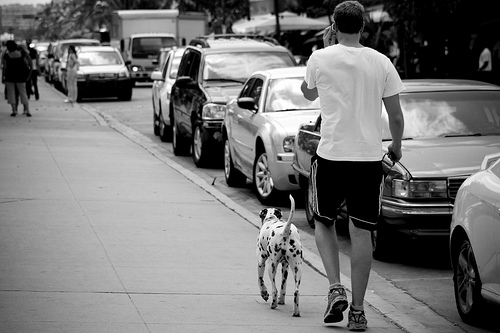
    As I looked to the right of the bike, sure enough, there was a collie-mix tethered by the collar to the mans seat post.

    OK, here we go. I’ve got it now.” I said, giving it one final tug as the now-free rear of the bike lumbered up the steps.

    By this time the whole car full of riders glared back at me. In the process of helping with the bike and dog– my bike had fallen down and made a horrible noise. So, as I was guiding the bike, rear-loaded with about 50 pounds of stuff in a box wired to a makeshift rear-carrier, his dog, and it’s owner having a long conversation with himself about needing to buy dog food– I also picked up my own bike and wedged myself back into my safe corner.

    It was clear that the people were not glaring at the man. They barely noticed him. But their ugly gaze was at me. They think I should have left the old man on the platform.

    I quickly popped my headphones back in just in time to hear Ira Glass introduce the next segment of the show.

    The trolley doors finally close. The driver instantly kicks it into high gear, as if to say… “I’ll show them!” The bike and the dog were secured, but the man had just made it to the top step and hadn’t quite measured his balance when the car leapt forward. His arm reached out and grabbed mine as he winced. Given the impossible choice of falling backwards or gaining his balance with a broken wrist, he chose to grab firm onto my forearm.

    Thanks for the help. I couldn’t have made it without you. What’s your stop? I’m going to Old Town.” He said, now settling into a comfortable place to stand at the rear of the trolley with his whole life at his feat.

    I get off at the college. So when we get close, you’ll have you slide forward so I can get by.

    And then he started talking to himself about some sort of gibberish I couldn’t make out. And then about 10 seconds of silence.

    In that silence I had to decide. Am I just going to tune this man out and go back to listening to the latest episode of my favorite podcast? Or am I going to take my headphones off and see where this conversation goes?

    The Holy Spirit was screaming at me. “Talk to this guy.”

    Sliding my headphones into my pocket– the man told his dog to lay down as he twitched and pulled and talked to himself.

    So, what’s the dogs name?” I said, startling him with my question and breaking the newfound silence between us.

    Wile E. Coyote. He’s part coyote. He’s the best dog in the world.”

    Oh, I see that. He’s a great dog. How long have you had him?

    He stared off into the horizon as the trolley slowed towards the next stop seemingly thinking about the question for a minute and came back with, “You know, these trolley cars weren’t built for bicycles. I asked a transit cop one day why we get these cars on the green line instead of the newer ones which let you roll your bike right on. He said it was because of the graffiti on the other lines.

    I just rolled with it and for the next few minutes listened and talked to the man about whatever he talked at me with. The Chargers. The canyon he calls home. How he broke his wrist. Florida. The weather. A fishing trip. It was like our conversation was the random setting on my iPhone, you never know where it’d land next.

    At first, I wasn’t certain he knew I was a real person as he had a tendency to look through me more than at me. He’d also stop in mid-sentence and start a different thought. I kept wondering if he thought I was a figment of his imagination. But over the next few stops it seemed like the blurriness of his life started to narrow a bit and things became slightly more in focus. As I kept chatting with him his eyes gradually drew more into the trolley car, even noticing me a couple of  times for his pupils to focus on me, or my bike, my backpack. His ticks and pulls dramatically slowed down. About 10 minutes into the conversation I think he realized I was real. The longer we made small talk the more relaxed he became.

    And the more relaxed I became in talking to him, too.

    To him, I think I became less a random object that helped him get on the trolley and more a person. And to me, he became less a homeless man with a dog and an impossibly heavy bicycle making me late and more a man who probably just needs someone to regularly talk to.

    In that moment we were just two normal men engaging each other in small talk on the trolley.

    It was the most healthy thing either of us had done all day.

    I’m no psychiatrist. So I don’t know if this is true or not. But in my experience I think anyone who is a little mentally ill probably gets increasingly worse when they become isolated from people who aren’t ill.

    And zooming by on the freeway at 70 mph or driving everywhere in my car isn’t going to put me in contact with the Dan & Wile’s of the world.

    Sure, I ride the trolley for my own reasons. But one reason I think God has me ride the trolley is to slow down and take notice of people the rest of the world largely ignores.

  • Economy of Words

    Good communicators are aware of an economy of words.

    Whether its blogging or public speaking or preaching– you must have a constant awareness of how many words your audience is capable of processing in the amount of space/time you have.

    Too many words and people get overloaded and tune you out. (or navigate to another website) Sloppy word usage or a lack of creativity? You’ve lost them. They may be present, but their minds are gone.

    Have you ever wondered why people can recount exactly what happened during an episode of their favorite show but can’t remember the three main points of your last sermon?

    The secret? Editing.

    Television shows, movies, magazine articles and even songs are all edited to maximize your retention of the words.

    They go through a process. Someone writes it. It gets edited. It gets rehearsed. It gets edited again. Then it gets performed. (If its recorded then it gets edited one more time.)

    Let’s review:

    1. Unimportant messages, things flowing from the entertainment industry, are edited to maximize impact with an understanding that the audience can only handle so many words before they stop taking it in. (Entertainment is passive in response, by nature. But looks at it’s impact in moving people!)

    2. Important messages, let’s say… things that are taught in youth group or Sunday morning at church… are almost never edited, rehearsed, or vetted in any way. (The Gospel message is active in response, by nature. But look at it’s impact in moving people!)

    And we wonder why the message doesn’t get through?

  • Opportunities Stomach

    Photo by Kenji Oka via Flickr (Creative Commons)

    Be wise in the way you act toward outsiders; make the most of every opportunity.

    Colossians 4:5

    These were the words of Paul to the Colossian church. He was wrapping up his letter to them with a few tidbits of sage advice. Like bits of dessert after a Holy Spirit inspired meal.

    Those words have stuck with me and become part of my self-talk. You know, the little words that run through your head all the time. A lot of people label me an optimist or a glass half full guy. In fact, I label myself an opportunist. I’m constantly asking myself, “Am I making the most of this opportunity?

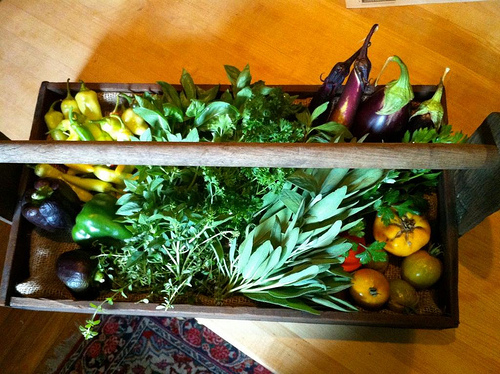
    Maybe that’s a spiritual or ministry opportunity? (Paul’s original intent of those words) But maybe that’s an opportunity at work? Or a business opportunity? Or an great idea? The possibilities are as endless as the food combinations at a buffet.

    The Opportunity Stomach

    I’ve found that there is a strategic difference between waiting for the right opportunity and and jumping at every opportunity.

    Think of opportunities like a meal. You are either hungry for it or you aren’t. (Most people aren’t. They just pass on opportunities without even thinking about it.)

    But if I jump on too many opportunities my appetite for really great opportunities wanes. Then, because I waited for the perfect opportunity I tend to lack the experience to know the difference between a choice meal and a cheap rip-off.

    I notice that most people tend to approach new opportunities like they approach their favorite restaurant. They like what they know and they know what they like. So they turn their nose up and almost all new opportunities.

    Whereas, I tend to nibble at a lot of opportunities and save room for the big ones. That way I know what a great opportunity tastes like when it comes along.

    With that said, the only problem with nibbling is that sometimes you get too full for the big meal.

  • The Emotionally Healthy Youth Pastor

    For the past 2.5 years my job has shifted from being a youth pastor to being a cheerleader, encourager, and fan of youth workers around the country.

    And, not surprisingly, I’ve bumped into a lot of youth workers with a shared story. Careers flopping. Getting fired. Financial struggles. And marriages crumbing.

    As you’d expect during a down economy (mixed with a season of re-thinking ministry strategies) there are a whole lot of people in full-time youth ministry who aren’t emotionally healthy.

    But I’ve also gotten to know some pretty happy and satisfied youth workers. They face the exact same struggles in youth ministry but they seem to have figured out how to manage it. (For lack of a better term)

    Rather than share what I think some of the problems are… I thought it would be more useful to share a couple of things that I see, universally, that emotionally healthy youth pastors have.

    Two hallmarks of an emotionally healthy youth pastor

    1. Low ownership of the youth ministry program. They tend to have Sunday school (even if they don’t teach it) and a mid-week program with some events/camps/retreats along the way. They seem less focused on being on the leading edge and more focused on doing what they are good at. They see their role as the leader of the program more than they define themselves as the leader of the program. It’s a profession and they can turn it on and turn it off. It’s not a “it’s just a job” mentality. It’s bigger than that as its a healthy acceptance of their role in students lives.
    2. Belonging to adult community. This is the bigger of the two. We are made for community. Healthy youth workers have more than just a couple of friends they see occasionally. They have community. They have a group of people in their life that don’t see them as the youth pastor but as just another knucklehead in a group of friends. This is being a part of a softball league or a fellowship of star trek geeks or even joining a small group from a church across town.

    The interesting thing about these two hallmarks is that they are completely within the control of the youth pastor. These are things you can actually do and change relatively easily. You don’t even have to tell anyone. You don’t have to preach about it. You can just do it.

    If you are starting to feel like youth ministry isn’t for you. Or if you are thinking that you aren’t really built to do this for the long haul. I’d suggest looking at these two things, first.

  • Michael Jordan Owns Lebron James

    This is a mash-up, but whoa. Awesome and true. Lebron isn’t the king of anything.

    ht to Eric Smith via Facebook

  • The God of My Neighborhood

    We want to change the world!

    We want our church to reach this whole community!

    God is the God of this city!

    [The crowd raises to its feet and cheers as the band begins to play…]

    These are guaranteed anthems to bring a church to its feet.

    But I’m left wondering if our ecclesiology is a little too big?

    It looks like your eyes were bigger than your stomach.” That’s what my mom used to say when I put too much food on my plate at dinner.

    And I think that’s the strategic error of many churches.

    I know it’s the strategic error of most believers.

    Most churches mission statements tell the people the goal is to reach the world… and when we aim at that we get nearly nothing because it’s too big.

    Isn’t our job to love our neighbors as ourselves and put God first? (Mark 12:28-31)

    Isn’t my job, then, to love my neighbors? Like the ones who live next door? Or down the block? Or maybe as far as around the corner? Isn’t that why God, in His infinite wisdom, placed me in my neighborhood?

    Yes, it is. That is the business God has clearly called you to. He has called you to be good news to your neighborhood.

    Every other type of ministry you do is secondary to that. To take it a step further… every other ministry you have which gets in the way of what Jesus calls the second most important command, is unnecessary. Until you can love your neighbors as yourself you have no business doing anything else. (Yeah, including those who work in churches. I’m looking at you.)

    Step 1: Get to know your neighbors

    Loving your neighbors isn’t hard. You were created in Christ Jesus to do it. It takes no training. And it takes no special skills. This is what you need to do.

    • Get to know your neighbors names. If your yard touches theirs get to know their names. If they are across the street they are your neighbors, too. Each neighborhood is a bit different. But just start with the people immediately around your residence.
    • When you see them… stop and say hello. Talk to your neighbors. These are people God foreknew you to know. You don’t need an agenda, just be friendly.
    • Keep your eyes open and your ears open. When you can see they need help, do what you can.
    • When you need help, ask your neighbors. Sometimes exhibiting some dependency is the perfect open door to getting to know someone.
    • Over time, learn to depend on one another. Maybe your neighbor is a little older and you have a snow blower. Start shoveling the walk. When you go out of town, ask them to pick up the mail.

    As you do this process, the Holy Spirit will begin to reveal to you next steps. Maybe it’ll be to host a neighborhood BBQ? Or maybe it’ll be to help find a lost dog? It could be any number of things… but it probably isn’t to invite them to church or to give them a flyer. God didn’t ask you to bring people to hear the Gospel at your church. He empowered you to bring the Gospel to your neighbors through your love for them.

    What are you waiting for? The power of the Gospel will prevail when you set out to be Good News in your neighborhood.