• How to write consistently for your blog

    I’ve written a series of articles for Immerse Journal describing a digital ministry philosophy for youth workers. The first article, called “Be Consistent” brought a lot of questions because I spent all 800 words talking about “why” to be consistent and it left many struggling readers with a burning question, “How can I be more consistent in this area?”

    Here’s my process for daily blogging

    1. I’ve made it a daily habit. To put it in Christian terms I’ve added it to my daily devotions. I consider writing a major discipline of my spiritual life. It’s a daily exercise for my brain. I belive it’s one of the ways the Gospel works its way both into my life and into the lives of the people around me. Since its part of my daily routine I don’t find the time to blog. The time to blog has found me.
    2. I constantly capture ideas for blog posts. I have two distinctly different methods for doing that. Everywhere I go I have a journal and my iPhone. If something comes to mind, a sentence or thought or paragraph, I capture it. (If you spend time with me you may have seen me do it, though you may have thought I was just checking my email.) Sometimes its a visual sketch that I draw out or write out. But typically, its any idea that pops into my head or flows from a conversation and I capture it. (I use Evernote for that. Synchs from my phone to the cloud to my laptop.)
    3. I have a list of blog posts for future writing. Periods of inspiration come and go. So I maintain a list on Evernote called “blog posts” — Just a raw list of things I want to blog about at some point. Right now, that list has 11 posts titles/concepts. Sometimes it has as many as 30 and sometimes it has as few as 5. Each morning, as I sit down to write, I open up Evernote and decide if I want to write about one of the things on my list or something else that just came to mind. (It’s about 50/50)
    4. I write on a timer. Since I ride public transportation to work I have a firm departure time from my house. If you could see  the time stamp of most of my blog entries you’d see it is right around 8:00 am Pacific. DING! That’s when I have to leave for work. So my blog post has to be done even if it’s not perfect. I start at around 7:00 am and I have to press “publish” by 8:00 am. That means I have to write, edit, do artwork, publish, and push the links out to Facebook & Twitter in that hour.
    5. I process concepts in outline form. That may sound weird but it is how my brain is trained to work. If you were to look the concepts I capture on Evernote you’d see a formula: Concept; list of supporting items. That’s why so many posts are often lists or bullet points. I’m starting with that and wrapping an intro and a conclusion. If I have more time each supporting item may be a paragraph. But typically, like this post, those supporting items are bullet points or numbered points.
    6. I allow myself to slip in other posts. Each day I have my “main blog post.” This is the one I get up and write in the morning. But if something pops up and I want to post it later in the day, I do it. Typically, that drop-in post takes me a few minutes instead of an hour. It’s a thought or image or video or life nugget or reaction to something I read. But I’ve found allowing that to flow allows me to have still have that consistency of one thing I’m writing each day.
    7. I don’t punish myself for days off. I don’t have a scheduled day off from the blog. But sometimes, typically a weekend, I just don’t post and I don’t worry about it or force myself to write two on one day to catch up. Or sometimes I’ll skip the morning ritual to take the dog for a walk and in the process of walking him I will generate 3 new ideas. It’s also typical on weekends that I don’t have a “main post” but I’ll just push out two drop-in posts of quick thoughts, videos, family updates, etc.
    8. Blogging isn’t really always on my mind. I’m not sitting there, having coffee with a friend, and thinking… I’m so blogging this. This process actually allows me to NOT do that. It frees my writers mind to be fully present in my daily life. That’s hard to explain– but I think I’m just wired to write and writing in the morning kind of gets it out of my system so I can be productive in my day without thinking about things to write.

    So, that’s how I do it right now.

    My process is one-part analytical, one part self-discipline, and a pinch of artistic desire. You could even call it a little bit manic.

    And if I’m really honest with myself. Part of the reason this process works for me is that it brings order, control, and discipline to my scattered mind– writing a blog is more for my benefit than yours.

  • Correlating Poverty to Religion

    Image by Charles M. Blow / New York Times

    “A Gallup report issued on Tuesday underscored just how out of line we are. Gallup surveyed people in more than 100 countries in 2009 and found that religiosity was highly correlated to poverty. Richer countries in general are less religious.”

    Interesting stuff.

    Jesus told the rich man, “If you want to be perfect, go, sell your possessions and give to the poor, and you will have treasure in heaven. Then come, follow me. When the young man heard this, he went away sad, because he had great wealth.” Matthew 19:20-21

    Second thought

    I’d really like to see a similar chart correlating the amount of money a religion spends vs. the number of participants per capita. I have a feeling that all of the spending in westernized Christianity doesn’t correlate to increased impact.

    HT to How to Break Anything & New York Times

  • 3.2 steps for dealing with crazy people

    If you serve in ministry than there’s a good chance you have one or two crazy people regularly occupying your time. (I don’t mean mentally ill people, I just mean irrational people who bring undue stress to your daily life.)

    For example:

    • A homeschooling mom who constantly tells you she doesn’t want her teenage son influenced by non-Christian boys despite the fact that she has a raging addiction to prescription pain killers and her children know it.
    • A group of parents that won’t let their kids go to a Christian concert because crowds are dangerous and terrorists are likely to attack.
    • A couple in the church who calls together the elders because I was teaching kids how to pray. And we know there’s only one kind of acceptable prayer, and the kind Adam teaches must be emergent and he’s leading kids to hell because their friend from the other Baptist church gave them a tract that said that Rick Warren and Tony Jones had a secret arrangement to destroy the church in America. And Adam has read Purpose Driven Life and he has a Tony Jones book on his bookshelf.

    The question for those of us in ministry isn’t, if we can avoid these people as the church somehow magically attracts them. The question is “What’s a strategy for dealing with these crazy people that works while not eating up all of your time or disrespecting a child of God acting irrationally?”

    Here’s how I handle it.

    Step .2: Tell your boss

    It’s always a good idea to let your boss know that someone is behaving irrationally. If you don’t manage the situation well than the situation may just handle you. (Many, many church staff lose their jobs annually because crazy people complained to the right people.) There’s a good possibility this person/people are going to tell everyone how you are mistreating them or ignoring them or whatever. So, it’s just good to go ahead and put it on your bosses radar early.

    Step 1.2: Breathe deep, remain calm, and smile when you see them

    I know these people are making your life uncomfortable. But you are still a minister of the Gospel called to love all people. One way I’ve tried to adjust my attitude towards the crazy people in my life is to label their behavior, “misplaced care” or “something they can control in a life spinning out-of-control.” My observation is that these folks aren’t driving you batty simply for the sake of that, it’s somehow fulfilling something they are passionate about. And it’s a good thing to be passionate about their kids, their kids faith development, their church, and the integrity of the church they attend. Changing my attitude towards their behavior helps me remain professional for the next step.

    Step 2.2: Explain your thinking or your philosophy behind their concern

    Fear, by its very nature, is irrational. And while it may merely fuel the fires I always try to backfill irrational behavior with my rationale. It might not help very much in the end but I find it best to schedule a time to sit down with the person and overload them with kindness and information. I’ll explain what I am doing, why I am doing it, I’ll fill their hands with books and documents, and most importantly– I will listen intently to their concerns. Listening validates their personhood without you having to change or agree with their perspective. Next, I’ll invite them to talk with someone else on the church staff or even an elder. Then, when the meeting is over, I document the meeting and share the notes with my boss. If the situation explodes later, everyone who needs to know will know that I treated that person with respect, I gave them all the information they wanted, and I acted professionally.

    Step 3.2: Minimize your time invested in crazy people

    Once you’ve done the first steps it’s probably best to just move on. There’s no need to rehash the thing with co-workers and waste their time. If you’ve followed the steps above, the best thing to do is stop talking and/or thinking about the situation and just get back to the task at hand. Don’t allow someone else’s irrational behavior to distract you too much.

  • Why aren’t more people good?

    Photo by René C. Nielsen via Flickr (Creative Commons)

    Maybe people don’t like to do good because they haven’t gotten bored with being bad?

    I had this thought while listening to an episode of This American Life called, Superpowers. In one of the stories a researcher spent months going to bars and asking patrons which superpower they would like to have and why.

    Most people either answered that they would like to fly or that they would like to be invisible.

    As the research continued, he discovered that while some people claimed they wanted to fly or to be invisible for the sake of doing good, in actuality… when they were totally honest… they wanted to use their superpower to do things that were naughty. And while flying sounded kind of fun, they really just wanted to be invisible so they could see people naked or steal stuff.

    That’s when I started to wonder: “Maybe people with superpowers do good stuff in the world simply because they’ve gotten bored with being bad?

    Think about it. The question Barbara Walters always asks a celebrity doing good in the world is always along the same line of reasoning.Bill, you are the richest man in the world. Why did are you giving it all away?

    And the answer is a meme. (Poor people like us, we love to hear the meme.) “Well Barbara, you can only own so many houses and meet so many famous people before you realize that there must be something else more meaningful in the world.

    Yeah, I’m calling them on that.

    You know full-well that someone like Bill Gates or Angelina Jolie or Warren Buffett or Oprah Winfrey are doing so much good in the world only after they have gotten bored doing some really bad stuff. There are only so many Maserati’s one can crash. Or sports teams one can buy. You can only have bald eagle for dinner so many times. You can only buy so many islands. You get the idea.

    Tiger Woods isn’t the first and he won’t be the last suddenly wealthy person to buy a yacht called Privacy and line up 10-20 women.

    You don’t wake up  thinking “I’m bored with this life, I need to commit to doing really good stuff from now on” until you hit rock bottom. You discover that only when your wife shows you a drawer full of Maserati keys. Or you wake up on your bathroom floor surrounded by a bowl of chocolate covered baby sea turtles you didn’t finish, Ben Affleck passed out next to you, a half a pound of cocaine, and a random baby in your closet.

    The first thing you do with newfound wealth is never give back. It’s always consume, consume, consume. And the epiphany comes when you took it too far.

    Back to my reality

    Photo by Rev. Xanatos Satanicos Bombasticos via Flickr (Creative Commons)

    When I think about my own life, my own free time, and the people in my life… each day we are faced with a similar choice. With the time I have available, will I do something productive for society or will I do some consumptive?

    • Do I volunteer more hours serving the people of my church?
    • Do I go play golf?
    • Do I go on a kick-butt vacation?
    • Do I go on a mission trip?
    • Do I attend a charity fundraiser?
    • Do I buy a big plasma TV?

    In the end, given the choice, I do some good in the world and I do some bad. (Not that those things above are horrible or anything. But you get the idea.) But if I’m honest about my motivation for doing either of the things above… it’s more often about mood than principle.

    At the same time, as a leader, I’m often in a position of trying to motivate people to do something for good. And sometimes we are left scratching our heads and wondering, “Why aren’t people busy doing good?”

    Maybe the answer is simple. Maybe they aren’t busy doing good because they haven’t gotten bored being bad?

  • You’ve got to finish

    My little football heart got broken last night. First, San Diego State gave up a touchdown with 50 seconds left to giveaway a victory to #25 Missouri. That would have been their best start in 30+ years. Then, a few hours later, Notre Dame gave up a silly trick play for a touchdown to lose to Michigan State.

    In both cases, it was about finishing the game. Both teams were sloppy. In one game, a lack of tackling discipline cost them the game. In the other, being over-aggressive cost them an embarrassing lose and landed them on Sportscenter for all the wrong reasons.

    For those of us who lead, both games were a powerful reminder for finishing.

    In life, just like in football, your last play leaves a lasting memory. No one cares how well SDSU or Notre Dame played on Saturday. We’ll only remember the embarrassing finish.

    Do you have a strategy for finishing a project well?

  • The Pastor Man Up Movement

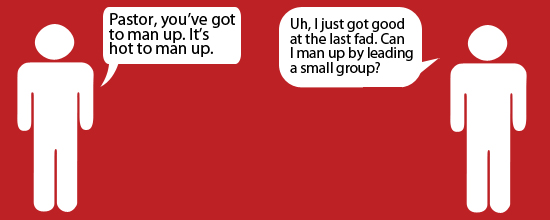
    The last few years has seen the popularization of something I refer to as the Pastor Man Up Movement. (PMUP)

    You hear things said, like “Pastor, if anyone is going to lead your church, it has to be you.” Or, “No one else in the church is called to lead more than you.” Or, “It’s time the pastors of the church took control from the committees.” It’s an interesting phenomenon. And it’s promoting a lot of abuse of power. Pastors read a blog or hear a PMUP message and run to the next meeting all full of testosterone instead of grace.

    It’s dangerous to take the power that a pastor is given and then encourage that person to exert his will on a congregation.

    It’s like storing a keg of black powder in a cigar bar. Eventually there will be an explosion.

    In a healthy context there’s nothing wrong with this movement. It’s good for pastors and church staff to be leaders and to be reminded of their calling. That’s why we pay them. (Let’s not lose site of that fact. I know many people have been abused by the church, but there really are healthy churches out there.) When we hire pastors at our churches we should empower them to lead. I currently attend a church where the church staff are good leaders. They seek wise counsel, they are temperate, they consider the needs of the whole congregation in making decisions, they work hard to battle “what people want” vs “what the Bible is asking us to do.” I’ve never sensed that they are afraid to lead.

    The problem is that it’s also become popular to hire staff members with little or no formal training. It’s not unusual for me to hear of people joining a church staff with not only no formal training at the undergraduate/graduate level– they’ve not even been an intern or been taught how to lead a church in an informal setting. They have zero training to enter the ministry. Literally, one week they are selling cars (or whatever) and the next week they have the title of pastor. Few other professions do this the way churches do. You wouldn’t hire a teacher to be a lawyer. Nor would you hire a vet to be a physician or a CPA to be a plumber. But in the church? It’s become en vogue to hire non-professionals.

    [My suspicion is that those people who leave a profession to enter the ministry probably weren’t that good at their profession in the first place. But it’s quite an ego boost to go from being a CPA to an executive pastor! It’s not like a mediocre CPA was going to make partner.]

    PMUP + Untrained staff = Explosion waiting to happen

    A couple of thoughts about this combination:

    • When a senior pastor surrounds himself with untrained associates this should tell you something about the leader of the senior.
    • There’s nothing wrong with being a strong leader. But if no one is following you of their own free will… you aren’t leading. You are a dictator. (Remember how things end for most dictators)
    • When a church calls an untrained person to be their pastor, this should tell you something about the congregation.
    • It makes me giggle when a bunch of dudes decide that they need to man-up. I grew up thinking that a real man took care of the people around him, not used his weight to get his way.
    • Where in the Bible were deacons/overseers/elders told they should man up?
    • When did the will of a congregation/voting become a bad thing?
    • Sometimes it seems as though people are selling themselves and their vision instead of God’s vision. As a churchgoer, all I know if I’m stuck with the bill.
    • If someone has to throw around their weight to make things happen, does that make them a leader worth following?
    • The unspoken message every person knows in a church is that if the pastor can’t exert his will, the congregation runs the risk of the person quitting. (This isn’t “manning up.” It’s “taking my ball and going home.”)
    • When did formal eduction/training as an entry point to ministry become a bad thing? And if churches are  going to hire untrained staff, why don’t they budget for properly training them?
  • Baby lettuce hatching

    I planted a few rows of lettuce 13 days ago. I’m happy to see that a few seeds have germinated. Hopefully, fresh fall lettuce is in our future.

  • Making the Bible Accessible

    “The Bible isn’t for people outside of the church to understand. So it isn’t your place to make the Gospel accessible.

    That may be the dumbest quote I’ve ever heard in relation to using sound missiological principles to reach a dead and dying people group. And yet, this quote apparently came from the mouths of smart, biblically authoritative evangelicals upset with the work of a young leader.

    Just so people know: This isn’t the position of middle-of-the-road evangelicals. It’s not even the position of anyone reasonably conservative in the evangelical world. It’s a radically fundamentalist position which denies the very presuppositions of evangelicalism!

    History counters this statement: The evangelical missions movement of the 19th and 20th century saw hundreds of thousands give their lives in work and thousands more give their lives as martyrs making the Gospel accessible to unreached people groups. Such a statement slaps those people in the face.

    Such a statement devalues the activity of nearly every evangelical in their daily workplace. It denies the action of church planting. It denies the the very notion that we, as believers, can impact the Kingdom with our actions.

    In short– its not an orthodox position. We must rally behind those who are reaching the lost!

    It is our job, as believers, created in Christ Jesus to do good works, to bring the Bible to the lost and see the Gospel renew the people and their land. (Ephesians 2:10)

    The statement above is why the church needs a change in leadership. We need people with level heads who are smart, savvy, and reasonable. Those holding extreme positions are not bad people. They just shouldn’t be in authority.

    Middle-of-the-road evangelicals are tired of culture wars. We are longing for fresh voices and fresh leadership. We simply want to right wrongs, reach the lost, and love their neighbors. (All in the name of Jesus, under the power of Jesus, and for the purpose of making Jesus known) We will continue to distance ourselves from extremist.

    While extremists lament and pontificate, we will continue to reaching the lost, righting wrongs, and loving our neighbors.

    People at high levels who say/think/perpetrate these thoughts devalue the entire purpose of the Gospel in order to protect their own self-interests. At the end of the day, that’s what the statement must be about. Protecting their self-interests. The statement isn’t true and doesn’t represent the tenants of our movement— so to say such a thing reveals that they are putting their own interests above all else.

    The lesson is– if you take a stand for truth you must be willing to stand up against the religious establishment, and continue to speak the truth in love despite their sneers and allegations of heresy.

    Today is no different than the time of John Wycliffe, who died shunned by the religious establishment.

    Sadly, shunning is part of reforming.

    For those who are bringing fresh wind into the sails of the movement, my encouragement is to boldly ask those people set aside what they are comfortable with for the sake of the Gospels spread.

    The spread of the Gospel to unreached people groups, whether home or abroad, is never comfortable. It has never been comfortable. And we cannot win hearts until we are willing to walk in the tension of discomfort for the sake of others.

  • Rules for Blog Comments

    Quick synopsis:

    1. I reserve the right to edit your comments if they contain foul language.
    2. I welcome all comments and all types of comments.
    3. You may use a pseudo-name so your “real name” isn’t publicly visible.
    4. But you must use your real email address so I can follow-up with you.
    5. You are welcome to use my contact form to send me comments that will not be published on my blog.
    6. Anonymous comments with invalid email addresses will be deleted.