• Notre Dame vs. Michigan

    Today is a big game for two coaches going in opposite directions. A win here cements the quick turnaround by Brian Kelly for Notre Dame. (But the loss for Kelly is kind of neutral.) A loss for  Michigan and Rich Rodriguez is firmly on the hot seat and would have to beat Ohio State to keep his job.

    For both Notre Dame and Michigan the annual game is clearly one which you circle on the calendar. They each have other rivalry games each year, but this rivalry game is always the early on the calendar and defines the season.

    For me, it’s the one week a year where I cheer against Michigan.

    The keys to the game seem to be:

    1. Can Notre Dame’s defense contain Denard Robinson? He looked phenomenal against UConn. But there’s definitely a quality difference between Notre Dame’s defense and UConn’s. If they force him to throw, that’ll be key.
    2. Can Notre Dame’s offense take advantage of Michigan’s weak secondary? They’ve had injuries and transfers. And Notre Dame’s Kyle Rudolph and Michael Floyd are legitimately top quality receivers in college football.

    My prediction: Notre Dame 41 Michigan 33

  • Youth Workers: Don’t Punk Out

    Youth Workers: Don’t Punk Out

    Youth ministry seems to be facing asymmetrical challenges right now.

    Two of them on the forefront of my mind are longevity and transference of wisdom.

    With a tough job market and a climate of deconstruction/re-thinking/shifting in the profession… it really pains me to see a lot of very gifted youth workers move on.

    Some of them are my friends. And I put on a happy face to try to be happy for you when you send me an email telling me of your bright new idea. But I’m really sad when I see our dreams for one another give way to something else. For a myriad of reasons our sophmoric desire to be in youth ministry for a lifetime has given way to leaving ministry altogether or becoming a church planter or taking a “higher” staff position at a church as executive/lead/teaching pastor.

    If I read those reasons right, most of them seem to imply– more stable, more money, more powerful positions.

    Let our 20-year old self talk to our 34-year old self for a second… “ARE YOU FREAKING KIDDING ME?!?!??!!”

    Those are all things we swore we wouldn’t give our dreams to. But, if I can use passive/politically correct language for a minute, life seems to be forcing some of us to sell out.

    I just want to toss this out there. Maybe there are others who are sitting on the fence and looking at greener pastures.

    • Don’t punk out.
    • Working with teenagers is as important now as ever.
    • Fight the temptation to take an easier way out of your problems.
    • You’ve always said youth ministry wasn’t a stepping stone.
    • The grass won’t be greener as a church planter or a lead pastor, you know it and I know it.

    We know this to be true: As cultural spins faster and faster the brightest minds and the greatest innovations are now will continue to flow from youth workers just trying to figure out how to best minister to kids in their neighborhoods. The best ministry innovations are not now nor have ever flowed from the top down. It’s always the other way around. The best innovators typically don’t have the biggest platforms nor do they typically have agents.

    Why?

    Intrinsic hunger forces innovation. The best ideas come when you have no other choice but to innovate.

    Sure– I know someone is going to light me up for saying it. After all, who am I to question decisions that aren’t mine? And all the other voices in my friends heads telling them they need to go plant a church, be a teaching pastor, or chase another vocation must be right and I must be wrong.

    But I’m allowing myself to be sad. And I’m allowing myself to put it in writing that you don’t have to punk out. Adversity, frustration, questioning, tension, getting fired, having to adapt, making less money, and being discouraged aren’t now and never have been “God closing doors.

    Sometimes those things are merely a testing of calling and God rewards you for passing the test.

    Sure, the world needs more senior pastors. Sure the world needs more church planters. Sure the world needs more whatever-it-is-that-is-taking-you-from-youth-ministry.

    But those kids. (The kid that was you. That kid was me.) That kid will always need a youth worker there at just the right moment to say just the right thing.

  • Go to Haiti this December

    As the video says, I’m looking to gauge the interest of a trip to Haiti this December 27th or 28th, 2010 – January 1st or 2nd, 2011. I’m specifically interested in leading a team of church/youth/college leaders who are exploring the possibility of a trip in 2011 or 2012. (Yes, this would be my 3rd trip in 2010… I know, crazy.)

    Also, if your church is considering a church partnership with a Haitian church, this would be a great way to see how the partnership works and meet some pastors who are in the program already.

    So, we’ll do ministry and meet practical needs with an eye on seeking the Lord’s desire for us to bring a team at a later time. The trip would be run by Adventures in Missions, obviously I don’t work for them but you’ll have the chance to see how they work, ask questions, and really figure out if the trip is the right fit for your ministry. (I love being the connector– that’s all I get out of it!)

    If you are interested, please let me know soon. For the trip to work I need 10-15 people to commit in September. Feel free to use the contact page, send me a Facebook message, Twitter direct message, or email me with questions.

    I have a lot more information for those interested. And looking for more information is absolutely not committing you to anything.

    UPDATE: The trip dates changed by a couple of days. But the intent and everything else is exactly the same. Let me know ASAP if you are interested.

  • The Great Soft Drink Map

    Soft Drink Map by County
    Click to see full resolution

    The YS offices have a mix of California and non-California people. On top of that, we often host guests from all over North America. So it’s pretty common to here a debate that sounds like this.

    “It’s not pop, its soda. Unless we’re in the south– then it’s coke. Everything is coke in the south. Unless its sweet tea.”

    As it turns out there is a person who cared about this so much that he conducted research county-by-county in our great nation. Apparently, this is a big deal in East Central Oklahoma, where a university conducted this study and hosts the website The Pop vs. Soda Page. If nothing else it is certainly an interesting research question.

    That’s your government money hard at work, people!

    I grew up in Indiana, went to college in Chicago. So when I’m home its pop. But, right now living in Southern California, it is vehemently soda.

    Question: The green sections are “other.” What are other names for soft drinks?

  • The God of Discomfort

    God doesn’t call us to a life of comfort.

    As an overweight, gainfully employed, hyper-educated American Christian– that phrase convicts.

    Recently, when I spend time in God’s Word, the Holy Spirit has illuminated in me this truth in a brand new way. God doesn’t call us to live a comfortable life. He calls us to a radically life of discomfort.

    I tend to read my culture and my experience into the Bible so much… my life is pretty cushy. I tend to think that since I’m typically comfortable in life, the people God lifted up to me as examples must have lived equally comfortable lives, right?

    Wrong.

    On and on, the Bible is full of stories of people called to live uncomfortable lives. There are endless examples!

    When I hear people talk about what they like or dislike about their church it bothers me to hear so much talk of comfort.

    • We want music we are comfortable with.
    • We want to be around people like us, people who make us feel comfortable.
    • We want the preaching to challenge us, but never to make us uncomfortable.
    • We want a church with a great kids ministry so we can feel comfortable about leaving our children there.
    • We want comfortable seating.
    • We want to serve the church in ways that are convenient and comfortable for us.

    When I hear Christians (myself included) talk about the life we want to live, we all desire comfort!

    • We want jobs we are comfortable with.
    • We never want to be sick, that’d be uncomfortable.
    • We want comfortable shoes.
    • We want a comfortable bed.
    • We want a big, cushy Lazy-e-boy recliner to watch football.
    • We want to marry someone who is comfortable to be around, and our friends are comfortable with.
    • We want friends we are comfortable with.
    • When we think of vacation, we want things to be über comfortable!

    As I stare at my Bible this morning and ponder this, I’m left with this question:

    What if God is calling me to live a life of radical discomfort?

    What if following Jesus makes those around me uncomfortable?

    What if the church I’m called to be a part of never feels comfortable?

    What if steps of faithfulness lead me to great and greater steps of discomfort?

    What if my desire to be comfortable is leading me further away from Jesus instead of closer to Him?

  • 10 Ways Your Church Can Be Good News to Public Schools

    I have a fervent belief that if we want to reach a post-Christian society, we have to be Good News before someone will listen to Good News.

    I asked some teachers, “How could a local church be Good News to your public school?” Here are 10 of their ideas.

    1. Create a team that participates at every school board meeting. Your presence at meetings, without bringing forward issues, will communicate to the decision makers that your church cares.
    2. Sponsor a community-wide clean-up day during the Fall and Spring semester. If you lead the charge, other churches and community organizations will join forces.
    3. Ask teachers to post individual classroom needs on Donors Choose, and then ask church members to help fund things that will go directly to the classroom.
    4. Set-up a tutoring program that meets in your building after school. (Example) You don’t have to be a certified teacher to help kids with math, science, and reading homework.
    5. Ask your congregation to strategically send their children to public schools. Resist the temptation to home school or send children to a private school. Instead, ask the congregation to invest that time and money into their children’s individual classrooms.
    6. Schools are often lacking volunteers for events. Meet with the principal early in the Fall and find out which events need help.
    7. Have the church cover any expenses for background checks or medical tests related to volunteering in schools. Sometimes the smallest obstacle becomes the biggest excuse!
    8. Once a month, provide treats to the school staff. Every school has a teachers lounge and every employee of the school will appreciate if you provide a bagels or a healthy lunch snack. (Don’t just bless the teachers, bring enough for everyone!) Trust me, this will make even the most hardcore staff smile.
    9. Many districts have cut spending on arts and music. Have your worship leader work with local administrators to set-up workshops, after school, or any opportunity for children to get exposure to art and music.
    10. Find out what projects are important at a school and help provide the supplies. If they have a garden, make sure they have tools. If they are allowing children to paint murals, make sure they have the paint they want.

    Want to get started? Pick one and let me know how it goes!

    These are my ideas. What are yours?

    Many of these ideas came from classroom teachers. Special thanks to Erin, Annie, and Paul for speaking into this post.

  • Labor Day Remembrance for Youth Workers

    Labor Day Remembrance for Youth Workers

    Labor Day became a holiday in response to the massacre of 13 employees to end the Pullman Strike at the hands of the Illinois National Guard. Why were they on strike? The owner of their company cut their wages on their 12 hour work day while holding rents on employee housing. When the owner refused to meet with the employees about the cuts 125,000 railroad workers brought the nation to a halt with a strike… until Grover Cleveland ordered federal troops to violently end the strike.

    For me, I cannot think of the plight of the 19th century worker without reflecting on the working conditions of many of my friends in youth ministry. If we’re honest… being in youth ministry is very much like pre-organized labor days. Mike Rowe has never shown up at a youth group meeting. But just know that being a youth worker is a Dirty Job.

    Today, I am reminded that thousands of youth workers struggle to serve Jesus while employed by churches who often, either intentionally or unintentionally, mismanage them.

    The latest economic downturn has lead to a whole new round of horrible stories. No one is exempt. People who once thought they were in great jobs at great churches have learned that tough times can lead to miserable work conditions. And with so much re-thinking of youth ministry vs. family ministry vs. parachurch-styled youth ministry… an unprecedented amount of youth workers are currently either looking for new ministries or trying to figure out how to be tent-maker in youth ministry or looking to get out of the pressure-cooker altogether.

    On this Labor Day, I want to draw your attention to some specific examples of their struggles:

    • Apparently, being pregnant or a new parent is the perfect time to fire a youth worker. I’ve heard tons of stories like Ryan Smith’s. What a horrible thing!
    • This is a tough time to look for a job in youth ministry. As I run the YS job bank, I know that churches often get hundreds of applicants for each opening. Many excellent/gifted/experienced youth workers are forced out of youth ministry each month because they simply can’t find a job.
    • It goes without saying that the youth worker is often the least respected pastoral staff member. Their role is seen as child’s play despite every statistic available which shows the importance of faith development during the teenage years.
    • It may be 2010, but nepotism is alive and well in the church. I have recently heard from youth workers who were fired because the senior pastors kid just needed a job.
    • Lots of people received pay cuts this year. They take the form of reduction in pay, losing medical/dental/vision benefits, foregoing conference/continued education allowances, etc. Of course, this is often in violation of an existing employment contract that wasn’t mutually re-negotiated. And churches balk when you ask for time off to do part-time work to make up the difference.
    • Most churches regularly break various federal employment laws, claiming to be exempt of all federal employment laws under Title VII of the Civil Rights Act. The church is not exempt from minimum wage laws except in a few circumstances. (Such as, ordained by your denomination.) No employer can make you work more than 40 hours without compensating you. You are not allowed to have uncompensated “ministry hours” on top of your work hours. I routinely hear of churches who advertise as a 50-60 hour per week job. Um, that’s against the law!
    • Many youth workers are punished or even fired because of the actions of their children or spouse in the church. You can’t be fired because your children don’t like the kids program or your spouse goes to another church. Working at a church does not mean you have no civil rights. (Interesting test of this by World Vision, good thing it only applies to the employee.)
    • Youth workers in small-to-medium sized churches work almost entirely in isolation. They have very limited fellowship with other people their age in the church. And their work hours make it quite difficult to have friendships with people in their community. Isolation leads to depression and all sorts of other bad things.
    • Speaking of small churches. These are especially difficult roles because youth ministry is just one of the myriad of things they are asked to do.
    • Part-time youth workers have it even rougher. Most churches that pay part-time really expect/demand full-time work.
    • Many spouses of youth workers are expected to be volunteers in the ministry. This is jokingly referred to as the “two-for-one” deal by churches. It’s a sick double-standard as the same is rarely expected of all ministry employees and is, again, in violation of the minimum wage/Civil Rights laws. I can’t think of another profession which makes the same demand.
    • The day-to-day job of a youth worker is quite difficult. It’s a multi-disciplinary role which requires skills in everything from teaching the Bible to counseling to marketing to event planning. Yeah, totally realistic.
    • Double-standards are the norm for youth workers. Just one example is work hours. They are asked to hold regular office hours. Plus, they are asked to be out evenings to work with students where they are.
    • When employment ends, many in youth ministry are treated poorly and without respect. There are countless stories out there from youth workers who weren’t even allowed to say goodbye to students they’ve ministered to for years.
    • Youth workers often take abuse from all sides. They work long hours which draws criticism from their spouse. Meanwhile, their boss is unhappy because their groups aren’t growing. All the while, parents express frustration because their child isn’t getting the 1-1 attention she’d hoped for.
    • This list could go on and on… but its a holiday and I don’t want to bore anyone before their barbeque.

    Certainly, many youth workers have wonderful employers who respect them and treat them well. I don’t want this post to over-shadow that fact.

    But perhaps those in great positions can take time to encourage those who are struggling today?

    Maybe, in the coming months you would find ways to lift up and encourage brethren in ministry who are in bad circumstances?

    Offer them a relationship of confidence?

    Offer your home as a place of refuge and relaxation?

    Share in your abundance?

    Share resources and friendship?

    Maybe be that calm and familiar voice who reminds them that this isn’t the way the bride of Christ is supposed to treat its workers?

    More than anything… will you take some time today to call or email a youth worker in your life and affirm them? Tell them that their ministry matters. Tell them that you know their job is difficult. And tell them that they are making a difference in your community.

  • Home Grown Jalapeños

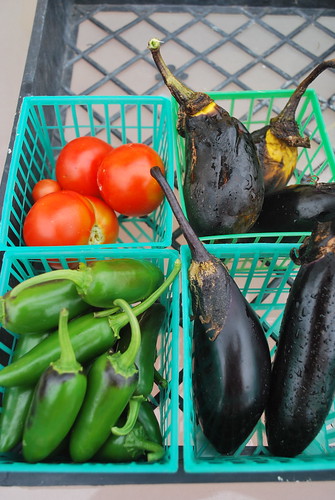
    Back in March my son and I thought it would be fun to grow our own hot peppers. So way back then we planted jalapeño seeds in the little jiffy starter packs and put it under the plastic dome. To our surprise, they actually popped up! A few weeks later we put them in the ground over in a corner where nothing else was having success.

    March 26th, Jalapeño seedling planted

    A lot has happened in our garden since then. Corn came and went. Eggplant grew up next to it and matured. The tomato forest grew next to it. We were over run with summer squash. And all the while our little jalapeño plants just kept on growing, and we waited for some sign that we’d get hot peppers.

    April 9th, not much change

    Spring gave way to summer. And the little plants just quietly grew. We kept watering the 4-5 plants who made it past the transplant and watched them grow bit-by-bit stronger. All the while, Paul and I would ask… is this thing ever going to flower?

    May 1st, still growing

    We’re pretty patient gardeners. And so we were more curious than anything. When would this thing mature?

    June 15th, our first jalapeño

    Right before we left for our summer vacation all of the pretty little flowers gave way to this beauty. A baby. But we were still hopeful that our plants would grow even bigger and that we’d get a lot more peppers!

    August 14th, the harvest is coming!

    A couple weeks back, I could tell we were on our way to a bumper crop. Now fully mature, our jalapeño plants got to about 3.5 feet tall and had fruit all over the place. It was just a matter of time.

    September 5th, the first big harvest

    Today, 180+ days after we planted the seeds, we have our first basket of beautiful jalapeños. Well worth the wait.

  • Why Americans are Going Local

    Yesterday Kristen and I listened to an author, Andrew Potter, describe the American movement towards all things local and eco-friendly as conspicuous consumption.

    It felt like an elitist slap in the face.

    His book is called, The Authenticity Hoax. (I’ve not read it) You can see the transcript to the Marketplace segment, “The new holier than thou” here.

    Basically, the author claimed that the real reason why Americans are going to farmers markets, growing their own food, shopping at locally owned business, and otherwise supporting their local economy is really to show off our wealth publicly. The entire tone of the interview seemed to mock and misrepresent a major shift in public opinion. (For a more reasonable interpretation of the same movement, check out this link in Business Week.)

    I couldn’t help but wonder if the author was just a tool or if he was a corporate tool who didn’t understand how inverse relationships work? As people’s distrust in “global” increases, their trust in “local” increases proportionally.

    Some examples of inverse relationships in the going local trend

    1. We are social creatures. With access to worldwide communication, its a natural human reaction to seek out local connections. People going local is an inverse relationship to a global society.
    2. Micro-economics makes sense. It doesn’t take a PhD in economics to understand that if I choose going to a local eatery vs. McDonald’s more of my money stays in my community. People eating locally is an inverse relationship to a global economy.
    3. The general public is coming to understand that our food chain is under-regulated and unsafe. As I’ve written about before, thanks to some great documentaries the general public is now aware that corporations are more concerned with profit than public health. People growing their own food is an inverse relationship to a global, unregulated food supply chain.
    4. The food decision wheel is turning more quickly. Each time there is a flaw in the food chain it just emphasized what the general public is thinking already. Bad eggs leads to “I need to buy my eggs from a farmer I can trust.” Now that people understand that most of our corn products are genetically-modified, people are starting to look for products containing no corn product. Every bad news story about food spins the wheel a little faster for people and centrifugal force is tough to fight for long. People trusting local farmers is an inverse relationship to a distrust of mega-farmers.
    5. Conspicuous corruption leads to local consumption. Look at the case of “special foreclosure courts” being set up in Florida to supersede constitutional rights in favor of corporations making a quick buck. This isn’t some conspiracy theorist… it’s the New York Times! Apparently the 7th amendment isn’t the law when courts are busy? No one in their right mind would trust that the government will rule in favor of a common citizen right now. So, people are investing their money in local businesses and things they know they can understand and trust. People investing in local banks is an inverse relationship to our distrust of a global banking society and the governmental corruption it has inspired.

    What are other examples of inverse relationships that are leading more and more of us to go local?

    Do you think that the shift to local really is conspicuous consumption? Is this just yuppies finding new ways to show off?

  • SDSU taking the field against Nicholls State

    Last night, Paul and I went to see San Diego State beat the tar out of Nicholls State. (It’s in Louisiana. I had to look it up, too)

    The final score was 47-0 but Paul and I left at the beginning of the 4th quarter when it was 30-0. If you listen to Brady Hoke, the head coach, they could have done a lot better. But I think it was their first shut-out in a very long time.

    Now, the video doesn’t show the level of excitement as the game got into full force. San Diego folks are late comers to all sports. In the end, nearly 26,000 people showed up… which is a big win for SDSU. (The next game will nearly sell out because of the annual “Sky Show” after the game.) The visitors side actually filled in a bit. I look forward to seeing them in late-September. If they have a few more wins and they put on a good performance at the next game, I think they will start to fill up the stadium more.

    As a person who grew up around the campus of Notre Dame, I really appreciated and “got” what coach Hoke was trying to do by adding a bunch of traditions. They had Marshall Faulk come out and spear the field at the beginning of the game. They somehow got every freshmen to come and fill the student section. And I love how they came into the stadium through the band and cheerleaders… nice and slow. They even introduced a secondary mascot, a panther. I kind of liked it but the alumni in my section were pretty ticked off.

    If you listen to Hoke’s postgame interview… this is all part of creating a winning tradition. And winning will draw more fans and make the whole thing more fun. The net result being that winning and more tradition will attract better quality recruits.

    Clearly, there are very talented underclassmen who got to play big chunks of the 3rd and 4th quarter.