• Emma Dryer is Smiling

    Emma Dryer is Smiling

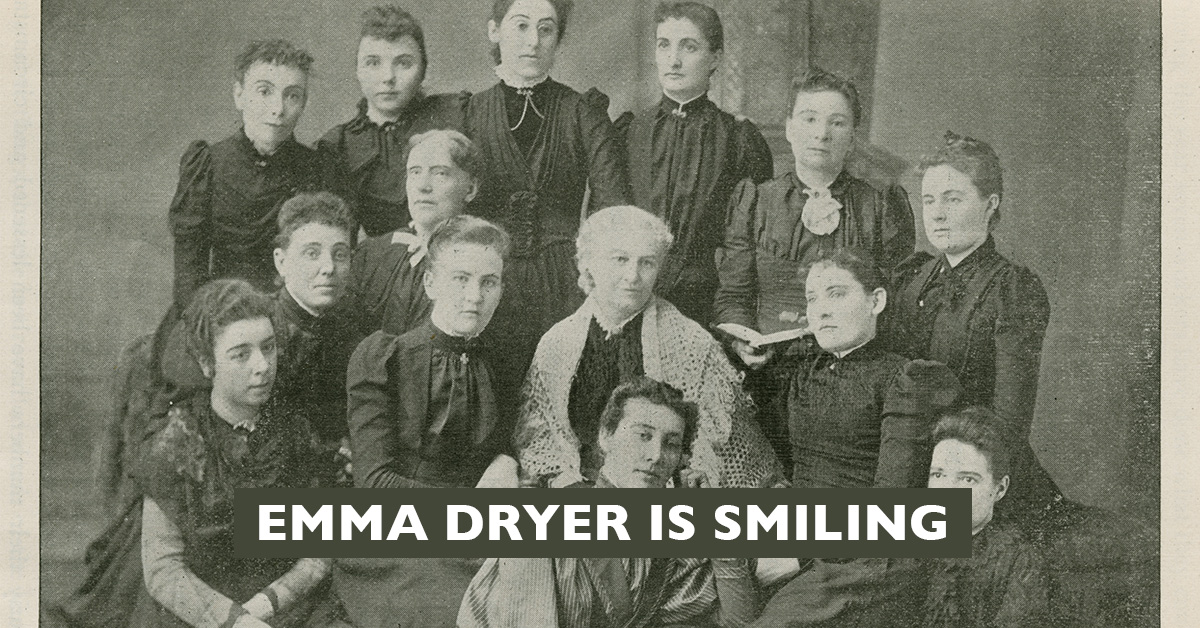
    About 3 years ago I wrote a blog post that was widely read entitled, “Moody, You Are Worth the Fight.” In this post I addressed Moody’s demarkation from their historic posture on women in ministry. While the school bears the name of 19th century evangelist D.L. Moody, the Institute was the brain child of a woman named Emma Dryer. Moody Bible Institute was among the first colleges in Illinois to admit women, it’s mission was to create a place for laypeople to get trained to serve the local church and mission field.

    In it’s day this was progressive. Very few bible colleges or seminaries admitted women at that time. And while throughout Moody’s history it’s been known as a conservative place, practically speaking it’s also been a place that fostered great amounts of theological diversity among it’s student body. In my time, I shared the classroom with many classmates from evangelical and non-evangelical backgrounds who both thrived there. (And we all struggled through the rules.)

    But this changed abruptly more than 100 years after Moody’s founding. For reasons unknown to me, MBI formally adopted a view on women in ministry that excluded them from preparation for pastoral ministry. This went as far as reshaping degree programs specifically to limit women’s participation. For example, in 1995 the youth ministry program was moved from the Pastoral Ministries department to the Christian Education department. Why? So they could continue to prepare women to serve in youth ministry while restricting women from being in classes with Pastoral Ministries majors.

    Here was the crux of my complaint in that 2013 blog post:

    So I am continually, out of love and respect, asking Moody to change its policy. I’m asking that they allow women to fully participate in every undergraduate and graduate program. I’m asking that women be allowed as fully registered participants at their annual Pastor’s Conference. I’m asking that they invite women pastors to speak and train both men & women at the conference.

    And yes, I’m asking Moody to re-embrace their leadership position on the role of women in the church which proudly supported thousands of opportunities for women to serve the church to their fullest giftedness from the late 19th century until the end of the 20th century.

    Until that time, this proud alumni respectfully stands in protest.

    [No need to read between the lines about what that means… I’ve withheld my support for MBI as well as financial support]

    Good News from LaSalle Boulevard

    After I wrote my original post I had several pleasant exchanges with some higher-ups at Moody. I felt like they heard me. But ultimately the conversation died off, they stopped responding to me, and I moved on.

    As promised, I respectfully stood in protest. I have deep love and respect for Moody but I felt like they were wrong.

    Change #1 – Women are now admitted to all majors

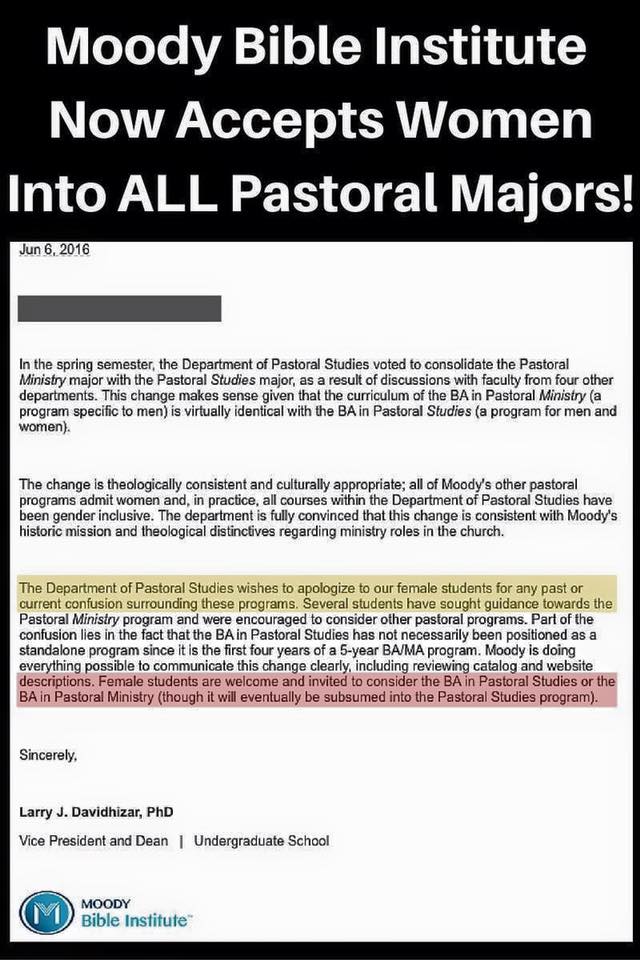
    Then yesterday, a fellow alumni and long-time friend posted a screenshot on my Facebook wall, asking if I’d seen it. It was a letter from Larry Davidhizer, a VP at Moody and man I casually knew at our church in Oak Park, letting students know that there had been some changes to the Pastoral Ministries major, clarifying that women were now invited into the Pastoral Ministries major, which is being combined into the Pastoral Studies major. The letter even includes an apology to current and former female students over the lack of clarity.

    Here’s the letter:
    13327605_913959872060194_5574296267060720397_n

    When I read that I was completely shocked. I didn’t think this would happen. Ever. I even doubted the truth in the letter posted, so I sent some emails and posted it on Twitter. And, to my surprise, they confirmed it as true.

    Translation for non-MBI folks… that’s Moody Bible Institute in Chicago, their campus in Spokane, Moody Theological Seminary Chicago & Michigan campuses, and Distance Learning. Basically, that applies to all majors at the undergraduate and graduate level. Women are in! Title IX compliant and everything.

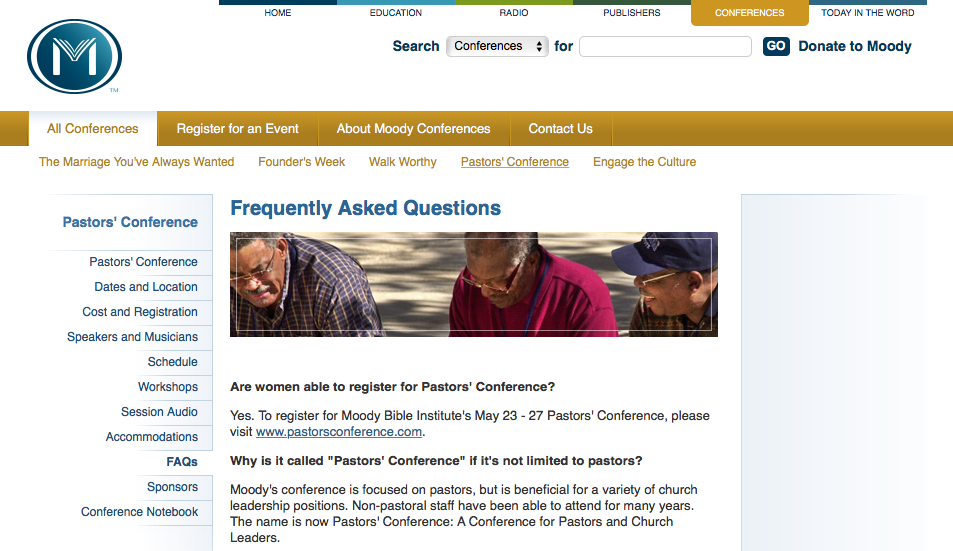
    Change #2 – Women are now invited to fully register and attend the annual Pastor’s Conference

    This might seem like a minor thing but I think it’s big. For whatever reason Moody’s annual Pastor’s Conference— which I’d snuck into a couple of times as an undergrad and found very encouraging- didn’t allow women to register. Spouses were invited to come to main sessions, as guests, during the main sessions. But women were prevented from registering independently or attending the breakout sessions and seminars.

    That’s no longer the case. Women are now invited.
    Screen Shot 2016-06-08 at 12.36.10 PM

    What Hasn’t Changed?

    To be honest, it’s not clear to me if Moody has walked back from their official complementation position or if they’ve merely gone back to their historical non-position position on women in ministry. To me, as an egalitarian it’s almost makes no difference. Ultimately, students will make their own choices and these changes create space for those differences to co-exist.

    The victory, in my opinion, is leaving those choices more on the movement of the Holy Spirit than as an institutional decision. A place like Moody does best, in my opinion, when it sees itself as preparing graduates to serve the local churches, ministries, and missions and worse when it tries to hold the line of a specific position within the broader evangelical spectrum.

    Not Taking Credit, But Saying Thanks

    I have no idea if what I wrote 3 years ago made any difference. I know that there are lots of people who made similar complaints as I did. So I’m not making any claim (or blame!) to these changes. Certainly, besides a few pleasant conversations– mostly by email– I’ve had very little contact with Moody about this.

    But I do want to say thank you to whomever pushed to make these changes. I feel like they are reflective and honoring to the founding of the Institute and likewise reflect current realities for the ministries Moody claims to be preparing graduates to serve at.

    Bit-by-bit, the Institute is addressing my concerns and regaining my support.

  • Small Ball

    Small Ball

    In the sport of baseball, small ball is an informal term for an offensive strategy in which the batting team emphasizes placing runners on base and then advancing them into scoring position for a run in a deliberate, methodical way. This strategy places a high value on individual runs and attempts to score them without requiring extra base hits, or sometimes without base hits at all, instead using bases on balls, stolen bases, sacrifice bunt or sacrifice fly balls, the hit-and-run play, and aggressive baserunning with such plays as the contact play. A commonly used term for a run produced playing small ball is a “manufactured run”. This style of play is more often found in National League game situations than in the American League due in large part to the absence of the designated hitter in the National League.

    Source

    I don’t follow major league baseball. Heck, I don’t even follow little league baseball. (Or particularly like watching  baseball!)

    Winning vs. Entertainment

    As a spectator sport, it takes a certain type of baseball fan to appreciate small ball. Americans like fast-moving entertaining baseball. We want to see homers, players running into one another in the outfield, and close plays at home.

    But watching batter after batter take balls to get walked? Not so much. 

    So it’s a balancing act for professional baseball management. On the one hand small ball wins ballgames. On the other, winning doesn’t matter if fans don’t show up.

    In professional sports there’s winning and there’s winning.

    A Life of Small Ball

    In the same way, American culture celebrates big, dramatic, and entertaining lives. We love it when someone does something big. Success looks like a stadium of people waiting to hear you speak or your creating something so big that you become a household name.

    That– we suppose— is what success must look like.

    Or is it? 

    • Is a big thing a success?
    • Is success big?
    • Is success external?
    • And what does this success cost in relationship to other things?

    Personally, I find going for the big home run to be more exhausting than the elation of the big moment. [Forget that fact that hitting a home run while losing the game isn’t much of a success.]

    Let’s take this out of the ether of hypothetical. “What are you really talking about, McLane?

    I’ve turned a corned over the past couple of years. I’ve largely given up on the idea of going for big, ambitious, household-name-styled success and instead embrace a lifestyle of small ball.

    I believe success comes as the result of more than a moment– though, at times, a moment exposes your success to a broad audience– instead, success is the result of a thousand good choices and behaviors.

    In my personal life, I don’t need to be celebrated as a great dad or husband. Instead, I just want to be a great dad/husband by making a thousand good choices. It’s better to be healthy than to be seen as healthy while actually being unhealthy.

    In the Cartel life, [a term we use informally to talk about leading The Youth Cartel] we aren’t interested in being big, with complex structures, large staff, and loads of property & products to manage. That’s someone else’s success, not ours. Instead, we feel like if we do a thousand things well/right/good the next thousand and the thousand after that will come to us. We’re not out to compete with anyone or put anyone down… we just want to do our thing in a way that’s healthy and sustainable for us.

    The Impact of a Small Ball Life

    When I travel for work people ask me about the impact of that on my family life. I suppose, if you don’t travel that much, that hanging out with someone who travels for work can feel like that must imply success. While I certainly like traveling and meeting new people, I see travel for work as just that… travel for work. It’s my job! I like to say, “My life is either really big– going cool places, meeting cool people, doing cool stuff– or really small. Outside of taking kids to school I work at home and so my life revolves around my family, house, and neighborhood.

    I like my “big life” and I like my “small life.

    But given the choice, I’ll take a thousand small successes over one big win, all day any day.

  • Reliance

    Two things will make you act drunk, blind, and stupid.

    Love. And fear.

    Sure, there are real things to fear in life.

    Instinctive fear in response to danger is completely normal. You hear gunshots and you instantly ducks down and wonder, “Is someone shooting at me or is it New Years Eve and I didn’t know?” Or you are weeding the garden, hear some rustling, and look to the side to see a snake slithering towards you. Or you are crossing the street while looking at your phone and you hear screeching tires.

    But that’s not the type of fear I’m talking about. I’m talking about fear that paralyzes us from making a choice or taking an action. You know you need to go back to school… but you just don’t because you’re afraid. You hate your job… but you don’t do anything about it because it’s too risky. You feel compelled to speak up, to tell the truth… but you stay silent because you don’t know what’ll happen if you do.

    I believe fear drives us to deeper and deeper levels of insecurity and, for Christians, further and further away from Jesus.

    The more I’m afraid the more I’m thinking about me: “What will people think of me if I ____? What are the consequences if _____ goes wrong? What will they say to others if _____? Is that too much risk? If I fail will people think I’m a failure?

    While not necessarily bad questions to ponder none should paralyze. Consider, weigh, make a decision and move along.

    The Word became flesh and blood,
        and moved into the neighborhood.
    We saw the glory with our own eyes,
        the one-of-a-kind glory,
        like Father, like Son,
    Generous inside and out,
        true from start to finish.

    John 1:14, The Message

    In Jesus-speak this is “the incarnation of Christ.” We believe God became a man to [among other things] bridge the gap between the Father’s divinity– His “not-humanness“– and to walk with us. The Son took all the risk in coming to earth, to become fully human. Here he experienced everything we experience, including fear. (Jesus got 1-on-1 time with Satan.)

    Therefore for Christians, the people who identify with Jesus as their Savior and the measure of which is to live a Christ-like life… As we identify our daily life in light of Jesus’ incarnation we are drawn closer and closer to hugging our problems, pushing us past fear, realizing that our most dangerous life is one dictated by fear instead of faith.

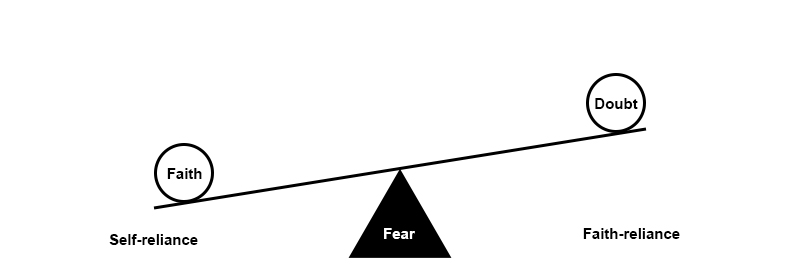
    fear-faith-reliance-teeter-totter


    Think of fear as a fulcrum on the teeter-totter of faith and doubt. When we walk in self-reliance we are overcome by fear and all the insecurities and me-ness that comes with it. When we walk in faith-reliance we dwell in the knowledge of what’s worthy of our fear and what’s merely a human response we can push past.

    Fear, by itself, isn’t bad. It’s not sinful to experience fear. But the consequences of living a life dictated by fear– or the avoidance of things which might be scary– can lead you to make lots of bad choices. (Indecision is a decision, after all!)

    Two things will make you act drunk, blind, and stupid.

    Love. And fear.

    Choose love.

  • The Right Guy for the Job

    The Right Guy for the Job

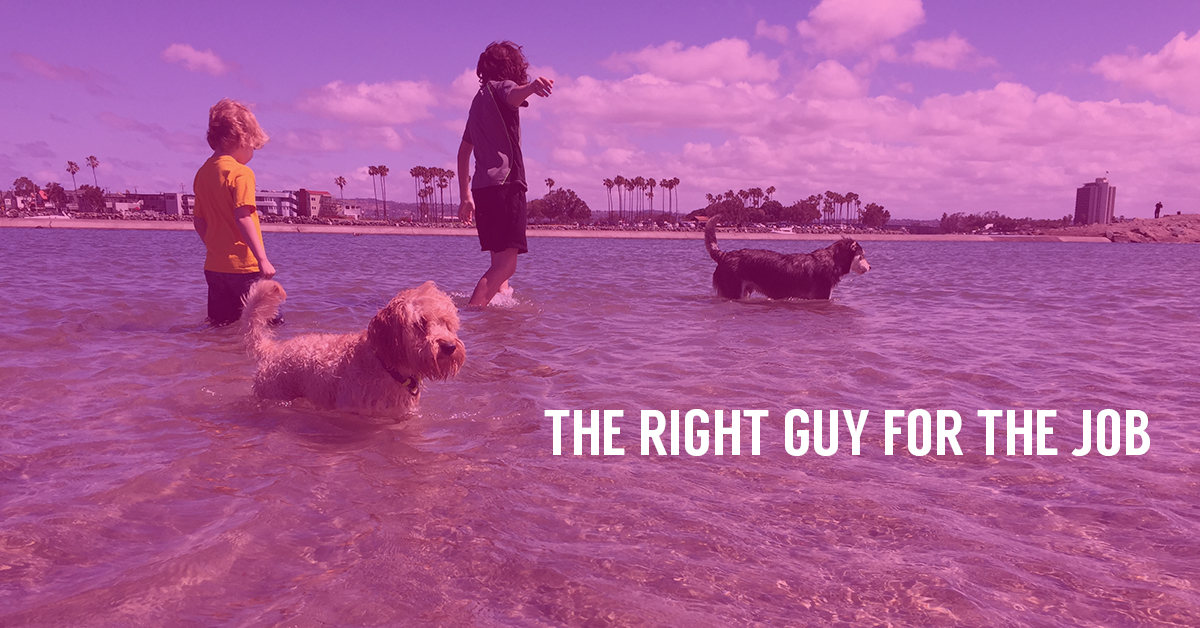
    “Daddy said I was the right guy for the job.” 

    ~ Jackson, 5

    If we ever buy another house I’m going replace all of the fixtures on the first day. Light fixtures, faucets, shut off valves, and every piece of the sprinkler system not underground. Why? It’d save time versus the way I’ve been doing it— one by one as they break.

    On Sunday I spent most of the day on some repairs to our irrigation system. In the morning I swapped out a number of sprinkler heads in the backyard, replacing older inefficient ones with adjustable ones to save water. In the afternoon I began rebuilding zone 5 in the front yard from the valve onward. It was poorly built to begin with and crumbling from years of exposure to the sun.

    Nothing sexy but a little project which had to get done.

    Want to help?

    Late in the afternoon Jackson, our 5 year old, came back from the park with Kristen. Together we hung out in the garage while I put together the parts needed to replace everything. [Since we got baby chicks a week ago the garage has become a favorite place to hang out.]

    Jackson bubbles with energy. He’s the most social McLane kid who constantly wants to play with his siblings, his parents, the dogs, the iPad, while watching Netflix on the TV. He’s game for everything… which is both really awesome and sometimes difficult to manage. He’s five. His world revolves around what he’s doing and thinking in that exact second. We adore our youngest but we have to admit he wears us out, too.

    Gathering up all of the parts and tools I’d need to finish up my front yard project I looked at Jackson, who’d bored of the chicks and was busy telling mom the ten thousandth detail of Pokemon she’d soon hope to forget.

    “Jackson, do you want to help me with my project?” 

    “Yes”

    “OK, I could use an assistant. Can you be in charge of holding onto the tools until I need them? It’ll be a big help.” 

    “I can do that. I want to help. I like helping.”

    “Good. You’re good at helping.”  

    So off we went. A screwdriver in one hand, a PVC cutter in the other, both of our pockets full of parts.

    We got about five feet.

    He’d taken off his shoes and we have prickly things in the grass right now. So I picked up my helper and carried him the rest of the way.

    For the next 10 minutes or so JT held onto the tools I wasn’t using, swapping out what I didn’t need for what I needed. He told me stories. I tried hard to listen. He wandered and had me watch him jump off of stuff. He was doing his best and I was doing my best.

    When we got it all connected I ran over and turned the valve on to check for leaks. There were none. We shared a high five then started tidying up.

    “Did I help you daddy?”

    “Yep, you were the right guy for the job. You were a big help. Thank you.” 

    “Will you carry me back to the garage?”

    “No. But I’ll show you where to step so you don’t step on prickly things.”

    “OK….”

    Two minutes later, as I was putting all of the tools and parts away in the garage, Jackson was relaying the details of our little project we’d done together to mommy mixed with stories of the Pokemon he’d seen along the way.

    “We cut the tube and then daddy put a part on the end and then I got to help squeeze it together and then we turned in on and it didn’t leak at all.”

    “That’s great, Jackson.”

    “Daddy said I was the right guy for the job.” 

    The Right Guy for the Job

    I don’t care if you’re five, fifteen, forty-five, or twenty-five. A son needs to hear from his dad, “I think you’re the right guy for the job.”

    A few years back my dad pulled me aside, “I’m proud of you. I don’t understand everything that you do for work but I know it’s good. You’re a good father and that means a lot to me.”

    I lived off of that affirmation for a long time.

    I can’t even explain what that meant to me.

    McLane men are critical. We don’t affirm cheaply, it’s earned.

    I didn’t know I needed to hear that but I did.

    I think every man needs to hear that from his dad.

    The truth is sometimes I don’t know if I’m doing a good job. Sometimes I don’t have a clue if I’m doing the right things or if I’m royally screwing up. I often feel like I’m just making it up as I go along— pretending to be a dad when I don’t have a clue if anything I do matters.

    I see what other dads do and feel inadequate. Most of the time I feel awkward in the role, like I’m wearing clothes that don’t fit. Who am I kidding? I’m wearing clothes that don’t fit both literally and figuratively.

    Beyond parenting a man gets beat up by life. We put on a hard exterior that everything’s OK. We convince ourselves we’re doing the best we can. We fake it until we make it… so we tell ourselves so that we can keep going.

    We provide. We protect. We nurture. We try. We fail. We try again. We are good at work. We suck at work. We coast at work. We hustle at work. We brag about work. We lie about work.

    Everything is great. Everything is terrible. We know. We don’t know. We’re OK. We’re not OK.

    We know who we are. We have no clue who we are. We try to be ourselves. We try to be someone else.

    We get a thousand compliments from our friends or comments from “friends” we don’t really know. Our spouse tell us we’re doing a good job. We align and justify our actions (or inactions) to match up to what we think is expected of us.

    We overthink it. Sometimes we dramatically under think it.

    We hold our emotions in. We explode in emotions.

    We’re confident. We’re guessing.

    Sometimes being a man, being a dad, is hard.

    Sometimes a son needs to hear from his dad, “You’re the right guy for the job.”

  • Amazon Prime Now Review

    Amazon Prime Now Review

    Grocery shopping is a waste of time. The stores are designed to get you to walk up and down all the aisles, hoping you’ll wander by something they’ll tempt it’s way into your shopping cart on the way to find the bread, milk, and eggs you came for.

    That’s the basic premise of Amazon Prime Now, a grocery delivery service from Amazon.

    What is it?

    Amazon Prime Now is a benefit of Amazon Prime where members can download an app to place orders for fast same-day delivery in select zip codes.

    Adam’s Description: It’s a Amazon’s attempt to collect even more data about you. The benefit is you can get food delivered in a couple hours and if you spend enough you’ll get free delivery.

    The Good

    Grocery delivery is far from new. People have had food delivered to their door for centuries. Some argue that cities formed largely to consolidate food production and distribution… so the idea of food delivery is one of those things that, once you try it, connects deep.

    This is Amazon’s second attempt, at least in San Diego, at grocery delivery. The simple fact is that companies have been trying to figure out online grocery shopping for the past 15 years. I remember when we lived in Chicago the rise and trickle-out of Peapod. (They are still around!) We tried Amazon Fresh but found that the $299 annual subscription plus a minimum $35 order just too cumbersome to really adopt. We used it a couple of times before Kristen flat out rejected it.

    Over the weekend we had three difference Amazon Prime Now deliveries. The first was a spontaneous act. We typically order pizza on Friday night. When I placed my order for “the usual” I decided to pop onto the Amazon Prime Now app and order a six pack of Mission Brewery’s blonde. Presto! Right after the pizza came a guy rang the doorbell and handed me a six pack. Everyone in the house roared with laughter!

    Kristen jumped on the bandwagon Saturday evening, converting her shopping list into two orders for the weekly groceries. The staples came from Amazon itself and the rest came from Sprouts.

    Here’s what we like

    Price, selection, delivery: The prices have become competitive to local grocery prices & more specialty shops have come on-board which makes the selection much better. When you add that in with free 2-hour delivery? All of a sudden Amazon Prime Now gets very, very attractive.

    Shopping gets easier & faster: The vast majority of what you buy at the grocery store is the same with each trip. Bread, milk, eggs, cereal, coffee, etc. What’s great about Prime Now is that you can create two kinds of lists. I can add all of the stuff I always buy into a list I call “the staples.” Then, as I’m planning meals for the week I can add things to another list say, “this week’s grocery list.” Then when it’s time to place an order I can either dump all of those things into my shopping list OR (and this is fun) I can just go to my Amazon Tap and say, “Alexa… add everything on the staples list to my shopping cart, also add this week’s grocery list.” And boom, it’s done.

    Things I Don’t Like

    Selections are limited – Amazon Prime Now kind of opens pandoras box. Grocery shopping is infinite and you kind of expect them to have everything, plus have it at competitive prices. That’s just not the case yet. I think it’ll get better over time as people adapt to it, but if price and selection are what really matters than Prime Now isn’t exactly ready for primetime.

    Quantities aren’t there yet – I think that this service could replace our bi-weekly trip to Costco. But they just don’t have the bulk item thing right yet. Stuff that we buy a lot of is available on Prime Now… just at a much higher cost than Costco.

    Scheduling deliveries is funky – Above I made it seem more simple than it really is. In reality, the things that you want to order get sorted into shopping carts based on where the groceries are coming from. This means that when you place your order, as with this week’s groceries in our house, you’ve got to manage what items come from which store. To get free shipping you still need to hit a minimum threshold for each store… meaning you can’t use it just to pick up a couple items.

    Who are these drivers?!?!?! – When we used Amazon Fresh everything got delivered from these cute little Amazon Fresh vans. The three orders we received this weekend were delivered by what looked like Postmates or Über drivers or a guy who just got fired from Über or Postmates for being too creepy. The people delivering our groceries did a fine job. But their beater cars and misfit uniforms just didn’t elicit much confidence. No way I’d let them in my house! Leave it on the porch, homey.

    The Money Line

    I know Amazon Prime Now isn’t available all over the U.S. just yet. But I think Amazon is going to get this figured out. As more areas come on board you’re going to see them iron out the wrinkles. As Kristen said last night… “If they could make it so I could have our groceries delivered to the rental house when we were on vacation… that’d be great.” Not quite there yet, but Amazon Prime Now seems like it’s on it’s way.


  • Do people really care about online privacy?

    Do people really care about online privacy?

    There’s an interesting lawsuit against Facebook snaking it’s way through the legal system. Here’s the gist of the complaint:

    The lawsuit alleges that Facebook’s photo-tagging system violated user privacy by creating faceprints — geometric representations of a person’s face — without explicit consent. Those faceprints are typically used to identify users to suggest tags for uploaded photos. According to the complaint, that’s a violation of Illinois’s Biometric Information Privacy Act, which forbids the collection of biometric identifiers like fingerprints or faceprints without a person’s explicit consent. As Alvaro Bedoya of the Center on Privacy and Technology at Georgetown Law described it, “If you run a bar, the law doesn’t prevent you from picking up my used pint glass, but it prevents you from pulling my DNA off it.”

    Source

    What is this about? Do you know how you upload an image to Facebook and it sometimes will ask, “Is this Adam McLane?” That’s happening because Facebook scans all of the images of you that you’ve tagged as yourself to determine unique biometric characteristics of your face to detect images of you all over Facebook. That biometric scanning, originally developed for military and law enforcement purposes, is now being used for commercial purposes by Facebook.

    Social media principle #5 says, “You aren’t the customer of social media companies, you are the product they are selling.” If you read Facebook’s terms of service carefully you’ll see that Facebook reserves the right to use this information to target advertising to you. So you might not say that you are a fan of Nike shoes. But that photo of you wearing Nike shoes? Yup, Facebook can sell Nike (or it’s competitors) information about Facebook users who wear Nike shoes. (They sell information about you which you freely give them!)

    That’s a rather benign example. But what about things which might not be so benign?

    We care about privacy but we don’t

    I find that people care deeply about their personal privacy. They will vehemently defend their legally protected rights to privacy, are offended by breaches of privacy, and can articulate “the line” clearly.

    That’s in theory, of course. In practice people don’t really care that much about their personal privacy much. Here’s a small sample of what they might post online:

    • Physical location
    • Location of their home
    • First, last names
    • Names of children, pets
    • Names of employers
    • Names of friends, co-workers, family members
    • Contact information, email, phone numbers
    • Photos and videos, themselves, their spouse, the children, their friends and relatives (including biometric information like their voice)
    • Writing samples
    • Religious information
    • Employment history
    • Educational background
    • Personal ideologies, aspirations
    • Purchase history
    • Travel patterns
    • Medical information

    These are the things that we post openly on the most popular social networks. (Facebook, Twitter, Instagram, Snapchat, LinkedIn, Periscope, etc) So many people will say they care deeply about privacy but they really don’t.

    Their behavior is mismatched with their actions.

    What apps are tracking me?

    To further this claim that most people don’t actually care about their privacy, they just say they do, let’s take a look at who you are sharing even more personal information with your smartphone.

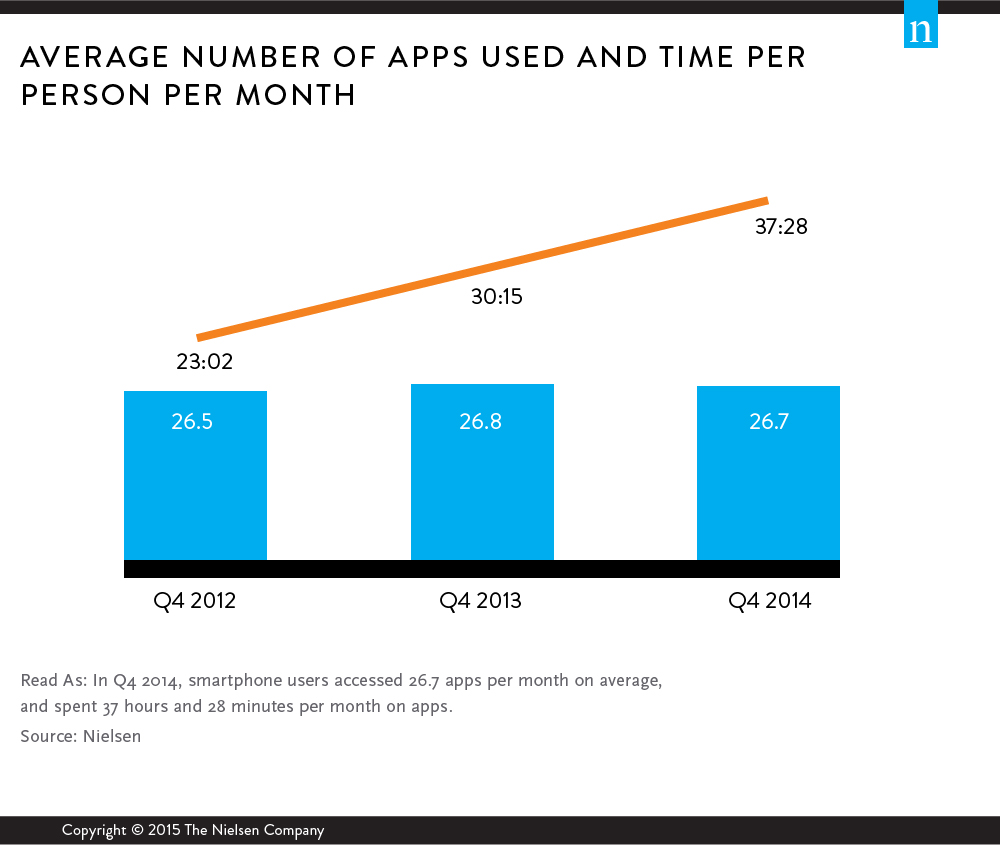
    A June 2015 report from Nielsen showed that the average number of apps American users access per month is steadily increasing, about 26 apps per month. (Source)

    8921_Smartphone_Wirepost_D1

    The study also says, “Over 70% of the total usage is coming from the top 200 apps.

    Here’s the question I find very few people seem to be asking: Who owns the top 200 apps, what types of data are they collecting about me, and what are they doing with that data?

    Here’s the Top 20 free iPhone App as of right now. Can you answer the above 3 questions for each of them? (Source)

    1. Hungry Shark World
    2. Slither.io
    3. Snapchat
    4. Messenger
    5. Fitbit
    6. Facebook
    7. Instagram
    8. YouTube
    9. Running Man Challenge
    10. Trumps Wall: Build it Huuuge
    11. Hovercraft: Takedown
    12. Houseparty: Group Video Chat
    13. Pandora
    14. Color Switch
    15. Google Maps
    16. Best Friends
    17. iTunes U
    18. Uber
    19. Layout from Instagram
    20. Spotify

    Each of these apps, as well as the rest that you have on your phone right now, each collect information about you. Do you know who owns that data? Do you know what’s being collected? Do you know what they are doing with your private information?

    Should you? 

    The example of location

    Right now, my iPhone has 65 apps that ask to track my location, 16 of which are listed as tracking my location “Always.” Why do you think they want this information? Some of it is to make the app work properly, for sure. But some of it is to collect, aggregate, and use that information for their own purposes.

    While not always visible when you post something online… if you’re using an app that accesses your GPS location

    How accurate is that information? The iPhone is accurate to about 8 meters. There’s a noticeable difference in the geolocation data in pictures that I take at my house between the front yard, my bedroom, the kitchen, and my office.

    The device itself

    IMG_7072Of course, let’s not forget that while apps are tracking and reporting back all sorts of information about you all the time, your device itself is tracking even more.
    Location… always means always. Here’s a fun fact that I don’t think most smartphone users realize. Your phone’s GPS only turns off if the phone is off. For instance, I kept my phone on Airplane Mode for my recent trip to Haiti so I wouldn’t use any international data. But pictures I took with my iPhone while it was on Airplane Mode… they are still geotagged. See, your phone is tracking you all the time. Don’t believe me? Open up the Health App for iPhone. It’s tracking your steps, your altitude, and your level of activity all the time. If you use Apple Pay you better believe they are keeping track of your spending habits, too.

    So what do I do?

    I suppose the smartphone has become the ultimate accountability partner. And, in some ways, that’s a good thing. The phone you keep in your pocket tracks your every move, what you’re thinking, what you are spending your money on, what you listen to, when you sleep, where you drive, and who you talk to.

    My point is that you can’t do all of these things and then claim you care about privacy. You say you do. But you don’t.

  • Long-term Missions

    https://www.instagram.com/p/BE1UZrJsjqe/

    Last weekend Kristen and I volunteered to help with a clean-up project in our neighborhood. I should clarify… Kristen volunteered and I tagged along. 

    As we were raking and hauling load after load of sticks, rotting organic matter, homeless paraphernalia, and pine needles to a 10 yard bin to be hauled away I got to thinking…

    In some ways, as an American, it’s pretty easy to wrap your mind around a short-term mission trip. (I’m a huge fan of short-term missions!) In a way… it’s quite a bit harder to maintain a posture that living in your neighborhood is a long-term missions project.

    Let’s unpack that…

    We live in a society where affinity is king. We chose to see the things we chose to see because we like something. But things that we don’t care about we just don’t see. Our eyes see so many things on a daily basis that we tune almost everything out or else we’d go mad from overstimulation.

    So, by default, we look after our own preferences as a primary thing. Things that we have an affinity for get unlimited attention. And we look after everything else as a secondary.

    But, as Christians, we are children of a Kingdom where proximity is king. Jesus didn’t say, “Love the people you have something in common with as yourself.” He said, “Love your neighbor as yourself.

    Each day we have to fight what our culture has taught us from infancy. Sometimes we need to divert our eyes to ignore the things we have an affinity for in order to see the things as a neighbor.

    Jesus is asking us to empathize with the needs of our neighborhood.

  • Intentionally Disconnected

    Intentionally Disconnected

    Here are two competing, intertwined questions rolling around the free spaces of my life lately like a driverless steamroller.

    Success, Pursuit or Arrival: Which Satisfies?

    Question One: What does a successful life look like? 

    A few years ago a friend said to me, “You live at a rare intersection where you love what you do, you’re good at what you love, and what you love pays you well.” And while I could banter and argue that this isn’t always true or that it’d be great to make a little more or work a little less or I’m more in the pursuit of what I love than working inside of what I love… the friend was right. Very few people have the opportunity to live at this intersection.

    I’m fortunate man. My privilege is not lost.

    But, like all ambitious people, I’m always wanting a little bit more of those three things. And, because I’m the poster child for a liberal arts education, there’s about 200 other things I’d really like to explore and get good at… maybe fall in love with the same way. 

    So some could look at me and assume that I see myself as somewhat successful [whatever that means] and yet I only look at myself and see areas I’d like to see more satisfaction and if there’s success is muted by day-to-day realities. The truth is I sometimes feel much more unsuccessful and dissatisfied than I am overcome by an awareness that things are going well.

    Add to this a long-held observation from Kristen. She says I’m happiest when I have too many things to do… that I’m kind of miserable when I’ve only got one thing to do for too long, that I get bored easily.

    And so that leaves me left to wonder: What does success really look like? Is success (for me) constantly chasing something new, 500 plates spinning. Or do I find success and satisfaction in enjoying the benefits of “right now“?

    Is success found “out there” in the future or is it found “right here” in the present? Or both? Or neither?

    Unintended Distraction

    Question Two: Because I can be accessible 224/7/365 do I want to be?

    Earlier this month I did something I’d never done on an international trip. I didn’t turn on international data for my phone. Admittedly, this was driven by the ridiculousness of AT&T charging more and more for less and less international data through their plan. I just couldn’t bring myself to pay $100 for 5 days of bad internet just so I could post to Twitter, Instagram, Facebook, and text with my wife.

    So I didn’t.

    And it was great.

    I turned my phone to Airplane Mode as the plane roared down the tarmac in Miami and four days later I turned it back on. And no one cared. It made no difference. The earth still spun. Stuff still got done. Stuff still happened. And the world didn’t need me, my opinion, permission, or even knowledge. 

    It wasn’t just great. It was delightful.

    But I already knew this because it wasn’t the first time I wasn’t accessible by choice.

    You see, over the last year or so I’ve been experimenting with something forbidden in our day. Even though I have a device that allows me to be accessible 24/7/365 virtually anywhere I go in the world— it has an off button.

    Just because you can call or text or email or Facebook message me any time you want doesn’t mean I have to answer. I own an iPhone 6, it doesn’t own me.

    And the fact that this seems somehow revolutionary as a concept is exactly why it’s so important.

    The economy is driven by distraction. Facebook’s stock skyrocketed this week, not just because of ad revenue, but because users are giving the app more and more of their attention. Each day millions of dollars are spent by companies trying to learn how to best divide your attention. Maybe make the app more crass? Maybe make it 3D? Maybe entice you to turn on devilish notifications? Maybe tell users the screen dims just a little so they’ll take it to bed with them? Maybe make it more playful so you’ll say, “Hey Alexa…

    In order to get more and more of your attention these devices are tapping into more and more subconscious, primal instincts. The devices goal is to own you! I need more information. I need to know something sooner than everyone else. I need friends to know I’m paying attention to them. I need to check my bank account, did I turn off the lights at work, did Jay-Z cheat on Beyoncé? I need to know these things and this device is going to tell me all of that.

    Your economy is driven by attention. If the economy of today and tomorrow is defined by companies ability to sub-divide your time… your greatest access to success is to control your attention. To do this you’ll need to fight primal instincts to know stuff.

    Intentional Disconnection

    Here is where question one and question two meet: I have decided that success to me— at least right now– looks like the freedom to disconnect. If I’m successful I can turn work on and I can turn work off. Kristen and I can take the dogs to the beach and leave our phones in the car. I can turn everything off and play board games with my kids. If my phone vibrates or buzzes or whatever while we’re having dinner with the kids, I can ignore it. I don’t care if a bomb went off or a presidential candidate said that or even a good friend just wants to chat. To be successful is to pick your spots of disconnection.

    Conversely, if I’m unsuccessful, that means that I can’t disconnect. I don’t have the time to recreate. I don’t have the time to concentrate on the work box when I’m at work, it instead bleeds into other things.

    And so I’ll leave with two weekend challenges…

    Challenge #1: Intentionally disconnect for 3 hours.

    I don’t care where you go, what you do, or when you do it. But give yourself 3 hours to do something with your phone off this weekend. (Don’t fall asleep. And movies don’t count…) The world will wait. No one will actually care if you don’t like their picture on Instagram fast enough. You can text back “lol” later.

    Challenge #2: Identify one sacred space

    For me it’s the dinner table. If I can disconnect from everything and just have dinner with my family, that’s a sacred distraction free space. But I don’t know what that might be for you. I do know, however, that identifying that thing and making it sacred– a no phone zone– will make a deep impact on you because it’s made a deep impact on me.

  • COPPA’s Amended Rules and Your Kids

    COPPA’s Amended Rules and Your Kids

    I feel like I’m constantly asked, “When is the right age for my child to get [insert social media app name]?

    The answer is really simple: Thirteen.

    Why? The Federal Trade Commission says so in a law that governs every social media app and online service. The law is called the Child Online Privacy Protection Rule of 1999.

    The point of this post isn’t to convince you of that, I’ve already written extensively about it here.

    The point of this post is to point out new amended rules that were enacted in 2013 in direct response to popular social media apps like Vine, Kik, Snapchat, Instagram, etc.

    The FTC has added some important clarifications which parents need to know about. And, despite what most parents seem to think, the FTC actually strengthened the laws/rules for online companies… they didn’t weaken them! So as much as your 11 year old seems mature enough to handle an Instagram account or she only exchanges Snapchats with her older sister… it’s still against the rules.

    Here’s what has changed: (again, these rules are only for users under 13 years old)

    • Parental consent required to ask for geolocation data. Basically, every social media app asks for geolocation data. (Think tagging an image at a restaurant, etc) Prior rules didn’t require parental consent for this, but now it is.
    • Parental consent is required for photos or videos containing a child’s image or audio files with a child’s voice from a child if that child is under 13. Yup, that means that if your child is uploading anything to the internet the app is required to ask for parental permission. Again, this is why apps age gate and why I think we need a better verification system.
    • A screen or user name is now considered personal information. In the past, this was only considered personal information if that user name included an email address. But now app manufacturers need parental consent to store even the user name. This means that if they know your child has created a screen name to use on say, Instagram, and they don’t have specific parental consent… they are required to delete that user name when it’s reported to them.
    • Persistent identifiers, things like cookies and your device ID, are now considered personal information. Basically, for any child under 13 an online service or app cannot collect ANY information without a parents consent. (That doesn’t mean mom and dad say it’s OK, it has to be an actual consent system… which most social media apps don’t have.)

    Read the amended rules here

    What’s the story here, Adam?

    The story is that COPPA is still in play. The minimum age for most social media apps, gaming sites, things like that…. it’s still 13 years old.

    This isn’t about competence. It’s not about parental opinion or ignorance. COPPA is a law that helps keep young children safe from specifically being marketed to or even their personal information being leaked online in a data breach.

    Parents! Please parent your kids by asking them to wait until they are thirteen. It’s for their best interest. Feel free to ask any questions in the comment section below.

  • I’m Still Here

    I’m Still Here

    It’s 2016.

    Duh.

    But I started on this journey in 1994.

    Whoa.

    How many people can say that they set out to join a profession at 17 that they are still in at 39? Not just ministry-types… adults, in general?

    Not that many.

    Looking back at it now I see three waypoints that have me right where I am now, right where I started out as a high school kid.

    Distractions & Temptations

    I don’t want this to sound pompous. But I’ve tried out enough different things to know I could have been good at a lot of things. All along the way there have been distractions and temptations drawing me away from ministering to teenagers. I can think of 8-9 different career directions I could have continued with had I wanted to. Everything from executive leadership to tech start-ups to leading a church.

    But here I am. Sometimes distracted. Sometimes tempted. But still here pecking away at it.

    Haters

    I’ve had a few straight-up haters. The brave ones said things to my face. In a twisted way I can respect that, someone with the balls to say something face-to-face. But most haters are cowards, whispering in the shadows to others that I wasn’t suited for ministry or that I’d never graduate or that sooner or later I’d be just like so-and-so.

    The funny thing about haters? They seek to destroy you but they give you fuel.

    A lot of people lie and say they don’t hear the haters. Don’t kid yourself. You always hear them. Those whispers often mimic the voices in my head, giving a face to my own doubts.

    And for some people? Haters do damage. But for people like me? That’s all the motivation we need.

    Quick reminder to the haters: I’m still here. Where are you? Probably right where I left you.

    Mentors

    I’m here today, largely, because I’ve had great mentors along the way. I’ve always had ambitions, talents, and some other intangibles. But I wouldn’t still be here if I hadn’t had great women and men to look up to and show me the way.

    Call it luck. Call it good fortune. Frankly, I don’t know what to call it. But I’m thankful for the people who invested (and are still investing) in me along the way.

    From Here to There

    And that brings me to where I’m at right now. I’m here and I’m still trying to get there. I’m still just as easily distracted as ever. I’m just as susceptible to the voices of haters as ever. I’m just as open to learning and being mentored as ever.

    But I’m also at the point where a big thing I’m looking for from the next 22 years of youth ministry is continuing the cycle.

    Just like lots of people have invested lots of themselves in me I’m getting more and more serious about returning the favor.