
I used to say that my life was really big and really small.
It was really big because 100 days per year I lived out of a suitcase, flying around the world meeting people, promoting my business, and towards the end of that period living out my Savior Complex in a foolish attempt to reform the Christian tourism industry.
It was really small because the other 250 days per year I lived within the square mile of Rolando, our neighborhood in San Diego where we worked, ran a small dog sitting business, kept busy with our gardens, and walked Jackson back and forth to elementary school.
Now my life is just small. Recently, I took Jackson to Fresno to get a haircut and realized it was my first time in the megalopolis of Fresno, population 450,000, in about 4 months. Otherwise, our daily lives in Ahwahnee, population 400, ping pong between Oakhurst, population 5,945, and Mariposa, population 1,800.
These days my life has gotten very small geographically but Super Sized in other ways. Addition of fulfillment by subtraction of meaningless work travel.
My Stand Against News
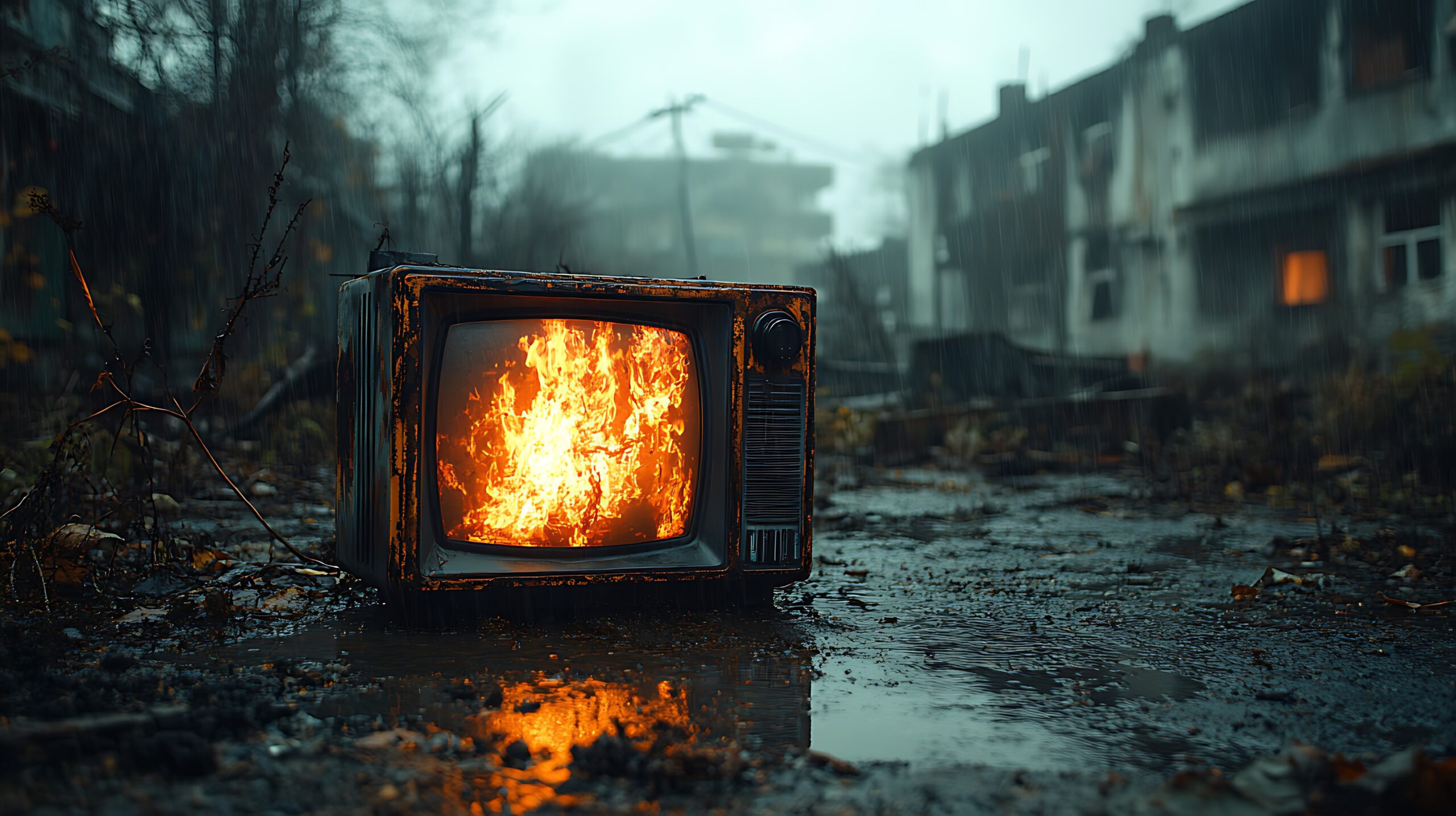
One aspect I love about starting up The Farm at Worman Mill is that I have no time for television. Specifically, I have no time to watch cable news.
I still pay attention to national news here and there. I enjoy the AP News app on my phone, the BBC app provides a nice dip-of-the-toes into an international perspective. But that’s about it. I’m more attuned to what’s covered by the Mariposa Gazette than I am the LA Times.
Largely, I’ve Tuned In to the world around me while Tuning Out to the world beyond my tiny town.1
- See what I did there? I just referred to a book that no one bought, Tuning In, which is now only available in my garage because no one bought it. Screw you Amazon. ↩︎
Tuning out of the daily news cycle has provided me some clarity and a whole lot of inner peace.
For example, the media has been reporting that Kamala Harris has raised over $1 billion in her campaign to become the first president under 70 years old since Barack Obama. Coincidentally, since that was reported, the polls have shown her lead narrowing from 4% nationally to 1.8% nationally— which is still within the margin of error for 4% but gives her campaign enough fear to spend that $1 billion on ads in swing states, that money flowing to– you guessed it– the same damned companies who do the polls showing that the race is tightening even though she is out-fundraising-and-out-campaigning her opponent 2:1.
If you turn on the news you’re convinced by the people on television selling ads to campaigns that the world is enraptured with a Presidential campaign. We could have voted a year ago and the outcome will basically be the same. The difference? The 3 big media companies have a bottom line fueled by extracting ad money spent only if they convince a roomful of politicos to buy ads. Ads don’t swing voters. Relationships do.
The media machine is just trolling you to get you to sit there and watch more ads.
Let me share a little farmer secret with you. If you turn off the news your world gets much more quiet, you hear the birds chirping, the frogs frogging, and the bees buzzing.
You begin to realize that what happens on the TV isn’t that important. That shit isn’t even real. Nothing on TV or in your news feed is nearly as important as the world right in front of you.
And in the world right in front of you people don’t really care about the bullshit on TV that divides us. Everyone in the real world is looking for a good price on bread and a really flavorful tomato.
It doesn’t matter who you vote for or what you think about the war in Gaza, we all want some good bread and tomatoes.

The Farm Stand
I spent more than a decade of my life talking about being “Good News in the Neighborhood” to impact my community when all I ever needed to do was start growing some vegetables and put a farm stand at the end of my driveway.
The Good News jargon was never really about religion to me. It was more about being something good in my community.
For a million reasons, this little farm startup in this little 400-person corner of this little 20,000-person corner of middle of nowhere of California, has begun to meet a utilitarian need.
In the first year of our farm startup we grew veggies and plants and then packed them into our white pickup truck and drove them to the big city of Fresno to try to sell them.
On the one hand I loved it. I liked meeting people and enjoyed the thrill of growing something, setting up my little tent, then enticing them to come look at the vegetables I grew. It’s fun because you’re hoping to convince a stranger to buy my tomatoes instead of the bacon-wrapped-churro-dipped-in-caramel thing the booth next door to me was selling.
But on the other hand I didn’t enjoy the driving. And too often we spent more money going on this adventure than we made at the farmers market. Along the way it dawned on me that I was out selling vegetables more than I was growing them and that felt completely backwards for a person starting a farm.
So in June we stopped going to farmers markets and got the farm stand. 96 square feet of freedom for less than $2000. What a deal!
[This is where the camera zooms in on Adam in the middle of the TED Talk stage. He pauses dramatically, allowing the audience to think about the waste of time farmers markets are for vendors, he clinches his pen, bends his elbow… they switch to camera 2, a close up of Adam’s face. Then he continues.]
Then something magical happened. Something that made no sense. Something that made every Seth Godin trained, Google Analytics informed, marketing-guru’d blood vessel in my brain pop– people drove up the road.
And they kept coming. Every dang day. All summer long. Now well into fall.
We learned that people are willing happy to drive to the edge of nowhere, where we live, to buy flowers and honey and baked goods and tomatoes and microgreens and nursery starts.
Why? I HAVE NO IDEA! But also why? Because it makes sense.
In a world where nothing makes sense. In a world where television and social media seek to divide us. In a world where no one talks. In a world where everyone is afraid of everyone else.
In that world, there’s a place you can go where things are simple and make sense.
You drive up the road. You park. You pick out some eggs or veggies or cake pops. You put money in a red box. You snap a picture for the gram. And you get what you want. Or not because we’ve sold out.
Everyone, and I mean everyone, comes to a farm stand.
People who drive Teslas and people who drive beater pick-ups. It doesn’t matter if you’ve lived on this mountain your whole life or you’re visiting here from the UK– you see a sign on the side of the highway that says “farm stand” and you drive way-the-hell-up this little winding road to a farm stand and buy yourself some eggs.
I used to fly 100,000 miles per year in search of something that I now find daily 200 feet from my pillow.
It’s beautiful. It’s simple. And maybe it’s ephemeral.
But in moment in our history, in this moment in my life, where nothing makes sense and the media is fueled by our desire to seek division, our little farm stand is there to bring us microgreens and a little bit of hope. (And a damned good heirloom tomato.)
At least that’s what it does for me.
And that’s good enough for me right now.
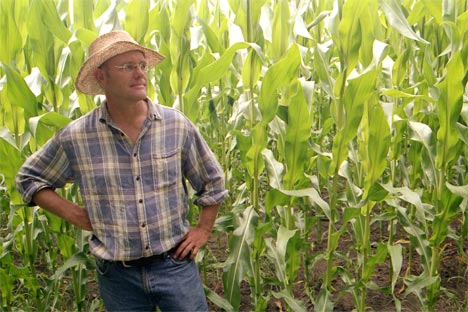
 1. Success is different. In business models growth is expected every year. You are expected to have a larger audience in 2010, 2011, 2012 or you’ve failed. When you reach saturation you have to franchise by planting a new megachurch or going to satellite services somehow. Plateau is the enemy, growth is measurable. In a farming model, growth is important but sustainability is more important. A farming-based model recognizes that you’ll have bumper crop seasons where there will be temptation to grow the farm… but you don’t, intentionally, because you know there will be tough times when a bigger farm would lead to failure. Successful farmers expect good years and bad years.
 A small church pastor is driven by sustainability. It always has to be about the people, the families, and the community. Since everyone will actually know everyone in a small, niche-based church can’t afford a cult of personality. In a small church the people are always aware that the pastor won’t be there forever… and so they hold the pastor accountable by making him make sustainable decisions. The small church pastor is motivated by “the farm” and he isn’t frustrated when there are bad times… it’s just part of what he does. He fertilizes and tills the ground, he maximizes the yield, and he understands that good and bad times are part of the ebb and flow of small church ministry.