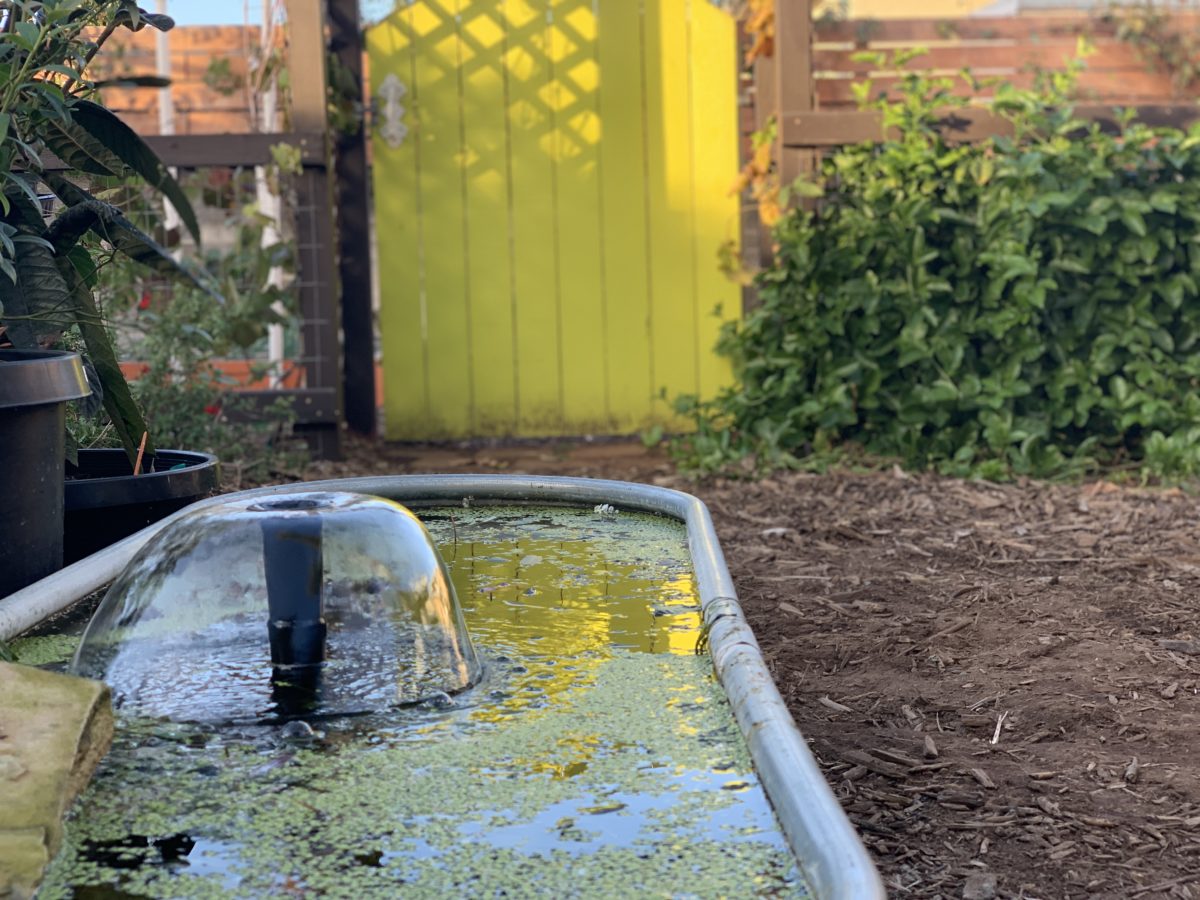
Tag: gardening
-
The Sacred Act of Pulling Weeds

If we confess our sins, he is faithful and just and will forgive us our sins and purify us from all unrighteousness.
Sometimes in the movies the bad guy goes into a church confession booth. He sits down heavily in the chair and the priest says, “Son, how long has it been since your last confession?” A cold, violent voice answers back, “Father, it’s…. it’s been a long time.” And then the bad guy takes a deep breath and slowly confesses his sins– murder, rape, deception, adultery, etc.
The unspoken narrative is that he’d come a long way from the nervous boy making his first confession as a boy. He hadn’t been to confession enough.
Confessing Sins is Like Pulling Weeds
I love my garden. There is something wholesome and beautiful about growing your own food. When you tend a garden your falls into a sacred rhythm. You become more aware of heat and season and wildlife because each plays a role in your garden. Each day you do a little bit of work and every day you enjoy a little bit of harvest.
Watering, fertilizing, pruning, preparing the soil… And pulling weeds. Every day you have to pulls some weeds.
If I pull weeds for 5-10 minutes every day I can keep it in control. The weeds aren’t a big deal. They are easy to pull and haven’t done much damage.
But if I take a few days off from pulling weeds it becomes a bigger deal. Weeds reproduce fast so there are more of them to pull and they are harder to kill because they have taken root in the soil. Not only have they begun leaching nutrients away from my vegetables, but their roots may have begun to intertwine with the roots of my vegetables, which means I’ll do damage to the good roots in the process of pulling the bad roots out.
If I take a week or two off from pulling weeds I’ll have a major problem. Weeds grow fast and tall and begin to choke out the good stuff. Fixing it becomes a major chore and it’s probably already too late.
I’ve found this to be exactly like confessing sins to another believer. When I regularly check in with someone, confessing sins in a sacred life rhythm keeps the sin in check.
It’s when I fall out of the habit, when I go weeks or months or even years without truly sharing with someone what’s really going on– those little sins take root and mature. They grow big and begin to choke out the good stuff.
And it’s a lot of work and a lot of pain to get them out of my life.
HT to Brian and Kevin and our high school small group. This post came directly from our discussion on 1 John last Wednesday.
p.s. Yes, I know I’m blogging about weeds on 4/20. Not that kind of weed, stoner.
Photo credit: Dreamcatcher-stock via Deviant Art
-
Weeds
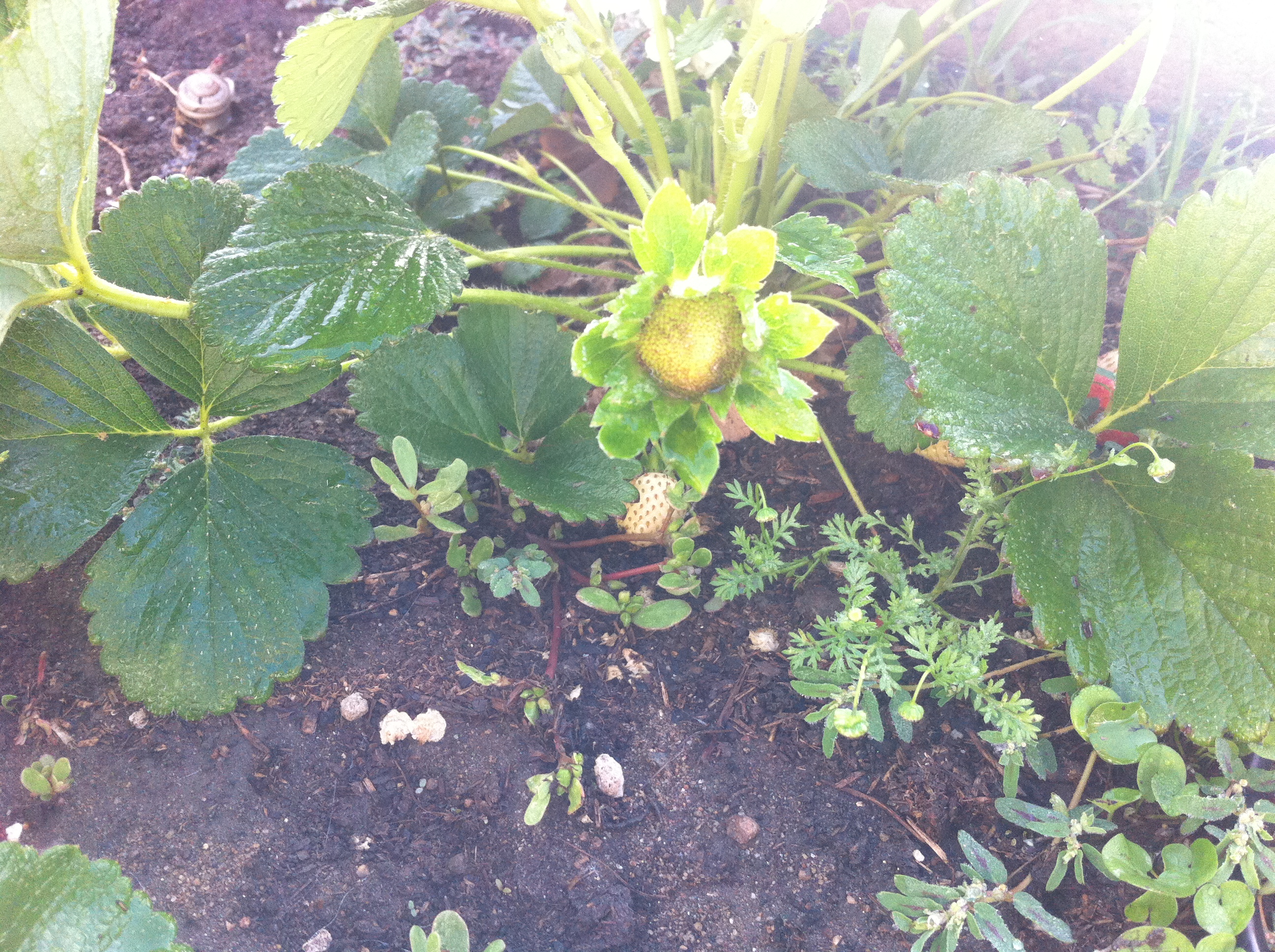
The last couple of weeks have been stressful. Work stuff piled up as an ever growing to-do list was at war with two very firm deadlines. Stress built, tension built, and I was an emotional wreck. One day last week I started working at 6:00 am and largely sat in the same place steadily working until 10:00 pm. And I didn’t feel any closer to being done than I did before.
I’ve learned that one of the ways I relax is to spend time in our garden. Life can be going a million miles per hour and it all slows when I crouch or kneel next to a bed of vegetables.
The chores of having a garden are fairly simply and repetitive. Fertilize the soil. Plant things at the right time. Water when its dry. Pull weeds. Harvest. Repeat.
The back-to-basics simplicity is what brings me so much joy. Fresh, organic fruits and vegetables are merely the by-product of the primary benefit.
Each weed I pull it releases a little bit of tension. In the past couple of weeks, the warmer weather arriving forced me to water more… which resulted in weeds springing up everywhere. That was perfect! Because I had plenty of tension, frustration, and anxiety to pull out with each weed as well.
Pulling weeds has a strong tie to my life with Jesus, too.
Here are a few things I’m reminded of as I weed my garden:
- You can’t just weed once per week.It’s better to weed a little bit each day.
- Weeds like fertile soil just as much as crop producing plants. Where there is growth there will be weeds.
- Sometimes you have to be gentle when you pull out a weed. It’s roots my be intertwined with roots of a good plant.
- Some weeds have thorns and smell bad. But others are pretty and you’re tempted to keep them. Don’t.
- Bugs eat your fruits and vegetables. For some reason they leave weeds alone.
- Even the best gardeners pull weeds. You never get above it… you just get better at it. And some just get better at hiding the evidence.
- Weeding the garden is work. It’s an easy skill but it is always going to get you dirty and always going to make you sweat.
What are some other parallels between taking care of your garden and your walk with Christ?
-
5 things gardens teach us about healthy churches

Last year, Kristen and I made a commitment to grow organically or buy organically 25% of our families food. For us, that has meant starting and maintaing a garden.
As they say, inch by inch and row by row– we have watched our garden grow.
A native suburbanite, I’ve discovered many revelations about my perceptions of a healthy church shattered by the realities of staying in tune with more agrarian things in my backyard.
The title of pastor is agrarian by etymology. To manage a flock is different than managing a business. Jesus could have chose to describe church leaders as business owners or organizational leaders… but instead Jesus chose an agrarian term, pastor.
Here are 5 things that gardens teach us about healthy churches:
- Healthy organisms replicate. The hallmark of a good plant is its fruit. And the reason a plant creates fruit is simple: To replicate. Conversely, the mission of a church isn’t to grow infinitely, it’s to replicate and make impact on the community it serves. If it isn’t replicating (producing fruit) than it’s just wasting space. (Matthew 3:12)
- In order to grow strong you must water & feed regularly. I need to make sure my plants have sun, water, fertilizer, (organic, of course) and good soil. In order for the church to be healthy, you need to do the hard work of making sure you have healthy conditions for your church to grow. Are you teaching good stuff? Are you grounded in your mission? Is your staff team feeding from God’s Word? Are you leading people to be dependent on you… or are you teaching them to feed themselves?
- In order to produce good fruit you must weed & prune. Last year, I got enamored with a tomato plant which grew to more than 20 feet tall. It was exciting to see how big that plant would get. But the bad thing was that it choked out the growth of all the plants around it. That taught me a valuable lesson about pruning. The goal isn’t just to have one healthy plant in the garden, to have a healthy garden all of the plants need to be healthy. Which means I need to keep up with weeding and pruning. Likewise, a good pastor weeds & prunes his church regularly. He doesn’t wait for big problems to arise before acting. He nips things in the bud. (A pruning pun for you.)
- Everything tastes better when its home grown. We love our CSA. Every two weeks we pick up a great big box of locally grown fresh fruits and vegetables. But, in all honesty, that stuff is no where near as tasty as the stuff we grow in our backyard. And stuff we buy from the supermarket… that’s like ordering a salisbury steak when you can have prime rib. Too many churches go to the supermarket instead of looking at their garden for talent and ideas. There’s nothing wrong with going to the supermarket. But growing your own talent and implementing your own ideas is so much more sweet.
- Healthy gardens are a habitat to many species, not just the plants. At any given time I have 5-10 different types of things I’m growing in my garden. But at the same time my garden has a whole ecosystem of other plants, animals, bugs, and crawly things which survive and thrive off of our garden. There are bugs that hang out by our compost heap. There are different little plants supported by the back spillage of our drip watering system. There are good bugs who eat bad bugs. There are bees who pollenate. And there are birds who live in our yard who live off of the bugs. The same is true in a church. When you let go of control and instead chose to create a healthy environment, an entire ecosystem of impact unfolds.
 Our title of pastor is describing something agrarian. For most of us, like myself, we grew up completely separated from all things farming. Perhaps more of us need to spend more time in the garden or in the fields tending to flocks to understand the simplicity and complexity of our roles?
What do you think? Should seminaries and conferences offer tracks which send you to the farm?
-
The great hope of the American church is…
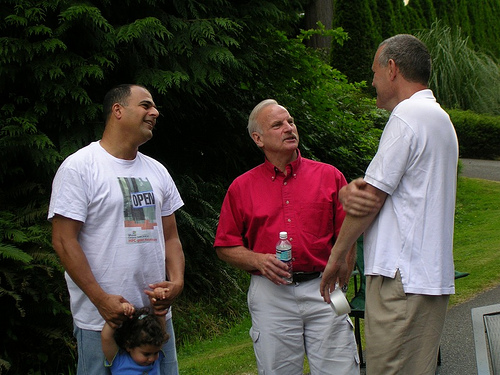
Photo by Gary Ericson via Flickr (Creative Commons) Neighbors loving neighbors.
The funny thing is that if you read enough church leadership blogs or read enough books by big-time church people you start to think that they believe the great hope of the American church is the church organization and its staff.
We know Jesus was a big fan of all things mega, right… (read John 6 to see an example of Jesus’ mega model.)
And we know that he sometimes went to the Temple or local synagogue but he just as often met out in public spaces, in a field, or in homes.
As a member of my faith community I’m reminded of the words of Paul in Romans 12:3-5.
For by the grace given me I say to every one of you: Do not think of yourself more highly than you ought, but rather think of yourself with sober judgment, in accordance with the faith God has distributed to each of you. For just as each of us has one body with many members, and these members do not all have the same function, so in Christ we, though many, form one body, and each member belongs to all the others.
What about people? Do you know any people?
“Healthy organisms are marked by their ability to grow.” – A church leadership mantra.
Apparently they skipped botany and biology. In my garden the goal of a maturing organism is reproduction. If something grows too big, is not pruned, and doesn’t reproduce… I pull it out of the ground and add it to my compost pile. A plant not reproducing is a waste of good soil, space, and time.
Understanding species
See, big churches or small churches or whatever your church species choice/preference is, were never designed to be the solution to reaching people. I’m a fan of churches of all sizes and shapes. But the species of a church was never the point in the Gospels.
The church is a gathering place of worship where we celebrate what God is doing in us and through us. In nature, the health of any organism is measured by its ability to reproduce. I believe the same is true in the church.
The solution is you. Your love for your neighbors is infinitely reproducible. Jesus death tore the veil between priest and citizen. Jesus freed Hope from the descendants of Aaron and gave us each equal access to the King. You have been empowered to reach your neighborhood. And thanks to the hard work of generations of scribes and translators you have, in your possession, the greatest tool you could ever need to reach your neighbors– the Bible.
Jesus could have chosen to spread his message by force. (Some of his disciples really wanted that!) But Jesus knew that hope doesn’t spread by force. Change only happens when the heart is transformed. (Our military has learned that in Iraq and Afghanistan.) [If you want to see the power of a message of hope vs. a message of force, just compare the exploits of David in the Old Testament to the exploits of the apostles in Acts.]
A message of reconciliation to the Father was a message of the heart best transferred neighbor to neighbor. It was never intended to be a come and see message. It was only meant to be a go and do message. It’s not dependent on a top-down leadership structure. Instead, Jesus empowered the people to change the world from the bottom up… from neighbor to neighbor.
-
Towards Simplicity

Photo by Steve Minor via Flickr (Creative Commons) ‘Tis the gift to be simple, ’tis the gift to be free,
- ‘Tis the gift to come down where we ought to be,
- And when we find ourselves in the place just right,
- ‘Twill be in the valley of love and delight.
- When true simplicity is gain’d,
- To bow and to bend we shan’t be asham’d,
- To turn, turn will be our delight,
- Till by turning, turning we come round right.
Simple Gifts – Elder Joseph Brackett, Shaker
This has hardly been our theme song for 2010. Yet, Kristen and I have made some serious moves towards simplicity this year. Ever since I read Richard Foster’s Celebration of Discipline, I’ve been fascinated by the concept that less is more in my life.
The Simple Things
- Quantity time with the kids, individually. As the kids are getting older we are making sure to schedule time for mom and dad to spend big chunks of time with each of us 1-on-1.
- Gardening. I can’t tell you how many deeply simple Biblical principles have been illuminated to us through our garden this year. For me, the biggest one has been– You have to prune daily, you have to weed regularly– Otherwise good things will take over your life and bad things will choke out your growth.
- Staycation- I suppose not everyone lives in a vacation destination quite like we do. But there was something so beautiful about renting a house 45 minutes away and spending a week with family.
- Financially sound – I was shocked when I looked at some graphs on Mint.com the other day. I told Kristen, “We did a really good job this year. We’re ahead in every category and on target or ahead in every goal.” It’s amazing what can happen if you’ll just live within your means. In 2010, we were able to give or save 25.4% of our income.
- Meaningful roadies- In November, I lamented a lot about being away from home 14 weeks in 2010. (27% of 2010) At the same time, most of those trips were really meaningful. And not all of that was away from family. (Including the mission trip with Kristen, probably the most valuable trips of our marriage.)
- Friendship – It’s incredible to have a life full of friendships. (Or as a co-worker calls them, “Adam’s bromances and brarriages.”) While having a bunch of great friendships is huge to me… nothing has made me more excited than to see Kristen develop some deep friendships with a few women in our community group.
- Real food – We’ve far exceeded our desire to buy/grow 25% of our food from organic sources in 2010. While it might not sound immediately like a step towards simplicity: Going to the farmers market (and even visiting the farm where our food comes from) has not only connected us to where our food comes from– we feel a lot better. There’s nothing finer than enjoying a salad or eating fruit that you’ve grown yourself.
- Acting on convictions – Putting what you believe to action really is a step towards simplicity. That might not sink in at first, but remember that regrets and the conflict caused by sitting idly on your convictions creates stressful complexity. All year long I’ve asked myself, “Am I making the most of this opportunity? Am I acting on my convictions? Will I regret it if I don’t say that?”
- Towards a small world – No doubt, I have many friendships all around the country and around the world. But taking the step to try to focus some of that energy onto the block we live has been rewarding. We’re looking to allocate more of our time/resources towards that in 2011.
- Journalling – I’m headed into my seventh year of journalling my life online. This little discipline has transformed my life. It’s really interesting when I interact with people who are thinking about starting a blog. “When will I have the time? What will I say? Will people read it?” I come at it daily with the exact opposite thoughts. The time I spend journalling brings me life. What I write just comes out of my life. And I don’t care if anyone reads it.
It’s funny how simplicity is different for everyone. When I think of my life, filled with a calendar full of meetings, digital gadgets, hours online per day, on and on… I still consider it grounded in simplicity. Perhaps that makes me a digital simpleton?
I don’t have grandiose plans to drive this further in 2011. With baby #3 coming soon I think we’ll just be happy to hold on to the progress we’ve made in 2010. You know, keep it simple.
What steps towards simplicity are you taking? What are things you’d challenge me towards in 2011?
-
DIY Sun-Dried Tomatoes
As I mentioned last week, our garden severely over-produced yellow cherry tomatoes, leading to the great tomato apocalpyse of 2010. With more than 5 lbs of tomatoes and no one willing to eat them in sight, we decided to get creative about preserving them.
Here’s how we made sun-dried tomatoes.
Step 1: Prepare the place

This is a pretty simple project. You’ll just need a clean workspace and a sharp knife. We also found a window screen in the garage, which we hosed off the night before to get it ready.
Step 2: Halve your tomatoes

If you are working with cherry tomatoes, cutting them in half worked just fine. If you are working with Roma or any other full sized tomato, I’d recommend cutting them into 1 inch wide chunks. (Keep them even, you’ll be cooking with these later, and even sizes will help.)
We had about 5 lbs to cut and it took us 10 minutes with 2 people. If you are using full-sized tomatoes go ahead and remove the seeds as they’ll just slow the drying process. But with smaller ones we didn’t bother and it didn’t seem to matter.
Step 3: Add seasoning

Dice up some fresh herbs, mix them in by hand, and let the mixture sit for about 20 minutes. (Set up step 4 while this all stews)
For our sun-dried tomatoes we added in some garden fresh rosemary and basil. This added a nice flavor and an incredible smell.
Step 4: Prepare your rack

Drying vegitables outside is an ancient food preservation technique. Chances are good that if you live in a sunny climate, you won’t have a problem drying fruits and vegitables out in the open. You can basically dry stuff anywhere that is hot and dry. So inside a car on a summer day works. As does your oven at 150 degrees for several hours. As does a food dehydrator.
We live in San Diego, it was especially sunny and hot, and the summer made for a long day of sunshine. So we opted to try the outdoor method. We placed an extra window screen we found in the garage on our garden table, propped up by 4 matching clay pots. It wasn’t fancy but it was free and best of all, it worked brilliantly!
Step 5: Spread out your tomatoes

Spread them out evenly on the screen. We found that it was useful to seperate them as much as possible so try to break up the little piles as best you can.
Step 6: Wait a couple hours

This isn’t a very exciting process. But every couple hours go out and check on them. It really does help them dry faster to flip them and bounce them around a little bit. They have a tendency to stick to the screen, so you’ll be pealing a flipping a bit the first few hours. I set a timer so I would only check on them hourly, taking pictures every time.
Note about flies: We were worried about our local hummingbird or other birds taking notice and feasting when we weren’t looking. That didn’t happen, but we did attract a few flies with the sweet, savory smell. For our purposes this didn’t matter because we knew we’d be cooking these. But if that bothers you then you’ll need to build some one to seal this process off from bugs.
Step 7: When are they done?

For us, by the time we came back from a family trip to the beach, the sun had gone down and they were done. In climates where it isn’t quite so warm you may need to store your rack inside overnight and leave them outside a second day.
They are done when they stop feeling sticky. Some of them we a bit crispy, but most of them were gummy but not overly sticky. If you do yellow tomatoes you’ll see that they darken significantly. If you are using red, you’ll see them get a very deep red when done.
Step 8: Storage

We emptied our drying rack and stored our bounty into several ziplock bags. 5 lbs of tomatoes made about 1.5 pounds of sun-dried tomatoes which we broke up into 5 bags. We put one in the fridge because we knew we’d use it right away and we froze the rest.
Step 9: Cook and enjoy!

The next day we enjoyed a delicious pasta dish with a sun-dried tomato and onion base.
Let us know how it went for you. And happy drying!