
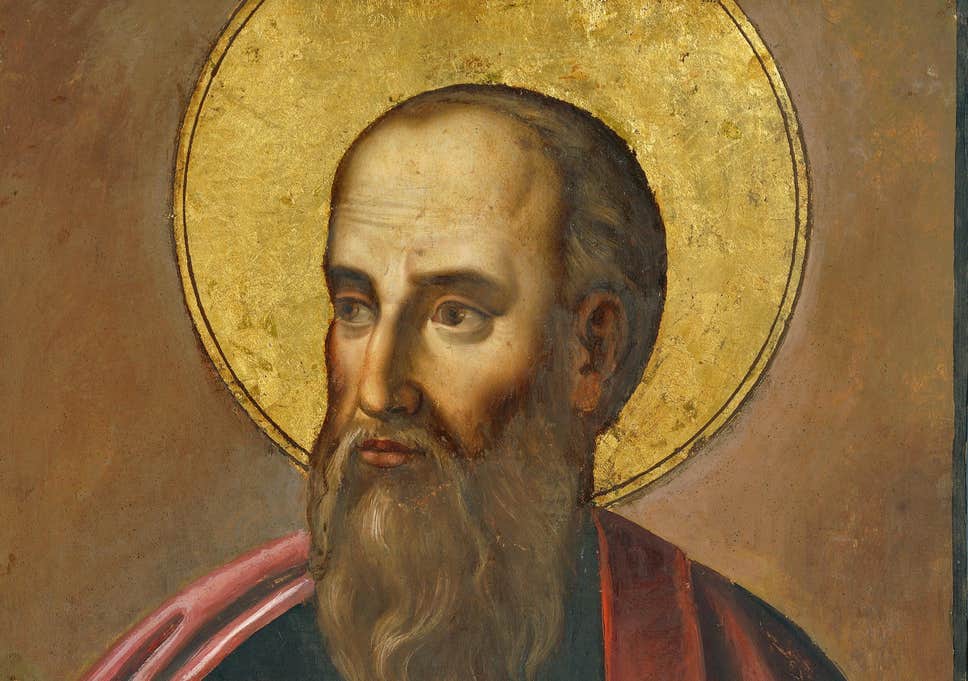
I find more people are interested in being seen as someone who does the right thing than I do people who just do the right thing despite how it may look. Character isn’t what people think, that’s reputation. Character is who you are when others aren’t looking.
(more…)Tag: integrity
-
The Dark Side of Ministry Life
From the outside looking in, ministry life is often romanticized. “It must be so cool to spend your days advancing the Gospel.” And yes, there are plenty of moments when you feel that.
But there’s a not-so-hidden dark side to ministry life that act as pitfalls, snares, and traps… these are things that don’t seem like a big deal early on in ministry, but over time they build up and eventually take you out.
Here’s three to highlight my point:
Plagiarism
Christians are ruthless about plagiarism. Had my IP ripped off from college until today like its a birthright to steal or something.
— Adam McLane (@mclanea) September 13, 2016
Plagiarism is a sin that creeps in out of convenience. You start off by missing a citation or manipulating the facts to include yourself in a good story that you heard. But, over time, since literally no one is fact checking you or asking where you get your content… you move deeper into it.
See, when you are young and brand new, you really can get away with this. You buy resources sometimes (which definitely isn’t plagiarism!) but other times you lift ideas from stuff you see. You build a series here and there ripping off an idea you saw at a conference or on TV. But before long, you stop buying resources and just start riffing off of podcasts you hear or your favorite preacher’s sermons you grab from their website.
“That’s not wrong, is it? I mean I make it my own…” Actually, it’s a lack of integrity. You are taking someone else’s work, not giving them credit, presenting it as your own, then getting paid. So you’re making money off of someone else’s work without permission, license, or payment?
That’s plagiarism.
And, over time, it’ll catch up to you. Let’s say you preach a sermon in “big church” and someone notices that a story you shared was on a podcast they listen to… but you didn’t give that podcast credit? They might not say anything to you but you’ve lost credibility with that person.
They know your sin.
And so do you.
All I’m saying is have integrity. Give credit where it’s due. If you need a resource, buy it. There’s never shame in being honest about where you get your stuff from. Doing so builds credibility instead of bleeding it away.
Burning Out from Going Hard
Like a lot of people in ministry I took notice of Pete Wilson’s recent announcement that he’s stepping away from ministry. Not too long Perry Noble did the same. You could probably label much of what happened with Mars Hill and Mark Driscoll as the same. People who go hard for a long period of time eventually burn out.
And never forget that for every big name lead pastor who drops out because of burn out there are 100 non-famous, regular church staff folks who do the same.
When you see these announcements you hear people say things like, “Pray for pastors. Their life is so hard.” And, of course, people should pray for their pastors because their life is really hard whether you are pastoring in ultra-wealthy Seattle or a very poor city in Haiti like Hinch.
But the thing about burn out? It’s 100% preventable. In every profession you can expect to go through season every once in a while where you go hard. But I think sometimes on ministry staffs “going hard” becomes the mantra.
We make the mistake of thinking we can do a lot to attract people. But don’t forget, eventually those people you are attracting with all that activity are going to look at YOU and ask themselves, “Is this what following Jesus looks like? I don’t want that.” In a post-Christian world how you live is more important than what you believe. If how you’re living isn’t good news to someone they probably won’t listen to the Good News of Jesus.
My thought? Yes, of course pray for pastors. But we need to also expect less from them, too. Ultimately, burn out is about integrity. Do you take care of yourself physically, emotionally, spiritually, and socially? It shocks me how many of my friends in church ministry have no friends outside of their church life, no hobbies, no life. If that’s you… you’re on Burn Out Boulevard. Make a hard turn at the next intersection or you’re next.
Don’t impress me with your ability to go hard. Impress me with your ability to go long-term by taking care of yourself.
HR Violations

I’ve written about this before. While the local church should be the best place to work in town it’s often the place using it’s tax status to violate an abundance of employment laws that a non-church workplace couldn’t get away with. EOE violations, [Only interviewing men for non-exempt positions… SHAME!] age discrimination, racial discrimination, misclassification of employment status, violating overtime rules… these are all the norm, obvious violations of normal workplace standards. Then there are organizations that foster workplace environments that are full of hostility, nepotism, and intimidation that are ripe for lawsuits.
I can’t tell you how many times I’ve heard from church staff that they hate their boss, their job, their church, etc. Yeah… that ain’t good.
Again, these are questions of integrity. If the only thing that matters is growing a big church than why bother with creating an endearing place to work? But when you look at the fallout, thousands of church workers who leave the ministry each year, you need to ask yourself: At what cost?
Like the rest– this is entirely preventable. But these things creep in under the umbrella of “everyone is just doing the best they can.”
So Why Bring These Things Up?
Listen, none of this is news. So why bother talking about it?
Because we need to shine light on the dark places of ministry. We need to work hard on creating space for church workers to take care of themselves, be awesome family members, be active in their community, and be amazing employers. We must give space for this to happen. And, in a lot of ways, we can do this when we lower our expectations to something more realistic.
As I read and reflect on the four Gospels sometimes it just pops off the page to me that their lives weren’t as packed in as ours are. We see being busy as being successful. But is that the measurement we really want for our lives in ministry? I’ll take being faithful over being successful all day, every day. (If I had to chose one or the other! They aren’t mutually exclusive obviously.)
What I see as Jesus interacted with his disciples is that they often times did a lot of ministry… really packed it in… then spent days getting to the next place. Walking for 2-3 days isn’t all that productive, is it? There weren’t strategy meetings or stuff like that… they walked. It was probably pretty quiet sometimes. It was probably sometimes uneventful and introspective. And they took Sabbath really seriously. Maybe even too seriously?
But man, the pendulum has really swung.
Busy is not the answer people are looking for in Jesus.
Again, that’s ultimately about integrity. These are insider things that only people on the inside will ever really know about.
-
Freedom to Doubt
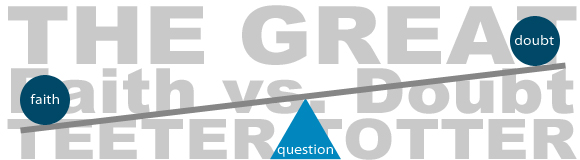
There is great integrity in a leader who fosters doubt in his congregation
Humans possess curious natural instincts. Of all of creation, no creature is more curious than humans.
God created us with this natural instinct. It’s as evident in the Garden as it is in your heart today.
Great faith is produced within an ecosystem where question is a free fulcrum between doubting God and having great trust.
Doubt is not the enemy of faith.
Indoctrination is.
Doubt is normal, it lives in a persons heart from his first breath to his last.
Fear of questioning inhibits faith development.
Doubt is not the enemy of the church.
Fear of doubt is.
Great faith does not come through eliminating doubt.
Great faith comes when a person has measured doubt’s full weight and chosen faith.
Consider Thomas
Now Thomas (also known as Didymus), one of the Twelve, was not with the disciples when Jesus came. So the other disciples told him, “We have seen the Lord!”But he said to them, “Unless I see the nail marks in his hands and put my finger where the nails were, and put my hand into his side, I will not believe.”
A week later his disciples were in the house again, and Thomas was with them. Though the doors were locked, Jesus came and stood among them and said, “Peace be with you!” Then he said to Thomas, “Put your finger here; see my hands. Reach out your hand and put it into my side. Stop doubting and believe.”
Thomas said to him, “My Lord and my God!”
Then Jesus told him, “Because you have seen me, you have believed; blessed are those who have not seen and yet have believed.”
What’s the point?
Often times, the biggest doubter among you– given the freedom to doubt, will develop the deepest faith.
We are not called to eliminate doubt.
How did Jesus deal with Thomas’ doubt? He chastised him a little, but allowed Thomas to express his doubt. Jesus didn’t look down on Thomas because of his doubt. Instead he knew that by allowing Thomas the freedom to doubt, a faith weighed and tested, would generate great faith.
And as a result Jesus knew Thomas would become a rock solid believer and took the Gospel to India.