A couple months back I raised some eyebrows by saying that medium-sized churches were in crisis. Since that post I’ve had dozens more conversations which confirm that it isn’t just me seeing this, it really is happening. Church leaders all nod their head when they read Seth Godin, “Big is the new small. But you’ll always have big.” In the business world, Wal*Mart is still getting bigger while medium-sized outlets struggle to exist. But the real growth in retail happens in the mom-and-pop shop online. The same is coming true in chuch-world.
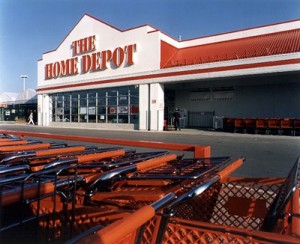
In churches, the big will keep getting bigger. Just like people are driven to the big box retailers, people are continuing to be drawn the big box churches. I say… let them have their big buildings, ginormous programs, and endless pursuit of perfection. While it doesn’t appeal to everyone… certainly, that appeals to masses and its obvious that those megachurches will/should continue to get mega-er.
For them, the business model really is the best model for church. 10% effort and 90% profit.
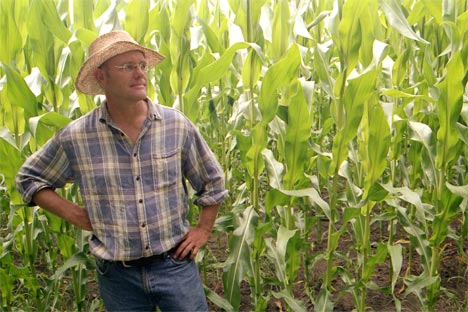
But for small churches, the best model is a farm. 90% effort and 10% profit.
Both are noble. Both are valuable. But both operate in strikingly different manners.
I see that we are at the forefront of seeing an explosion of small, niche based small churches. Just like it’s easy to dream of an online shop selling homemade Mario Brothers crafts and finding an audience on Etsy.com, it’s getting increasingly easy to build a church around a niche. People are more-than-happy to drive 50 miles to worship with people in their tribes who share their passions. That’s why we’re seeing a major wave of church planters who successfully grow from 1 to 200 and then plateau… happily. They are churches full of artists or surfers or engineers or soccer players.
Differences between business models and farming models of church leadership.
At the core it’s this: Business models are driven by growth. Farming models are driven by sustainability.
 1. Success is different. In business models growth is expected every year. You are expected to have a larger audience in 2010, 2011, 2012 or you’ve failed. When you reach saturation you have to franchise by planting a new megachurch or going to satellite services somehow. Plateau is the enemy, growth is measurable. In a farming model, growth is important but sustainability is more important. A farming-based model recognizes that you’ll have bumper crop seasons where there will be temptation to grow the farm… but you don’t, intentionally, because you know there will be tough times when a bigger farm would lead to failure. Successful farmers expect good years and bad years.
2. Discipleship is different. Examine any discipleship method in the business model of church and it all goes back to the Sonlife model taught in youth ministry of the 80s. Win-Build-Equip-Multiply. Navigators, Sonlife, Willow Creek, Saddleback, North Point… all of those models are designed to grow a church through multiplication. In a farming model, it’s all about yield per person. How can I maximize growth with the people that I have? How can the people within my congregation grow the most? How can I love them more? Since farming is about sustainability and not multiplication discipleship is always about maintaining a healthy ecclesia. One isn’t better or more biblical than the other… they are just different methods. (Of course, proponents of each think their model is superior!)
3. Leadership is different. A large church pastor is driven [and held accountable] by growth. There are many good ramifications of this. Tens of thousands of people are introduced to the Gospel… please don’t misread that I’m saying big churches are bad. But a nasty byproduct of that drive for growth is that the successful church in this model really becomes about the pastor. New Spring is Perry Noble’s church. Lifechurch.tv is Craig Groeschell’s church. Willow Creek is Bill Hybels church. North Point is Andy Stanley’s church. Mars Hills is Mark Driscoll’s church (Or Rob Bell’s church, depending which coast you live in.) On and on. While those leaders never desire to create a cult of personality… the leadership-style that creates that movement of God draws that type of person in the same way Ebay is Meg Whitman’s company, Microsoft is Bill Gates company, and Apple is Steve Jobs company. Contrary to what you might think… I don’t think the drive to grow a large church is evil. It’s perfectly fine and healthy to live within that paradigm. My fear with those churches is that there simple isn’t a succession plan if/when that leader steps away! Look back to last generations megachurches and you see the problem and how it plays out.
 A small church pastor is driven by sustainability. It always has to be about the people, the families, and the community. Since everyone will actually know everyone in a small, niche-based church can’t afford a cult of personality. In a small church the people are always aware that the pastor won’t be there forever… and so they hold the pastor accountable by making him make sustainable decisions. The small church pastor is motivated by “the farm” and he isn’t frustrated when there are bad times… it’s just part of what he does. He fertilizes and tills the ground, he maximizes the yield, and he understands that good and bad times are part of the ebb and flow of small church ministry.
4. Expectations are different. Values in a large church are that things will be professional, smooth, highly organized, and striving for perfection. In a small, farm-modeled church, excellence is nice when you have an excellent person… but the expectation is “the best we can do.” That’s why there was so much pride in Mainstreet when I was in Romeo. It was the best thing we could do and we were proud of it. Sure, it wasn’t Broadway quality. Reggie Joiner wasn’t going to come to Romeo and write a book about how we adopted his model with cardboard and a fat youth pastor dressed like a cow. But no one in Romeo really expected it to be and we set it up in a way that could sustain. That’s why Mainstreet is still happening even after I moved away. In a small, niche/affinity based church, perfection isn’t the goal… the niche is the goal. Quaint is good! Rock that quirky church, baby! Mrs. Nelson’s son playing on the piano poorly is just fine. A kids program lead by an ex-stripper now Christian grandma is a blessing. Ministries lead by teenagers is about sustainability of the niche-based church… not about having the best leaders teaching.
What do you think? Do you think it’s time to introduce a model for small church ministry that is based on sustainability? Do you agree with this premise… or am I way off?