 A couple weeks back Kristen and I took Jackson into the pediatricians office to get circumcised. This is one of the things that has changed since we had Paul 7.5 years ago. Now they wait until a baby is two weeks old before doing circumcision. When Paul was born the nurses took him for a bath and a hearing check and he came back circumcised. Don’t ask me why this is so, it just is.
Our pediatrician is wonderful older Jewish gentleman in his early 60s. He’s the kind of doctor that when you tell other doctors who your kids pediatrician is they all go, “Oh, he’s a great, great doctor.”
After he explained that the latest research thinks it is best to wait a couple of weeks to circumcise I quipped that maybe Jewish law had been right all along, waiting until the 8th day. As he continued preparing little Jackson for the procedure he and I struck up a conversation about Genesis 17. (Kristen rolled her eyes, she’s heard my little rant about this 100 times.) My initial thought went OK well so I moved on to my main point. I told him that when I was in Bible college I asked the professor two questions about this passage: When Abraham circumcised his entire household in one day who went first? And did God give a diagram so they knew what to do and how much foreskin was enough?
I was showing off and he wasn’t impressed. Kristen smirked.
He didn’t laugh. Everyone laughs when I tell that story.
Instead he said, “You see, this is a problem for the Protestant faith. While you’ve rightfully elevated the written revelation of God you’ve completely discounted thousands of years of oral tradition.” He went on to explain that parallel to Moses’ recording the Torah in written form an oral tradition was passed from priest to priest explaining how to interpret the laws, how to translate many things into daily life, and how to actually do some of the things that the written word commands.
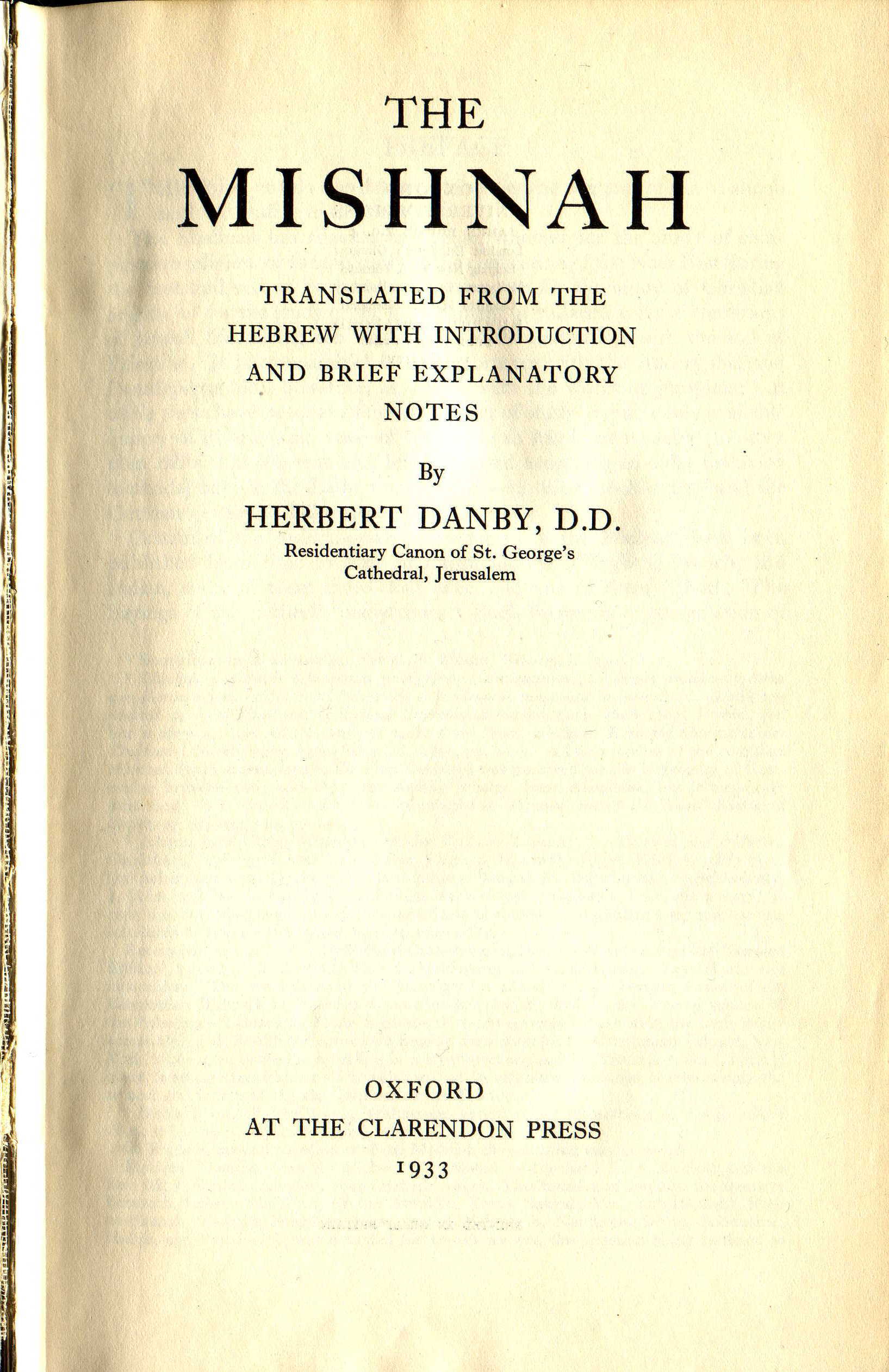
In other words– Mishnah told ministers how to do their job. That’s how they learned how to do things like circumcision. Later, about 200 years after the destruction of the Temple in Jerusalem, it was decided that they needed to record some of that oral tradition because the Jewish people were increasingly scattered. This resulted in what is now the beginning of the Talmud, what’s called Mishnah.
I was a pretty good student. All I remember learning about the Talmud as a student was that there was Mishnah, defined as oral tradition, and Midrash, defined as commentary. It was literally just a test question and a couple of paragraphs in a couple of books.
After the procedure we took Jackson home. And I went on Amazon and bought a Mishnah translation of for my Kindle. With 25 other books I could be reading, I’ve been reading 1800 year old instructions on how to be a good rabbi.
Reading through Mishnah has opened my eyes to two things:
- I never understood the non-temple responsibilities of a priest, Levite, or rabbi quite the way I do now. The Old Testament makes the job seem mostly ceremonial. In fact, their job was deeply engrained in daily life. The entire first section is about farming/gardening. I can envision the rabbi in the field with the farmer, “OK, you need to put wheat over there. Yes, you can plant barley in an adjacent field, just angle it like this. Now make sure your furrows are as deep as they are wide, about the width of your foot. Now, the vineyard. The reason you don’t want to plant onions between rows in the vineyard…” This wasn’t an office job. It was literally and out-in-the-ministry-field life, helping congregants understand God’s way for doing just about everything.
- Perhaps one of the problems in the Protestant church today is that we don’t have Mishnah? We disregard (disrespect perhaps?) oral tradition so much that we’ve assumed that those old time ministers didn’t know what they were doing. When was the last time you spent a day making house calls? Visiting jails? Visiting hospitals? We don’t bother with such things– let the volunteer deacon and small groups do that. We have important stuff to get done in the office. Like meetings and preparing for our programs and updating our Facebook status to complain about going to meetings all day. I think this has lead to the average minister considering himself more of a manager than a minister. They consider their sacramental duties limited to the things they do in the church itself. Teaching the Bible, preaching, communion, baptism, etc. Sadly, our profession is no more engrained in the daily life of our congregants than the occasional appearance at a congregants home or a visit when they are in the hospital. Instead of going and being with people every day we spend the majority of our time thinking about how to best serve the church when they come to us. Maybe, just maybe, it isn’t supposed to be like that and our predecessors had it right and we have it wrong?