Tag: qualifications

  • The Pastor Man Up Movement

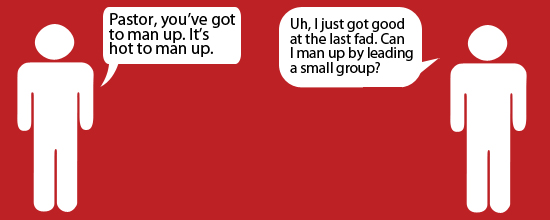
    The last few years has seen the popularization of something I refer to as the Pastor Man Up Movement. (PMUP)

    You hear things said, like “Pastor, if anyone is going to lead your church, it has to be you.” Or, “No one else in the church is called to lead more than you.” Or, “It’s time the pastors of the church took control from the committees.” It’s an interesting phenomenon. And it’s promoting a lot of abuse of power. Pastors read a blog or hear a PMUP message and run to the next meeting all full of testosterone instead of grace.

    It’s dangerous to take the power that a pastor is given and then encourage that person to exert his will on a congregation.

    It’s like storing a keg of black powder in a cigar bar. Eventually there will be an explosion.

    In a healthy context there’s nothing wrong with this movement. It’s good for pastors and church staff to be leaders and to be reminded of their calling. That’s why we pay them. (Let’s not lose site of that fact. I know many people have been abused by the church, but there really are healthy churches out there.) When we hire pastors at our churches we should empower them to lead. I currently attend a church where the church staff are good leaders. They seek wise counsel, they are temperate, they consider the needs of the whole congregation in making decisions, they work hard to battle “what people want” vs “what the Bible is asking us to do.” I’ve never sensed that they are afraid to lead.

    The problem is that it’s also become popular to hire staff members with little or no formal training. It’s not unusual for me to hear of people joining a church staff with not only no formal training at the undergraduate/graduate level– they’ve not even been an intern or been taught how to lead a church in an informal setting. They have zero training to enter the ministry. Literally, one week they are selling cars (or whatever) and the next week they have the title of pastor. Few other professions do this the way churches do. You wouldn’t hire a teacher to be a lawyer. Nor would you hire a vet to be a physician or a CPA to be a plumber. But in the church? It’s become en vogue to hire non-professionals.

    [My suspicion is that those people who leave a profession to enter the ministry probably weren’t that good at their profession in the first place. But it’s quite an ego boost to go from being a CPA to an executive pastor! It’s not like a mediocre CPA was going to make partner.]

    PMUP + Untrained staff = Explosion waiting to happen

    A couple of thoughts about this combination:

    • When a senior pastor surrounds himself with untrained associates this should tell you something about the leader of the senior.
    • There’s nothing wrong with being a strong leader. But if no one is following you of their own free will… you aren’t leading. You are a dictator. (Remember how things end for most dictators)
    • When a church calls an untrained person to be their pastor, this should tell you something about the congregation.
    • It makes me giggle when a bunch of dudes decide that they need to man-up. I grew up thinking that a real man took care of the people around him, not used his weight to get his way.
    • Where in the Bible were deacons/overseers/elders told they should man up?
    • When did the will of a congregation/voting become a bad thing?
    • Sometimes it seems as though people are selling themselves and their vision instead of God’s vision. As a churchgoer, all I know if I’m stuck with the bill.
    • If someone has to throw around their weight to make things happen, does that make them a leader worth following?
    • The unspoken message every person knows in a church is that if the pastor can’t exert his will, the congregation runs the risk of the person quitting. (This isn’t “manning up.” It’s “taking my ball and going home.”)
    • When did formal eduction/training as an entry point to ministry become a bad thing? And if churches are  going to hire untrained staff, why don’t they budget for properly training them?
  • What Do I Look for in a Pastoral Staff?

    pastoral-teamFor a variety of reasons I know a lot of people in church transition. Some were on staff at a church which has let them go for budget reasons and they need a new church home. Others have moved to new states for a job. Still others just can’t stand their current church situation anymore and are looking for a new church home in their town.

    So the question presented to me, as a friend is: What do I look for in a church? (We’re talking about believers looking for a new church, not people brand new to the faith.)

    I like to immediately rephrase the question to be about the pastoral staff. You simply cannot go visit a church and make a judgment on whether or not you want to be a part of it based on a site visit and observation of programs or even the weekly service. The quality of a church is determined by the quality of leaders. If you want to see the heart of the church and get exposed to what is really going on– you will need to meet senior leaders. If the church is so big that you don’t get to meet the senior leaders if you request a meeting… decide for yourself if that’s the type of church you’re OK with being a part of. Me personally? That tells me everything I need to know. If I can’t get a meeting for a cup of coffee with the pastoral staff they don’t want me to be a part of their church, got it!

    Things you are trying to figure out when you meet a pastoral staff member.

    1 Timothy 3:1-7 outlines the Biblical qualifications for being a pastor. (overseer) This becomes the basis for my bullet points below.

    Here is a trustworthy saying: If anyone sets his heart on being an overseer, he desires a noble task. Now the overseer must be above reproach, the husband of but one wife, temperate, self-controlled, respectable, hospitable, able to teach, not given to drunkenness, not violent but gentle, not quarrelsome, not a lover of money. He must manage his own family well and see that his children obey him with proper respect. (If anyone does not know how to manage his own family, how can he take care of God’s church?) He must not be a recent convert, or he may become conceited and fall under the same judgment as the devil. He must also have a good reputation with outsiders, so that he will not fall into disgrace and into the devil’s trap.

    • Above reproach- Do the senior leaders have a good reputation? When you talk to other church leaders in the area do they know who they are? Do they show up to local pastor network stuff? Do the people of the church have nice things to say after the first cup of coffee?
    • Husband of one wife- I don’t think this means divorce and I don’t think this is exclusive to men… so it could be “wife of one man” in my eyes. But I do think this means… are these people true to their spouse? Are they working so hard that the church is really their spouse?
    • Temperate, self-controlled, respectable, hospitable– If you want the inside scoop on this talk to the secretaries. They will tell you flat out if the pastoral staff are a bunch of jerks or not. “Does he ever blow a gasket?” If you really want to dig into this, talk to the vendors who service the church. The computer people, the copier salesmen, or even their insurance broker will know if these people just put on a happy face for parishioners but are otherwise jerks.
    • Not a drunk- I’ve actually never met a pastoral team member who was a drunk. I’m sure they are out there. I just wouldn’t worry about this one too much.
    • Gentle- You need to trust your gut on this. This is one of the most important qualities of being a pastor. So even the jerks can “put on gentleness” as a survival skill. But you need to determine if the staff are gentle when it counts or just gentle for the church show. You can test this out by bringing them an absurd idea. If they aren’t jerks when you tell them that you will only go to a church that uses free trade communion wafers… you know they are gentle. 
    • Not quarrelsome, not a lover of money– We’re getting somewhere now! If you talk to your pastor and you sense that they are in the church to build their kingdom instead of the Kingdom of God, walk out of the meeting. Based on my years of experience this is about 1:5 pastors. It’s an American epidemic. Why flee these pastors? They will be a bull in a china shop. They will do whatever it takes to grow/build the church. That’s fun for about 2 months but gets old real fast. In short, those people tend to love a good rumble. But if the church is doing a reluctant building campaign because they have clearly maxed out their current space… this isn’t always a bad thing.
    • A good family- This is tricky as it might take a while to figure out.  You can sniff it out by asking how they manage their time. Every church will say they encourage their staff to put family first. But are they backing that up? Is it OK for a staff member to miss a Sunday for a key sports tournament with their son? Is it OK for a staff member to go home early or go late to get the kids to school? Do they punch a time clock with strict office hours? Does the church limit the number of evenings a staff member can be out working for the church? If you see inconsistencies here you know they aren’t managing their families well. And a church that permits this is not a church you want to be a part of.
    • Not a new believer- It’s all the rage right now to hire new believers as church staff. This is tied to a theory that it’s more important what you do for a church (worship leading, marketing, executive leadership, etc) than that you have a strong theological education. (seminary) Paul was wise to make it a requirement that someone not be a new believer. If you meet the executive pastor and he has an MBA, was converted at the church 3 years ago, and left an accounting firm to be a part of the church, RUN!

    If you want me to get even more practical than this, leave me a comment! We’ll start a “thumbs up” or “thumbs down” voting system!