
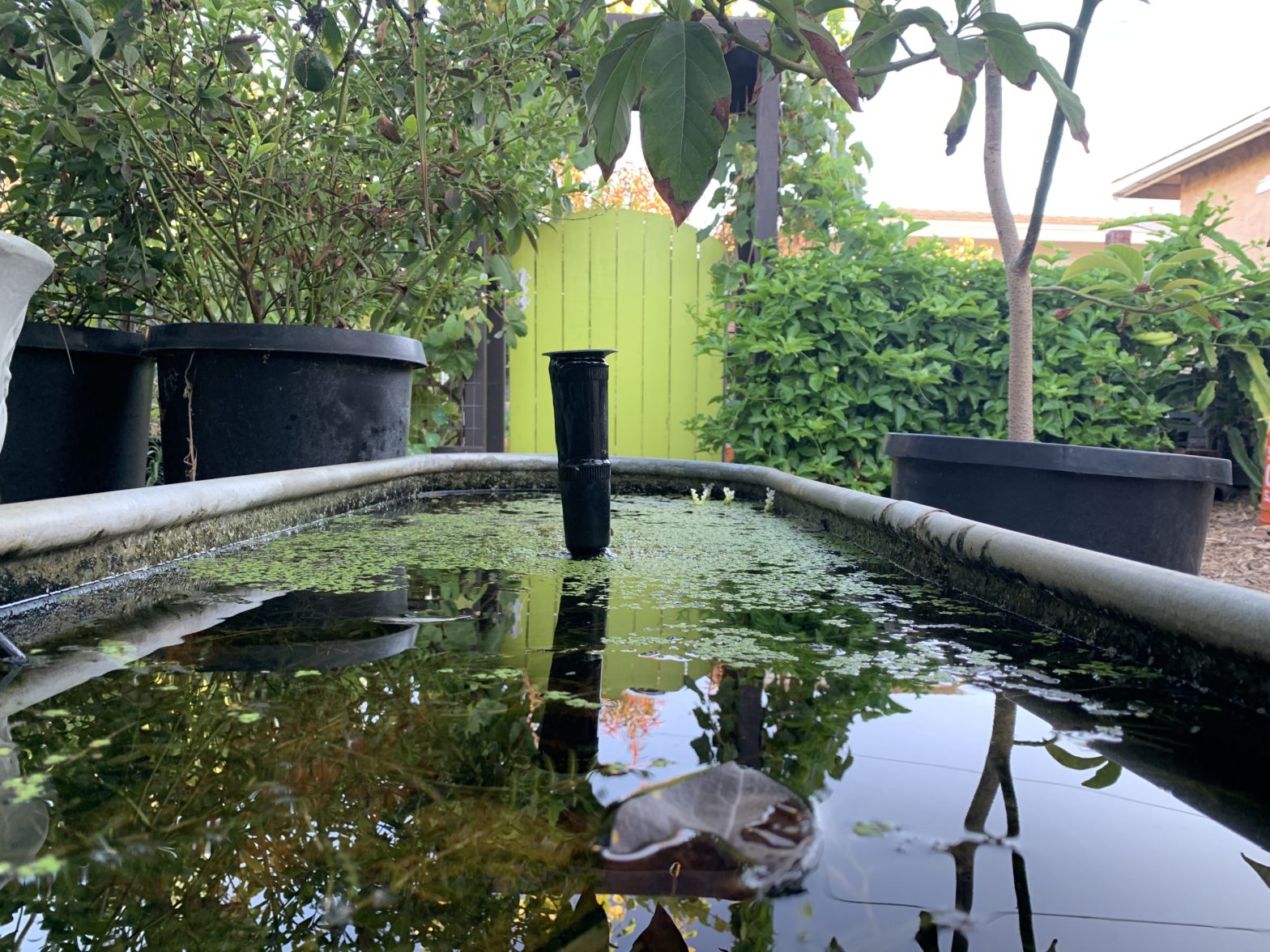
It’s Sunday morning. Not early and not late. I’ve fed the chickens and opened up the doors to let the cool air in. The house is still quiet. I’ve just made coffee for Kristen and I. And I just sent Murray out to do his one really cool dog trick, bringing in the Sunday paper in exchange for a treat.
(more…)Tag: sabbath
-
Dealing with Fatigue
 I’m still recovering from two months of travel. I came back from my last trip very worn out and fighting a chest cold that just won’t let go.
The past couple of weeks… I’ve just been tired. Normally, a day off will do for recovery. But this has been different. Each day I get up and mash the gas peddle of what I want to do… and there’s simply no vroom there.
-
Who feeds you?
On a Sabbath, while he was going through the grain fields, his disciples plucked and ate some heads of grain, rubbing them in their hands. But some of the Pharisees said, “Why are you doing what is not lawful to do on the Sabbath?” And Jesus answered them, “Have you not read what David did when he was hungry, he and those who were with him: how he entered the house of God and took and ate the bread of the Presence, which is not lawful for any but the priests to eat, and also gave it to those with him?” And he said to them, “The Son of Man is lord of the Sabbath.” Luke 6:1-5
Mishnah
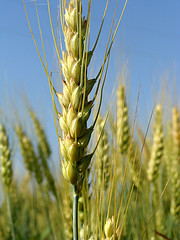
Photo by Martin LaBar via Flickr (Creative Commons) This is one of those passages that I’ve glossed over for years. But recently, I’ve been drawn to its intricacies which unlocked the bigger picture.
First and foremost, the complaint never made sense to me until I started reading Mishnah. Various rabbis passed down various interpretations and instructions on Sabbath regulations. While the written Old Testament gave general directions for obeying the Law, mishnah was the oral tradition that defined the boundaries. And depending on your rabbi and who trained them, the oral tradition told you how many steps you could take on the Sabbath and not be “work.” Or how to cook in a way that wasn’t work for the cook or work for the animals who provided sustenance. As referred to in the passage, there were disagreements about pulling an Ox out of a hole to save its life. Was it OK to do that on the Sabbath or should we wait? Was it OK to save a life on the Sabbath? Or was it OK to just save its life but not try to help it once you’ve gotten it out of the hole? Various rabbis had various opinions that were passed down through the mishnah.
While all agreed that the Law required that farmers left a few rows of grain unharvested along the road for the poor/traveling to glean, there was disagreement as to whether it was lawful for the poor/travelers to glean on the Sabbath. So when Jesus replies back to the Pharisee referring to Old Testament passages, the Pharisees are really trying to figure out which oral tradition gave him permission to glean on the Sabbath.
He frustrates them by offering a remixed version. He didn’t respond from the perspective of a certain rabbi. Nor did he respond by quoting the Law of Moses. Instead, he asked a question that reframed the inquiry altogether.
Even if you obey the Sabbath— who is the Lord of the Sabbath? And ultimately– who feeds you from his gleanings, the farmer or the Father?
Physical food
Who feeds me physically? Our food chain is so messed up that I don’t think we can even comprehend this question. In my fridge right now are fruits/veggies grown on a farm about 30 miles from me. But there is also milk which came from another farm in California. And that cheese? It came from yet another farm in California. Juice? Well, some of the fruit came from Australia (I think) and the rest came from a chemical plant in Ohio.
The sad reality is that we are so far removed from our sources of food that this passage is completely foreign to us. We don’t have a clue where our food comes from! Our best guess is that we kind of know the grocery companies that we purchased food from. And we certainly don’t go and glean from farmers fields when we are out of cash or on the road. They’d shoot us!
Ultimately, God provides the food. As messed up and distorted as our food chain is, God is the ultimate source of food. While I don’t think He is the author of high-fructose-corn-syrup, grain filler, and the other GMO crap most of our food is laced with, He is the ultimate provider of both the food that we eat and the money we use to buy it. It all comes from Him.
Emotional food
If we zoom out the lens just a little bit we can ask a deeper question. Are you free to eat emotionally on the Sabbath? Are you slowing down enough to listen? Not just to the preacher or the Sunday school teacher or to other people in your small group. But are you slowing down enough on the Sabbath to hear the voice of the Holy Spirit in your life? Is He feeding you words of instruction, comfort, and rebuke? Or are you drowning the Spirit out by turning the volume up too loud with the human voices in your life?
Are you slowing down enough on the Sabbath to listen to your own voice? Are you taking time to process the stuff that is happening? Are you taking time to rest your body? Are you taking time to rest your mind by doing recreational stuff?
That’s emotional food. The passage evokes a visual of Jesus and his disciples walking along the road, probably quietly as they observe the Sabbath, and the group of them spreading out and gleaning the grain. Each of them plucking heads of grain and grinding away the chaff between their fingers or with their palm before popping the uncooked grain into their mouth. This isn’t tossing a bag of popcorn in the microwave! This took time. And it was likely full of introspection and listening.
Who feeds you during quiet times of self-reflection? Who speaks to you and gives you emotional food to prepare for the week ahead?
Spiritual food
Finally, we zoom the lens on this passage out as far as it goes. With our wide angle lens Jesus asks the question, “Ultimately, who is the Lord of the Sabbath? Who is in charge of the Harvest?”
Jesus is our ultimate source of nutrition. He is the Provider. He gives us life. He made the sun which warms the soil and provides the energy for photosynthesis.
Spiritually, Jesus is the source of life on the Sabbath. Rather than leaning on the interpretations of man alone… modern day mishnah… Jesus is eternal, alive today, and active among His people bringing nutrition to the poor and sojourners among us willing to glean along the roadside.
Clearly and obviously, Jesus wants us to gather with fellow believers to corporately worship Him on the Sabbath. But he doesn’t want us to get lost in the granular act of going to church for spiritual food. That’s a supermarket approach when Jesus gave us the example of finding food where we are on the Sabbath. He reminds us again and again, “I am the Lord of the Sabbath. It belongs to me. It’s ultimately about me. You want to rest, it’s found in me. You want to eat, I am the bread of life.”
Who are the farmers in your life? Are they leaving a little on the side for you to feed from?
-
Sabbath Breakers
“Remember the Sabbath day by keeping it holy. Six days you shall labor and do all your work, but the seventh day is a sabbath to the LORD your God. On it you shall not do any work, neither you, nor your son or daughter, nor your male or female servant, nor your animals, nor any foreigner residing in your towns. For in six days the LORD made the heavens and the earth, the sea, and all that is in them, but he rested on the seventh day. Therefore the LORD blessed the Sabbath day and made it holy.”
Kristen and I are drawing more and more clear lines around Sunday– the culturally accepted Sabbath day.
Our new family rule is:
Church activities on Sunday are limited to the worship service and children’s church only. No meetings. No nothing.
There have been two general reactions to mentioning this new rule on my Facebook profile.
- People who don’t work at a church applaud. They feel the same pressure to get involved with everything at church and want to reclaim Sunday morning as a time of worship-only as well.
- People who work at churches don’t appreciate my sentiment quite the same. (Staff at my church get it.) The over all impression I’ve gotten from church staff is that they wish they could make Sunday a Sabbath for themselves, but they have too much work to do and try to turn either Saturday or Monday as a Sabbath.
Now… let me be fundamentalist for a second.
Under what circumstances is it OK to willfully break the 4th commandment?
None. The principle of Sabbath is just as clear and relevant today as all of the other commandments. It’s not OK to covet my neighbors wife if it grows the congregation, is it? It’s not OK to steal if I do good, is it? It’s not OK to create an idol for the sake of expanding a ministry, is it?
So why is it OK to willfully break the Sabbath by doing a million things on Sunday morning in the name of church?
I don’t think it is. Hence, we’ve drawn a line. (Here is a good time to mention we’re not asking anyone else to do this, it’s our personal conviction.)
This is where the grey area comes in
The command of Sabbath is a trust issue. You work the fields six days a week and you trust God to provide for you and your family on the 7th. Generations of God followers have taken that literally. But we’ve entered into an age where that is seen as a figurative command.
Jesus talked about the Sabbath a few times and he seemed to have a non-legalist perspective on the Sabbath. (See Mark 3:1-6)
In fact, Jesus gave 11 examples of when it was lawful to break the Sabbath. (source)
- Pulling an ox out of a ditch on the Sabbath was permitted.
- Circumcision is permitted on the Sabbath.
- It is lawful to do good on the Sabbath.
- The precedent of David and his men eating the shewbread.
- Priests work on the Sabbath and are blameless.
- The ministry of the Messiah is greater than the ministry of the Temple.
- God desires mercy from His people and not sacrifice.
- The son of man is Lord of the Sabbath.
- The Sabbath was made for man, not man for the Sabbath.
- It is lawful to lead animals to water on the Sabbath.
- The Father works on the Sabbath.
Back to my house, bring this home
The principle of Sabbath is abundantly clear. All throughout the Old Testament we see that God’s people struggled to maintain the Sabbath (trust issue) and God punished His people as a result. (Numbers 15 is the most extreme example for habitual individual Sabbath breakers, for an en masse examples, just look at the exiles.)
I’m audacious enough to believe that God still cares about the Sabbath. I can’t lead my family to sin by working seven days a week and in turn expect God to bless my family. (Just like I couldn’t expect God to bless me financially if I didn’t manage my money well. Or other areas of clear trust/sin issues. You can’t expect God to bless areas of your life in which you exhibit willful sin.)
As I talk with church leaders– we all treat Sunday morning as our big day. It’s the day we try to cram as much as we possibly could into the service as well as the opportunity people’s attention and presence afforded us. Sunday morning is anything but Sabbath.
And for people in the pews its inborn hypocrisy. We say, “Put God and His ways above the ways of the world.” And yet, by our actions as leaders, we put the ways of the world ahead of the 4th commandment. By our desire to cram as much into Sunday as possible, we exhibit willful disobedience.
Our words say, “Run to the Lord of the Sabbath and He will give you rest.”
Our actions say, “Flee these crazy church people who want to make your Sunday even crazier!”
As I think of the hundreds of staff meetings I’ve attended, planning hundreds of worship services, I want to go back and ask myself this simple question: “Instead of trying to maximize what we can do on Sunday morning, why don’t we talk about how little we can do? What would happen if we modeled Sabbath on Sunday’s by doing the maximum 6 days a week and called our people to a minimalist experience of worship?”
There is another way
This is where our family is headed. We want to trust God with our church life. We trust Him with our money. We trust Him with our children. We trust Him with our marriage. We trust Him for safety, security, and most importantly… our salvation.
So now we’re going to trust Him with our church. We trust that as we turn Sunday into a Sabbath day for our family and willfully skip the busyness our church provides… that God will bless our church.