Two truths
- Bigger isn’t better.
- Wider doesn’t make things deeper.
A lie
Bigger is shallow, deeper makes things smaller, our way is best.
Axiom
There are good systems used for evil and evil systems used for good.

A lie
Bigger is shallow, deeper makes things smaller, our way is best.
There are good systems used for evil and evil systems used for good.
All day yesterday I got hit up by people excited about Facebook’s announcement of their new groups feature. (Actually, this is a very old feature with some newish features.) Mashable wrote about it. Techcrunch wrote about it. And tons of youth workers were left saying, “This thing is going to be great for youth ministry.”
Here’s what I’m thinking. No one, not even the creators of Facebook, can predict what the next cool feature on Facebook will be.
Mini-rant about Mashable, Techcrunch: These are now just hype factories for the big social media companies. I’m tiring of their private parties and exclusive access. All that tells me is they are all in bed together. Other than publishing social media companies press releases, their utility is gone for me. My trust for those sites impartiality has vanished.

When it comes to social media hype never equals mass appeal. The best you can do is create something and hope people discover it and like it.
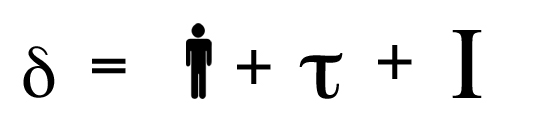
That’s the funny thing about social media. Open system theory defies hype and that’s what makes it amazing. Big companies and their R&D departments [and overhead and patents] simply can’t predict what will be hot. (And almost always shoot themselves in the foot because they need ROI when the only way to grow is to acquire customers.) So the game isn’t now, never in recent history has been, about creating cool things. It’s about masses of people (cough, 12-19 year olds) adopting the technology as their own and it spinning out of control in unexpected uses.
Closed system thinking implies that you can control how your users interact with your product. Apple is really the only organization on the planet that gets away with this. They decide what features you will like and they force them on you and you like it. But every time Facebook tries it they get hammered by user backlash. Microsoft learned the hard way that this just forces customers to another product like Apple or Linux. Their latest media campaign is a direct attempt to lie to you by convincing you that their ideas are really your ideas. “I’m Adam and Windows is my idea.” Windows isn’t your idea. If it were it’d be free.
Open system thinking implies that users control how they interact with the product and the owners/app developers respond. This is the secret ingredient for Apple’s recent success. Twitter will be the first to tell you that they do everything in response to how users utilize their app. To some extent, this is why Facebook has survived to date because the app developed on their open API have people hooked on crap like Farmville. (Their growth of late has been in middle-aged folks using Facebook for gaming, largely at work.) I’ve done dozens of consults with ministries and businesses trying to make a name for themselves with a new technology– I tell them all the same thing, which they balk at. “If you want to be big, build a Facebook app that your audience will love. Then, when you have their trust (and personal information) launch your own site. It’s about users, not money.”
I don’t know if Facebook groups will be hot among high schoolers. But I do know that the same principles I’ve used to engage people online for more than 10 years will always work, no matter what the technology.
Principles are timeless while technology is is an ever-morphing magma of response.
Some stuff to chew on, right? How does this correlate to church leadership?
We spend a lot of time talking about ownership. But I don’t hear a lot of talk about autonomy.
Ultimately, church is just a closed system.
This weekend the family hosted my friend Andrew Marin. I suppose most people know Andy as a controversial speaker and author who is trying to help the church build bridges with the gay community. I know Andy more as a friend. We met last summer in preparing for National Youth Workers Convention where he was a general session speaker. In exchanging some Facebook messages for a guest post I knew Andy was the real deal. There was something about him I instantly liked. Humble, yet bold. Courageous, with a healthy measure of fear. I could tell he had been biten by a few sheep as well. Then when we met in Sacramento he joined Cathy and I for a trio of fun that carried us all through the convention season.
The point of this post isn’t my friendship with Andy.
The point of this post isn’t that sheep bite.
This post is about you and I bringing change to the world.
The reason for change goes back to two core things which shape the world. First is the fall of man, which leads man towards a life in pursuit of sin, expressing enmity towards God and entropy in all systems of people. (Governments, local organizations, Christian organizations, etc.) Second is the redemption of mankind through the person and work of Jesus Christ. Jesus didn’t come to the world merely to provide a way to salvation and for us to patiently wait for the world to go to pot until His return. [Honestly, this is the view of the Evangelical church in the last 30 years.]
No! The Gospel cannot be limited to a singular, man-focused individualistic message! He came, first and foremost to be the Savior of mankind… but He also charged the church to be His witnesses in Jerusalem, Judea, and the rest of the earth. He set us up to be agents of His. As Ephesians 2 points out… we (both individually as believers and as the church) were called by Him to do good works. We are meant to effect change. Our role as believers to to make life better. Our job in a life with Jesus is to change the world and make it a better place for others. Our desire must always be to fight systemic entropy. Our focus as belivers must be to continually force Jesus’ redemption into systems of church, government, charity, and friendship.
The world will not right itself. The world will never wake up by itself and say… “You know what, we should stop this injustice. We should stop oppressing people. We should stop trapping them into slavery. We should stop corruption. We should stop stealing.”
The world needs us to be agents of change. The world needs people who are absolutely driven, like Andy Marin. He is brave enough to look eye-to-eye with the most powerful men and women in Evangelicalism and say, “How you treat gay people is wrong. Let me help your church apply some principles that build bridges instead of walls.”
One of my favorite songs right now is John Mayer’s “Waiting on the World to Change.” I listen to it every Monday morning on my walk to work. It fires me up, it reminds me that I am not meant to wait for the world to change. I am meant to change the world. If you know Jesus as your Savior, you are meant to lean into the insane call of changing the world.
Me and all my friends
We’re all misunderstood
They say we stand for nothing and
There’s no way we ever couldNow we see everything that’s going wrong
With the world and those who lead it
We just feel like we don’t have the means
To rise above and beat itSo we keep waiting
Waiting on the world to change
We keep on waiting
Waiting on the world to change