Check this out, in 1981 the idea of people getting the news via the internet was already well underway. It took a while, but online is a primary way people get news these days. I love that monitor!
HT to Mark

Check this out, in 1981 the idea of people getting the news via the internet was already well underway. It took a while, but online is a primary way people get news these days. I love that monitor!
HT to Mark
 Another weekend of chillaxing ahead. We’re still getting used to having every weekend off. Yesterday afternoon I had the chance to take Kristen out for a lunch date. We tried out a a Vietnamese place in City Heights called, Pho King. (Yes, it is fun to say!) It was Kristen’s first Pho and I think she liked it. Than later, we took the kids out for fondue. We’ve got a pretty strong Friday night family date night thing going.
Today is a beach day. While it won’t hit 80 like it did yesterday, it will get into the 70s. First I’m going to take Stoney to dog beach so he can run and play with other dogs. Then later we’ll load the bikes up into the truck and ride around Pacific Beach.
Coffee in hand, iPod attached to my head. Here are the next 10 tunes I’m listening to this Saturday morning. As always, completely random with ratings included.
#1 Realize by Colbie Callat *****
#2 Drown in My Tears by Ray Charles ***
#3 We Shine by Steve Fee ***
#4 Celestial by P.O.D. ****
#5 So What by P!nk *****
#6 Can’t Find the Words by Karina ****
#7 California Uber Alles by Dead Kennedys ****
#8 Hand in My Pocket by Alanis Morissette ****
#9 Almighty Silence by Tree63 ****
#10 No One Does it Like You by Department of Eagles *****
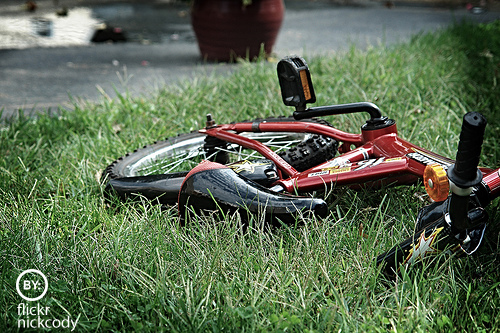
Up until fourth grade I lived in the city of South Bend on one of those quintessential small town streets where everyone knew everyone, kids played outside until the street lights came on, we all played at one anothers house, and we were all one happy family. Summer was all about riding bikes, fireworks, BBQs, swimming in Doug’s pool, endless games of football, and weekends at the lake. Winter was endless fort building and snow ball fights while avoiding shoveling the walk. At least, that’s how I remember it. I loved my street growing up. It was a safe place to play with friends.
Until the summer between my 1st and 2nd grade year.
One day I was riding my bike with a friend when we spotted something no kid could resist… wet concrete. The city had paved our street and replaced the concrete that went around a sewer grate right in the middle of my street, just a few doors from my house. The traffic cones were like syrens calling a weary sailor. We left our bikes in the grass, grabbed some sticks, and dashed for the land of the forbidden.
The first thing we did was write our names. Then, my friend started furiously writing cuss words. He was number four in an Irish-Catholic family of seven. With two older brothers and a fire chief father he magically knew millions of cuss words and how to spell them. Not to be left out I spelled out the only cuss word I was confident I could spell: Dam.
Proud of our vandalism we grabbed our bikes and took off to the park. Within minutes we had completely forgotten about our misdemeanor and moved on to other dubious acts like racing empty beer bottles down the slides and ghost riding our bikes down the hill of death.
The next day, on my way over to the same friends house, I circled my bike around that sewer drain to see how things turned out. I was fixated on my name. “Adam.” How cool was that? Forever in the lore of Tonti Street everyone would know that I had placed my name on that sewer. One day, archeologists would dig up our block and they’d know that Adam lived there. I was an instant legend.
Ecstatic, I jumped back on my bike. As I got a few pedals away, with my pride cutting through the summer air like a bottle rocket, I heard my name called out. I turned around to see one of the old geezers coming off his covered porch and waving me to come over to him. Our block was a mix of old timers and young families who had bought homes from estates of their former neighbors. I wheeled my bike around to gain momentum and sailed up his driveway to his front steps. Surely, he had seen my street art and wanted to congratulate the artist.
I was dead wrong. While I had seen him mow his lawn and trim his bushes I had never talked to this man before. His size and demeanor were intimidating. He came down his steps with a limp and put his giant hand on my 7 year old shoulder. I remember looking up at him but not seeing much further than the anchor tattoo of the Navy on his forearm. Every sensor in my brain was telling me to run. I was convinced that he was going to grab me and pull me into his garage where he’d chop me up with his hedge clippers.
“Son, I see you and your friend wrote in that concrete yesterday. You know you wrote some bad things and you’re going to have to clean that up somehow.” 25 years later and I still have no idea how he expected me to erase words from hard concrete. A jackhammer was simply not in the arsenal of a 7 year old. “If you don’t take care of that I’m going to tell your mom.” If his firm grip on my shoulder hadn’t scared me, the threat of telling my mom that I wrote “dam” in concrete on our street sent my flight instinct over the top. I wiggled my way free, jumped on my bike, and got out of there.
The Power of Fear
Those 15 seconds put more fear into me than I had never experienced. Worse yet, I was now deathly afraid to go anywhere near that man’s house… and he lived 4 doors down and across the street! The sanctuary of my block came tumbling down. I had constant nightmares starring that man. He was my Frankenstein. I still remember a recurring dream where I woke up hearing his voice on my front porch talking to my mom. In the dream I ran downstairs with a John Rambo-styled machine gun and peppered him with bullets until he completely disappeared. As a young child living halfway between reality and fantasy, all of my fantasies had me as a superhero and him as the villain.
It’s amazing how 15 seconds of fear can terrorize you for years.
The effect of this fear was actualized in my behavior. From that day forward I never went down that side of the street unless I was convinced he was gone. If I didn’t see his car drive away I was certain he sat on his porch staring at me, waiting for his moment to get me once and for all.
I began riding my bike down the alley so as to avoid his glare. When school began, I didn’t go out the front door anymore, instead I climbed over the back fence and cut through neighbors yards to meet up with classmates for the walk to school. Halloween? Forget about it. I went to friends houses. On and on it went for more than two years. Those 15 seconds of terror changed how I felt about where I lived.
A couple of years later my mom told us we were moving from the city to the suburbs. While my brother was upset that he’d lose all of his friends I was happy to start over and get away from the scary old neighbor. Little did I know that the dark streets of suburbia had their own things to be afraid of… but that’s another story for another time.
My point here is that fear, no matter how irrational at times, often leads us to action. Sometimes that action is good, it protects us, while other times it leads us to do weird things like climbing fences to avoid the glare of an old man. Sometimes they are based in something imagined. While other times fears are based on something very real.
Fear is one of the root motivators of all of our actions. If you serve in ministry… getting to the bottom of what you are afraid of helps you a lot. More importantly, building trust with people so that they will share their fears will help you discover how to best serve them.
Last night I was watching a PBS piece of the history of comedy on television in our country. While the documentary itself wasn’t all that interesting or funny there was a cultural parallel there which caught my attention.
In times of peace, comedy is introspective and makes fun of the human condition. In times of war, comedy is external to the self and makes fun of politicians and the enemy.
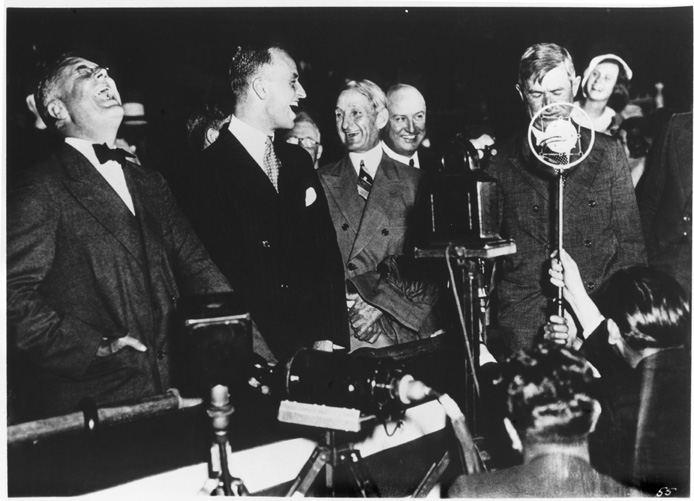
This explains why the video I posted yesterday isn’t as funny today for its content as it was 15 years ago. The piece pointed to Will Rogers as being hilarious in the 1920s-1930s [Seen above mocking FDR to his face!] but immediately falling out of “funny” when Pearl Harbor was attacked. Likewise, Jon Stewart and Stephen Colbert would seem out-of-place if we were not at war in the Middle East.
But I wonder how much that the condition or war and peace effects how we think of ourselves? I wonder if times of peace make us introspective while times of war make us look at external things to ourselves?
As the culture gets more individualistic I wonder if we can take it a step further. (This is where it gets purely hypothetical) I wonder if what’s funny to you or I is dependent upon war or peace in our own lives?
If I’m depressed, is my sense of humor darker?
If I’m generally happy, is my sense of humor jovial?
I’m probably reading way too much into this. But it does have me thinking about what is funny to whom and when.
Tony Myles, a retired youth pastor senior pastor in Ohio, challenged his congregation and blog readers with this list. It has challenged me this week, I thought it was worth sharing for those who hadn’t seen it:
-How will you grow in your love for God in a way that encompasses all of who you are and all of who He is?
– How will you grow in your love for the people you see everyday and care about their spiritual condition, whatever it is?
– In what area of your life do you most need to grow to be more like Jesus?
– Read Galatians 5 – which fruit of the Spirit needs most development in your life?
– What will you read in the Bible this year?
– What sections of Scripture will you memorize so you can “own” them?
– How will you deepen your prayers this year?
– What music will help you worship more?
– What books will you read and/or reread?
– With whom do you need to build or rebuild a relationship/friendship with this year?
– How will you maximize the teachings of this church – in person and online?
– What special events should you be a participant in? What values and activities do you need to become a point person in?
– What new practices of connecting with God do you need to develop?
– What resources do you have that you need to release back to the God who gave them to you?
– Who will hold you accountable?
Don’t slip into spiritual apathy… take this on with me and some other brave men and women, and let’s see if this world doesn’t respond to some real-deal change from God to us to them.
HT to Tony
The launch of Beyond the Zoo has gone great so far. We’re adding new reviews weekly and we’re even hoping to add a couple contributors to capture some various genres of stuff in and around San Diego.
At the same time we thought it’d be fun to kick things up a notch and have a fun contest at the same time. This Sunday we’re giving away $50 in PayPal cash to one fortunate person chosen at random. All you have to do is leave a comment on this post to enter. Anyone with a valid email address and a desire for $50 can enter.
 In light of budget cuts all over, I’ve been thinking about those most effected.
In my world, youth ministry and childrens ministry seem to be the first things cut at a church. If not first, than high on the list.
Maybe in your world, it’s teacher’s.
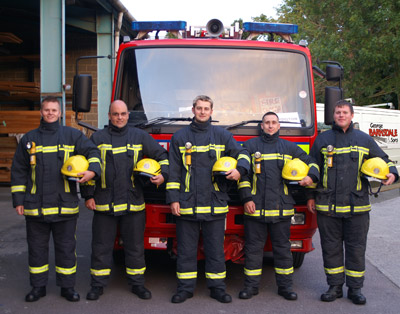
Or firemen/EMT’s.
Or frontline customer service people.
This isn’t the first recession of my working life. So I’ve seen the ebbs and flows of how it seems to work. In low-times those running things cut symbolically from their own perks and then hammer the little guy with layoffs. Even worse, sometimes they keep the little guy but make their work life horrible buy cutting the funding they need to be effective.
So, now we see youth workers and teachers taking double paycuts. They won’t get a raise this year… didn’t get one last year… even worse, they didn’t get a raise last year and will take a paycut this year. On top of that they will start paying for a lot of ministry stuff out of their pockets. (Hence the double paycut) The same is true of teachers and many other frontline heroes.
So, my question is simple. Why do heroes get paycuts while the big bosses don’t?
Why are teachers seen as replaceable but administrators not? Why are kid’s ministry workers seen as less important than preaching to adults? How come no board says to their senior pastor, “We don’t really need a sermon every week. How about once a month and we’ll just get DVD’s for the other 3 Sunday’s?”
Why are firefighters worried about getting laid off? Are we supposed to believe that city administrators will now answer 911 calls and rush into burning buildings?
I think not. I think our culture grossly undervalues everyday heroes. I hope to one day live in a world where the heroes of society are richly rewarded.
I have to tell you, I’m especially excited about this week’s podcast. Every episode is fun to work on… but this one uses two segment that were especially meaningful to me. The tip is from Kerry Loescher. She’s not someone I had ever met before and since she isn’t a published author… I hadn’t heard of her. She is a youth ministry prof at Oral Roberts University in Oklahoma. Before the shoot she had a great chat. Even after the shoot, the chatting continued and I was really happy to see her around the convention center the rest of the weekend. I love how she leads you into this simple tip with a compelling story. Great communication! A few weeks later I shot this piece with Danielle Strickland. (She’s the social justice director for Salvation Army Australia) I had heard some really cool stuff about her so I had a feeling the piece would turn out good. What I wasn’t prepared for was how easy she was to talk to. In her eyes I wasn’t just some dude with a camera to bother her on a very busy day. (This was about 2 hours before her general session talk) She had carefully arranged the meet-up time, then apologized for being ready early, (which NEVER happens) and was extraordinarily kind through the whole thing. Then, when she started to teach I found myself captivated. By this time, I had shot dozens of these segments at the conventions. But for whatever reason I was really into it. And she really challenged my heart with this devo. When the shoot was done I felt a little awkward… like stunned to silence as contemplated it and let it soak in. I looked over at Cathy (my co-worker who was with me) and she had the same look I did. It was quite a moment when I realized that I wasn’t just shooting a devo for a podcast. My heart had been ministered to as well.
The only other side note on this episode worth sharing has to do with the timing of my segments. In order to get the show to appear on YouTube, we need to get it as close to 10 minutes as possible. We knew Danielle’s segment was longish for what we normally do… which was fine because Kerry’s was shortish. All that to say… Ian and I were rushing to fit my intro, segway, and outro in as fast as possible. Never fear, we have something fun planned for next week’s show!
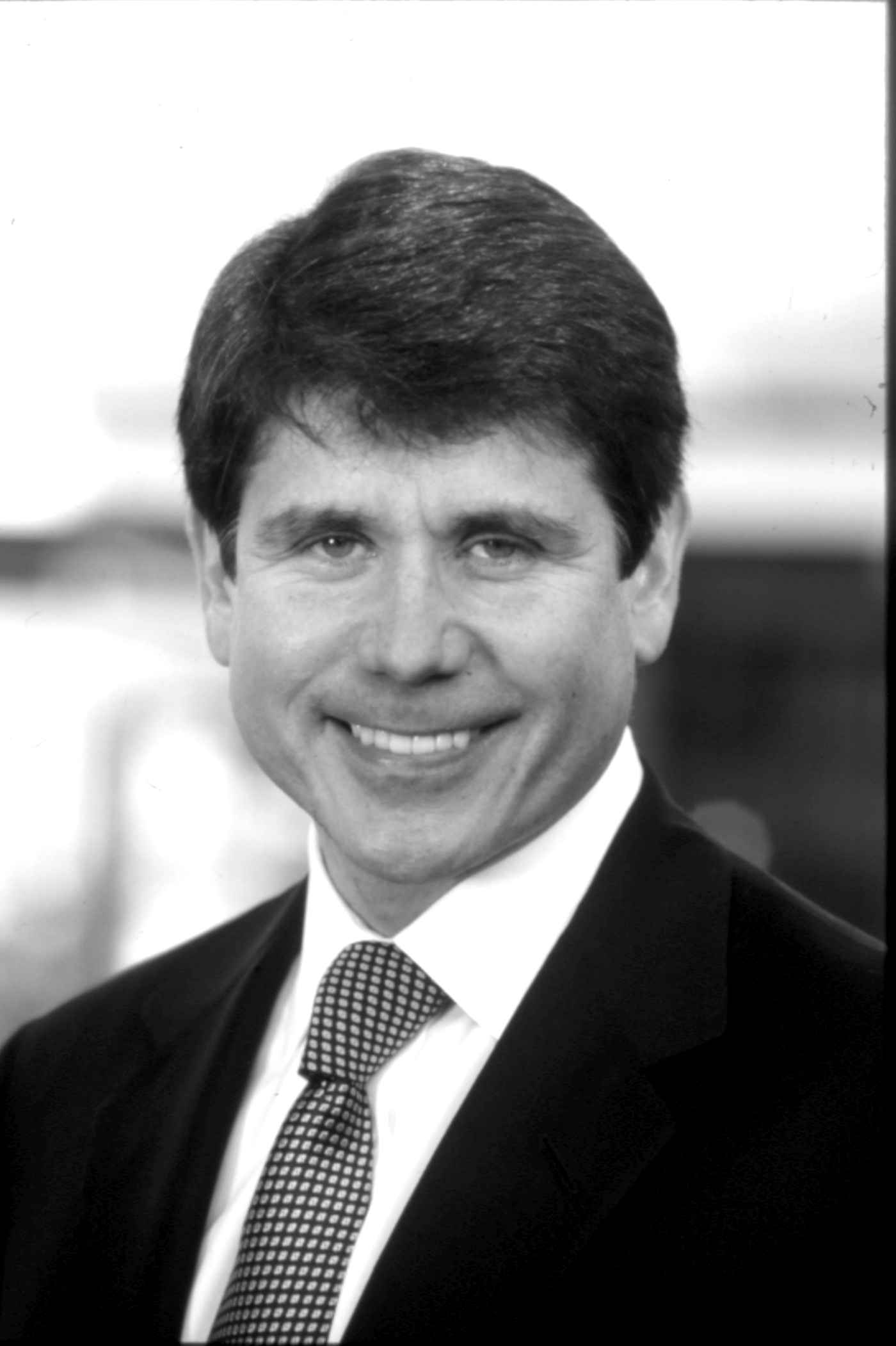 The impeachment of Rod Blagojevich is an interesting case for church leaders. What do you do if a former leader refuses to leave?
In Rod’s case, the facts of the matter don’t matter nearly as much as the soundbyte. Whether or not he was really selling Obama’s senate spot is unclear. But what was clear was the vote to impeach him. (And probably remove him from office.)
I’ve been around church life enough to know that most people fired from a church job feel the way Rod does. The politics shifted on them and the next thing they know they’re in a witch hunt. In all too many cases, the witch hunt is over by the time they find out they are on trial. From the 50 member country church to the 16,000 member megachurch the reality is that all of the politics in church is conducted the same way. Closed door meetings. Coffee shop decisions. Fairness and justice take a backseat to pragmatism.
Watching Rod on Good Morning America was like talking to a freshly fired youth pastor. He didn’t think the procedure was fair. He didn’t have the opportunity to call witnesses and tell them his side of the story. You can see him, wounded and fighting for life, in complete denial that there was no chance getting it all back.
Watching Rod on Good Morning America reminds me of the advice I’ve given to friends in his situation. The best thing you can do is quietly leave. Fighting is just embarassing for everyone and rubs salt in the wounds daily. Working at a church is a political position. Keep the powers that be happy and it’s a great life. Everything you do is appreciate and your family is adored. Get on the wrong side of the politics and your life will become a living hell.
It’s doubtful that Rod will get his fair trial. But I do know that, in church life, the best thing you can do is just move on with your life. Sticking around and trying to fight it out is bad for you and bad for a church. Fighting the politics in a church when the tide has turned against you will merely grind your faith on the hard rocks of others sin.
I just hope Rod figures that out soon enough.