Month: February 2009

  • 5 Reasons I Love Social Networking

    The last 12 months has seen a major shift in how people view social networking. A year ago most adults (who weren’t in youth ministry) said the word “Myspace” with a suspicious scowl. If they used it they kept it on the downlow.

    Now everyone has Facebook. (150 million users and growing every second; it would be one of the largest countries in the world by population.) Now, most everyone is jumping on Twitter and getting completely addicted to that. The swarm of humanity has taken what was done in the margins and brought it to the mainstream. It’s a beautiful thing!

    As a person who “lives online” through my work, I thought I would share 5 things I love about social networking.

    1. Meeting new people. I’m pretty brave so I’ve taken to joining meet-up groups and showing up to meet people who share a special interest. It’s really not as creepy or as weird as I thought it’d be.

    2. Learning stuff about people I already know. The “25 random things” meme on Facebook has reached legend status. I’ve been tagged on that thing probably 50 times and I don’t mind reading them all.

    3. Reconnecting with long lost friends. Sure, there is the occasional misfire as a person who was a jerk to you in 8th grade friend requests you or wants to follow you on Twitter. But over all, I’ve had amazing reconnections.

    4. Getting exposed to the good stuff. This is especially true on Twitter! If there is anything new and noteworthy, social networking sites are all over it way, way before it hits the mainstream media. I suppose that’s both good and bad as there is such a thing as being too current on stuff. Also, a danger to this is that it’s hard sometimes to distinguish right away what is actually newsworthy.

    5. Instant feedback. Who needs focus groups anymore? I can pop an idea on Twitter of my Facebook status and get 25-50 responses right away.

    What about you? What are things you love about social networking?

  • Beer Bottle Mario

    Again, chances are these guys are lacking in girlfriends.

    This is our future ladies and gentlemen. Our geriatric treatment will one day be in these people’s hands…

    Put a man on the moon? That’s nothing! This takes talent.

  • Slow Exhale

    Yesterday, Youth Specialties let go of about 40% of its workforce. It was a day that suckety, sucked, sucked. And than I thought about it and it sucked some more.

    Since YS is a small close-knit company I know every single person who was let go. You read about a company cutting jobs and it never seems personal… just a ticker on the bottom of the screen on MSNBC as I drink my morning coffee. This was very personal and too close to home.

    Today begins the slow exhale. In a couple of hours I begin to deal with the realities of “now what?” Yesterday is in the past and there is a lot to do in the hours, days, and weeks to come.

    Today I take a deep breath to breathe the new air of today. There is no other choice. The task at hand is to equip and encourage youth workers.

    Literally, this morning I will reshoot the podcast that was to go live yesterday and we will get right back to work. I will look into the camera and remind everyone… “What you do matters.” It does. It matters a lot.

    Marko posted this on his blog today… it captures what I feel about today.

  • Magical Deer

    Not sure why, but this made me giggle.

    HT to Snuh via Boing Boing

  • Dropping out of big church?

    This morning on the YS blog I wrote about an impending crisis in rural churches in the United States. It was based on an excellent story in last week’s Time Magazine. Here’s the link.

    So here’s what I see, call me crazy. I am curious if anyone else thinks the same thing.

    1. Big churches getting bigger. This attracts the vast majority of talent out there. Most people I know in smaller churches would love to “move up” to a big church. Moreover, people seem to like the megachurch model. I don’t get it… but I can see how my friends really like it.

    2. Big church pastors are one of three types of people. Either they are the alpha dogs who thrive on the hype and long for more production value, bigger numbers, and bigger Jesus. Or they are uber talented and feel like their big church misses the boat, misuses their talents, mismanages funds, etc. Or they grew up around that big church and now work there, they just love it because its all they know and they don’t have the education to get a job elsewhere. This is a gross generalization… but it’s merely for dramatic effect, ok?

    So, here is what I’m wondering. I’m wondering if all of these middle people eventually get sick of the relative safety of their paycheck, reject the hype and production of big church, and decide that they will be bi-vocational rural church planters or pastors of all these churches who are lacking pastors.

    Simply put, will these middle folks in jobs they need but don’t really like start dropping out of big church life to intentionally take on the smaller churches so desperate for a loving and qualified pastor?

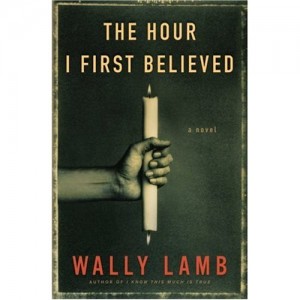
  • The Hour I First Believed by Wally Lamb

    Few books require comparison to a Fyodor Dostoyevsky novel. Yet both the length of the story and the depth of the primary character does resemble works like The Brothers Karamazov.

    While Dostoyevsky wrote in serials and was therefore paid by the word for his work which in turn paid for his gambling addiction, about 500 pages into The Hour I First Believed I began to wonder more about the sanity of the author, Wally Lamb, than the sanity of the main character. In the end, it was a novel that you both couldn’t wait to finish, while at the same time this reader remained convinced that the story should continue forever. It was a painful joy similar to Thanksgiving Day. You can’t possibly eat one more thing and yet you find yourself opening the refrigerator door, more out of compulsion than true hunger for more.

    The story is a first person perspective of the main character, Caelum Quirk. Caelum and his wife work at Columbine High School in Littleton, Colorado in 1998-1999. The story takes a dramatic twist when Quirk’s wife is caught in the crossfire during the school shootings. Her life is spared and taken at the same time. Spared in that she isn’t harmed. Taken in that the post-traumatic stress syndrome steals much of the joy and peace from her life.

    In an attempt to get away from the tragedy and start over, the Quirks leave Colorado and move into the home of his aunt, who raised him. Left with the family farm and a wife whose mental capacity continues to decline, Caelum begins discovering his real family history. This history is disturbing and freeing as Caelum begins to create a new life for himself in the town he grew up in.

    While the story is long and covers a decade, it is still interesting. The title misleads you to believe that Caelum’s tale is a spiritual one. While one could argue this search for history and identity is a spiritual journey the conclusion is not a Christian spiritual journey but perhaps one of existentialism. Lamb seems to paint a superstitious picture of Mrs. Quirks religiosity and the parallel between her discovering peace in Jesus and the end of her life is opaque enough to fail hiding the authors bias.

    I almost wish there had been a third person narrative about the author of the story coinciding with the writing of the novel. In the appendix Lamb shares how the novel took nearly a decade to write. For him, it was natural and necassary to weave real world events like the shootings at Columbine and September 11th. Likewise, he threads in a story of a women’s correctional facility founder into his main characters life. In the end, I don’t know if these provided a richness to the story or merely context for a story which otherwise would have lacked depth.

    While it is obvious that critics will find this novel brilliant I found it to be tiresome. In the end I felt like it was just 400 pages too long.