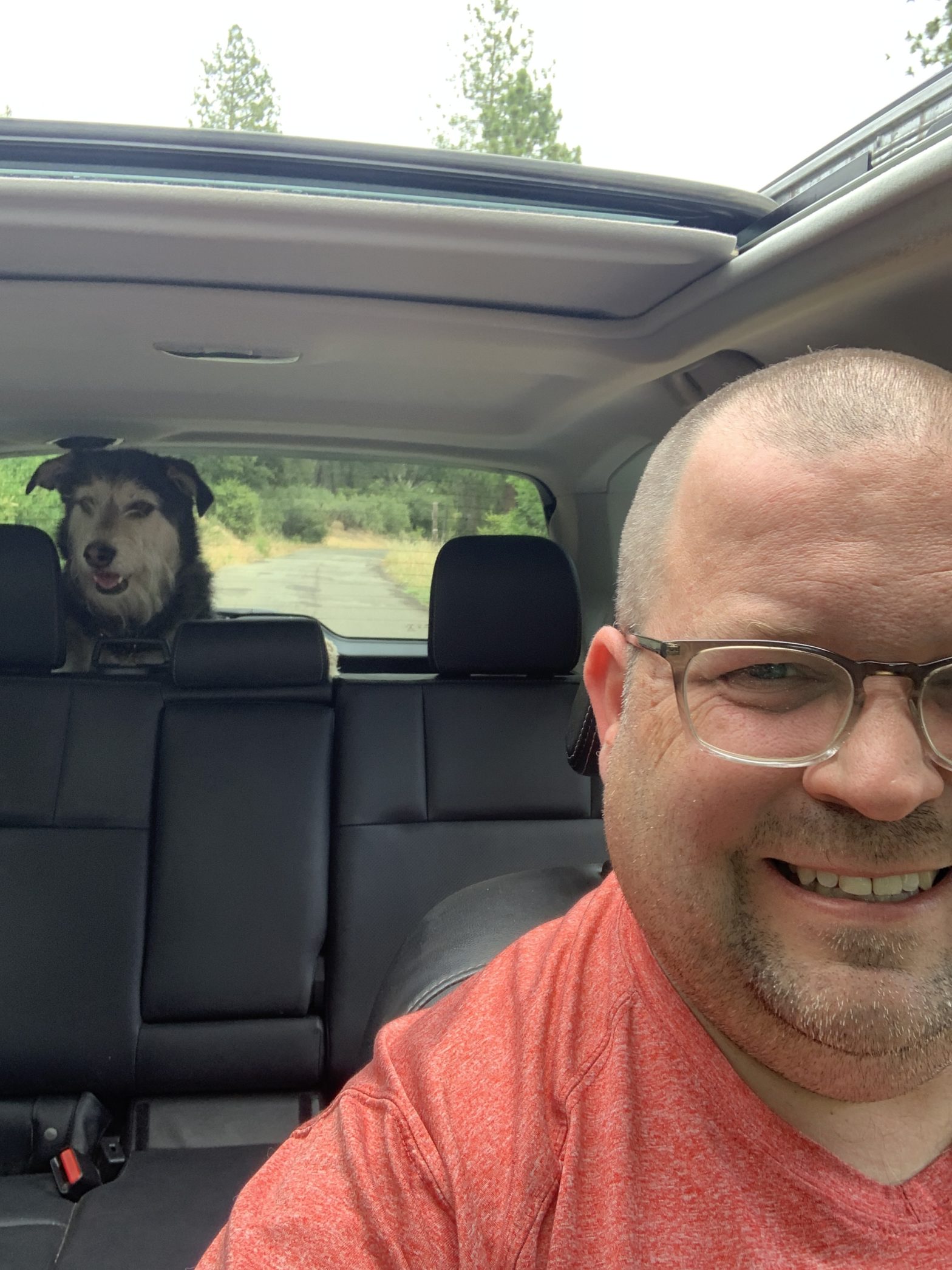
Sent that text to Kristen as I made my way out for deliveries yesterday. Driving north on the 49 the big, tall van was getting blown around.
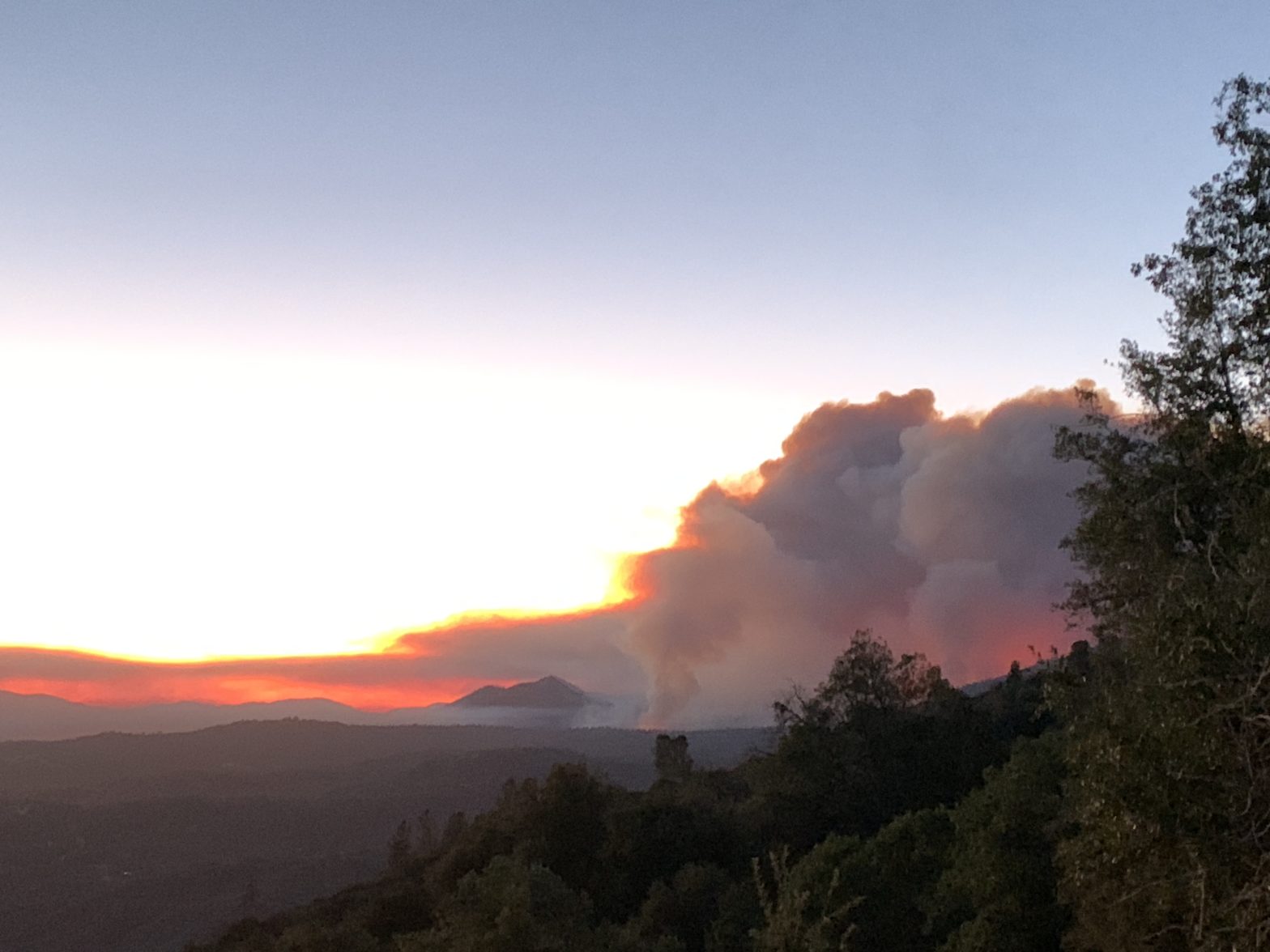
A line of thunderstorms ran just west and north of us off and on all day. Some areas got flash flooding while others were spared the floods but speared by lightning.
Dozens of spot fires took off in nearby towns like Raymond, Catheys Valley, Hornitos, and further to the north along Highway 120. The grasslands dried out in May and by early September what grass the cattle haven’t eaten is so crisp it breaks when you step on it.
It’s really dry right now. Really dangerous.
It sounds like the historic town of China Camp, about 50 miles north of us, took heavy damage.
Around our immediate area we are rattled, but fine. Later in the day a wind came through with gusts north of 30 MPH. Just a spark and we are cooked.
There’s irony in it all.
While the country is feeling the effects of the highest beef prices ever, fires leave cattle running for their lives.
We need more cattle, sheep, and goats grazing in the foothills to help mitigate the impact of a more volitile, changing climate. Not just in the grassier areas— everywhere.
But as herds head to the market the cattle families are asking themselves… do we cash out and retire? Or do we reinvest and buy the most expensive calves in history? It’s a fair question because by the time these replacements are ready the market might dip so much they’d lose money.
Imagine yourself as a local cattle ranching family. They’ve never taken money out of their ranch, just reinvested earnings to keep growing the herd and pay their bills. But with high prices and kids getting ready for college? It’s tempting to cash out, lock in the future, and wait for the dip. You’re torn by this because you want to serve the community you love, as well. But…
When things are as uncertain as they are right now? Certainty is awful tempting.
Early yesterday morning, before all of this happened, I sent an email to our Sierra National Forest team asking about our own grazing project. Why? Because winter is looming and I need to know: Am I buying to increase my herd, selling to reduce, or just breeding?
We’ve been in a holding pattern for months but I am at the point where it’s critical to have an answer.
I’m under no delusion, one day the dry lightning is coming for us, too.
We’d like our goats to be part of preventing a disaster but the land next to us doesn’t belong to us… so we are stuck waiting for permission.
Will it come in time? I have no idea.
Fingers crossed today is cooler, less windy, and those fleets of firefighters and bulldozers are able to contain that spectacle of fires. And fingers crossed I get a call from North Fork with the go ahead.
In sociological terms a “public” is a place where a local society meets or hangs out. It’s where you catch up with friends, meet new people, relax, conduct business, develop friendships, or simply be.
In a sense these are usually “public spaces” but it doesn’t have to be publicly-owned spot. Back in the late 80s a “public” in the small town I grew around in Indiana might be the parking lot of a McDonald’s along McKinley or the USA Roller Rink or in the early 90s it would be cruising the mall, slow walking a Saturday night in hopes you might get invited to a party or be there when the fight happens, sipping on an Orange Julius or sneaking a peak into Victorias Secret.
Social media has brought about the erosion of publics. People don’t hang out in person quite like they used to because apps have taken the local public from the coffee shop to your pocket. But, as we’ve learned, a digital public can be dangerous… they can accidentally turn into echo chambers. But we all know enatelt that there’s nothing quite like sitting around and chewing the fat with people in real life.
In a small town like Mariposa the county fair is one of our main publics. It’s 4 days of pageantry, intrigue, and drama by which the social calendar of our 18,000 residents revolve. Whereas, in the Upper Midwest kids might get the opening day of deer season off from school, here you get the opening day of the fair off and if you don’t make it to school on Thursday the attendance office doesn’t seem to notice.
Everyone knows Saturday night is the derby and Sunday is the livestock auction right before the rodeo. Even if you don’t go to any of it you know the whole world around here revolves around these 4 days.
For kids, it’s “what are you showing this year?” Not “are you going to the fair?” It might only be 150 out of all the kids in the county but it sure feels like everyone.
If you’re a city or suburban dweller you might not even know things like 4-H or FFA still exist. But around here? They are the lifeblood that makes the county fair a public. These programs have more members than all the churches combined. Our town loves youth sports but even the sports teams know better than to mess with the fair.
I’m enjoying the fair. It’s the break I need at the end of a long, hot summer. It’s exhausting. But it also fills my tank. One full day left for me then back to harvesting on Monday for the week to come.
Fair is important. And we like participating in our small ways.
Jackson did much better this year than last. He’ll always be remembered in the rabbit group as the kid who showed his rabbit covered in blood because it ripped a toe nail out on the way into the ring.
But I hope the core memory he’ll have from this week is the improvement he made showing his goat. He was first out last year in both market and showmanship, a source of a year’s frustration and embarrassment as his friends saw him place last. This year he moved up a division and finished 4th out of 15 in showmanship and 3rd in his group for market goats with the goat we bred.
Tomorrow all attention will shift to the payoff, selling his goat to the highest bidder at the annual auction. It’s emotional for me to see the community rally and spend upwards of $500,000 on 160 fair project animals. And it’s especially emotional for me to see someone graciously overpay for a $300 goat to encourage my child’s interest in agriculture.
Zooming out the lens, this is why it’s so important to invest in your communities public. I don’t know what it is where you live. But it’s there for you to find. And your life will be enriched when you join in.
In Romeo it was Halloween and the Peach Festival. In Rolando it was the street fair and (RIP) the Boo Parade. Here? It’s the fair.
Truly, I don’t think anyone who lives here would have it any other way. Even if they avoid going.
Though, everyone should go to the derby once in their lives.
An older lady cut a long line at Pioneer saying “I’m a local, I can’t wait.” I did what any reasonable Mariposa man would do. I put one of those free parking lot puppies in her back seat. Good thing you’re local!
I used to say that my life was really big and really small.
It was really big because 100 days per year I lived out of a suitcase, flying around the world meeting people, promoting my business, and towards the end of that period living out my Savior Complex in a foolish attempt to reform the Christian tourism industry.
It was really small because the other 250 days per year I lived within the square mile of Rolando, our neighborhood in San Diego where we worked, ran a small dog sitting business, kept busy with our gardens, and walked Jackson back and forth to elementary school.
Now my life is just small. Recently, I took Jackson to Fresno to get a haircut and realized it was my first time in the megalopolis of Fresno, population 450,000, in about 4 months. Otherwise, our daily lives in Ahwahnee, population 400, ping pong between Oakhurst, population 5,945, and Mariposa, population 1,800.
These days my life has gotten very small geographically but Super Sized in other ways. Addition of fulfillment by subtraction of meaningless work travel.
My Stand Against News
One aspect I love about starting up The Farm at Worman Mill is that I have no time for television. Specifically, I have no time to watch cable news.
I still pay attention to national news here and there. I enjoy the AP News app on my phone, the BBC app provides a nice dip-of-the-toes into an international perspective. But that’s about it. I’m more attuned to what’s covered by the Mariposa Gazette than I am the LA Times.
Largely, I’ve Tuned In to the world around me while Tuning Out to the world beyond my tiny town.1
See what I did there? I just referred to a book that no one bought, Tuning In, which is now only available in my garage because no one bought it. Screw you Amazon. ↩︎
Tuning out of the daily news cycle has provided me some clarity and a whole lot of inner peace.
For example, the media has been reporting that Kamala Harris has raised over $1 billion in her campaign to become the first president under 70 years old since Barack Obama. Coincidentally, since that was reported, the polls have shown her lead narrowing from 4% nationally to 1.8% nationally— which is still within the margin of error for 4% but gives her campaign enough fear to spend that $1 billion on ads in swing states, that money flowing to– you guessed it– the same damned companies who do the polls showing that the race is tightening even though she is out-fundraising-and-out-campaigning her opponent 2:1.
If you turn on the news you’re convinced by the people on television selling ads to campaigns that the world is enraptured with a Presidential campaign. We could have voted a year ago and the outcome will basically be the same. The difference? The 3 big media companies have a bottom line fueled by extracting ad money spent only if they convince a roomful of politicos to buy ads. Ads don’t swing voters. Relationships do.
The media machine is just trolling you to get you to sit there and watch more ads.
Let me share a little farmer secret with you. If you turn off the news your world gets much more quiet, you hear the birds chirping, the frogs frogging, and the bees buzzing.
You begin to realize that what happens on the TV isn’t that important. That shit isn’t even real. Nothing on TV or in your news feed is nearly as important as the world right in front of you.
And in the world right in front of you people don’t really care about the bullshit on TV that divides us. Everyone in the real world is looking for a good price on bread and a really flavorful tomato.
It doesn’t matter who you vote for or what you think about the war in Gaza, we all want some good bread and tomatoes.
The Farm Stand
I spent more than a decade of my life talking about being “Good News in the Neighborhood” to impact my community when all I ever needed to do was start growing some vegetables and put a farm stand at the end of my driveway.
The Good News jargon was never really about religion to me. It was more about being something good in my community.
For a million reasons, this little farm startup in this little 400-person corner of this little 20,000-person corner of middle of nowhere of California, has begun to meet a utilitarian need.
In the first year of our farm startup we grew veggies and plants and then packed them into our white pickup truck and drove them to the big city of Fresno to try to sell them.
On the one hand I loved it. I liked meeting people and enjoyed the thrill of growing something, setting up my little tent, then enticing them to come look at the vegetables I grew. It’s fun because you’re hoping to convince a stranger to buy my tomatoes instead of the bacon-wrapped-churro-dipped-in-caramel thing the booth next door to me was selling.
But on the other hand I didn’t enjoy the driving. And too often we spent more money going on this adventure than we made at the farmers market. Along the way it dawned on me that I was out selling vegetables more than I was growing them and that felt completely backwards for a person starting a farm.
So in June we stopped going to farmers markets and got the farm stand. 96 square feet of freedom for less than $2000. What a deal!
[This is where the camera zooms in on Adam in the middle of the TED Talk stage. He pauses dramatically, allowing the audience to think about the waste of time farmers markets are for vendors, he clinches his pen, bends his elbow… they switch to camera 2, a close up of Adam’s face. Then he continues.]
Then something magical happened. Something that made no sense. Something that made every Seth Godin trained, Google Analytics informed, marketing-guru’d blood vessel in my brain pop– people drove up the road.
And they kept coming. Every dang day. All summer long. Now well into fall.
We learned that people are willing happy to drive to the edge of nowhere, where we live, to buy flowers and honey and baked goods and tomatoes and microgreens and nursery starts.
Why? I HAVE NO IDEA! But also why? Because it makes sense.
In a world where nothing makes sense. In a world where television and social media seek to divide us. In a world where no one talks. In a world where everyone is afraid of everyone else.
In that world, there’s a place you can go where things are simple and make sense.
You drive up the road. You park. You pick out some eggs or veggies or cake pops. You put money in a red box. You snap a picture for the gram. And you get what you want. Or not because we’ve sold out.
Everyone, and I mean everyone, comes to a farm stand.
People who drive Teslas and people who drive beater pick-ups. It doesn’t matter if you’ve lived on this mountain your whole life or you’re visiting here from the UK– you see a sign on the side of the highway that says “farm stand” and you drive way-the-hell-up this little winding road to a farm stand and buy yourself some eggs.
I used to fly 100,000 miles per year in search of something that I now find daily 200 feet from my pillow.
It’s beautiful. It’s simple. And maybe it’s ephemeral.
But in moment in our history, in this moment in my life, where nothing makes sense and the media is fueled by our desire to seek division, our little farm stand is there to bring us microgreens and a little bit of hope. (And a damned good heirloom tomato.)
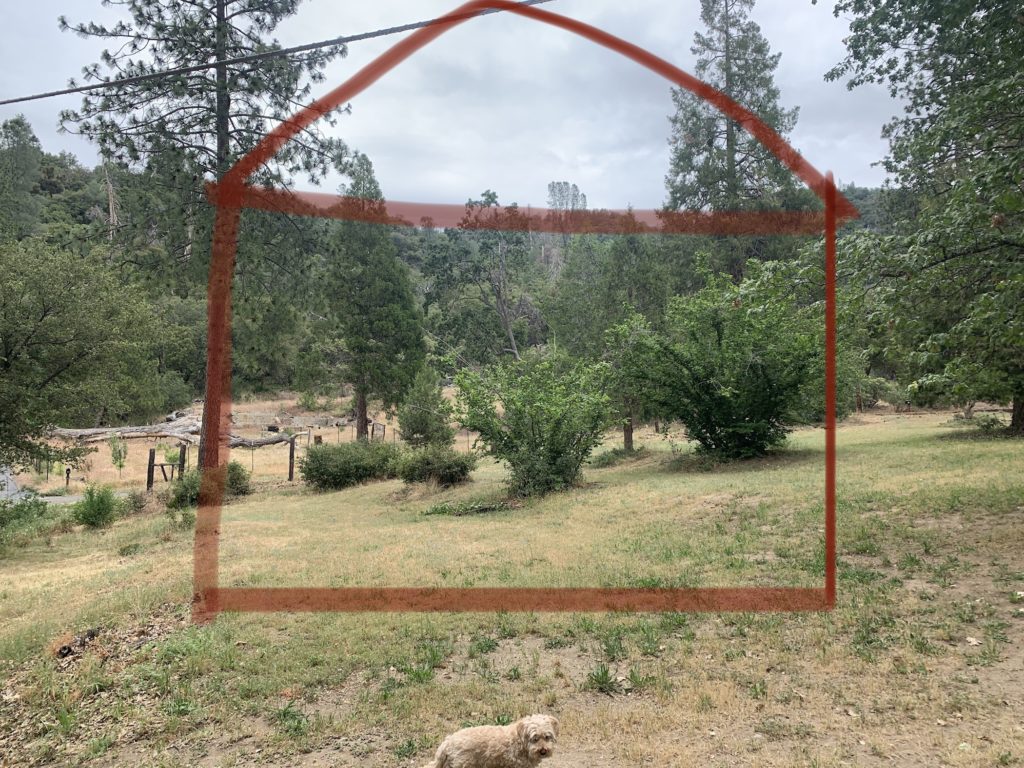
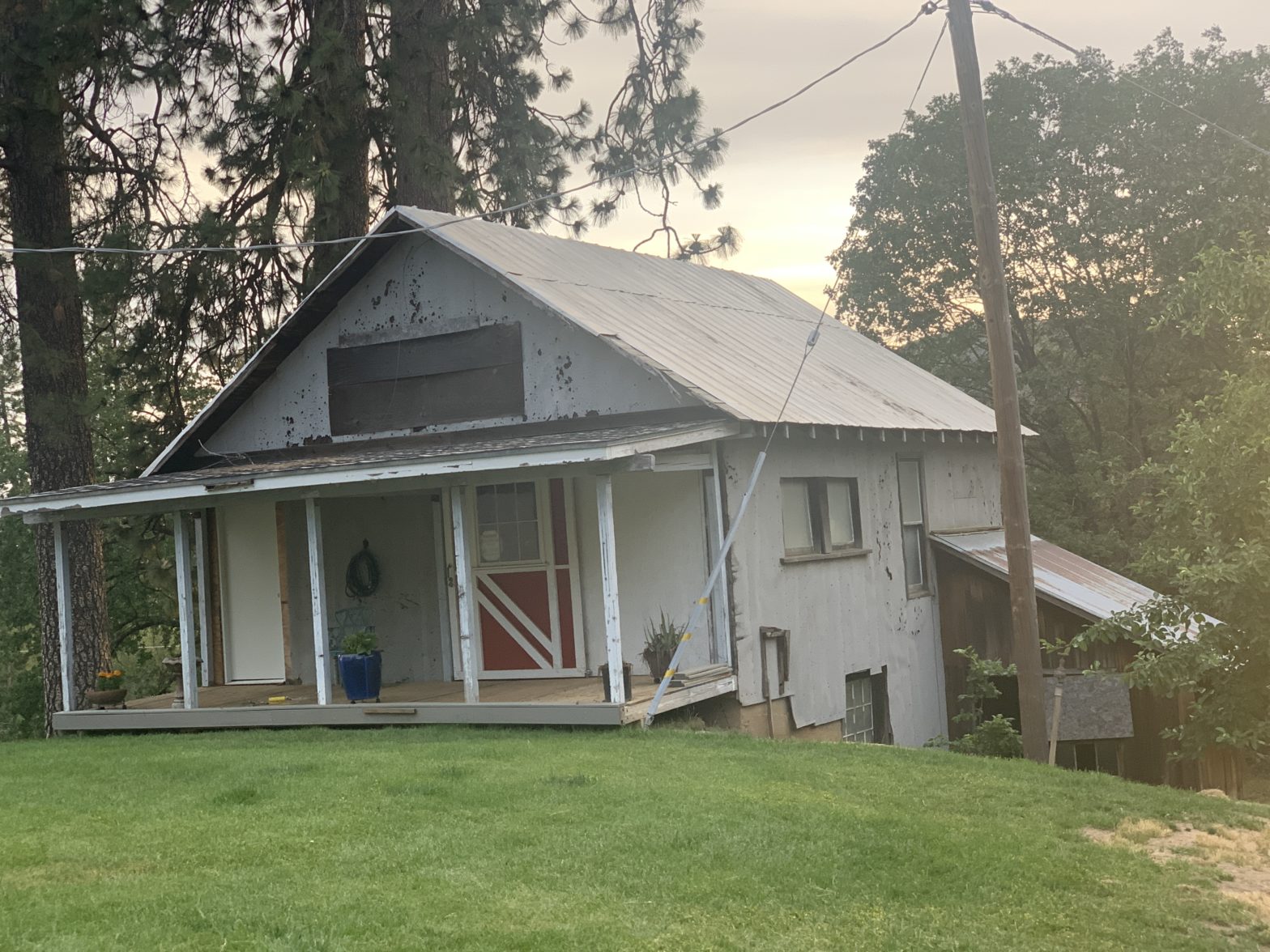
Our plan for this house is revealing itself more visibly.
Originally, this house was the center of a 440 acre working ranch. They logged, sold timber locally to build houses and barns. They had an orchard, supplying the nearby Sugar Pine Mill workers with apples nearly year round, making cider with the rest, including some they’d leave by the fire to ferment just for themselves. They raised chickens and pigs and a few cows. They grew grapes and other stone fruit and had a garden to sustain themselves. They generated their own power using gravity.
The heat has finally broken here in Mariposa County. I’ll be the first to admit that I had no understanding just how hot it was going to get here from early July until late August. It was the kind of heat where you wake up thinking it won’t be too bad but by 2 o’clock you just want to hide in the house.
Five weeks ago Jackson and I pulled out of San Diego and headed for Ahwahnee in a 16 foot rental truck from Budget. Several hours later we pulling into our driveway, the truck took out a limb on an old peach tree, and Murray and Kristen greeted us.
Tonight, Murray and Ms. Bey (our dogs) will load up the Subaru and head back to San Diego to wrap up. From there we’ll wrap things up in San Diego, pack another load of stuff, and (Good Lord willing) head back to our new home early next week.
Your Dreams
Last night I watched Adam Sandler’s new movie on Netflix, Hustle. He’s a 50-something year old NBA basketball scout who has pursued his NBA coaching dream his entire life and gone virtually no where. Early in the film he has his Jerry Maguire moment where he realizes that in order to fulfill his dream he’s going to need to take a chance so risky he might lose his job. He says to himself, “In your 50’s you don’t have dreams you have nightmares.”
What he meant was that by the time you get into your 50’s you should be done dreaming about your life. You should be locked into something secure. You should be thinking about wrapping up your career successes instead of taking on new, risky projects.
With respect, because I love Adam Sandler even though I’ve never met the guy, I disagree. The last thing I want on my tombstone is the epitaph: “He played it safe and still ended up here.”
Kristen and I look at the success in our lives we’ve built over the past 25 years and, while certainly tempting to ride out our next 20 years before we think about retiring, we’re thinking about getting after the next big dream for our family: Whatever it is that McLandia Farms can become.
I think about the risk we took in joining our friends at PPM… from the outside maybe that looked like a big risk? But to us it was a risk worth pursuing. And I’m really loving the work I’m doing, it’s hard, but stuff like launching PPM365 last month is exactly why I still think PPM is worth the sacrifices we make to pursue.
And as I look at the risk we took in selling our San Diego home to build a new life for ourselves here… sure, it’s risky. (You should see my homeowners insurance: They know it’s a risk!) But it’s a measured risk that brings us a ton of joy and opportunity, too.
Let me take the focus off my own pursuit and ask you about your own dreams. Maybe you’re 25 and you’ve got dreams for yourself so private you’re afraid to say them out loud because they might sound dumb? Or maybe you’re 35, got a couple little kids and the idea of pursuing your dream for your own self sounds foolish or even a bit selfish? Or maybe you’re 55, you’ve moved on from raising kids to grandkids and looking forward to retirement life?
I hope you look at Kristen and I and think: Maybe my dreams are worth pursuing after all?
It’s OK to say yes to the opportunity a smart risk brings along.
Do we build a barn here next for animals? This is one of the questions we’re asking.
The Road Ahead
I’ve been going to the Mariposa Certified Farmers Market each Wednesday evening. It’s been a great way to get to know some locals who are into all things organic, plants, food, and community. It’s only 12-15 stalls each week but I really love going.
I don’t know yet if our dream will include something for sale at the Farmers Market but I’m not opposed to going that direction. Whether it is or it isn’t I’ve found the farmers market to be inspiring because it’s full of people ahead of us on this journey.
The past month has been fun getting to know the vendors. Each week I stop and chew the fat with a few, asking about their farms and what they sell and how they got started. Last night I had a nice conversation with a woman who lives in Fish Camp, 4 miles as the crow flies from our house, but 45 minutes over the mountain or around the mountain. I was describing our property and she nodded her head. She told me about her place being in similar condition when she took it over: dry, dusty, full of weeds, not much productivity and not much biodiversity.
Her sharing brought into my memory the journey Kristen and I took with our house in Rolando. When we bought it in 2015 it came with a “mow, blow, and go” type of gardener who quickly cut the grass and sprayed chemicals before leaving for two weeks. (No knock on those guys, they are feeding their families and providing a service people want.) But it wasn’t what we wanted for our home. We reluctantly fired him and started pursuing a different path towards native plants and edible gardening in an organic, regenerative way.
I know the path ahead on our dream for this place is going to be hard.
I joke with friends that everything in the mountains either wants to kill you, poke you, or make you itch. I’m waiting for some new footwear to arrive today that’ll hopefully help me not fall as much on the loose, sandy soil and rocks of our property.
The path ahead for Kristen and I is going to be hard. We want to move on from weed management to soil management. In the next couple of months we’ll need to make hard choices as we build out the infrastructure this property needs to fulfill our dream. That means spending money… and spending money isn’t in our nature… life has taught us to always hold our money.
And of course, we’re pursuing all of this part-time while we hold down our real jobs and raise our kids and all of that.
We know the path ahead is hard. But it was hard in Rolando. It was hard in Romeo. It was hard in Chicago. It was hard in South Bend.
Just because a dream is hard to pursue doesn’t mean it’s a dream not worth pursuing.
There’s something deep in me that likes that challenge. And, dear reader, I hope that you like pursuing difficult dreams too.
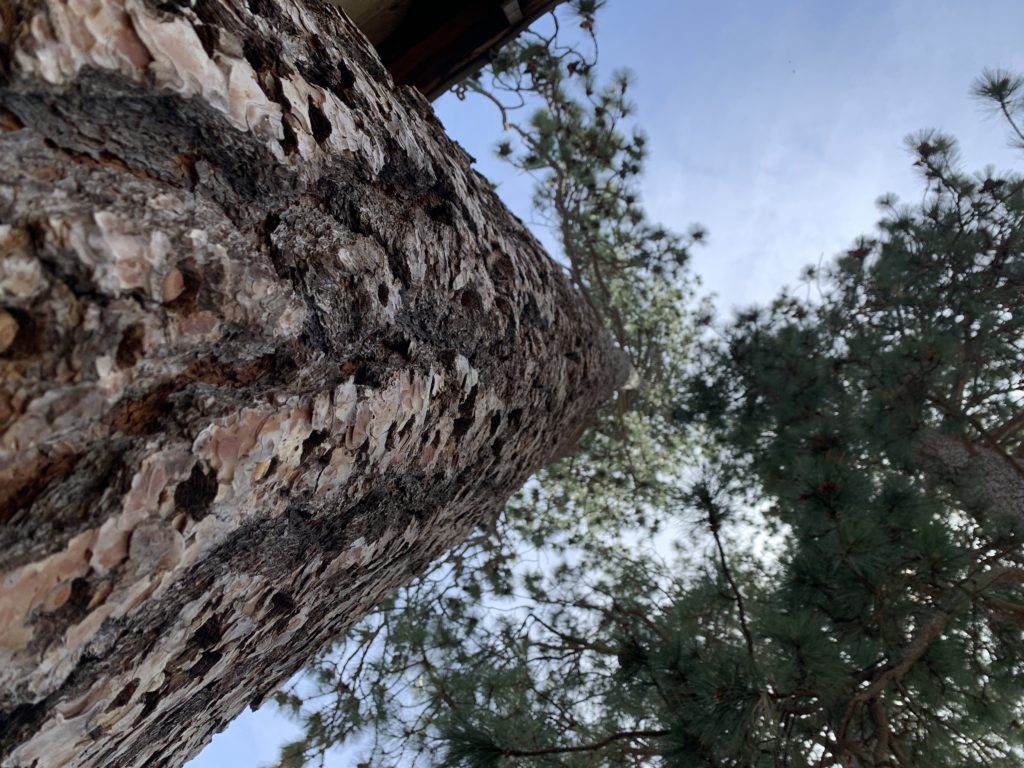
Last night, I sat on the porch of our century old workshop enjoying the timeless cool, evening breeze. The sun filtered through our towering pine trees. We sat in the silence with only the birds and mosquitoes as background music.