I have a fervent belief that if we want to reach a post-Christian society, we have to be Good News before someone will listen to Good News.
Here are 10 ways you can begin transforming your church into a place where Good News flows from:
If you have a building, offer a public bathroom and shower that’s open to whomever needs it during your office hours.
Ask every attendee to get in the habit of bringing a canned food item (you get the idea) to church every week. Then start a food pantry that’s open a couple days a week for people to drop in.
Buy things for the church from local suppliers. Avoid the big box (probably cheaper) stores for ones that support a local company. Encourage your church attendees to do the same.
Require church staff to live within the area you are trying to reach.
Add a requirement to all board and staff job descriptions that they attend public meetings. (Schools, city planning, city council, county government, etc.)
Ask adults to volunteer at the public schools. (Give staff lots of freedom to volunteer)
Participate in organized community events. Cleaning up, planting flowers, helping with parades, etc.
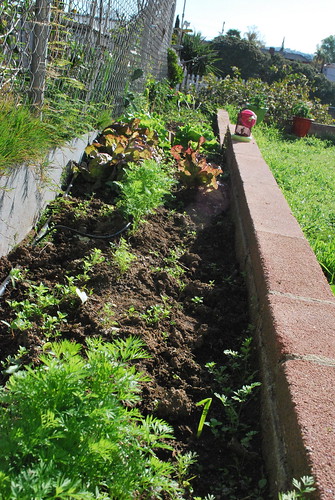
Make church property open to the public. (Playground equipment, skateboard park, community garden, host local festivals, allow the schools to hold events in the auditorium.) Better yet, turn all of your property into a community center.
Create a culture of saying yes to community involvement instead of no.
These are my ideas. What are yours?
How can your church (and the people who go to it) become Good News to your neighborhood?
Photo by richardmasoner via Flickr (Creative Commons)
Perhaps the reason your church isn’t growing is because you are boring? Your church is boring. Your faith is boring. The Jesus you’re presenting is boring.
People’s faith isn’t challenged by your ability to keep them busy. It is transformed when they are sent out to do God’s work in their daily life.
The last thing most people need is another sermon. The last thing they need is another worship experience.
The first thing they need is to apply the last thing you taught them. I guarantee you that your next worship service will be exciting if your community of believers is coming to worship Jesus after they have dipped their toes in the River of Grace and seen Him act.
That is exciting. That grows… Quickly.
No more songs about moving mountains until you show people– God moving mountains!
I don’t need Microsoft Office anymore. Actually, I’ve used it decreasingly less for a few years now. Instead, I use Google docs for that. (Or Evernote on my iPhone.) The first thing group of editors do when they receive a new article for youthspecialties.com? Upload it to Google docs. When they are ready to share it, they don’t have to email it, they just share it and everyone on the team has it. When I need to write some copy on the fly, I just open a Google doc, invite a collaborator, and start writing. I can’t tell you how many times I’ve been writing a paragraph ahead of someone who is editing. I finish writing the copy and 30 seconds later its edited and ready to go out.
I don’t need a server at work anymore. If you opened up my personal folder from work you’d only find a few old back-ups. Why store stuff there and go through the awkwardness of connecting to a VPN when I can access it anywhere using Dropbox? As long as I have an internet connection my office is accessible. My file cabinets are mostly for show. Well, I hide gear in them. But no file folders. If I need it, I scan it and save it in the cloud.
Photo by zarprey via Flickr (Creative Commons)
Speaking of Dropbox, when I’m making stuff for McLane Creative, I just ask anyone else on the team to save their stuff on a shared Dropbox folder instead of on their computer. Dropbox installs on a Mac just like a folder… so that’s a snap. No more “can you email me the logo” stuff… everything from the entire project is right there. They make a change, everyone already has it. They want the creative brief? Done.
I’m looking forward to more and more of my creative desktop applications moving towards the cloud. I don’t know that I’d like to be 100% dependent on a solid internet connection for everything I do with Photoshop, Dreamweaver, Illustrator, and Final Cut. But it would be pretty sweet to have the option of working off of a cloud-based drive and thinking about replacing the full version of them with a cloud-based version.
Why on earth would a start-up company buy a physical server (with ridiculous hardware and software costs at your scale) when they can store everything in the cloud for $.14/gb per month? I know I wouldn’t. And IT guys who flap their gums about security? They need to adapt their game. You’ll only be able to convince execs of those lies for so long. Remember IT guys capitalized on the Y2K lie, too.
John Paul Stevens, soon to retire Supreme Court Justice
(Yes, the title of this post is sensationalistic. But it got you to read it, right?)
All of my life I’ve grown up with versions of this phrase, “Don’t judge someone by their color, race, ethnicity, gender, or religion– judge them by their character and abilities.”
I grew up in a college town, with the University of Notre Dame within my elementary, middle, and high school’s boundaries, we were as melting pot a community as you could get in Indiana. Lots of ethnicities, lots of religions, lots of races. Growing up with that sort of diversity makes you hungry for it. It’s one of the things I love most about San Diego, where we live now.
“Stuff like that just doesn’t matter.” That’s what we were taught. That was really our mantra growing up. And if I’m really honest– that’s what I believe in the core of my being. In fact, given the choice I still prefer to celebrate diversity. Kristen and I exhibit this by where we chose to live and the schools we chose to put our kids in and the church we chose to worship in.
With just five exceptions, every member of the Supreme Court in the nation’s history has been a white male, like Justice John Paul Stevens.
But Justice Stevens cuts a lone figure on the current court in one demographic category: He is the only Protestant.
His retirement, which was announced on Friday, makes possible something that would have been unimaginable a generation or two ago — a court without a single member of the nation’s majority religion.
— [moving to the end of the article] —
For his part, Professor Stone said there were ways a justice’s religious affiliation could have an impact on the court. President Obama, for instance, could nominate an evangelical Christian.
Mark Tushnet, a law professor at Harvard, had another suggestion.
President Obama, he said, could use Justice Stevens’s retirement as an opportunity both to honor tradition and to break new ground.
“The smartest political move,” he said, “would be to nominate an openly gay, Protestant guy.”read the full article
So, if I read that right the Supreme Court nomination is open to anyone who isn’t… a white protestant straight male.
I’m not calling it discrimination. But I find it odd. I’m all in favor of choosing people for the Supreme Court for political reasons. That’s certainly a tradition and one of the major privileges of being elected President. And I understand that as our nation has fought to make diversity a value, we had to intentionally place individuals in places of power and decision to communicate that value. All things equal, for more than a generation, we’ve chosen to elevate someone of another race, gender, religion, or whatever.
This has helped significantly communicate, “It doesn’t matter where you’ve come from you can get anywhere in our culture.”
But I wonder at what point does the discussion get back to purely, “Who is the most qualified?” and “Who would keep the courts balanced to represent a variety of worldviews?”
In other words– I’d like to think we’ve arrived at a place in our nations history where it truly doesn’t matter the color of your skin, what nation your parents came from, where or if you worship, what your gender or sexual preference is, or even where your degree comes from.
Have we reached a place where white, protestant, straight, males are not put on the sidelines because of their race, gender, and sexual preference?
I’ve got 3 big things on the horizon which are capturing a ton of my attention. Both the details and the scope of them are great!
In just a few weeks I’m embarking on a road trip up I-5, through California, Oregon, and Seattle. The goal is simple, connect with a bunch of West Coast youth workers, hear what’s going on in their ministries, and share what’s going on at YS these days. Since it’s a youth ministry trip, it’s a low budget deal. Shawn Michael Shoup (my travel buddy) and I will be either crashing at churches, youth workers homes, or sleeping under the stars.
In June, Kristen and I are hosting a 13th anniversary party. It’ll be a small barbeque with some close friends. We’re also going to do a snarky renewal-of-vows type of thing as part of it. More like a celebration of marriage than anything else. As we looked at venues for that we quickly discovered that it’d be better to just rent a beach house for a week, host the barbeque there one evening, and turn it into a staycation. So we think we’ve nailed down the beach house… but still need a contract. It’s kind of funny when you live somewhere that’s a vacation destination.
In July, Kristen and I are hoping to head to Haiti for a week of ministry in Port-au-Prince. Lots and lots of details still to be determined on that. But I’m pretty sure it’s happening.
With the difficulty of 2009 it’s fun to have exciting stuff planned for 2010.
I laugh when I see the term, “social media expert.“ Let’s be honest. It’s an emerging field and the only thing that makes someone an expert is that they have labeled themselves as such and they read Mashable and Seth Godin.
With that in mind, I’ll just point out that for the last two years I’ve gotten paid to handle social media. I don’t know if that makes me an expert in the field, but it does mean that I’m employed in the field. (And I read Mashable and Seth Godin just for good measure.)
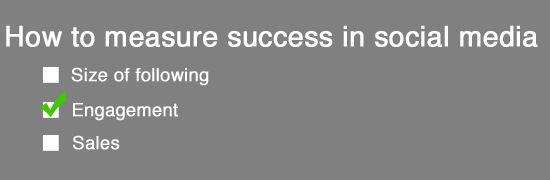
So, how do I measure success?
False positives
Size of following. Having 25,000 followers on Twitter or 10,000 fans of your Facebook page doesn’t mean jack.
Contest excitement. I love hosting contests as much as the next guy, but hosting a big contest doesn’t mean jack.
Being active. Utilizing the tools of social media is important, but just showing up doesn’t mean jack.
Atta boys. [Or atta girls] When you first get started everyone in your organization will be excited, but that doesn’t mean jack.
Sales or lead generation. This may make the boss happy, but in most cases it doesn’t mean jack.
True positives
Engagement.Are your followers, fans, subscribers listening to the stuff you send out in a measurable way? Do they click on links you recommend? Do they comment on stuff you post? Do they open the emails you send? Having a large following is only as valuable as your ability to engage those people. Otherwise, your just another message they are ignoring. I’d rather have 100 engaged Twitter followers than 25,000 who ignore me. What to measure: comments, likes, open rates, click rates, number of clicks, mentions on fan/followers feeds.
Users who contribute. Is your effort a two-way conversation? Traditional marketing is about pushing a message. Social media is about pulling a response. It’s shocking to me how many organizations have large followings but only push. And they wonder why they think their social media efforts are a waste of money? They are! What to measure: Submissions, Facebook messages, Twitter direct messages, unsolicited or solicited ideas.
Repeaters.This post is the perfect example. When I press publish on this blog post, my own network will draw a couple hundred visitors. But this post will be read several thousand times in just 7 days. How did that happen? Repeaters. What to measure:Facebook shares, Twitter retweets, add-to-this analytics, trackbacks, blog posts about your content/product/service.
Photo by canonsnapper via Flickr (Creative Commons)
Golf has taught me a lot of life lessons.
Probably most importantly is this one: Since you’ll never be perfect, success or failure is defined by how you respond in less-than-ideal circumstances.
I’ve always been a recovery golfer. Even when I was playing my best golf– my playing partners always complimented me more on my ability to make a recovery shot than my ability to hit the ball a long way off the tee into the fairway or sink a 5 foot putt for par. As we drove home or hung out at the clubhouse it’s always the recovery shot stories that get told. “Adam hit his tee shot into the next fairway, than pulled out an 8 iron and hit a sky ball over the tree line and into the middle of the green.”
When I played on a golf league these stories annoyed me a little. I’d play 6-7 boring holes, playing from the middle of the fairway, hitting to the pin side of the green, and score a long series of pars. But these weren’t remarkable. I heard other golfers tell me I was a bad playing partner. “All he does is make pars.” What made the other men talk were my stories of recovery. Ending up behind a tree. Or missing the green badly with an approach shot. Scrambling for a decent score when most guys would go double bogey or worse is worth talking about. But being “good” isn’t.
You should have seen when Adam hit it in the water on the par 5 and only made a bogey.
He snaked his second shot from under some trees than over the pond and onto to the green.
Never mind the fact that being in those positions qualified as horrible golf!
I think this is why Christian make such horrible story tellers.
We’re boring. While our struggle is the most interesting thing about us it is the thing we hide the most. We like to emphasize the boring parts of our story. Worse yet, we like to pretend like we don’t ever miss life’s green.
We like to pretend like we magically stopped sinning when we became believers.
Like it or not, Americans are intrigued by stories of imperfect winners.
I guess that means that in order to be interesting we have to be more open about who we really are?