This explains so much.

 Earlier this week I started noticing the Facebook “like” button popping up on some of my favorite sites. And then, my co-worker Jonathan installed it on our site at work.
When I saw that… I knew I had to have it on my blog. Plus I knew I had to master it for some of my McLane Creative clients.
It took some fiddling around but here is how I’ve gotten it to work. Follow these steps and you can set it up in about 10 minutes.
Please note: These instructions are for the Thesis theme for WordPress. If you’re looking for a completely customized WordPress theme you can build yourself, I recommend purchasing Thesis.
Step 1: Download and install the free Thesis OpenHook plugin.
Step 2: After activating the plugin, go to the settings link for Thesis OpenHook. On my blog it looks like “/wp-admin/themes.php?page=thesis-openhook/options.php”
Step 3: Scroll down to the hook you’d like to install the code at. I’m using “after post.” But here’s a list of all the hooks and what they are.
Step 4: Paste the following code into the hook you’d like use.
Step 5: Click the checkbox “Execute PHP on this hook.” This is important, you will get an error if you don’t click this checkbox!
Step 6: Press the “Little save button.”
Step 7: Like and retweet this post, telling everyone what a swell guy I am.
Bonus:As you can see I’ve also added a couple Tweetmeme buttons to the same location. You can download my code for that, just put your Twitter name in the [twitter_user_name] spot and you’re good to go.
Click here to download –> [download id=”6″]
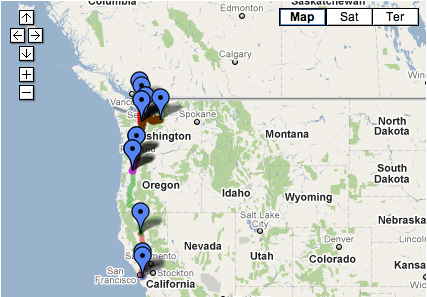
Next week, I’m hitting the road and driving from San Jose to just north of Seattle. I guess there are 3 over-arching reasons I’m doing this. Two are a bit secondary and perhaps selfish, which the third is really the justification for everything else.
What’s fascinating about going out to discover youth workers stories is… it’s all about discovery. I’ve got a rough sketch of who I’m going to meet, but I really don’t have a clue where this is going to go. And what makes a road trip so fun for this format of story discovery is that I probably won’t really get a thread through all of the stories until I’m done. Since I’m telling stories as I go, there’s even a great chance that you will see the thread before I will.
Another fascinating element to telling people’s stories, one that I’m just learning to appreciate, is that power of telling a persons story to the person whose story is being told. It’s one thing to tell your own story. But it’s an entirely different thing to have someone come into your life and then to other people about you. As I’ve been scheduling my meet-ups and talking to people, I hear them question, “you want to tell my story?”
You are story worthy.
Your story is interesting.
Your story is helpful to you.
Your story is helpful to others.
As a child of the King bought at a price, your story has unlimited value.
“you were bought at a price. Therefore honor God with your body.” 1 Corinthians 6:20
OK, dear blog reader. It’s time you and I do something to change the world together.
Back in February I shared my trip to Port-au-Prince with you. You saw my joys, sorrows, giggles, and heart-longings. And since that trip I’ve had a strong, STRONG desire to go back. Opportunities have come and gone with the circumstances never quite right.
This is right. This exactly fulfills the vision I had for this trip as our van lumbered out of Port-au-Prince for the day-long drive back to the Dominican Republic to return home in February.
Some details:
How do you get involved? Shoot me an e-mail, mclanea@gmail.com.
Again, because of the nature of the team this trip is limited to only 20 team members. So if you are interested, it’d be good to contact me right away.
I’m an Apple addict who hasn’t fully appreciated the iPad. Now I finally get it. It’s Apple’s play into the pet owners market.
This stuff fascinates me. I love the mystery of public reactions. I love surprise and wonder. I love the feeling of “why didn’t I think of that?“
For the last two years I’ve been riding the pine at church. This time has taught me a lot about what it means to be in church leadership.
From age 16 until 31 I had always aspired to be an up front leader at church. I like being visible. I love speaking, teaching, and preaching. I truly enjoy the grind of regularly doing those things as my vocation.
Over the past two years I’ve gone from being the person everyone on our church campus knew to being a relative nobody. In athletic terms, I went from being a starter to being a player who sits the bench.
And just like in athletics, when you put a starter on the bench, the Coach always does it so the starter can learn.
Here are 5 things I’ve learned from riding the bench at church:
If you’ve gone from church staff to church attendee, what are some things you’ve learned through that process that could help people in church leadership?
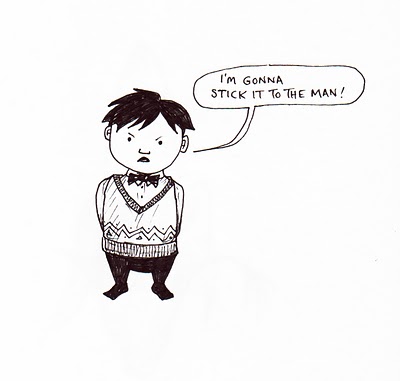 I want to see church culture change. I know that if we’d just apply what we believe the church would be the most attractive option on the planet.
And I also know that in order to change the leadership culture within a church you have to do three things.
Here are some examples of moments in history when visionaries have extended the middle finger (mostly figuratively) to the man and changed the culture forever.
The reason I’m saying this is to remind people like myself that we are, oftentimes, the biggest agents against change. We have our ways. We have our culture. We look at prominence and degrees. As the established religious leaders we give a million excuses why the pains in the neck are wrong and we are right.
World changing men and women come into our lives, observe our behavior and practices, and give us the middle finger.
The lesson from the examples above is simple: When people come to you to give you the middle finger of no-more-fellowship… you need to listen to them. You need to give them the opportunity to be heard.
They may be right and you may be wrong.
You need to look at those people with sober judgment.
Do not think of yourself more highly than you ought, but rather think of yourself with sober judgment, in accordance with the measure of faith God has given you. – Apostle Paul, Romans 12:2
 More than 3 months have passed since 200,000 people were killed and a million people were displaced in Port-au-Prince.
For a news item that’s an eternity ago. It’s just how we’re hardwired. We hear a news item, we are shocked by it, we do a fundraiser, we move on. And we want to block it out until late December of that year when our favorite news agency does “2010: A Year in Photos.”
For lack of a better term I’ve been calling this “Haiti fatigue.” The news cycle has passed. People are thinking about economic recovery. Health care reform. Earthquakes in San Diego, Chile, and China. Larry King and Tiger Woods sex lives. iPads. On and on. Anything to distract ourselves from the good and bad that is happening just a few hundred miles south of Miami.
Talking about what’s happening in Haiti just isn’t that interesting to people any more. They are sick of it.
But I’m not fatigued.
I’ve not forgotten.
I’m praying about how to wake up those echoes. Stay tuned.

One of the hardest skills to teach a competitive golfer is what I call The Sucker Pin Principle.
A sucker pin is a pin placement that is inviting you to take a dangerous or unnecessary risk. This takes advantage of an aggressive player.
The sucker pin principle rewards the patient golfer while punishing the aggressive. Application of this principle is what separates a talented high school golfer from an all-conference high school golfer.
For most golfers sucker pins are irrelevant because they just aren’t good enough to worry about pin placements. But for competitive golfers on every hole they are not just trying to hit the ball on the green from the fairway or the tee box on a par 3, they are trying to hit the ball to the area of the green where the pin is so that they can try to score. (e.g. birdie the hole)
Sucker pins come mostly into play on a par 3 hole. If the greenskeeper wants to make a hole more difficult, he may place the pin to a comfortable distance, say 150 yards, but place it far to the right of the green near a bunker. The safe and smart play in that situation is to play the ball to the center of the green. But the aggressive player will be tempted to play to the right and flirt with the being in a short-side bunker.
When I coached high school golf I would always say, “Play to the middle of the green, don’t fall for the sucker pin.” In practice this was fine. Players would amuse their coach. But in a match, particularly if they had bogeyed the hole before, they were tempted by the opportunity to get a stroke back. The lure of an easy birdie would be too much, they’d go for it, inevitably miss the green, and bogey another hole.
If you watch golf on TV you will see that professional golfers pick spots on the course where they can be aggressive. But they show respect to certain hole and their pin placement, go for the middle of the green, and pat their caddy on the back as they walk to the next tee box with a par.
Commentators talk about it all the time. “He picks his spots well.” or “He manages the golf course like Seve.” “Golfers are attacking this pin placement today.”
More often than not, the golfer who picks his spots to be aggressive is going to win while the golfer who is overly aggressive is going to take too many risks, pay too many penalties, is going to lose.
If you watched the final 9 holes of The Masters this year you saw a case study in this principle. Tiger Woods climbed up the leaderboard, chose a spot to be aggressive and came up short. Lee Westwood tried to be conservative all day and he was too patient. But Phil Mickelson chose to be aggressive on the 12th hole (I screamed at the TV) and he nailed it and hoisted the green jacket.
The same principle applies in life. Life is full of sucker pin opportunities. Any major transaction in life is doubly full of sucker pins. You may just have to pay a price for your aggressiveness. But if you are patient and pick your spot, you can come out ahead.
Specific areas of sucker pins:
What are sucker pins you fall for all the time?