Category: Books

  • Learning about community from the Didache

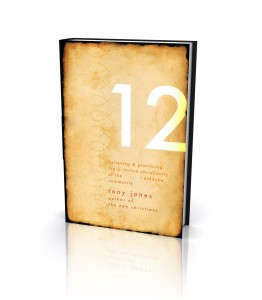
    I’ve got bad news for Tony Jones haters. There’s nothing to hate about his latest book, The Teaching of the Twelve. In fact, you may love it.

    Last week, I finished reading his little book about the little book, the Didache. The didache is a book that dates back to the ancient church but didn’t quite make it into the cannon of Scripture. Unlike some of its contemporaries, it didn’t make it in because it was steeped in gnosticism… instead the didache likely didn’t make it in because it didn’t provide deep theological teachings, warnings, or narrative about Jesus. It’s not really a letter or narrative at all. Authorship is also unclear. Instead, it’s a group of teachings– probably from various authors– that baptismal candidates likely studied before being accepted as Christians in a small town in the first century.

    In other words, the Didache (greek word meaning teaching) is a practical guide for living in community with other believers. That’s an area I am growing. I’ve spent the last 10 years teaching on and focusing on individualistic growth in relationship to God. All the while, I’ve been fascinated by books about first century Christians, Essenes, the Qumran community, and early church history. There was a contradiction there between the individualistic faith of American believers and the community faith I read about in the first century. I have long been trying to figure out how to rectify the two as there is a gulf of difference between what we do today and what was practiced then. Deep down, the Holy Spirit has stirred in me a desire to figure out how we can do life together. I don’t have it figured out… but I’m on a journey of discovery towards figuring it out.

    Like a lot of conservative Evangelicals, I tend to approach books by Tony Jones with my ears finely tuned to look for a twist to something traditional about his hermeneutic. For some reason I’m left looking for the agenda behind his words. I don’t know where this started… but it was something I carried into buying and reading this book. My radar was finely tuned!

    So, for those haters, here is the bad news. Tony’s latest book approaches Scripture in a thoughtful, academically pure way. It reads the same as many of the scholarly texts places like Dallas Theological Seminary, Wheaton Graduate School, or Trinity Evangelical Divinity School would require of New Testament students. He doesn’t lift the didache up as Scriptural, rather uses this groups application of Apostolic teachings to explain how that culture was applying early Christian teachings. Even when the text permits him to hypothesize to tear away at traditional Christian values, he instead affirms them. When the text talks about a pre-millenial view of the community in the first century, he doesn’t try to spin it to another viewpoint… instead affirms what the text makes clear, that community looked forward to the imminent return of the risen Christ.

    Conservative haters are left with nothing to hate. In fact, I think a lot of my friends need to read this book as we all figure out… “What does it mean to live in community as believers?” Yeah, we need to learn. Yeah, we may just be doing community wrong. Gasp! The horror!

    I will leave you with the same encouragement that lead to me buying this book in the first place. Before you hate, before you criticize, before you call names, take the time to read for yourself. Read it, like I did, with a critical eye. Then, when you go to critique, you can do so intelligently. But my feeling is that if you actually read the Teaching of the Twelve, you’ll be as impressed as I have been with the treatment.
  • College Ministry 101

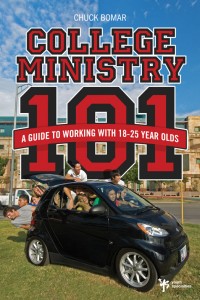
    college-ministry-101aToday, I am driving up to Los Angeles to meet with fellow YS blogger and YS author, Chuck Bomar. Chuck’s new book, College Ministry 101, is an important read for the church today. While church leaders have known of a significant drop-off of kids from high school into college few church are doing anything serious to rectify it.

    Some churches run programs like glorified youth groups that really just delay the problem.(Eventually you do need to transition them to an adult-like ministry, right?)

    Most churches do nothing. Their action provide an implied rumschpringer where Christian children go off and experience the worlds delights and horrors. (And 20% or so return later.)

    Some churches expect 18 year olds to join adult Sunday school or small groups.

    Long story short, Chuck has spent a lot of time helping churches figure out the college-aged ministry and now he has a book. Today I am meeting up with him to do some filming for the podcast as well as some stuff about his book.

    I’m looking forward to meeting him. And I’m looking forward to what he has to teach youth workers about college ministry.

  • Youth Worker Book of Hope ON SALE NOW!

    At work today Mandy handed me an envelope from Zondervan. Holding it, I could feel a lump in it. As I opened it I joked to myself, “Geez, are they paying me in cash these days?” To my delight it was not a bundle of cash, it was my copy of The Youth Worker Book of Hope.

    Out of pure selfishness, I flipped to the table of contents and scanned for my chapter. Sure enough, on page 99 my name is in black and white. For a blogger that is a funny thing to see. I’m used to seeing my name on a computer screen… but printed in a book was a tactile experience I wasn’t quite prepared for. It was emotional and fun. I then dutifully read my chapter as if I hadn’t read it like 20 times before.

    When this project was originally pitched to me I was literally and figuratively thousands of miles from working at YS. As I’ve blogged about before I didn’t have a strong desire to be a part of a book project. When I walk into a bookstore I love seeing books written by people I know, but for whatever reason I’ve never had a strong desire to walk into a bookstore and find a title with my name on it. While my default answer about any book is always “no,” this project was on a topic near and dear to me– encouraging youth workers faced with crisis. That’s what my chapter is about… how do you handle a crisis in leadership in youth ministry. My working title was “what do you do when the crap hits the fan?” How do you deal with being dealt a bad deck of cards as a leader? I’ve been dealt some fun cards… and I jumped on board with this project because I felt like I had a thing or two to help others.

    Of course, the book isn’t about me. It’s about hope. There are lots of chapters and lots of authors sharing stories of how they found hope in hopeless situations. In that regard I think the book appeals to everyone, even people who don’t work at churches. That’s why I want to encourage you to buy the book. (Like right now! It’s only $11.04, you can do it.) It’s the type of book you want to have on your bookshelf for when hard times hit. It’s the type of book you’ll want to hand to a discouraged friend. It’s the type of book you may even want to come back to. Or even reach out and connect with an author.

    Youth Worker Book of Hope

  • The Blue Sweater

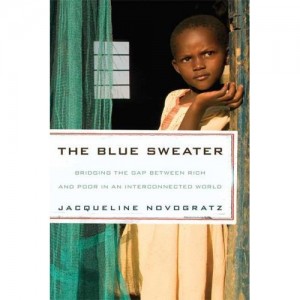
    the-blue-sweaterOver the past month or so I’ve been working my way through The Blue Sweater by Acumen Fund CEO Jacqueline Novogratz. I think this is a book worth reading for a number of reasons. Here are some high points.
    – Novogratz carries a general principle with her that makes a ton of sense: To change a families life you have to work with women. I wouldn’t label her a hardcore feminist, but her point is very valid. Traditionally in charity and community development the money goes to the men. The thing is that very little of that money ends up trickling back to the family. A much higher percentage of the income you invest in women goes towards educating, feeding, and investing in the home.

    – Novogratz sees her role in changing the world as a blend of charity and for-profit business. The old adage that “If you give a man a fish, he eats for a day. If you teach a man to fish he’ll feed his family forever” is an interesting sentiment but isn’t truly solving the problem. This book talks a lot about helping people set up businesses that are sustainable, run by locals on their terms, and yet holds them accountable for their actions. Those are qualities of an ecosystem worth chewing on.

    – Justice is beyond charity. There is a huge movement going on about mosquito nets. When Ashton Kutcher gave $100,000 to buy 100,000 mosquito nets this was both good and bad. While it is fantastic that $1 buys a mosquito net, it’d be way better if some of that $1 went to helping build a company that could produce and innovate those nets without the need for more charity. Charity is great… but it doesn’t go far enough to fix problems.

    – Dignity is more important than charity. For a lot of us who think about building systems upon which others can build their livelihood, it’s important to remeber that our role is to provide the system and get out of the way. A truly good system is a platform on which others can invest and trust.  The platform should take a backseat to the products developed for the platform.

    – For-profit is not evil. There is a sentiment of those who work for charitible organizations that anything for-profit is ignoble. I love how she shows for-profit being as important as non-profit and not-for-profit.

    Interwoven in these threads of thought, Jacqueline Novogratz shares stories from the rich tapestry of her life. Each story helps to form a patchwork quilt from various places in the developing world. From her first experience as a young co-ed where she discovers that a blue sweater she donated in America worn by a child in Africa to running a small bakery in Rawonda, to eventually creating The Acumen Fund, Jacqueline shows that she is crazy enough to change the world.

    For world changers and those longing to see the world a better place, The Blue Sweater is a great read.

  • Mark Riddle Interview

    I’ve had fun finally getting to know Mark Riddle. He and I have interacted on forums and blogs for several years, but we only met face to face for the first time back in February. He has a new book out which is near and dear to my heart… Inside the Mind of Youth Pastors. It’s a fun little staffing book that is designed to help church leaders understand what makes youth pastors tick.

    Anyway, here’s an interview I did with Mark about the book for the YS Blog. I apologize for the poor audio. There are times you can hear the birds in my backyard better than Mark. But if you can get past that I think it’s a pretty solid interview.

  • Youth Worker Book of Hope

    Youth Worker Book of HopeBack in January 2008 I was asked to participate in something out of character. Tim Baker, a well-established youth ministry author, emailed me and asked if I’d be interested in submitting a chapter to a book he was working on. My first few reactions were simple…

    – I don’t want to write a book. (Kind of weird for a guy who works for a publisher, eh? Just not my dream.)

    – I don’t have anything important to say.

    – I don’t have time. (Besides running YMX and a ministry in Romeo, I had just dropped out of grad school because I was too busy.)

    When I talked to Kristen about it she read through the concept of the project and gave me the look and said, “You need to do this.” As I looked at the project once again it became clear to me that I had to participate in this project, I did have something important to say, and I needed to make time. If there is one thing I want my ministry to youth workers to say over and over again it is that youth ministry matters, it changes lives, and no matter how bad it is, there is hope!

    At this point, 16 months later, I am stoked to see this book come out in August. I don’t often get Perry Noble-stoked about stuff… but I am getting close with this one. There is a mega-pile of fresh authors, each sharing their unique story of finding hope when bad things happen. But let me be completely selfish here… I think you need to buy this book simply to read my chapter. My particular chapter is on, “How do I find hope for tommorow when the crap hits the fan?” And how many people in ministry haven’t had a moment when everything hit the fan?

    So, here is the link. You can pre-order it now.

  • Andrew Marin goes to Washington

    I probably seem like a total fanboy for Andrew Marin. Thing is, I think he’s one of those few prophetic voices within Evangelicalism. Here’s a message he presented as part of the Inauguration Weekend in Washington, DC.

    I’m really digging his book, Love is an Orientation. It comes out soon, you can get yours today at Amazon.

  • The Hour I First Believed by Wally Lamb

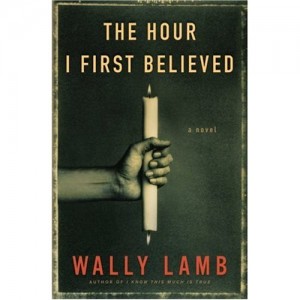
    Few books require comparison to a Fyodor Dostoyevsky novel. Yet both the length of the story and the depth of the primary character does resemble works like The Brothers Karamazov.

    While Dostoyevsky wrote in serials and was therefore paid by the word for his work which in turn paid for his gambling addiction, about 500 pages into The Hour I First Believed I began to wonder more about the sanity of the author, Wally Lamb, than the sanity of the main character. In the end, it was a novel that you both couldn’t wait to finish, while at the same time this reader remained convinced that the story should continue forever. It was a painful joy similar to Thanksgiving Day. You can’t possibly eat one more thing and yet you find yourself opening the refrigerator door, more out of compulsion than true hunger for more.

    The story is a first person perspective of the main character, Caelum Quirk. Caelum and his wife work at Columbine High School in Littleton, Colorado in 1998-1999. The story takes a dramatic twist when Quirk’s wife is caught in the crossfire during the school shootings. Her life is spared and taken at the same time. Spared in that she isn’t harmed. Taken in that the post-traumatic stress syndrome steals much of the joy and peace from her life.

    In an attempt to get away from the tragedy and start over, the Quirks leave Colorado and move into the home of his aunt, who raised him. Left with the family farm and a wife whose mental capacity continues to decline, Caelum begins discovering his real family history. This history is disturbing and freeing as Caelum begins to create a new life for himself in the town he grew up in.

    While the story is long and covers a decade, it is still interesting. The title misleads you to believe that Caelum’s tale is a spiritual one. While one could argue this search for history and identity is a spiritual journey the conclusion is not a Christian spiritual journey but perhaps one of existentialism. Lamb seems to paint a superstitious picture of Mrs. Quirks religiosity and the parallel between her discovering peace in Jesus and the end of her life is opaque enough to fail hiding the authors bias.

    I almost wish there had been a third person narrative about the author of the story coinciding with the writing of the novel. In the appendix Lamb shares how the novel took nearly a decade to write. For him, it was natural and necassary to weave real world events like the shootings at Columbine and September 11th. Likewise, he threads in a story of a women’s correctional facility founder into his main characters life. In the end, I don’t know if these provided a richness to the story or merely context for a story which otherwise would have lacked depth.

    While it is obvious that critics will find this novel brilliant I found it to be tiresome. In the end I felt like it was just 400 pages too long.

  • Love is an Orientation

    I’ve been so impressed with Andrew Marin and his work to help bridge the church to the homosexual community. Check out Andy’s promo video. If you want to buy his book, you can join me in pre-ordering it from Amazon.

  • The Longest Trip Home by John Grogan

    I’m not sure where I first heard this phrase but, as a parent, I think about it all the time. It’s a parents job to mess a kid up, it’s their life’s work to put it all back together.

    That could be the byline for John Grogan’s book, The Longest Trip Home.

    This memoir picks up early in John’s life in the Detroit suburbs. Like a lot of families, John was born in Detroit but his parents sought solace and safety in the burgeoning oasis that developed near the industrial areas of Pontiac in the mid-1690s. His neighborhood was a developers dream, complete with a lake, Catholic church, and outlot where all the families could have a common swimming area.

    The truth was that John’s parents chose their lot in the neighborhood because of its proximity to the church. His life was defined by daily mass, Catholic schools, and vacation to North American sightings of the Virgin Mary. They were not a run-of-the-mill Catholic family, they were a Super Catholic family.

    The Longest Trip Home is a faith story. Moreover, it is a case study in how we raise kids in the church. Let’s just say John’s parents didn’t get it right. It seems that their primary faith development tools were fear, fear, and fear. As soon as the kids discovered that their sins didn’t immediately send them to hell they were all out of there. While their bodies went to church their brains and hearts never did.

    That’s where the mischief started. In youth ministry terms, we’d say John began living a dualistic life. He did his best to maintain a clean cut happy face to his parents. But when they weren’t looking John was into all the things you’d expect a kid in the early 1970s to go through.

    John’s story of walking away from his faith begins to slowly turn subtly in his adulthood. As his parents guilt trip him for everything from skipping to church to living with his girlfriend his hatred towards the hypocrisy grows. Yet buried in his annoyance is a seed of questioning that begins to grow.

    This isn’t a Christian book. And the author’s life doesn’t resolve into a tidy feel good story. John Grogan is not going to write the Catholic version of Mere Christianity any time soon. But what it does is raise some interesting questions about faith development and our role as parents.

    Most disturbing in John’s story is that his story towards faith isn’t about connecting with God, it’s about connecting with his parents. And that, my friends, is something worth exploring.