Category: Church Leadership

  • Transforming Community Through Faith and Farming

    Transforming Community Through Faith and Farming

    It will never not be weird that you can get a theological education, hired into Christian ministry, and not take a single class in agriculture or spend time on a farm.

    I said that before I was a farmer. And now that I am? I think you need to demand a refund from your seminary because you learned marketing and bad business mantras when you should have been learning how to prepare the soil, plant, cultivate, fertilize, and harvest.

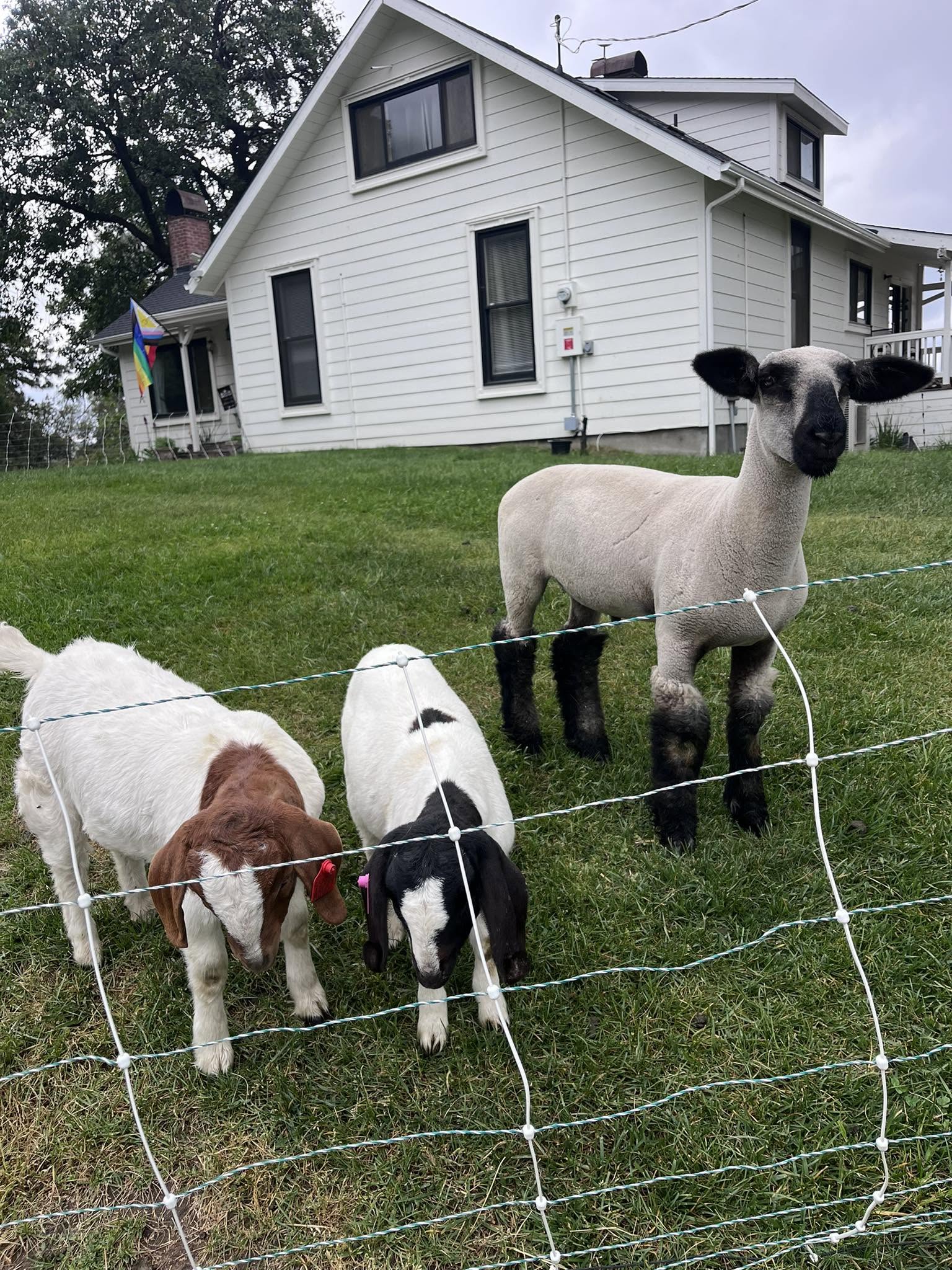
    How in the world can you “shepherd a flock” when you’ve never worked with sheep and goats?

    I might not draw a paycheck from a church but starting a few years back my neighborhood became my congregation and you know what? I think rejecting the Church Industrial Complex and attempting to make my life Good News in the Neighborhood is way more effective than any church I’ve ever been part of. I do more pastorin’ now than ever.

    Want to know what faith looks like? Take a day off during your harvest season. Want to find your purpose and a reason to get out of beet Get some livestock. Want to know what it means make an impact on a family? Grow their dinner.

    Want to know what healthy organisms do? They multiply.

    You won’t learn that at a conference, you’ll learn that in the fields.

  • Christian Employment is Broken

    Christian Employment is Broken

    Over the last 4-5 years I’ve slowly been processing the abusive work relationships I had working in the Christian world. There’s no need to point to or call out one as it’s been a patten consistent for the entire time I was in from 2001 to 2022.

    Maybe it’s a pattern you’ll recognize in your own life, too? I dunno. But here goes.

    Outward Signs

    I knew things had become untenable and I couldn’t continue. It’s taken me some years to see that it was more than the outward things that led me out.

    On the surface I felt at the the rise of Trumpism, hatred towards outsiders, exploitation of the poor for personal profit, the persistent two-faced approach to the gay community, hatred of women as a whole, the death cult fetish with Israel– those things made it so I had to leave.

    That hasn’t always been there. But it started in the early 2000s and has gotten progressively worse.

    Those were outward things. I last attended a church service without getting paid around Easter 2017– I couldn’t take hearing one more “sermon” about the pastors surf buddies, scripture twisting, while ignoring the rising hatred of immigrants in our midst. It was too much.

    Dude spent a long time telling us where “regulars” had to park for Easter and I looked at Kristen and said, “That won’t be a problem. One less car for them to worry about. I’m not coming back.”

    I quickly learned I wasn’t the only “leader” who only went to church when there was a paycheck. In fact, I’d say that’s true of just about every “leader” I know. They are there when there’s a paycheck otherwise they don’t bother. They maintain a relationship with a home church that’s convenient to them but that’s usually to maintain a credential or something like that. Most of my friends working in churches will readily admit that they wouldn’t go to their church if they weren’t on staff.

    The truth is that the evangelical church as I knew it– as most of us in our prime years right now knew and gave our lives to– died in the mid-2000s. It’s just not the same and I don’t think it’s worth being around.

    Many of my friends feel trapped. They want out but they can’t find jobs where they’ll be treated as well or paid as well. So they stick around.

    That’s the outward stuff.

    Looking Inward

    Let’s talk about the inward stuff. These are things that I’ve realized while listening to audio book after audio book about farming or truths I’ve learned from hours of hearing pop songs in my headphones while pulling weeds.

    As time has gone on I can more clearly see the inward things were abusive and untenable, as well. Things that gnawed on me and made me realize I was part of something that wasn’t true to myself.

    I realized that many of the people I was consulting with and working with cared about my ideas, my ability to make money, my ability to build a community around an idea– but they didn’t care about me at all.

    Not one bit.

    That was proven when we lost Lilly and very, very few people I’ve worked with reached out. I called them and mourned with them when their dogs died but I lost a child and not even a card or text.

    To them, I was nothing more than a means to an end. I didn’t feel that way about our relationship but they did.

    In my roles I was expected to deep dive into their personal lives.

    Go to their homes, get to know their kids, remember their wedding anniversary, help them deal with everything in their personal lives, plan vacations, give them meaningful gifts, timely compliments and encouragement, on and on.

    My roles were never just about the work. It was always “doing life with” as well.

    But it was deeply one-sided.

    When I was “for them” (read: making them money and notoriety) they were all about Adam McLane. They couldn’t get enough of me. And I liked that reputation as the “get shit done” guy with so many orgs.

    But as soon as I shared things that I cared about or if I asked them to get to know my family, even remember my wife’s name, maybe drop by and share a meal– when I dared to prioritize living out my own faith in my community by getting involved– I was suddenly a liability.

    I spent decades in this cycle where when I was “for them” everything was great but if I tried to ask others to be “for me, too” I was out.

    That’s not what friendship, partnership, leadership, or doing life with someone is meant to be.

    When we lived in San Diego it would always shock me that people would come to town for vacation and not say anything to me. I’d fly to their ugly ass shithole town in the middle of winter, hang out with their family, meet them for a beer at their favorite spot. But when they came to my town? Nah, nothing.

    It’s taken me a long time to admit to myself that those people were never actually “for me”. They were never on my team, cared about me, anything… I was just a tool to them as they tried to build their empire exploiting the faith of others for personal gain.

    So, a few years back when I knew it was time to call it quits, I made an important distinction for going forward.

    I decided that my life, my values, my ideas, my potential, my kids, my wife, my heart— these things needed to be conditional.

    I’m fine working with or consulting with someone in a dispassionate way. That’s fine, let’s just keep it professional. I don’t want to know about your kids and I’m not going to talk about mine.

    My Path Forward

    When I think about the culture and business we’re creating now I’m aware that I will readily give of myself if it’s reciprocated but if it isn’t?

    Then you’re not for me. There are 6 billion people on our planet and not all of them have to be my friend.

    I hope this work I’ve been doing on myself changes my work/life relationships going forward. I don’t know that it will as old habits are hard to break. But I do think that by owning the reality that I put myself in an abusive pattern is part of breaking that pattern.

    As I think about the business we’re building right now and the people that are coming alongside of us to do it… I’m really conscious, maybe overly so, that I want to be genuine, that I want to truly share in both the heartaches and victories of it.

    I used to believe that bad shit happened to me for a greater purpose. I believed, and even wrote about on my blog, that it somehow made me better. I used to resonate deeply with the story of Joseph and his brothers in Genesis.

    But I don’t want to identify with that anymore because that’s not the relationship I want to have with people. I reject the version of a god told in the Joseph story, that he puts bad things in your way just to get your attention or help you find meaning through the chaos he created for you. That’s not love, that’s abuse. [Don’t even get me started on the paternal failure of the Prodigal Son story.]

    I don’t want to believe that all the bad things a person does to me is somehow for the greater good… I just don’t want bad things to happen to me in the first place!

  • Two wins from yesterday

    Two wins from yesterday

    I don’t get to celebrate wins every day. So when wins happen I want to make sure I take time to acknowledge those victories.

    Big rock life goal for Kristen and Adam: Lift up women in leadership.

    So, two wins yesterday to celebrate towards that goal.

    (more…)
  • Youth Ministry Short-Term Missions Cognition

    Youth Ministry Short-Term Missions Cognition

    Outside of facilities and staffing, youth ministry short-missions is likely the largest financial investment in young people the local church makes.

    But do we think about it as much as we do facilities and staffing? I sense we don’t.

    (more…)
  • Put an End to the Billy Graham Rule

    Most Americans became aware of the Billy Graham Rule in 2017 when they learned that Vice President Mike Pence refuses to meet with women one-on-one.  For the record, I defended Mr. Pence’s right to take this position as it’s his own deeply held religious belief in the same way I’d defend any other religious person’s right to alter their work responsibilities to accommodate a deeply held religious belief. Of course, defending his right to the practice doesn’t mean I personally support the practice, which I don’t.. I just supported his legal right to the practice. 

    (more…)

  • Is your church a safe place?

    Is your church a safe place?

    Is your church a safe place for anyone in the community to come?

    I know that’s a loaded question… “Adam, safe for whom?” In this case, I mean is your church a safe place to come regardless of immigration status? As a San Diego resident living in Mid-City you might imagine this is highly relevant as we live in a community of documented and undocumented immigrants and refugees.

    (more…)

  • Untangling Terms to Understand Growing Your Church

    Untangling Terms to Understand Growing Your Church

    Admittedly, I sit in a weird seat.

    I’m former church staff so I totally get the realities of what it’s like to lead a congregation. But my vantage point is now from the pews, volunteering where I can and cheerleading the best I can. All-too-often I can see things that I wish people working for churches could see and understand. But, as one megachurch pastor puts it, “Sometimes you’re so busy working in the church you can’t work on the church.

    So here’s a little something I’ve been noticing lately that I think really hurts churches strategically: Term confusion.

    Here’s two examples.

    (more…)

  • The Dark Side of Ministry Life

    The Dark Side of Ministry Life

    From the outside looking in, ministry life is often romanticized. “It must be so cool to spend your days advancing the Gospel.” And yes, there are plenty of moments when you feel that.

    But there’s a not-so-hidden dark side to ministry life that act as pitfalls, snares, and traps… these are things that don’t seem like a big deal early on in ministry, but over time they build up and eventually take you out.

    Here’s three to highlight my point:

    Plagiarism

    Plagiarism is a sin that creeps in out of convenience. You start off by missing a citation or manipulating the facts to include yourself in a good story that you heard. But, over time, since literally no one is fact checking you or asking where you get your content… you move deeper into it.

    See, when you are young and brand new, you really can get away with this. You buy resources sometimes (which definitely isn’t plagiarism!) but other times you lift ideas from stuff you see. You build a series here and there ripping off an idea you saw at a conference or on TV. But before long, you stop buying resources and just start riffing off of podcasts you hear or your favorite preacher’s sermons you grab from their website.

    That’s not wrong, is it? I mean I make it my own…” Actually, it’s a lack of integrity. You are taking someone else’s work, not giving them credit, presenting it as your own, then getting paid. So you’re making money off of someone else’s work without permission, license, or payment?

    That’s plagiarism.

    And, over time, it’ll catch up to you. Let’s say you preach a sermon in “big church” and someone notices that a story you shared was on a podcast they listen to… but you didn’t give that podcast credit? They might not say anything to you but you’ve lost credibility with that person.

    They know your sin. 

    And so do you.

    All I’m saying is have integrity. Give credit where it’s due. If you need a resource, buy it. There’s never shame in being honest about where you get your stuff from. Doing so builds credibility instead of bleeding it away.

    Burning Out from Going Hard

    Like a lot of people in ministry I took notice of Pete Wilson’s recent announcement that he’s stepping away from ministry. Not too long Perry Noble did the same. You could probably label much of what happened with Mars Hill and Mark Driscoll as the same. People who go hard for a long period of time eventually burn out.

    And never forget that for every big name lead pastor who drops out because of burn out there are 100 non-famous, regular church staff folks who do the same.

    When you see these announcements you hear people say things like, “Pray for pastors. Their life is so hard.” And, of course, people should pray for their pastors because their life is really hard whether you are pastoring in ultra-wealthy Seattle or a very poor city in Haiti like Hinch.

    But the thing about burn out? It’s 100% preventable. In every profession you can expect to go through season every once in a while where you go hard. But I think sometimes on ministry staffs “going hard” becomes the mantra.

    We make the mistake of thinking we can do a lot to attract people. But don’t forget, eventually those people you are attracting with all that activity are going to look at YOU and ask themselves, “Is this what following Jesus looks like? I don’t want that.” In a post-Christian world how you live is more important than what you believe. If how you’re living isn’t good news to someone they probably won’t listen to the Good News of Jesus.

    My thought? Yes, of course pray for pastors. But we need to also expect less from them, too. Ultimately, burn out is about integrity. Do you take care of yourself physically, emotionally, spiritually, and socially? It shocks me how many of my friends in church ministry have no friends outside of their church life, no hobbies, no life. If that’s you… you’re on Burn Out Boulevard. Make a hard turn at the next intersection or you’re next.

    Don’t impress me with your ability to go hard. Impress me with your ability to go long-term by taking care of yourself.

    HR Violations

    I’ve written about this before. While the local church should be the best place to work in town it’s often the place using it’s tax status to violate an abundance of employment laws that a non-church workplace couldn’t get away with. EOE violations, [Only interviewing men for non-exempt positions… SHAME!] age discrimination, racial discrimination, misclassification of employment status, violating overtime rules… these are all the norm, obvious violations of normal workplace standards. Then there are organizations that foster workplace environments that are full of hostility, nepotism, and intimidation that are ripe for lawsuits.

    I can’t tell you how many times I’ve heard from church staff that they hate their boss, their job, their church, etc. Yeah… that ain’t good. 

    Again, these are questions of integrity. If the only thing that matters is growing a big church than why bother with creating an endearing place to work? But when you look at the fallout, thousands of church workers who leave the ministry each year, you need to ask yourself: At what cost?

    Like the rest– this is entirely preventable. But these things creep in under the umbrella of “everyone is just doing the best they can.

    So Why Bring These Things Up?

    Listen, none of this is news. So why bother talking about it?

    Because we need to shine light on the dark places of ministry. We need to work hard on creating space for church workers to take care of themselves, be awesome family members, be active in their community, and be amazing employers. We must give space for this to happen. And, in a lot of ways, we can do this when we lower our expectations to something more realistic.

    As I read and reflect on the four Gospels sometimes it just pops off the page to me that their lives weren’t as packed in as ours are. We see being busy as being successful. But is that the measurement we really want for our lives in ministry? I’ll take being faithful over being successful all day, every day. (If I had to chose one or the other! They aren’t mutually exclusive obviously.)

    What I see as Jesus interacted with his disciples is that they often times did a lot of ministry… really packed it in… then spent days getting to the next place. Walking for 2-3 days isn’t all that productive, is it? There weren’t strategy meetings or stuff like that… they walked. It was probably pretty quiet sometimes. It was probably sometimes uneventful and introspective. And they took Sabbath really seriously. Maybe even too seriously?

    But man, the pendulum has really swung.

    Busy is not the answer people are looking for in Jesus.

    Again, that’s ultimately about integrity. These are insider things that only people on the inside will ever really know about.

  • Mount Assumption

    Mount Assumption

    Our Greatest Invention

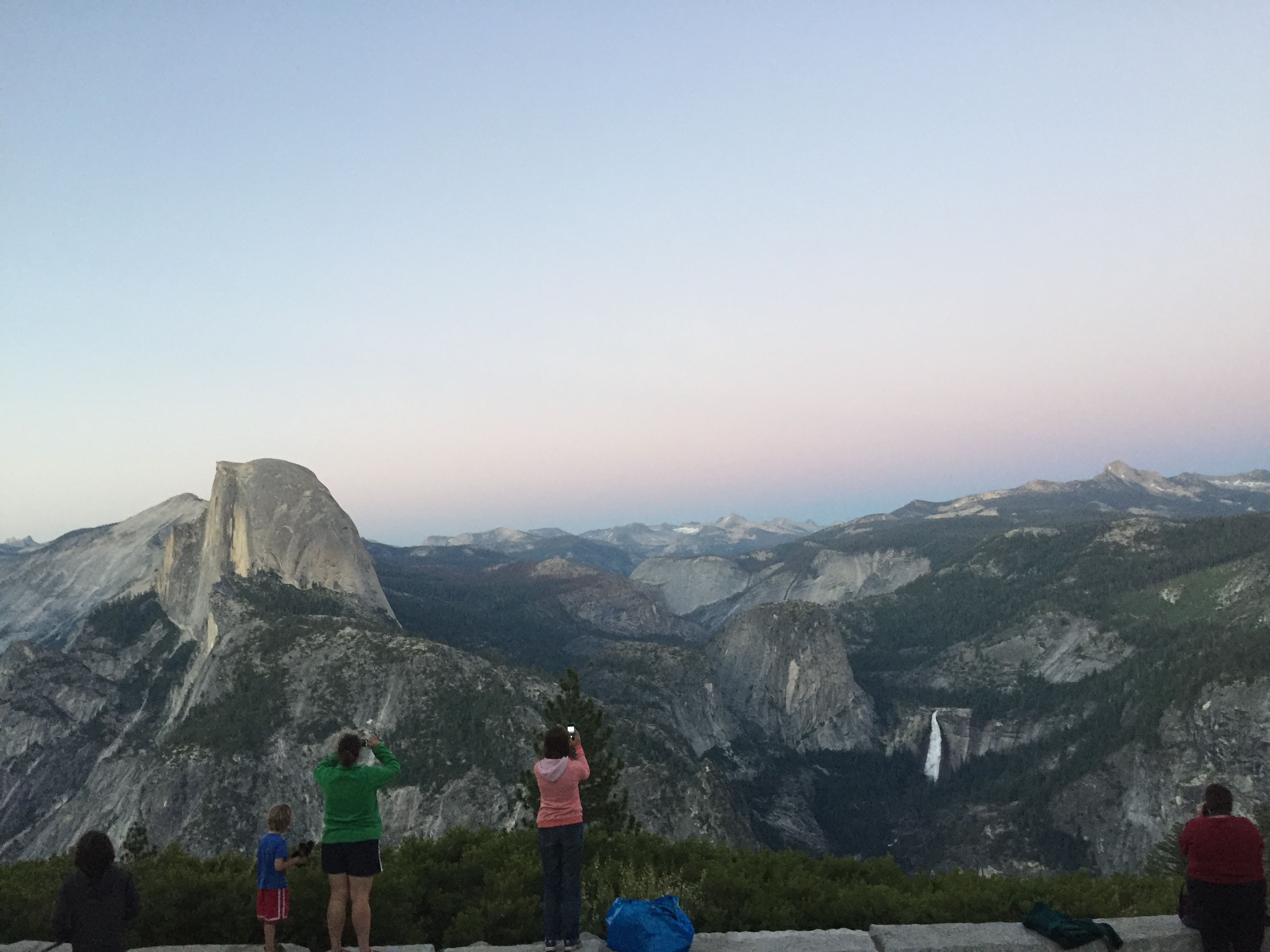
    Like millions of people I am in awe of the Sierras. Each summer, our family vacations in Yosemite National Park. And each summer I seem to have a moment where the mountains sing a Sirens tune.

    • July 2015, wading through an Eastern Sierra creek in search of golden trout. One hand on my fly rod and the other used to stabilize myself scrambling over slippery rocks. In the middle of the creek, out of breath, I sat down and heard nature’s song. Miles from no where and completely alone yet overcome with a profound sense of connection.
    • A couple summers ago I was swimming with my kids in the middle of the Yosemite Valley when for some reason we all stopped. We held still, staring at the sheer face of El Capitan, barely noticing as a family of ducks swim by.
    • This summer I woke up early thinking I’d fish the creek by our campground. Heading down a path that disappeared into deer trails, scrambling across offshoots, over loose granite, I was so overcome with discovering beauty around the next bend that I never cast a single line.

    This is why so many call our national parks our greatest invention. Countless miles of wilderness, owned by everyone for everyone to enjoy.

    New York Times columnist Nicholas Kristof wrote a piece recently highlighting both the wisdom of our forefathers to set aside this land and the potential Congress has to widow our greatest invention to state control:

    In an age of enormous inequality, these public lands are arguably our most democratic space. Wealth may buy political influence such that to speak of “one person one vote” seems naïve and incomplete. So the most democratic place in America is perhaps not the voting booth but rather our shared wilderness, as long as we sustain it.

    Source

    Here, you find yourself in places where everything moves around and yet you’re overcome by the stillness. In an age of 24/7/365 connectedness there’s something profound in being disconnected from technology and intertwined in wilderness.

    The Rare Gem of an Open Mind

    Like millions of families school is starting for the McLane kids. Paul started 8th grade last week. Megan (tenth) and Jackson (kindergarten) will start next Monday. As Summer fades from our present reality to our memories new realities are setting in… back-to-school shopping and homework replace spontaneous trips to the beach or lazy walks to Yogurtland.

    New-ness for school also means the return of people into our lives who want to get to know us better or, far worse, already think they know us based on how we look or how we dress or where we live.

    I like the insulation Summer provides our family. Kids invite people into their lives who know them. They don’t have to bother with people who don’t know them or don’t like them. There’s no drama.

    But school forces us back into a different, more democratic, reality.

    We ask our kids to start the school year off with an open mind. You might get assigned to a class or a teacher you don’t like. Or you might have to sit next to someone or play on the playground with someone who doesn’t like you. Approach those moments with the same open mind we approach our visits to Yosemite. You never know what you might discover around the next bend? It might be that what you don’t already know is better than what you’ve already experienced.

    That’s all fine and dandy until reality sets in. As much as I’d like to think our family celebrates open-mindedness, we probably don’t do it very well. Certainly, each day we experience people who are closed-minded.

    Truly, an open mind is a rare gem. Like a diamond or emerald, it’s something you have to protect because everyone is out to use it for their own purpose.

    Ascending Mount Assumption

    Like millions of people I struggle with the assumptions people make about me. (and my family) You can sometimes see the calculations flashing before their eyes. “An overweight white guy, goes to church, drives a minivan, has kids. He must….

    Don’t assume anything. When you do that it’ll make an ass out of you and me.” I remember my 7th grade English teacher saying that as the class erupted in giggles. She was teaching us to spell the word correctly. But that phrase is also full of truth.

    One of the great challenges we all face is our own assumptions.

    Like navigating an Alpine meadow trail to the next set of mountains we each ascend Mount Assumption every time we try something new or meet someone new. We assume things that must be true of them because of what they look like, what language they speak, where they went to school, how they dress, the color of their skin, their gender, on and on and on. Likewise, they also assume things about us.

    The challenge we all face is ascending the mountain of your own assumptions to get to the heart of the matter. Not all people are ___. Not everything thinks ____. To get there we have to open our minds to new realities.

    To find common ground we must both ascend Mount Assumption, on our own paths and at our own pace, to meet at the summit. At the summit, now clear of the hard work of our ascent of Mount Assumption, we truly see one another. Together we forget about the process and enjoy a shared experience.

    But this is hard work. It’s a test of character. And failure is an option.

    But, just like in hiking, once we’ve gotten to the top the first time it’s easier the second because you know what to expect!

    And, I believe, it’s the people who will embrace this hard work– Ascending Mount Assumption– who will truly help us regain a society of shared trust. See, just like our shared ownership of the National Parks binds us together the continual hard work of ascending Mount Assumption to embrace the Sirens tune of a share experience becomes our own Greatest Invention.

  • Emma Dryer is Smiling

    Emma Dryer is Smiling

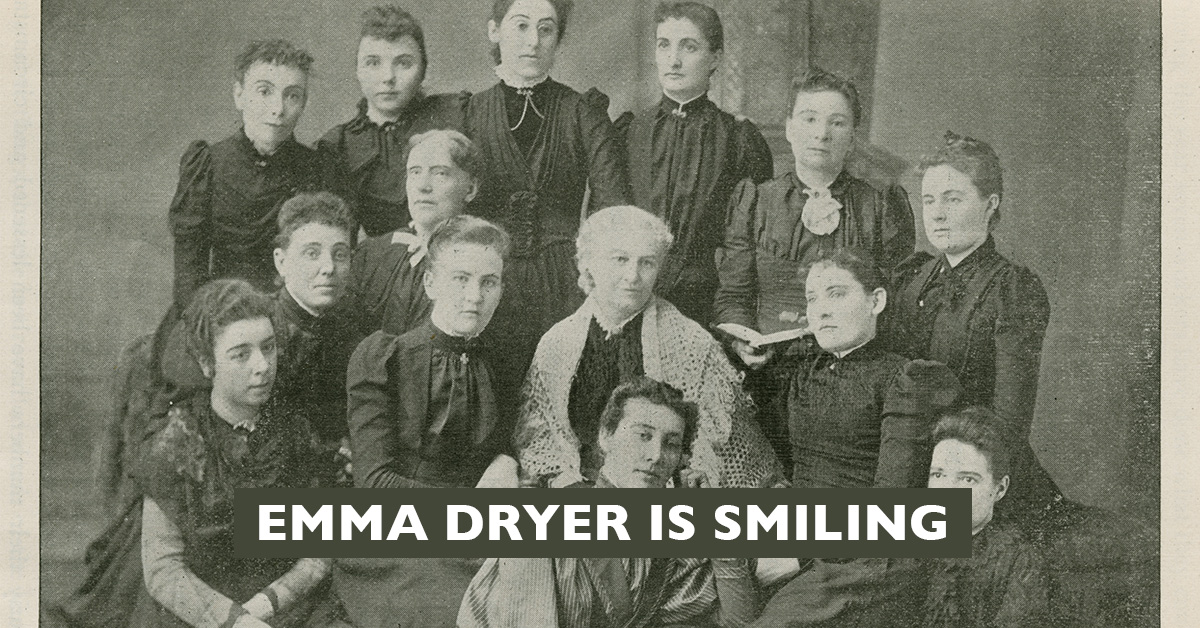
    About 3 years ago I wrote a blog post that was widely read entitled, “Moody, You Are Worth the Fight.” In this post I addressed Moody’s demarkation from their historic posture on women in ministry. While the school bears the name of 19th century evangelist D.L. Moody, the Institute was the brain child of a woman named Emma Dryer. Moody Bible Institute was among the first colleges in Illinois to admit women, it’s mission was to create a place for laypeople to get trained to serve the local church and mission field.

    In it’s day this was progressive. Very few bible colleges or seminaries admitted women at that time. And while throughout Moody’s history it’s been known as a conservative place, practically speaking it’s also been a place that fostered great amounts of theological diversity among it’s student body. In my time, I shared the classroom with many classmates from evangelical and non-evangelical backgrounds who both thrived there. (And we all struggled through the rules.)

    But this changed abruptly more than 100 years after Moody’s founding. For reasons unknown to me, MBI formally adopted a view on women in ministry that excluded them from preparation for pastoral ministry. This went as far as reshaping degree programs specifically to limit women’s participation. For example, in 1995 the youth ministry program was moved from the Pastoral Ministries department to the Christian Education department. Why? So they could continue to prepare women to serve in youth ministry while restricting women from being in classes with Pastoral Ministries majors.

    Here was the crux of my complaint in that 2013 blog post:

    So I am continually, out of love and respect, asking Moody to change its policy. I’m asking that they allow women to fully participate in every undergraduate and graduate program. I’m asking that women be allowed as fully registered participants at their annual Pastor’s Conference. I’m asking that they invite women pastors to speak and train both men & women at the conference.

    And yes, I’m asking Moody to re-embrace their leadership position on the role of women in the church which proudly supported thousands of opportunities for women to serve the church to their fullest giftedness from the late 19th century until the end of the 20th century.

    Until that time, this proud alumni respectfully stands in protest.

    [No need to read between the lines about what that means… I’ve withheld my support for MBI as well as financial support]

    Good News from LaSalle Boulevard

    After I wrote my original post I had several pleasant exchanges with some higher-ups at Moody. I felt like they heard me. But ultimately the conversation died off, they stopped responding to me, and I moved on.

    As promised, I respectfully stood in protest. I have deep love and respect for Moody but I felt like they were wrong.

    Change #1 – Women are now admitted to all majors

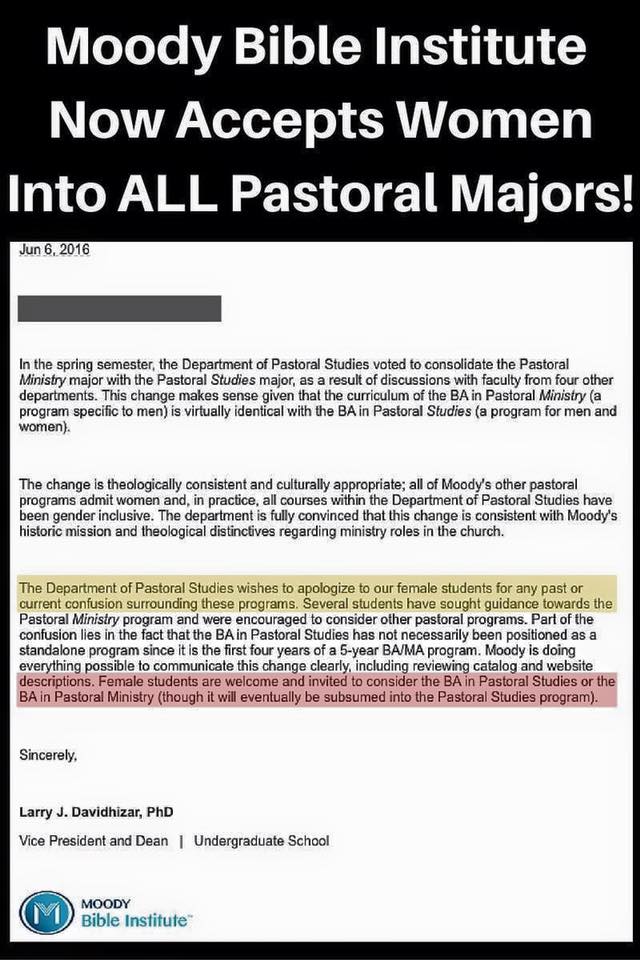
    Then yesterday, a fellow alumni and long-time friend posted a screenshot on my Facebook wall, asking if I’d seen it. It was a letter from Larry Davidhizer, a VP at Moody and man I casually knew at our church in Oak Park, letting students know that there had been some changes to the Pastoral Ministries major, clarifying that women were now invited into the Pastoral Ministries major, which is being combined into the Pastoral Studies major. The letter even includes an apology to current and former female students over the lack of clarity.

    Here’s the letter:

    13327605_913959872060194_5574296267060720397_n

    When I read that I was completely shocked. I didn’t think this would happen. Ever. I even doubted the truth in the letter posted, so I sent some emails and posted it on Twitter. And, to my surprise, they confirmed it as true.

    Translation for non-MBI folks… that’s Moody Bible Institute in Chicago, their campus in Spokane, Moody Theological Seminary Chicago & Michigan campuses, and Distance Learning. Basically, that applies to all majors at the undergraduate and graduate level. Women are in! Title IX compliant and everything.

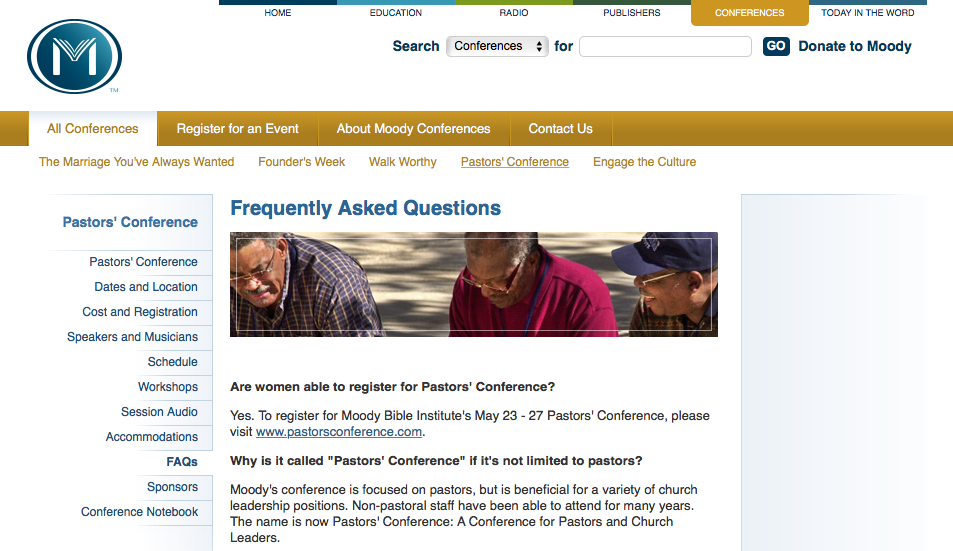
    Change #2 – Women are now invited to fully register and attend the annual Pastor’s Conference

    This might seem like a minor thing but I think it’s big. For whatever reason Moody’s annual Pastor’s Conference— which I’d snuck into a couple of times as an undergrad and found very encouraging- didn’t allow women to register. Spouses were invited to come to main sessions, as guests, during the main sessions. But women were prevented from registering independently or attending the breakout sessions and seminars.

    That’s no longer the case. Women are now invited.

    Screen Shot 2016-06-08 at 12.36.10 PM

    What Hasn’t Changed?

    To be honest, it’s not clear to me if Moody has walked back from their official complementation position or if they’ve merely gone back to their historical non-position position on women in ministry. To me, as an egalitarian it’s almost makes no difference. Ultimately, students will make their own choices and these changes create space for those differences to co-exist.

    The victory, in my opinion, is leaving those choices more on the movement of the Holy Spirit than as an institutional decision. A place like Moody does best, in my opinion, when it sees itself as preparing graduates to serve the local churches, ministries, and missions and worse when it tries to hold the line of a specific position within the broader evangelical spectrum.

    Not Taking Credit, But Saying Thanks

    I have no idea if what I wrote 3 years ago made any difference. I know that there are lots of people who made similar complaints as I did. So I’m not making any claim (or blame!) to these changes. Certainly, besides a few pleasant conversations– mostly by email– I’ve had very little contact with Moody about this.

    But I do want to say thank you to whomever pushed to make these changes. I feel like they are reflective and honoring to the founding of the Institute and likewise reflect current realities for the ministries Moody claims to be preparing graduates to serve at.

    Bit-by-bit, the Institute is addressing my concerns and regaining my support.