Category: Christian Living

  • Long-term Missions

    https://www.instagram.com/p/BE1UZrJsjqe/

    Last weekend Kristen and I volunteered to help with a clean-up project in our neighborhood. I should clarify… Kristen volunteered and I tagged along. 

    As we were raking and hauling load after load of sticks, rotting organic matter, homeless paraphernalia, and pine needles to a 10 yard bin to be hauled away I got to thinking…

    In some ways, as an American, it’s pretty easy to wrap your mind around a short-term mission trip. (I’m a huge fan of short-term missions!) In a way… it’s quite a bit harder to maintain a posture that living in your neighborhood is a long-term missions project.

    Let’s unpack that…

    We live in a society where affinity is king. We chose to see the things we chose to see because we like something. But things that we don’t care about we just don’t see. Our eyes see so many things on a daily basis that we tune almost everything out or else we’d go mad from overstimulation.

    So, by default, we look after our own preferences as a primary thing. Things that we have an affinity for get unlimited attention. And we look after everything else as a secondary.

    But, as Christians, we are children of a Kingdom where proximity is king. Jesus didn’t say, “Love the people you have something in common with as yourself.” He said, “Love your neighbor as yourself.

    Each day we have to fight what our culture has taught us from infancy. Sometimes we need to divert our eyes to ignore the things we have an affinity for in order to see the things as a neighbor.

    Jesus is asking us to empathize with the needs of our neighborhood.

  • Is Pietism Good News in a Post-Christian Context?

    Is Pietism Good News in a Post-Christian Context?

    I posted some thoughts on Twitter this morning that I think deserve some unpacking, if even for myself.

    The Inciting Question

    There is a central, driving question that I think many people outside of the church are asking and those in church leadership are fervently avoiding: If you are inviting me into a life with Jesus is that life better than the one I’m leading without Jesus?

    “Does it work for you or are you just trying to get me to come to your church?”

    Actually, I don’t just think people are asking that question in an academic-y, wondering kind of way. Real life people are asking me this question.

    Statement of Thesis

    What I find, from outside of church employment, is that HOW I live the Christian life is much more important towards reaching people than WHAT my religious practices actually are.

    This causes confusion because when I’m talking to friends they like the way I live, maybe even aspire to it, but some of the “HOW I live” stuff is oppositional to the people on the platforms at churches. I’m living a life they want but they know that if they step into a church the model for them looks very, very different.

    Statement of the Problem

    This is what people see. They are struggling with working too much. They have an inborn desire to connect with God (see Romans 1) but the life they see modeled through church is not a life they see as better, it’s really a life indifferent than what they already know.

    In fact, they think, asking them to follow Jesus and get connected with a church is actually asking them to become busier and have even less margin.

    They want a life worth living and the church seems to offer an alternative busy life not any better than the life they are already living.

    In other words, if the Gospel (Good News of Jesus) being offered by the institutional church that people see isn’t really “good news” to them… why bother?

    Obviously, the answer is… they don’t bother.

    Where Does This Come From?

    Theory One – The church is answering a question no one is asking

    Back in the day, Seth Godin argues, advertising and marketing focused on features and benefits of products. The idea was that people carefully considered the best product before making a choice. But that all changed in the late 1980’s and 1990’s with Nike’s “Like Mike” campaign. Successful marketing became about identifying with a brand, people didn’t buy Jordan’s shoes because they were the best, they bought them because they wanted to be like Mike. A current version of this might be Dos Equis “Most Interesting Man” campaign.

    Is Dos Equis the best beer? [No, they don’t win awards. It’s just cheap Mexican beer.] That’s not the point of the campaign. The point is that interesting people, people with swagger, drink Dos Equis.

    Church leadership is often stuck in this pre-1990’s marketing mindset. Programmatic approaches are presupposing that people are looking for the best church. It’s a fundamental disconnect.

    People make a choice. They go to a church they want to identify with. And, interestingly, church insiders will openly tell you where they are in opposition to their church because they might want to be identified with it, but not everything it stands for. So you’ll hear church attendees say, “I got to X church but I struggle with their position on women in ministry.”

    But, when you’re asking someone to identify as a Christian they look beyond the activities of the church, they look at the people on the platform… who are literally “above” the people in the pews. (As Dan Kimball pointed out 15 years ago… there’s a reason you sit below the person on the platform. It’s not so you can see, it communicates subconsciously that you are below them and you have to “look up” to hear from them.) And the people I talk to? They look at those who work at churches as workaholics, whose life revolves around their work, who have very little social life, whose margin is forced or non-existent… and they think that they are living a better life without Jesus.

    The programmatic church is based on felt needs of insiders. But outsiders are asking a question from higher criticism… “Is the life they are asking me to live better than the one I’m currently living?

    Theory Two – Programmatic church answered a different question for a different day

    spenerFor centuries the church offered few programs. The religious life of pastors looked very different from the one of today. Pietism brought into the church the idea that walking with Jesus meant being involved at church outside of the worship service. And, for a long time, this was a good thing.

    But in a post-Christian world, the churches programmatic approach offers very little to someone that they can’t get elsewhere. I don’t need the church to provide a social structure, I have one already. I don’t need the church to provide daily religious activities… I’ve got Google, I can find that if I want it. I don’t need Christian music, I can find Jesus in the art of the world just fine. On and on.

    Am I right on this? I don’t know. But it’s what I’m thinking about this morning.

  • We is Better Than Me

    Sin divides us, Jesus unites

    I’m tired of the divisions. I’m sick of divide and monetize.

    I’m ready to be a part of something where “we” is better than “me.”

  • The Unmoored Life

    The Unmoored Life

    The Word became flesh and blood,
        and moved into the neighborhood.
    We saw the glory with our own eyes,
        the one-of-a-kind glory,
        like Father, like Son,
    Generous inside and out,
        true from start to finish.

    John 1:14, The Message

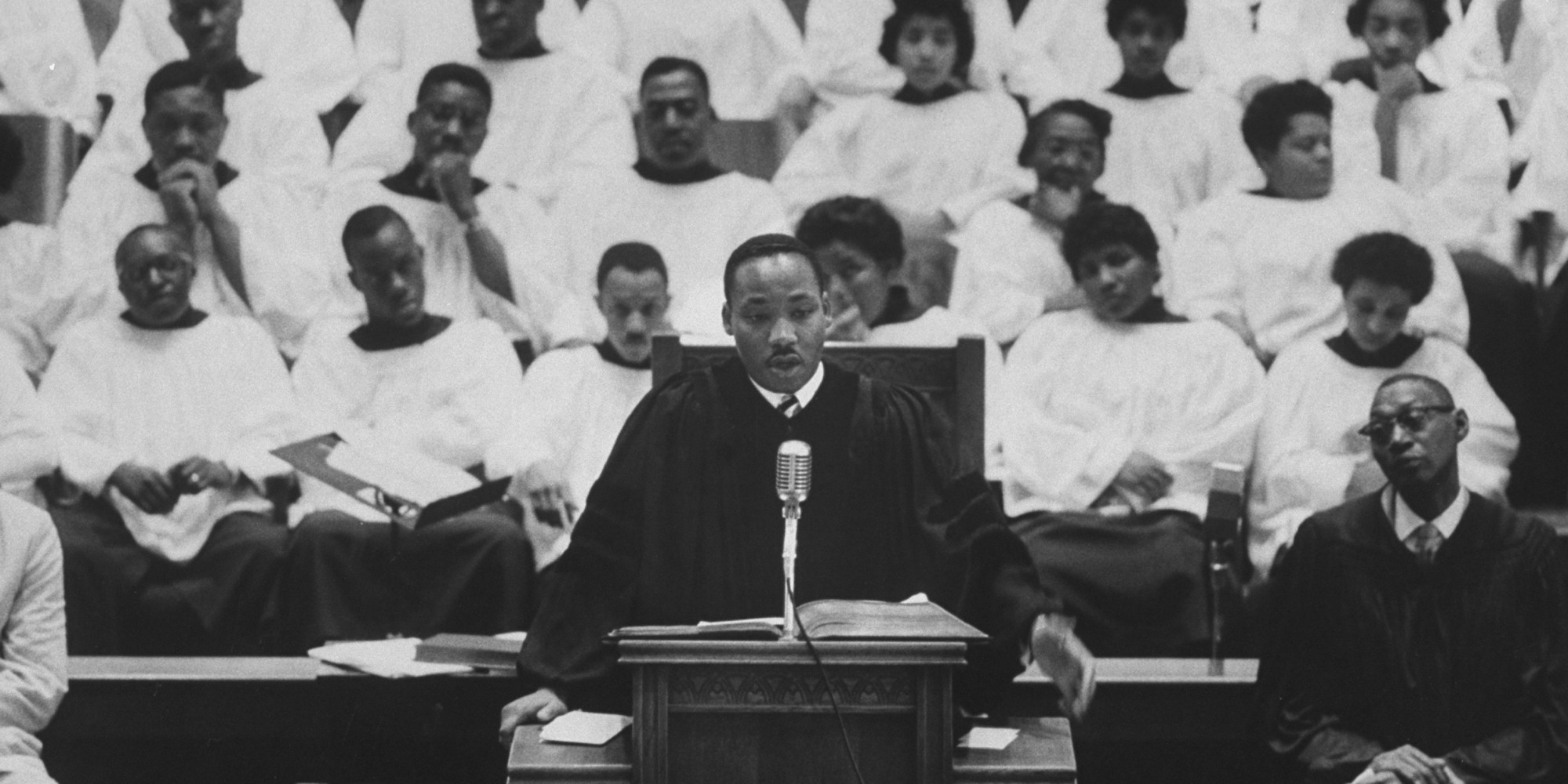
    Dr. King’s life reminds me that vocational ministry isn’t limited to church employment. Our calling is bigger than a job.

    The incarnation of Jesus takes the Good News preached in our pulpits and invites us to live it out as good news in the neighborhood.

    The Unmoored Ministry

    It’s been several years since I last worked in a church. It’s a funny thing… you spend a decade pursuing one thing [a career on church staff] and then God invites you to explore something entirely different. [a career serving the church outside of church employment]

    If I’m honest I’ve not really recovered. I feel “on purpose” in my work but not quite in the same way as every day grinding it out on staff. And as I’ve written before this sometimes leaves me feeling disconnected and lost. “What am I doing here?” That’s not an unusual question for a Sunday morning. The answer is unsettling: “Just sitting here in this chair, counting down the seconds until it’s over.”

    For me, that’s where Dr. King provides some inspiration.

    The things we celebrate about Dr. King? Most of them happened when he answered God’s vocational ministry calling by doing something else. Yes, some of that happened when he was leading a congregation. But the big things? They came later.

    As I push through a season of feeling a bit unmoored that’s good news to me.

    Yes, working in a church is honorable and good. I have many, many friends who work on staff at a local church.

    But yes, serving God in whatever you do? That’s important stuff too.

    I need to reflect and remember that vocation is different than work. My vocation hasn’t changed. In fact, I might just be leaning into it harder than ever.

  • Rubberneck

    Rubberneck

    No, rubbernecking is not some new way to make out that you’ve not yet tried. Instead, it’s the reason it took 11 hours to drive home from San Jose yesterday whereas it took us 7 hours to drive to San Jose on Friday.

    Rubbernecking is the human inclination to slow down and look. To scornfully, guiltily gaze at the folly of others.

    We really can’t stop ourselves from looking. Whether some poor soul has gotten a flat tire or their baby blew out a diaper: We must slow down enough to look.

    We whisper to ourselves…

    • I wonder what happened? 
    • A flat tire? What an idiot.
    • [Looking at a fender bender] I wonder what happened? 
    • [Driving by a bad accident] I shouldn’t look. Kids don’t look. Look the other way. [Meanwhile, you always look.]
    • I can’t believe all of these people slowing down to watch a guy change a diaper. Morons. 

    It’s morally wrong to look, we tell ourselves. We curse the rubbernecker for slowing everyone down just so they can look and they should just be minding their own business anyway.

    And yet we are the rubbernecker. Our culture sends us one message… “Get there in good time!” while our nature forces us to cause the problem, “I feel guilty or looking, but I can’t stop myself.

    The Good Samaritan

    A man was going down from Jerusalem to Jericho, when he was attacked by robbers. They stripped him of his clothes, beat him and went away, leaving him half dead. A priest happened to be going down the same road, and when he saw the man, he passed by on the other side. So too, a Levite, when he came to the place and saw him, passed by on the other side. But a Samaritan, as he traveled, came where the man was; and when he saw him, he took pity on him. Luke 10:30-33, emphasis mine

    Some say the Bible is irrelevant to daily life today? Dude, Jesus is talking about rubbernecking. That’s quite literally my life on November 29th, 2015!

    He went to him and bandaged his wounds, pouring on oil and wine. Then he put the man on his own donkey, brought him to an inn and took care of him. The next day he took out two denarii and gave them to the innkeeper. ‘Look after him,’ he said, ‘and when I return, I will reimburse you for any extra expense you may have.’ Luke 10:34-35

    See! Jesus said “Go and do likewise… DO NOT SLOW DOWN TRAFFIC TO LOOK!!!! Rubberneckers are the devil incarnate!

    Oh wait. He didn’t say that at all. While he poked fun at the rubbernecker scornfully, careful to insert the very people he’s talking to into his parable as the example of what not to do just to make sure they understood he was talking about them– he said that the polite inclination of minding your own business and driving by was also morally wrong.

    We shouldn’t rubberneck. Nor should we mind our own business.

    We should stop the car and help.

     “Which of these three do you think was a neighbor to the man who fell into the hands of robbers?”

    The expert in the law replied, “The one who had mercy on him.”

    Jesus told him, “Go and do likewise.” Luke 10:35-37

    Go and do likewise.” when you see a dad changing a poopy diaper on the side of I-5… stop and help. At the very least take the dirty diaper in your own car! Why? Not because it’s convenient. Not because it’ll get you there on time. Not because

    The Counter-Culture Revolution of Jesus

    When a 7 hour drive is turned into an 11 hour drive because of rubbernecking drivers you start to wonder, “Where is Jesus in all of this?”

    And the reality is…. He’s right there on the side of the road waiting for you to stop. To get involved instead of driving by. “It’s not good for man to be alone in his car, listening to podcasts and staring at his clock.

    This is the revolution.

    Culture says mind your own business.

    Culture says that the safest thing to do is to stay in your own car.

    Culture says don’t stop.

    Culture says don’t even slow down.

    But Jesus says stop and help.

    Embrace his timing.

    Embrace his agenda.

    Don’t worry about yourself or your own timeline.

    Worry about others. Worry about God’s timeline.

    Go and do likewise.

  • The Second Act

    The Second Act

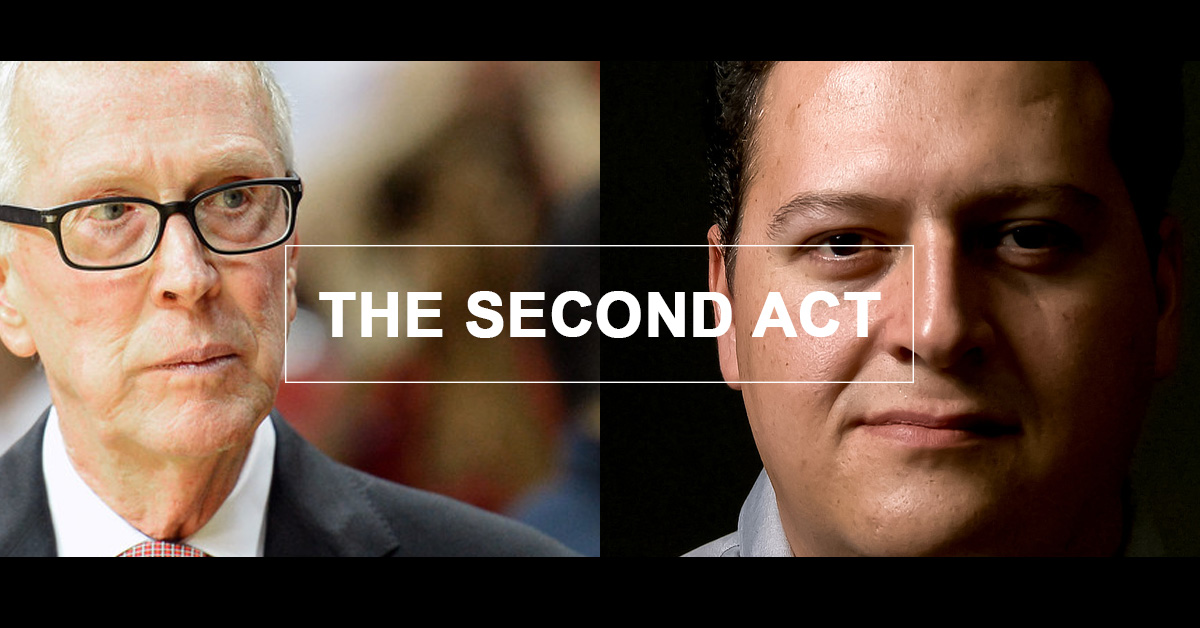
    Sebastian Marroquin

    Sebastian Marroquin is the son of one of the world’s most notorious criminals, Colombian drug baron Pablo Escobar. At the height of his powers Escobar was said to be the seventh richest man in the world. And he controlled up to 80% of the world’s cocaine trade. His unbelievable wealth and power were only matched by his brutality – he was responsible for thousands of deaths and kidnappings during the ’80s and early ’90s – a period when his cartel terrorised Colombia. Sebastian told Outlook his memories of growing up in the palatial Escobar family compound, Hacienda Napoli.

    Source

    You can’t listen to this interview and NOT hear the words of a forgiven man:

    • “I have been fulfilling the second promise instead of the first.”
    • “I created the documentary because I believe in forgiveness and reconciliation.” 
    • “It wasn’t safe for me to come back to Columbia… I took that risk because I thought peace in the country was much more important than my own life.”
    • “Thank God, I could start from zero. I am free of the past.” [On not having any of his father’s money.]
    • “I never hated my dad… I love him unconditionally. I am not his judge. I am a part of him. I was his son, one of the most important people in his life.”
    • “My dad was one of the best dads. But he was also one of the most dangerous bandits in the world. I have to live with both facts.” 

    Steve Fisher

    To some, Steve Fisher is most famous for having coached the Fab Five, for Chris Webber’s timeout, and for getting fired from Michigan when it was revealed that some members of that team were being paid by boosters.

    But to San Diego, he is known as the man who put San Diego State basketball on the map. He went from giving tickets away all over town to the hottest ticket in town. The school is entering it’s 5th straight season of selling out it’s 12,414 Viejas Arena before the season begins.

    At the same time, SDSU has transformed itself from a fallback school of commuter students to a top 100 research university bursting at the seams. There’s a direct connection between success on the hardwood and success on the Mesa.

    Second Acts

    It’s easy for your life to get defined by your first act.

    Sometimes, as in the case of Sebastian Marroquin your first act is defined for you— you’re born into a notorious family. But for most, it’s not that of a drug lord– but it might be a family history of divorce, addiction, abuse, or poverty that defined your first act, you were born into it.

    But for still others, like is the case with Steve Fisher, you might have played a role in your own first act failure. [To be clear, Steve Fisher was never tied directly to what happened at Michigan. But we can all agree that he somehow played a role. At the very least he was responsible for the actions of his team.] Or for still others, there is no doubt in your defining first act role— you were the addict, abuser, unfaithful, or carried the bad habits that lead to a life of poverty?

    In your first act you experienced failure.

    You were the bad news.

    Yet, when this happens, you are left with a choice only you can make.

    Are you going to allow your life to be defined by your first act or are you going define yourself by your second act?

    Some remain defined by their first act failure their entire lives. But other, a small percentage, get up… dust themselves off… and create a strong second act.

    This is, in Christian terminology, the crucified life.

    Therefore, if anyone is in Christ, the new creation has come: The old has gone, the new is here! All this is from God, who reconciled us to himself through Christ and gave us the ministry of reconciliation

    2 Corinthians 5:17-18

    Will you be defined by your first act or your second?

  • Slow Your (devo) Roll

    Slow Your (devo) Roll

    “You better slow your roll, homey.”

    Before hearing that phrase while waiting in line at Home Depot the other day, the last time I heard that was probably 10 years ago.

    Slow your roll.

    You’re a bit out of control.

    Chill out.

    Relax, what’s the rush?

    Slow down.

    Devotions

    The idea of a daily devotional goes back to the Reformation. For centuries many Christians went to daily mass, observed the hours, or similar practices.

    The Reformation marked a turn from spiritual practices done largely in community towards practices that were more personal than communal. Private Bible ownership was extremely rare prior to the Reformation. And personal Bible study was largely frowned upon… seen as potentially dangerous even since you didn’t have a community of people or a religious leader to help you.

    All of this has shifted, of course. A daily devotional is seen as a measurement tool that you are serious about your faith. You’ll hear people say things like, “My life was spiraling out of control a bit. But then I realized that I had just gotten away from my daily devotions. I fixed that and things have gotten better.” Is that truly a cause and effect? Like, does God punish you for not doing a personal Bible study every day? And does God make your day more smooth if you spend 30 minutes reading the Bible?

    Of course not. Those things aren’t mutually exclusive. Jesus’ love for you is not conditional, nor is God’s benevolence.

    A daily reading of the Bible or reading a devotional is just fine, I’d even say it’s good. But it’s not a biblical command. Millions of Christians are enjoying heaven right now having never done a single daily devotional. None of the Apostles read a single line of My Utmost for His Highest. None of them even owned a Bible! (And none of them ever said, in their lifetimes, “Open your Bibles to John chapter three…“)

    Slow Your (devo) Roll

    I’m not anti-devotional or daily Bible reading. I’m for it. It’s something I’ve practiced for decades now. So please don’t misread me in that.

    But I do want you to consider slowing down. I really think one of the challenges we are all facing is that we’ve become consumers of the Bible and not recipients of the Word’s revelation.

    As Christians, we believe every Word is inspired by God. Of all of the things God could write down for us to have… these 66 books are it. In some ways, it’s so giant. But in light of God’s omniscience it’s the summary on the back of a CliffsNotes, right?

    Last night, one of our exercises in our  high school small group was to read Proverbs 21 aloud. As Keith read my 2004 brain kept thinking… “Slow your roll, homey.” Actually, I stopped him over and over to say things like, “Whoa… let’s think about that for a second.” There was so much in there to contemplate… moving so quickly kind of devalued the wisdom in each proverb. It made my head spin!

    We can’t just consume the Word of God! A devotional life isn’t just checking off a box to say, “Yup, I’m good to go. Spent some time in God’s Word this morning.” It doesn’t work like that. Instead, sometimes  we need to slow down… S-L-O-W-W-A-Y-D-O-W-N. We need to make room for digestion, contemplation, contextualization, and application. To use a theological term we need to leave room for revelation. The Holy Spirit can’t do His thing if you don’t make room for Him to do His thing.

    So maybe instead of a daily devotional you need a weekly devotional? Maybe instead of meditating on a new passage of Scripture every day you need to spend a month on it? Maybe you don’t need a daily Bible reading, maybe you need to download the message from Sunday and listen to it over and over again? (You know, the Holy Spirit works through your pastor, right?)

    Or maybe you need to keep going back to the same passage until it sinks in, until it gets past the callouses and into the meat, until it literally becomes part of you? Maybe– though Christian culture tells you that you need to move on– you need to resist that temptation. Maybe you need to stop moving so fast?

    Maybe you need to slow your devo roll, homey?

    Anyone who listens to the word but does not do what it says is like someone who looks at his face in a mirror and, after looking at himself, goes away and immediately forgets what he looks like. But whoever looks intently into the perfect law that gives freedom,and continues in it—not forgetting what they have heard, but doing it—they will be blessed in what they do.

    James 1:23-25

  • Other People’s Sin

    The past few months have been a reminder that sin splatters like a can of paint falling off of a shelf.

    It’s messy. It gets on you. But it also sprays out indiscriminately on things near and far, related and unrelated.

    We tend to think of the impact of sin as being mostly personal. Not so.

    The Example of Porn

    When a person looks at pornography they are committing a personal sin that is sexual. Jesus said:

    You have heard that it was said, ‘You shall not commit adultery.’ But I tell you that anyone who looks at a woman lustfully has already committed adultery with her in his heart.

    Matthew 5:27-28

    Yet that sin has a spiraling impact beyond that person’s personal sin of lust…

    • Lust impacts sexual relationships with a spouse, future spouse, other people in your life, etc.
    • Looking at pornography generates revenue which, in turn, generates more pornography.
    • The pornography industry exploits people by degrading and objectifying a person for financial profit… this is also a sin.
    • The people participating in and profiting from pornography are having their sin encouraged. Even if it’s consensual, their acts are sinful.
    • Of course, most would argue that the coercion involved in the creation of pornography is sexual exploitation. That doesn’t even include the rampant amount of sexual exploitation that generates pornography as a direct result of threat or force.
    • The “normalization of pornography” in a society fosters the idea that it’s OK to objectify people sexually since “everyone does it.” When we get used to the idea that it’s OK to commercially sexually exploit someone, we look at things like prostitution as a “victimless crime.” As if, as is the case just 1000 feet from my home, a 16 year old girl who has been trafficked to the United States by a gang and subsequently sold as a slave and is forced on the street as a prostitute isn’t a victim of an entire society who looks at her as doing it by choice.

    As you see demonstrated… the “personal sin” of someone looking at pornography isn’t so personal at all. It’s like a paint can falling from a shelf.

    Closer to Home

    Here in McLandia, the past 2 months the trajectory of our household has been dominated by the impact of sin from a person we don’t even know, we’ve never met, and has no idea the chaos they’ve created.

    It’s caused untold amounts of stress, lost sleep, anxiety, inability to concentrate or work at a normal rate, and a whole lot of other things. Chaos.

    And you know what? The other person involved likely has no idea.

    We’ll be fine. We are fine.

    But dang, we got a lot of paint on us on this one.

    There’s no such thing as a little sin. Even a little sin has a lot of impact.

    Instead, pursue righteousness and let your life be good news in the neighborhood.

  • Dancing with the Fantasy

    Dancing with the Fantasy

    Cynicism takes root when you disengage, when you engage you reside in the fantasy.

    Let me first be careful to define what I mean by “fantasy.”

    Fantasy isn’t the same as fallacy. I mean fantasy in a more emotional sense. Like when you’re on vacation somewhere amazing you are in a fantasy that everyone is having as good of a time as you are. You are able to relax, you pour into your loved ones in a way you couldn’t with the normal daily pressures of life, you have no care or understanding about the day of the week, and you are under the assumption that everyone around you must be as relaxed and having the same good time you are. That’s the fantasy. But the reality is that for most people it’s just a Monday. There’s nothing special going on, at all. The lady cleaning your hotel room or serving your family dinner or the guy who drives your shuttle or the myriad of people behind the scenes making your trip great– it’s a work day for them.

    You are the puppet and they are pulling the strings of your fantasy. You gleefully and willfully shut off your mind to even think about those moving parts. You are living the fantasy and it’s good.

    A fallacy isn’t that at all. It’s when you know you can’t separate what you know is going on behind the scenes and you go through the motions anyway. It’s taking your family on a great vacation, watching them live the fantasy, but in the back of your mind you know you are running from your problems… your car is getting repossessed while you’re on vacation or you’ve just lost your job but haven’t told them because you want them to enjoy the trip or you’ve got cancer but haven’t told your family.

    And so you fake it. You let those around you believe in the fantasy but for you it’s a tortuous fantasy, a lie.

    Ministry is Complicated

    Ministry life is complicated. We all know that. We know too much to enjoy the fantasy is quite the same way. We love our co-workers but we know their struggles, their weaknesses, and “what’s really going on” often takes precedence in our mind.

    Yet, we guide people to live in the fantasy. We even use language to describe it. We want people to be “in” and many churches have even used gambling language to ask people to “go all in” for our ministry. Having been part of both being in a church where people lived in the fantasy and been at churches where we saw people step into that happy place, it’s a beautiful and good thing. Entering into the fantasy allows God to work in wondrous way… things which shouldn’t be possible are and most importantly lives are changed.

    We ask people to embrace the fantasy that our church is “it” and the more they buy into the fantasy the more growth that can happen in their lives. (Just like on vacation, right? If you don’t buy into the fantasy you’ll never relax… and if you don’t relax you’ll never enjoy the experience. So you allow yourself to enter into it. It’s a willful thing, a social exchange.)

    This isn’t bad. We all do it. You can read through Acts and see this played out in the first century church. People dove into the fantasy! I mean, families sold everything they had because it was so good!

    But when it becomes a fallacy it is bad. Especially when it happens at church. When an inch below the surface lies conflict or staffing issues or hidden problems, the staff puts on a happy face and hopes people buy into the fantasy because they all know that it’s kind-of-a-fallacy. The children’s pastor has kids who hate them. The small groups pastor hasn’t been in a small group in 20 years. The youth pastor is a great manager but doesn’t really love teenagers, at all.

    People convince themselves that they love their jobs or that their motives are pure. Yet quietly, behind the scenes, everyone can’t wait for the pastor to retire. Or they’ve experienced the wrath of anger brought down on them by the board when they ask question or dream about things outside of the scope of the fantasy. They mistakenly wondered out loud, “What would happen if our church embraced all kinds of people from all kinds of lifestyles?” And once they stepped out of bounds of the fantasy they’ve experienced something darker… like seeing Mickey Mouse smoking a joint on his break at Disneyland… they’ll never be the same.

    In my ministry life I have a hard time embracing the fantasy because I know too many people who’ve have experienced the fallacy. Confessionally, I think half the time I’ve wondered if I was living in the fantasy or the fallacy myself. So when I go to church today I want to buy in but I struggle.

    I find it easy to disengage, therefore I find it easy to step back enough where I’m no longer inside the fantasy but am comfortable observing those outside while also observing inside those behind the scenes.

    On the one hand this is a valuable vantage point. One for which I’m thankful. I’m able to help those creating the fantasy see what is and isn’t working, what’s believable, what isn’t.

    But, confessionally, sometimes it eats at me.

    Just like at the end of the Wizard of Oz you’re left to wonder… would it have been better to not know? Or are you better knowing?

    For me, engaging in the fantasy is a choice. I chose it. I want it. I have decided that it’s not a fallacy. That my faith is real, that everything I know and have been taught is real.

    But it’s a rational choice.

    But sometimes? I just wish I could go back to not knowing.

  • In Pursuit

    In Pursuit

    Maybe you’ve heard about the drought in California? And maybe you’ve heard that weather experts are forecasting for an El Niño that should end the drought later this fall, perhaps the strongest El Niño in 50 years?

    Both trends have to do with ocean water temperature. While I’m sure there’s also impact of climate change most believe that there are natural and ancient cycles of ocean current temperature change in the Pacific where our normally cold coastal water, which creates San Diego’s temperate climate year-round, turns warmer every so often bringing moisture and rain to Baja and California.

    The water off the coast of California is significantly warmer than it should be, 5-10 degrees warmer than normal. One result of that is that this year’s inshore and offshore fishing is one for the ages. People are catching within a few miles of shore that are usually caught 100 miles offshore.

    For anyone who fishes the Pacific this is a season for the ages. No one knows how long it might last but the thought that fishing off of California’s coast may not be this good again in our lifetime has everyone pushing to get on the water.

    Innate Pursuit

    Over the past few months I’ve been drawn into this more and more intensely.

    • I’ve continued to fish in local bays for bass and other species.
    • I’ve gone on several shorter, half-day type trips onto the ocean.
    • I’ve acquired all of the gear to take my kayak onto the open ocean, making my first trip last Friday morning.
    • I’ve gotten more heavy gear suitable for offshore fishing.

    I have no idea what’s driving this.

    It’s coming from somewhere deep inside of me that I can’t quite explain.

    It’s innate. I can give you a lot of descriptions and justifications of why I’m into fishing right now, I could get Freudian and say it’s some connection to family, I could get mid-century pop psychology and say it’s about some midlife search for significance, I could get all Christianese and say it’s this or that.

    I don’t really understand the drive. But that’s what it is, it’s powerful, and–frankly– I don’t feel bad about it one bit. I love it!

    This past weekend, Paul and I took that pursuit to the next logical step by going on our first ever overnight fishing trip. We left San Diego at 10:00 PM on Saturday night, slept on board the Tribute for a few hours, and then spent all day Sunday fishing for bluefin tuna… a species that’s not normally seen in SoCal waters in the numbers and size that are being seen.

    We woke up before dawn yesterday, did one last gear check, and then fished from first light until the boat was full at about 1:00 PM.

    Paul was the first between us to catch a fish, landing his fish at about 8:30. You haven’t lived until you see you son reel in a 35 pound fish. (Half his body weight!) It’s a mano y mano battle. You are reeling hundreds of yards of line like mad and shuffling to stay in front of it while it’s trying to swim away. You tire the thing out to get it to finally come to the surface and submit to it’s fate. It was especially awesome that the entire crew and fellow fishermen cheered for him as his boat came on deck. “Yeah PAUL!” followed by fist bumps, chest pumping, pats on the back, and congratulations from every corner of the boat. I got to witness a moment of manhood in my boy’s that is one small step towards what’s to come in his life, and that was priceless.

    Throughout the day Paul and I lost a combined three other big tuna while the rest of the boat continued catching. I started to think I might not catch one myself and go home with stories of the ones that got away.

    But just as we were reaching the boats limit of 2 fish each, my reel started screaming, I clicked it into gear and it peeled away some line on the drag right away. Initially I thought I had a little guy as it allowed me to pull it near the boat quickly. But just as it was about 50 feet from the boat it went on a giant run, showing it’s strength. 30 minutes of fighting later the captain gaffed it and pulled it on board.

    No Pursuit, No Health

    As I laid in my bunk on the long ride back to San Diego I started to reflect on this fishing pursuit.

    Why am I paddling my kayak out 3 miles from the shore in La Jolla? Why did Paul ask for this trip for his birthday? Why did landing those fish feel so good? Why is this boat full of men and women doing the same thing?

    But that’s when it started to sink in. 

    We live in a society where things are upside down. Weber’s Protestant Work Ethic teaches us that virtue comes by unlimited hard work and frugality. So our culture tells us to feel guilty when we rest or do anything recreationally or maybe spend money unnecessarily.

    But laying in that bunk thinking about the day, seeing the pride from my son– a little swagger, and the pure joy on display on this boat leads me to conclude this: I have no guilt in this pursuit. In fact, I’m not worried about people who have pursuits. I’m worried about people without pursuits.

    People who convince themselves that their work is their sole passion scare me. I love what I do and am fortunate to have a career that reflects so much of who God has made me to be. But it’d be sad if that defined me wholly.

    I am more than my work. (Which I love)

    I am more than what people know me for. (Which is great)

    I am more than a dad and husband. (Roles I cherish)

    I am more than any label.

    I am more.

    I am made in the image of God, a God in pursuit of His children.

    I am made to pursue. And when I do? It reflects His image in me.

    To not pursue is to not reflect His image.