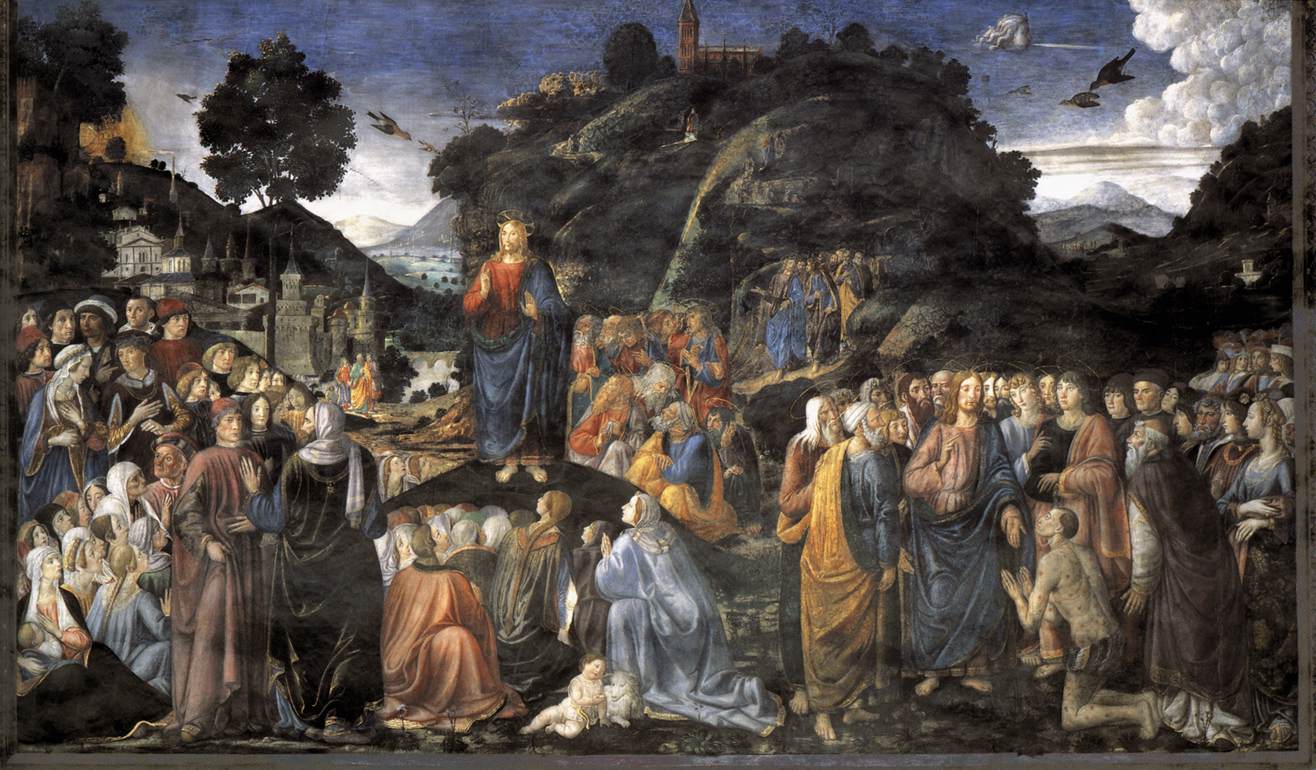
However, when I think of Saint Patrick, I think of one of the greatest missionaries to have ever walked the planet. Born in Wales, trafficked as a teenager and sold into slavery in Ireland. Patrick miraculously escaped six years later, then after a time of preparation felt called back to the island of his captivity as a missionary. During his lifetime, despite early persecutions, he was instrumental to the success of Christianity on the island. By the time of his death he had planted nearly 500 churches.
In honor of Patrick’s service, this is my St. Patrick’s Day Prayer for the American Church:
Loving Father, Creator and Sustainer of our land. You are our Compass, our Standard, our Protector, and sole Provider.
We are lost without you. In our own power we chose to make the Gospel about us. We are so busy being religious that we forget that it’s not only about us, it’s also about the lost.
We are lost without you. We cannot sustain ourselves. We cannot rule ourselves. We cannot protect ourselves. We cannot provide for our people alone. We need you.
Break our hearts, Lord. Help us to order our lives in ways that respect your Word.
We are thankful, God, for Patrick’s ministry in Ireland. You called him from bondage to reach his captors. Instead of resentment you, you filled his heart with love. Instead of a life filled with nightmares from his past, he fulfilled his dreams day by day in the light of day.
Raise up among us a new Patrick in our nation. A person to renew the heart of our nation for you. Millions among us have never heard Your Name nor felt Your presence nor tasted Your Grace.
Prepare a young man or woman set free by your Spirit, who knows no fear, who will escape their present bondage and yet return to reach their captors.
Awaken that person today, Lord. Echo Your calling in their ear. Begin in them an earnest desire to be filled with Your knowledge. Give them wisdom and understanding to penetrate to the marrow of our culture. Help them to cast out of our country far more dangerous realities than snakes.
Give them boundless energy and laser-like focus.
Open our ears, eyes, and heart to this new Patrick. Help us accept this person as Your servant among us.
We need you now more than ever. Save us from modern day druids, from those who make us serfs, and from those who force us to acknowledge their power over Yours.
Last year, Kristen and I made a commitment to grow organically or buy organically 25% of our families food. For us, that has meant starting and maintaing a garden.
A native suburbanite, I’ve discovered many revelations about my perceptions of a healthy church shattered by the realities of staying in tune with more agrarian things in my backyard.
The title of pastor is agrarian by etymology. To manage a flock is different than managing a business. Jesus could have chose to describe church leaders as business owners or organizational leaders… but instead Jesus chose an agrarian term, pastor.
Here are 5 things that gardens teach us about healthy churches:
Healthy organisms replicate. The hallmark of a good plant is its fruit. And the reason a plant creates fruit is simple: To replicate. Conversely, the mission of a church isn’t to grow infinitely, it’s to replicate and make impact on the community it serves. If it isn’t replicating (producing fruit) than it’s just wasting space. (Matthew 3:12)
In order to grow strong you must water & feed regularly. I need to make sure my plants have sun, water, fertilizer, (organic, of course) and good soil. In order for the church to be healthy, you need to do the hard work of making sure you have healthy conditions for your church to grow. Are you teaching good stuff? Are you grounded in your mission? Is your staff team feeding from God’s Word? Are you leading people to be dependent on you… or are you teaching them to feed themselves?
In order to produce good fruit you must weed & prune. Last year, I got enamored with a tomato plant which grew to more than 20 feet tall. It was exciting to see how big that plant would get. But the bad thing was that it choked out the growth of all the plants around it. That taught me a valuable lesson about pruning. The goal isn’t just to have one healthy plant in the garden, to have a healthy garden all of the plants need to be healthy. Which means I need to keep up with weeding and pruning. Likewise, a good pastor weeds & prunes his church regularly. He doesn’t wait for big problems to arise before acting. He nips things in the bud. (A pruning pun for you.)
Everything tastes better when its home grown. We love our CSA. Every two weeks we pick up a great big box of locally grown fresh fruits and vegetables. But, in all honesty, that stuff is no where near as tasty as the stuff we grow in our backyard. And stuff we buy from the supermarket… that’s like ordering a salisbury steak when you can have prime rib. Too many churches go to the supermarket instead of looking at their garden for talent and ideas. There’s nothing wrong with going to the supermarket. But growing your own talent and implementing your own ideas is so much more sweet.
Healthy gardens are a habitat to many species, not just the plants. At any given time I have 5-10 different types of things I’m growing in my garden. But at the same time my garden has a whole ecosystem of other plants, animals, bugs, and crawly things which survive and thrive off of our garden. There are bugs that hang out by our compost heap. There are different little plants supported by the back spillage of our drip watering system. There are good bugs who eat bad bugs. There are bees who pollenate. And there are birds who live in our yard who live off of the bugs. The same is true in a church. When you let go of control and instead chose to create a healthy environment, an entire ecosystem of impact unfolds.
Our title of pastor is describing something agrarian. For most of us, like myself, we grew up completely separated from all things farming. Perhaps more of us need to spend more time in the garden or in the fields tending to flocks to understand the simplicity and complexity of our roles?
What do you think? Should seminaries and conferences offer tracks which send you to the farm?
Sometimes I think that being a great leader in the church looks like being a great leader in everyone’s eyes. After all, greatness is not achieved until you are publicly recognized as great, right?
I start to read books about being a business leader and think, I want to do that!
I like to listen to interviews with politicians who have done amazing things around the world, and I contemplate a life in public service.
I’m drawn to quotes of big time leadership speakers plastered all over Twitter. Wow, I want to say things that brilliant!
I feed off of and find energy from success stories of non-profit leaders making a big impact in our community. How can I do stuff with that much impact?
I confess that when I gobble that stuff up I secretly start to aspire to be like those people. I envy their roles, positions, and greatness. I want to measure my success against the big things those people are doing. I would love it if people looked at me and said, “Wow, Adam is a great leader. Look at his list of accomplishments.”
Yesterday, my pastors message was just the reality check I needed. I needed to be reminded that in Jesus’ upside down, bottom-up leadership economy… it’s the servant who is a great leader. (And not “servant” for the sake of saying you’re a servant leader in sermons, books, or as a public persona in the way the Christian media portrays it.)
At that time the disciples came to Jesus and asked, “Who, then, is the greatest in the kingdom of heaven?” He called a little child to him, and placed the child among them. And he said: “Truly I tell you, unless you change and become like little children, you will never enter the kingdom of heaven. Therefore, whoever takes the lowly position of this child is the greatest in the kingdom of heaven. And whoever welcomes one such child in my name welcomes me. Matthew 18:1-5
Want to be great in God’s upside down leadership economy? Serve the least of these. (Matthew 25:40)
The guy who vacuums the carpet in the sanctuary is greater than the guy playing the guitar in front of the congregation.
The nurse who wipes away the vomit from a disabled child’s nostrils at 2:15 AM is greater than doctor who’s name is on the door.
The pastor who visits the sick, has homeless people move in with him, or runs a middle school small group is greater than the pastor who preaches in front of thousands, meets only with the powerful in the church, or assigns visitation to lesser employees.
The pastor at the tiny church in a small town people wince at when you mention it is greater than the megachurch pastor in Americas Finest City.
The good news of becoming a great leader in the church
No pedigree required.
No seminary degree required
No ordination required
No recognition from a governing body required
No board approval required
No website required
No money needs to be raised
All you have to do, to be great in Jesus’ upside down leadership economy, is to serve the least.
Then he told them what they could expect for themselves: “Anyone who intends to come with me has to let me lead. You’re not in the driver’s seat—I am. Don’t run from suffering; embrace it. Follow me and I’ll show you how. Self-help is no help at all. Self-sacrifice is the way, my way, to finding yourself, your true self. What good would it do to get everything you want and lose you, the real you? If any of you is embarrassed with me and the way I’m leading you, know that the Son of Man will be far more embarrassed with you when he arrives in all his splendor in company with the Father and the holy angels. This isn’t, you realize, pie in the sky by and by. Some who have taken their stand right here are going to see it happen, see with their own eyes the kingdom of God.” Luke 9:23-27, The Message
That book’s title is perfect for a life in church ministry. You feel like you need to be pretty good at everything just to survive.
When people would ask me what my job at the church was I would kind of laugh. “We all kind of do a little bit of everything.”
There were many days when I’d lead a Bible study for high school students before school, drop them off at school, then shovel the entryway to the church before going inside. Then I’d help with our building project by painting or something like that to start the day, I’d be interrupted by phone calls where I was negotiating our health insurance plan or with another vendor, then dash to a creative planning meeting for Sunday’s service, then lunch with a deacon, oh and another interruption by a parent who was crying and desperate for some counsel about the porn she found on her son’s computer. After the meeting I’d pick up students from school who were helping with our kids ministry and get them started on set design, then I’d work some Photoshop magic and design the week’s bulletin while I waited for the paint to dry for another coat downstairs. After that I’d get started on the lighting set-up for Sunday while brainstorming an idea for a video intro to the message before moving chairs in the sanctuary to set up for a marriage event on Friday evening. Then at 5:00 PM I’d go home for a quick bite of dinner and spend an hour with the kids before our adult small group came over from 6:30-8:30.
No seriously– that was 2 days per week. And that’s not even a Wednesday when I had youth group.
I was a generalist who wore the youth ministry hat just a little bit more than the senior pastor, who wore the preaching hat, or the worship leader who wore that hat. That’s just life in a small church. Everyone wears a lot of hats and does a lot of different things.
I’ll never forget one of my first phone calls with someone about coming to work at Youth Specialties. We were talking and the person said, “Hey, I hear a bit of an echo. Where are you?” I laughed, “Well I’m in our sanctuary. Actually, I’m about 40 feet in the air in some scaffolding. I’m changing the bulb on the projector.”
That’s why I laugh, sometimes audibly, when people refer to me as an expert at something.
Sure, I’m pretty good at some things. But in my heart I’ll always be a generalist trying to figure out how to be the best at everything.
Separation is to the protestant church what kryptonite is to Superman. In my opinion, separation is the bitter herb of the Protestantism Reformation.
Separations marks are seen in every corner & practice of the church. Nearly every denomination began when one group of people decided they didn’t agree to the point that they needed to start another group of churches. When a leader grows to a certain point in protestantism– a symbol of that power is to create their own ministry. The way we do communion has resulted in separation. The way we do baptism has resulted in separation. The way our churches are governed has resulted in separation. The songs we sing, the way we preach, the Bible we read, on and on… we are a people marked by separation. (Yes, wars have even been fought over some of these things.)
How many flavors of Presbyterian are there? How many flavors of Methodist? How many flavors of Baptist? Do you even know why they separated in the first place? Would you blush if you examined the issues there? Probably, at least a little.
It’s in our DNA to separate. When something happens that we are uncomfortable with our gut reaction is to push away and separate. The cost of unity is seen as too great a sacrifice in the face of personal views on doctrine and practice or even personality.
And yet, Jesus’ words ring out…
Blessed are the peacemakers, for they will be called children of God. – Matthew 5:9
Leaning into making peace
If pushing away is natural to us. We need Jesus’ power to help us to lean in to peacemaking.
While our instincts are to separate, our minds know we are stronger together. We are better together. We are more effective together. We utilize resources better together. We are encouraged when we work together. The world listens to those who work together.
When we do stuff together we stick out. It feel right because it is good!
When we chose unity over separation our distinctives merely add flavor to our lives instead of souring the pot.
Conversely, when the trivial, non-essential, and personal preference cause us to separate we need to call it out for what it is– sin. Jesus called the peacemaker blessed, literally happy. So what does that make those of us who separate?
5 Ways to be a Peacemaker in Your Community
Take the first step towards reconciliation. Examine the history of your church. For example: Is there a First Church and a Second Church in your town? Separated because of race in a bygone era? Reach out to the other congregation. Ask for their forgiveness. I’m not saying you need to merge congregations… but you will never know the power of reconciliation until you take the first step and humbly ask to have coffee with the other churches leaders.
Develop a sister church friendship with another congregation in your zip code. This doesn’t have to be formal or difficult. But begin the process of your staff getting to know and blessing the staff of the other congregation. Even if it’s just a quarterly prayer breakfast… that’s a step towards making peace. As your congregations develop a sister relationship you will begin to see the fruit of that blessing.
Support good ideas in town. When another congregation has a great idea jump on the bandwagon. Cancel stuff in your church and lend your staff and resources to the idea. Carry an attitude of what’s good for the Kingdom is good for our church.
Support community organizations in town. I was shocked at how easy this was. When I’ve reached out to community organizations doing good things and said, “We’d like to help. Not to make our name great or to even tell people about the church, just to make this a great place to live.” That simple, easy, free step has lead to infinite blessings for the church.
Mediate the divide. What would happen if your church became neutral ground for discourse and disagreement? What if your staff became known as people who went to community board meetings and helped develop 3rd option compromises?
Dream with me
Next steps: What if the people of your church started to see themselves literally as peacemakers in their job places?
What are your ideas for the church becoming known as a place where peace is made, at all cost?
Paul’s teacher has been on us for a few months to get his eyes checked out. She’d tell us, “He squints to see the board” or “He says he has to sit up front. I think he needs glasses.”
I assumed, just like his big sister, that he’d need glasses eventually. Everyone in my family wears glasses. It’s an inevitability for McLane’s.
Until recently, he never complained about not being able to see well. When we asked him to read a sign or move back from the TV he’d just roll his eyes. In truth, there are a number of behavior issues we are dealing with, so we thought this stubbornness about sitting near the TV was just part of his personality.
It all made sense when I took him to Lenscrafters on Saturday. He was very excited and talkative about the appointment. As we waited for the doctor to see him, he was a nervous kind of chipper that we rarely see.
Then he did the pre-screening. He seemed to instantly shut down. There were four machines with simple tasks. In each of them he was excited to do it. But in each of them when the doctor asked him questions he just didn’t answer.
“Uh oh, this isn’t going well.” I sent Kristen a text.
When the pre-screening was over I asked him why he didn’t answer any of the questions. “She was trying to trick me. I never saw anything like she was saying I should. I’m not going to answer and get an answer wrong, I only like correct answers.”
That’s when I started to worry. It hit me. It’s not that he wasn’t trying. It’s that he had just failed all four of the pre-screening tests. Had we somehow missed something all along? Does my son have a vision problem?
My mind raced to connect the dots.
Then we went into the big room. The one with the hydraulic chair and big eyeglass contraption. The chair was on one wall and the chart with all the letters was on the other.
“Paul, there are no wrong answers. This isn’t an eye test. We’re just seeing how we can help you see better. Is that OK?” He shook his head affirmatively.
She explained what all of the instruments were in the room– so he wouldn’t be surprised by anything. (My heart was pumping a million miles per hour!)
“Paul, can you tell me if you see any letter on the wall right in front of you?”
“Letters? All I see is a white wall.”
She pulled a pen from her pocket and held it about 2 feet from his face.
“Can you read the letters on this pen?”
“Of course I can, duh!” He was starting to have fun.
Within a few minutes she started dialing her contraption to discover the right lenses which would help Paul.
She flashed the first set in front of his face.
“Ha! Ha! Now I see the poster on the wall. You weren’t tricking me.”
On and on this went. Within a few minutes he was able to read the smallest letters on the chart with ease. First with one eye, then the other.
Finally, she made some measurements and pulled out two lenses from desk. Just as she was putting them in front of his eyes she said, “OK Paul, tell me what you can see now?”
His face lit up. He quickly started looking around the room. “Wow! I can see everything.”
A smile was plastered on his face like one I’d rarely seen.
I beamed at his discovery.
The doctor turned to me and said, “Your son is profoundly nearsighted. But he doesn’t have a vision problem. He has a clarity and focus problem. Glasses are going to change everything.”
That was a lightbulb moment for me. My mind started to race at all the times I’d taken him to sporting events or movies and he’d turned to me and said, “Can we leave? This is boring.” Or all of the blank stares when we pointed out historic sites. Or why he burned through quarter after quarter looking at New York City through those big binoculars. Or why he hated playing catch with me in the backyard. Or why riding his bike had always seemed so scary. On and on– the dots began to connect.
How many of the behavior problems that we pull our hair out over are tied to this one simple thing… He couldn’t see?
We will soon find out.
The hour between ordering his glasses and picking them up might have been the longest 60 minutes of his life. We wondered the mall aimlessly. And about every 2 minutes he’d ask… “How much longer?”
Finally, the time came and the lab technician called his name. As he put the glasses on his face and the technician made adjustments to the frames, I could see his eyes shooting all over. He was reading and discovering everything in the room. It was a brand new world!
As we left the store he grabbed my arm. “Dad, look at those clouds!”
What the moral of the story?
There’s a lot of talk in leadership circles about having strong vision. But vision without clarity and focus on purpose will lead you, your organization, and your teams to become near-sighted.
It’s one thing to have big vision. It’s another thing to back that up with clarity and focus.
Photo by Phillip Howard via Flickr (Creative Commons)
Then how are you measuring what people are learning?
As a youth worker I’m always aware of leakage in my teaching. That is, the difference between what I am teaching and what learners are learning.
There is a naughty little educational word called “retention” we need to deal with. If there isn’t, what is the point of my teaching if my pupils aren’t learning?
Questions I ask myself as a communicator of Biblical truth:
Why am I teaching them?
How do I measure if they are learning?
How do I teach all levels of learners, interest levels, and learning styles at the same time?
Those who have sat under my leadership know that I do a lot of repetition and context to my regular teaching.Why do I do that? Because I want some things to stick. It doesn’t matter to me if you write it down in your outline or talked about it in a small group, I believe the Bible has incredible value for believers, we are called to know God’s Word, and we as leaders as told that one of our qualifications for biblical leadership is an ability to teach. I repeat and quiz because I want to burn an image of God’s Word on your heart. It’s not enough to know about the Bible… the teachings of Jesus have to be in your heart to impact your daily life.
I also know, as a leader, I’ll be judged by what people actually learn and what people actually do with what I am teaching them.
As the years have gone by I’ve become less enamored with perfecting my lecture-styled teaching and more enamored with a discussion-based, conversational-style.
Why? Because I’ve found, for me, that method to be a solid way to engage with the middle 70% of my audience. Folks in the top 15% aren’t my target. And folks in the lower 15%… I hope to teach them with other methods that work for them.
Some commenters took the post as an attack on the church, going to church, and those who lead at church. Others seemed offended that I’d even bring up Sunday morning as something we could collectively improve upon.
My intention was to the contrary. It was an attack on doing something that is largely ineffective for the sake of doing what we know in opposition to what might work better. For all of the thousands of hours the average church goer has listened to we should have seen so much more fruit. Let’s not forget that the church is on decline.
That pushes questions to the forefront of my mind:Is it the hearer who is disobedient to the teaching? Or is it the teacher who is failing to teach truth in a way that influences action? Probably some fault lies on either side.
It is my hypothesis that the primary method we are using for educating our congregations on Sunday mornings needs alteration. Church leadership is full of brilliant minds. We should show off our brilliance in our ability to lead people in innovative way: Not just talk about leadership but do it. Not merely preach a message that doesn’t move people, instead allow the message we preach to move us.
At the end of the day results are all that matter. Jesus isn’t going to look at you and say, “Awesome preaching, my good and faithful servant.” He will look at your body of work and judge you by the results & intention of your heart.
Photo by byronv2 via Flickr (Creative Commons)
What are the physical restrictions to learning on Sunday morning?
Nearly all churches are constructed the same way. Rows of seats all facing forward with a person on stage or behind a podium. That person lectures, sometime passionately, sometimes you fill out an outline, sometimes words are put on a screen.
But the Sunday morning experience is typically based on a single teaching method: Lecture.
Is that how you learn best? It isn’t for me. I learn best by hearing, discussing, and practicing. Passive-learning bores me. I need something to do!
And when I look around on Sunday morning I don’t see a lot of learning going on. (Bear in mind, my pastor is off the charts good at what he does, he is my favorite preacher. Week in and week out, he’s just as solid as people who have sold as who we have at our conferences.) Instead, I see a lot of polite nodding, the occasional taking of notes, and virtually no way to respond.
Sunday morning is highly assumptive.
There is an assumption that people in the pews are going to live this teaching out in their lives.
There is an assumption that people are going to talk about what they heard at lunch or with a small group, or somehow try to knead the message into their lives.
There is an assumption that the church staff spends the majority of their work week living that message out.
There are no checks and balances to make sure anyone is putting anything into practice. (Staff and attendee alike.)
The proof is in the pudding. There are hundreds of thousands of churches in America. Most use the same methods, few grow. Conversely, where the church is growing around the world and even here in the United States, different methods are in play.
The “It’s not about Sunday morning argument.“
I’ll be the first to admit that the Christian life isn’t 100% about Sunday morning. But, for most people, it’s the centerpiece of their walk with God. People aren’t just whining about being busy, they are. And they are sitting in your pews, bored, and saying to themselves… “You kind of waste my time on Sunday morning, why should I trust you with more of my time? We don’t need another program. We need this program to work for us.” If it isn’t about Sunday morning than why do we even do it? Of course Sunday morning is very important! Let’s not fool ourselves with double talk.
Are the methods we use on Sunday morning “sacred?“
Sure, Paul preached until a young man fell from a window and died. (Then Paul healed him.) And Jesus preached both at the temple and in public. No doubt, he was taught by rote memory as a boy growing up attending the synagogue. At the same time, oral tradition and discourse were both forms of education and forms of entertainment. We see from the New Testament that Jesus didn’t instruct his disciples to build churches and hold meetings. Instead, he taught them while they were on the road from place to place. Or by sending them out in pairs to do ministry in His name. Or using parables. Or by asking them questions. In truth, we see a variety of teaching methods to communicate biblical truth in the Bible.
While the way we’ve always done church is held as sacred, the methods we use aren’t Biblically sacred. But what is sacred is the simple command to teach.
A challenge
Photo by SparkFun Electronics via Flickr (Creative Commons)
I want to challenge you to try something. Maybe it’ll sound crazy. But maybe it’ll just be crazy enough to change your church. (And maybe you don’t have access to try this with the whole church, so try it with your youth group!)
Conduct a six-week experiment.
Week one: Teach a normal Sunday service. On Thursday, send out a 5 question email (or Facebook) survey for Sunday morning attendees, asking them 4 basic questions about your message, and one open-ended question about how they applied the message on Sunday morning. (What was the passage? What was the main point? Which of the following was an illustration? What’s one way you are applying last week’s teaching today?)
Week two: Teach, again, in your normal fashion. This week, acknowledge after the sermon that they will again receive a survey via email on Thursday. This will tip them off that it is coming, so expect the results to be higher.
Take weeks three & four off from the experiment. You’ll be tempted to peak at the results so far. Show discipline!
Week five: Try a different teaching method on Sunday morning. Maybe teach by discussion. Or get people into work groups. Do anything that isn’t one person up front teaching. Don’t warm people that this is coming! That’ll mess up the experiment. Then send out the same 5 question survey again. (Expect some negative comments, people coming on Sunday might hate any type of change.)
Week six: Use the same method one more time. Send out the same survey. Just like in week two, tell them to expect a short survey on Thursday.
At the end of the six weeks unseal the results and meet together as a staff to look at them. Did retention scores increase or decrease? Did the change in method cause more people to apply teaching? Did the workgroups hold each other accountable? Overall, what was the net change? (Heck, maybe the old method was statistically better!)
Week seven: Send out one last email sharing the full results.
This will serve two purposes. First, it’ll communicate to your congregation that you are taking your biblical role as a teacher seriously and being professional by sharing the results of an experiment which involved them. Second, it’ll invite the congregation into the problem solving. Chances are good that you’ll get a lot of feedback simply by conducting the experiment.
Of course, I’d love it if you shared your results with me as well. Email me a Word document and I’ll share them on my blog.
Group think – the -practice of approaching problems or issues as matters that are best dealt with by consensus of a group rather than by individuals acting independently; conformity.
Translate that to the church.
Autonomy is all the rage in church leadership circles these days. It’s almost heresy to present the concept of getting outside help from another board or body when making decisions. If you read the latest leadership magazines or listen to the speakers at leadership conferences they all pretty much say the same thing: Your leadership team knows best; you have been called to lead locally, do it boldly.
And the result is group think.
I hate to say it, but sometimes instead of acting boldly groups act stupidly.
Too often, locked in a board room and forced to make a decision, a leadership team goes with a BIG IDEA and changes everything.
The result is a pendulum effect.Attendance is down? Let’s find the boring and replace it with the exciting. Let’s get rid of game time and go with meditation circles. Let’s stop passing the offering plate around and force people to text in their donations. Let’s fire the organized youth pastor and hire a relational one.
There is something in our DNA that looks at problems and processes only two solutions…. stay the same or make an extreme change.
And the nature of group think is that you are always going to chose A or B. No one in a room is going to fight for options C, D, E, or F. Because they want the meeting to end.
And in a group, consensus is viewed as good even if it is bad.
Pendulum swing vs. Minor Correction
Let me introduce two concepts to you since you probably sit on some sort of leadership team. Maybe internalizing these things will help your organization end the tennis match of pendulum thinking?
#1 Slow down – I’ve been in these meetings. And I know that at the board level there is a desire to move quickly in order to look decisive. (Or empty the agenda) And I know that those closest to the situations feel the most urgency to make drastic changes. By making the time to study and really understand a problem you will make a much more wise decision. When your board is on the verge of swinging the pendulum, just ask that a decision not be made for 2 more meeting cycles. Give everyone some assignments about the problem. Then agree to talk about it briefly at the next meeting. Then at the third meeting, make a decision.
#2 Side step to the right or left – Chances are that you are largely doing the right things for your organization. And what you are doing today did actually get you to the place you are at today. (In a good way) So rather than killing a program or firing a staff person, take the time to invest in minor corrections as opposed to swinging the pendulum. Consider investing in the staff people that you have. (Way cheaper, kinder, and wiser for the long-term health of your organization.) Or consider visiting other organizations that run a similar program to see what you can learn. And also consider that you probably have the best program, staff, or idea for your context in play and that you might just need to ride out a temporary downward cycle.
Break group think and its pendulums!
One thing I’d like to see if for autonomous bodies (not bad, by definition) getting more comfortable with outside voices. You can be autonomous and still bring in outside voices. Bring in visitors from outside the organization to regular meetings… just for a fresh outside perspective. Once a year do a retreat with another similar board where you spend a weekend working on your problems together. When faced with a big decision, produce a white paper and ask another board for their advice.
The only party who really believes that nothing will change is AOL.
From now on a line has been drawn. There will now be three audiences. Those who loved the Huffington Post before the sale. Those who became fans after the sale. And those who have transcended their love of the Huffington Post through the transition.
And things will change among the team there, too. They have played their card. The exit strategy now lives in their bank account.
Why? Its tough to go back to a job in the same way and work for thousands when you know you have millions in the bank. Certainly, they will go back to work. And they will try their hardest to work in the same way as they always have. But everything will slowly change as the fight changes from “beating the man” to “becoming the man.”
People in ministry know exit strategies, too well
We live in a low-trust, highly transient culture. Everyone has a price and everyone has dreams that include not working where they work or living where they live. (Some will shake their head and swear it isn’t so. But deep down we all know its true.)
The dirty little secret of the American Dream is that it implants a deep seeded dissatisfaction with our current situation and a heads-up mentality that to succeed you might need to go where the grass is greener.
And people in ministry are quick to make moves. I rarely meet a staff person who isn’t willing to at least feel out another opportunity somewhere else.
Let’s be blunt: This kills your ministry.
While people who are in your ministry don’t know that you are passively looking, you exude a mentality that people pick up on but can’t quite articulate. It’s like they walk into your office and smell something but can’t quite put their finger on what it is. But if they looked under your desk they’d see boxes ready to be shipped off somewhere else.
And then when you play your exit card… it all clicks. They knew you were a fake all along.
What people need
2008-2010 taught people that the American Dream is largely a lie. We learned that you can’t mortgage your way to wealth. We learned that companies have no loyalty to employees. We learned that more education doesn’t guarantee you lifetime employment. We learned that corporations can steal houses from hard-working families. And we learned that the next generation will likely not be wealthier or more educated than their parents.
This has knocked our country off its equilibrium. It has forced Americans to do very un-American things like reject the notion that all people are equal. (Core to the health care debate) Or the central theme that our nation is built on accepting immigrants. (Rejection of the DREAM Act and all forms of immigration reform) I could go on… but it’s not the point of this post.
We need bedrock. We need leaders in our community who have hitched their horse in our neighborhood. Who declare that they won’t leave our community. We need the talents, voice, intelligence, passion, and tenacity of church leaders who see themselves as ministers to the community at-large and not just the few who pay their rent.
We need activists. We need leaders who will stand up for the rights of the minority in our communities and hold their hand in the public arena in Jesus name. We need people who have stood the test of time and been the pain in the neck of the good old boys for long enough to see real change.
We need retirement parties. We need leaders who are willing to stick it out for their career. Who aspire to have a street named after them more than a book with their name on it. We need leaders who recognize that long-term ministry means good times and bad times. We need leaders who recognize that their role may morph. We need leaders who dream that one day they will be recognized for 40 years of service with a cake and a party. (And maybe we won’t be, and that’s OK, too.)
That’s where church leadership will be in 20 years. The question for you is simple: Will you be here in 20 years or will you be doing something else? It’s up to you.

 Green beer, revelry, parades, and dyeing the river green.