Category: Church Leadership

  • The stupidity of labels

    A couple times a week someone asks me if I’m a liberal or a conservative. So I want to say this loud and clear. My name is Adam McLane, I want my label to be “Christ-follower.” You can call me crazy. You can call me radical. But liberal or conservative are stupid titles.

    Here’s why the labels mean nothing. Labels like conservative and liberal are not black and white, it’s not that easy. They are completely subjective to the person asking the question as well as the question that person uses to determine if a person is “left or right” of them on that particular issue.

    Two examples from my world.

    Politics In this year’s election you have McCain vs. Obama. Mike Huckabee would call John McCain a liberal republican. But just about any democrat would label McCain a conservative. On the democratic side most democrats, who republicans call liberals, would consider Obama a liberal and themselves conservative. It is difficult in 2008 because one traditional test of a persons “liberal or conservative status” is determined by who is seen as the person with the best family values. Boy, that’s a tough call in 2008!

    In Christian circles the political labels reverse based on where you live. Traditionally, Christians in the north vote republican while Christians in the south trend towards democrats. Now Christians from the north or the south would have the same view that abortion is murder, but a “conservative” would use a persons belief on abortion as the litmus test for his candidacy while a “liberal” would use a litmus test along broader social policy lines.

    Church This is where it gets really scary. In conservative places, like my alma mater and the churches I’ve worked at, I was labeled a “liberal” in that I believe Paul, that men and women are equal in Christ. But with others, because I went to a “conservative” Bible college and have always worked at “conservative” churches and I personally believe in the inerrency of Scripture, I’m a borderline fundamentalist conservative Christian. the crazy thing is, in the church, these labels have so many litmus tests that no one truly is a conservative or liberal but most of us are both liberal and conservative at the same time.

    To further draw out the point from a church perspective. A “hard core conservative” would call teachings from a place like Willow Creek Community Church, liberal. But a “hard core liberal” would call the same teachings “conservative.” It’s all about perspective, baby!

    Here’s why labels like this are stupid. Most times I am asked the question, “Are you a liberal or conservative?” I have no freaking clue how to answer it. And most of the time, the people asking the question are mixing politics and religion together… which is something I think is equally difficult in a postmodern, pluralistic society. I think its possible to be a flamingly liberal on social issues while holding firmly to my conservative religious roots. But on other issues, I am flamingly liberal on matters of faith… longing to shake the church out of inaction into world change… while staunchly conservative on certain political matters. So the label is meaningless altogether.
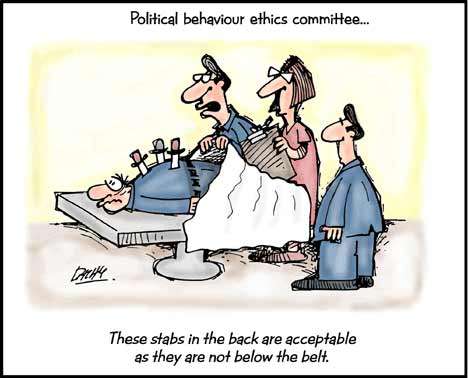
    Labeling a person one way or the other is a dismissive thing to do. It devalues the entirity of a human being, someone bought and paid for by Jesus, into a label. This labelism is a dark mark against us as believers. It is a hate crime to a persons intellect which prevents us from fulfilling the Great Commission. Labels are, in fact, a devisive tool of our enemy, Satan. Labelism is emblematic of the label-fighting our Lord fought against. Over and over in the Gospels we see religious people asking Jesus litmus test questions. And over and over again, we see Jesus giving double answers that defied labeling.

    Remember when mom taught you, “Sticks and stones will break our bones, but words will never hurt me. She lied. Words (labels) are powerful. My challenge to is always the same, live wildly… crazily… passionately… stupidly… for Jesus Christ in all you do.

    Never be distracted by fans or haters!

  • Stumbling buddies

    Last night we hosted our first community group with Harbor. I don’t have much else to say but this.

    #1 It’s fun to host a small group after going to a church 3 weeks.

    #2 I’m looking forward to having some people like me to stumble towards a deeper walk with Jesus with.

  • Secret Sex

    I’ve been around Christians long enough to know that they like to talk about sex. In fact, I know enough about internet traffic to know that only one thing is more popular than a post about sex. In fact, most of you are reading this because you clicked on a link with a keyword you like to click on, “SEX” and are wondering what the secret is all about.

    What’s the one thing more popular than a post about sex? A post about sexual behavior Christians “shouldn’t do but like to talk about.”

    – Homosexuality

    – Cheating

    – Masturbation

    – Pornography

    – Getting caught looking at gay porn and masturbating.

    Here’s some data behind this Christian propensity to search for and click on things about sex. Notice the #1 read item at YMX over the last 2 years by a wide margin… it’s an article called “Solo Sex” and its about masturbation. In the 2 years that article has been on the site it has averaged 25 readers per day! Likewise, my blog data shows that most of my google visits from google searches arrive on terms such as “Christian dating” or “Christian sex.”

    Proving this point further, stop for a second and think about this:Why are you reading this post? What about the title ‘Secret Sex’ made you click here?” Did I trick you to come here with my blog title? Did you click on a delicious link I served on Twitter? Or were you googling something like “Christian love advice?”

    Here is my theory, disagree with me if you like. I think that internally many evangelicals are wrestling with sexuality. I don’t mean they are worried about their gender preference or even secretly longing to do sinful things. I think that within Christian circles it just isn’t safe to talk about sex which leaves many adult Christians very immature in how they handle sex. So the result is that we talk about sexuality in very immature fashions. (And then we wonder why students have messed up views on sexuality!)

    While in non-Christian circles it isn’t unusual to have some safety within your peer group to talk about sex in an intelligent manner, I know I’ve never found Christian friends willing to have a serious conversation blushing it off as either “naughty” or diverting to childish jokes. (Of course, maybe its just my friends?) So while it may be normal and/or healthy to seek out talking with a peer about something intimate… in our circles we repress that discussion and look for answers privately.

    And I’m not sure that’s a good thing.

    I wonder if that repression of the discussion, which in and of itself is amoral but breaks a Christian taboo, is exactly what leads to the gross sexual dysfunction within many churches and marriages. Why can’t Christians just talk about sex? Why do Christians scour the internet searching for answers?

    Sidebar: Of course it could also be that there are so many people out there googling anything to do with sex that this disproportionally elevates the click through rates of posts about sex… that’s a theory worth contemplating without devaluing the overriding question.

    So, what is it?

    – Victorian cultural leftovers permeating Christian culture?

    – Fear?

    – Our mommy told us never to talk about sex, just learn about it the way she did in the library?

    – It should just be repressed. Asking this question proves that Adam is a pervert and just likes to say “sex” a lot.

  • What’s up with “that church?”

    I’ve had several people ask me about the church in Romeo, so here’s a quick update. I know a bunch of people who go there read my blog… so please feel free to fill in the blanks by leaving a comment.

    Did the church close? Nope, they just changed their name.

    Do they still have services? Yes, Sunday’s most likely. But I don’t know what time.

    Are they in the same location? Yep. I understand they took down the Romeochurch.com sign and now it just says “Stoneridge.” That’s where it is. It’s not a community center (that I know of) nor the offices for a new subdivision development. It’s still at 32 & Campground in Romeo. Same church, new name.

    Do they have a website? I can’t find one if they do. I see the old website is gone which is probably why people are asking me if they went out of business. So apparently adammclane.com is their new website. Welcome!

    Are they the same people? I think the point was that they wanted new people. So they figured if they changed the name the other people wouldn’t see the sign and new people would think they were going to the park and accidentally go to church there. Poof! OK, actually… it’s the same leadership team and I would guess that most of the same people go there.

    Do I like the new name? Yeah, it’s way better than “First Baptist Church.” Here’s a secret… that was the first “baptist” church I ever attended.

    What’s the name mean? Once upon a time [circa 1992], in that very location, a mountain range crested along Campground Road. As you reached 32 miles north of the center of that range a massive ridge line of large stones fell off to the west as far as the eye could see. Hence the most historically accurate name for 32 Mile & Campground is “Stoneridge.”

    I also feel it is sociologically accurate for a community with an alleged marijuana problem to have the word “stoner” in it. (Yes, they have munchies between services.)

    Any other thoughts on Stoneridge? I’m secretly jealous that I worked there for 5 years with a church name handicap and then I leave and they instantly solve the biggest problem in reaching the community.

    My biggest thought on Stoneridge is that I can’t remember the name half the time. So for Kristen and I it has become an ongoing joke. OK, so it’s just me telling the joke and once I saw Kristen snicker about it.

    – Stonemeadow

    – Stonevalley

    – Stonepoint

    – Stonecreek

    – Stonemountain

    – Stonecrater

    – Stoneorchard

    – Stonedbaptist

    – Stonefalls

    – Stoneriver

    – Stonelake

    – Stoneapple

    – Stonetech

    – Stone- did you hear they had a mechanical bull last night?

    – Stonetemplepilots Memorial

    Do you think the church is screwed up and secretly that’s why you left? OK, just between you and me. If it means that people come to Jesus, I hope they do whatever it takes. (Swing dancing, roller coasters, bar & grill, gas station, bookstore, start a parachute club, whatever!) Here’s a revolutionary concept… the church is there to reach the community and equip the redeemed to reach the community. With 3-4% of North Macomb residents currently attending a church I’m just glad they are trying to do something, anything, to bring light to a very dark place.

    If I have said anything inaccurate, please feel free to leave a comment.

  • Finding a church home: We think we’ve found it

    For the first time in our adult life Kristen and I have had the chance to find a church with a tabula rosa. Well, that’s a sensationalist way to look at it since we’ve made the choice before but it was always complicated because it was both a church decision and an employment decision. And at least once (Oroville) we worked at a church we wouldn’t have attended if they had not paid us.

    For the past several weeks we’ve been researching, praying, talking, and visiting churches. An interesting part of our search is that we’ve been able to accelerate it because of the internets. (And the Google, as President Bush calls it) Being a web dude, I instantly recognized that there was a correlation between how much I liked a church’s website and how much I liked their church. It may seem like an odd thing to compare to… but a good church has a good website because they recognize it as a powerful representation of their community. Plus, we were able to week out a lot of places simply by listening to the sermons online. You can tell a lot about a church by their messages. Anyway, just a random observation.

    When we set out on this process we were evaluating churches based on a few criteria. (non-negotiables)

    #1 Teaches biblical truth

    #2 Kids are important

    #3 Expectation that we’ll get involved, but respects that this may take time

    #4 Practically passionate about the community we live in

    #5 Values its people, all of ’em

    Enter Harbor Church Mid City. Last Sunday we visited and yesterday Kristen and I had the opportunity to sit down and chat with the lead guy, Stephen and his wife Bradford. When Kristen and I went last week we were blown away by the spirit of this church. Sure, empirically speaking it hits all 5 of the things we want in a church… but let’s face the fact that connecting to a church is an emotional experience. And church last week felt like home. (And it helped that this was a big celebration service and vision casting day.)

    What makes Harbor different from a lot of places we evaluated is its unique design. In the DNA of the church is a desire to reach neighborhoods with the Gospel. This isn’t just a Gospel of words but also a Gospel of social change, mercy, and justice to restore what’s broken eternally and today. Stephen explained that the goal of Harbor (it’s part of a team church planting effort) is to launch about 100 churches in the San Diego/Tijuana area over the next 20 years. In church growth models, they are a multi-site strategy “big church of little communities” idea. So all over the area are linked bodies part of a larger church with the hope of adding a lot more little communities in neighborhoods as opposed to growing one regional monster campus.

    I have to be honest… the big vision for San Diego is interesting but we really just care about our neighborhood! And we witnessed first hand that practically living out. We’ve heard a lot of churches say they want to be diverse but few actually pull it off. As we look around our neighborhood we recognize that these working class folks represent tons of cultures, races, dreams, and hardships. And it was refreshing to see that translated on Sunday morning.

    This is a church who loves kids. As Stephen and I chatted we talked about reaching the lost kids of the community more than we talked about discipling our own. For Kristen and I this echos our hearts. As much as we value a strong children’s program we long to see the two-fold model of evangelism/discipleship lived out in our family from an early age. We recognize that if we want our kids to catch a vision for reaching their peers they need to see mom & dad modeling that behavior. The very fact that the church meets on a school campus and has several active outreaches/ministries/supports within that same campus tells us a lot about the heart of the people. You can’t help thinking about the school’s kids as you worship in their building!

    The church values its people, all of them. One thing that I really like is the strong sense of mission. Like the best missions the core of Harbor craddles the reality that indigenous people are best at reaching their people. So rather than “the experts” the staff seem to position themselves as the enablers. Stephen described this as being a coach rather than a player. And as you think about that analogy you recognize that the coach is powerless in determining the outcome of the game. (Not to devalue life by calling it a game.) Instead, being the coach empowers the people to be the players and also clearly communicates that the mission can only be accomplished when the players play. In most cases, the coach was/is a great player who may feel as it is easier to “do it myself” in order to guarantee a win. But a coach willingly allows others to learn their position and represent the team to the measure of thier ability to play. To hear the leadership describe themselves as a coach rather than a player is powerful in our decision.

    All that to say, we think we’ve found it. As Kristen and I left we were entirely comfortable in telling the kids that this is the place. In the weeks and months to come we’ll gradually get more into the lifeblood of what’s going on. But for now we’re happy to begin the process of making friends.

    A couple other random things I like about Harbor:

    – Structurally, they have a central office which does all the admin stuff. This leaves the ministry staff to do ministry and not worry about details like a bulletin or paying bills.

    – They’ve partnered/joined forces with World Impact to reach the neighborhood. It’s always a good sign when you see an organization attracting other Christian organizations staff members to attend.

    – They dig student ministry. As it fits, I am looking forward to getting involved with students again. I’m not going to wiggle my way into this… but if they want me to help I’ll gladly jump in.

    – Kristen is jazzed about some things they are doing… but really got excited to hear them talking about a babysitting co-op!

    – I like the words “incarnational living” and “community development.”

    – Stephen and Bradford like college football. I think it’s a sign.

  • Lies of Youth Ministry, Part One

    Boys and girls in youth ministry we’ve got some problems. We in youth ministry, as a tribe, believe some lies about who we are, what we’re about, and how we should be reaching students. Let’s address these and move forward to fix them, OK?

    #1 Your ministry is “successful” if you have 10% of Sunday morning attendance. My entire youth ministry career has been wrapped up in the local church so I can state this from experience. But let’s bear in mind historical perspective to understand this lie before we can look at a solution. The current version of Youth Ministry is really a reaction to the success of early parachurch ministries. Back in the late 1940s modern youth ministry was born when Youth for Christ hired Billy Graham to lead crusades to reach teenagers… and boy did that work! YFC’s crusades scratched a cultural itch since teens had been left out of the local church with the emergence of adolescence. (Adolescence is only about 120 years old!) As a strong middle class was born out of post-WWII days adolescent teen culture blossomed and the church was seen as irrelevant to teens. Gradually, in the early 1960s the American church responded in a big way to numerical victories of parachurch ministries. Churches were tired of seeing all of the students go to YoungLife and Youth for Christ… so they started hiring those organization’s staff to run programs in local churches.

    It was a great concept, but from the very beginning youth ministry was seen by church leadership as a way to hold onto church kids and maybe, just maybe, reach new families. This fixed a problem parachurches had without truly addressing the church issue that created the parachurch need in the first place… no place for non-believers to be ministered to.

    The truth is that local churches royally ruined what the parachurches were doing. To even call what most churches do “youth ministry” is demeaning to its evangelistic heritage. Instead of youth pastors being hired to reach a high school they were hired to grow/maintain a local church. (In fact, I’ve talked to countless youth pastors who were fired for trying to reach lost students!) The lie is that a good youth ministry is about growing a church. In most cases, a youth pastor’s job is so limited and focused on the church that it’s really not about reaching lost kids at all. (Appropriate lip service is always about evangelism!) I’ve actually sat in youth ministry networks and listened to youth pastors sound satisfied that they are reaching 50-60 students with their ministry. The target isn’t a percentage of butts in seats on Sunday morning! Reaching 50 students while 1950 have never heard the gospel is a gross failure.

    True success comes when you reach and disciple brand new people for Jesus Christ! The first lie points to the fact that church-based youth ministry largely lies to itself and calls itself a success when it reaches less than 1% of students in a community. Is it the individual youth pastor’s fault? Absolutely not. It’s a design flaw worth addressing. The truly successful youth ministries in this country focus on the lost in their schools and could care less what percentage of saved church kids come to their programs.

    Questions for youth workers: Do you agree with my use of the term “lie?” If so, what are some ideas for fixing this in your context? If you don’t agree, I still love you. But I’d like to hear your push back.

    Lie #2 It’s about discipleship

    Lie #3 You have to have a youth pastor

  • YS Podcast Episode 4

    Loving how the podcast is working out. Every time we shoot a segment we take some time to restate to ourselves what it’s all about. It’s all about encouraging youth workers… paid, part time, full time, volunteer, parent, sunday school teacher, whatever… you totally matter.

    In church leadership? You need to get this thing in the hands of whoever does youth ministry in your church.

    Want to see me every week in video? Subscribe to the YS Podcast on iTunes.

  • Finding a church home: Journey Community Church

    finding a church home: journey community churchSeveral weeks ago I shared that our family would document the church search process. And this past weekend that search continued as we attended Journey Community Church in La Mesa. 

    It’s worth pointing out right away that a ton of people I work with go to Journey and suggested that we check it out. Everyone at work says the same thing, “I love Journey.” With that ringing endorsement… why not visit?

    First impressions: Journey recently bought a shopping center. So their campus is spread around in a typical California shopping center kind of way. (For you midwesterners, this means that its designed like a mall, but the walkways aren’t indoors.)

    As we pulled into the parking lot Kristen told me “if you flash your lights at a parking attendant they’ll know you are a visitor and you can park in the front row.” Apparently, she read that on the website. As soon as she said this I swerved to park back by the student center. Getting out of the car, the kids could tell this didn’t look very much like a church. In fact, Paul said “can we go to a regular church next week?” (Kaleo meets in a movie theater.) So we walked to what looked like the main building and started looking for signs to the kids area. 

    When we got to the lobby we were pointed towards the kids registration area. So far, so good! As we made our way through the maze of hallways we saw lots of pictures of things the church had recently done, I liked that a lot. (Good to know they do stuff today.) The child check-in process was painless enough. After checkin the desk printed some badges for the kids and we were led upstairs to the kids rooms. 

    The kids rooms were well stocked and the staff was clearly well-trained. Our kids were nervous, Paul particularly, and they were fine with us giving them a little extra attention before we headed to the service. 

    From there, Kristen and I made our way to “big church” for the 9:00 AM service. The room has a lot of very comfortable chairs, the room is laid out a lot like a typical conference room. Big sections of seats, bleachers near the back, big stage, and two big screens so people in the back can see. 

    The service. The music was familiar to us. In fact, the order of service was pretty familiar to us as well and we found comfort in that. Couple songs, announcements, shake some hands, couple more songs, offering, song, sermon, song. The music was good, nothing about it really captured my attention strikingly good or bad. If nothing else, the songs were performed fairly closely to how they are recorded. It was clear when we came in that they were trying to do something artistic in the room that day. There were several prayer stations in the auditorium. Let’s see, lighting was good, display of stuff on the screen was good, sound was good. From a technical aspect the only thing that was distracting was that their transitions were pretty rough leaving the service feeling very disconnected from its elements choppy. Plus, the very fact that I was sitting there thinking about the service order, lighting, set design, and transitions should tell you a lot about the service. 

    The message. Clearly the people like the teaching pastor. I found him to be an acquired taste and struggled to pay attention for longer than a minute or two at a time. The people listened intently and followed along on the outline diligently. (Well trained!) About 10 minutes in Kristen leaned over and said what I was thinking, “Can we get something in the middle?” This meant at Kaleo the sermons are so deep that it’s easy to get lost but at Journey it just felt very light. Not knowing the mission of the church its impossible to know if this teaching approach is right for this fellowship and the people they reach, but I’m just being honest in reporting that I didn’t connect with the message or the teaching pastor at all. His message ended with a transition to some prayer stations. It was really clear to me that there was a disconnect between the preparation of the prayer stations (art guy) and the communicator/instruction of the prayer stations. (teaching guy) When the speaker told people to get up and shuffle to the stations I looked at Kristen and just said, “Let’s go!” Yep, we bolted. 

    The church. It was really hard to grasp the heart of Journey in one visit. It’s a big church with a ton of people and a ton of things going on. I know from people who attend that it’s a very loving church and people grow a lot in small groups. In our visit, we didn’t feel the love. (yet) What came across to Kristen and I is that Journey is a programmatic church. You can see that in the kiosks and the endless bulletin. Now, there is nothing wrong with a programmatic church where there is something for everyone. Certainly, a lot of churches operate this way and are successful in reaching people. But not having been to one in a long time… it was a shock to the system! I kept thinking… where in the world would we start?

    Kids ministry. Our kids were happy. They told us all about the reward system of verse memory. They told us about the game. They showed us their crafts. They talked about how nice the teachers were. They told us they sang songs, but couldn’t remember what the songs were. Paul didn’t like the puppets but did like a guy dressed like an astronaut or something like that. (Did this really happen?) But when we asked them what they learned about God they looked blankly at us and said “I don’t know.” This is our families normal routine as we talk about what they learned in church… they are really good about telling us what they learned. But for some reason the lesson didn’t stick and 10 minutes after leaving they couldn’t remember. But they did get a nice goodie bag and were very entertained by that. 

    Overall. Let’s just say that I’m glad our process requires a second visit as we feel it’s not right to judge a ministry based on a single visit. Likewise, we know from our friends who a involved that this is a great community to be a part of. Yet, judging from Sunday services alone you can tell where this review would lead a decision for us. Let’s hope on our second visit we’ll get to meet a few people and get better connected to the heart of Journey. 

    A HUGE upside to Journey is that I know they have a rocking student ministry. Since we don’t have kids in that age bracket I didn’t get to see that in action. I’ve been in the middle school room, met the middle school pastor, and met a few of her volunteer staff… so when push comes to shove, I’m a youth ministry dude and having a great youth ministry is going to trump a lot of other stuff.

  • The mindset of college freshmen

    Here is this year’s Beloit College Mindset list for 2008.

    For these students, Sammy Davis Jr., Jim Henson, Ryan White, Stevie Ray Vaughan, and Freddy Krueger have always been dead.

    1. Harry Potter could be a classmate, playing on their Quidditch team.
    2. Since they were in diapers, karaoke machines have been annoying people at parties.
    3. They have always been looking for Carmen Sandiego.
    4. GPS satellite navigation systems have always been available.
    5. Coke and Pepsi have always used recycled plastic bottles.
    6. Shampoo and conditioner have always been available in the same bottle.
    7. Gas stations have never fixed flats, but most serve cappuccino.
    8. The students’ parents may have dropped them in shock when they heard George Bush announce “tax-revenue increases.”
    9. Electronic filing of tax returns has always been an option.
    10. Girls in head scarves have always been part of the school fashion scene.
    11. All have had a relative—or known about a friend’s relative—who died comfortably at home with hospice.
    12. As a precursor to “whatever,” they have recognized that some people “just don’t get it.”
    13. Universal Studios has always offered an alternative to Mickey in Orlando, Fla.
    14. Grandma has always had wheels on her walker.
    15. Martha Stewart Living has always been setting the style.
    16. Häagen-Dazs ice cream has always come in quarts.
    17. Club Med resorts have always been places to take the whole family.
    18. WWW has never stood for World Wide Wrestling.
    19. Films have never been X rated, only NC-17.
    20. The Warsaw Pact is as hazy for them as the League of Nations was for their parents.
    21. Students have always been “Rocking the Vote.”
    22. Clarence Thomas has always sat on the Supreme Court.
    23. Schools have always been concerned about multiculturalism.
    24. We have always known that “All I Really Need to Know I Learned in Kindergarten.”
    25. There have always been gay rabbis.
    26. Wayne Newton has never had a mustache.
    27. College grads have always been able to Teach for America.
    28. IBM has never made typewriters.
    29. Roseanne Barr has never been invited to sing the national anthem again.
    30. McDonald’s and Burger King have always used vegetable oil for cooking french fries.
    31. The students have never been able to color a tree using a raw-umber Crayola.
    32. There has always been Pearl Jam.
    33. The Tonight Show has always had Jay Leno as its host and started at 11:35 p.m. Eastern time.
    34. Pee-wee has never been in his playhouse during the day.
    35. They never tasted Benefit cereal with psyllium.
    36. They may have been given a Nintendo Game Boy to play with in the crib.
    37. Authorities have always been building a wall along the Mexican border.
    38. Lenin’s name has never been on a major city in Russia.
    39. Employers have always been able to do credit checks on employees.
    40. Balsamic vinegar has always been available in the United States.
    41. Macaulay Culkin has always been Home Alone.
    42. The students’ parents may have watched American Gladiators on TV the day they were born.
    43. Personal privacy has always been threatened.
    44. Caller ID has always been available on phones.
    45. Living wills have always been asked for at hospital check-ins.
    46. The Green Bay Packers (almost) always had the same starting quarterback.
    47. The students have never heard a gasoline-station attendant ask, “Want me to check under the hood?”
    48. Iced tea has always come in cans and bottles.
    49. Soft-drink refills have always been free.
    50. The students have never known life without Seinfeld references from a show about “nothing.”
    51. Windows operating systems have always made IBM PC’s user-friendly.
    52. Muscovites have always been able to buy Big Macs.
    53. The Royal New Zealand Navy has never been permitted a daily ration of rum.
    54. The Hubble Space Telescope has always been eavesdropping on the heavens.
    55. 98.6 degrees F, or otherwise, has always been confirmed in the ear.
    56. Michael Milken has always been a philanthropist promoting prostate-cancer research.
    57. Off-shore oil drilling in U.S. waters has always been prohibited.
    58. Radio stations have never been required to present both sides of public issues.
    59. There have always been charter schools.
    60. Students always had Goosebumps.

    Feel old yet?

    HT to Jake

  • Are you fake around your pastor?

    Check out this quote.

    Dear God,

    I was a pastor for 23 years. It killed me. I am not sure I was every called to it. As you know, the overwhelming numbness finally caved in all around me. Now, I am on the outside of the church looking in and I don’t like what I see. Why do we have to be fake to be a Christian or part of a church? How did we buy the lie that showing up occasionally was the same as a relationship with you? Now that I am not a pastor, people are honest with me. I had no idea how hard life was for so many people because when they came on my “turf” they pretended just as much as I did. I feel hope inside God. Now, without the job I feel like you let me go through everything to understand pain. I want to do what I can, but I feel like a failure every day. Can you still use me? link

    While I can’t identify with the feeling far from God or having felt fake with God while serving at a church, I can definitely tell that people are more honest with me about their lives now that I don’t work at a church full time. Why is that? Was there something in my title that made me someone you couldn’t speak openly with? Did you feel like I couldn’t help? Did you feel like I didn’t want to know? Were you trying to protect me? Do you think I’d judge you? Not love you? Tell others you were human? Were you looking for an escape when you were around me? Did I project myself as someone who couldn’t understand? Was I above your struggles? Was I intimidating? Was I uncaring? Was I too transparent? Not transparent enough?

    The thing is, I’m not done being a church leader… at least I hope not. I just want to know. 

    HT to Andy