Category: Church Leadership

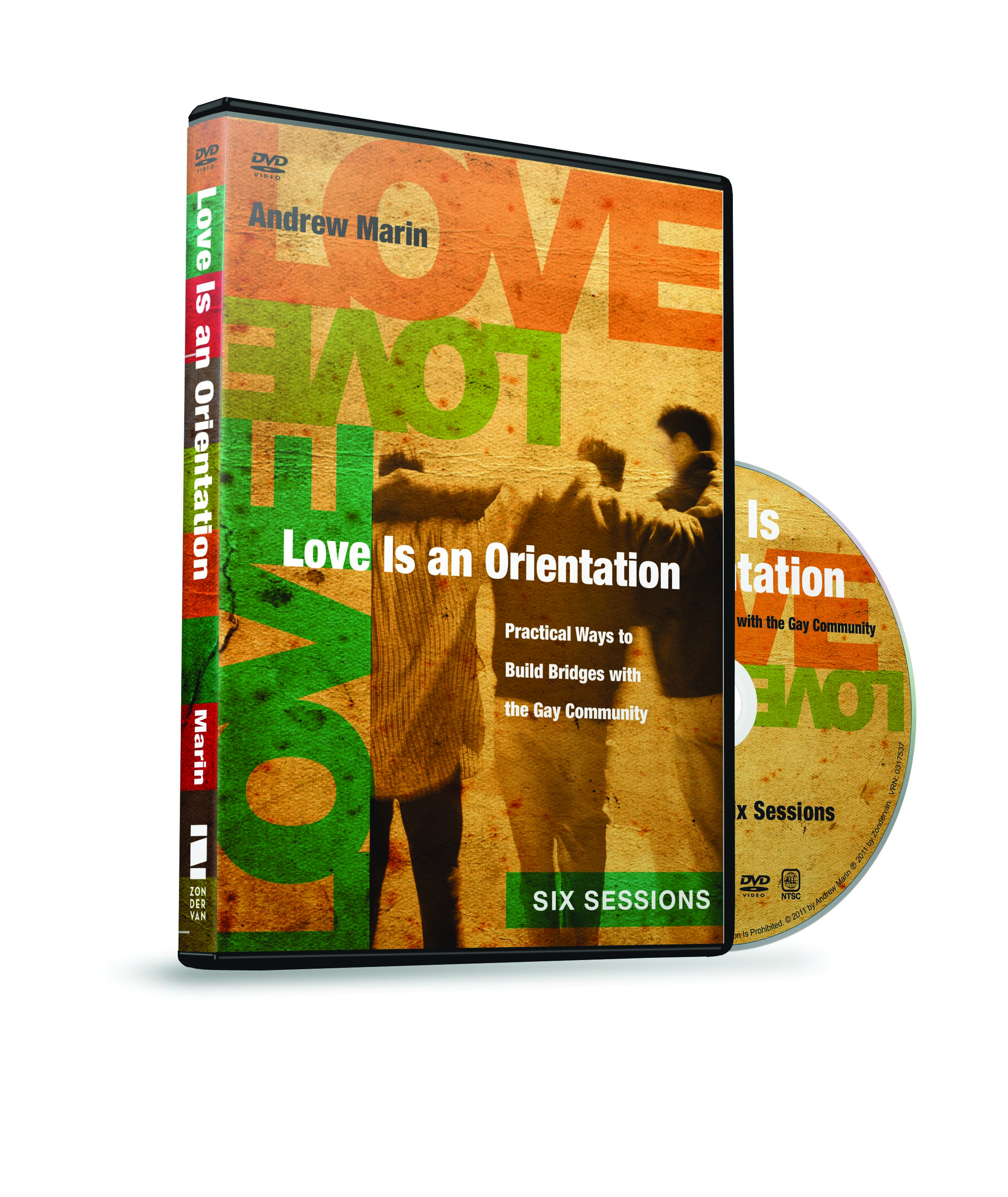
  • GIVEAWAY: Love is an Orientation DVD by Andrew Marin

    What it is…

    Love is an Orientation DVD is a video curriculum based on The Marin Foundation’s ground breaking work in the LGBTQ community. The byline is, “Practical ways to build bridges with the Gay Community.” I’ve heard amazing things from adult small groups and church leadership teams who have worked through this content together. Andrew’s ministry and work is truly a revolutionary approach.

    Who is Andrew…

    I first met Andrew in the lead-up to the 2008 National Youth Workers Convention. He was the guy coming in to talk about the hot-button topic and I was the guy trying to build buzz around the convention. During the 3-city tour we became friends and our friendship continues to grow.

    Yup, some people don’t like Andrew. Either they think his approach goes too far or they think it doesn’t go far enough. That’s the tension The Marin Foundation lives in each day. And something in me says that this tension is just about right. (He’s speaking at The Summit on the topic of, Ministry within Theological Tension, see the connection?)

    Why I like it…

    3 reasons I like this.

    1. I’m in it. Ginny Olson and I teamed up on the youth ministry portions and I love how it turned out.
    2. There’s nothing out there as good. Andrew has presented this content to hundreds of churches, to hundreds of thousands of people, and in a bunch of countries. It’s really, really good stuff.
    3. It breaks the ice. I’ve talked to a few leaders who have used it and they love that it gets people talking about ministering in the gay community in a fresh, hopeful, loving way. Like any good teaching it causes great self-reflection and personal change.

    How you can get it…

    BUY IT. The more direct way is to head over to The Marin Foundation website and buy it.

    WIN IT. Leave a comment of any kind to this post and you’ll be entered to win a copy of the DVD and a participants guide. (Comments close at midnight tonight, winner announced tomorrow.)

    WINNER! SarahD92 – You’re the winner! Send me your mailing address and I’ll get it out to you.

  • Dear Megachurch: Adam’s list…

    Part 1

    Last week, NorthPoint young adult pastor Sammy Adebiyi wrote an article that was published on ChurchLeaders.com which offended some people. In fairness, he was very gracious as comments flowed in pointing out the many flaws in his post. In radio, I’d call this post “shock jock material.” He called a bunch of people names in the headlines of the post and then quickly backed off when the nasty calls for his head came in. (A legit engagement strategy if you ask me.)

    If his post had merely been confessional about why HE used to make fun of megachurches before he worked at one, I could have read the post, shared a laugh, and moved along. Instead, he used inclusive language… “WE“…  to make it seem like he represented all small church voices.

    Here’s Sammy’s list of reasons for why he used to make fun of megachurches:

    1. We don’t know you
    2. We are sitting on the sidelines
    3. We are jealous
    4. We are hypocrites
    5. We are arrogant

    I completely agree with point #1. It is easy to make fun of people you don’t know. I’ve spent most of my life in smallish churches, places with fewer than 500 people. In my mind, people who worked at monster American churches were unknown to me and unknowable. What I found in getting to know a pile of these folks, including ones who work at Sammy’s church, is that they are essentially the same types of people who work in small churches. They work hard, love their work, love the people in their ministry, have problems, have doubts, etc. But at the end of the day I don’t find many differences between a megachurch middle school pastor and an associate at a small PCUSA church who oversees birth-college ministries. People are people. 

    Maybe I’m just sensitive? But it sure felt like the next 4 points were Sammy exhibiting that he doesn’t really know many people who go to or work at small churches. I read those and thought… “Actually, I don’t know anyone who thinks this way!” In fact, by the time I was done reading his points I actually hurt for the hard-working, God-honoring, Jesus loving brothers and sisters I know who give their lives to their ministries.

    Part 2

    But I’m willing to put that all that aside. I’m not really mad at Sammy for saying what he said. Again, had he written the same thing from his perspective instead of “we” than all would have been easily forgotten.

    The real shame here is that Sammy’s post wasted a perfectly good blog title without having any fun! I mean, there really are good things worth poking fun at, tongue-in-cheek-style.

    So I made a little list, which I’m sure will get me in trouble, but why not?

    So, why do I make fun of people who think their megachurch is the reason a cat meows?

    1. You think 20,000 people is big and makes you a big deal. I mean seriously– 35,000 people go to Qualcomm Stadium on a Saturday to watch no-name San Diego State football. 20,000 is a decent crowd for an NBA game. Compared to the relative population of our country, none of us are that big of a deal.
    2. You think it’s cool to have a lion in your services. No seriously, a church in Texas had a live lion and lamb in a recent sermon series. It’s stuff like this that makes me shake my head. Yeah, you have too many resources for your preaching when you think… “You know what would make that illustration better? Let’s bring a flipping lion right into the building!” Jesus could have done this easily– but he choose to cast out demons and heal people instead. Just sayin’.
    3. You think it’s OK to have a security detail, personal assistants, and “people.” The Washington Post ran a story yesterday joking about Newt Gingrich’s Secret Service detail. The candidates campaign is so derailed that he had to take the train from Washington D.C. to New York for an event yet he still has 4 Secret Service agents watching him 24 hours per day. Jesus didn’t walk around with a group of homies watching his back and running his schedule. In fact, I seem to remember him rebuking a disciple for cutting a dude’s ear off in the Garden. If you need people, my assumption is that you might need to spend more time with your people. But I am probably wrong in that assumption.
    4. You think Jesus’ idea of multiplication was a bigger building or a helicopter to get from one campus to another. I’ve had 4-5 conversations with church staff about the lengths their teaching pastor goes through to speak at multiple campuses on a Sunday morning. I know of 2 churches who employ a helicopter for this purpose. A helicopter. Paul only left Timothy in Ephesus because his chopper was in the shop. (Not naming names intentionally on this one.)
    5. You think you created a big organization. My observation is that most of these big churches don’t really know how they grew from a staff of 5 to 50 to 250 or from 200 people to 15,000 people. It kind of happened gradually and because you knowingly or unknowingly made a whole lot of great decisions. It just cracks me up how fast they think they’ve invented an organizational or reporting structure or decision-making processes. In reality, it’s the same thing that happened to every major denomination and non-profit organization.

    Part 3

    All jokes aside, in a post-modern, post-Christian society– it’s going to take all types of churches to make a significant impact. Sure, we can poke fun at one another and have a good time with that. But in the end, we’re all on the same team. The bottom line is we need more churches and all kinds of them. Big ones, little ones, crazy ones, practical ones, missional one, unintentional ones, house ones, prison ones, neighborhood ones, institutional ones… and a whole bunch of churches who don’t call themselves churches!

  • Take the Public School & After School Program Involvement Survey

    Next week, I have the opportunity to speak at the Boost Conference. Boost is the premier conference for out-of-school time professionals and administrators. While not exactly youth ministry like we define it in our tribe, these are adults who are very similar to our tribe. They live, breathe, and love children and teenagers. In some circles they even refer to themselves as youth workers! (Yes, this tribe has TONS of Christians. I can’t wait.)

    Here’s a description of my talk:

    Engaging with the Faith-Based Community

    Current trends in the faith-based subculture have faith-based organizations, including churches, looking for opportunities to serve the needs of the community. in this seminar, we will examine this trend, fill in some gaps of misinformation, address a shared past of difficulties, look at some current examples, and explore ground rules for positive engagement. When it comes to the children of our communities, we have a lot in common, including many shared values. let’s bridge some gaps and create a new story together.

    I need your help

    This seminar will be a lot better if I have some recent data and input from people currently involved vocationally in churches. I can speak to this topic in generalities and can point to data points from other research, but I’d love to have fresh data specifically for this talk.

    I’d love it if 150 – 200 people currently employed by a church / parachurch would share their insights into this important topic.

    Would you please take 15 minutes to complete this survey? 

    Please help me reach my goal by sharing with other staff people you know.

    And yes, I’ll be sure to share what I learn both from this survey and my time at Boost, right here on my blog.

    To take the survey, click here


  • The Apostles Stayed in the Neighborhood

    Did you know that The Way wasn’t the only Jewish cult in Jerusalem in the first century? 

    Visit a Dead Sea Scrolls exhibit and you’ll learn all about the strict rules and discipline of the Qumran community. While they didn’t have a Messiah figure, they were disciples of a teacher. Who had his own beatitudes and life plan which sounds very similar to Jesus. Devotees left society altogether and lived in no mans land in the desert. (Remember, it took 1900 years to discover the Dead Sea scrolls– not exactly prime real estate.)

    And there were others. Collectively they are known as the Essenes. Most of them were built around a claim of the messiah or a certain apocalyptic vision or a withdrawal from societies pleasures. (Some took vows of celibacy, which seems like a tough multiplication strategy.) They each tended to remove themselves from society by first creating compounds in the city, then once you’d proven yourself truly worthy, you were allowed access to the leaders.

    My point isn’t to give an exhaustive list. Rather to point out that at the time of Jesus’ resurrection The Way joined a few other groups in the city. (I’m sure there are other books about this. But one I’m familiar with is Communities of the Last Days. Also see Josephus.) Jesus’ followers copied some of what they saw from these other groups since this is what all the cults did,  these will seem familiar in light of the Acts record:

    • Asked followers to forego their families for the sake of their group.
    • The entry point was communal living.
    • Baptism was a symbol of identification.
    • Followers sold everything they had and gave it to the group for the sake of the common good/needs.
    • The ones in Jerusalem all had a base near where the Last Supper and early church hung out. It was kind of a neighborhood of cult groups.
    • Once you’d proven you were all the way in, memorized everything, worked your tail off, proven your devotion… then you got to spend time with the leaders. (For most that meant complete withdrawal to the desert. For others that meant living in protest in the city.

    The Difference

    Of course, those groups collectively known as the Essenes, are all gone today while The Way became one of the largest religions in the world.

    Why? 

    As Christians, we believe Christianity spread because it was true. But another practical answer is strategy.

    Followers of Jesus didn’t withdrawal from society. They indwelled it.

    Once followers of Jesus had proven they were all in, memorized everything, been baptized, gave everything they had to the group– they were sent out to love their neighbors in ways that were defined by the needs of the neighborhood. Instead of withdrawing they deposited and invested in their community. (This was radical thinking! No one else did this!)

    All of these other groups, their contemporaries and fellow Judaic cults, believed that their strict obedience to rules would lead to the messiah coming, or the apocalypse, or revival of the people.

    But Jesus’ followers became an unstoppable force because of their profoundly simple strategy. They loved their neighbors as themselves. They didn’t just know them. They didn’t just witness to them about Jesus’ resurrection.

    They loved them.

    As people used to harshness and exploitation, when they experienced love in the name of Jesus, they wanted that– experiencing the practical realities of Good News made for fertile ground for Jesus’ message to be received.

    The Good News wasn’t just a theological reality, it was an unstoppable force of love for their neighbors. To date, no army has been able to stop the spread of love. The Way was an insurrection of the heart and it changed everything. It spread like wild fire. Think about it, within 200 years this simple strategy spread throughout the known world.

    Love literally conquered all. 

    And my belief? My belief is that the simple strategy of The Way is what we need today.

    Let’s indwell our neighborhoods and truly be the Good News in the name of Jesus.


  • Powerless

    Breathing heavy and full of adrenaline I stood up from the knee deep waves among the kids and did a 180. With a massive smile I began the long push through the surf back to my fellow bobbing boogie boarders.

    It was a Sunday afternoon at Torrey Pines. One of my favorite beaches doing one of my favorite things.

    Smiles were ear-to-ear among this pod of boogie boarders, basking in the late Sunday afternoon glow the with warm summer breezes, the water temperature had finally risen to the point where you could stay in indefinitely without shivering.

    The swell was building. We all felt it. In our group were a wide variety of skill levels. Experts with nice boards and fins running circles around all of us. Beginners on their $20 boards that weren’t quite the right size. And me, a midwesterner who loved it but resides firmly in the novice category.

    Typically, I don’t like to go off shore beyond where I can touch the bottom. My technique is typically to wade out and position myself near where the waves break so that I can move “hop on” a wave rather than paddle and drop in. But the waves have drawn me out here, floating and chatting alongside all the other giddy riders.

    We’d all caught enough waves. We were just lined up at the dessert table waiting for something fantastic to happen. In truth, the waves had already been too big for me and I’d been lucky to duck the ones that broke weird and hop on some fantastic rides.

    I was way beyond my skill level. I felt it. But the allure of nice, pretty waves, warm water, and my success pulled me out where I didn’t belong. I was trying not to think about

    A few minutes later one of the more advanced guys said, “Here they come!” About the same time one of the guys girlfriends said, “Hey, I can touch the bottom.” We all knew that this meant that the next set was going to be big. Most of us got off our boards and stood up, watching where the first waves in this set broke.

    I was in the perfect spot. I ducked and let a couple of big waves break over me. And I was feeling pressure not to let this big set go by. I could tell by the excitement level of the better boarders that the next wave was the best one. Judging by the massive size of some of the other ones, which were way taller than me, the best one had to be ridiculous.

    And there it was. I ducked a wave and looked up… it was rolling in. The best guys missed it, they were too deep. But I’m there, standing in the sand with my board up against my chest. As it approached me I felt like it was too big. But I had only a split second to turn and dive under it before it broke on top of me. Instead I hesitated. It was too late, I had to go or get rolled.

    Pushing off the sand just as this massive wave started to release I could feel the waves massive power. But I was a fraction of a second late. And I was about five feet too far to the right… I was on the waves but in the wrong spot.

    It’s hard to imagine how fast I was going… Imagine a fat dude on a boogie board going 30 miles per hour propelled by the biggest wave of the day. It’s a scary thing to imagine and an even scarier thing to experience. The first half seconds were perfect, I cut into it and was flying by as all the other boogie boarders and swimmers ducked as it went by.

    In the next instant I was crushed.

    The wave collapsed on top of me. I was completely powerless against it’s power. It shoved me to the bottom then flipped me and rolled me and held me under water. It didn’t just roll me side-to-side, my head hit the bottom then my knees then my head. Water rushed into my sinus cavities causing me to gag under water.

    It’s a horrible helpless feeling.

    Finally, it released me. I felt like I’d been spit out of Jonah’s whale. And I was back in knee deep water among the kids and moms and floaties.

    The best leaders are powerless

    There’s a silent allure to power in leadership. Early success leads us over our head. But we quickly find ourselves out deeper than our skill level.

    We mislabel fear as following. We mislabel position as authority. We mislabel obedience as respect. But behind the mask of many “strong leaders” are very scared little boys. They’ve created a puffed up thing, manipulative, terrified, and tired. Others have mislabeled it as leadership.

    Lord, make us powerless leaders who lead with love. Amen.

  • 5 things great leaders never say


    If I were preparing a talk about leadership this would be my premise and these would be my 5 points.

    5 things great leaders never say….

    1. I let others do my dirty work.
    2. I could use one more critic.
    3. I’m not hard on myself.
    4. That’s impossible for us to accomplish.
    5. I need to get better at recognizing others achievements.

    If you missed it, here’s a post on why people follow.

  • Learning Icons from VocationCARE

    I spent 3 days last week learning VocationCARE practices with the Foundation for Theological Education.

    Here are my 3 take-aways from my time there:

    1. When the pendulum swings, it is most violent to those at the bottom. 

    I get very excited about changing things. Change is fun for me. And envisioning fast change within an organization almost always makes sense in my mind. But as I thought about the power of those pendulum swings of change I was stricken by the reality that a fast swinging pendulum of change is most violent at the bottom of its curve. When we’re talking about people, a change is often most painful to those at the bottom of the organization. That doesn’t make it right or wrong. But leading with compassion requires I’m aware of this.

    2. Any group of I’s can become We’s.

    I was way outside of my circle at VocationCARE. And I had to consciously make a choice to be a participant instead of an observer with people I seemingly shared little common ground with. I chose to lean in and chillax on the things we had common ground on for the sake of becoming “we” for a few days.

    If we are going to make a difference in the world we will need to give up a lot of I’s for the sake of We’s.

    3. Make the design process fun

    I started drawing this little guy on things during VocationCARE. Why? These were very serious people who do very serious work. But I learned pretty quickly during our breaks that laughter was just below the seriousness. Laughter releases creativity. And creativity embraces whimsy… the heart of good design.

    If your creative process lacks laughter you’ll never get the best possible design. The output of that process can be serious. But the process of getting there requires creative freedom and the embrace of whimsy.

    Learning Icons

    I have a really hard time tracking with some learning environments. I learn best by doing/experimenting/trying. I learn second best by discussing. And I learn least best by listening.

    When the learning environment is listening I am often lost. There are so many words, so many good things said, and so little time to process or ask clarifying questions. I’ve learned that this method of synthesizing things from doodles (which is where all of these started) to become icons has really helped me retain not just the words from times of learning, but also the application and emotions I felt while hearing that training.

    Discussion: What helps you retain and synthesize learning? When you teach, how aware are you of various learning styles? How much does your learning style impact your teaching style?

  • A lover and a fighter

    A lover and a fighter

    People look at me sideways a lot. As if to say, “You don’t really get it, do you?” 

    Oh no I get it. Inertia and entropy are hard at work in youth ministry. The weight of this is how we do things and the gravitational pull of this impacted me so it’ll work today are powerful. It’s hard to imagine anything else working better. When you are working so hard it’s hard to step back enough to ponder, “Is my strategy even working? Can I change these trends with small changes? Or do I need a reboot?

    People look at me weird because I’m a lover and a fighter. It’s easy to leave youth ministry and go into another area of the church. This is why so many youth workers plant churches. It’s not that youth ministry is unfulfilling. It’s that inertia is so strong and leaders don’t think they have the power to turn it around. And all the fighting to innovate into something different is just too difficult. I get it, it’s totally understandable.

    But that’s not me. I love this thing enough to fight for it. And I have a feeling a lot of folks who are reading this are the same way.

    So how do we fight our way forward? 

    Here are a few things I’m learning.

    Jerry Maguire and Martin Luther both got fired

    It’s important to remember this fact. Both Jerry Maguire and Martin Luther wrote manifestos and ignited their own pyre. It might have been the only way to make the changes they needed to see. But that doesn’t mean it is the only way for us to lead the change process. I love manifestos. But the reality is that you don’t need to write one because it’ll probably just get you fired! Instead, live a manifesto!

    Too often I talk to folks who can see the problem and think their only option is something radical. Their youth ministry is reaching almost no one. And the weight of those they are reaching is costing them the freedom to reach others. (You have reached the wrong 1% of the population! Let’s call them the easy 1%.) So they think the best way to create something new is to change everything. Trust me, this almost always gets you fired from a church.

    Soft innovation is the process of intentional incremental adjustments to what you are doing that can increase the productivity for the whole operation. You know those safety triggers on lawn mowers? Those things drive me crazy because I have to hold my hands in a weird position to keep the engine running on the mower. And sometimes I want to leave the engine running while I clear away a stick or ball in the grass. For me, a velcro cable tie is a soft innovation which solves this problem. I can wrap that around the safety so that I can let go of the mower and not have to constantly restart the engine. It increased my productivity, decreased my frustration, and is fairly simple and safe.

    In churches, that’s often the best way to lead the change process.

    Lead experiments, don’t change things

    One thing I’ve learned recently is to not call change, change. It seems silly by positioning things as experiments but I’ve found that people are willing to give it a try. Change feels like high commitment. But an experiment feels like it’s OK to fail. It’s low committal and it makes people feel like they are part of the process as subjects as opposed to victims of change.

    So rather than use a phrase like, “We’re going to change some things around here because we’re stuck in a rut.” I’ve learned I get a better response by saying, “I’d like to try a couple of experiments. Let’s try this for a few weeks and see how it goes.” (Which is absolutely true. If it sucks we’re going to kill it!)

    Open the process to everyone

    Here’s the last thing that I’ve learned as a lover and a fighter. It sucks to fight alone. It’s even stupid to think that you can fight alone for very long. (Actually, if you’re completely alone you’re probably wrong in your hypothesis.)

    I’ve learned that once I create an environment of experimentation, soft innovation, and failing fast… it spurs on new ideas from EVERYONE. And if you really want to unleash an energy bomb in your midst, start empowering these ideas that come to you. The phrase, “OK, let’s try it!” has earned me a thousand smiles and helped me discover some really cool stuff I never would have found on my own.

  • The Problem with the Cause of the Week

    “Oh, I’m so going to use that with my students.”

    This week it was the Kony 2012 video. (And the backlash) Next week it’ll be something else because our cycle of interest is now about 96 hours.

    As the video went viral all of my youth ministry groups on Facebook were littered with questions from youth pastors asking, “How can we best use this video for our youth group?”

    I think that we are too fast to want to use everything as a resource or teachable moment.

    In fact, I think we often hide behind our role as a leader to become plastic. We don’t allow things to impact us because we look at everything from a lens of, “How can I use this?

    And that’s a very cheap way to engage our life on earth. It denies our own human experience to go from one thing we can promote to another. And we get excited about getting people excited about stuff more than we get excited about getting ourselves to really understand stuff.

    I don’t know all that is behind this leadership instinct to rush to resource instead of allowing ourselves to be impacted. But, for me, I think it’s built around my insecurity. I want to be seen as compassionate to child slavery [or whatever the cause of the week is] more than I actually want to personally do something about it. I am quick to give a few dollars but slow to understand how my daily actions may be funding child slavery.

    No more distractions

    Perhaps the bigger thing, speaking purely for myself, is that I know I need to walk away from the cause of the week sometimes because it becomes a distraction from my cause of every week.

    I cannot escape these priorities in my life.

    1. My own relationship with Jesus is more important than the cause of the week.
    2. Jesus has called me to invest in my family. 
    3. Jesus has called me to love my neighbors as myself. Not a metaphorical neighbor, the people who live on my block.
    4. Jesus has called me to dig in at my church. 
    5. Jesus has called me to my work. 

    In light of this, the cause of the week really isn’t all that important.

    Investing in my relationship with Jesus is more important than leading a discussion about Kony 2012. Having a great conversation with my kids is more important than telling them about Kony 2012. Leaning on the fence and listening to my neighbor is more important than telling them about Kony 2012. Leaning in and engaging with my small group is more important than plugging Kony 2012. Working hard and pushing through my work is more important than caring about Kony 2012.

    See, I don’t think the cause of the week is bad. Not at all. But I do think things like this are a big distraction, for me, from my priorities. And if things like that do impact me, I need to allow them to really and truly matter to me before I think about involving other people.