Category: Culture

  • The News Stand and the Farm Stand

    The News Stand and the Farm Stand

    I used to say that my life was really big and really small.

    It was really big because 100 days per year I lived out of a suitcase, flying around the world meeting people, promoting my business, and towards the end of that period living out my Savior Complex in a foolish attempt to reform the Christian tourism industry.

    It was really small because the other 250 days per year I lived within the square mile of Rolando, our neighborhood in San Diego where we worked, ran a small dog sitting business, kept busy with our gardens, and walked Jackson back and forth to elementary school.

    Now my life is just small. Recently, I took Jackson to Fresno to get a haircut and realized it was my first time in the megalopolis of Fresno, population 450,000, in about 4 months. Otherwise, our daily lives in Ahwahnee, population 400, ping pong between Oakhurst, population 5,945, and Mariposa, population 1,800.

    These days my life has gotten very small geographically but Super Sized in other ways. Addition of fulfillment by subtraction of meaningless work travel.

    My Stand Against News

    One aspect I love about starting up The Farm at Worman Mill is that I have no time for television. Specifically, I have no time to watch cable news.

    I still pay attention to national news here and there. I enjoy the AP News app on my phone, the BBC app provides a nice dip-of-the-toes into an international perspective. But that’s about it. I’m more attuned to what’s covered by the Mariposa Gazette than I am the LA Times.

    Largely, I’ve Tuned In to the world around me while Tuning Out to the world beyond my tiny town.1

    1. See what I did there? I just referred to a book that no one bought, Tuning In, which is now only available in my garage because no one bought it. Screw you Amazon. ↩︎

    Tuning out of the daily news cycle has provided me some clarity and a whole lot of inner peace.

    For example, the media has been reporting that Kamala Harris has raised over $1 billion in her campaign to become the first president under 70 years old since Barack Obama. Coincidentally, since that was reported, the polls have shown her lead narrowing from 4% nationally to 1.8% nationally— which is still within the margin of error for 4% but gives her campaign enough fear to spend that $1 billion on ads in swing states, that money flowing to– you guessed it– the same damned companies who do the polls showing that the race is tightening even though she is out-fundraising-and-out-campaigning her opponent 2:1.

    If you turn on the news you’re convinced by the people on television selling ads to campaigns that the world is enraptured with a Presidential campaign. We could have voted a year ago and the outcome will basically be the same. The difference? The 3 big media companies have a bottom line fueled by extracting ad money spent only if they convince a roomful of politicos to buy ads. Ads don’t swing voters. Relationships do.

    The media machine is just trolling you to get you to sit there and watch more ads.

    Let me share a little farmer secret with you. If you turn off the news your world gets much more quiet, you hear the birds chirping, the frogs frogging, and the bees buzzing.

    You begin to realize that what happens on the TV isn’t that important. That shit isn’t even real. Nothing on TV or in your news feed is nearly as important as the world right in front of you.

    And in the world right in front of you people don’t really care about the bullshit on TV that divides us. Everyone in the real world is looking for a good price on bread and a really flavorful tomato.

    It doesn’t matter who you vote for or what you think about the war in Gaza, we all want some good bread and tomatoes.

    The Farm Stand

    I spent more than a decade of my life talking about being “Good News in the Neighborhood” to impact my community when all I ever needed to do was start growing some vegetables and put a farm stand at the end of my driveway.

    The Good News jargon was never really about religion to me. It was more about being something good in my community.

    For a million reasons, this little farm startup in this little 400-person corner of this little 20,000-person corner of middle of nowhere of California, has begun to meet a utilitarian need.

    In the first year of our farm startup we grew veggies and plants and then packed them into our white pickup truck and drove them to the big city of Fresno to try to sell them.

    On the one hand I loved it. I liked meeting people and enjoyed the thrill of growing something, setting up my little tent, then enticing them to come look at the vegetables I grew. It’s fun because you’re hoping to convince a stranger to buy my tomatoes instead of the bacon-wrapped-churro-dipped-in-caramel thing the booth next door to me was selling.

    But on the other hand I didn’t enjoy the driving. And too often we spent more money going on this adventure than we made at the farmers market. Along the way it dawned on me that I was out selling vegetables more than I was growing them and that felt completely backwards for a person starting a farm.

    So in June we stopped going to farmers markets and got the farm stand. 96 square feet of freedom for less than $2000. What a deal!

    Then something magical happened. Something that made no sense. Something that made every Seth Godin trained, Google Analytics informed, marketing-guru’d blood vessel in my brain pop– people drove up the road.

    And they kept coming. Every dang day. All summer long. Now well into fall.

    We learned that people are willing happy to drive to the edge of nowhere, where we live, to buy flowers and honey and baked goods and tomatoes and microgreens and nursery starts.

    Why? I HAVE NO IDEA! But also why? Because it makes sense.

    In a world where nothing makes sense. In a world where television and social media seek to divide us. In a world where no one talks. In a world where everyone is afraid of everyone else.

    In that world, there’s a place you can go where things are simple and make sense.

    You drive up the road. You park. You pick out some eggs or veggies or cake pops. You put money in a red box. You snap a picture for the gram. And you get what you want. Or not because we’ve sold out.

    Everyone, and I mean everyone, comes to a farm stand.

    People who drive Teslas and people who drive beater pick-ups. It doesn’t matter if you’ve lived on this mountain your whole life or you’re visiting here from the UK– you see a sign on the side of the highway that says “farm stand” and you drive way-the-hell-up this little winding road to a farm stand and buy yourself some eggs.

    I used to fly 100,000 miles per year in search of something that I now find daily 200 feet from my pillow.

    It’s beautiful. It’s simple. And maybe it’s ephemeral.

    But in moment in our history, in this moment in my life, where nothing makes sense and the media is fueled by our desire to seek division, our little farm stand is there to bring us microgreens and a little bit of hope. (And a damned good heirloom tomato.)

    At least that’s what it does for me.

    And that’s good enough for me right now.
  • While you’re at work

    While you’re at work

    Between 6:00 – 9:00 AM your middle class neighborhood clears out. Or so you think. The vast majority of residents wake up, make a cup of coffee, put on morning radio, and drive to work.

    But what happens while you’re away? Have you ever wondered? Probably not. We live in an out of sight out of mind culture so chances are high you have no idea what happens during the day at your house while you’re at work.

    (more…)

  • Race in America

    Race in America

    “We need to talk about race in America.” 

    I’ve heard that phrase often. Whether it’s a political candidate stumbling over whether or not to disavow an association with the Klu Klux Klan or a pastor of an almost-all-white-church stumbling through an awkward conversation… it’s something you say that makes it seem like you’re really interested when in fact you aren’t.

    “We need to talk about race in America.” 

    For me, I see this as a placeholder phrase. It’s slightly better than saying “uh, I dunno.

    I think a lot of people truly are interested in cultivating change about race, but they just don’t know where to start. For me… it is intimidating because I am mostly ignorant of the way that society has privileged me. I find myself afraid to say the wrong things and consequently say nothing.

    So perhaps instead of saying, “We need to talk about race in America” I should start saying, “I need to listen better about race in America”?

    HABIT 5: SEEK FIRST TO UNDERSTAND, THEN TO BE UNDERSTOOD

    If you’re like most people, you probably seek first to be understood; you want to get your point across. And in doing so, you may ignore the other person completely, pretend that you’re listening, selectively hear only certain parts of the conversation or attentively focus on only the words being said, but miss the meaning entirely. So why does this happen? Because most people listen with the intent to reply, not to understand. You listen to yourself as you prepare in your mind what you are going to say, the questions you are going to ask, etc. You filter everything you hear through your life experiences, your frame of reference. You check what you hear against your autobiography and see how it measures up. And consequently, you decide prematurely what the other person means before he/she finishes communicating. Do any of the following sound familiar?

    source

    I can’t understand until I listen.

    I can’t change until I understand.

  • I Believe Change is Possible

    I’m locked into my way of thinking.

    You are locked into yours.

    We’re enjoying the banter back and forth.

    I’m convinced I’m going to change you and visa versa.

    Of course, neither one of us changes our minds. The banter ends and we move on.

    This seems to be the course most online conversations take today. If we’re really honest– it’s the way most adults seem to respond to a lot of things.

    Conversations is amicable. But true change of actions or opinions seem rare.

    Is Change Possible?

    Yes! I believe in change absolutely. Core to being a Christian is that He is God and I am not, His ways are right and I sometimes I find myself in the wrong. Without the possibility of change, without an acknowledgement that my ways are insufficient… the Christian life is a joke.  

    But what about life change? Is it possible to talk someone out of a firmly held position? Again, I believe the answer is yes.

    The Pearl

    Deep inside every firmly held belief is a pearl of doubt about that belief. Each of us have lots of pearls in our inward thoughts.

    We believe in fiscal conservatism. We believe in the right to bear arms. We believe Tupac is still alive. We believe things are more dangerous today than yesterday. We believe in democracy. We believe GIF is pronounced with a hard G and not like the peanut butter. On and on are all of these beliefs make up who we are, some are firmly held while others we’re less sure of.

    But behind each belief is a pearl of doubt. The key to changing someone’s firmly held belief is discovering what this pearl is. Here are two.

    Pearl #1: Relationship

    For most of human history being gay was a secret. Yet, in less than a generation, our society went from barely acknowledging the LGBT community even existed to seeing gay marriage become the law of the land. How did that happen? Relationship.

    For centuries the narrative was that being gay was bad. But as it became more popular (and safer) for people to come out about their sexuality, all of a sudden the “bad narrative” fell apart. You would hear someone say being gay was bad and you’d think about your friends who are gay… You’d think to yourself, “Wait, they aren’t bad. They are my best friends.” And with that, the pearl of doubt that being gay is bad began to grow.  Then, with each new mention of the “gay = bad” narrative, you started to doubt the narrative itself because your relationships proved the narrative false.

    Pearl #2: Personal security

    Politicians and alarm companies have learned that personal security is a great access point to your wallet. The United States is overwhelmingly a safe place. We take our personal safety for granted. We believe that when we drive to work the road will be just as safe and secure as the last 200 times we did it. But security expands beyond safety. We expect our finances to be secure, too. Why is the unemployment rate an indicator that most Americans know about enough to know if it’s high or low? Personal security. Why do we fund the Food & Drug Administration? Food security. These measures and a thousand like them provide assurance that we are secure and can live our lives without thinking about our personal safety or security. We have come to expect that.

    So if you want to change a persons opinion about something you need to make them uncomfortable when it comes to their security. You don’t even have to provide a direct threat! When we lived in Michigan we used to joke that the weather forecasters were paid off by the grocery stores. If they forecasted a big snow storm, this threatened personal security, and people made a run on gas and bread and milk and salt like it was the storm of the century… every month!

    Why does this work? Because everyone has a personal security pearl. They’ll change if their job is threatened. They’ll change if their commute is slow. They’ll change if they find out their neighbors house was robbed. We all sit on a pearl of doubt when it comes to personal security.

    Hmmm…

    So why do I bring this up? I bring this up because over and over again I hear a new narrative emerging that you shouldn’t even bother talking to people about change because they simply won’t change.

    And that narrative is a lie.

    People change every day. You change every day.

    And, as a Christian, to give up on the hope of personal change is to give up hope on God.

  • America is Safer Today Than When You Grew Up

    America is Safer Today Than When You Grew Up

    I hear it all the time.

    Things just aren’t what they used to be.” 

    And I correct it all the time. “Actually, did you know that every measure of crime in America is down since you grew up? Did you know that things are so much better?” 

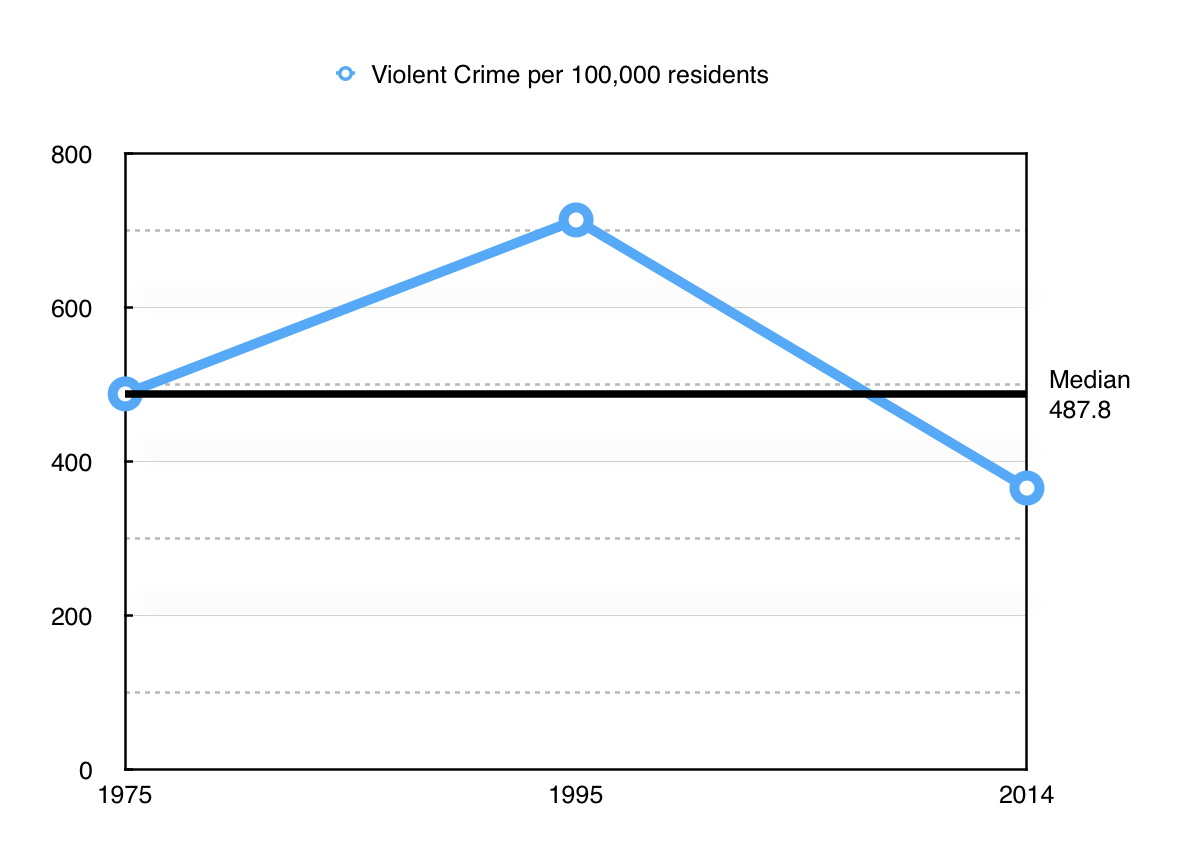
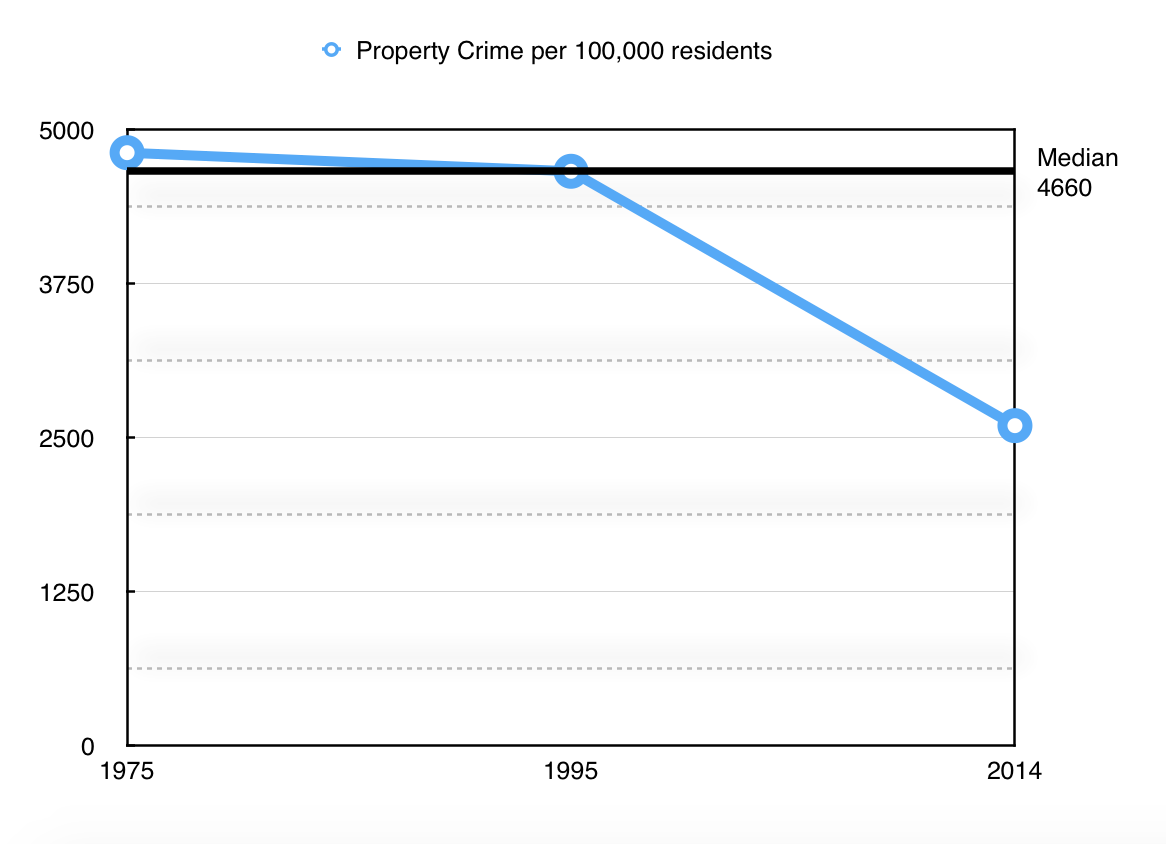
    Comparing 1975 to 1995 to 2014 Crime Stats

    Screen Shot 2015-12-12 at 7.36.21 AMViolent Crime data (includes things like murder, assault, rape)
    • 1975 – 487.8 per 100,000 (source)
    • 1995 – 713.6 per 100,000 (source)
    • 2014 – 365.5 per 100,000 (source)

    Screen Shot 2015-12-12 at 7.37.49 AM

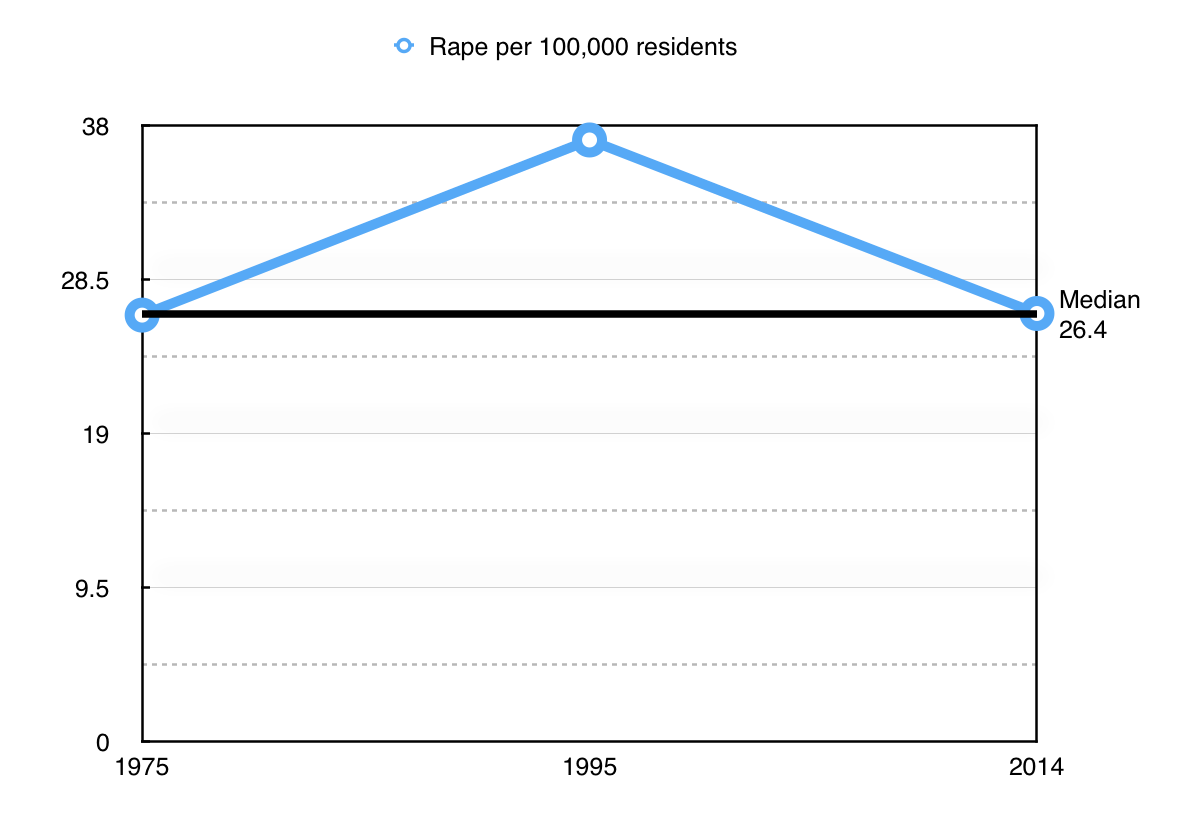
    Rape data 

    • 1975 – 26.3 per 100,000 (source)
    • 1995 – 37.1 per 100,000 – (source)
    • 2015 – 26.4 per 100,000 – (source)

    Screen Shot 2015-12-12 at 7.38.53 AM

    Property Crime data (includes burglary, larceny-theft, motor vehicle theft, arson, and things like that)

    • 1975 – 4811 per 100,000 – (source)
    • 1995 – 4660 per 100,000 – (source)
    • 2015 – 2,596.1 per 100,000 – (source)

    WOW!

    See, this is data. While the narrative, that “this country is horribly dangerous” is powerful… there’s an inconvenient truth. Our nation is so-much-better than when we were growing up.

    Less murder.

    Less rape.

    Less kidnappings.

    Less home invasions.

    Less carjackings.

    Less E.V.E.R.Y.T.H.I.N.G.

    Why Isn’t This Known?

    Why is the news full of bad news when things are actually getting better? Why do people say, “I don’t want to have kids because I don’t want to bring them into this kind of world?”

    Um, your community is significantly safer than the one you grew up in.

    So why? 

    [insert commercial break]

    [insert :15 trailer for 10 o’clock news]

    [insert clicking on “breaking news” on Twitter]

    Because bad news sells better than good news.  

  • 40 Stereotypical Things to Write in a Yearbook

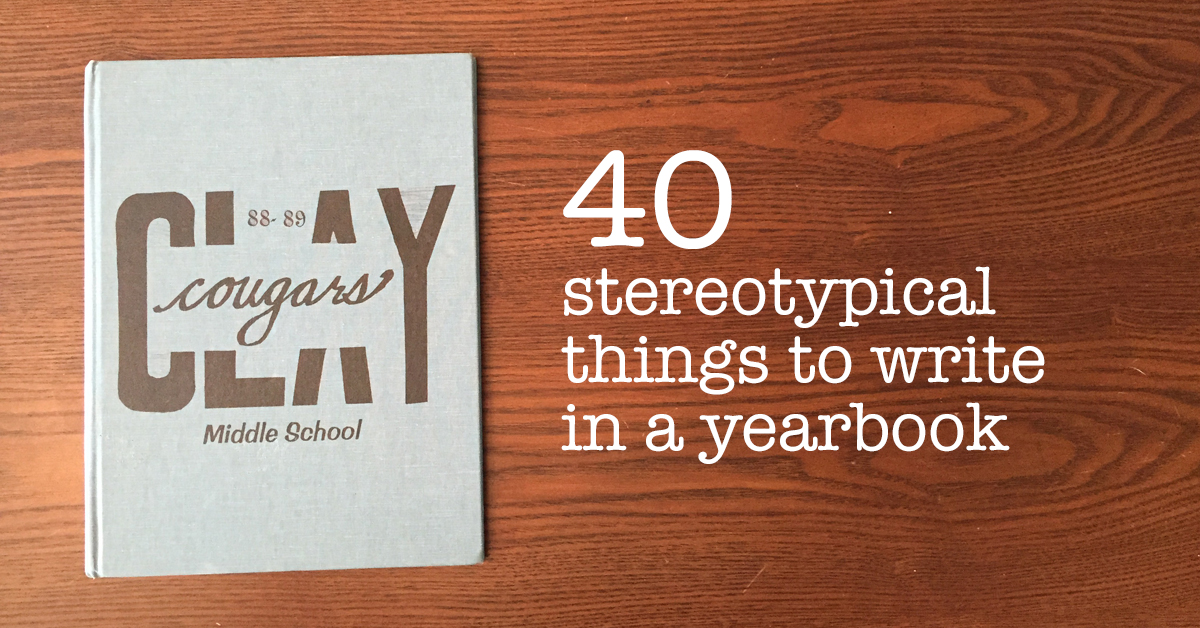
    40 Stereotypical Things to Write in a Yearbook

    Megan is in her last week of 8th grade. Yesterday, I asked her what she did at school to which she replied, “Pretty much we signed yearbooks all day in class. Then we had a yearbook signing party at the end of the day.

    And that got me thinking… “What does one write in a year book?

    With the help of my Facebook friends we created this list.

    40 Stereotypical Things to Write in a Yearbook

    Just to make it fun, my real world translation for each is in red.

    1. Stay cool (Julie F.) [I don’t really know you]
    2. My email address is 28384458383,2828@compuserv.com (Jason T.) [I am socially awkward and wanted to be friends, but didn’t get the nerve to take the first step]
    3. I’m the first to sign your crack. [Right along the binding] (Marty E.) [I think I’m original]
    4. Never change! (Marty E.) [Your yearbook got handed to me, I don’t know who you are]
    5. Always stay the same never change (Joanne H) [I went with the combo, props to you for getting the combo, not everyone gets it]
    6. K.I.T. (Jeff L.) [I have a lot of these to sign]
    7. I wish I could have known you better, but you seem like a really great person. (Jon M.) [Don’t call me, I’ll call you]
    8. Have an awesome summer!! (Julie F) [I don’t really know you]
    9. Let’s Keep in Touch (Alex B) [Probably not]
    10. HAGS (Sherry B) [I don’t know what to write]
    11. HAKAS (Andrew B) [I am pretty clever]
    12. Stay Sweet Always (Melissa B) [I don’t really know you]
    13. 2015 was great this year (Ryan S) [I am a teacher]
    14. Lylas – love ya like a sister (Aimee M) [We know each other from youth group]
    15. Friends forever! (Michelle R) [Probably not]
    16. I will always remember you! (Michelle R) [Probably not]
    17. Class of ’99!!! Next year we RULE THE SCHOOL! (Heather U) [I don’t really know you]
    18. Packing up the dreams God planted, in the fertile soil of you… (Tim G) [My dad is a pastor]
    19.  I know your future will be bright , I will miss you (Stacy K) [I’m not planning on seeing you next year]
    20. 2 good + 2 be = 4 gotten (Barb B) [I don’t really know you]
    21. 2 friends + 2 gether = 4 ever (Scott R) [I still listen to Boyz II Men]
    22. Have fun in the sun and get laid in the shade! (Adam K) [Can’t wait for your mom to read this while you are sleeping]
    23. See you in high school! (Christel A) [I don’t really know you]
    24. YOLO, so I hope you graduate this year finally. (Peter E. M.) [You are a slacker]
    25. To a cute girl with great clothes! (Terri G) [OMG, I can’t believe I got to write in your yearbook]
    26. Had fun with you in _____ class! (Deanna S) [I don’t really know you]
    27. We’ll always have ____ [teacher name] (Adam M) [We had some laughs in class, but we aren’t friends]
    28. I wish I could’ve known you more (Stacey K) [You are cute]
    29. Call me! (Gives someone else’s number) (Josh K) [I am clever for my age]
    30. God will do something good in your life. (Leneita F) [I don’t like you very much, but it’d be rude to not write something, so here you go]
    31. Don’t do anything I wouldn’t do (Jeff P) [My summer will be lame, hope yours isn’t]
    32. Live every day like it’s your last! (Jake A) [My summer will be lame, hope yours isn’t]
    33. Birds fly, ducks quack, I’m the first to sign your crack (Brock M) [I think I’m pretty clever]
    34. Too bad we didn’t hang out more……..text me (followed by number) (Jeffrey D) [I’m socially awkward but still want to hang out]
    35. Glad I got to know you (Karen K) [I don’t really know you]
    36. Best Friend 4-Ever (Heather U) [Probably not]
    37. Hope we stay friends, never change! (Mark K) [Emphasis on HOPE]
    38. I never told ya, but I think you have a great ass! (Donn B) [This is my last chance to hit on you]
    39. I’ll always remember how fun it was laughing with you in Mr. So-and-so’s class. (Jennie O) [I’m in AP and you’re probably not, I’m not planning on seeing you again]
    40. Have a bitchin summer. (Bill B) [Have a bitchin summer]
  • Eyelashes, Dinner Tables, and Other Stuff that Promotes Long-term Health

    Eyelashes, Dinner Tables, and Other Stuff that Promotes Long-term Health

    Have you ever wondered why we have eyelashes?

    This morning, while making coffee, I poured boiling water into our french press and it splashed a little in an unexpected way. A fraction of a second later my eyelid batted away a drop of boiling water that’d somehow missed my glasses.

    Think about that. When you blink, the duration of that blink is 100 to 400 milliseconds. (.1 to .4 seconds) But, according to researchers at MIT, the human brain can recognize an image in just 13 milliseconds. That means that, instinctively [and without caffeine] my eye saw an incoming droplet within flying at my eye, my brain saw this and processed “BLINK” all within a tenth of a second.

    This happened so fast and was so effective that I didn’t really think about it until AFTER it actually happened.  

    But is that the reason we have eyelashes in the first place? Preventing tiny boiling drops of water from hitting your eye? Partially. It turns out that our eyelashes do that… but it’s among their purposes.

    Through anatomical measurements, we find that 22 species of mammals possess eyelashes of a length one-third the eye width. Wind tunnel experiments confirm that this optimal eyelash length reduces both deposition of airborne particles and evaporation of the tear film by a factor of two. Using scaling theory, we find this optimum arises because of the incoming flow’s interactions with both the eye and eyelashes. Short eyelashes create a stagnation zone above the ocular surface that thickens the boundary layer, causing shear stress to decrease with increasing eyelash length. Long eyelashes channel flow towards the ocular surface, causing shear stress to increase with increasing eyelash length. These competing effects result in a minimum shear stress for intermediate eyelash lengths.

    Source

    Basically, your eyelashes exist to bat away tiny boiling drops of water but also help keep your the air around your eye moving, helping to keep the perfect moisture on all your eyes parts so that it operates optimally. Eyelashes too long? That causes fatigue. Eyelashes too short? You may experience dryness.

    The Dinner Table

    I think I’ve shared before that our family got our first dining room table last year. We transitioned from a family who rarely ate together to a family that regularly ate together around a family table. [Generally, we’d go to the kitchen to retreive food the go back to whatever we were doing. So we were together in the same room, just not paying attention to one another. Now we set the table, food is brought to the table, and we all sit there, eating together until everyone is finished.]

    The dinner table had an instant impact on our family. Our 11 year old, who when we brought the table home said, “That’s the worst idea you’ve ever had!” has been the biggest benefactor. While we all look forward to dinner together, it’s the one guaranteed distraction free time during the day where we’re together, Paul benefits from this the most.

    Since we started eating together I’ve started to recognize the family meal as a keystone behavior to our family’s health… this one thing lead to so many other good things! When we sit down together, good things happened. When we have a string of days it doesn’t happen, things begin to break down and old habits emerge.

    As we started experiencing this simple, yet powerful transformation, I started to notice all sorts of research coming out ascribing family meals other indicators of mental and physical health. (Obesity, depression, drug use, etc.) In short, the dinner table started to feel like a magic bullet when I know it’s not that simple. That’s why I was excited to read this study from Cornell University, which brought balance, understanding, and context to some of the other research emerging:

    The take away message from this study is that youth who engage in more frequent family meals tend to have lower depressive symptoms. While a more basic analysis suggested that family meals have a significant beneficial effect on child mental health, substance use, and delinquency, after accounting for demographic backgrounds and family relationships, these benefits decreased in magnitude, suggesting that they were not due to the family meals per se, but rather reflected the type of people who engage in family meals.

    Source

    In other words, family meals are not a magic bullet. But family meals do reflect a value we, as a family, seek to be.

    Ordinary Things, Extraordinary Impact

    Eyelashes and Dinner Tables. Two things so ordinary that most don’t even pay attention to them until they are gone.

    But without them? The long-term impact is dramatic.

    We live in a society that is infatuated with extremes. Extremes get attention whereas the ordinary is ignored.

    But if you ignore the ordinary? You’re missing your opportunity for long-term health.

    Photo credit: Close Your Eyes by Kristina Alexanderson via Flickr (Creative Commons)
  • The Value of Attention

    The Value of Attention

    If you want to know what’s important to a person…

    1990s answer — Look in their checkbook…

    checkbook register

    and follow the money. Where a person spends money shows what they really value.

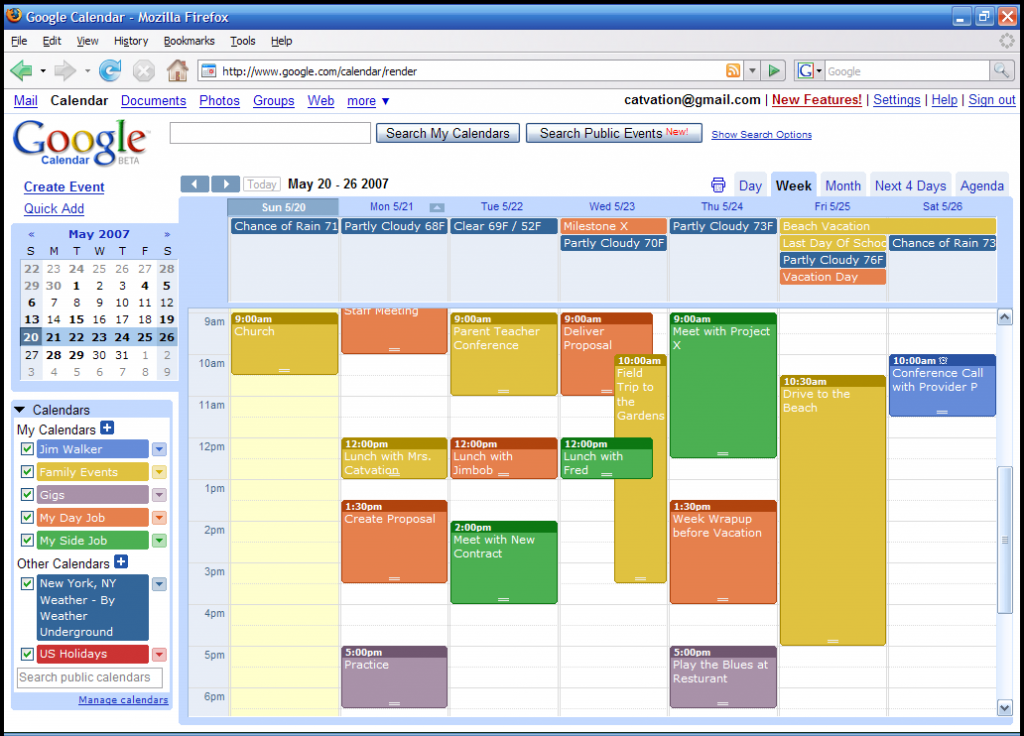
    2000s answer — Look at their calendar…

    Google Calendar

    and see where they spend their time. Where a person spends their time shows what they really value.

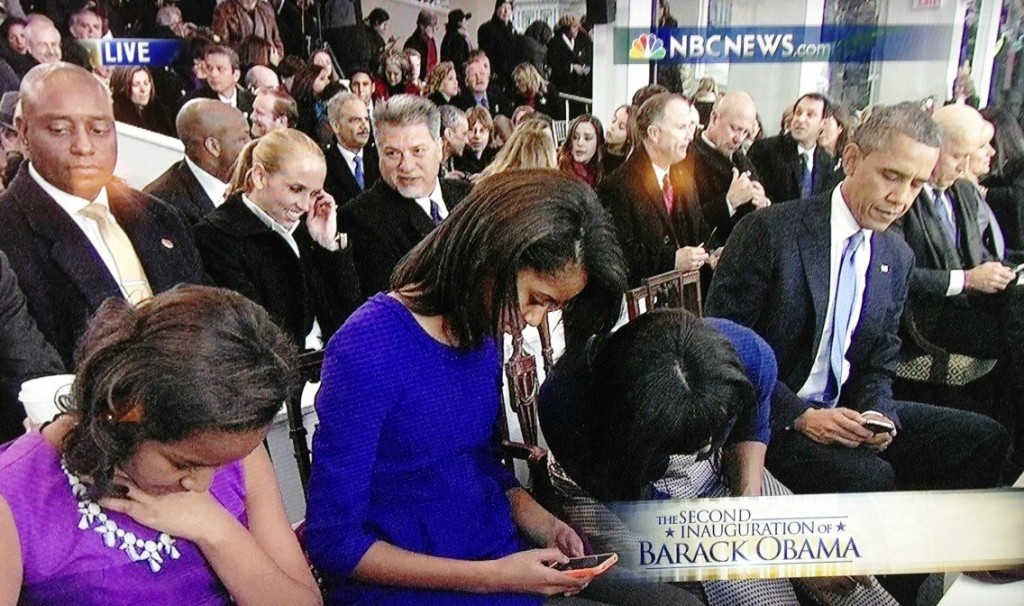
    2015 answer — Look at what they pay attention to…

    obamas-on-phone

    and you’ll see what they value. Where a person’s attention is at is what they care the most about, regardless of place or time.

    The Power Shift

    Those old adages are no longer true, particularly when it comes to younger people. (Teenagers and young adults.)

    They have little control of where they spend their money. We no longer live in a country where most teenagers and young adults have jobs. What disposable money they have is more likely to come from their parents or debt than from money they’ve earned. Largely, what money they have is already spoken for. Consequently, what they spend their money on has less and less value.

    They have little control of their schedule. Schools, sports, after school activities, social responsibilities, church & service expectations, and an incredible amount of newfound travel accessibility means that people’s bodies are busier than ever… But going places and doing things just doesn’t have the same value that it once did. Going on a big trip, going off to college, or even going out to dinner with your family– all are less of a big deal than ever.

    Today’s teenagers and young adults have almost no control or choice over their schedule… and consequently, it’s value to them means less.

    So what’s the most valuable thing today? 

    Attention. 

    Here’s the thought process– you’re likely doing it and haven’t even thought about it…

    I will go somewhere I’m forced to go, say to school or watching a movie on the couch with my parents Friday night– but being there doesn’t ascribe value to that activity because you you can’t make me pay attention. Being there and paying attention are two different things. One I have choice over and the other I don’t.

    Attention is my choice.

    Where I go is irrelevant.

    Doesn’t really matter if I have money.

    I will pay attention to what I want to pay attention. That’s my choice.

    Welcome to the Attention Economy

    Consequently, things that get our attention have the most value in our society.

    • Why is Snapchat valued at $10 billion without a real revenue stream to back it up? Attention.
    • Why are presidential candidates jockeying for the perfect announcement? Attention.
    • Why does ISIL have power? Attention.
    • Why do people look at their phones in the middle of the sermon? Attention.
    • Why do brands do outlandish things like give away their product on a specific day? Attention.
    • Why do app developers build in like buttons, push notifications, and other tricks to trigger your brain to release dopamine? Attention.
    • Why are you reading this right now instead of working? Attention.

    In 2015, if you want to make money. If you want to impact change. If you want to gain power.

    You have to get people to give you their attention.

    Take my money.

    Take my freedom of movement.

    But only I will know if I give you my attention.

    Unlike money, unlike place, unlike time… my attention is finite. It’s limited and what I pay attention to is is my choice and shows what I value.

    Ruh Roh, Shaggy

    83206ae67da70662c246b9cca0b92d2da77cae199a14e8d23e102739d5192b2e

    Buy you know what? The flip side is also true.

    I might be physically present. I might give you money. But that doesn’t necessarily mean anything.

    You’ll know I value something by what I pay attention to.

    Thought Questions

    1. In what ways is this true or false in your line of work?
    2. Do you agree that money and time have less value?
    3. If this is true, what needs to change for your organization to accomplish it’s goals?
    Photo credit: See it in my eyes by Adriana Cecchi via Flickr (Creative Commons)
  • Playing Tag, Riding Bikes, and other Nefarious Activities of Children

    Playing Tag, Riding Bikes, and other Nefarious Activities of Children

    “We don’t allow tag”

    Kristen and I looked at one another yesterday and giggled. It was more of a silenced snort. I looked down to hide my grin of disbelief.

    My 10-year old son had gotten into trouble for playing tag in the school yard at lunch. Even his teacher knew how silly it sounded. (For the record: We love his teacher. It’ no knock on her. School rules. Law & order you know.)

    The school banned the game of tag. Tag. Banned. A game played for centuries by school-aged children in every country in the world. Banned!

    So why can’t kids play tag?” Actually, I didn’t even have to ask the question. His teacher answered it before I asked. “The school doesn’t want kids running around, acting wild, on the asphalt.

    She then went on to share that her students haven’t enjoyed the new structured recess. In short, they hate it.

    Yes, the term structured recess is an oxymoron. Somewhere someone went to a conference that told schools that free play at recess was bad and that structured recess was good. So now instead of kids running and playing they are put into groups and are forced to play games.

    You see, structured recess counts as instructional time… so schools do it. 

    So now my son is a criminal. His heinous crime? Be tagged “it” and daring to challenge the taboo of chasing another student to tag him as “it.”

    First comes tag. Next comes buying and selling organs on the black markets in South Sudan. 

    It’s a slippery slope to destruction, Paul. And it starts with a simple decision. If tagged “it” what will you do? 

    God-forbid he gets a cootie shot. Circle, circle, dot, dot… now injecting yourself with a fictional drug will get you expelled.

    “Kids don’t ride bikes”

    A couple years ago I walked into my neighborhood bike shop and bought a very cool bike for Megan.

    I don’t know why. She never rides it. And I never… EVER… see other kids riding their bike around our neighborhood.

    Bike riding in our neighborhood is not a thing.

    If we put her bike in the minivan and we drive over to a park where there are lots of people riding bikes, she will ride. We will ride together and it’s wonderful.

    You see, that’s a fundamental difference between her childhood and mine.

    My mom bought me a bike when I was 10 and she didn’t see me again until I was 13.

    If it wasn’t raining we weren’t home. I’d come home and my mom would ask where I’d been. I’d just say “around.”

    Why? Because that’s where I was. Around. Everywhere and nowhere and up  to nothing. We spent hours… days even… climbing trees and building forts and jumping off things.

    I rode my bike around my neighborhood. Then I started riding my bike everywhere. I went miles and miles and miles around my community on my bike. And no one called the cops. My mom was not contacted by Child Protective Services.

    I was doing something perfectly normal.

    But today? My kids do none of that. I don’t know if they’ve ever climbed a tree. They’ve certainly never just gotten out of the house and been “around.” No hide-n-seek. No ghosts in the graveyard. No days lost to playing twenty-one until your hands turn white.

    I always know where my kids are. They are either at home, school, or church. When they go to a friends I know all the details. When they go somewhere else, an adult is there.

    To make it even creepier I’ve given my 12-year old an iPhone with GPS features. If I wanted I could track her all day, every day.

    It’s very, fundamentally, different than how I grew up.

    The death of free play

    I’m not saying any of this is good or bad. I’m just saying it is. 

    It is our kids reality. It is the world they are growing up in. This is the way education and parenting are today. Very high levels of control. Very low levels of childhood autonomy. And the absolute eradication of free play.

    Free play, as you and I knew it growing up, is dead.

    And free play is continually buried one-inch deeper with every news story about a child abduction or kid bullied on the playground or some idiot at the state capital decides that structured recess can count as a replacement for gym.

    Fear did this. Parents are so scared that their child will get hurt that they’ve eliminated all of the fun stuff about being a kid.

    So What?

    One day the rubber band of fear we’ve strangled our children’s childhood with will break.

    One day, our kids wake up as adults to the reality that the absence of danger was the most dangerous thing that could have ever happened to them.

    And then what?

    Question: Has your school banned free play? Do you think this is a good thing? Why or why not?

  • Everyone is a minority somehow

    Everyone is a minority somehow

    In a pluralistic society everyone is a minority somehow. 

    By minority, I mean that in an academic way. Meaning not a people group universally identified as a minority group but a group. We most often think of that in terms or race.

    I mean our society is now acknowledging groups of self-identified people who have formed their own ad-hoc tribe around an affinity to create a minority.

    Some examples…

    (more…)