Category: Culture

  • Rejecting the rejection of community life

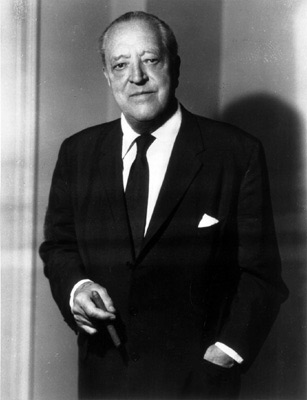
    In the mid-20th century architects like Mies van der Rohe envisioned simplicity and wholeness in urban centers. Into the chaos of the city their residential designs sought to bring wholeness and community. (For reference, see Upton Sinclair’s The Jungle.) They attempted to convince residents that an amazing community life could be had within just a short walk or bus ride from the office, the market, church, or anywhere else you’d need to go.

    This sense of urban holism was central to the phrase van der Rohe is now known for, “God is in the details.” In the chaos of our daily life, when we slow down to notice the small things, we notice God everywhere.

    Urban holism was largely rejected in the late 1960s and 1970s. When racial tensions, riots, crime, and violence increased in urban environments most population centers like Los Angeles, New York, Chicago, Detroit, and Philadelphia experienced a new residential phenomenon– suburbanization. (Or the more loaded term, white flight.)

    Suburbanization completely changed the landscape of American culture. It was a rejection of community life and an embrace of individualism. Explore just about any 1970s suburban development and you will see the contrast from urban life. Instead of communities built around common spaces like parks, markets, and clusters of people who knew one another, homes were constructed like fortresses and oasis for the individual family. The front porch became a façade. The double garage doors became a gate. The home itself was designed for privacy and experiences of the outdoors lead to a fenced backyard. Words that sold these houses were privacy, seclusion, safety. The master bedroom overlooked a spacious backyard of grass. The kitchen window looked into the backyard where mom could watch her kids play on their very own playset in the safety of their encampment, in complete opposition to the community life they experienced as children.

    You had to get into the car to go to the market, to school, to church, or just about anywhere. No longer did city planners include mixed-use development zones, it was Residential zoning on one side of the freeway and Commercial on the other. At the same time, people greatly increased their travel time to work. Instead of a walk or short bus ride, people took to newly created expressways to travel from newly formed suburbs named after forests in England to the dangerous, cold city for work.

    Instead of God being in the details our cars became our gods. As people spent hours and hours alone commuting to and from work or driving our kids from one activity outside of their neighborhood to another. The American Dream was reshaped from opportunity for a better life to opportunity for a better car or bigger, more private home.

    The net result was a complete rejection of life in community with one another. For centuries humans formed community with those they lived near. Now we form communities with people we like and are like us. The acquisition of things overtook the desire to acquire friendships or do what is best for our community.

    It was a dramatic demarkation from van der Rohe’s philosophy.

    Enter new urbanization. Through the 1990s and into today, children raised in the suburbs have stumbled upon centuries old principles of community living.  There is now a reinvigoration of urban living and a rediscovery of community life. (And even adaptations like urban farming.) Initially, this movement wrought havoc on urban communities, bringing gentrification. But in recent years more careful planning has largely kept money-hungry developers from gobbling up cheap property to flip from the urban poor to the yuppy.

    It’s a form of a rejection of individualism. (Or some would say a fulfillment of individualism.) As they seek community in the city they want to affirm their individuality by placing themselves into a complex ecosystem of community where their skills, passions, and ideas have value. The mainstream, suburban-focused, marketing-driven mindset of their parents struggles to understand why their children reject a comfortable, safe life in the suburbs for the chaos of the city. The news media looks at the increased ridership of public transportation and double-digit sales increases of bicycles and blames this on the price of gas. In their eyes, it could never be that people don’t want to have their own cars that they sit in for lonely hours on their way to offices full of people they don’t like.

    That’s exactly what it is. One generation looks at the failure of the generation of their parents and choses another path. That’s the nature of pendulum swings. We go from one wild extreme to the next. And in the process power (and the money that follows) swings wildly from corporate megacenters of suburban idealism to mom/pop shops where community-feel and small town ideals leads to parting with dollars.

    Questions for church leaders:

    1. Do you agree or disagree with this premise that people in America are shifting from a suburban mindset to more of a community mindset?
    2. How are you seeing this trend play out in your area?
    3. How does this impact your church?
    4. What are areas of the church where people currently say, “God is in the details?
    5. How does this impact your definition of community life within your congregation?
    6. Where do you find fear in this trend? Where do you find hope?
  • Pop Culture Christianity

    Am I the only one disturbed by the latest trend that Christians are chasing pop culture & news so they can share their unsolicited opinion?

    Part of my appeal in becoming part of the church was that it was an other-worldly, safe place where it didn’t matter that I wasn’t up on the latest fashion or books or news stories or TV show.

    Today… Many of my evangelical friends seem to have an opinion on every pop culture item of the day. In turn, they pretend to care what my opinion is so that they can tell me their opinion which I don’t really care about.

    Are we really this shallow?

    The latest Kanye West song? Here’s my commentary for how to talk about it in youth groups. The Royal Wedding? We all know someone is going to turn that ceremony into a Bible study on marriage and sell it for $9.99, right? The military finally found their #1 adversary, Osama Bin Laden. Within 24 hours hundreds of Christians had written blog posts telling me how to feel about it, process it through a Christian lens, and talk to my youth group about it.

    Stop the INSANITY!

    I’ve never read anything from Paul that instructs pastors to have an opinion about every news item. Is this buried in your job description under “Other duties as assigned?

    From a youth ministry perspective I don’t think it’s useful to introduce topics to adolescents, things that genuinely don’t matter to them, for the sake of trying to get them into a discussion, that you can then turn around and blog about, tweet about, or post on Facebook from a perspective of “My students really wanted to know what the Bible had to say about William not kissing Kate at the altar on their wedding day.

    It feels like there are so many more important things to talk about.

    When I hear of people who talk to their youth groups about all of these topics I think, “Don’t you have a teaching plan? Why do you deviate from it so much? Are you accountable to anyone for what you teach?

    The best opinion you can have most of the time is no opinion

    It’s perfectly OK to not have an opinion. No one is going to look down on you for saying, “I don’t really pay attention enough to really have an opinion. I’m really focused on loving my neighbors and serving the needs of the students in my youth group.

    Instead, reject this temptation to have an opinion on every pop culture item that comes across the ticker and focus fully on the ministry Jesus has called you to.

  • God grew tired of us

    Last night I finally watched God Grew Tired of Us. It’s a beautiful film worthy of 90 minutes of your time. (And available for streaming on NetFlix.)

    Our neighborhood, like a lot of other communities in the United States, has become a place of refuge for many people relocated here because of war. I’ve heard an estimate that as many as 60 language groups live in the 92115 zip code. A drive down El Cajon Boulevard or University Avenue validates. I meet them all the time, saying hello and exchanging uncomfortable pleasantries. My Swahili, Spanish, and Arabic is far worse than their English.

    The neighborhood in which I live has become a literal refuge in the city as we have a large, open park perfect for sports. Obviously children play at the park all day. But each evening, about 50 Somali men gather to hang out and play soccer until the sun goes down. On Saturday’s, several hundred people, mostly from Mexico and Central America, come to watch youth soccer. On Sunday’s, a different group of men get together to play cricket.

    Lately, my heart has been stirring me to figure out some of these folks stories. Maybe I’m just the curious type? And maybe God is the one pushing me? The difference doesn’t seem to really matter, I suppose.

    I wonder if they are as curious about my life as I am about theirs? What circumstances lead to them arriving here? Like the movie brought out, I wonder who is explaining to them some of the things they are encountering each day of their new life in America?

    I guess I won’t know any of that until I take the first step.

  • St. Patrick’s Day Prayer for the American Church

    Green beer, revelry, parades, and dyeing the river green.

    These are the things we think about to celebrate St. Patrick’s Day.

    However, when I think of Saint Patrick, I think of one of the greatest missionaries to have ever walked the planet. Born in Wales, trafficked as a teenager and sold into slavery in Ireland. Patrick miraculously escaped six years later, then after a time of preparation felt called back to the island of his captivity as a missionary. During his lifetime, despite early persecutions, he was instrumental to the success of Christianity on the island. By the time of his death he had planted nearly 500 churches.

    In honor of Patrick’s service, this is my St. Patrick’s Day Prayer for the American Church:

    Loving Father, Creator and Sustainer of our land. You are our Compass, our Standard, our Protector, and sole Provider.

    We are lost without you. In our own power we chose to make the Gospel about us. We are so busy being religious that we forget that it’s not only about us, it’s also about the lost.

    We are lost without you. We cannot sustain ourselves. We cannot rule ourselves. We cannot protect ourselves. We cannot provide for our people alone. We need you.

    Break our hearts, Lord. Help us to order our lives in ways that respect your Word.

    We are thankful, God, for Patrick’s ministry in Ireland. You called him from bondage to reach his captors. Instead of resentment you, you filled his heart with love. Instead of a life filled with nightmares from his past, he fulfilled his dreams day by day in the light of day.

    Raise up among us a new Patrick in our nation. A person to renew the heart of our nation for you. Millions among us have never heard Your Name nor felt Your presence nor tasted Your Grace.

    Prepare a young man or woman set free by your Spirit, who knows no fear, who will escape their present bondage and yet return to reach their captors.

    Awaken that person today, Lord. Echo Your calling in their ear. Begin in them an earnest desire to be filled with Your knowledge. Give them wisdom and understanding to penetrate to the marrow of our culture. Help them to cast out of our country far more dangerous realities than snakes.

    Give them boundless energy and laser-like focus.

    Open our ears, eyes, and heart to this new Patrick. Help us accept this person as Your servant among us.

    Refresh us, Lord. Awaken us, Lord. Remind us, Lord. Expand us, Lord.

    We need you now more than ever. Save us from modern day druids, from those who make us serfs, and from those who force us to acknowledge their power over Yours.

    Amen.

    See also:

  • What’s cooler than a billion? 7 billion

    So if I read that correctly… the church is going to need to become more urban in the next 25 years. Are you moving that way?

    HT to Fuller Youth Institute

  • iPhone, Your New Cigarettes

    iPhone, Your New Cigarettes

    The parallels between the iPhone in 2011 and cigarettes in the 1950s, 60s, 70s, and 80s are stunning.

    • It’s iconic.
    • It’s celebrated as the cool thing.
    • It’s a status symbol.
    • It’s celebrated in the media.
    • It’s manufacturer is getting rich.
    • There are cheap imitations. (Sorry Android users)
    • It’s addicting, but not viewed as a serious addiction.
    • The first thing you do in the morning is light up your iPhone.
    • The last thing you do before you go to bed is put your iPhone out.
    • People step out of meetings to check their iPhone.
    • People huddle around their iPhone while they walk around.
    • They do it in public, to the sneering glare of non-iPhone users.
    • After sex… well, some people light up their iPhone.
    • The price could go up at any minute, but you’d still need an iPhone.

    I’m as much an addict as the other millions of regular users. Hopeless. Helpless. And happily satisfied in my addiction.

    Just like cigarettes– users are left with the question:

    Do you own your iPhone or does your iPhone own you?

  • Lord, change me first

    What motivates people to change?

    Here’s a list of things that I’m coming to terms with…

    Things that I see which don’t change people or organizations but should: (Generally speaking)

    • Biblical truth
    • Their current reality, state, or condition
    • Current position, authority and/or aspirations of
    • Scientific research or law
    • Reading books about other organizations or people who change the world
    • Inspirational stories on the internet, television, or radio of success and/or failure
    • A new program at their school, work, or place of worship

    Now, if you are part of an organization, think about the amount of money you spend on the list above. Probably most of it.

    Chew on this…

    Things that I see which do help people and organizations change behavior: (Generally speaking)

    • Selfish ambition, money
    • Accessibility to something which feeds their ambition, money
    • Fear of losing their family, friends, position, income
    • Losing family, friends, position, income
    • Fear of being discovered
    • Being discovered
    • Peer pressure, positive or negative
    • Cultures laws, mores, and taboos

    Thought #1: Behavior change isn’t the point of the Gospel.

    Thought #2: Behavior change can be a manifestation of the Gospel in an individual or organizations life.

    Thought #3: The majority of  my time/my resources/my energy is invested in things that should change behavior but don’t. There’s a gulf between “ought to affect change” and “does affect change” that people I need to wrestle through.

    Thought #4: When I stop trying to be the answer for the top list and start building community where the bottom list is shared openly, then I see the Gospel go places I never thought it would.

    Thought #5: As a believer, according to Scripture, I am the answer to the change the people in my life so desperately search for. The question for me to wrestle with is this, “Do I want to be the person people expect me to be and focus on the things that ‘ought to affect change’ or do I want to look in the mirror, deal with my own mess, and help people exchange solutions that don’t fix a thing for solutions that are really hard but affect long-term change.”

  • Leave me alone

    Photo by Ian Burt via Flick (Creative Commons)

    Maybe I want to be in debt, eat crappy food, and watch endless hours of mind-numbing television?

    Has it ever crossed your mind that the reasons I do this are because I want to? And maybe, just maybe,  don’t want to be fixed?

    Maybe it’s not about addiction? Maybe it’s not some sort of freudian cover-up to deal with the pain of childhood lost? And maybe it’s not because I’m avoiding handling my responsibilities.

    Thank you Dr. Phil. Thank you Suze Orman. Thank you Dave Ramsey.

    Yeah– I’ve heard about the book. Yeah– I’ve heard about your website.

    But no thank you.

    A fix it culture

    Rooted in our DNA as Americans is an innate desire and need to fix things. We find our identity by making broken things better. It is a source of great pride. People who fix things are heroes. People who need fixing are zeroes.

    We hunt out things that aren’t right and apply a solid dose of American stick-to-it-tiveness to the situation so that it falls in line with a level of social acceptability.

    We love Dr. Phil.

    And Maury Povich, Jerry Springer, Judge Joe Brown, Oprah Winfrey, and we used to love Phil Donohue.

    We feed off of Biggest Loser. Before that we giggled at Richard Simmons, while thinking he was a hero at the same time.

    A show like This Old House or Flip this House are as addicting as crack cocaine.

    We text in our favorite underdog to American Idol or Dancing with the Stars.

    Then a few years later we cry along with fallen heroes on Celebrity Rehab.

    Fix me, baby. Fix me.

    Why?

    Because we have an innate desire to fix people.

    And yet we never ask the question… “Would you like to be fixed?” Or “Can we humiliate you on national television so people can be entertained?

    At the end of the day, deep in our DNA, we don’t care if someone wants the help nor do we take the time to understand how they could best use our help.

    We’re too busy fixing symptoms and not causes.

  • Sick Puppies – Maybe

    When the generations prophets cry for change you have to ask yourself:

    Am I a catalyst for the change they are calling for or am I the object the catalysts are fighting against?

  • Stop Throwing People Away

    There is something going on in church culture that I can’t stand. And it’s something I think we really need to change. And it is something we can change right now, in this moment.

    It’s this.

    We have a tendency to throw people away because they do or say or write one thing we don’t like.

    One thing. A moment. A blog post. A book. A sermon. A prison stint. A bad habit. Or even something they didn’t do but we think they should have in a Monday morning quarterback kind of way.

    Gone. That person is trash. I’m going to trash that person. For life. And hate them. For ever. I’m on Team Hate That Person for the rest of eternity.

    Really? One thing.

    We need to stop this. People of the King: We look like fools, not peacemakers.

    The world knows us as a people of hatred. Last time I checked Jesus didn’t call us to hate each other.

    Three examples from my life

    1. I don’t hate John Ortberg. I’ve never even met him. But I’ve had multiple conversations in the past few months where people asked me why I hate John Ortberg. It all goes back to a blog post I wrote in May 2010 where I disagreed with one thing he wrote on his blog. Really? That doesn’t mean I hate him. I never said I hate him. It means that he wrote something I disagreed with. That’s it. I’m not the president of his hate club. I’m reading one of his books right now. I’ve even bought and recommended his books in the past. I’m sure he’s a lovely person. I don’t hate him. It was one thing. Big deal? I’d still recommend his church. I’d still listen to him preach. Wait… I have still listened to him preach. Amazing, right?
    2. I know of few people in Churchland who have more haters than Tony Jones. People hate me because I’m an acquaintance of his and have recommended one of his books here on my blog. Really? You hate me because I am an acquaintance of someone you’ve never met or spoken to but hate because he wrote or said some things you don’t agree with. First, it’s dumb that you can hate someone like Tony. (If you’ve ever met him you’d find out he is unhateable.) Second, it is really dumb to hate me because I know him. This hate by association thing is illogical. What’s next? Are you going to hate me because I drive a Volkswagen and you’re a Kia guy? Lame.
    3. People think I hate C.S. Lewis. I don’t hate him. I think his writings are over-rated and over-quoted. But it’s not like I think he’s a heretic. (Though, interestingly, evangelicals who adore his writing would think he was a heretic if they actually compared what they believe next to what he believed. But most evangelicals don’t know what they believe… that’s another post for another day.) It’s not like I’ve banned his books from my home. I just don’t like it that he’s on the quote-a-matic. Need a quote? Don’t want it to be from the Bible? Just spin the wheel on my brand new C.S. Lewis Quote-a-Matic. What I’m really saying is that I wish more Christians would read wider. If I was going to hate him it would be because his middle name is Staples… I’m more of an Office Depot kind of guy.

    Litmus Tests

    Let’s face it. Every single person in the world could do something you aren’t going to like at one point in their lives. We are a broken people. We have a natural tendency to hurt and be hurt by people.

    And yet we walk around with these little litmus tests all day. A guy cut me off on the freeway? I hate him and wish he were dead. I don’t know him but I hate him? Are you kidding me? That’s a person doing something you’ve done. And you hate them?

    Ludicrous.

    We need to bathe in grace. And we need to carry around an aura of grace in how we interact with the world.

    Let grace be our cologne as we leave the house.

    Let the world know us for our gracious attitude towards those we disagree with.

    We need to adapt a mindset that says we can disagree with someone, even strongly, and never hate them.

    “For by the grace given me I say to every one of you: Do not think of yourself more highly than you ought, but rather think of yourself with sober judgment, in accordance with the measure of faith God has given you.”

    Romans 12:3