Category: management

  • How we got here is not how we get out of here

    In 1995, I got a job running some machinery on nights and weekends for a large health care company. I was a college student and it was a perfect job for me.

    • It was boring and I could do my homework. 
    • I had free reign to the 29th floor of a Chicago skyscraper until 6:00 AM. 
    • It paid $15.00 per hour, as many hours as I wanted to work.

    The people who trained me were meticulous is telling me “this is how things are done.” In truth, their system took a fairly simple task and made it really complicated. They spent most of their day waiting for something to load onto the computer or setting up the machinery.

    And when I’d point out that if you did things in a different order, the whole process ran a lot faster, I was sharply told, “Don’t mess with the order. This is how we were trained to do it. This is how things are done.

    And I did. Until they left. And then I did things my own way.

    This went on for months. The day staff would do 10% of the work and in 5-6 hours I’d come in and knock out the other 90% using my own techniques. And the day staff started to hate me. They’d leave me “encouraging notes” all the time about how I was making them look bad.

    One night, about 10 o’clock, the door of my room swung open unexpectedly. I was blasting the Newsboys, reading Hodge’s Systematic Theology, and the machine was running like a champ even though I was barely looking at it. To my horror I had missed that my bosses, bosses, bosses, boss– the VP of the department– had stayed really late to work. As she had heard my music and wanted to say goodbye before she left.

    I stood up suddenly, convinced I was about to be fired for breaking like 6 rules.

    Adam, I want to ask you some questions!” Crap. Dangit. How did I let this happen?

    It turns out that she had actually left at five and come back just to see me. She explained to me that she heard in a meeting that I was somehow doing more, cheaper, and faster than other employees who had 10 years experience on me. And no one knew why… so she had come to figure it out.

    By the time I was done explaining my process to her she had two questions for me:

    1. Could I teach other people how to do this?
    2. How soon could I start as the supervisor of that area?
    That’s when I learned that “this is how things are done” wasn’t going to work for me as an adult.

    This is how things are done.

    As an idea guy, there are rarely more offensive words spoken.

    In my mind, there are lots of ways to do everything and the way that you’ve always done them has lead you to the results that you know. So, if you have the absolute best results/product/organization on the planet, and it can’t possibly get any better than it is, yes… I suppose this is how you do it.

    But for everything else– This is how you do it to get the results you already have. 

    • This is our service order
    • This is our product cycle
    • This is our traditional calendar
    • This is our fundraiser
    • On and on

    This is how things are done” is fools gold. Because of the law of diminishing returns, “this is how things are done” will only lead you into doing less, earning less, and reaching less– instead of more.

    What’s interesting about being around people who believe in this? They think that it leads to greater efficiency and better results. And when results aren’t what they’d hoped they would be it’s not the system that is broken, it’s that you didn’t do things the right way, in the right order, or with the right people.

    You see, “this is how we do things” works. At least it does for  them.This is how things are done” is comfortable, predictable, and easy.

    But as a long-term strategy? It only leads to failure. Long term, systemic failure.

    Sadly, because the law of diminishing returns is gradual you don’t even recognize that your systems are, like the frog in the pot, killing you.

    Until one day you wake up and realize:

    • My church is way smaller than it used to be even though we’re working harder.
    • Kids aren’t coming to my retreats anymore even though I’m promoting it like crazy.
    • I’m selling fewer cars than I need to in order to survive and prices have never been better.
    • I’m making far fewer widgets than I need to be in order to make a profit.
    • I can’t make payroll, much less a profit.

    What’s the solution?

    Start some new mantras. “How can we do more with less?

    Create a culture that rewards soft innovation.

    Ask your frontline workers.

    Reward your frontliners and they’ll keep you on the bleeding edge.

    REVOLT: The systems that got you here will not be the systems that lead you where you want to go.
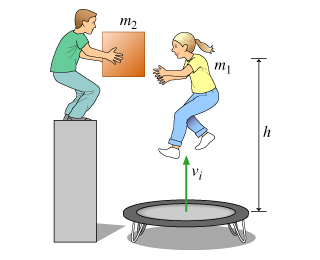
  • The Trampoline Effect

    Myth: It matters who you know.

    I couldn’t be more of a nobody. When I showed up as a 17 year old kid on the campus of Moody Bible Institute I couldn’t have been more aware that I’d stepped into a world I knew nothing about, knew not a soul, and had no claim to anything.

    As I met people, they referenced relationships to people I’d never heard of. Famous pastors. Famous parents. Famous books. Famous and important allegiances that would take them far in life.

    Years later I learned that some of my early ministry job references were telling people that my biggest obstacle to a ministry career was that I didn’t come from a ministry family. “He’s a nice guy, but didn’t grow up in a ministry setting, so he can’t possibly ever be that effective.”

    Huh…. Really? 

    17 years later I can look up many of those people on Facebook and quickly learn that knowing all the right people and kissing all of the right rings hasn’t gotten them very far in life.

    Why is that? Because it doesn’t really matter who you know. That’s just a lie told by people in power to make you think you’re a nothing. 

    Your Secret to Success

    The Trampoline Effect: Who you don’t know isn’t nearly as important as what you do with who you do know.

    Give me a handful of friends who want to help one another and we’ll do 10000% more in a month than a pile of well-connected, entitlement fat, whiners who think the world owes them their next paycheck.

    It’s simple physics. 

    Potential Energy = 0 Impact

    If you’re a nobody like me. If you’re like me and your family lineage looks more like a bush than a tree. If your track record includes some famous failures. If you have dreams bigger than your budget or zip code. If you woke up this morning and realized that you have no more tricks in your bag.

    Than the Trampoline Effect is good news to you. Having the right friends is nice. But it isn’t the difference between success and failure! I’m living proof.

    Get together with a couple friends and show the world what you can do. 

    Kinetic Energy = Massive Impact

  • Bottlenecks, rubberneckers, and other people who slow you down

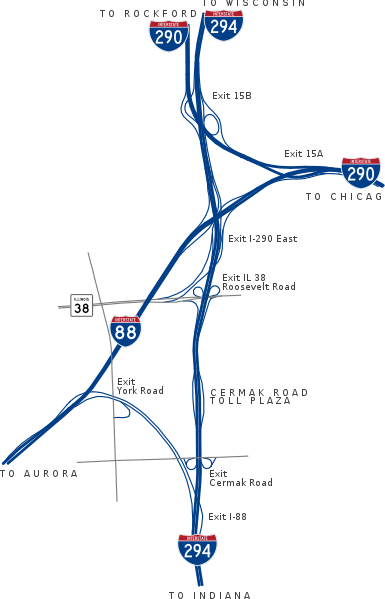
    Every commuter in Chicago is familiar with the Hillside Strangler. Prior to the early 2000s, this section of interstate where two major 6-lanes of highway merged onto a 3-lane onramp to a 5-lane city-bound highway doubled the commute of everyone. 11 lanes of traffic don’t merge into 5 lanes very well.

    The Hillside Strangler was a bottleneck. Everyone had to go through the bottle neck to get work done. Truckers. Commuters. Tourists. School busses. All of the pressure of the cities west side was placed on that 3-lane onramp each morning.

    People left an hour earlier just to sit and listen to the radio and sip coffee while they waited their turn.

    Conversely, on the ride home everyone hated rubberneckers. I can’t tell you how many times I’ve sat in traffic for up to an additional hour just so people in front of me could slow down and watch AAA change a tire or watch two people who got into a fender-bender fill out paperwork.

    Both are aggravating and all-too-common for commuters.

    And both are aggravating and all-too-common in organizations.

    Organizationally, bottlenecks are people, teams, or systems that slow things down at the point of decision making. While a legitimate part of the bureaucratic process they are frustrating to deal with for those who like to (or need to) take action quickly. For people on the front lines bottlenecks always take too long and  the mantra “It’s better to ask for forgiveness than permission” takes over. Which is why those who are the bottlenecks describe their job as herding cats.

    Likewise, within every organization there are rubberneckers or gawkers. These are people who like to talk about and look at things more than they like to do them. Sure, they claim it’s all human nature to want to talk about what is going on. But in the meantime they slow everything down.

    Every organization I’ve ever worked in has these two problems which slow everything down. Bottlenecks of decision or execution and rubberneckers who slow down to talk. (Or study, or hire a consultant, or pray, or wait for the board to meet, etc.) In many ways these are just the ebbs and flows of work life as you try to balance going about your everyday balance while trying to push forward to grow.

    Some organizations solve this by dispersing their teams

    Plenty of companies, some Fortune 500, are dispersing their staffs and closing offices to remove rubbernecking while dealing with the obvious issues of bottlenecks, internally. Working remotely, while once laughed at, has become en vogue as a way to keep people working and happy by eliminating the commute and office life altogether.

    Would this work in the church? Absolutely. Most church staff members I know look at their offices as more a liability towards reaching their community than an asset. No one went into ministry to be a desk jockey… but that’s most of what we do.

    Why aren’t we doing it? Perceptions and trust.

  • Manage Acceleration or Acceleration Manages You


    Back in college I had a job managing a group of machine operators. Part of my job was to make sure that the materials for the equipment were easily available to my team so that they could keep the machines running as much as possible. I taught my team to think of the machine as a cash register. When it stopped running the company stopped making money. With that simple mindset we were extremely efficient.

    Our materials came from various sources around the world, I purchased in bulk through a series of middle men, then stored the materials in our warehouse. In our department, we kept a small quantity and I would order replacement items on a regular basis and a different department would go get what I needed and bring it near our area of the warehouse and we would put stuff away.

    Typically, this was a smooth operation. But sometimes, like on a weekend or over a holiday, I would have to go out into the warehouse and get my own materials.

    Our stuff was densely heavy. So, I would take apart skids of materials on their shelves and put what I needed onto a very heavy hand cart one item at a time. Then I’d push as much as 1 ton of materials and put them away in our room.

    This cart was really cool in it’s simplicity. It had big steel wheels, heavy wood, and a massive steel bar for pushing or pulling.

    You know what was interesting about that cart? I could put thousands of pounds of materials on it, give it a big shove, and then walk along with it along the smooth concrete exerting very little effort. It took way more energy to stop it and start it than it did to just keep it going in a straight line.

    To keep that cart under control you had to find the right speed and apply an even amount of force. If you did that it was fine. If you didn’t apply enough force consistently you ended up working way too hard. But if you got going too fast… you would be out of control and you might not actually be able to stop it.

    I always feared that someone would walk out in front of me and I wouldn’t be able to stop the cart before it hit them. That never happened. But one of my co-workers did hit a very large steel post (buried in concrete) and bent it severely.

    That is physics in action. A giant mass doesn’t need to go very fast to apply a large amount of force against a stationary object.

    It is also a lesson in how momentum works. In order to keep moving with the least amount of effort, you have to apply a steady amount of force.

    I think the cart taught me a lesson way back that is easily applied to stuff I do today.

    Moving a lot of mass involves the right amount of force

    When I reflect on things that are out of control in my life… maybe I’m misapplying force? Maybe I’m going too slow and working to hard as a result? Maybe I’m going too fast and changing directions is just too difficult? And maybe I’m just not patient/disciplined enough to walk at the right pace or applying the right level of direction?

    Accelerate safely

    Too often, I have an attitude that I can do everything at once RIGHT NOW and all the time. And that means that things sometimes get out of control. Sadly, it also means that sometimes people get hurt.

    The role of friction

    The key to the cart working in the warehouse is that there’s very little friction between the steel wheels and the smooth concrete. That’s why its so important to keep the floor of a warehouse clean. Outside of the warehouse, friction is the variable in the equation that is not always under my control. In order to maintain momentum, I need to constantly monitor and deal with sources friction.

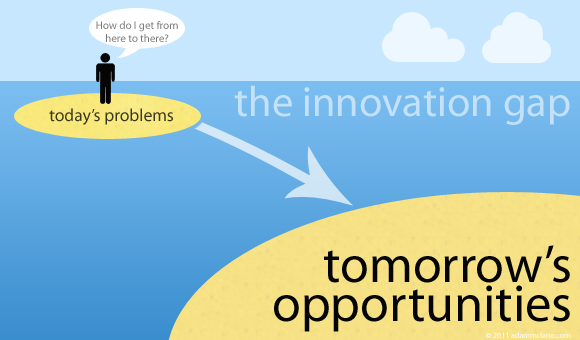
  • The Innovation Gap

    The pessimist complains about the wind; the optimist expects it to change; the realist adjusts the sails.” ~ William Arthur Ward

    “A pessimist sees the difficulty in every opportunity; an optimist sees the opportunity in every difficulty.” ~ Sir Winston Churchill

    “Sometimes when you innovate, you make mistakes. It is best to admit them quickly, and get on with improving your other innovations.” ~ Steve Jobs

    I don’t pretend to know what today’s problems are for you.

    But this much I do know–

    • The best ideas comes from those on the front lines. That’s the great joy of innovation. Today’s heroes count their riches while tomorrows heroes work all night.
    • Avoiding failure is a failure in itself. The trick to creating new stuff is to fail fast. Risk isn’t the enemy, comfort is.
    • Celebrate every milestone. A step towards your ultimate goal is still a step forward. Plus, moving forward will gain you momentum.
    • Every person has a creative mind. Don’t sell anyone short. Rarely are the best things innovated alone. Your best idea might come from listening to another person talk about the same problem.
    • Look at your problem from every angle. The best putters in golf walk all the way around their shot.
  • Team Meeting Strategy

    The team meeting.

    It’s one of those necessary evils of most organizations.

    No one truly enjoys them but it’s also critical for teammates to get an idea of where you are at regularly. Whether you are a start-up with 3 employees or a conglomerate with thousands of employees across multiple offices and departments, this is one of those ubiquitous things you do.

    For as long as I’ve had these meetings I’ve heard people complain about them. But the simple truth is I don’t know of a better alternative. How else are you going to know who is doing what, what needs to  get done, and how we are doing as a team?

    Forms of team meetings

    I break it down into two distinct styles:

    1. The sit down – Get the coffee, even the shortest version of this is an hour.
    2. The stand up – Get the coffee, but we aren’t going to sit so it’ll only last 10-15 minutes.

    Style of team meetings

    I break it down into three types:

    1. Report to the boss – Everything is presented to or directed at the boss, who responds and digs deeper as needed.
    2. Catch up with the team – Everything is directed at the team, those who need to ask more questions do so.
    3. Hybrid – Most team meetings are this, there’s a little bit of reporting to the boss, and hopes of collaboration.

    Adam’s rules for team meetings

    1. Be prepared – Typically these happen weekly. If you don’t show up ready you don’t take your job seriously.
    2. It’s a briefing, keep it brief – When I show up I want to have my facts handy, I try to stay on point, and I want to plainly communicate the whole truth. Facts, numbers, problems.
    3. Don’t hide failures – I like to make sure I communicate where I’m struggling, where my problems are, etc. Hiding that only leads to bad things.
    4. Open to questions – Even when I screw up, I make sure to ask if anyone has any follow-up questions.
    5. If you aren’t the team lead, don’t take over – I don’t like it when someone dominates this meeting that isn’t in charge of the meeting.
    6. If you are the team lead, moderate well – When I’m running these meetings I make sure I keep them moving. I’m never afraid to interrupt and say, “That’s a sidebar, let’s meet later.” Or “it would be better if you two just talked about that and reported back next time.
    7. The meter is running – In my mind, I calculate the hourly rate of these types of meetings. If there are 10 people who average $30/hour, are we getting $300/hour worth of benefit here?

    What about you? What are your rules for team meetings?

  • Right turns only

    According to this video, UPS truck drivers avoid turning left to save money.

    Turns out that it’s true. How do I know that? Because Mythbusters tested it.

    What does this have to do with anything?

    • It always pays to measure things and test theories, no matter how crazy they seem.
    • The shortest route isn’t always the fastest nor the most effective.

    HT to Derek Johnson

  • You need clarity and focus

    Paul’s teacher has been on us for a few months to get his eyes checked out. She’d tell us, “He squints to see the board” or “He says he has to sit up front. I think he needs glasses.

    I assumed, just like his big sister, that he’d need glasses eventually. Everyone in my family wears glasses. It’s an inevitability for McLane’s.

    Until recently, he never complained about not being able to see well. When we asked him to read a sign or move back from the TV he’d just roll his eyes. In truth, there are a number of behavior issues we are dealing with, so we thought this stubbornness about sitting near the TV was just part of his personality.

    It all made sense when I took him to Lenscrafters on Saturday. He was very excited and talkative about the appointment. As we waited for the doctor to see him, he was a nervous kind of chipper that we rarely see.

    Then he did the pre-screening. He seemed to instantly shut down. There were four machines with simple tasks. In each of them he was excited to do it. But in each of them when the doctor asked him questions he just didn’t answer.

    Uh oh, this isn’t going well.” I sent Kristen a text.

    When the pre-screening was over I asked him why he didn’t answer any of the questions. “She was trying to trick me. I never saw anything like she was saying I should. I’m not going to answer and get an answer wrong, I only like correct answers.

    That’s when I started to worry. It hit me. It’s not that he wasn’t trying. It’s that he had just failed all four of the pre-screening tests. Had we somehow missed something all along? Does my son have a vision problem?

    My mind raced to connect the dots.

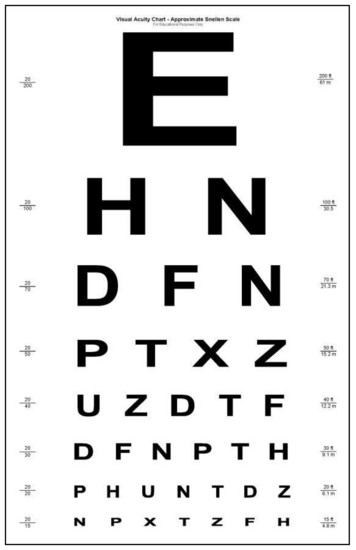
    Then we went into the big room. The one with the hydraulic chair and big eyeglass contraption. The chair was on one wall and the chart with all the letters was on the other.

    Paul, there are no wrong answers. This isn’t an eye test. We’re just seeing how we can help you see better. Is that OK?” He shook his head affirmatively.

    She explained what all of the instruments were in the room– so he wouldn’t be surprised by anything. (My heart was pumping a million miles per hour!)

    Paul, can you tell me if you see any letter on the wall right in front of you?

    Letters? All I see is a white wall.”

    She pulled a pen from her pocket and held it about 2 feet from his face.

    Can you read the letters on this pen?

    Of course I can, duh!” He was starting to have fun.

    Within a few minutes she started dialing her contraption to discover the right lenses which would help Paul.

    She flashed the first set in front of his face.

    Ha! Ha! Now I see the poster on the wall. You weren’t tricking me.

    On and on this went. Within a few minutes he was able to read the smallest letters on the chart with ease. First with one eye, then the other.

    Finally, she made some measurements and pulled out two lenses from desk. Just as she was putting them in front of his eyes she said, “OK Paul, tell me what you can see now?

    His face lit up. He quickly started looking around the room. “Wow! I can see everything.”

    A smile was plastered on his face like one I’d rarely seen.

    I beamed at his discovery.

    The doctor turned to me and said, “Your son is profoundly nearsighted. But he doesn’t have a vision problem. He has a clarity and focus problem. Glasses are going to change everything.

    That was a lightbulb moment for me. My mind started to race at all the times I’d taken him to sporting events or movies and he’d turned to me and said, “Can we leave? This is boring.” Or all of the blank stares when we pointed out historic sites. Or why he burned through quarter after quarter looking at New York City through those big binoculars. Or why he hated playing catch with me in the backyard. Or why riding his bike had always seemed so scary. On and on– the dots began to connect.

    How many of the behavior problems that we pull our hair out over are tied to this one simple thing… He couldn’t see?

    We will soon find out.

    The hour between ordering his glasses and picking them up might have been the longest 60 minutes of his life. We wondered the mall aimlessly. And about every 2 minutes he’d ask… “How much longer?

    Finally, the time came and the lab technician called his name. As he put the glasses on his face and the technician made adjustments to the frames, I could see his eyes shooting all over. He was reading and discovering everything in the room. It was a brand new world!

    As we left the store he grabbed my arm. “Dad, look at those clouds!

    What the moral of the story?

    There’s a lot of talk in leadership circles about having strong vision. But vision without clarity and focus on purpose will lead you, your organization, and your teams to become near-sighted.

    It’s one thing to have big vision. It’s another thing to back that up with clarity and focus.

  • 3 Qualities of Successful People

    Photo by SearchNet Media via Flickr (Creative Commons)
    I have a lifelong obsession with golf. It started in 2nd grade when my parents scraped together enough money for a starter set and a series of playing lessons at a local par 3 course. Even though neither of them were serious players– I guess they thought I’d enjoy it. And I did. A lot.

    Don’t read that the wrong way. I’m not a country club kid. I’ve never belonged to a course where I got my own locker or had an account on file with the restaurant.

    Instead, I grew up playing city-owned munis and family-owned courses. In middle school, my first membership to the local golf course cost my family $50. That also included an annual pool membership, ice rink membership, and anything else the Mishawaka Parks Department charged money for. I didn’t grow up playing with kids named Chip or Trevor. We were more of an Adam, Mike, and Tim kind of crowd. But golf was my obsession. All summer long, every day, I play 27, 36, or 45 holes of golf.

    Here’s what I learned about success in golf that translates to life: We don’t have equal access to success

    One fact that I love about golf, especially professional golf, is that anyone can become a professional in 7 days. Unlike any other professional sport on the planet I can start on Monday as a nobody and win a million dollars on Sunday. Just about anyone can enter a qualifier. And if you manage to qualify you are in the same tournament as the card carrying professionals on Thursday. And if you make the cut on Saturday, then manage to win on Sunday– they will hand you a big check and a Tour Card for the rest of the season.

    Fat chance trying that in baseball, football, or basketball.

    But that almost never happens. While there are several PGA Tour members who rose from poor backgrounds to earn their card on Tour I can’t name a single person who is currently on Tour who started as a Monday qualifier and turned a good 7 days into a career.

    It can happen, but it is nearly impossible.

    Instead, if you look at those who made it, you’ll see that their success is a combination of 3 qualities.

    1. Talent – Talent is the constant. Talent is the difference between learning skills well enough to be pretty good and being a winner. Over the years I’ve played with and coached hundreds of people. But when you walk the course with a person who has a natural talent for the game… it’s amazing. Most amazing is that these players can rarely describe to you the mechanics of what they are doing. They just try stuff and it works.
    2. Ambition/hard work – Talent isn’t enough. I’ve met plenty of talented players. Each high school team of 12-15 young men had 3-4 players with enough talent to take them to the next level. But if they aren’t single-focused enough they won’t advance in the game. An ambitious person never stops practicing. They putt in their living room. Hit wedges in their backyard. Keep a 7-iron and a bag of balls in their trunk to practice between meetings. They play 9-holes before work and chose vacations with great practice facilities.
    3. Environment/resources – This is the X factor. This is the difference between a good local golfer and a professional. They have access to amazing resources. In most cases, their family has invested in them from a very young age. They played in expensive junior tournaments. They have great equipment. They have great coaching. And it results in opportunities to get to even better tournaments, more finely tuned equipment, and the best coaching.

    You can be pretty good, above average, with two out of the three. But you’ll never be excellent. There are millions of guys putting their clubs in their trunks right now who have endless talent and ambition but aren’t in the right environment with the right resources to make it to the next level. And this weekend will be full of guys who pull up their Mercedes at a country club, with access to the best environment and resources and absolutely no talent for the game.

    I don’t care about golf. What does this have to do with you or me?

    We each have something we were created to be amazing at. There is something in our lives that we have talent, ambition, and resources to be the best at.

    Identify that thing… no matter how obscure the niche`… and you’ll find the success you know you deserve.

  • 5 Sources of Creative Inspiration

    Getting stuck is a big deal. In my world it means progress stops. So getting from an uncreative space to a creative space is integral to thriving.

    One thing I’ve learned about myself is that restarting the creative process is typically a matter of moving in one of two directions. I refind my mojo by taking things from very structured to very unstructured or visa versa.

    5 Sources of Creative Inspiration

    1. Improvisational jazz or intensively introspective classical music. I have a few works from Miles Davis and Rachmaninoff that seem to come in handy at different times. The ordered chaos in Miles Davis seems to help my brain make sense of things when I’m going a million different directions on a project, all of which I like but can’t figure out how they fit. And the acapella All Night Vigil has a unique ability to both calm and awaken my senses. Anxiety, particularly that my work will be rejected, is a major block. For some reason Rachmaninoff helps me release that.
    2. Magazines. I like the staccato pace of magazines. While I do get a few regularly I can’t say that I read one all the time. But when I’m stuck I tend to gravitate to a magazine. There’s something about the page turning, the ads, and getting stuck on a story that always leads me to my notebook to draw or sketch. (Or Evernote if I’ve got new ideas.)
    3. A walk or bike ride. Sometimes I just need to think about something else for a while in order to think about a project in a new way. Taking the dog for a walk in our neighborhood or riding my bike somewhere is a great stress relief and for some reason typically helps me clear my mind enough where eventually, almost accidentally, my mind will free enough to release a creative idea.
    4. Web design showcases. For some reason this helps me even if I’m not working on a web project. I subscribe to several web design sites and when they publish showcases of cool designs I always bookmark them for later. There’s something inspiring about seeing how people are using the latest HTML5 tags or what’s hot in Polish web design or the hottest trends in mobile app sales.
    5. Deadlines. I’m a middle schooler on the inside. The pressure of a deadline gets my juices flowing. Maybe it’s the desire to get stuff done on time and maybe it’s the pending reality of failure? Who cares! I find the approach of a deadline an important part of the creative process. It helps me get to past the point of something needing to be perfect and into the frame of “What is the best I can do with the time I have available?”

    Creative buzzkills

    These are probably unique to me but maybe they are stopping your flow, too?

    • Novels and non-fiction books. I find biographies sources of inspiration. But novels and non-fiction works tend to suck creativity from my brain.
    • Pressure to perform in the moment. There are times when I can come up with amazing things in a group setting. But typically, my best group work comes in lulls in the action. But if you walk up to me and demand three ideas for something I know nothing about, I’ll punt every single time.
    • A palette too big or too small. I do best with some parameters. A few, not too many.
    • Interruptions. It can take me a couple hours of fiddling around to really get into a creative groove. But it can take only a single interruption to get me out.

    I suppose this all just proves one thing. I’m a pain in the neck to work with!