• The great hope of the American church is…

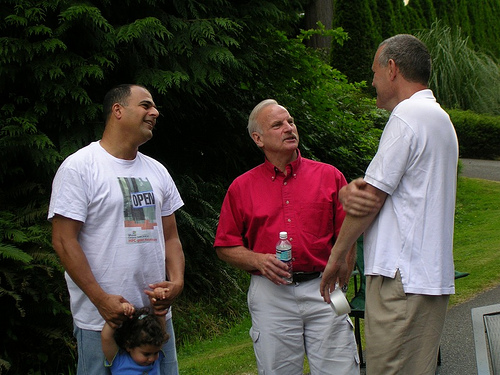
    Photo by Gary Ericson via Flickr (Creative Commons)

    Neighbors loving neighbors.

    The funny thing is that if you read enough church leadership blogs or read enough books by big-time church people you start to think that they believe the great hope of the American church is the church organization and its staff.

    We know Jesus was a big fan of all things mega, right… (read John 6 to see an example of Jesus’ mega model.)

    And we know that he sometimes went to the Temple or local synagogue but he just as often met out in public spaces, in a field, or in homes.

    As a member of my faith community I’m reminded of the words of Paul in Romans 12:3-5.

    For by the grace given me I say to every one of you: Do not think of yourself more highly than you ought, but rather think of yourself with sober judgment, in accordance with the faith God has distributed to each of you. For just as each of us has one body with many members, and these members do not all have the same function, so in Christ we, though many, form one body, and each member belongs to all the others.

    What about people? Do you know any people?

    Healthy organisms are marked by their ability to grow.” – A church leadership mantra.

    Apparently they skipped botany and biology. In my garden the goal of a maturing organism is reproduction. If something grows too big, is not pruned, and doesn’t reproduce… I pull it out of the ground and add it to my compost pile. A plant not reproducing is a waste of good soil, space, and time.

    Understanding species

    See, big churches or small churches or whatever your church species choice/preference is, were never designed to be the solution to reaching people. I’m a fan of churches of all sizes and shapes. But the species of a church was never the point in the Gospels.

    The church is a gathering place of worship where we celebrate what God is doing in us and through us. In nature, the health of any organism is measured by its ability to reproduce. I believe the same is true in the church.

    The solution is you. Your love for your neighbors is infinitely reproducible. Jesus death tore the veil between priest and citizen. Jesus freed Hope from the descendants of Aaron and gave us each equal access to the King. You have been empowered to reach your neighborhood. And thanks to the hard work of generations of scribes and translators you have, in your possession, the greatest tool you could ever need to reach your neighbors– the Bible.

    Jesus could have chosen to spread his message by force. (Some of his disciples really wanted that!) But Jesus knew that hope doesn’t spread by force. Change only happens when the heart is transformed. (Our military has learned that in Iraq and Afghanistan.) [If you want to see the power of a message of hope vs. a message of force, just compare the exploits of David in the Old Testament to the exploits of the apostles in Acts.]

    A message of reconciliation to the Father was a message of the heart best transferred neighbor to neighbor. It was never intended to be a come and see message. It was only meant to be a go and do message. It’s not dependent on a top-down leadership structure. Instead, Jesus empowered the people to change the world from the bottom up… from neighbor to neighbor.

  • SDSU: I believe that we will win

    SDSU: I believe that we will win

    This is more fun in person.

    As a good friend and SDSU alumni is quick to tell me, I joined the Aztecs fan-dome at just the right moment in history. It’s been amazing to see this school go from identifying itself as a party school to a campus full of pride for its athletics. (Baseball, football, and now basketball.)

    Not many people outside of Southern California have noticed this transformation. But it is exhilarating.

    When we moved into the college area almost three years ago I decided I would embrace the school… because it’s part of my neighborhood and some of our neighbors are students. Yet, as a person who grew up around a major university, I was shocked by how little people cared about SDSU. You’d rarely see non-students wearing SDSU gear, people didn’t care about the sports, and even the school itself was kind of a third or fourth choice place. Non-student neighbors didn’t take much pride in being in the college area. And, unlike in South Bend, there wasn’t a soul who had the school’s logo painted on their garage door or a school flag hanging from their flag pole.

    Not anymore.

    Yesterday was marked by three major things in the life of SDSU.

    First, they welcomed 4100 brand new freshmen on campus. They had record applications.

    Second, I rode the train home from work with a trolley car full of fans headed to the game…. this is two full hours before tip off! This is something you only see with the Charger or maybe the Padres if the Angels are in town.

    Third, the national media has no choice but to pay attention. They were the first team to 20 wins and hold the longest win streak in the NCAA.

    As I walked around the Viejas Arena last night before finding my seats I did an extra loop around the stadium because the buzz was palpable. Everyone was wearing SDSU gear, walking through campus I saw tons of visitors carrying bookstore bags… and I mumbled to myself, “This is what jumping on the bandwagon feels like.

  • If you don’t want to play with the big boys…

    Photo by Callan Christiano via Flickr (Creative Commons)

    Stay on the porch.

    I remember my mom saying this when I was a kid. One of us would come home crying because we got a bloody nose or a scraped knee from playing 2-hand-touch football or 21 in basketball, and she’d just kind of sarcastically say, “If you don’t want to play with the big boys… stay on the porch.” I think she said it with a smile– but the message is still the same.

    Getting roughed up is just part of life. When the kids come to ask who wants to play– the wimps stay home and play inside.

    The same is true for church leaders today

    I’m 34 years old. I’m not getting any younger or more energetic from here on out. Welcome to middle-age, baby.

    I know a whole lot of people who work in churches who are about 5 years above or below me. They have all the education and experience they need to lead their churches from the mire they find themselves in. And yet they sit on the porch like little brothers. “I’m not on the board.” Or “I’m not the lead pastor.” Or “I don’t like conflict.

    They levy excuses like, “I could never say things like you say and keep my job.” Or “I really admire the stand you take on ____.

    If you are 29-39 years old… welcome to the prime time. If no one else is saying it to you, I will: This is your opportunity. Everyone is waiting for you to do something. If you need permission… it’s not going to happen. Make your own permission!

    I’m tiring of people who are sitting on the porch, waiting to get in the game, being told that they don’t have quite the correct age or position or rank to do anything significant.

    That’s a lie from the mouth of the devil. Wake up! Game on!

    Leaders lead people to where they would otherwise not go on their own. Period.

    Leaders don’t sit on their hands politely and bide their time waiting for someone in leadership to bestow on them magical powers to lead. They lead. It is who they are more than a position they hold.

    In other words, they see that getting your nose bloodied here and there is part of playing with the big boys. That may mean you get fired. So what? That may mean people say mean things about you. So what? That may mean you might have to stand down a group of older men/women in charge. So what?

    At least you got fired doing something. It’s better than getting fired for doing nothing.

    The power to change things is rarely given to you by sitting back and being patient. Just ask Prince Charles how well that is working for him. Power is taken. Power is awarded. But power is rarely given to really good middle managers.

    And the secret is that the people in power are waiting for you to stand up to them and take it. How else will they know you are ready to lead?

    Sitting around on your hands and watching the big boys play until you are viewed as old enough is just going to result in your doing nothing another year. Stop sitting in your corner, reading another Christian leadership book, and get in the game.

    Your community is dying because of your passivity.

    Today is the day. Now is the time. Lace up and get in the game.

  • Wanted: Maladjusted Activists

    No application necessary. Work from home.

    Position available immediately.

  • Unleashing a Feeding Frenzy

    Photo by Iggy via Flickr (Creative Commons)

    Last night, we dropped a bucket of chum in the tank and ran away.

    Back in December we introduced Inductive Bible Study at our winter retreat. It wasn’t anything fancy– in fact I thought it was a little cerebral for a retreat. (This coming from a guy who did a high school retreat based on the spiritual disciplines of Richard Foster!) We broke up into groups, each team given a part of a parable, we tore into it, and came back together a little later to share what we’d learned.

    Sparks flew.

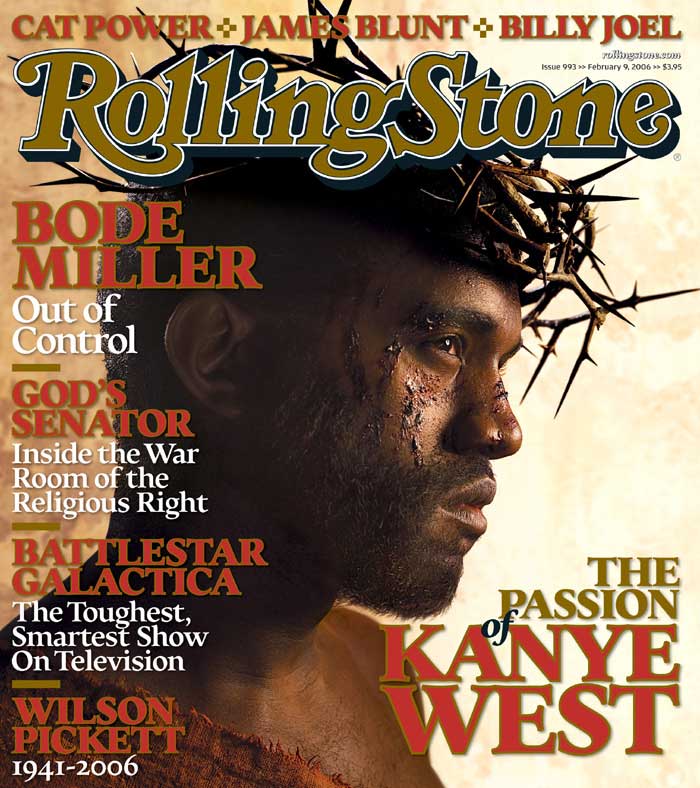
    In my group a key moment happened when we were studying the parable of the sower. One of the guys in my group had been a little frustrated… “Why did Jesus teach in riddles like this? Why didn’t he just tell them what he wanted them to know. This is so confusing” Another person in the group looked at another part of the parable and said, “I think it’s like rap music. Jesus was speaking to people who understood the words like he did, but people who didn’t get, he wasn’t talking to them.” (Maybe Kanye and Jesus really do have something in common?)

    Kanye ain't Jesus, but Jesus taught like KanyeWhen our leadership group met a couple weeks later, the students told the adults… “We don’t want you to lecture us. Instead, teach us how to study the Bible on our own.

    Collectively, our  heads tilted 10 degrees to the right. We didn’t see that coming.

    Last night my task was pretty simple. Get the students thinking like investigative reports. Questions, questions, questions. Ask the text lots of questions. And get them to grasp that in Luke 1, Luke was setting out to do the same thing we were asking them to do. “Put the story in order so it makes sense.

    I created an object lesson where each student received a sealed envelope, each envelope containing a fragment of a vaguely familiar story, and they had to piece it together, chronologically, in three minutes. They were frustrated, some gave up, and in the end they didn’t quite get it in the right order.

    They saw that putting a vaguely familiar story together in chronological order was a nightmare unless  you took the time to carefully examine every fragment.

    After we read the worst rendering of ‘Twas the Night Before Christmas in history I gave them the background information they’d need to understand why the Gospel of Luke was written. Theopholis, either a new believer or an investigator of Christ, had likely hired Luke, a believer and doctor, to go back and document what actually had happened. He’d find witnesses and put together the story to document an orderly account of Jesus’ life. (Luke 1:3) There were all sorts of fragments, little letters, floating around. But someone had to put all the pieces together so that the story would stand up to histories glare.

    From there it got noisy as students went into their groups.

    Group time was disorderly. It was messy. Loud. All over the place. Markers coloring. Pens circling. And the group leaders had to poke and prod to move things along.

    But students were asking questions of the passage. Good questions.

    • Why did Gabriel pick Mary?
    • Who was this Zechariah guy? And why was it important that Gabriel made him not speak?
    • Even though Mary was scared, why did she consider it an honor to become pregnant with Jesus?
    • Why did Luke mention that Joseph was a descendent of King David?

    At the end, when we shared what we learned, I think students were left with more questions about Luke 1 than answers. And that’s a very good thing.

    I closed our time by asking them what this passage had to do with them. Those dots had not quite gotten connected… and that’s OK.

    A process

    As we cleaned up… the leaders were exhausted. I could see it on their faces. What have we gotten ourselves into? We really had to work hard to keep it together. But I was left with a few thoughts of encouragement.

    • We aren’t after quiet compliance. To change this community we need students who investigate God’s Word for themselves, ask hard questions, and put it to work.
    • It’s OK if it is messy and loud. Being quiet doesn’t mean they are engaged any more than being loud means they are disengaged. And finding the right answer isn’t as important as learning how to look for the right answer.
    • It’s OK to ask more questions than provide answers. Leaders have a desire to wrap everything up in a neat little bow. But that’s not how Jesus taught. He got the crowd thinking and then sent them home.
    • Teaching critical thinking skills takes time. In truth, today’s educational system isn’t designed to teach critical thinking skills. It teaches to regurgitate facts more than to comprehend them. Retraining the brain takes time.
    • We’re teaching a life skill that can transform our church. Imagine what would happen if our pews were filled with people who self-fed God’s Word in community? Imagine how that would change our Sunday morning worship services? The focus would step away from teaching and move towards celebration.

    Messy. Exhausting. Intriguing. Fascinating. Thrilling. Scary.

    These are words I’d use to describe unleashing a feeding frenzy of God’s Word on our students last night.

    And I like it.

  • Leave me alone

    Photo by Ian Burt via Flick (Creative Commons)

    Maybe I want to be in debt, eat crappy food, and watch endless hours of mind-numbing television?

    Has it ever crossed your mind that the reasons I do this are because I want to? And maybe, just maybe,  don’t want to be fixed?

    Maybe it’s not about addiction? Maybe it’s not some sort of freudian cover-up to deal with the pain of childhood lost? And maybe it’s not because I’m avoiding handling my responsibilities.

    Thank you Dr. Phil. Thank you Suze Orman. Thank you Dave Ramsey.

    Yeah– I’ve heard about the book. Yeah– I’ve heard about your website.

    But no thank you.

    A fix it culture

    Rooted in our DNA as Americans is an innate desire and need to fix things. We find our identity by making broken things better. It is a source of great pride. People who fix things are heroes. People who need fixing are zeroes.

    We hunt out things that aren’t right and apply a solid dose of American stick-to-it-tiveness to the situation so that it falls in line with a level of social acceptability.

    We love Dr. Phil.

    And Maury Povich, Jerry Springer, Judge Joe Brown, Oprah Winfrey, and we used to love Phil Donohue.

    We feed off of Biggest Loser. Before that we giggled at Richard Simmons, while thinking he was a hero at the same time.

    A show like This Old House or Flip this House are as addicting as crack cocaine.

    We text in our favorite underdog to American Idol or Dancing with the Stars.

    Then a few years later we cry along with fallen heroes on Celebrity Rehab.

    Fix me, baby. Fix me.

    Why?

    Because we have an innate desire to fix people.

    And yet we never ask the question… “Would you like to be fixed?” Or “Can we humiliate you on national television so people can be entertained?

    At the end of the day, deep in our DNA, we don’t care if someone wants the help nor do we take the time to understand how they could best use our help.

    We’re too busy fixing symptoms and not causes.

  • No more country clubs

    Photo by Elliot Brown via Flickr (Creative Commons)

    Quick facts

    Cumulatively, the American church is likely the largest private land owner in the country. Most zip codes contain at least one house of worship. In my zip code alone there are more than 30. In many communities around our nation the church occupies some of the prettiest property in town. It’s square footage competes with all other public buildings in girth and consumption of natural resources.

    Cumulatively, the American church is likely one of the largest private employers in the country. Each of those congregations in my zip code employ at least one individual. But when you include secretaries, janitors, and associates, the number goes up. Nationwide hundreds of thousands of people are employed by churches.

    And yet…

    • Churches pay no property taxes
    • Most church staff do not pay full payroll taxes.

    Think about the fiscal crisis your state is going through… not taxing churches and their staff comes at a pretty high cost, right?

    Why is that so?

    Have you ever thought about it? Why don’t churches pay property taxes? And why are clergy taxed differently than other types of employees?

    The best I can tell there are two main reasons for this:

    1. In the last 70 years, there has been an increasing desire to keep church and state separate. The Supreme Court has, again and again, affirmed a desire to not sniff around in the churches business too much. Collecting property and payroll taxes would probably require audits which the federal government wants no part of.
    2. Historically, there was an understanding that the local church was the primary provider of social programs. It didn’t make sense to tax the entity taking care of the sick, feeding the poor, and often providing meeting space for the community.

    (More on this from the L.A. Times)

    Closed to non-members

    If I were to walk to the front door of most churches in our country today and pull the handle of the door I’d find it locked. (And not because it’s a holiday, it’s locked nearly every day. Even if unlocked I don’t have access to use the space.) I’ll quickly be told it is private property.

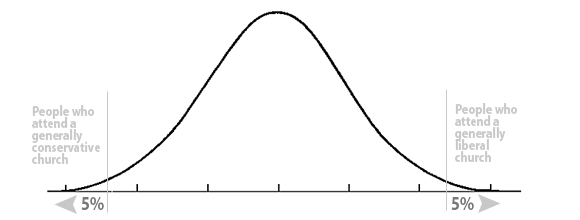
    The simple truth is that the church is one of the largest private land owners and largest private employers, but it is generally closed to the public. The possibility of its existence is financed by 100% of the community whereas the benefits of the property, staff, and resources, are functionally only available to the 5% or so who attend.

    For years I’ve heard the local church referred to as a country club and scoffed. But largely, it is true.

    The public is not welcome.

    My dream for the church

    It’s Martin Luther King, Jr. Day. I will watch the speeches. (And make my kids watch them, too.) I will remember the effects of his ministry. And I will be inspired by the quotes on Twitter.

    More importantly, I am empowered by Dr. King’s message to keep dreaming.

    When I close my eyes these are the things I dream about:

    Photo by Brian Hawkins via Flickr (Creative Commons)

    One day, the churches facilities will embrace the implications of its tax status. It will be a place truly separate from the world because it serves the world. So separate that people coming into her doors will wonder if they are in an alternate reality. I dream of a church who flings it’s doors open to the public Monday – Saturday from 6:00 AM until 10:00 PM. It’s a place the poor are served. A place the sick go for healing prayers. A place the elderly use as a resource. A place high school volleyball teams practice. A place kids go for tutoring. A place of civic debate. A place the arts are celebrated. A place local business people use for meetings. And a place where people go to find out how they can serve their fellow neighbors.

    One day, the churches staff will see themselves as employees of the community. The skills Paul talks about in Titus 1 & 1 Timothy 3 will be used not just to run programs attended by the faithful but cast upon the community for the common good of all people. Sure, there will be sacramental duties performed by the staff. But they will be kept in focus by the needs of the community. The pastor will see himself as not just the pastor of the people who come on Sunday morning, but as the pastor of the community he’s been called to serve. (Using “he” in an inclusive mode, my egalitarian friends.)

    The church will no longer be dictated by fears of lawsuits. They will rise above the desire to protect its assets in realization that the assets came from and belong to the community in the first place. The church will no longer be stricken by a separation of church and state because it is too busy embracing the needs of the state’s citizens. You want to sue us? Then sue us because we have made our property open to all. You want to close our doors? Then you are closing the doors on the place of refuge for refugees and the place of stability for those lacking the stability of a family. Let our good works be our best defense.

    The church will be a physical manifestation of the redemptive work of the Holy Spirit. The church will be a continuation of the ministry of Jesus. It will be a place every person can both be served and serve in the fullness of their spiritual gifts.

    What will we see than? We will see Jesus at work. We will see the irresistible draw of our Savior on the hearts of the community. The church will cease being a place for the 5%-10% on the fringes and regain its place as the centerpiece of our communities. We will see that the church will be the waypoint when giving directions to people around town. We will see that the community will look at offering tax breaks to churches and clergy will be a bargain and a burden its people happily bear for the greater good of the community.

    This won’t wallow in a social gospel. Instead it will embrace that the Gospel is social. It’ll be the embrace that the Gospel isn’t just about renewing of our hearts but also a renewing of our community.

    Let the religious among us be skeptics of what can happen when we embrace our role in society. In the meantime, when we step into these things, we will see today’s skeptics give their hearts to Jesus when they finally see the Gospel alive with their very own eyes.

  • Being Good News

    Today’s video post is a synopsis of about 10 conversations I’ve had in the last 60 days. All of them get to the question, “Adam, something has changed inside of you. I like it sometimes and I don’t like it sometimes, what is it?

    One thing I’ve learned to get comfortable with in the last 10 years of ministry is people asking me hard questions, diving into my motivations, and even offering critical responses. I can handle it. I am not intimidated by it. In fact, questions like this actually encourage me.

  • The Vindication of Steve Fisher

    The Vindication of Steve Fisher

    If you aren’t familiar with the head coach Steve Fisher at San Diego State you should be. In fact, if you aren’t familiar with his 19-0 Aztecs, you aren’t a fan of college basketball.

    Yesterday was the perfect example of why they are so good. They traveled to New Mexico to play in an arena called “The Pit.” It’s a notorious place to play. They were down early- the starters were plagued by whistle-happy refs. With three of the starting five on the bench, the Aztecs roared back on a furious run which ultimately held on at New Mexico. The simple fact is that they have 8 legitimate starters in a league where most teams have 3. They get stronger as the game wears on and eventually own their opponents.

    Is this team as good as the Fab 5? Probably not. We will ultimately find out in March. Before that they are hungry for a conference title, then trying to repeat as conference tournament champions.

    If you get the chance, watch a home game on TV. (I’d say go to the game but I think all of the tickets are now gone!) What you will see will rival anything you will see at any of the big programs in the country. It’s loud, it’s festive, it’s fun. And it’s starting to look like an impossible place to play.