• The Man Who Punk’d the World


    It’s becoming increasingly clear that this family punk’d the world.
    In fact, it looks as if the man who scripted the whole incident, less the involvement of the child, sold his story to Gawker.

    What isn’t clear is why they tried to play it this way. OK, so you pulled a fast one with the world’s media? Awesome! Why not use the spotlight to look into the camera and say to Wolf Blitzer, “You just got punked!”

    Sure, he’d be opening himself up to a big bill from the agencies who wasted taxpayer money playing pawn-like roles in his publicity stunt.
    But, if he got the last laugh on CNN and then told Wolf that he had a place where people could chip-in to cover his impending legal problems– all of this would have been funny, he would have collected a million dollars, and the Heene family would have pulled something off which would have made Ashton Kutcher blush.

    In that moment Richard Heene’s held choice in his hands which would change his family forever. Would he tell the truth and become a legendary prankster? Or would he lie and become a legendary mook?

    Richard Heene chose to try to keep the hoax a secret. Even after 6 year old Falcon Heene spilled the beans on live TV. And now the family looks horrible. And now the parents may get arrested. And now the fame they so eagerly wanted will be replaced by visits by the Child Protective Services.

    The hoax had the potential to live out an example of Seth Godin’s blog post from the same day. Instead, we’re stuck with this sad story of 3 little kids who may now see their family encounter hard times.

    I just wish Richard Heene had chosen the other option.
    Now that would have been captivating television. “Wolf, the truth is that you… and the whole world… just got punked!“


  • Use of Jargon in Church Marketing

    mailer-side-a

    mailer-side-b

    Today we received this mailer from a San Diego area church.* Since we live about 15 miles from their campus I’m going to make two assumptions:

    Assumption #1: They sent it to a lot of people!

    Assumption #2: They intend to reach a lot of people with this series!

    Both of those are world changing things. I know enough about the church to know that they have great intentions. The mailer makes it clear that they are trying to use something in our culture (tough economic times) for a Kingdom purpose. (reaching people with the Gospel.) I’m on board with their intentionality and boldness.

    In many ways it is a great mailer. It’s slightly larger than a normal postcard so it stuck out of my mailbox a little. It’s printed on high quality paper. I love the color scheme. Blue, orange, and white catches my attention. The fonts are fine and even the imagery they use is nice. Compared to a lot of church marketing they are way, way above average.

    One major problem with this mailer.

    Lots and lots of Christian jargon that their intended audience [unchurched people] wouldn’t know the meaning of or much less care about!

    – What the Bible says about your financial future.

    – The hidden cost of the new global economy.

    – The one world order

    – The new global economy

    – The coming cashless society

    – The world financial czar

    – The war between God and mammon

    – Babylon the fallen city

    – God’s final one world order

    – The millennium

    Conservative evangelicals will recognize this jargon right away… this isn’t really a series your financial future, it’s a series on the book of Revelation. (Words that never appear on the mailer.)

    Anyone outside of conservative evangelicalism… this jargon is meaningless. Babylon? Millennium? New world order? War between God and mammon?

    My fear is that this mailing may have had a negative impact on the community opinion about them they were trying to reach. This message is ill-timed as the economy is making a massive comeback the economic concerns seem far less interesting, the heavy use of jargon makes them come across as a doomsday cult.

    How to fix it? You simply cannot design marketing materials in a vacuum. If you are producing stuff like this in house make sure you field test it on your intended audience before you mail it to a few hundred thousand people. At the very least, send it to a copywriter. This was a preventable mistake.

    * Disclaimer: I’ve removed the church’s name on purpose. This post isn’t intented to be a slight at the staff or the church in any way. I like the church. I like the pastor. The people I know who go there say its a great church. This post is only using their marketing as an example. I removed their name because the church name is irrelevant to the discussion.

  • Remember what it was like when this was fun?

    I absolutely loved what Francis Chan said in LA a couple weeks ago. (about :43 into this video) He reminded us- me- youth workers… to stop taking ourselves so seriously, find a way to laugh again, remind yourself that you’re just a stupid kid, mistakes aren’t that big of a deal, we all went into ministry because it was fun. It was the pep talk a lot of us needed to hear among the stress of our lives.

    Let’s get back to just being children of God.

    That’s a good reminder for this weekend, isn’t it?

  • Schlepping through a data schmutz

    At work I’m doing a data smash. That is a tech geek way [I made up the term myself] of saying I’m taking all of our pipelines of customer web data and pouring it into one bucket to see if there’s anything interesting I can learn.

    It’s an experiment. There’s no guarantee it’ll tell me anything!

    Lately I’ve felt like I should put my lab coat on when I go into the office. And I find myself telling data jokes that people just stare at.

    It’s a very interesting experiment from 30,000 feet. But in the course of doing it, at ground level, it’s pretty flipping boring. As I trudge through spreadsheets, cleaning data, and merging terms like “church” and “organization” and “account” from various databases into one consistent term– I try not to let my mind wander. Consequently, at the end of the day I’m completely mentally exhausted. And you thought my job was just playing on YouTube, Facebook, and podcasts?

    My little experiment makes me think of real scientists in  real lab coats doing real experiments. These folks test a hypothesis with their hard work, ingenuity, intuition, experience… and money. Like my little experiment at work they don’t know if their hard work will ever pay off or if they’ll have to admit that their hypothesis failed despite all of the hard work, ingenuity, intuition, education, and money.

    And yet some of them work years and years, day-after-day, on the mundane unsexy experiments that change the world in big sexy ways. They invent new medical devices, develop vaccines, make sure the stuff we use is safe, on and on. Our society is dependent on nerds in lab coats.

    They are often the quiet heroes of our civalization. And yet we never learn their names.

    Better find my pretend lab coat and get back to work.

  • Unleash the Power of Observation

    observation

    Life is full of surprises. Unexpected things happen. People do funny stuff. But you’ll never notice the good stuff until you train your eye to look for it.

    Every week I see something that completely blows my mind. Sometimes its hilarity. Sometimes its tragedy. Sometimes its awkward. Sometimes its a persons moment of accomplishment. And when I share these things I always get the same response… how do you notice all that stuff?

    Observation is a skill. I don’t have special eyesight and I don’t think I live somewhere that especially strange things happen. OK, living near a university gives me the advantage that strange things probably happen more often than in other places. But I will make this promise, if you develop your observation skills you will see the art of life unfold before your eyes.

    Step one: Pop a squat. Define normal.

    The first thing you need to do is get to know your environment. If you’re new to this, go to a favorite coffee shop with a legal pad of paper or your laptop. Then, start writing everything you see down. Don’t talk to anyone. Just observe who is there, what they are doing, what they are talking about, what they are wearing, what they order, what they do after they order… write it all down. When it’s slow, map out the floor plan of the the coffee shop. Start noticing where people’s eyes go when they first walk into the shop. Start tracking foot traffic. Start noticing who stays how long. Start noticing how other people chose a seat. Once you’ve done this for a couple hours you will know what is normal about that shop.

    Step two: Contrast everything. Ignore the normal to notice the abnormal

    Once you get comfortable with the normal behavior of people in the coffee shop, you’ll start to notice the abnormal. (aka The Good Stuff) Notice that a guy sits in a certain place to check out female customers. Notice that people drop their change when the cute person is taking orders. Notice that the same person is meeting multiple people in a day. Notice the woman who cries quietly by herself. Notice the guy in the suit rolling his eyes while on the phone. On and on.

    Once you are used to a single environment and you get good about noticing what is abnormal at one place… it should start to come naturally with things in your every day routine.

    Most of the interesting things I observe happen when I’m in my routine. Riding my bike to the trolley I know what sprinklers are on, which direction cars typically come from at the intersections, which people are normally waiting for the bus, who are the regulars outside of Starbucks, that Tuesday’s are light traffic days at SDSU, who gets off at my stop, and which cars are parked on the side of the road as I work my way from the trolley to the office. Once I know that stuff– I only notice things that aren’t normal.

    The more you do this the better you get. I think I observe things a little better than most people because I do it in my routine all the time. Airports are easy “next steps” as typically most people behave about the same in all airports. But just know this.

    You can observe great things about the world simply by training your eyes to look out for it.

    The irony of this post? I notice obscure things but often miss the obvious.

  • Bring Soul Train to Church!

    Thank you Andrea for pointing this one out. Oh how I long for a little Soul Train moment at my church during the offering! Come on Harbor, represent!

    What if giving to God were this fun? Would people give more? Or would more people give? I dunno, but we’d all be better dressed!

  • Is God Still in Charge?

    who-is-in-charge

    It’s kind of funny, isn’t it? We live as though we are in charge. As if we decide and determine everything. Do we put the Bride of Christ into a cheap box and make it seem as though church is just a company?

    – Church growth can be boiled down to a formula? You need training for that. 4 easy payments of $19.95.

    – Church boards decide who is the leader? They pray at the beginning and end of each meeting.

    – Want a thriving church? Follow these 6 steps.

    – Want to experience life-changing worship? Hire some great musicians.

    – Need to reach the community? It’s all about your marketing strategy.

    – Want to change people’s lives? You need a gifted preacher to do that.

    Jeremiah 17:5

    This is what the LORD says: “Cursed is the one who trusts in man, who depends on flesh for his strength and whose heart turns away from the LORD.”

    Romans 9:14-16

    What then shall we say? Is God unjust? Not at all! For he says to Moses, “I will have mercy on whom I have mercy, and I will have compassion on whom I have compassion.” It does not, therefore, depend on man’s desire or effort, but on God’s mercy.

    Colossians 2:8

    See to it that no one takes you captive through hollow and deceptive philosophy, which depends on human tradition and the basic principles of this world rather than on Christ.

  • Americans Love to Hate Winners

    celebrity-plotline

    We have a fascination with the little guy. Foundational to American storytelling is the little guy overcoming adversity to make it big. Americans love happy endings. The movie credits roll when Rocky raises his fists to the sky. Or when the young lawyer wins the big case against the mean corporation. Or when the nerdy sales guy finally marries the hot receptionist.

    A storyline of a champion successfully defending his place in the world would never make it on TV. You’d never see a TV drama about a big law firm protecting their big clients assetts in a positive light. It would be offensive to our American storyline to celebrate the big guy keeping the little guy down. Our culture isn’t wired to believe that is a valid storyline.

    We, collectively, hate the perennial winner. When the Chicago Bulls finally won the NBA Finals we celebrated with Michael Jordan. But when they won 3 in a row that seemed a bit much and everyone was fine with MJ going to play baseball for a few years. We were sick of his winning ways. The good guy needed to go wear a black baseball hat for a while… so we could welcome him back as he overcame being down to come to the top one more time.

    We love the process of becoming a winner. But actual winners become the enemy in about two seconds.

    This plays out painfully in politics. Collectively, we loved Bill Clinton as president. Then we hated him. We loathed his sleazy ways and couldn’t wait for him to leave office. People loved George W. Bush. It’s almost embarrassing to say that publicly– but the people loved Bush! Then they hated him. As time wore on everyone looked forward to him leaving office. Not even Republican nominees for his office wanted him at their events in the last year of his presidency. And now the tides are turning against Barack Obama. Just 12 months ago more than 60% of Americans chanted “Yes We Can” as they cast their ballot. Many cried along with the thousands at Grant Park when Obama won. Many lined up for days to proclaim his innaguration as the greatest day in our lifetime. But now he’s not the little guy, is he? The little guy has become the man and there is something in our collective DNA that must learn to loathe him.

    It’s a little surreal when you look at it like that, isn’t it? Maybe its just hip to hate the President?

    Sports? Same thing.

    Celebrity? Same thing.

    Business? Same thing.

    Churches? Same thing.

    Pretty much anyone or any thing which rises from obscurity to some notoriety is immediately loathed once they make it to the top. People hate Microsoft. They hate Dell. They hate AT&T. They hate the Yankees. They hate CNN. They hate Rick Warren. They hate Miley Cyrus.

    I don’t know about you. But I’m ready for a new storyline in our culture. I’m sick of the hatred. I’m bored with making celebrities awesome in order to just tear them down. The plot is disgusting to me.

    How about we start celebrating the everyday champions? The ones who never gain notoriety for coaching a freshmen basketball team. Is it possible for our culture to celebrate the Jack & Diane’s of the world? How about celebrating longevity? How about focusing on long term success instead of a parabola of success?

    Of course not. We love creating superstars for the sole purpose of destroying them far too much.

  • Alone in the Wild

    wide shot ed walking

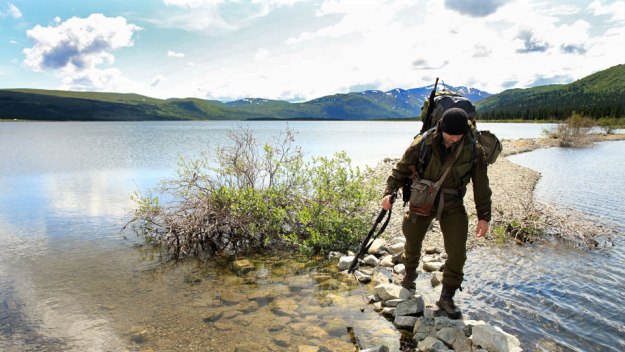
    Last night I watched a fascinating documentary on the National Geographic Channel called, “Alone in the Wild.”

    It was difficult to watch. Here was this outdoorsmen named Ed Wardle. He wanted to test himself to see… can I live completely independent of others and survive in the Yukon wilderness? He intended to make it 90 days. He made it 50. And the last few weeks weren’t pretty. As time wore on, as hunger set in, as the reality that he could contact people but was choosing not to set in, the pain set in. It was agonizing TV. He cried a lot. He dealt with a lot of emotional pain. And of course he documented his unraveling. With the pressure of shooting a film on his mind all the time and the reality that he was lonely– he was paralyzed. He was in the wild, all by himself trying to prove that he could do it on his own, and he realized he needed people. He could technically do it but he chose to give up.

    Deep exhale on that. He needed people. He had the skills to do it on his own. But we just aren’t wired that way. We’re hardwired to need one another.

    And so he quit. He couldn’t do it. Check out what he said:

    The isolation was the most difficult element of this adventure. With no contact I immediately began to lose direction and reason. Without food I lost concentration and the ability to think straight. I worked hard from week one to keep myself motivated and keep going and by the end I was spending hours every day just convincing myself to carry on one day at a time. When I was travelling or doing something physically hard I had a military voice superimposed on my thoughts keeping me going and getting me organised, other times I had a female voice that would tell me to be sensible, breathe and take it easy on myself. They helped and I could feel them getting stronger and more necessary as time went on. link

    I doubt Kristen would remember saying this to me but when we were dating in college she wrote in a letter, “I love you because you don’t need anyone but you chose to let me into your world.“ True– I was raised to be independent. One of my parents goals in raising my brother and I was that we’d be able to take care of ourselves. (I don’t think they ever meant this emotionally, but physically we knew how to take care of ourselves with food, laundry, cleaning up, and stuff like that pretty young!)  When things got rough in high school and college I took that desire to be independent to an extreme. In my dysfunction I translated “you can do it on your own” to “I will do life with no ones help, I will muscle through anything, I don’t need to depend on anyone.”

    Kristen was right. Back then, I didn’t need or want anyone in my life. It was amazingly fulfilling to find my own way, take care of myself, and go from absolutely nothing to paying my way through college. But it was also dysfunctional. And it took someone I loved calling that spade a spade to motivate me to change.

    This is where Kristen has completed me in a powerful way, though. She reminds me, in words and deeds,  that we need others in our lives. We need good friends. We need the wisdom of our peers. We need to be open in these relationships. She has taught me that while we don’t “need” others to survive… life is infinitely better with people than without.

    Doggone it if she wasn’t right, too. Life is way better surviving in the wild with friends.