• Meandering Monday Morning Thought

    Meandering Monday Morning Thought

    Generally speaking, young people find meaning by getting involved.

    Older people find meaning by retreating.

    I wrote this phrase down a couple weeks ago and I’ve been chewing on it ever since. I don’t know if it’s true. But since it popped in my head I’ve been seeing evidence of it more and more.

    What do you think? 

  • Naughty List Notifications

    Naughty List Notifications

    NORTH POLE – In an unprecedented move Santa Claus has sent naughty list notifications to hundreds of thousands of people in the United States. When asked about this change in protocol Mr. Claus said, “Things are pretty wound up in the Lower 48. My team expressed concerned that a lack of deliveries may lead to unintended consequences or even violence, possibly disrupting service to the rest of the globe. We are making these notifications now out of an abundance of caution. Christmas is too important to allow a localized problem to impact delivery while others are expecting Christmas cheer.

    For hundreds of years Mr. Claus has delivered Christmas presents to billions of children without incident. His temporary intrusion into homes is traditionally viewed as traditional and charming. However, with tensions in the United States at near record highs the 500 year old Claus sought to avoid confrontation. “Each year there disappointed people who have made the naughty list, typically adults who have cheated on their taxes or had an affair. We wanted to give them some time to cool off before the Big Delivery on December 25th.”

    Mr. Claus did not release the names of anyone on the naughty list. When pressed he replied, “Just look around on Facebook.”

    Have you been impacted by this decision? Sound off in the comment section below. 

  • 3 Reasons Nextdoor Can Disrupt Facebook’s Dominance Among Adult Users

    3 Reasons Nextdoor Can Disrupt Facebook’s Dominance Among Adult Users

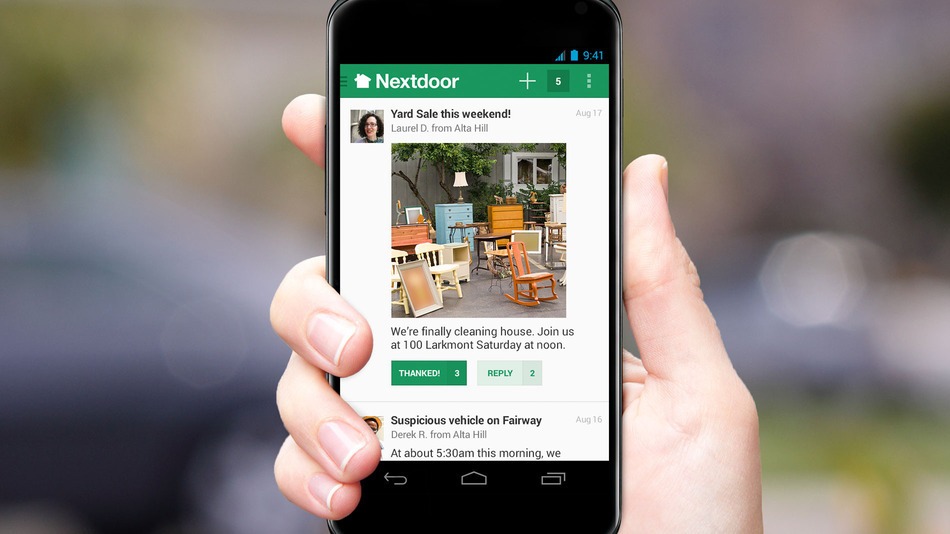
    Over the past several months I’ve worked Nextdoor into my loop of social media sites I participate in.

    If you’re not familiar with Nextdoor, here’s how they describe themselves:

    Nextdoor is the private social network for you, your neighbors and your community. It’s the easiest way for you and your neighbors to talk online and make all of your lives better in the real world. And it’s free.

    Understand this. Nextdoor is still in its infancy. There’s a ton of posts about lost animals and people selling junk and people complaining about stuff.

    But if you stick around, if you invest a little, if you squint… you can start to see why I think Nextdoor has the potential to disrupt the dominance of Facebook, particularly among adults.

    There’s something culturally interesting that could bring much needed change that’s worth watching here…

    Here’s 3 Reasons

    1. Hyper Local Wins Over Hyper-Segmented – Facebook is built around connecting a global world with your now globalized friendships. What I love about Facebook is that I can stay connected with people I’ve known for a long time but aren’t close to my by proximity. Facebook also allows me to gather people around the world around things I care about. But this hyper-segmentation misses something very important– place. Facebook drives communities apart by encouraging people to talk to only who they want to and ignoring the rest. Nextdoor turns that on it’s head, sometimes forcing you to deal with the crazy cat lady on your block instead of complaining about her on Facebook to your college dorm mates. Just like in real life, proximity ultimately wins out because it impacts you on a daily basis whether you chose it or not. You can’t ignore the cat lady forever, right? You think you can… but ultimately you have to face her. Facebook has no mechanism for this. Sure, you could create a closed group for your neighborhood but you’d always have leaking because people might belong to their neighborhood, their old neighborhood, on and on. There’s power in hyperlocal that Facebook has engineered you away from.
    2. Normalizing the Weirdos Among UsNextdoor is in it’s infancy. So there are very annoying things… in some ways it’s become a joke in our house because we’ll see something, say a shopping cart on our block, and we’ll say “I give that a couple hours before someone reports in on Nextdoor.” Certainly, Nextdoor is giving a voice to the, um, more suspicious among us. But the long-term beauty of this is that it’s solving Facebook’s biggest problem among adults… the loud mouth, over-opinionated adults mouthing off without ever having to face the people they are popping off to. With Nextdoor you don’t have that luxury. If you mouth off about your conspiracy theories or post lunacy about Donald Trump or tell people they shouldn’t buy a purebred puppy because there are adoptable dogs at the shelter… there’s a VERY HIGH likelihood you’ll see that person at the grocery store or walk your dog by their house. And that “social filter” is much more powerful than Facebook’s mechanical filter of the “unfollow” button. I believe that as Nextdoor grows in popularity it’s going to normalize the weirdos. While hyper-segmentation has made people passionate about whatever sub-sub-sub-culture they have joined up with… to your neighbors you’re just the guy who doesn’t cut his grass or doesn’t recycle or needs to paint his shutters. When you know you might bump into someone in real life, you’re going to normalize that weirdness. At least that’s my theory!
    3. Governmental Partnerships – Here’s the real secret to why I think Nextdoor will get their foot in the door among adults. They are forming partnerships, most likely paid partnerships, with local government agencies to put government officials in direct contact with the people they are serving. Here in the San Diego area we see posts from a bunch of agencies and in the City of La Mesa the city is actually advertising their involvement. That direct connection to people we need access to is good for everyone, it’s making it so that “everyone” really needs to be on Nextdoor to keep up with what’s going on.

    My Prediction? Facebook will either acquire Nextdoor or will launch a neighborhood feature in the next 12 months.

    Have you tried Nextdoor? (If not, sign up here) Is it big in your area? What kinds of things are you seeing successful? And what kinds of things aren’t working, at all? Let me know in the comments.

  • Youth Pastors in the News

    Youth Pastors in the News

    Here’s a list of headlines from the month of November for the Google News search term, “Youth Pastor.” I’ve deleted multiple links to the same instance.

    Don’t like the news about our profession? Make good news in your community.

  • Rubberneck

    Rubberneck

    No, rubbernecking is not some new way to make out that you’ve not yet tried. Instead, it’s the reason it took 11 hours to drive home from San Jose yesterday whereas it took us 7 hours to drive to San Jose on Friday.

    Rubbernecking is the human inclination to slow down and look. To scornfully, guiltily gaze at the folly of others.

    We really can’t stop ourselves from looking. Whether some poor soul has gotten a flat tire or their baby blew out a diaper: We must slow down enough to look.

    We whisper to ourselves…

    • I wonder what happened? 
    • A flat tire? What an idiot.
    • [Looking at a fender bender] I wonder what happened? 
    • [Driving by a bad accident] I shouldn’t look. Kids don’t look. Look the other way. [Meanwhile, you always look.]
    • I can’t believe all of these people slowing down to watch a guy change a diaper. Morons. 

    It’s morally wrong to look, we tell ourselves. We curse the rubbernecker for slowing everyone down just so they can look and they should just be minding their own business anyway.

    And yet we are the rubbernecker. Our culture sends us one message… “Get there in good time!” while our nature forces us to cause the problem, “I feel guilty or looking, but I can’t stop myself.

    The Good Samaritan

    A man was going down from Jerusalem to Jericho, when he was attacked by robbers. They stripped him of his clothes, beat him and went away, leaving him half dead. A priest happened to be going down the same road, and when he saw the man, he passed by on the other side. So too, a Levite, when he came to the place and saw him, passed by on the other side. But a Samaritan, as he traveled, came where the man was; and when he saw him, he took pity on him. Luke 10:30-33, emphasis mine

    Some say the Bible is irrelevant to daily life today? Dude, Jesus is talking about rubbernecking. That’s quite literally my life on November 29th, 2015!

    He went to him and bandaged his wounds, pouring on oil and wine. Then he put the man on his own donkey, brought him to an inn and took care of him. The next day he took out two denarii and gave them to the innkeeper. ‘Look after him,’ he said, ‘and when I return, I will reimburse you for any extra expense you may have.’ Luke 10:34-35

    See! Jesus said “Go and do likewise… DO NOT SLOW DOWN TRAFFIC TO LOOK!!!! Rubberneckers are the devil incarnate!

    Oh wait. He didn’t say that at all. While he poked fun at the rubbernecker scornfully, careful to insert the very people he’s talking to into his parable as the example of what not to do just to make sure they understood he was talking about them– he said that the polite inclination of minding your own business and driving by was also morally wrong.

    We shouldn’t rubberneck. Nor should we mind our own business.

    We should stop the car and help.

     “Which of these three do you think was a neighbor to the man who fell into the hands of robbers?”

    The expert in the law replied, “The one who had mercy on him.”

    Jesus told him, “Go and do likewise.” Luke 10:35-37

    Go and do likewise.” when you see a dad changing a poopy diaper on the side of I-5… stop and help. At the very least take the dirty diaper in your own car! Why? Not because it’s convenient. Not because it’ll get you there on time. Not because

    The Counter-Culture Revolution of Jesus

    When a 7 hour drive is turned into an 11 hour drive because of rubbernecking drivers you start to wonder, “Where is Jesus in all of this?”

    And the reality is…. He’s right there on the side of the road waiting for you to stop. To get involved instead of driving by. “It’s not good for man to be alone in his car, listening to podcasts and staring at his clock.

    This is the revolution.

    Culture says mind your own business.

    Culture says that the safest thing to do is to stay in your own car.

    Culture says don’t stop.

    Culture says don’t even slow down.

    But Jesus says stop and help.

    Embrace his timing.

    Embrace his agenda.

    Don’t worry about yourself or your own timeline.

    Worry about others. Worry about God’s timeline.

    Go and do likewise.

  • 11 Medicinal Properties of Cranberry

    11 Medicinal Properties of Cranberry

    Discovered in 1427 by Cardinal Joseph Cran, the cranberry is useful for many things. It is delicious. It is tasty. It is tart. It is good mixed with various other fruits. It floats. It is from heaven. It’s amazing canned shape invites my gobbling. It’s juice keeps away urinary tract infections.

    Cranberry out of the can
    The cranberry, in it’s raw form, prior to being injected into waiting skins.

    Cranberries are magical.

    But they are also medicinal.

    11 Hidden Medicinal Properties of Cranberry, America’s Favorite Holiday Fruit*

        1. Many know that cranberry juice helps to fight urinary tract infections, but few realize that it’s the tart flavor that empowers the urine to literally scare the infection out of the pee.
        2. Suffering a sunburn? Apply the tannin of cranberry skins to rejuvenate burned skin, leaving behind perfectly healed, while slightly deeper red, skin.
        3. article-2228806-15E16A88000005DC-419_306x329Historically, Quakers in Pennsylvania invented frozen cranberry pacifiers for teething babies to suck on. The original Gerber baby was sucking on one prior to this famous shot.
        4. Non-clinical trials among undergraduate dropouts at the University of Massachusetts Cranberry Station have shown that cranberry is a natural alternative to Adderal for college students who procrastinate studying.
        5. You can lose 30 pounds per month on an exclusive cranberry diet. Eat all you want!
        6. Many people in Maine tape a cranberry behind their ear to prevent the common cold.
        7. When suffering from acute oversharingitis on social media, therapists recommend slowly chewing on raw cranberries prior to commenting online.
        8. Twice daily bathing in cranberry is an effective, all natural pregnancy prevention.
        9. Brushing your teeth with cranberry paste removes plaque build up and eliminates bad breathe.
        10. Mixed with moderate amounts of vodka, cranberry juice is commonly used to treat social shyness.
        11. Consuming large quantities of cranberry in its gelatin form relieves irritable bowel syndrome.


    via GIPHY

    *Adam McLane is a cranberry enthusiast. He is not a scientist, medical doctor, or even very good at anything health related. Please do your research before trying any of these treatments. 

  • Movie Reviews that Don’t Suck

    Movie Reviews that Don’t Suck

    I don’t pretend to know much about film or movies. Fundamentally, I’m far too cheap to go to the movies very often. A few weeks ago Paul and I went to see The Martian while on our trip to Seattle:

    • Two tickets: $25.60
    • Parking: $6
    • Seeing The Martian with my son: Priceless
    • NO. It was $31.60! That’s twenty-two cents per minute!!!
    • Exclamation marks!

    So that’s my bias. While I love watching movies I don’t know much about them beyond how much they cost per minute to watch. And I have a thing for documentaries.

    Perhaps this is why I’ve been so intrigued to witness Joel Mayward‘s growth with his movie reviews?

    I first took note of this several years ago as he posted excellent reviews on his blog. Then, as his interest grew, we started working with him on a few smaller projects. This grew and his interest continued to mature. A year or so ago we began working on a book with him eventually titled, Jesus Goes to the Movies. Earlier this year he and I spoke at an event where he presented an entire theology of Film & Ministry that completely blew me away.

    Two New Things with Joel Mayward

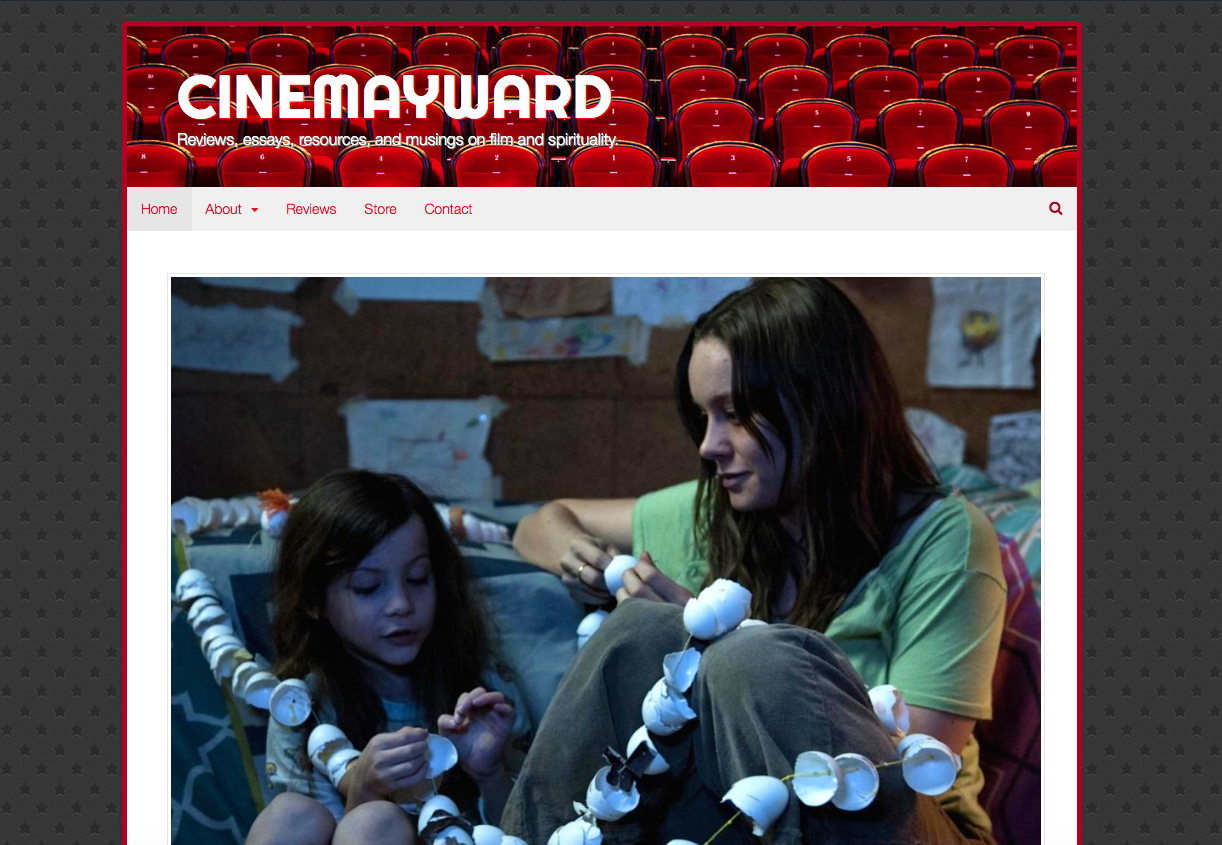
    1. Cinemayward.com – Yesterday we launched Cinemayward.com with Joel. Here Joel will be focusing his attention on essays about the intersection of faith and film as well as more of his truly excellent movie reviews. Unlike most Christian movie reviewers, who tend to focus on surface things like counting cuss words or discounting an entire movie because of a sex scene… Joel’s review tend to go back to a central theme… “Where is Jesus in this movie?”  While geared for everyday Christians, Joel’s reviews help you think differently about film… beyond consumption, they introduce you to the
    2. CINE Film Discussion Guides – Also launching yesterday is a companion series to Jesus Goes to the Movies. The first half of JGTTM is a theology of film in youth ministry. But the second half is all about practical application which includes film discussion guides you can use right in your ministry. When we were publishing the book we wanted to make sure that the book stayed current… so we came up with CINE, building on the success of another downloadable curriculum line VIVA. Our first edition of CINE came out yesterday and includes film discussion guides for four Christmas movies… and it’s totally free. (Grab it here)

    Why the investment in movies?

    This last part is pretty simple. It’s two-fold.

    1. We believe Joel is onto something great. He’s helping us all think differently, deeper, and better about movies. He represents an uncommon Christian response to film that we think is needed and we want to get behind that… Joel possesses a characteristic we call “Very Cartel-y.
    2. Movies and film are powerful to teenagers. At the end of the day the Cartel is fully invested in helping youth workers reach more teenagers, better. Few things influence our culture quite like film. And since that’s true, we want to make sure we’re creating and supporting resources for youth workers that are excellent.
  • The Incarnation and Networked publics

    The Incarnation and Networked publics

    A couple weeks back I went to the Association of Youth Ministry Educators annual conference, affectionately known as AYME.

    I was there as an exhibitor for the Cartel. But since the topic of this years conference was Technology and Transformation I got to attend as a learner, as well. (How awesome that they had a conference built around my expertise!) So I had the opportunity to hear from several brilliant minds around the general topics of social media, youth ministry, and how faith formation is being impacted by a social-media-fueled adolescent experience.

    I took pages and pages of notes. I bought books on top of books that will take me months to get through. And at the end of it I walked away with two prevailing thoughts that I’ll be exploring over the next several months here on the blog and in work that I’ll hopefully publish somewhere else. (Both of which I’ll not be mentioning here.)

    What Does Incarnational Ministry Mean with Networked Publics?

    At the end of the day youth workers just need to know what to do. I’m often asked by adults who minister to teenagers about various apps, about ministry best practices, and about ways to market to teenagers effectively.

    So let’s cut to the chase: Should youth workers being hanging out with teenagers online the way they used to hang out with teenagers at football games? 

    • Thought One: At the root of most of my [Sonlife informed] youth ministry training is the incarnation of Christ. John 1 provides a model, just as Jesus came into the world as good news in his neighborhood, so should I enter into the lives of teenagers as a youth worker.  So that’s my background and bias…
    • Thought Two: As Danah Boyd points out in her book, It’s Complicated [the premier sociological work on social media and adolescence right now] teenagers have largely had traditional face-to-face publics eliminated and have largely moved to what Boyd calls, Networked Publics.
    • Thoughts Three: Youth ministry, as a profession, is in a place where accountability and professionalism in the relationship with teenagers is important. If we, as a tribe, do not address ways to do this– ultimately to keep teenagers safer and hold adults accountable for the relationships they have with the minors in their ministry– we will continue to see our profession pushed to the margins.

    With those three prevailing thoughts in my mind here’s what I’m thinking: I don’t think youth workers should be engaging with teenagers on social in a regular one-on-one basis without accountability, documentation, policies, and training.

    In other words, a casual connection or a logistical “Hey, are you coming to the retreat?” is one thing. But I think youth workers would be better off engaging with teenagers in real life, even going back to old-school-incarnational-ministry standards like contact work on the local campus or limiting their relational time to officially sanctioned youth ministry meetings and events.

    See, to read Boyd’s work about teenagers networked publics and think to yourself… “If teenagers are there, I need to be there” is a misinterpretation of Boyd’s work. She’s saying that they’ve resorted to networked publics because they can’t find anywhere else that’s adult-free. And not having any place to just be a teenager without adults prying eyes is a big developmental thing… So if you suddenly start butting in to that one place in their entire life where they can talk freely, without the prying eyes of a parent or adult… all you’re doing is forcing them to find another place where they “really talk” without you. It’s a developmental need.

    Never mind the fact that– quite frankly, teenagers think adults talking to them or sending them gifs or snaps online is creepy.

    So, in my very limited time this morning, this is why I would argue that social media is not a place for incarnation youth ministry. But it is, in many cases, an excellent place for youth ministry communication.

    Keep your contacts with teenagers online logistical or promotional. Leave conversations and relationship building for face-to-face.

  • The Second Act

    The Second Act

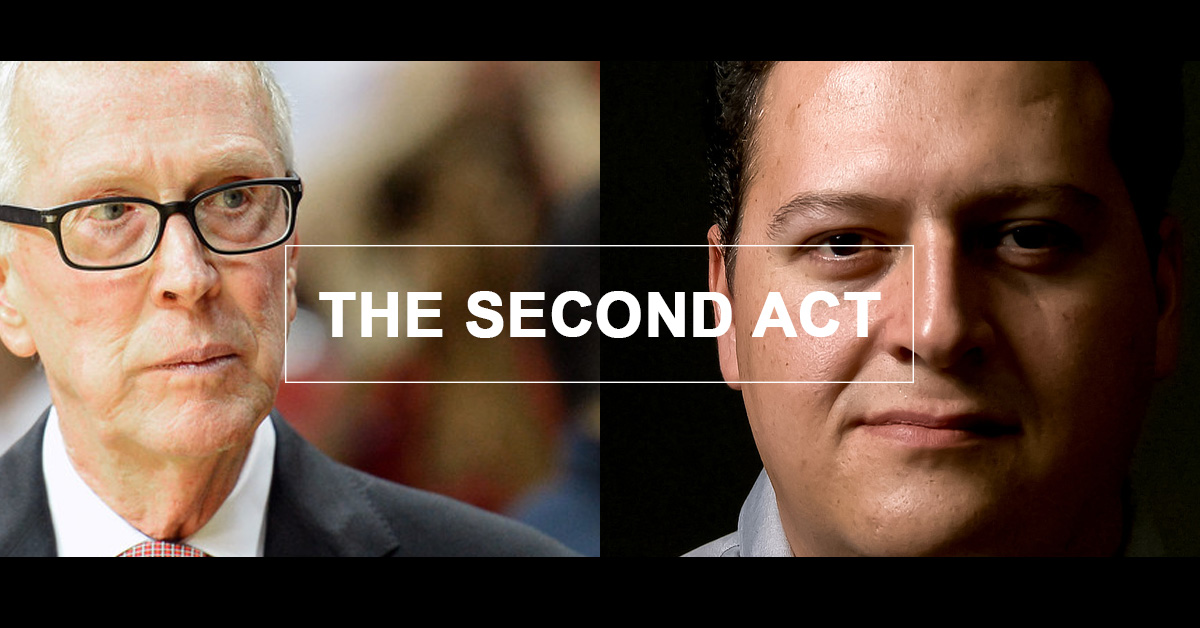
    Sebastian Marroquin

    Sebastian Marroquin is the son of one of the world’s most notorious criminals, Colombian drug baron Pablo Escobar. At the height of his powers Escobar was said to be the seventh richest man in the world. And he controlled up to 80% of the world’s cocaine trade. His unbelievable wealth and power were only matched by his brutality – he was responsible for thousands of deaths and kidnappings during the ’80s and early ’90s – a period when his cartel terrorised Colombia. Sebastian told Outlook his memories of growing up in the palatial Escobar family compound, Hacienda Napoli.

    Source

    You can’t listen to this interview and NOT hear the words of a forgiven man:

    • “I have been fulfilling the second promise instead of the first.”
    • “I created the documentary because I believe in forgiveness and reconciliation.” 
    • “It wasn’t safe for me to come back to Columbia… I took that risk because I thought peace in the country was much more important than my own life.”
    • “Thank God, I could start from zero. I am free of the past.” [On not having any of his father’s money.]
    • “I never hated my dad… I love him unconditionally. I am not his judge. I am a part of him. I was his son, one of the most important people in his life.”
    • “My dad was one of the best dads. But he was also one of the most dangerous bandits in the world. I have to live with both facts.” 

    Steve Fisher

    To some, Steve Fisher is most famous for having coached the Fab Five, for Chris Webber’s timeout, and for getting fired from Michigan when it was revealed that some members of that team were being paid by boosters.

    But to San Diego, he is known as the man who put San Diego State basketball on the map. He went from giving tickets away all over town to the hottest ticket in town. The school is entering it’s 5th straight season of selling out it’s 12,414 Viejas Arena before the season begins.

    At the same time, SDSU has transformed itself from a fallback school of commuter students to a top 100 research university bursting at the seams. There’s a direct connection between success on the hardwood and success on the Mesa.

    Second Acts

    It’s easy for your life to get defined by your first act.

    Sometimes, as in the case of Sebastian Marroquin your first act is defined for you— you’re born into a notorious family. But for most, it’s not that of a drug lord– but it might be a family history of divorce, addiction, abuse, or poverty that defined your first act, you were born into it.

    But for still others, like is the case with Steve Fisher, you might have played a role in your own first act failure. [To be clear, Steve Fisher was never tied directly to what happened at Michigan. But we can all agree that he somehow played a role. At the very least he was responsible for the actions of his team.] Or for still others, there is no doubt in your defining first act role— you were the addict, abuser, unfaithful, or carried the bad habits that lead to a life of poverty?

    In your first act you experienced failure.

    You were the bad news.

    Yet, when this happens, you are left with a choice only you can make.

    Are you going to allow your life to be defined by your first act or are you going define yourself by your second act?

    Some remain defined by their first act failure their entire lives. But other, a small percentage, get up… dust themselves off… and create a strong second act.

    This is, in Christian terminology, the crucified life.

    Therefore, if anyone is in Christ, the new creation has come: The old has gone, the new is here! All this is from God, who reconciled us to himself through Christ and gave us the ministry of reconciliation

    2 Corinthians 5:17-18

    Will you be defined by your first act or your second?

  • Place, Restoration, Hope

    Place, Restoration, Hope

    Tools

    By Sunday evening, things were calming down on our weekend home improvement projects, Kristen went to run errands, and I had a little time to reflect.

    In the search of wire cutter I opened a giant Rubbermaid that had tools poking out of it. As I started pushing things around I realized that I put all of these tools away in their new place instead of searching through the bins each time I needed a tool.

    Over the next hour I unearthed three more tool bins to put away, unpacking each into a giant set of drawers labeled: Hand tools, tool sets, power tools, and hardware.

    Place, Restoration, and Hope

    Unpacking my tools was oddly emotional.

    I hadn’t seen most of these things for more than seven years so it was like Christmas. Each tool was something I didn’t have to buy! Most of them I’d thought we’d left in Michigan, lost to the final stages of packing for a cross-country move, or our frantic garage sales, or one of many Craigslist binges. I still regret leaving a bunch of tools in one of the garages simply because I couldn’t figure out what to do with them in time.

    With each bin came a flood of memories about our house in Michigan. Using those tools on projects, learning to do things I never thought I’d do, and looking at the tools filled me with thankfulness for the many men from our church who’d helped me figure stuff out.

    I realized as I was putting these tools in their new spot that I’d packed away a lot of emotions about owning a house… for the past seven years we’d been forced to trade place-making for temporary shelter.

    As much as we loved our years across the street at the rental house– it was never ours and we’d never really unpacked. Kristen and I were sharing on Saturday night about how we’d coped with a house that wasn’t “ours” by spending as much time as we could not at home. We went to the beach, we went to the bay, we went hiking, biking, running, kayaking, spent endless hours at the zoo or Sea World or Balboa Park– so many of our weekends were spent trying to get away from home.

    There was something good about that. But there was something deeply wrong about that too, which we’re only starting to realize.

    Buying this house is more than merely finding a new place to live or the discomfort of moving.

    In many ways it is an act of justice– standing up for ourselves to make things right. How things ended in 2008, how that was a place of hurt and anger, lacking any sense of closing, not knowing what to do with the shame of foreclosure that wasn’t really our fault, all of that is now being replaced by this new house [itself having been rented for the last 20 years] and starting a process of becoming the home we’ll finish raising our kids in.

    So now, as we unpack, we’re also beginning to unpack those emotions of home and place. Putting things on the walls isn’t “I hope the landlord doesn’t get mad about these holes” but instead becomes “we want people to come here and feel connected to our family.”

    We’re unpacking tools but we’re really unpacking the unknownness of our future. We’re no longer wondering how long we’ll stay in San Diego, we have made the decision that this is our place– our city– for the foreseeable future.

    Another emotion ran over me as I put away the tools. Hope.

    The physical act of spending the weekend adding gutters and painting exterior stuff brought out a hope-filled energy I’d not felt in a long, long time. Again, it’s one of those emotions that’d been packed away somewhere deep that was starting to come over me like a ducked wave.

    And so, two weeks into home ownership, I’m remembering the crazy mix of physical labor… of the sink breaking and having to go to Home Depot to get parts… but also the emotional attachment of turning a commodity such as a house into a part of your family, that connection we call place.