No application necessary. Work from home.
Position available immediately.

Cumulatively, the American church is likely the largest private land owner in the country. Most zip codes contain at least one house of worship. In my zip code alone there are more than 30. In many communities around our nation the church occupies some of the prettiest property in town. It’s square footage competes with all other public buildings in girth and consumption of natural resources.
Cumulatively, the American church is likely one of the largest private employers in the country. Each of those congregations in my zip code employ at least one individual. But when you include secretaries, janitors, and associates, the number goes up. Nationwide hundreds of thousands of people are employed by churches.
Think about the fiscal crisis your state is going through… not taxing churches and their staff comes at a pretty high cost, right?
Have you ever thought about it? Why don’t churches pay property taxes? And why are clergy taxed differently than other types of employees?
The best I can tell there are two main reasons for this:
(More on this from the L.A. Times)
If I were to walk to the front door of most churches in our country today and pull the handle of the door I’d find it locked. (And not because it’s a holiday, it’s locked nearly every day. Even if unlocked I don’t have access to use the space.) I’ll quickly be told it is private property.
The simple truth is that the church is one of the largest private land owners and largest private employers, but it is generally closed to the public. The possibility of its existence is financed by 100% of the community whereas the benefits of the property, staff, and resources, are functionally only available to the 5% or so who attend.
For years I’ve heard the local church referred to as a country club and scoffed. But largely, it is true.
The public is not welcome.
It’s Martin Luther King, Jr. Day. I will watch the speeches. (And make my kids watch them, too.) I will remember the effects of his ministry. And I will be inspired by the quotes on Twitter.
More importantly, I am empowered by Dr. King’s message to keep dreaming.
When I close my eyes these are the things I dream about:

One day, the churches facilities will embrace the implications of its tax status. It will be a place truly separate from the world because it serves the world. So separate that people coming into her doors will wonder if they are in an alternate reality. I dream of a church who flings it’s doors open to the public Monday – Saturday from 6:00 AM until 10:00 PM. It’s a place the poor are served. A place the sick go for healing prayers. A place the elderly use as a resource. A place high school volleyball teams practice. A place kids go for tutoring. A place of civic debate. A place the arts are celebrated. A place local business people use for meetings. And a place where people go to find out how they can serve their fellow neighbors.
One day, the churches staff will see themselves as employees of the community. The skills Paul talks about in Titus 1 & 1 Timothy 3 will be used not just to run programs attended by the faithful but cast upon the community for the common good of all people. Sure, there will be sacramental duties performed by the staff. But they will be kept in focus by the needs of the community. The pastor will see himself as not just the pastor of the people who come on Sunday morning, but as the pastor of the community he’s been called to serve. (Using “he” in an inclusive mode, my egalitarian friends.)
The church will no longer be dictated by fears of lawsuits. They will rise above the desire to protect its assets in realization that the assets came from and belong to the community in the first place. The church will no longer be stricken by a separation of church and state because it is too busy embracing the needs of the state’s citizens. You want to sue us? Then sue us because we have made our property open to all. You want to close our doors? Then you are closing the doors on the place of refuge for refugees and the place of stability for those lacking the stability of a family. Let our good works be our best defense.
The church will be a physical manifestation of the redemptive work of the Holy Spirit. The church will be a continuation of the ministry of Jesus. It will be a place every person can both be served and serve in the fullness of their spiritual gifts.
What will we see than? We will see Jesus at work. We will see the irresistible draw of our Savior on the hearts of the community. The church will cease being a place for the 5%-10% on the fringes and regain its place as the centerpiece of our communities. We will see that the church will be the waypoint when giving directions to people around town. We will see that the community will look at offering tax breaks to churches and clergy will be a bargain and a burden its people happily bear for the greater good of the community.
This won’t wallow in a social gospel. Instead it will embrace that the Gospel is social. It’ll be the embrace that the Gospel isn’t just about renewing of our hearts but also a renewing of our community.
Let the religious among us be skeptics of what can happen when we embrace our role in society. In the meantime, when we step into these things, we will see today’s skeptics give their hearts to Jesus when they finally see the Gospel alive with their very own eyes.
Billions were given.
Tens of thousands have gone to help.
Yet not much has changed.
We’re left now with more questions than answers.
The answer to all of these questions is you. The cameras will shine on Haiti today. And you will feel sorry for what is going on.
Don’t.
Our Haitian brothers and sisters don’t ask for your pity today.
But they are asking for you to help them in ways that answer the questions I’ve posed above.
Know that the media elite will leave tomorrow; having satisfied their ratings and your curiosity, they will board private jets tomorrow and go back to New York, while children still sleep on muddy cardboard beds.
1.5 million people are asking the question, “Who is helping us?”
The answer is you.
Turn off the TV and do something.

You don’t have to be the President of the United States, Bill Gates, or Bono to change the world. Here are 10 simple things you can do to help make the planet a better place to live in 2011 and beyond.


I have thousands of pictures from 2010. Work events, family life, our garden, and two mission trips. But both of my favorite pictures of the year came from the same day in the same location. The Sons of God Orphanage in Carrefour, Haiti.
The first picture is of Kristen. She’s with a little boy who latched himself to her and promptly fell asleep. He sensed her mom-ness and found rest. And she carried him around in the 100+ degree heat with this smile on her face for more than an hour. She and I were thinking the same thing, knowing it was impossible.
The second picture is of me. Walking around the small courtyard snapping pictures of the 60 or so children playing and interacting with our team I decided to let a boy take some pictures of his own. Placing the strap around his neck he grabbed the camera like a pro. He started fiddling through my Nikon settings and changing things to his liking. About that time another boy snagged Mandy’s sunglasses and told his friend to start shooting. I was shocked by the quality of shots this young man took, including this one. I love the composition and the juxtaposition of my smile against the backdrop of a the orphanage. Likewise, the subjects serious face mixed with the silliness of his sudden discovery of style captures the fullness of the moment. Despite the hardship these were kids having fun.
Give $10 to the Sons of God orphanage. (They run the entire thing on $30,000 per year.)
Everywhere I’ve done youth ministry I’ve met undocumented students. (Chicago, Northern California, Suburban Detroit, and here in City Heights)
But it wasn’t until I started doing youth ministry here in City Heights that I truly started to understand the difficulty they had in furthering their education and starting their own American Dream.
Think of the uphill battle a student in our neighborhood climbs towards adulthood. Their parents brought them here when they were very young. They were put into an elementary school where they didn’t speak the language. But they’ve overcome obstacles beyond language. A lack of health care, parents with unstable jobs, parents who struggled with the stress of starting a new life in a new culture, (the divorce rate is high) rough schools, the temptation of gangs, the reality of substance abuse, the allure of teenage pregnancy, few meaningful extra-curricular activities, on and on.
And despite everything– these students have succeeded by every measurement tool. tudents with high GPAs, excellent standardized test scores, held offices in their class, been star athletes… the top of their class.
Born in quick sand sucking them towards a failure no one would blame them for. They have struggled, clawed, and fought their way through high school. They are living proof that hard work pays off.
But, as it stands now, the American Dream ends there for all but a few.
As they reach graduation, a waypoint on their way to what they can become, they are faced with a new struggle they might not be able to overcome: Their immigration status prevents them from many academic/financial aid opportunities they would otherwise qualify for. Likewise, their immigration status prevents them from another viable option towards a career in the military.
To put that in perspective in my neighborhood: Future community leaders hit a roadblock towards education and military service and are left with few options towards a bright future.
The young adults in that video could just as easily be students in our youth group. And, in all reality, there’s a very good chance that there are students in your group facing the exact same problem. Our ministry isn’t just about preaching Good News, it’s about bringing good news to the neighborhood. See, this has everything to do with youth ministry here in San Diego and around the country!

That’s where the DREAM Act comes in. Without going into a comprehensive immigration reform and all of its political pitfalls, it helps bridge a gap immediately that most people agree needs to get fixed.
Purpose
The purpose of the Development, Relief and Education of Alien Minors Act, also called the DREAM Act, is to help those individuals who meet certain requirements, have an opportunity to enlist in the military or go to college and have a path to citizenship which they otherwise would not have without this legislation. Supporters of the DREAM Act believe it is vital not only to the people who would benefit from it, but also the United States as a whole. It would give an opportunity to undocumented immigrant students who have been living in the U.S. since they were young, a chance to contribute back to the country that has given so much to them and a chance to utilize their hard earned education and talents.
Would I qualify?
The following is a list of specific requirements one would need in order to qualify for the current version of the DREAM Act.
- Must have entered the United States before the age of 16 (i.e. 15 and younger)
- Must have been present in the United States for at least five (5) consecutive years prior to enactment of the bill
- Must have graduated from a United States high school, or have obtained a GED, or have been accepted into an institution of higher education (i.e. college/university)
- Must be between the ages of 12 and 35 at the time of application
- Must have good moral character
For nearly 10 years the Dream Act has taken on many forms as it’s proponents have tried to get the law to pass through both the House and Senate. It has stalled or was killed every time.
On December 8th, the bill was passed by the House of Representative. It was hoped that the debate in the Senate would begin immediately. Unfortunately, the Senate tabled a vote on the measure yesterday.
Obviously, this is labeled a political issue.
But in my world this is a social justice issue. These students have done everything right and the only country they’ve ever known prohibits them from pursuing their dreams. They have looked adversity in the eye and climbed past it’s sneering, snarling teeth and overcome everything to become the embodiment of success our country adores.
It’s time that this legislation passes and they are allowed to move on.
More info:
Follow the story on Twitter, #dreamact
Dream Act Portal (student activist site)

And I really don’t care who your favorite cartoon character was as a kid. Nor do I care about a twibbon.
And yet these meme‘s make their way through social media sites over and over again as if they made a lick of difference. “You just have to do this, it’ll raise awareness about ____.”
Don’t kid yourself. Changing your avatar or posting a one word Facebook profile status update isn’t changing the world or raising awareness. It’s just clutter.
You want to change things? You want to be an activist?
Speak out. Act out. Write out. Video out. Stand out. Get out. Stand out. Jump out.
There is a whole world full of worthy causes to activate people about. And God may be calling you to be that voice for that cause. So do it.
But don’t fall into the trap of passive activism. Be bold, loud, proud, a pain in the neck, a thorn in their flesh, a force to be reckoned with. Stick it to the man. Get kicked out of school. Live in a tree. Whatever it takes.
Just don’t ask people to change their avatar. Ask them to give money. Go to the place you are trying to make a difference and make a video to activate resources and your friends. Ask them to join you actively in a movement.
 Contrary to popular belief– I do have fears.
Every day I ride my bike to work, I’m fearful of getting hit by a car.
When I’m out bodyboarding, I’m fearful of getting killed by a shark.
When my kids are late coming out of school, I’m fearful that something happened to them.
I have the same fears as everyone else. I recognize that there are things with which it is healthy to have fear.
Fears are often irrational. I’ve got a pretty slim chance of getting hit by a car, or killed by a shark, or that my kids will be kidnapped from their school.
That’s the rational reality.
So, I chose to not have my life defined by paralyzing fear of those things.
The lens of fear is the wrong lens to judge an opportunity. You can’t worry about failure. You can’t worry about getting emotionally hurt. You can’t worry if people will like you. And you can’t worry about what people will think if you say yes or say no.
You need a better lens than that. You need a level head to determine whether an opportunity is good for you or not.
I often say no to ideas presented to me. But I never allow fear to be a part of the equation.
Why?
Deep down I know that I shouldn’t fear what could happen if something goes wrong. Instead, I fear what could happen if I don’t try.
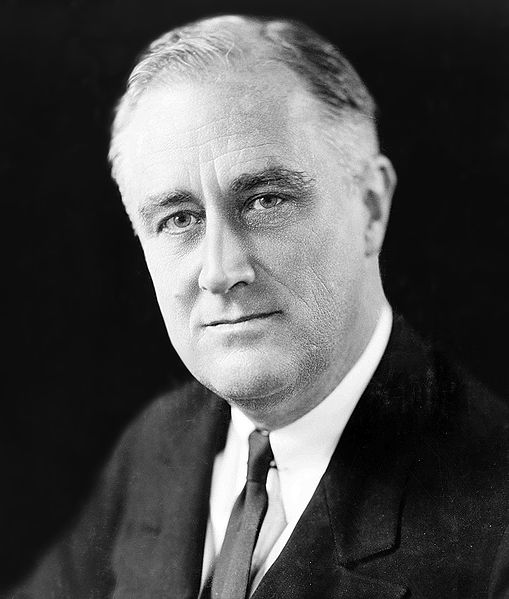
As Franklin D. Roosevelt said, standing before the world on his inauguration day. With everything to fear– from wars on two continents looming, a depression lasting nearly a decade, and even his private battle with paralysis:
The only thing we have to fear is fear itself. listen

“A Gallup report issued on Tuesday underscored just how out of line we are. Gallup surveyed people in more than 100 countries in 2009 and found that religiosity was highly correlated to poverty. Richer countries in general are less religious.”
Interesting stuff.
Jesus told the rich man, “If you want to be perfect, go, sell your possessions and give to the poor, and you will have treasure in heaven. Then come, follow me. When the young man heard this, he went away sad, because he had great wealth.” Matthew 19:20-21
Second thought
I’d really like to see a similar chart correlating the amount of money a religion spends vs. the number of participants per capita. I have a feeling that all of the spending in westernized Christianity doesn’t correlate to increased impact.
HT to How to Break Anything & New York Times