Category: social media

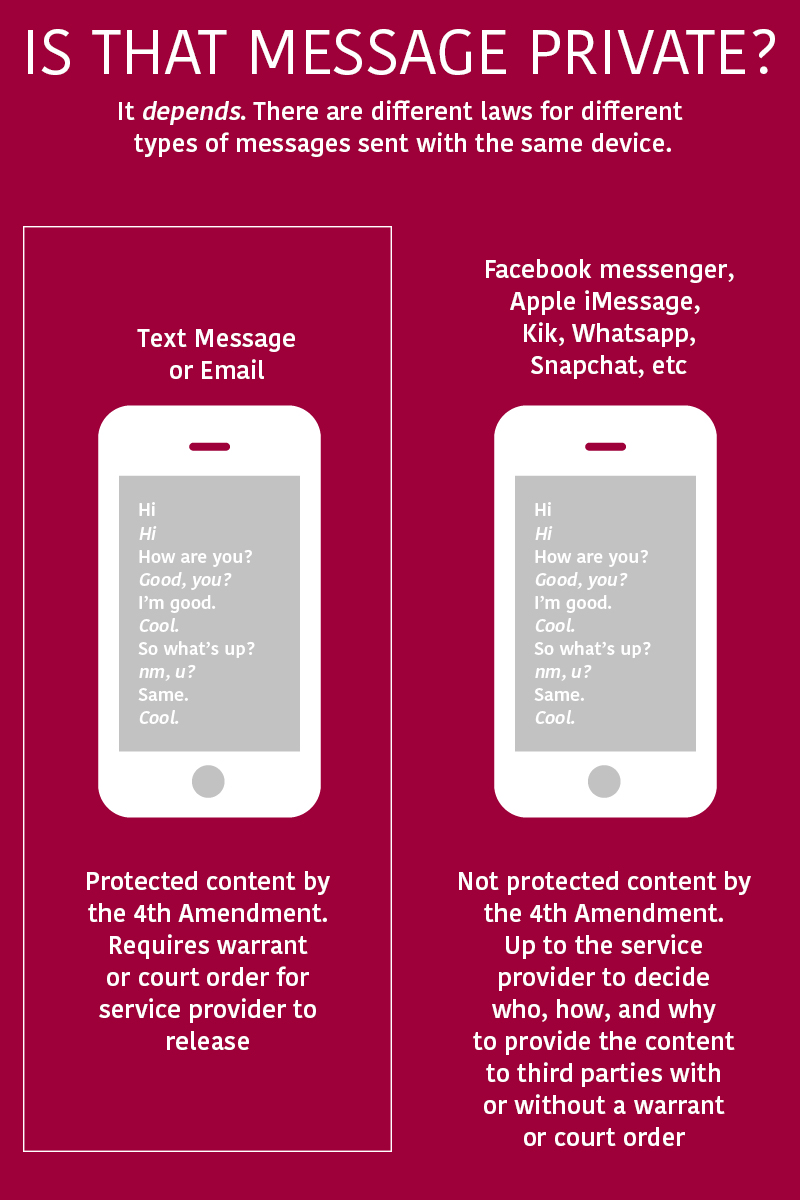
  • Is that message private? (Infographic)

    Is that message private? (Infographic)

    Social Media Principle #2

    There’s no such thing as internet privacy, only perceived internet privacy.

    Sources

    ACLU – U.S. Surveillance Law May Poorly Protect New Text Messaging Services

    Electronic Frontier Foundation – New Ninth Circuit Case Protects Text Message Privacy From Police and Employers

  • A Brief History of Blog Gimmicks and The Problem of Cheap Traffic

    A Brief History of Blog Gimmicks and The Problem of Cheap Traffic

    This history of blogging is full of gimmicks to draw cheap traffic. And I’ll be the first to admit that over the last 10 years I’ve been influenced by these gimmicks, tried them out, and ultimately gotten better at recognizing that they aren’t part of my strategy.

    What is “cheap” traffic?

    Cheap” blog traffic is non-organic traffic to a blog drawn by gaming the system to get more pageviews while failing to convert visitors to invested readers.

    Cheap traffic” impresses for all the wrong reasons. It’s all numbers and no real impact or quality. On the surface, it’s easy to get impressed with a blog boasting 100,000 daily readers. But when you look into the actual analytic data you’ll see that most of those visitors are coming to a single page and not returning. Often times visitors aren’t even staying long enough to have actually read the post they are visiting.

    Let’s say there is a blog post drawing 90,000 daily readers via referrals from Facebook. That is great, right? Maybe. But if the article is 1200 words and the average visitor is staying 9 seconds, only visited that single page, and then went back to Facebook, they didn’t read it and you didn’t gain a new reader. What did you get? Cheap traffic.

    A Brief History of the Blog Gimmicks

    • Blogrolls – Before search engines really gained popularity there was a ton of effort to get people to link to one another in blog posts. You still see historical remnants of this on a lot of blogs. Bloggers would create a page or a sidebar that had links to all of their friends. (WordPress didn’t depreciate their link manager until December 2012)  These were basically recommendations. You’d read your favorite blogger and in their sidebar you’d discover and visit their friends blogs. There was a social dynamic to it because you always wanted to get linked to from someone’s blog. Why? That “recommendation” meant traffic. As this took off as a source of traffic people became more and more interested in making sure their blog got attributed in as many other blogs/websites as possible. Soon, tools were developed and companies started providing services to get your blog mentioned. But as soon as it shifted from an “organic” link in a blog roll or trackback to something “paid” people stopped trusting that blogrolls were legit and the inbound traffic from people’s blogrolls diminished greatly.
    • Blogrings – In the midst of the blogroll boom Blogrings emerged as one of the first sources of cheap traffic. One of my very first toes dipped into the youth ministry world came when I managed a blogring of youth ministry bloggers. How it worked was that you could submit your blog to the blog ring if you met the groups criteria (being a youth pastor) and agreed to post the blogring’s code snippet in your sidebar. So someone would read Marko’s blog and they’d click to the next person in the youth ministry blogring and land on another person’s youth ministry blog. The “cheap traffic” part started to emerge because of human behavior. People would just keep clicking without really reading. So bloggers would get excited that they were getting tons of traffic, but it wasn’t really good traffic, it was just blogring traffic. Really, blogrings were pretty important as far as gimmicks go. And why did you want to manage one? You got to game it so that your blog got the most traffic from the ring… DUH!
    • Google & Relevance – This is really when search engines started to take off. The internet was truly a web of somewhat arbitrarily socially connected websites and blogs. But then Google came along and their technology started to crawl servers, cataloging everything, then sorting content into an order based on relevance. They defined relevance democratically… if a lot of people linked to a single source, it must be the most relevant page on that topic. So when you searched “youth ministry” you landed at “Youth Specialties” because they had the most links for the word “youth ministry” on the entire web. So then the game became, how can I get the most relevant site to link to me… so that my own blog will show up higher in search results. This lead to trackbacks.
    • Trackbacks – Because Google was indexing things based on relevance and links, linking to a source became more than a recommendation… it became almost life & death for bloggers. You wanted to write something that other people had to respond to or write about… and then link back to you. Trackbacks (still part of WordPress core) were a way of your blog automatically alerting another blog… and posting a link back to you… that you’d mentioned their blog. This was a HUGE source of cheap traffic for bloggers in the mid-2000s. I’d read something on USA Today and write a quick response to it with a link back to the USA Today article. That trackback would appear above the comment section with a title like “Why ____ matters to the church” and I’d get hundreds of inbound links from visitors who wanted to read that response. I can’t tell you how many times I did that, sometimes on purpose and sometimes on accident. Trackbacks were crazy because sometimes your blog would even get mentioned on air as some radio host blabbed about the USA Today article. On a smaller scale, trackbacks became about etiquette. It was considered good form to mention several other bloggers in each post and if a blogger mentioned something you wrote or said, you expected a trackback. And, as Google became “the Google” links became more and more important.
    • Backlinks – About the same time that Trackbacks became important, backlinks took off. Marketing companies, aware that Google placed a high value on who was linked to whom, started providing services where they could guarantee that your blog would get linked to by a more relevant website, theoretically meaning your blog would appear higher in search engine results. There was a lot of money exchanged over backlinks. I never really got into this because I always felt it was a little dishonest. But “organic” backlinks became social currency. You could get people to backlink to you with a small gift or service. So you’d agree to review a book if the author and the publisher linked back to you. Within a few years, Google started differentiating between organic and paid backlinks, punishing paid backlinks with lower search result relevancy… so this was a gimmick that was SUPER IMPORTANT for a short period of time, made a lot of people a lot of money, and got a lot of brands hooked on cheap traffic.
    • SEO – The next logical step of Google’s power over search engines had to do with Search Engine Optimization or SEO. There are lots of people (myself included) that think it’s important that your website/blog be optimized to take advantage of all that Google offers by making sure your site gets the right information to Google. That’s not what I’m talking about when I refer to SEO as a gimmick. Where the gimmick comes in is people adding content to their site solely driven and informed by search results. In the youth ministry world, the late 2000s saw several youth ministry bloggers emerge statistically simply because they learned to game Google’s search engines by writing content based on what youth workers would Google. So they’d use a various keyword tools to determine what youth workers were searching for and then write blog posts to capture that search traffic. This gimmick lead to endless blog posts on “youth ministry game ideas” or “youth group mission trip rules.” Again, this wasn’t about having something relevant to say or even writing something worth reading. It was simply about capturing cheap traffic by gaming what people were googling. It was a short-term strategy… and most of those people made good money on the reason Google was tracking keywords… placing ads for you to click on. And as Google has become less important you’ve seen those blogs fade.
    • Blog Contests & Reviews – Overlaying the SEO gimmick was contests and review sites. As brands began to see that cheap SEO traffic wasn’t impacting their bottom line, the pendulum swung back to desperately trying to get recommendations. They found a host for this gimmick in the mommy blogger community. Virtually overnight, small groups of moms who blogged suddenly had conferences at 5-star resorts paid for by Proctor & Gamble. There was no vetting to this whatsoever and no one seemed to ask if you were interested in a product or even if you wanted it. (We know this because Kristen was on a lot of these mom blogger lists, we got TONS of free stuff sent to us.) A company would send you two copies of a product, one for you, one to give away. You’d offer up a short review and you’d post a contest on your blog. Leave a comment and pick a winner. It was completely ludicrous! Kristen would receive 2 toys in the mail that were $200 each. She’d write a blog post about it, list her contest on a blog contest site, and several hundred random people would enter. She’d get TONS of traffic, it’d be fun, and that would be it. It’s funny, but this gimmick is alive and well. It has matured a little in that it most often now requires you to join an email list… so at least companies get something. But when it was hottest in the late 2000s it was a straight up gimmick.
    • Viral Lift – All of this gaming of Google, backlinks, SEO… it leads to where we are right now. The cheap traffic gimmick of viral lift. BuzzFeed is the king of viral lift. They aren’t interested in Google, it’s web crawl is too slow for them. Instead, their entire site is built on two principles: Link bait & social sharing. Literally, instead of gaming Google they are gaming your brain to get you to link to them on social media. So they’ll create a title like, “21 Kitchen Gadgets You Need to Buy Right Now.” Is that important? Nope. But BuzzFeed has learned that they can get you to click on something by mixing keywords and your inborn curiosity. It’s a genius gimmick. And while I tend to believe that it’s author, Tabatha Leggett, loses just a tiny bit of her soul wondering out loud… “I went to Cambridge for to write about banana slicers?” she is actually winning the cheap traffic gimmick war right in this moment. She’ll continue to write stuff like that because it works in the moment and BuzzFeed only cares about the moment.

    What Does This Mean for Bloggers?

    As bloggers, we are all influenced by these trends. Whether we intentionally do it or not, these trends continue to emerge and we find ourselves mimicking stuff that seems like it works.

    My point in bringing all of this up is to point out that if you are in this to write and establish a long-term relationship with your readers, you need to remember who your audience is. Getting hooked on drawing cheap traffic to look at an image or enter a contest or get “quick ideas” isn’t cultivating an audience that’ll convert into long-time readers. It might seem like it “could” but it doesn’t. I’ve simply seen it too much in both my own work and the work we do for our clients.

    My advice is always the same: The biggest reward in blogging comes when you play the long game. Just write good content and the rest will take care of itself. 

    What Does This Mean for Businesses?

    You really have to know your business. Very few businesses can survive without establishing relationships. Sometimes you need a quick burst of energy that a promotion can generate. And sometimes you do need to do things just for branding or list building.

    But long-term growth in almost any field has to do with excellence. A gimmick is just that. Look at a gimmick like Thanksgiving door busters. How many of those people who come at 5 AM to buy a cheap TV also buy something else? How many of those people come back in 2 months to buy something else? How many of those people are your best customers? How many of them become your best customers.

    Just like I don’t see “cheap traffic” on blogs converting to long-term readers of a blog, you have to see gimmicks as a short-term strategy and a sign that something is wrong. A healthy business-owner isn’t opening up his shop at 5 AM the day after Thanksgiving. A healthy business owner is sleeping in, giving his workers the day off, and enjoying time with his family.

    What Does This Mean for Churches?

    Somewhere along the line churches started believing that “cheap traffic” days were opportunities for growth. With the Lenten season upon us we’re only days away from churches “announcing” their Easter gimmicks.

    Just because you have high attendance on Easter doesn’t mean you have an opportunity.

    But before you do that… stop and ask yourself three important questions:

    1. Where are the people you attracted with last years gimmick? If they are in your pews… awesome. But don’t mistake getting someone to show up one time with making an actual impression on them.
    2. What are you doing to make sure that your engagement is at an all time high… instead of all the attention on your gimmick? Just like the blogger can’t expect people to come back because they gamed Google, what makes you think someone will come back?
    3. What’s your real motivation for the gimmick? To draw traffic or to convert? No one thinks poorly of BuzzFeed for drawing endless millions on cheap traffic. But I think that in a post-Christian world the public cares a lot when they see churches pulling off the latest gimmick to draw an audience.
  • Tracking Anonymous Social Media Accounts Back to the Source

    Tracking Anonymous Social Media Accounts Back to the Source

    You aren’t the NSA and you have a problem

    Do you have a hater? Is someone anonymously posting things on social media that are driving you crazy or disrupting your school? Is someone posing as you?

    In many cases, it might seem like you can never figure out who these people are. And, usually, they aren’t doing anything illegal so there’s little the police could do about it.

    I’m going to share a simple way that you can catch most online creepers. Most aren’t that sophisticated, most are just idiots who think they are being funny.

    Last year I shared how I deal with trolls, this year I’m sharing how I track not-so-anonymous accounts back to their source

    A Rat ALWAYS Returns

    I went to a college where pranks were big. It was a conservative Christian college that didn’t allow students to have sex or drink alcohol. We weren’t even allowed to dance or go to movies. With all that extra time, pranking folks was a form of currency.

    And there I learned an important thing that applies to annoying anonymous accounts: A Rat ALWAYS Returns.

    In other words, the fun for the prankster (or troll or bully) is seeing your reaction. This curiosity will point you back to the culprit 99 times out of 100.

    Let’s say someone put something in our microwave for an hour and it burned, causing a nasty smell that brought everyone out to inspect the problem in the kitchen. The person who was there who didn’t fit in… or the random person who walked by “because they smelled something” was usually the person who did it. They were the rat.

    The exact same behavior is true when someone is anonymously tormenting someone on social media.

    You don’t have to be the NSA to track down the culprit because 99 times out of 100, all you have to do is look at who is looking and it’ll point to your rat.

    Mapping Users

    Step 1 – Identify the account

    Might seem too obvious. But you need to isolate the account. Go to it’s profile page, it’s a wealth of information.

    Step 2 – Map the users they engage with

    Looking at the offending profile, start taking notes on who are they engaging with? Grab a piece of paper and identify the first 10 people the account followed or became friends with. Next, identify who they most frequently engage with. Look for social activity like favorites, retweets, mentions, things like that.

    Step 3 – Identify Related “Accounts of Interest

    Once you’ve done that, order the accounts that they engage with the most from #1 – #10. Chances are very high that your culprit is one of those accounts OR they are, at least, friends with them. These are your “accounts of interest.”

    Why? Because this behavior is about social power. And there is nothing to be gained unless other people know you are doing it, can watch it, etc.

    Map the Context / Language

    Step 4 – Isolate the Context

    I find it helps to get the text/images/videos out of the actual app and into another format.

    Create a Google/Excel spreadsheet with a new tab for each incident when the offending account posted something. Create a column for each of your 10 “accounts of interest” associated with the anonymous account. (So row 1 is the names of all the accounts) Next, copy/paste any post from those users around the time that something was posted. Note mentions of the offending message or the person being targeted. Anything that could be in context.

    The point in doing this isn’t that you are going to identify your offender. But you are most definitely going to be able to identify the friend group of the offender(s). You can assume that these people are either together or texting/messaging one another about the anonymous account.

    Take careful note about who is promoting the account to other people. They are vested in other people discovering the account, sharing it as funny or asking other people to check it out/follow it.

    As you sift through this you will see a few accounts who are the closest to the action. These are the most interested parties. They might not be the offender, but they know who it is.

    • When were things posted?
    • What were they talking about before and after?
    • Were there references to what they were doing? Where were they?
    • Were they referring to contexts of things that limited people know about? (Something that happened in a class, for instance.)

    Remember: Social media happens in real time. Context is very important. Circumstances often lead to the timing of what is posted, when.

    Mapping Location

    Step 5 – Map Mistakes

    I can’t believe how often this points directly back to a source. 

    Most smartphones have a built-in GPS. And most social media apps, unless you turn it off, will tell you a location. Scroll through the offending account to see if you can spot any of that.

    Step 6 – Map Images

    If they are posting images they’ve taken, their goose is cooked. Seriously, this is too easy. Download the images to your computer and look at the properties of the image with the image viewing applications included with your computer for free. (In my case Preview) Open the image, click Tools>Show Location Info

    Here’s information about a picture I took at a local grocery store of some duck eggs. 

    If you have this information, you can establish exactly where that person was when the image was taken… but you can also tell the exact model of their device. If you have 10 people you’re looking at, how many of them have a black iPhone 6? Your circle just got a lot smaller.

    Face-to-Face Pressure

    Step 7 – In Real Life

    Let’s say you are an administrator at a school and you need to know who is impersonating a teacher or who is bullying a student. Now that you have this information you have a pretty good idea who to talk to.

    The last step is the confrontation. If you’ve followed the steps above, chances are very high you’ve identified 3-4 people you need to talk to as well as created a paper trail as to why you are talking to these individuals.

    Likewise, let’s say that this behavior has crossed a legal boundary. The information above is easy enough to share with an investigator to give them a fast-forward on doing a criminal investigation.

    Did this help you? Leave me a comment or drop me a note via my contact form.


    This post relates to my social media principle #2: There’s no such thing as privacy online, only perceived online privacy. If you’d like to learn more about that please check out my book, A Parent’s Guide to Understanding Social Media.

     

  • What is Swipe?

    What is Swipe?

    Question from a middle school administrator – Over break I was invited by students and former students to JoinSwipe.  It has a smiley face.  What do you think of this app?  What is it?  Any advice would be great.

    What is Swipe?

    First off, their logo is a wink. The logo alone is a bit of a shot across the bow about what the app is all about.

    Second off, I’ve not heard of it. It seems to be pretty small and new, which doesn’t mean much I suppose.

    So let’s do some digging. 

    Here’s the official description on the iTunes App store:

    By invitation only.

    See the photos & videos your friends won’t post on Facebook.

    With Swipe we wanted to build something fun that made conversations more like running into friends in real life?—?wherever you are and whatever you’re doing. When you get into the app, you’ll see a stack of photos & videos posted by your friends. It’s not stuff you’d find on Facebook?—?it’s what they’re really doing. That’s because your username is invisible by default when you post to Swipe.

    You can do three things with posts, and they all involve swiping ;). If the post doesn’t interest you, swipe left to pass?—?you’ll never see it again. If you think it’s cool, swipe right to let the poster know you like it. And if you want to reply, just tap the post, write a message, and swipe up. When your friend gets the reply, they can send one back to you and reveal their identity. Replies can go back and forth until someone gets bored?—?and just swipes it away.

    Here’s the official screenshots:

    Here’s some background from the developers on their blog:

    With Swipe we wanted to build something fun that made conversations more like running into friends in real life?—?wherever you are and whatever you’re doing. When you get into the app, you’ll see a stack of photos & videos posted by your friends. It’s not stuff you’d find on Facebook?—?it’s what they’re really doing. That’s because your username is invisible by default when you post to Swipe.

    Source (Notice they are using Medium as their blog platform, not Tumblr. I see Medium as more of a grown up version of Tumblr.)

    Here’s the company that’s developing it, Complex Polygon, it’s small, might be just two guys.
    It looks like the domain may be registered in Panama, but that could just be a privacy setting. It’s pretty clearly being developed in Silicon Valley.
    Here’s who is funding it, it looks like a legit first round, $1.7 million:

    And here’s some backstory about the primary brains behind it, actually a really interesting read. 

    The app is a mash-up of several different trends right now.

    It’s “anonymish.” Your friends share different photos but you won’t know exactly who took them, even if you have a pretty good idea (like Snoop Lion, pictured above).

    It’s got a Tinder mechanic where you swipe left or right to like things. Or up if you want to comment on something.

    It’s ephemeral. You only get to see photos once.

    How did Roushdy and Hardy end up here?

    They wanted to build something fun that would be universally recognized; they structured Complex Polygon as a startup where they could spin out idea after idea to see which one stuck. Swipe is their second one, and it had enough promising engagement metrics that they decided to do a bigger launch.

    Source

    What You Need to Know

    I think Swipe is most like Tinder. If students are using it in your school or youth group I wouldn’t be overly concerned. It doesn’t have a positive or negative reputation at this point. But I would be curious, I would inquire with students about what they are doing with the app and why they like it.

    If I were a middle or high school student and Tinder was a little too, um, flirty and/or sexual for me, I can see playing with something like Swipe. It’s basically a mash-up of Snapchat and Tinder. (With the swiping right or left of Tinder, the disappearing image thing.)

    For students, again, it’s all about helping them understand that the images here don’t really disappear any more than they do with Snapchat. (Social Media Principle #2) And since people can send you pictures and you don’t really have any context for it… what TechCrunch called “anonymish” it could just as easily be someone doing something you don’t want to see as it could be someone making cutesy duck face at their grandmas.

    Questions for readers: How are you using Swipe? Did I get something wrong? Leave a comment and share your experience.


    Have a question for Tech Tuesday? Submit your question on the Tech Tuesday form on the sidebar of my blog.

  • Why Ephemeral Matters

    Why Ephemeral Matters

    Ephemeral – lasting for a very short time. “fashions are ephemeral” synonyms: transitory, transient, fleeting, passing, short-lived, momentary, brief, short

    In the social media world, most of what took off and gained traction among teenagers and young adults in 2014 fall into the category of Ephemeral Apps. Things like Snapchat, Tinder, Yik Yak, and others are built on the temporal nature of the messages.
    • A Snap lasts for just a few seconds. (Though Stories last a little longer, they also aren’t as popular as sending a Snap.)
    • On Tinder, you swipe to the right if you want to know more about a person, swipe to the left and they are gone.
    • Yik Yak is all about capturing the unfiltered thoughts of the moment. (I consider it to be the bathroom wall of the internet.) If you live somewhere where the app is active, your Yaks might only be on the site an hour before they go away.

    For most adults, you roll your eyes at things like Yik Yak, Tinder, and Snapchat.

    Understand this– That’s entirely the point!

    RULE #1 – Teenagers and college students want to hang out where adults don’t. The less popular something is for adults, the better.

    RULE #2 – Perceived anonymity and privacy is enough for what they want to do. We’re talking about a generation of app users who have grown up with their lives documented on mommy blogs, Facebook, and Instagram. They ultimately know that there is no such thing as privacy or anonymity online… that things get tracked back to them… but that’s not the point. The point is creating private space from the prying eyes of adults and/or people they don’t want to connect with. The perception of anonymity or privacy is just fine with them.

    Why Ephemeral Matters

    When I’m talking to parents or youth workers or school administrators they are dealing with very practical problems.

    But I don’t think you can problem solve ephemeral apps without first taking the time to understand why it’s important for teenagers and what it’s in response to within our society.

    1. Ephemeral matters because it’s seems safer than other options. “Safer” can mean a lot of things. Safer from mom and dad, safer from creepers, safer from getting tracked back to you, on and on. Posting on Twitter or Facebook, where adults persist, is dangerous. Posting on Snapchat? Totally safer.
    2. Ephemeral matters because it’s just chatting. As Danah Boyd so aptly drove home in her book, It’s Complicated, American society has systematically eliminated the places teenagers used to hang out free from the prying eyes and ears of adults. (Malls, streets, casual sports, etc.) These apps matter because these become the places where they can hang out. They may have very little “free time” that you or I grew up with, these apps provide the space to just chat. (This is why taking them away is so traumatic.)
    3. Ephemeral matters because it’s outside of adult control. Beyond the prying eyes, beyond the deep signs, beyond the misunderstanding, beyond the control-freak-parenting-methodology… ephemeral apps are a response to all of this. It doesn’t matter because of them, it matters because of  us. 
    4. Ephemeral exists because of general isolation everyone is experiencing. Here’s a challenge. Go sit at Starbucks with a pad of paper. Sit in a corner by yourself so you can see the whole store. In a 15 minute period, make a tick for every person who is in the store, comes or goes. Next, make a tick for every time someone looks at a screen. (Phone, computer, tablet.) What you’ll likely observe is that people are generally isolated from the life in front of them because they are absorbed by the life on the small screen in their pocket. This isolation creates the need for places you can speak flippantly, without worry that what you say is going to get back to your parents or boss or whomever. We all need places where we aren’t making “official statements” or having an “official position” but just have a place to say whatever comes to mind or feels good in the moment.
    5. Ephemeral persists because of the neurological high. Lastly, and perhaps an area where the least is known, is this idea that apps trigger your brain to check notifications, likes, and send responses at the neurological level which can mean that you don’t know why you’re checking it or using it so much… you just are. (More on that here)

    My advice? As an adult, it’s easy to just deal with the frustrations caused by things you haven’t taken the time to understand. Don’t waste your time trying to talk people out of using apps. (You’re actually increasing their desire to use them!)

    Instead, take the time to understand why these apps matter to the young adults in your life. Just because you don’t get it doesn’t mean something is bad. It might mean that you need to be the learner and not the teacher. 

  • A Call for a Better Adult Verification System

    A Call for a Better Adult Verification System

    “How many of you guys have a cell phone?” [most hands go up]

    How many of you guys have an account on Instagram or Snapchat?” [nearly the same amount of hands go up]

    This gymnasium of 4th through 6th graders in Northwest Kansas was just another example of our failed Adult Verification System. “Age gating”— the industry term for asking users their age when signing up for an account on a website that collects personally identifiable information, aka every social media app on the planet, is horribly broken.

    The intent of age gating is to comply with COPPA— a federal law that prevents the collection of personally identifiable information of those 12 and under. More technically, age gating helps social media apps get out of very expensive COPPA compliance because they don’t have to maintain a system whereby parents can get access to all of the information collected about their children.

    See, creating an account on a social media site is not about capabilities or gaining parental permission. (see When Should I Allow My Child to Get a Social Media Account?) Creating an account on a website or app that collects personal information is about age… like driving a car or voting or buying alcohol.

    The minimum age to create an account is 13. But the system for verifying users is virtually non-existent.

    An Age Old Cycle of Blame

    You can’t tell me that app manufacturers don’t know that they’ve have tons of underage users. It’s rampant and they definitely profit from their usage and data.

    Whenever I do assemblies with elementary-aged kids lots of them have questions about apps that they aren’t old enough to use.

    And when I talk to parent groups– most of the parents readily admit that their 9 or 10 year old has an account on Instagram, Snapchat, Twitter, or another app that they aren’t old enough for.

    When questioned about this, most app manufacturers simply blame parents. They cite quotes from research like this:

    “Our data show that many parents knowingly allow their children to lie about their age — in fact, often help them to do so — in order to gain access to age-restricted sites” — Dana Boyd

    Source

    The problem with app developers blaming parents? The Federal Trade Commission doesn’t make age verification the responsibility of parents… it’s the website or apps responsibility:

    If you operate a commercial Web site or an online service directed to children under 13 that collects personal information from children or if you operate a general audience Web site and have actual knowledge that you are collecting personal information from children, you must comply with the Children’s Online Privacy Protection Act.

    Source

    COPPA requires those sites and services to notify parents directly and get their approval before they collect, use, or disclose a child’s personal information. Personal information in the world of COPPA includes a kid’s name, address, phone number or email address; their physical whereabouts; photos, videos and audio recordings of the child, and persistent identifiers, like IP addresses, that can be used to track a child’s activities over time and across different websites and online services.

    Source

    See, in regards to COPPA compliance from a legal perspective, the burden isn’t on parents. (Though we all agree they should play a part in compliance.) It’s on the operators of the sites which collect personally identifiable information.

    We Need a Better Age Verification System

    This slideshow requires JavaScript.

    Most apps deploy a simple script on their account creation page which acts as their Age Verification System. They call it Age Gating  because the app is only going to check once, it’s a gate. Provide a birthdate older than 13 years old one time and it’ll never ask again.

    Technically speaking we’re talking about a few lines of code, asking for a user’s birthdate, and that’s it. If you tell Instagram or Facebook or Snapchat you are under 13 years old it doesn’t allow you to create an account. But standard age gating doesn’t prevent the same IP address or even browser session from submitting the exact same information with a different birthdate. Deploying a blacklist isn’t that hard to do. It’s simply blacklisting an IP address or device ID to prevent it from changing the birthdate to get past the gate. If app developers wrote a script that told users they weren’t old enough and then prevented them from trying to submit the form again for 24 or 48 hours, most would go away.

    [box type=”note” size=”large” style=”rounded” border=”full”]Most of these same sites use a similar blacklisting technology to prevent spammers and bots from creating hundreds of accounts from the same device or IP address. So the technology already exists and is deployed, just not applied to age verification.[/box]

    [box type=”note” size=”large” style=”rounded”]Did you know Instagram and Twitter don’t even ask users for an age? How is this COPPA compliant? The operators make no attempt to keep underaged users off their application.[/box]

    A Call to Develop On-Going Age Verification Versus Age Gating

    Rather than simply age gating a social media app which has done nothing to prevent underage users from gaining access to sites intended for older teens and adults, I would like to see a developer create an on-going age verification system that not only prevents underage users from creating accounts but also flags on-going underage user activity

    For instance, many app and device manufacturers (most notably Facebook with facial recognition on images and Apple with fingerprints) are using biometrics to identify users. (see Biometric Technology Takes Off) So the technology is available to identify users based on their physical biometrics, like if they use their finger to unlock their phone, or if they post a photo of themselves on Instagram but no effort is put forth by these companies to verify that users are of legal age to use their services. For instance, if a 10 year old creates an account on Instagram saying she is 16 then later tags themselves in a selfie with her mom whom she also tags in the photo… why doesn’t Instagram’s API correlate that data to the tagged parties Facebook account where the mom correctly lists the child’s age as 10? It’s not that the technology doesn’t exist, it’s that Instagram– a Facebook company– has no will to do so.

    Similarly, we know that technology exists for apps to flag content based on geolocation, keywords, or message content. If an app developer were truly interested in on-going Age Verification the technology exists to limit the collection of personally identifiable information to those 13 years or older but the will to do so does not exist.

    Instead, most app developers take a passive approach, ignoring [and profiting from] underage users and only dealing with it when reported. It’s not seen as a legal compliance issue, it’s usually seen as a community management issue. 

    [box type=”note” size=”large” style=”rounded” border=”full”]I’ve made the same argument about Snapchat’s lack of will to prevent the creation and distribution of child pornography. Could they not deploy a technology that detected nudity and prevented someone under 18 years of age from sending or receiving illicit images? Of course they could. They don’t have the will to do so because ultimately the illegal behavior is driving usage and making them rich![/box]

    A Call on the Federal Trade Commission to Force Operators to Comply with COPPA

    14.    Will the amended COPPA Rule prevent children from lying about their age to register for general audience sites or online services whose terms of service prohibit their participation?

    No.  COPPA covers operators of general audience websites or online services only where such operators have actual knowledge that a child under age 13 is the person providing personal information.  The Rule does not require operators to ask the age of visitors.  However, an operator of a general audience site or service that chooses to screen its users for age in a neutral fashion may rely on the age information its users enter, even if that age information is not accurate.  In some circumstances, this may mean that children are able to register on a site or service in violation of the operator’s Terms of Service.  If, however, the operator later determines that a particular user is a child under age 13, COPPA’s notice and parental consent requirements will be triggered.

    Source, emphasis mine

    The Child Online Privacy Protection Act belongs to the Federal Trade Commission. The will of social media operators to comply with COPPA is not there, therefore it is up to the FTC to force operators to comply.

    I’m calling on the Federal Trade Commission to do two things:

    1. The law allows fines up to $16,000 per instance depending on the level of egregiousness. It’s time the FTC brings social media operators to account. Operators are knowingly allowing underage users to create accounts and use their services. They are choosing to not deploy existing technology to automatically flag and remove underage users. If the will to comply does not exist, fine them.
    2. I’m calling on the Federal Trade Commission to force large social media operators, those with over 1,000,000 user accounts, to deploy technology which actively verifies user age, automatically flagging potential underage accounts for removal or compliance with parental notification rules.

     What Can You Do?

    If you are like me and believe that social media operators should actively comply with the intent and letter of the Child Online Privacy Protection Act (COPPA) than I’m asking you to consider the following:

    1. Raise awareness of the intent & boundaries of COPPA among the parents and children in your life. Ask them to read COPPA.org or this article for parents from the Federal Trade Commission. Have a discussion about not just the rules… but also why it’s important. 
    2. Report underage accounts to social media operators. (see this post for links to social media operators reporting systems)
    3. Report offending operators to the Federal Trade Commission. If you have reported an underage user and the operator has not removed the account, report it to the FTC for investigation.
    4. Raise awareness among parents and other adults by sharing this post on social media sites.
  • Yik Yak Threats Are a Bad Idea

    Yik Yak Threats Are a Bad Idea

    CBS News 8 – San Diego, CA News Station – KFMB Channel 8

    [Link to the above video – I appear in a phone interview talking about the situation at Torrey Pines High School and Yik Yak, in general.]

    Yik Yak has a problem.

    The harder they try to market themselves as an app for college students the more high schoolers they attract.

    In fairness, they really have been a good digital citizen. 

    They make it easy for law enforcement to contact them, they provide information to aid investigations when they receive a court order, and they went to great expense and effort to geofence off every middle and high school over the summer. They’ve even made it possible for school administrators to request geofencing or correct it.

    And yet problems persist. The perception of anonymity gives some teenagers license to wreak havoc. Just like there were idiots who pulled the fire alarm every day at Hanau American High School when I was a junior in high school, the (child of) that same idiot will make threats on Yik Yak.

    “You Are So Dumb”

    You-are-dumb-you-are-really-dumb-fo-realIn the words of a great American, Antoine Dodson, I say this: If you think you can post an anonymous threat on Yik Yak and get away with it… You are so dumb.

    Here’s What You Need to Know

    All of the so-called anonymous and ephemeral apps point directly back to you. (Yik Yak, Snapchat, Whisper, Secret, etc) The only people that thinks things disappear or are anonymous are the users.

    So if you are using these apps and thinking it’s all private or secure or anonymous, recognize that this is merely a perception.

    There is no such thing as privacy or anonymity online, only the perception of privacy or anonymity. 

    Here’s Some Reasons Yik Yak Threats Are a Bad Idea

    • To create an account you need a valid email address. Oops. 
    • Even if you use a fake or “anonymous” email address to create an account, the IP address associated with your account points back to you. (Learn about IPv6 — “Every device on the Internet is assigned an IP address for identification and location definition.”) Oops. 
    • Most people are too lazy for that so they login with their Facebook account. Oops. 
    • With Yik Yak specifically, the app simply won’t work if you don’t have the GPS on your phone activated for the app. (Location Services for Apple Users) So while a Yak posted my only show you a general area it’s posted from, the app recorded your exact location when you posted. Oops. 
    • When you post an image to something like Whisper or Snapchat… the image itself has TONS of metadata that points directly to your device and location. Oops. 
    • The data network on your phone is constantly pinging your location back to your service provider. Actually, the GPS on most phones actually works even if you have data turned off. In other words, if that phone is on, it’s logging your location within about 10 feet. Oops.
    • The cellular network on your phone connects to nearby towers each time you make or receive a call or send a text. While not as accurate as the GPS, it establishes that you are within a general area. Oops. 
    • Let’s say you think you are slick and use a VPN. Wanna know what? Your phone logs that you used that VPN. So if a threat came through a VPN and your phone used the same VPN? Oops. 

    And do you know how hard it is to get all of that information? Not that hard if you are law enforcement. A court order, subpoena, or search warrant is all that’s needed. A little paperwork and the signature of a judge.

    So, let’s say you make a threat about a school on an “anonymous” app. Within about two weeks you’ll discover that what you thought was anonymous was anything but that.

    Far from putting on winter gloves and pulling the fire alarm in 1993, an online threat posted to Yik Yak or another so-called anonymous app leaves a digital footprint that easily establishes your guilt. All of this data is admissible in court. And all of this data will prove, beyond a reasonable doubt, that you did it.


    Yes! I agree that it’s weird that I have to write this. It feels kind of obvious. But then again… every day a new story emerges of someone doing it. So, I guess this post really is needed.

  • How can a pastor help families with social media?

    How can a pastor help families with social media?

    “How can I help families with social media?”

    I think this is something that lots and lots of churches are wondering. While culture is ever-morphing and hard to understand– the way people are communicating and integrating technology into their lives is big/obvious and churches feel the need to offer help.

    The flip side is that most recognize that they are not experts on social media, much less experts on how social media integrates into adolescent life. And so they either do nothing… which is common. Or they try to provide their congregation access to “experts“… which is rare, but appreciated. (No really, thank you.)

    But I want to present to you a plan that is right down the middle and plays into your expertise as a pastor.

    How to Help From Your Expertise

    As I’m out doing seminars and workshops with people I end up speaking out of two different postures about social media.

    1. I’m speaking out of specific, long-term research I’ve done on teenagers and social media.
    2. I’m teaching and answering questions using skills learned and refined in my ministry training and life as a pastor.

    In other words, half of the skill set that I have, every pastor has.

    Lean on Pastoral Counseling

    Often times I’m asked about how social media impacts the home relevant to children and teens. And just below the surface of those questions are questions relevant to family life and marriage. It’s pretty normal that a spouse will attend a workshop and then make mention of their spouse being “the one with the problem in our home.” So, as a pastor, I can see that issues in the home might be flowing from a lack of communication about how the device makes his spouse feel or maybe that he’s using the device because of a larger marital issue or even that they aren’t have sex as often as they’d like because they are staring at their phones in bed instead of each other.

    You don’t have to be a social media expert to talk about these things, these are pastoral counseling issues that you, as a pastor, really are an expert on. These are things you can deal with in informal counseling in your office or make a referral to a professional counselor.

    Social media might be the presenting issue. But often social media is the symptom of something bigger, it’s a family problem with which you can provide counsel.

    Social Media as a Window to the Soul

    The more I talk and write about social media the more I realize that the behavior itself is a window to a persons soul. In a normal healthy adult situation, social media usage is congruent to their life. They say things and do things with social media they would do in real life. And where there is incongruence, it’s often from a place of dissatisfaction or unhealthiness.

    That’s a two-way street, right? If someone is projecting perfection on social media but you know they are a mess, that’s incongruence. Likewise, if they are a mess on social media about their job, but happy-go-lucky at church… you know that incongruence means something.

    I share that because, again, you don’t have to be an expert on social media to notice this. If you’re sensitive to knowing your congregants you’ll be able to see that plainly and ask hard, yet obvious, questions. “Tom, how is everything going at work? You seem… I don’t know… grumpy when you post stuff on Facebook at work. Can we get together and talk about that?

    Use Resources to Maintain Baseline Understanding

    Let’s say you want to do a seminar about social media for parents at your church, but you can’t afford to bring someone in? Well, if you take my book A Parent’s Guide to Understanding Social Media and reverse engineer it… you’ll see my presentation. Voila! Start there and add/edit it to fit your context.

    Subscribe to my blog, iParent.tv, and Common Sense Media and keep those resources in your back pocket as things come up. But don’t feel like you need to become a social media expert in order to help the people in your congregation.

    Wrap-up

    Don’t get caught up in the trees to miss the forest when it comes to social media usage and helping families within your congregation. Focus on your expertise, lean on it, and allow the natural love a pastor has for her congregation and your expertise in pastoral care to overcome what you do or don’t know about how to use the latest social media app.

    And when you need more help, ask me. That’s what I’m here for.

  • 200,000 More Reasons to Delete Snapchat

    200,000 More Reasons to Delete Snapchat

    Since news of this broke on Friday I’ve received at least 50 texts, emails, and other messages about it.

    I’m a little torn. I don’t want to say “I told you so.” More like– “NO!!! I tried to warn people.”

    More than 4 million people have read my post, “Why you should delete Snapchat.” The PDF of that post has been downloaded 45,000 times. It’s been taught as an example of a persuasive argument in just about every state in the United States.

    But here we are. My efforts weren’t enough.

    Somewhere, in the ether of the internet, are 200,000 images posted online without permission. That’s on top of the countless number of Tumblr blogs and other websites dedicated to sharing captured Snaps.

    The facts of what I wrote about Snapchat in August 2013 haven’t changed

    1. Snapchat is built on a lie that digital images disappear. They don’t. Once you take a picture with your device and send it to another person you’ve given up control of that image. It might get deleted. Once you send it via text, email, or upload it to an app… you lose control.
    2. You think you’re anonymous online, but you aren’t. Whether it’s Snapchat or Yik Yak or an online forum, everything you post online points directly back to you. Everything. That happens at the device level with metadata. It happens with your ISP or mobile provider. And it happens with app developers at the server level. The only one who doesn’t know who everyone is on an anonymous app are the actual users. And, as we’re about to learn with the Snapchat leak, facial recognition is a double-edged sword.
    3. Snapchat was created as a safe way to sext. In the past year since the January 2013 uproar, Snapchat has done a very good job navigating further and further away from it’s genesis story of a safe sexting app. I’ve acknowledged that publicly. They introduced some new features, they’ve said all the right things in the press, they’ve educated users, and– even for me– they truly have done a good job trying to pivot Snapchat from the salacious history, which indeed fueled the initial popularity, to something better and more mature. But they can’t get away from their history or the subset of users who use the app as a safe way to sext. As Mitt Romney learned in 2012… you can’t “Shake the Etch-a-Sketch” and just tell a new story sometimes. If they were serious about getting rid of the subset of users who sext with the app they would invest a few million dollars to develop a feature that detected nudity and blocked it. (ala facial recognition in Facebook or iPhoto.)
    4. The Snapchat leaders seem more interested in blaming others than blaming their app. When they settled with the FCC, it was a misunderstanding and they didn’t own responsibility. When user names and passwords were leaked, it wasn’t their incompetence as developers– it was unscrupulous people wanting access to an unlimited treasure trove of private data. And in this latest leak, it’s not the fact that Snapchat has an open unofficial API that even an untrained developer can crack into within a few minutes then build and release iOS and/or Android apps on the official marketplace— it’s these 3rd parties who are to blame. We all know people like this. Whether it’s entitlement or immaturity or arrogance, they can’t simply admit that their leadership failed, that Snapchat is bigger than they are capable of leading, or that their skills as a developer are not up to snuff. Instead they play the “Hey, I’m just a kid, I make mistakes” card. Snapchat is valued at anywhere from $2 billion to $10 billion. (Though with existing and pending litigation I can’t see it.) Isn’t it time for the leadership at Snapchat to be held responsible? Shouldn’t the board, likely full of VC investors, make a decision to remove the founders and put in place someone capable of finishing the job? Surely, if the eventual goal of Snapchat is to sell it to Google, Apple, Yahoo, Facebook, or whoever wants it– the maximum value of Snapchat will never be achieved with a bumbling leadership team who can’t publicly own failure. Duh.

    If anything, what I wrote in August 2013 has been validated time and again. Which only leads me to the same conclusion: Delete the app.

    Do not trust an app built like this. And do not trust people like this.

    There are white hats and black hats in this world, Snapchat wears a black hat.

    Beyond “I Told You So”

    Right now, nearly every hour, a story is coming out blaming Snapchat for this leak. And they are 100% to blame. No doubt many will join me in calling the Snapchat board to remove Snapchat’s founders for their incompetence.

    But, emotionally, I’m just not interested in “I told you so” any more than I truly care about who is the CEO of an app people should just delete.

    Just like there wasn’t anything in it for me when I wrote the original post in August 2013, I am not somehow filled with pride that this has happened and I was right all along. (If you didn’t know, I wrote the post in response to requests from a group of moms at a seminar. I couldn’t answer their question about Snapchat sufficiently on the fly, I told them to watch my blog and I’d write some reasons you should delete it.)

    So here’s what I’m feeling about the Snapchat leak:

    • I feel terrible for the people who will now pay a penalty for their lack of understanding on how the internet works. Yes, we should hold Snapchat responsible. And I believe that the FBI will hold those who have leaked images of minors will be arrested for distribution of child pornography.
    • For those who have had images leaked, I hope they seek and get justice. What was done to them was wrong, it’s against the law, and the perpetrators may have had a good reason (to expose Snapchat’s vulnerability) but that’s not reason enough to violate the law.
    • I hope the public learns from this leak. For those who will have images posted, I hope they’ve learned that no matter what is promised, anything shared online is ultimately public. Take solace in knowing you aren’t alone. But make a correction in your behavior, as well, so that it never happens to you again.
    • As a Christian, I believe all humans are ultimately fallible. This isn’t about Snapchat– it’s about us. (Ourselves and the people we thought we trusted.) We make mistakes, people we trust betray us, and we all live in a space between blaming ourselves and blaming others for a lot of stuff. (Not just this leak) This is what we do as humans. While we all have good in us, as we’re made in the image of God, we also have evil in us. Last week I wrote about a new research study about teenagers and sexting. In talking about this with some friends I came to this conclusion: 100% of us are susceptible to sexting. The reason many haven’t is that the opportunity hasn’t arisen in our lives. The hormones of sex and the dopamine rewards of our inborn reward system are simply stronger than us. We all need Jesus. We need his strength to resist. We need forgiveness when we mess up. And we need His hope (and the actions of His people) for freeing the world of sexual exploitation. But I don’t see myself any better than those who have leaked images or had images leaked. And neither should you.
    • Let’s not forget that the leak is about sexual exploitation and the power of shame in our society. In the coming days it’ll be easy to throw people under the bus and blame them for taking these images. But there’s a big difference between exchanging these images with someone you trust (or are flirting with) and having them published, perhaps with their usernames or real names. Trust me, those affected will feel terrible enough as it is. Let’s not forget that the release of these images is illegal. (Do I even need to say it… DON’T LOOK AT THEM!)
    • These aren’t 200,000 images. These are 200,000 people. That’s a lot of hurting people out there. Ugh, my heart hurts.
    • I’ve got more work to do. One thing that’s become clear over the past year is that there aren’t a lot of people actually trying to educate teenagers about social media in a useful way. Scaring them doesn’t work. Instead, I’ve found that helping them understand how basic principles of social media play out in the real world as well as creating some common language with the adults in their lives really, really helps. In so many ways– I’m sick of talking about social media. But I also don’t feel like I can stop because the need is so great.

    Why Have You Deleted Snapchat?

    I’d love to hear from people who have had enough and deleted Snapchat. Now that you aren’t using it, what are you using instead?

  • Speaking Opportunities for 2015

    Speaking Opportunities for 2015

    With the latest round of social media leaks making waves today, this time impacting Snapchat users, I’m in the odd place of looking like an Old Testament prophet.

    I’m not a prophet.

    I simply applied long-standing principles of social media to the current wave of ephemeral apps popular today.

    And here’s the deal: I love to share those principles of social media with anyone who will listen– teenagers in school, teenagers at church, teenagers in a social club, teachers, parents, youth workers, etc. 

    In 2013-2014 I spoke in dozens of classrooms, school assemblies, youth group meetings, parent groups, conference, and even a farm safety day. I’ve spoke to grandparents trying to sort out what their grandchildren are doing on their phones and I’ve spoken to kindergartners about picking games that are fun and safe for them.

    If you’d like me to come to talk to your group… let’s chat.

    Here’s What I Don’t Do

    I’m not a “scared straight” speaker. I don’t find that trying to scare teenagers or parents about all the bad things that can happen with social media affects any change.

    Here’s What I Do

    But what does help bring change is two-fold.

    1. Build understanding
    2. Create common language

    When adults learn both how social media works and why it’s important to the teenagers in their life with some common language that everyone can use to talk about it… they can bridge the gap to get beyond behavior management and into a conversation about shared values.

    It’s much more productive to lead people to a place of “Who are we trying to be as a school, family, church and how does social media impact that?” instead of “Why do you take selfies?

    Got Some Samples?

    I’m not systematic about getting recordings of every talk, but I do allow groups to record me… so there are plenty of YouTube and Vimeo links out there.

    Here’s a few:

    Teaching in Church

    Leading a Parent Meeting

    Conference Presentation for Youth Workers

    How to Book Me

    If you’d like to have me out in 2015 (or even late 2014) drop me a note on my contact form. I’m willing to work with your organizations needs, budget, schedule, etc.