A good percentage of people in this world are full of crap. And we all need help figuring out who is worth listening to and who is not.
(more…)Tag: Church
-
How much is “enough?”
I go to church on Friday night, volunteer in the high school ministry on Sunday morning, and help lead a high school small group on Wednesday night.
That is enough. When I hear an announcement for something else I could do, or somewhere else they need help, or even something else I would really enjoy doing– I have learned to resist. I am doing enough at church. (If I’m being honest, I’m actually doing one thing too much.)
Hierarchy of serving
I know this is hard for my friends who work in churches. They have spots to fill and they feel like a failure if they can’t fill them. But there is a very real hierarchy of service we all need to bend our lives around.
- Serve your family, however that is defined for you. In my life, my kids are in their primary years of faith formation. The Shema dangles inches above my head. There is no mistaking it. My primary ministry right now is my kids, it needs to be my kids, and relying on the church– even expecting them to cater to my kids– is on the edge of sinful selfishness.
- Serve your neighbors, there is no other way to love them as yourselves. Jesus’ words couldn’t be more simple. Love God with everything you’ve got, love your neighbor as yourself.
- Serve your church, it’s a good thing. The New Testament talks a lot about community life, and Paul talks several times about the various roles of people in the body of Christ. And we certainly get a lot of joy out of serving the greater needs of the church.
For where I am at in my life, with three young kids and two fledgling small businesses, that leaves me with just a handful of non-work, non-running-around-like-a-chicken-with-my-head-cut-off hours to serve. For the sake of simplicity we’ll say that is 10 hours per week.
Within the hierarchy of serving for my stage of life that looks like this.
- Family – 70%
- Neighbors – 20%
- Church – 10%
When I try to do more at church… it’s not like I get more than 10 hours per week. It’s that other areas of my life lose those hours. I sleep less, I rest less, I go to my kids school less, I lean on the fence talking to my neighbors less. And it means that less of what I need to get done, gets done.
It’s OK to tell your church leaders the truth. If you are doing enough and it wouldn’t be wise to take on more… don’t. (And don’t feel guilty about saying no.) There is no shame in doing enough! [Which is why it’s called, “Enough.”]
And if you’re a church leader with spots to fill and no one seems to have the time to fill them, kill some things guilt-free. I know that sounds harsh, but if you’re people are already doing enough… why try to burn them out? Maybe this will even lead you to re-evaluate the priority what you’re doing?
The Disconnect
Here’s an observation from going from a church staff person to a volunteer lay leader. There’s a big assumption differentiation. As a paid staffer I constantly had this feeling that people were on the sidelines and largely uninvolved. “If only I could get them in the game, this church could really do some big things for the Kingdom.” But sitting on the other side of that coin I see the opposite to be largely true. People are very, very involved in stuff at the church and lots of other places. They are exhausted! They are doing too much. It’s not so much that they aren’t doing things for the Kingdom. It’s that their definition of Kingdom is bigger than your church.
-
You can’t do communion alone

When I was in middle and high school I spent a lot of time home alone. My mom worked crazy hours and my older brother joined the Air Force when I was in 8th grade. A million nights home alone will lead you past boredom. While I always kept the TV on so I didn’t feel alone I rarely watched it. (A habit I often fall back on today, to the annoyance of Kristen.) And there’s only so many nights in a row you can play video games before the loneliness of solo gameplay sets in.
In fact, there comes a point where boredom leads to creativity. Creative with things you can do alone.
In those years I would take as long as I possibly could to eat meals. I’d take forever to cook it. Or I’d cook it out of order or one thing at a time. Anything to make it last longer and give me something to do.
One little food oriented fascination I had was with communion. I don’t know why but I’d play around with communion elements. I’d tear bread, or a tortilla, or a tortilla chip… and mimic the motions of communion that we’d do in church. I’d recite the verses, dip the bread, the whole nine yards.
I wasn’t mocking it and it wasn’t quite the real thing. Actually, I used to worry that it was sacrilegious. And I would never have told a soul about this back then. In fact, I’m a little nervous about writing about it today.
Here’s the thing: It wasn’t really communion. Sure, it was the motions of communion. I got a certain feeling during communion at church, one worth trying to replicate.
But you can’t do communion alone. Even if you nail the elements and the words and everything. Because you can’t do communion alone.
The very word communion has the same root word as community, with a different suffix. Just like you can’t be in a community alone you can’t experience communion alone.
This is something for those of us in evangelicalism to wrestle with. We have a personal pronoun issue. Our relationship with Jesus is about communion, not ourselves. Communion with the Father, communion with the Son & Holy Spirit, and communion with one another. It isn’t about you it’s about we.
I’ve often found the way we evangelicals do communion to be a lonely shadow of the experience found in other types of churches. We have reshaped communion into being about me and my relationship with Jesus, uncomfortably giving space to create a private moment, instead of allowing communion to be about a communal thing, our collective relationship with Jesus.
Satan wants nothing more than us to look out for our own best interests. Never forget the table. The table drives us to communion.
Photo by Pierre Porte via Flickr (Creative Commons)
Support this blog! Get regular updates from adammclane.com via RSS or email.
-
High-trust, low-control
A movement cannot grow in a low-trust, high-control environment.
But a dictatorship can. (Cuba)
A corporation can. (McDonald’s)
A gang can. (Al Capone)
In a low-trust, high-control environment leadership is supreme. Decisions flow from top to bottom. A high value is placed on replication and copying and perfecting. Efficiency is more important than individualism. And the everyday worker has virtually no voice. In fact, the less voice the worker has the better.
China
You want to see what church growth looks like? Remove the money. Learn about the Boxer Revolution and how that changed the church in China. All the western missionaries and their hierarchical structures went away. (Or were killed) And the church went underground.
Thus, a low-control and high-trust structure was forced to emerge. When the church went from an Augustinian mindset with paid staff and buildings and budgets and fake-butts-in-seats to an underground movement of unpaid pastors on the run, meeting in house churches, and people risking their life to be a part of it… the church became a movement again. The Gospel spread neighbor to neighbor because it is Good News. People risked their lives to be called a Christian.
And it became an unstoppable force. (I’ve heard estimates in the hundreds of millions of converts during the 20th century in China.)
Jesus designed the church as an insurgency. Looking at church history, the times when the church has been most effective have been in a high-trust, low-control environment. The Roman Empire conquered every people group in its path but was conquered from the inside-out by an insurgency of the heart.
A core problem in America is the rapid embrace of a low-trust, high-control leadership structure. “Church growth experts” (and their books and conferences) encourage church leaders to remove the voice of the people and go to staff-lead models. To generalize, the staff become the local experts on everything from discipleship to sex and the people become relatively voiceless, idea-less, worker bees in support of the vision of the leadership. These high-control, low-trust leaders proudly say things like, “This is the type of church we are. If you don’t like it, you can leave. There are plenty of churches out there.”
I’ve heard leaders say that at leadership events. And people in leadership write that down. And underline it. As if asking people to leave who disagree with you is a sign of a powerful leader. (Hint: Surrounding yourself with people who agree with you makes you a wimp of a leader.)
So many people have left the church. Sure, there are examples of big churches you can look to and hope for growth in that model. But I can schedule a tour of a 25,000 square foot church for sale 500 yards from my house that says there is no hope in that model.
You can’t create an insurgency of the heart with a low-trust, high-control model. People will die for Jesus but they won’t die for you.
La Raza
The church will grow when we give power back to the people. Not just the power to serve leaders vision, but real— actual power over their day-to-day church life. We give lip service to the Priesthood of all Believers but we don’t live it out. In 1520, Martin Luther wrote On the Babylonian Captivity of the Church:
How then if they are forced to admit that we are all equally priests, as many of us as are baptized, and by this way we truly are; while to them is committed only the Ministry (ministerium Predigtamt) and consented to by us (nostro consensu)? If they recognize this they would know that they have no right to exercise power over us (ius imperii, in what has not been committed to them) except insofar as we may have granted it to them, for thus it says in 1 Peter 2, “You are a chosen race, a royal priesthood, a priestly kingdom.” In this way we are all priests, as many of us as are Christians. There are indeed priests whom we call ministers. They are chosen from among us, and who do everything in our name. That is a priesthood which is nothing else than the Ministry. Thus 1 Corinthians 4:1: “No one should regard us as anything else than ministers of Christ and dispensers of the mysteries of God.” Source
Friends, our lips say we believe in the Protestant doctrine of the Priesthood of all Believers but we fund a priesthood among us.
Are you saying we have to fire people?
Listen. I’m not saying that we need to eliminate church staff. I’m saying that if we want to see the church grow again, in a post-Christian America, we need leaders to lead towards decentralization of power. We need paid staff to see their job as expert equippers and not expert speakers. We need to measure leaders on their ability to replicate Jesus and not themselves. We need leaders to unleash an insurgency and not continue an occupation.
So indeed, we probably need to fire some people who won’t embrace the present reality we live in. But new leaders will emerge. The Holy Spirit has always provided. Indeed, there are leaders in your pews today who could do this if only you allowed it.
And which people should we pay? Probably the ones who don’t want to be paid.
-
What does your ministry have to do with Dropbox?
Did you catch that? Steve Jobs invited Drew Houston, CEO of Dropbox, to his office to play Let’s Make a Deal. And Drew Houston walked away.
 Why? In the written interview for Forbes and the video above you get clued into Houston’s reasoning.
- “He said we were a feature, not a product.” Apparently, Jobs was thinking that Dropbox would be a great feature… what is now iCloud. (Which is buggy and I’ve turned off, by the way.)
- “We are excited about the prospect of building a really great and independent company.“
Those two statements have great meaning if you understand how the tech industry works. In the tech ecosystem there are whales and minnows and only a few medium-sized fish in the middle. The whales go around and gobble up anything that looks tasty. If you are a minnow your goal, largely, is to get swallowed by a whale. Virtually no company survives a full life cycle from minnow start-up to medium-sized company to big great, independent company. The whales have too much money and too many lawyers. (see Patent Troll)
While at first blush every tech start-up I’ve ever met will tell you that they are excited about their product line and would love to grow into a great company, the reality is that acquisition is probably their exit strategy. If you asked them, “Would you sell to Google?” Almost everyone will say yes because as they grow they realize a couple of things.
- They are great entrepreneurs/inventors and not great managers of people.
- They have a product and not a company. It might be their 4th product which hits and makes them a household name but they can’t see past the success of their first product.
- They are starters and not sustainers. Their business model is short-sighted.
- They want to cash out to get billions, bottles, and babes.
What does this have to do with people in ministry?
- If you want to build a great ministry you have to keep innovating. You can’t get so hung up on perfecting your first “product” that you stop innovating altogether and never find the thing that hits.
- If you want to build a great ministry you have to be a great manager of people.
- If you want to build a great ministry you have to sustain. Stop looking for a better job and make your job the best job you could ever get.
- If you want to build a great ministry you better forget about billions, bottles, and babes.
-
The weekend ahead
I’m looking forward to a fun and crazy next 5 days.
We’re going to Disneyland!
We might be the only family in Southern California who has never been to Disneyland. And that’s all Megan wanted for her 10th birthday. So today, after school, we are going up to do just that. We’ll be in Anaheim tonight through Sunday. I’ve actually never done anything at a Disney park, either. So we’re all pretty amped up about it and a little nervous, too.
Sunday morning, I’m getting up at the butt crack of dawn to leave Disneyland and come back down to La Mesa to teach at Encounter. My talk is called, “So I’ve been thinking about how to be good news in my neighborhood.” It’ll be all about unleashing your creativity to be good news. (I’ll post the notes in the free section.) After church, I’m back to Anaheim to hop in the pool and then drive everyone home.
Monday afternoon through Tuesday, I’m off to Chicago to help out my friend Andrew Marin. He’s working with a publisher to produce some training materials for his smash hit book, Love is an Orientation. Actually, I’m not 1000% sure what my role is in that. But I know that I’ll be speaking into the youth ministry portion of the content, helping youth workers practically minister to adolescents in matters of sexual orientation.
I’d appreciate your prayers for this whirlwind 5-days.
-
Rejecting the rejection of community life
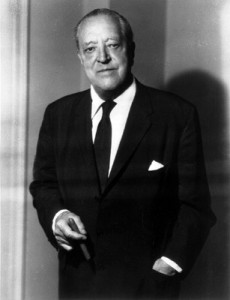 In the mid-20th century architects like Mies van der Rohe envisioned simplicity and wholeness in urban centers. Into the chaos of the city their residential designs sought to bring wholeness and community. (For reference, see Upton Sinclair’s The Jungle.) They attempted to convince residents that an amazing community life could be had within just a short walk or bus ride from the office, the market, church, or anywhere else you’d need to go.
This sense of urban holism was central to the phrase van der Rohe is now known for, “God is in the details.” In the chaos of our daily life, when we slow down to notice the small things, we notice God everywhere.
Urban holism was largely rejected in the late 1960s and 1970s. When racial tensions, riots, crime, and violence increased in urban environments most population centers like Los Angeles, New York, Chicago, Detroit, and Philadelphia experienced a new residential phenomenon– suburbanization. (Or the more loaded term, white flight.)
Suburbanization completely changed the landscape of American culture. It was a rejection of community life and an embrace of individualism. Explore just about any 1970s suburban development and you will see the contrast from urban life. Instead of communities built around common spaces like parks, markets, and clusters of people who knew one another, homes were constructed like fortresses and oasis for the individual family. The front porch became a façade. The double garage doors became a gate. The home itself was designed for privacy and experiences of the outdoors lead to a fenced backyard. Words that sold these houses were privacy, seclusion, safety. The master bedroom overlooked a spacious backyard of grass. The kitchen window looked into the backyard where mom could watch her kids play on their very own playset in the safety of their encampment, in complete opposition to the community life they experienced as children.
You had to get into the car to go to the market, to school, to church, or just about anywhere. No longer did city planners include mixed-use development zones, it was Residential zoning on one side of the freeway and Commercial on the other. At the same time, people greatly increased their travel time to work. Instead of a walk or short bus ride, people took to newly created expressways to travel from newly formed suburbs named after forests in England to the dangerous, cold city for work.
Instead of God being in the details our cars became our gods. As people spent hours and hours alone commuting to and from work or driving our kids from one activity outside of their neighborhood to another. The American Dream was reshaped from opportunity for a better life to opportunity for a better car or bigger, more private home.
The net result was a complete rejection of life in community with one another. For centuries humans formed community with those they lived near. Now we form communities with people we like and are like us. The acquisition of things overtook the desire to acquire friendships or do what is best for our community.
It was a dramatic demarkation from van der Rohe’s philosophy.
Enter new urbanization. Through the 1990s and into today, children raised in the suburbs have stumbled upon centuries old principles of community living. There is now a reinvigoration of urban living and a rediscovery of community life. (And even adaptations like urban farming.) Initially, this movement wrought havoc on urban communities, bringing gentrification. But in recent years more careful planning has largely kept money-hungry developers from gobbling up cheap property to flip from the urban poor to the yuppy.
It’s a form of a rejection of individualism. (Or some would say a fulfillment of individualism.) As they seek community in the city they want to affirm their individuality by placing themselves into a complex ecosystem of community where their skills, passions, and ideas have value. The mainstream, suburban-focused, marketing-driven mindset of their parents struggles to understand why their children reject a comfortable, safe life in the suburbs for the chaos of the city. The news media looks at the increased ridership of public transportation and double-digit sales increases of bicycles and blames this on the price of gas. In their eyes, it could never be that people don’t want to have their own cars that they sit in for lonely hours on their way to offices full of people they don’t like.
That’s exactly what it is. One generation looks at the failure of the generation of their parents and choses another path. That’s the nature of pendulum swings. We go from one wild extreme to the next. And in the process power (and the money that follows) swings wildly from corporate megacenters of suburban idealism to mom/pop shops where community-feel and small town ideals leads to parting with dollars.
Questions for church leaders:
- Do you agree or disagree with this premise that people in America are shifting from a suburban mindset to more of a community mindset?
- How are you seeing this trend play out in your area?
- How does this impact your church?
- What are areas of the church where people currently say, “God is in the details?“
- How does this impact your definition of community life within your congregation?
- Where do you find fear in this trend? Where do you find hope?
-
Incarnational living and the busy family

Photo by fhwrdh via Flickr (Creative Commons) Here’s the deal: I don’t have nearly as much time, resources, or energy as I wish I did.
And I certainly don’t have as much time, resources, or energy as my church expects me to have.
Will you come to a meeting? Will you join a committee? Will you come to a picnic? Will you come to clean the neighborhood? Will you join a Bible study? Will you go on a mission trip? Will you help on Sunday mornings?
The list never ends.
I’m just happy to make it to church on Sunday. Literally, that’s about all I can muster most weeks.
But in the churches eyes? You hear the groaning from the staff, “We can’t get anyone to do anything…” “People don’t support us like they should.” “We could do so much more if people just pitched in.” “80% of the work gets done by 20% of the people.”
This exposes a deep disconnect between those in leadership and those who are a part of the congregation.
There’s an assumption from church staff that I have lots of free time that I will give if only they can pitch it to me in a way that will motivate me. And I have an assumption that my church staff just look at me as a body who should be serving more. The truth probably lies somewhere in the middle.
Not the church– the neighborhood
It’s so easy for me to confuse what incarnational living is all about.
At its root, that’s just a fancy word for “living like Jesus.” Jesus, 100% God, chose to become 100% human. (Phillipians 2:6-8) As John 1:14 says, “He made his dwelling among us.” And while he was on earth he chose to invest in things of the community instead of merely hanging at the Temple.
If we are to follow Jesus’ example of how to live… we need to spend way more time with the people of our neighborhood than we do with churchy people.
That’s where the frustration lies for me. The invitation/temptation is constantly to get involved with the things of my church. All I have to do is say yes! Yet in reality, living incarnationally is an invitation to bypass most church involvement for the sake of living like Jesus in my neighborhood.
A realistic pace
Here’s my week:
- Monday – Friday: Get the kids to school, go to work, come home, spend time with the kids, do some chores, spend at least 15 minutes alone with Kristen. Go to bed. Monday night we have community group, [taking time off from that with baby] Tuesday I help with youth group, Wednesday the kids go to Awana. That leaves Thursday and Friday night “open” each week.
- Saturday: Get stuff done around the house. Mow the lawn, weed the garden, etc. We try to do something with the kids like go to a movie or play mini golf.
- Sunday: This is our day of rest. We lounge around a bit in the morning before church. We go to church from 10:30 – 12:30. When it’s warm, we go to the beach.
That leaves very little extra time for other things. And there are a whole lot of voices telling me how to best utilize that time. (More time with my kids, shuttling my kids to sports, I should be working out, take a seminary class, volunteer at the school, volunteer at church. This list never ends.)
We have an infant in our house. Want to know how I want to utilize that extra time? Sleep!
Sure, I could squeeze a couple more activities into that weekly line-up if I wanted to. But I’ve also learned that if I jam too much in there, there’s no joy there. It’s just not a realistic pace for this stage of life. I prefer to leave Livin’ la Vida Loco to Ricky Martin.
Ultimately, squeezing the life out of a busy schedule for the sake of one more thing at church is not incarnationally living, is it?
If I’m really honest… loving my neighbors is really all I can swing.
The question is simple: Is that enough?
What do you think? How should we teach people to balance involvement at church with involvement in the neighborhood? If the net result of ministering to people with full lives is less programs, how could the church impact more people with less programs? What would the roll of church staff be?
-
From information to action

click to see full size 
click to see full size Our society is in desperate need of Good News
Therefore, the question for church leaders is simple: Will you be the source of Good News in your community or will someone/something else?
The Sunday Disconnect
Like clockwork, we have trained our people that the place to be on Sunday mornings is the church. That is a great thing: People show up!
There is expectancy in that. Something innately in us instructs us, “Sunday morning is the time we gather for corporate worship of our God.” Whether its your first Sunday, you’ve been in the church your whole life, or you work at the church, we all come together on Sunday mornings: We are going to the church to worship God!
That togetherness ends in the parking lot. As we arrive at church I find that we each family & individual has a slightly different agenda as they come on Sunday morning.
The difference in agenda is fascinating, mind-numbing, and ultimately a sign that we need corrective leadership.
My Sunday morning agenda – aka “Things I am hoping for“
- Get there, all of us. On time is preferable.
- Get the kids to children’s church.
- Corporate time of worship, prayer, and the reading of God’s Word.
- Drop off my offering.
- See some friends during the soft time after service, meet some new people.
- Avoid invitations to help out with things that don’t interest me. Check in with things I am interested in.
- Hear reports/testimonies of what God is doing in my neighborhood through His people.
- Hear about corporate opportunities to do something. I only have 2-3 hours available per week, but if something can be done, I want to do it.
- Hear what’s going on in my neighborhood.
- Share ideas, process what’s going on, and form action plans for the week to come.
The Sunday morning agenda of the staff – aka “Things I perceive they need to see the morning as a success.“
- Make sure the building is ready for visitors.
- Make sure all of your people are in the right places and they know what they are supposed to be doing.
- Invite people into a deeper relationship with God.
- Communicate God’s Word. (Song, sermon, prayer, etc.)
- Announce stuff.
- Check off the mental check list of people to reach out to (Some, to see how they are doing or follow-up. Others, to recruit or check-in about stuff you are announcing.)
- Make sure the service happens. (You want it to be worshipful for yourself, but largely it’s not because details overwhelm you.)
- Oversee staff, volunteers, and check-in with all of them after to see how it went.
- Count stuff. I don’t know why but church staff have to count everything.
- Troubleshoot. Something always manages to go wrong.
See what’s happening?
Largely, the people coming want to be called to action. Sure, they want to gather. But they also want to do something with their faith outside of the walls of the church in their own community.
Largely, the church staff want to call people to help make church happen. They want to do stuff outside of the church, too. (Don’t read that the wrong way… the church staff largely is on staff because they want to impact the community!) But they can’t even think about that unless their bases are covered.
Questions: What are some first steps to alleviating this disconnect on Sunday morning? What are ways you can transform Sunday morning from information sharing to a call to action?