Tag: leadership

  • 3 Things I’m Wondering About What Church Leaders Believe

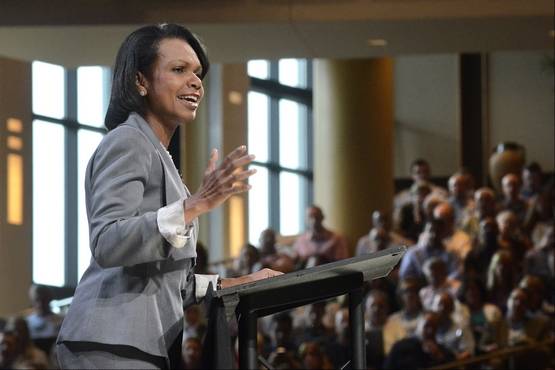
    Yesterday, Kristen and I went to the Willow Creek Global Leadership Summit. It’s an event I’ve always loved… I’ve gone 3-4 times in the past decade and the years that I couldn’t make it I always wanted to. Looking back, it’s an event where I always learn a lot.

    I’m probably a lot like you. I’m tired of talking about why humpty dumpty sat on a wall, why he had a great fall, or why all the kings horses and all the kings men couldn’t put humpty dumpty back together again. Deconstruction is so… 2005. My time is spent coming up with ways to reconstruct the church in new ways, in ways that people currently disconnected from Christ want to connect with Him. It comes from a deep respect for the Scriptures, leaning into the truths of the Gospel, and a relentless hope that our best days must be ahead.

    All that to say– I walked away with 3 things I’m wondering about based on what I heard yesterday. These were the working, meta-narrative, definitions of how the speakers/hosts seemed to view the world around them. And it left me wondering… is this what they really believe?

    1. The church is the hope of the world – I walked away wondering… Is that really a true statement? I know I just have an undergrad Bible college degree. And I picked Spanish in college because Greek and Hebrew didn’t seem all that practical for youth ministry. But I think Jesus is the hope of the world. I think the church is the bride of Christ. The church is Hope’s wife, they are wed, they are one… but the church is not the Hope of the world. Jesus is. (I can accept the phrase as a metaphor but the phrase was not said as a metaphor– it was said as an axiom/truism/fact.)
    2. Neighbors are people you invite to church – I walked away wondering about the application of one of the stories… Bill Hybels told a story about a man who came to their property looking for his cat. The man asked Bill, “What is this place?” (Assuming it was a college) Bill used that story to illustrate that they, for the first time in 30 years, needed to do some marketing to retell the Willow story to people in their community. His story left me screaming inside! Dude, you blew it. Jesus didn’t say, “Love your neighbor and invite them to church.” He said, “Love your neighbor as yourself.” The guy didn’t come and ask Bill for a flyer or an invitation to church. He wanted help looking for his cat. It was an invitation for Bill to go to the man’s house! It was an invitation to get to know his neighbor— not fill his mailbox inviting neighbors to hear him preach. Oh, I really wanted that to be a turning point for Bill to see that a church dispersed in its community, as Hope’s representative and wife, is far more potent than a church coming to his “college.” [If you know me, you know my prayer is that the church becomes Good News in the Neighborhood.]
    3. Leadership is the most important spiritual gift – Oh, there was so much insider language and playing to a senior pastor audience about “leadership!” Bill Hybels repeatedly pumped up leadership as the only important spiritual gift. He “thanked God” that he didn’t have the other gifts. (There was a lot of woman bashing from the stage, too. I hope someone mentions that to him. That’s beneath leaders of his caliber.) It made me wonder about the definition of Christian leadership. Paul makes it clear in 1 Corinthians 12, no one is more important in the body of Christ than anyone else. And Jesus corrected his disciples again and again… to be great, you must be a servant. (Mark 10:42-45) Those weren’t popular concepts at Willow’s Summit. In fact, in an interview with an organization that has two equal leaders the question came up again and again… “Is it possible to have 2 leaders?

    So that’s what I left wondering with after day 1. Just wondering. Not criticizing or tearing down. Just wondering. 

    If you went to WCAGLS— what were your highlights? What did you leave wondering about? 

    QUICK UPDATE: Day 2 of WCAGLS was very good, I didn’t stick around for Bill’s closing talk, but really enjoyed all of the speakers today. Pranitha Timothy was absolutely stunning today. Very thankful for that talk.
  • Leading without Anger

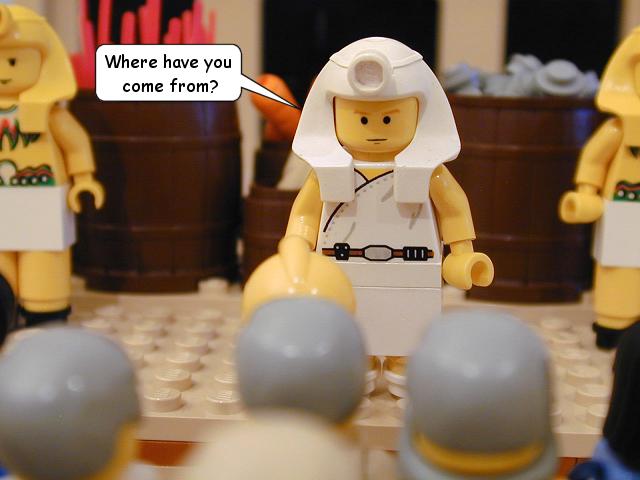
    It’s hard to imagine what was going through Joseph’s mind. For 40 years he imagined this moment — He saw his brothers. (Reread Genesis 42, it’s fascinating.) When he was just a teenager these brothers staged his death, sold him to some travelers as a slave, and lied to their father about his disappearance.

    • For 40 years his brothers owned the secret.
    • For 40 years Joseph wondered what he might do if he saw them again.

    And here they were. Penniless and in desperate need of food. And here was Joseph. The man with the power to silently execute judgement on them. They didn’t recognize him and no one in the room knew they were his brothers.

    He held all of the power over their life and death.

    And here was his moment of confrontation! He had the power to do whatever he wanted to them!

    Leading Without Anger

    Inside Joseph screamed this truth: They wanted to destroy me. They wanted me dead. They lied to our father.

    But. BUT. BUT…

    They didn’t have the power to harm me. They didn’t have the power to destroy me.

    And I do…. so what am I going to do?

    He lead without anger. He made the radical choice to not empower the voice of revenge. He made the choice to not execute judgement. He made the choice, instead, to give power to leading his people forward and towards a new life.

    We Have to Make This Choice

    Leading with and without anger looks the same. There is only a silent difference between driven by a dream and driven by anger. Only you will truly know. Like Joseph, leading without anger is a daily, intentional choice to make.

    In my own life I am very competitive. I’m driven by dreams and aspirations, some of which are decades old while others are brand new. There’s a fine line between wanting to do my very best, wanting to “win” versus wanting others to lose. [Sidenote: I’m a golfer. We view competition differently than football players. Wanting to win is not truly wanting others to lose. Golfers cheer for one another, wanting everyone to do their very best, while at the same time trying to win. That’s why Ernie Els consoled Adam Scott in the scorers tent at the British Open, he was happy he won but sad his friend lost by not playing his very best.]

    I do have things that could allow me to be driven by anger. (We all do.) There’s temptation there. There’s energy to be found in relying on anger to drive your dreams.

    But doing that give your adversaries, those who have sought to harm or even destroy your work, all the power. It’s leaning into the sin of the Garden instead of the redemptive hope found in Jesus.

    True power is not in the execution of revenge, it’s in having the opportunity for revenge but choosing redemption.

    “Do not be overcome with evil. But overcome evil with good.” 

    Romans 12:21

    Photo credit: The Brick Testament
  • Powerless

    Breathing heavy and full of adrenaline I stood up from the knee deep waves among the kids and did a 180. With a massive smile I began the long push through the surf back to my fellow bobbing boogie boarders.

    It was a Sunday afternoon at Torrey Pines. One of my favorite beaches doing one of my favorite things.

    Smiles were ear-to-ear among this pod of boogie boarders, basking in the late Sunday afternoon glow the with warm summer breezes, the water temperature had finally risen to the point where you could stay in indefinitely without shivering.

    The swell was building. We all felt it. In our group were a wide variety of skill levels. Experts with nice boards and fins running circles around all of us. Beginners on their $20 boards that weren’t quite the right size. And me, a midwesterner who loved it but resides firmly in the novice category.

    Typically, I don’t like to go off shore beyond where I can touch the bottom. My technique is typically to wade out and position myself near where the waves break so that I can move “hop on” a wave rather than paddle and drop in. But the waves have drawn me out here, floating and chatting alongside all the other giddy riders.

    We’d all caught enough waves. We were just lined up at the dessert table waiting for something fantastic to happen. In truth, the waves had already been too big for me and I’d been lucky to duck the ones that broke weird and hop on some fantastic rides.

    I was way beyond my skill level. I felt it. But the allure of nice, pretty waves, warm water, and my success pulled me out where I didn’t belong. I was trying not to think about

    A few minutes later one of the more advanced guys said, “Here they come!” About the same time one of the guys girlfriends said, “Hey, I can touch the bottom.” We all knew that this meant that the next set was going to be big. Most of us got off our boards and stood up, watching where the first waves in this set broke.

    I was in the perfect spot. I ducked and let a couple of big waves break over me. And I was feeling pressure not to let this big set go by. I could tell by the excitement level of the better boarders that the next wave was the best one. Judging by the massive size of some of the other ones, which were way taller than me, the best one had to be ridiculous.

    And there it was. I ducked a wave and looked up… it was rolling in. The best guys missed it, they were too deep. But I’m there, standing in the sand with my board up against my chest. As it approached me I felt like it was too big. But I had only a split second to turn and dive under it before it broke on top of me. Instead I hesitated. It was too late, I had to go or get rolled.

    Pushing off the sand just as this massive wave started to release I could feel the waves massive power. But I was a fraction of a second late. And I was about five feet too far to the right… I was on the waves but in the wrong spot.

    It’s hard to imagine how fast I was going… Imagine a fat dude on a boogie board going 30 miles per hour propelled by the biggest wave of the day. It’s a scary thing to imagine and an even scarier thing to experience. The first half seconds were perfect, I cut into it and was flying by as all the other boogie boarders and swimmers ducked as it went by.

    In the next instant I was crushed.

    The wave collapsed on top of me. I was completely powerless against it’s power. It shoved me to the bottom then flipped me and rolled me and held me under water. It didn’t just roll me side-to-side, my head hit the bottom then my knees then my head. Water rushed into my sinus cavities causing me to gag under water.

    It’s a horrible helpless feeling.

    Finally, it released me. I felt like I’d been spit out of Jonah’s whale. And I was back in knee deep water among the kids and moms and floaties.

    The best leaders are powerless

    There’s a silent allure to power in leadership. Early success leads us over our head. But we quickly find ourselves out deeper than our skill level.

    We mislabel fear as following. We mislabel position as authority. We mislabel obedience as respect. But behind the mask of many “strong leaders” are very scared little boys. They’ve created a puffed up thing, manipulative, terrified, and tired. Others have mislabeled it as leadership.

    Lord, make us powerless leaders who lead with love. Amen.

  • The Problem with the Cause of the Week

    “Oh, I’m so going to use that with my students.”

    This week it was the Kony 2012 video. (And the backlash) Next week it’ll be something else because our cycle of interest is now about 96 hours.

    As the video went viral all of my youth ministry groups on Facebook were littered with questions from youth pastors asking, “How can we best use this video for our youth group?”

    I think that we are too fast to want to use everything as a resource or teachable moment.

    In fact, I think we often hide behind our role as a leader to become plastic. We don’t allow things to impact us because we look at everything from a lens of, “How can I use this?

    And that’s a very cheap way to engage our life on earth. It denies our own human experience to go from one thing we can promote to another. And we get excited about getting people excited about stuff more than we get excited about getting ourselves to really understand stuff.

    I don’t know all that is behind this leadership instinct to rush to resource instead of allowing ourselves to be impacted. But, for me, I think it’s built around my insecurity. I want to be seen as compassionate to child slavery [or whatever the cause of the week is] more than I actually want to personally do something about it. I am quick to give a few dollars but slow to understand how my daily actions may be funding child slavery.

    No more distractions

    Perhaps the bigger thing, speaking purely for myself, is that I know I need to walk away from the cause of the week sometimes because it becomes a distraction from my cause of every week.

    I cannot escape these priorities in my life.

    1. My own relationship with Jesus is more important than the cause of the week.
    2. Jesus has called me to invest in my family. 
    3. Jesus has called me to love my neighbors as myself. Not a metaphorical neighbor, the people who live on my block.
    4. Jesus has called me to dig in at my church. 
    5. Jesus has called me to my work. 

    In light of this, the cause of the week really isn’t all that important.

    Investing in my relationship with Jesus is more important than leading a discussion about Kony 2012. Having a great conversation with my kids is more important than telling them about Kony 2012. Leaning on the fence and listening to my neighbor is more important than telling them about Kony 2012. Leaning in and engaging with my small group is more important than plugging Kony 2012. Working hard and pushing through my work is more important than caring about Kony 2012.

    See, I don’t think the cause of the week is bad. Not at all. But I do think things like this are a big distraction, for me, from my priorities. And if things like that do impact me, I need to allow them to really and truly matter to me before I think about involving other people.

  • High-trust, low-control

    A movement cannot grow in a low-trust, high-control environment. 

    But a dictatorship can. (Cuba)

    A corporation can. (McDonald’s)

    A gang can. (Al Capone)

    In a low-trust, high-control environment leadership is supreme. Decisions flow from top to bottom. A high value is placed on replication and copying and perfecting. Efficiency is more important than individualism. And the everyday worker has virtually no voice. In fact, the less voice the worker has the better.

    China

    You want to see what church growth looks like? Remove the money. Learn about the Boxer Revolution and how that changed the church in China. All the western missionaries and their hierarchical structures went away. (Or were killed) And the church went underground.

    Thus, a low-control and high-trust structure was forced to emerge. When the church went from an Augustinian mindset with paid staff and buildings and budgets and fake-butts-in-seats to an underground movement of unpaid pastors on the run, meeting in house churches, and people risking their life to be a part of it… the church became a movement again. The Gospel spread neighbor to neighbor because it is Good News. People risked their lives to be called a Christian.

    And it became an unstoppable force. (I’ve heard estimates in the hundreds of millions of converts during the 20th century in China.)

    Jesus designed the church as an insurgency. Looking at church history, the times when the church has been most effective have been in a high-trust, low-control environment. The Roman Empire conquered every people group in its path but was conquered from the inside-out by an insurgency of the heart.

    A core problem in America is the rapid embrace of a low-trust, high-control leadership structure. “Church growth experts” (and their books and conferences) encourage church leaders to remove the voice of the people and go to staff-lead models. To generalize, the staff become the local experts on everything from discipleship to sex and the people become relatively voiceless, idea-less, worker bees in support of the vision of the leadership. These high-control, low-trust leaders proudly say things like, “This is the type of church we are. If you don’t like it, you can leave. There are plenty of churches out there.

    I’ve heard leaders say that at leadership events. And people in leadership write that down. And underline it. As if asking people to leave who disagree with you is a sign of a powerful leader. (Hint: Surrounding yourself with people who agree with you makes you a wimp of a leader.)

    So many people have left the church. Sure, there are examples of big churches you can look to and hope for growth in that model. But I can schedule a tour of a 25,000 square foot church for sale 500 yards from my house that says there is no hope in that model.

    You can’t create an insurgency of the heart with a low-trust, high-control model. People will die for Jesus but they won’t die for you. 

    La Raza

    The church will grow when we give power back to the people. Not just the power to serve leaders vision, but real— actual power over their day-to-day church life. We give lip service to the Priesthood of all Believers but we don’t live it out. In 1520, Martin Luther wrote On the Babylonian Captivity of the Church:

    How then if they are forced to admit that we are all equally priests, as many of us as are baptized, and by this way we truly are; while to them is committed only the Ministry (ministerium Predigtamt) and consented to by us (nostro consensu)? If they recognize this they would know that they have no right to exercise power over us (ius imperii, in what has not been committed to them) except insofar as we may have granted it to them, for thus it says in 1 Peter 2, “You are a chosen race, a royal priesthood, a priestly kingdom.” In this way we are all priests, as many of us as are Christians. There are indeed priests whom we call ministers. They are chosen from among us, and who do everything in our name. That is a priesthood which is nothing else than the Ministry. Thus 1 Corinthians 4:1: “No one should regard us as anything else than ministers of Christ and dispensers of the mysteries of God.” Source

    Friends, our lips say we believe in the Protestant doctrine of the Priesthood of all Believers but we fund a priesthood among us.

    Are you saying we have to fire people?

    Listen. I’m not saying that we need to eliminate church staff. I’m saying that if we want to see the church grow again, in a post-Christian America, we need leaders to lead towards decentralization of power. We need paid staff to see their job as expert equippers and not expert speakers. We need to measure leaders on their ability to replicate Jesus and not themselves. We need leaders to unleash an insurgency and not continue an occupation.

    So indeed, we probably need to fire some people who won’t embrace the present reality we live in. But new leaders will emerge. The Holy Spirit has always provided. Indeed, there are leaders in your pews today who could do this if only you allowed it.

    And which people should we pay? Probably the ones who don’t want to be paid. 

  • 4 Things Negativity Guarantees

    Negativity isn’t the opposite of positivity. It is the opposite of gratitude. 

    When things are going great your response to success determines your ability to continue succeeding. And when things are going rotten your response can be the rally point your team needs to keep going.

    Here are 4 things that being negative will guarantee in your life

    1. You’ll have negative future returns. Poor performance is the love child of a negative attitude.
    2. You’ll have negative friends. Negativity attracts negativity.
    3. You’ll have negative impact on loved ones. Negative people contaminate everything they touch and hurt everyone they love.
    4. You’ll have negative job history. Your outlook leads to your ouster time and again.

    Leaders set the tone. Pure and simple. 

    Be gracious to one another in how you lead.

    Then many will give thanks on our behalf for the gracious favor granted us in answer to the prayers of many.

    2 Corinthians 1:11

    Like this post? Consider subscribing via RSS or getting my daily email updates.

  • Stop. Collaborate. And Listen.

    August beckons new life in ministry. 

    School starts. Our programs relaunch. We recruit and train (hopefully) a batch of volunteers. And we find ourselves, emotionally, in this weird place of hopeful dread.

    We’re hopeful because fall is our spring. Fall is full of new life, new energy, new commitment, and new dreams for the school year to come. Dread because we’ve felt this way before. We’ve printed the agenda, met with parents, trained volunteers… and it’s not gone as expected. 

    We need this year to be different. We are tired. We are weary. We need some success to come easily. We need our strategy to work. Because we don’t know if we can take another year like last year. Which was like the year before. And the year before that.

    In order for this year to be different we need to be a different type of leader.

    Stop.

    I remember in my first semester of classes in youth ministry being told that as the youth pastor it was my job to be the leader. And being the leader meant that I was in charge and ultimately responsible for everything that happened. The reality is that people don’t trust this type of leadership anymore. It might feel familiar or comfortable to them, it might make you look good to the board, but this type of leadership is only going to deliver the results you’ve already seen.

    To grow you’ll need to change.

    To clarify, an autocratic leadership style work great if you’re an ultra dynamic leader. I’m not. And most of the people I know in ministry are not. I’ve found it to be a growth limiter.

    Collaborate.

    I suck at telling people what to do and inspiring them to be all that they can be. But I’m pretty good at working as a leader in a flat, collaborative environment.

    I think that the old style of leadership, especially in the church, feels like a collaborative style is weak leadership. We make the mistake of believing that giving up the headship or giving up the microphone is giving up what we’re paid to do.

    Instead, I see it as forcing new leaders to emerge. It takes no leadership ability at all for me to say… “This is what we need to do, this is where we are going, and this is how it will work.” And if I do all of the teaching and speaking I’m communicating a style of leadership that Jesus didn’t foster with his own disciples.

    Conversely, it takes all of my leadership skills to say, “We all need to work together, we need the best ideas to come out of the group, and we all need to share responsibility.” While the first feels better because I’m taking all of the responsibility, collaborating with a team allows the team to dream a whole lot bigger.

    Listen.

    Nothing makes me tune out faster than being asked to come to a meeting to listen to the leader talk. (Or read from his notes which he dutifully sent to us all in advance.)

    I am willing to be lead. But to be lead I need to be listened to. And I need to see that the leader doesn’t just listen to me, he listens to everyone. The primary task of the leader of a movement is to listen. Ask open ended questions. Sit in a circle on the same level. Provide an open-ended agenda. And make listening your primary task. Listening isn’t passive leadership, it’s where leadership begins.

    It’s fall. Our spring. Are you ready to…. Stop. Collaborate. And Listen?

  • Do we live on the same planet?

    Sometimes I’ll meet a person in ministry and think, “Do we live on the same planet?” 

    • I’ve got a really solid core group of kids each Wednesday night– I think they have a chance at winning the Bible quizzing championship.
    • Our high school students are very involved in the community. Each year we get together with other churches in our district for a youth rally. They love it.
    • I always take my sword wherever I go. You have to be prepared for battle at all times.
    • I had to pull my kids out of public school because in California there’s a new law that teachers have to include gay history in the curriculum. (What’s really weird is that they don’t live in California!)
    • I teach my students that they need to take a stand. A life with Jesus is all about taking the stand, right?

    Code language. Insular communities. Church-centric attitudes. It leaves me wondering who they are trying to reach?

    It makes me wonder how they have a conversation with their neighbors? I wonder what they are thinking as they get to know Diane next door, who just had to put her mom in a home. Or what they talk about with the gay couple across the street? Or what their neighbors think about them when they turn off their light on Halloween? Or refuse to come to the block party because people are drinking?

    I wonder if people think of them as good news in the neighborhood?

    I’m guessing that there are a lot of neighbors hiding from a lot of their Christian neighbors in this country.

    I believe in Jesus. He is my only hope for salvation. And I fully acknowledge that the church is God’s chosen instrument for believers. But there is this sliver of people in every church who… are really weird.

    And no one ever has the guts to tell them the truth: “You’re weird. And you really need to work on that. Jesus asks us to be different in a good way. Your weirdness is making it harder for me.

    The Flip Side – The culture wars are dying

    Not all church staff are like that. It’s actually very few.

    More and more I’m hearing a bad strategy being replaced with good strategy.

    • In order to reach a community you have to meet the relevant needs of the community.
    • In order to start reaching more people we had to stop fighting culture and stop teaching that the output of a life with Jesus is behavior modification.
    • We recognize that to reach our neighbors we have to be good news before they will hear Good News.
    • Rather than bring a program into our community which worked elsewhere, we’re going to the community and asking how we can serve them.
    But it’s the really weird ones that we now have to shake and ask, “Do we live on the same planet?
  • Finding Strength in Lonely Moments

    Can you imagine what it was like to be Joshua?

    During your lifetime Moses did just about everything a leader could ever do. He had regular 1-on-1 meetings with GOD! He lead millions of people out of slavery in Egypt. He established the rule of law for those people. While they wondered the desert for 40 years he kept them safe. And, by his petitioning the Lord, they ate every day.

    Then. He dies.

    And your shoulder gets tapped to take over.

    The biggest “oh crap moment” in your lifetime. When a nation mourns the passing of its leader and worry and discontent bubble to the top in their exhaustion. All of that weight is now put on your shoulders.

    Joshua. It’s you. You’re in charge. What do we do?

    Can you imagine what it was like to be Joshua that day?

    Actually. I think you can. Imagining the emotions of Joshua’s that day reminds you of moments you’ve had. Or maybe in this very moment you are feeling that same weight?

    And in a quiet moment, when it all swirls and people are asking you what to do, you take a moment. Maybe in the sanctity of the bathroom or in your office with the door closed and everybody at lunch and you scream into a towel or your garbage can.

    “GODIDONTKNOWWHATTODOBUTYOUHAVETHEWRONGGUYWHAT

    DOYOUMEANYOUWANTMECANTYOUPICKSOMEBODYELSE?OKITSMEILLDO

    ITBUTIMGONNANEEDYOURHELPBECAUSEIMREALLYREALLYAFRAIDRIGHTNOW!”

    Into that lonely desperate crying moment, where you are utterly convinced it won’t be OK because this spot your in is going to expose you for the scared kid you really are when no one is looking: God gives you these words.

    Be strong and courageous, because you will lead these people to inherit the land I swore to their ancestors to give them. “Be strong and very courageous. Be careful to obey all the law my servant Moses gave you; do not turn from it to the right or to the left, that you may be successful wherever you go. Keep this Book of the Law always on your lips; meditate on it day and night, so that you may be careful to do everything written in it. Then you will be prosperous and successful. Have I not commanded you? Be strong and courageous. Do not be afraid; do not be discouraged, for the LORD your God will be with you wherever you go.” Joshua 1:6-9

    I don’t know what has lead you to that point today. But I know this is God’s encouragement.

    Be bold and courageous.

  • Homeless Teenagers Among Us

    [Video enclosed]

    The poverty rate for those under 18 will soon hit 25% in America.

    This video from 60 Minutes broke my heart yesterday. While riding the trolley to work I listened to the audio and wept.

    16 million kids in our country are currently living below the poverty line. That’s an increase of 2 million in just 2 years as families slip from “middle class” into poverty.

    It’s where you live. In your city, town, suburb, gated community, or rural area. And it’s people who never thought they’d struggle. And certainly never thought they’d become homeless.

    As the video shows, millions of kids are now homeless. We hear about foreclosures and we think of the housing market. We forget that those are also displaced people. Families who lost everything.

    5 Ways You and Your Church Can Respond

    As I listened to this story, I thought about how can the church NOT respond?

    I thought about how churches and youth ministries could easily do a few things that could make a big difference. Ministry life just can’t go on as normal with a quarter of the families in our community unsure where their next meal might come from, or unsure if they can stay in their apartment another month, or unsure if they can even keep their families together.

    It’s one thing to preach Good News. It’s another thing to actually be Good News.

    What are some things you can actually do?

  • Start a food closet. There isn’t a church door in America that doesn’t get knocked on every week asking for food. If your church doesn’t have a food closet, start one. If the church doesn’t want one, just start bringing non-perishable food items to church every time you visit. They’ll figure it out when it starts to pile up.
  • Get out of your car and look around. In your routine where you drive everywhere, you won’t ever see the problem among us. Stop driving everywhere! Commit to start walking or riding a bike, and you’ll see things you never thought existing in your community. It’ll do your heart good.
  • Take a family in. There’s a part in the 60 Minutes piece above where they say that most families foreclosed on move into a neighbor or family members house. I know it’s easier to pretend you don’t see what’s happening. But a lot of people in a lot of churches have more bedrooms than people in their homes. Maybe you’ve got a big crib for a reason?
  • Convert some classrooms into temporary housing. It’s sickening how many churches have so much space that goes unused for 6.5 out of 7 days. Spend a tiny amount of money to convert under-utilized space into temporary housing for families so they don’t get split up. Convert a bathroom stall to a shower, buy some used basic furniture, and allow families a place to regroup for 60-90 days.
  • Open your youth room 5 days per week after school. There are some things that are so simple to do, yet we don’t do it because we get hung up by thinking too small. It would cost you nothing to have a volunteer staff your youth room after school every day from 2:30 – 5:00 PM. Hang some signs up at the middle and high schools. You already have space, just make it available to kids who need a safe and quiet place to study overseen by a caring adult.
  • How about you? What are some things you can do, as an individual or as a church, in the next 30 days?